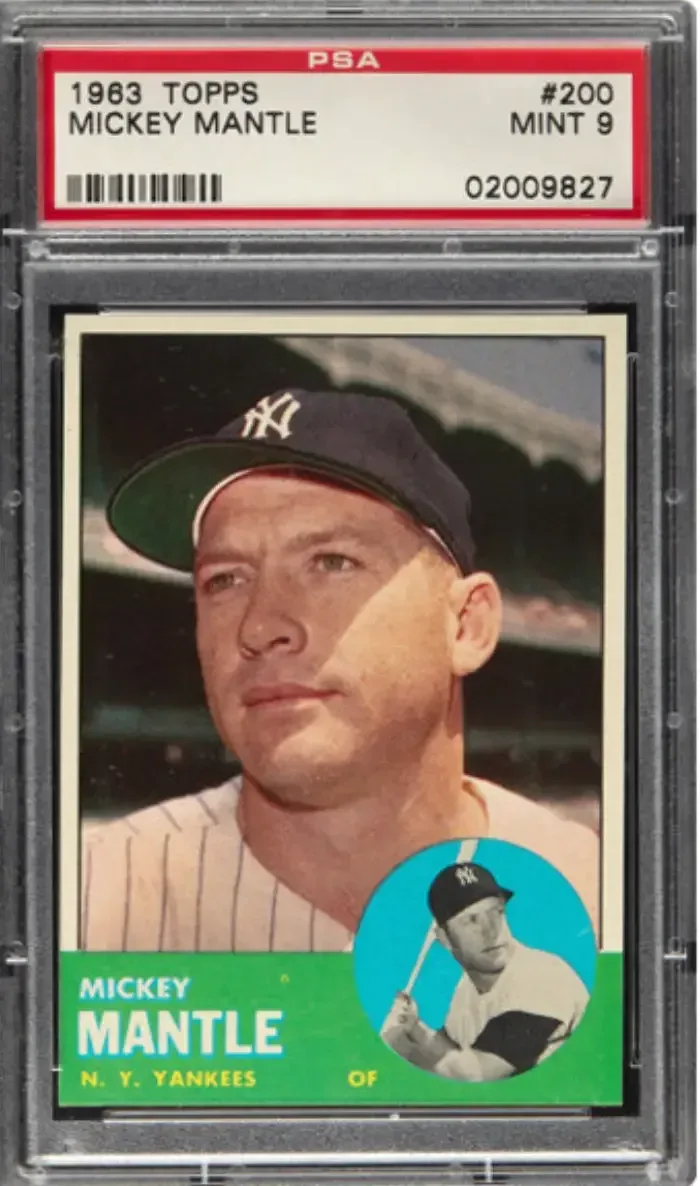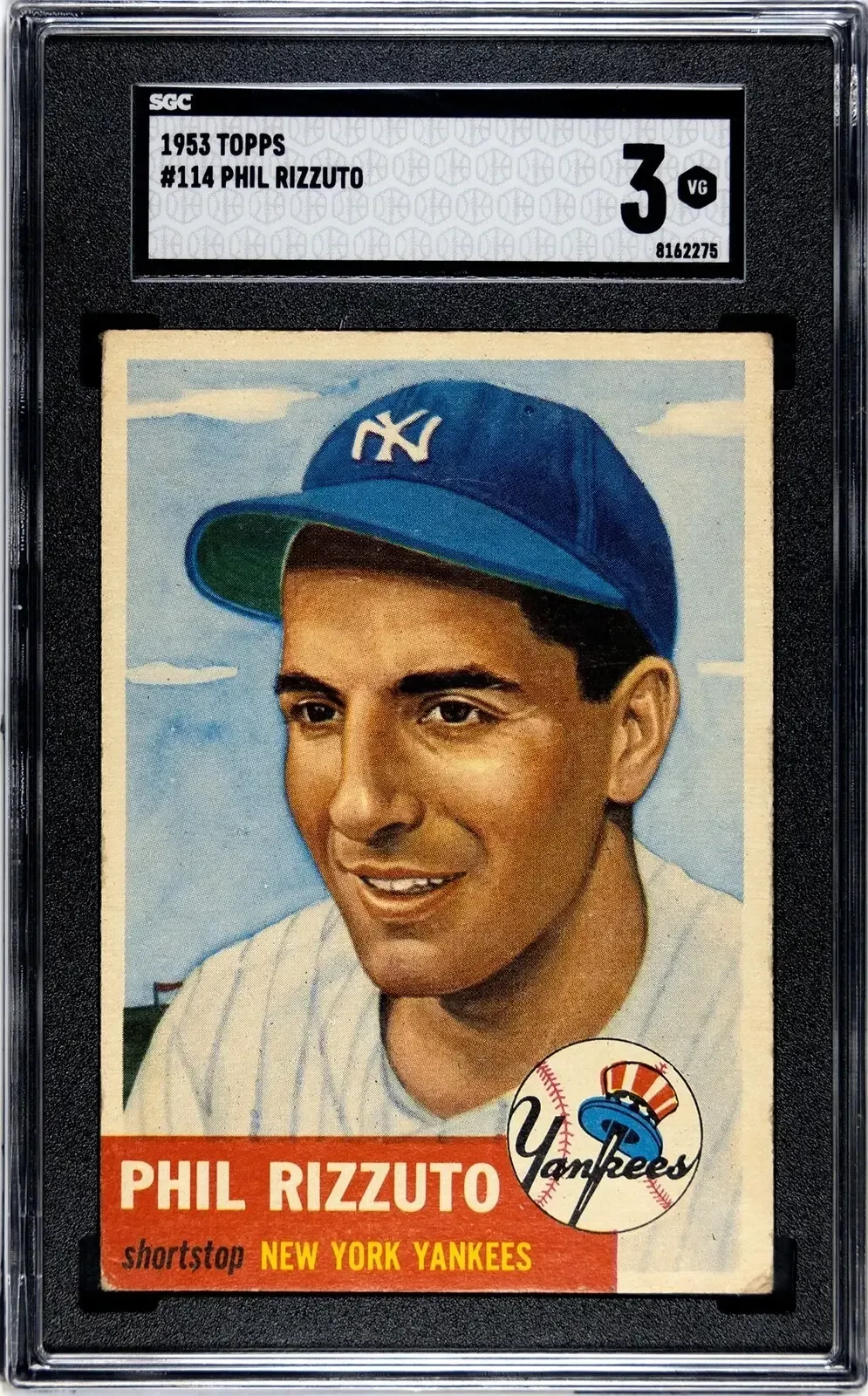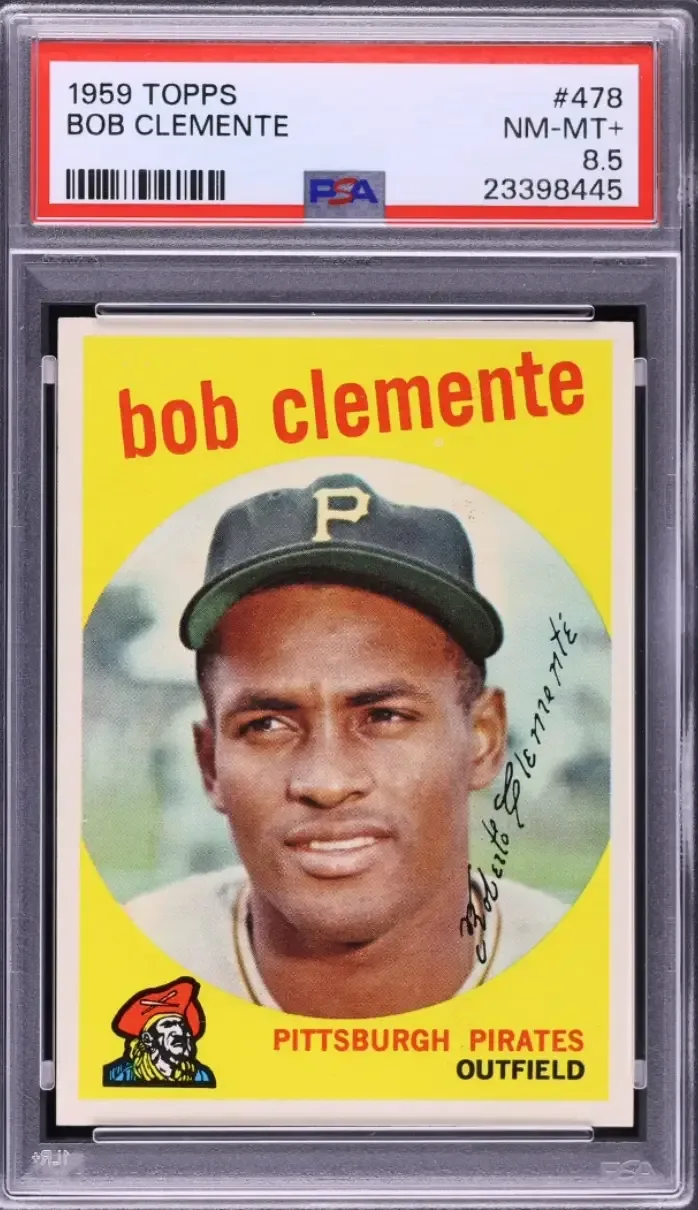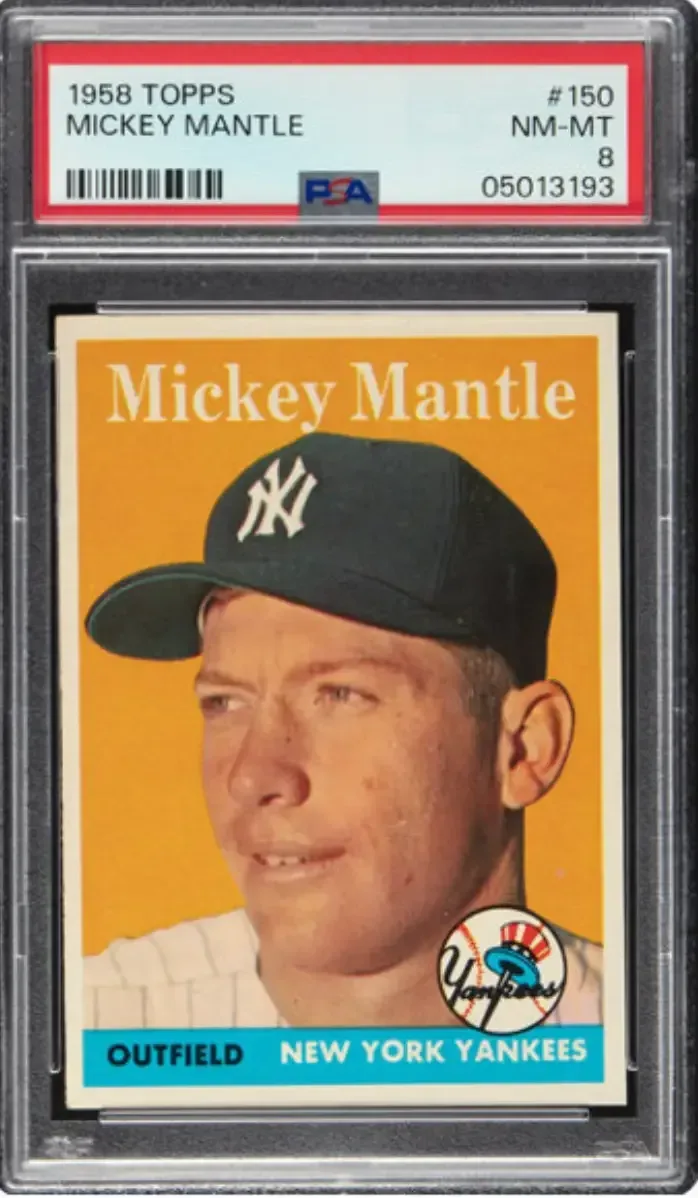
Vintage baseball’s big names have put up some striking individual auction results in 2026. Five cards from the 1950s—spanning Phil Rizzuto, Jackie Robinson, Roberto Clemente, Mickey Mantle and Ted Williams—each sold well above earlier recorded sales of the same card and grade.
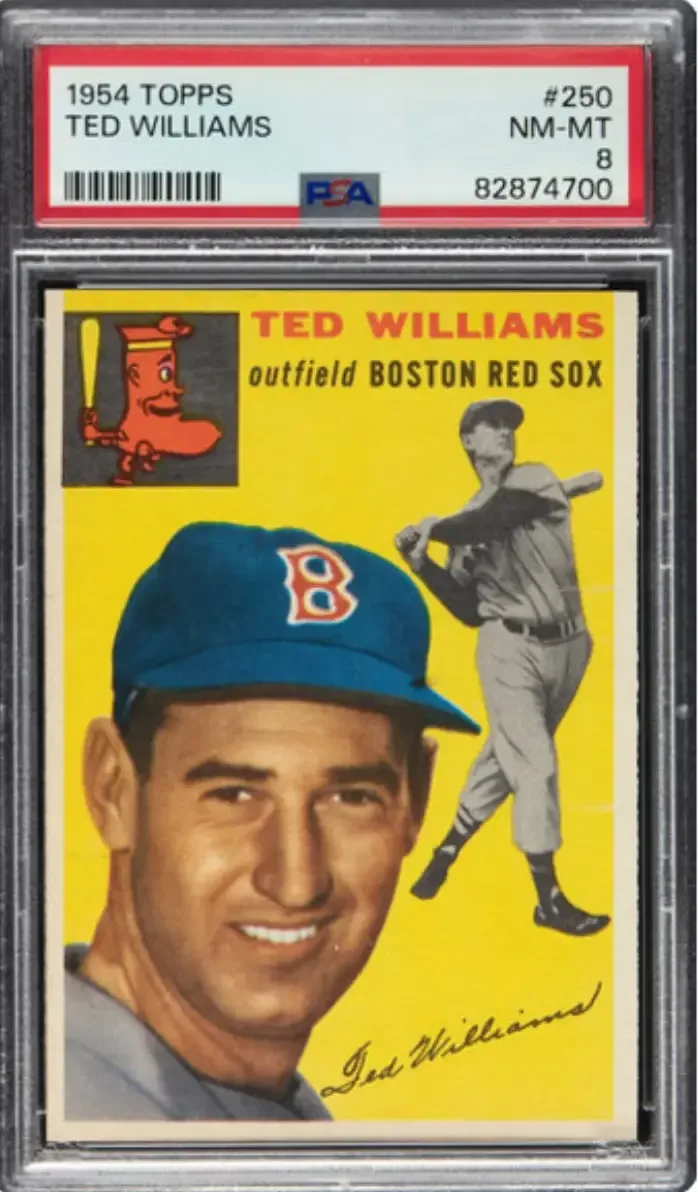
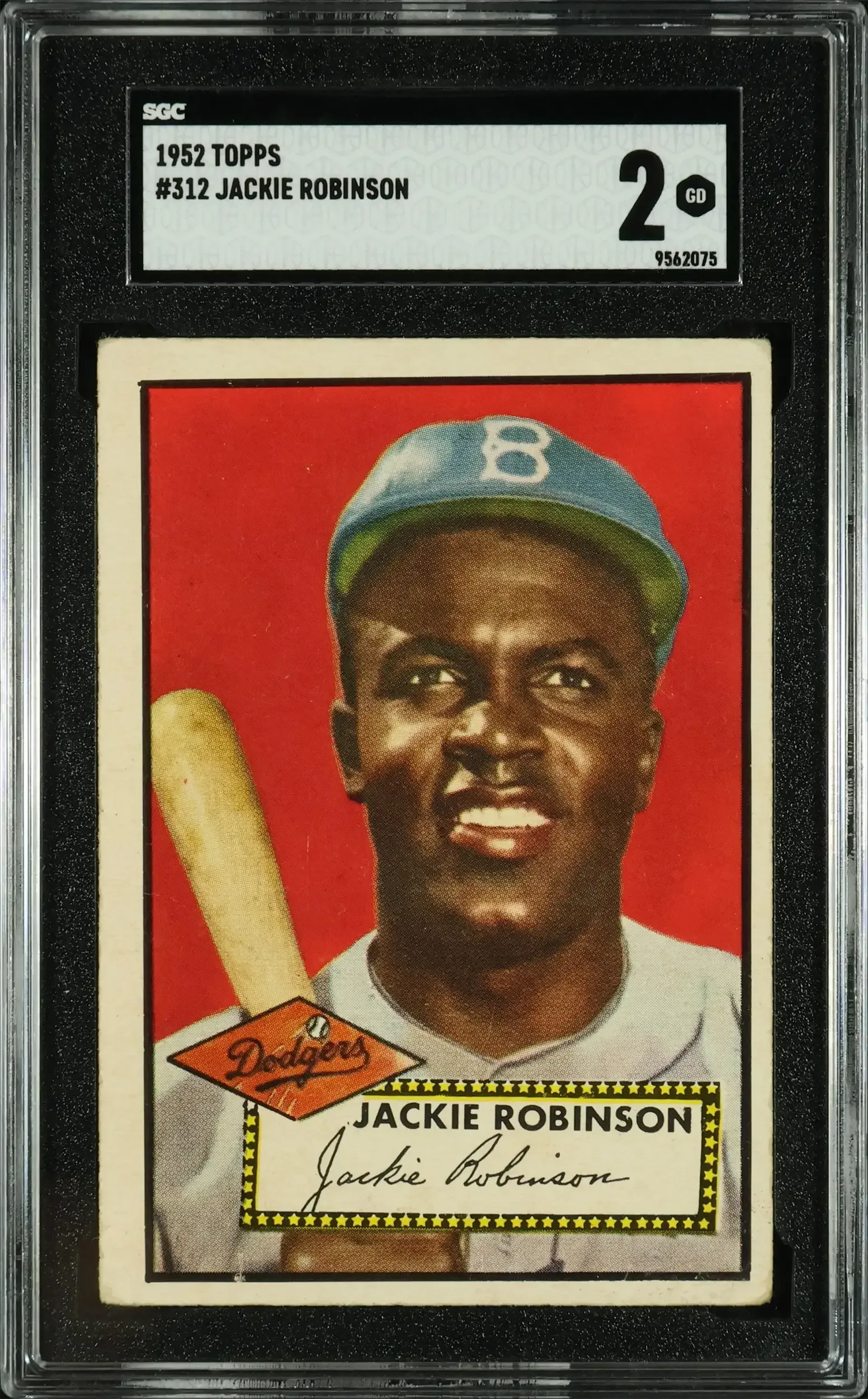
The headline number belongs to a 1954 Topps #250 Ted Williams graded PSA 8, which sold for $17,700 on October 26, compared with $3,419 in April and $3,000 in February. That is a reported 418% rise from the February comp. Elsewhere, a PSA 8 1958 Topps Mickey Mantle reached $41,500, a PSA 8.5 1959 Topps Roberto Clemente sold for $19,800, and an SGC 2 1952 Topps Jackie Robinson brought $20,400.
Those figures should not be read as a promise that every vintage card—or every copy of these cards—will follow the same path. They are specific sales involving particular cards, dates and third-party grades. Still, taken together, they offer a useful look at why established 1950s issues remain central to the hobby when the broader card market is described as cooling.
Why these results matter in a cooler market
The market context is uncertain. The MLB collective bargaining agreement is set to expire on December 1, creating concern that a lockout could affect the 2027 season. A shortened season or no season at all would be a problem for a hobby segment driven heavily by current performance and new-product momentum.
Vintage cards operate on a different set of collector motivations. The five examples here feature Hall of Fame players with enduring historical importance, recognizable designs, and, in several cases, difficult-to-find high-grade copies. That does not make vintage immune to declines. It does mean attention may shift toward cards with long-established collector bases when speculative modern cards become less compelling.
There is a useful distinction between a player’s popularity and a card’s scarcity at a given grade. Mantle has a huge collector following, for example, but the specific condition of a 1958 Topps Mantle is a major part of the story. The same is true of Williams: his #250 card has an important place in the set, yet the grade-population detail helps explain why an especially strong example attracts attention.
PSA and SGC are third-party grading companies. Their numerical labels identify the assessed condition of the encapsulated card. Comparing like for like—PSA 8 to PSA 8, or SGC 2 to SGC 2—is generally more meaningful than comparing a sale across different grades, since condition can materially affect scarcity and price.
1. Ted Williams 1954 Topps #250 PSA 8: reported gain of 418%
The fastest-rising result in this group was the 1954 Topps #250 Ted Williams, PSA 8. Its $17,700 sale on October 26 followed a $3,419 sale on April 17 and a $3,000 sale on February 26.
Related coverage includes Top 3 Hottest 1950s Baseball Cards Surging in 2026.
This card has two particularly relevant hooks. It is Williams’ first Topps card, often described by collectors as a “Topps rookie.” It is also the final card in the 1954 Topps set. Williams appears twice in that release, on card #1 and card #250. As the first and last cards in the set, those two issues were more exposed to rubber-band wear and repeated handling by collectors assembling sets.
That physical history matters at the high end. Of 4,943 copies submitted to PSA, only 11 have received a grade higher than PSA 8. The October sale is therefore not simply a Williams result; it is a sale of a difficult condition tier for a significant early Topps card of one of baseball’s most celebrated hitters.
The price progression is dramatic, but it also illustrates a practical lesson for collectors tracking comps: a single high-grade sale can move sharply without establishing a permanent, universal price floor. Subsequent sales, along with the condition and eye appeal of individual examples, remain important.
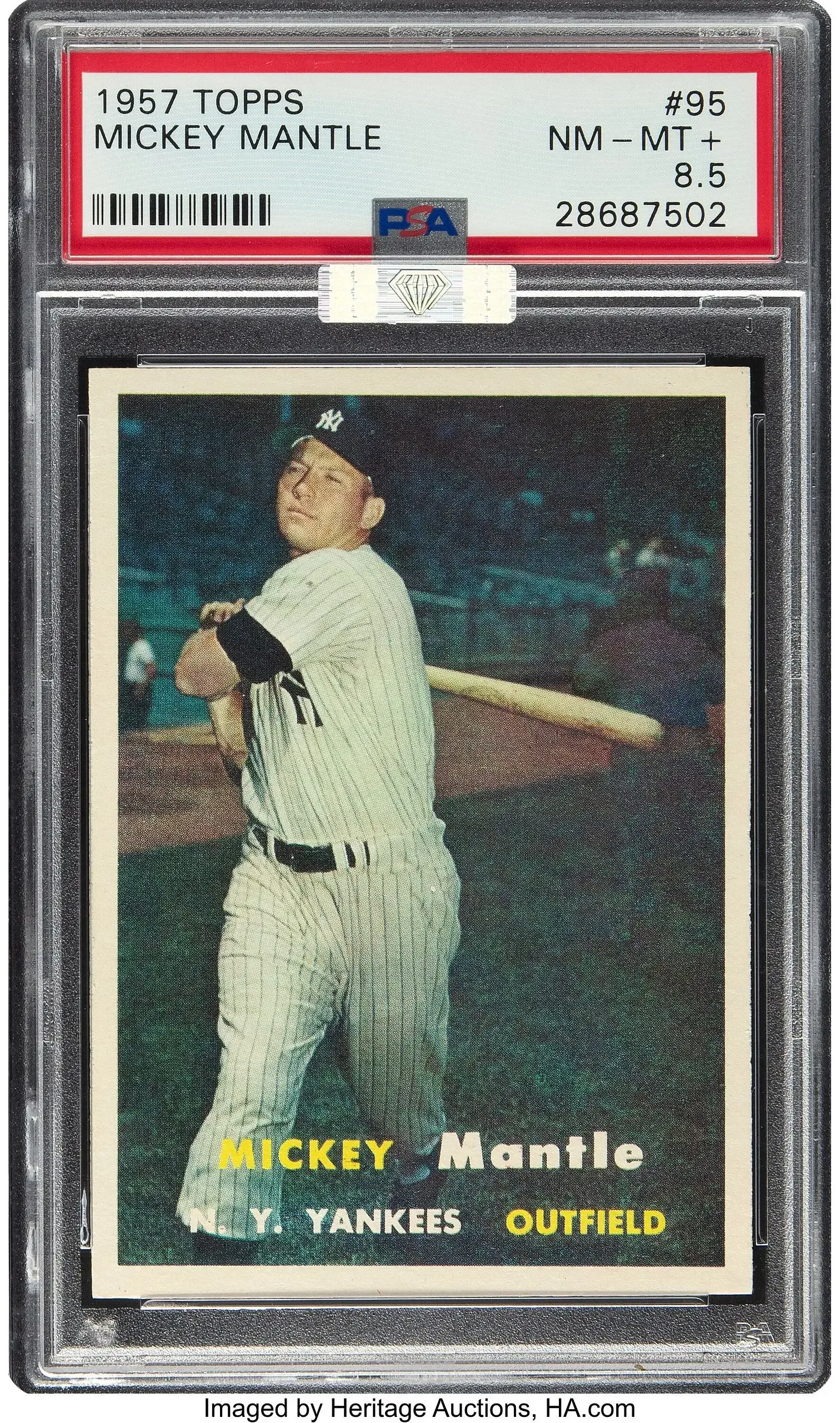
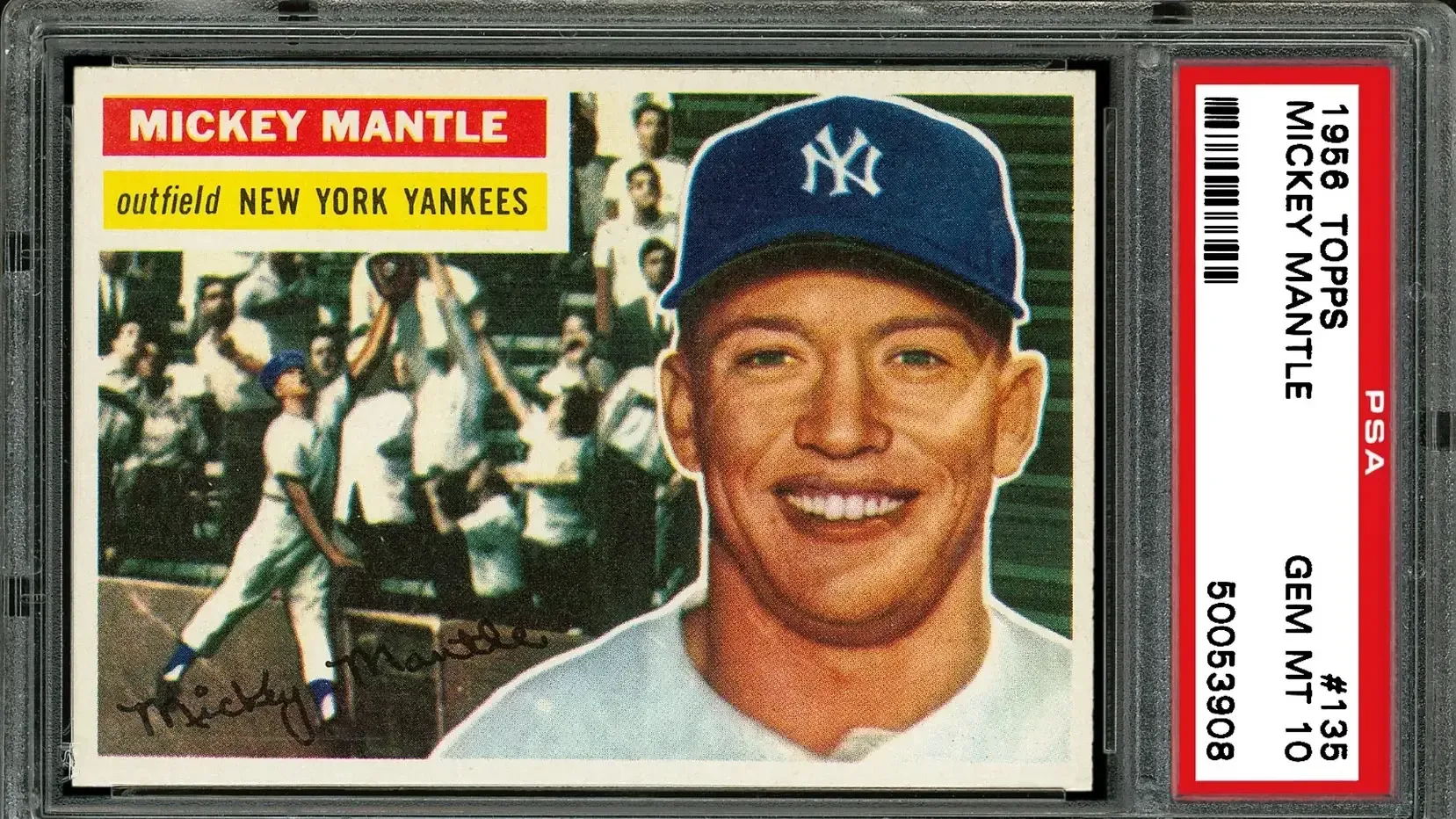
2. Mickey Mantle 1958 Topps #150 PSA 8: reported gain of 229%
A 1958 Topps #150 Mickey Mantle graded PSA 8 sold for $41,500 on October 26. Earlier 2026 sales cited for the same grade were $12,600 on May 31 and $14,100 on May 18.
Mantle remains one of the most important names in baseball cards, and the 1958 Topps design is immediately recognizable for its orange background. Yet the key detail is that widespread grading does not eliminate scarcity at upper grades. PSA has graded 10,070 copies of this Mantle, but only 41 received a grade above PSA 8.
The next step up is even more constrained. Only 28 PSA 9 copies are noted, with no PSA 10 examples. A PSA 9 sold for $189,100 on the same October 26 date, eclipsing a prior high of $92,000. The huge separation between the PSA 8 and PSA 9 results is a vivid reminder that vintage values do not rise in smooth increments from one grade to the next.
For collectors, that makes grade population a helpful piece of context rather than a shortcut to value. A population report counts graded examples, while an auction result reflects what buyers chose to pay for one particular card at one point in time. Both can matter, but neither replaces careful comparison of the actual card and its available sales history.
3. Roberto Clemente 1959 Topps #478 PSA 8.5: reported gain of 116%
The 1959 Topps #478 Roberto Clemente, PSA 8.5, reached $19,800 on August 23. The cited earlier results were $9,150 on May 18, 2026, and $5,600 on November 28, 2025.
Clemente’s 1959 Topps card uses a yellow background and a portrait of the young Pittsburgh Pirates star. His legacy carries broad appeal, including legendary status in Latin America, but the high-grade population again gives the result added context. Only 57 copies have been graded higher than PSA 8.5, and there are no PSA 10 copies.
An 8.5 grade is noteworthy because it lies between whole-number grades. Its value is not automatically halfway between an 8 and a 9; collector demand, the number of comparable examples, and the visual quality of a particular card can all shape where it lands. The available sales here show a substantial climb, but they should be treated as a compact sequence of comps rather than a comprehensive census of the card’s entire market.
4. Jackie Robinson 1952 Topps #312 SGC 2: reported gain of 96%
The 1952 Topps #312 Jackie Robinson graded SGC 2 sold for $20,400 on November 1. Earlier 2026 sales were $10,400 on May 18 and $5,315 on January 5.
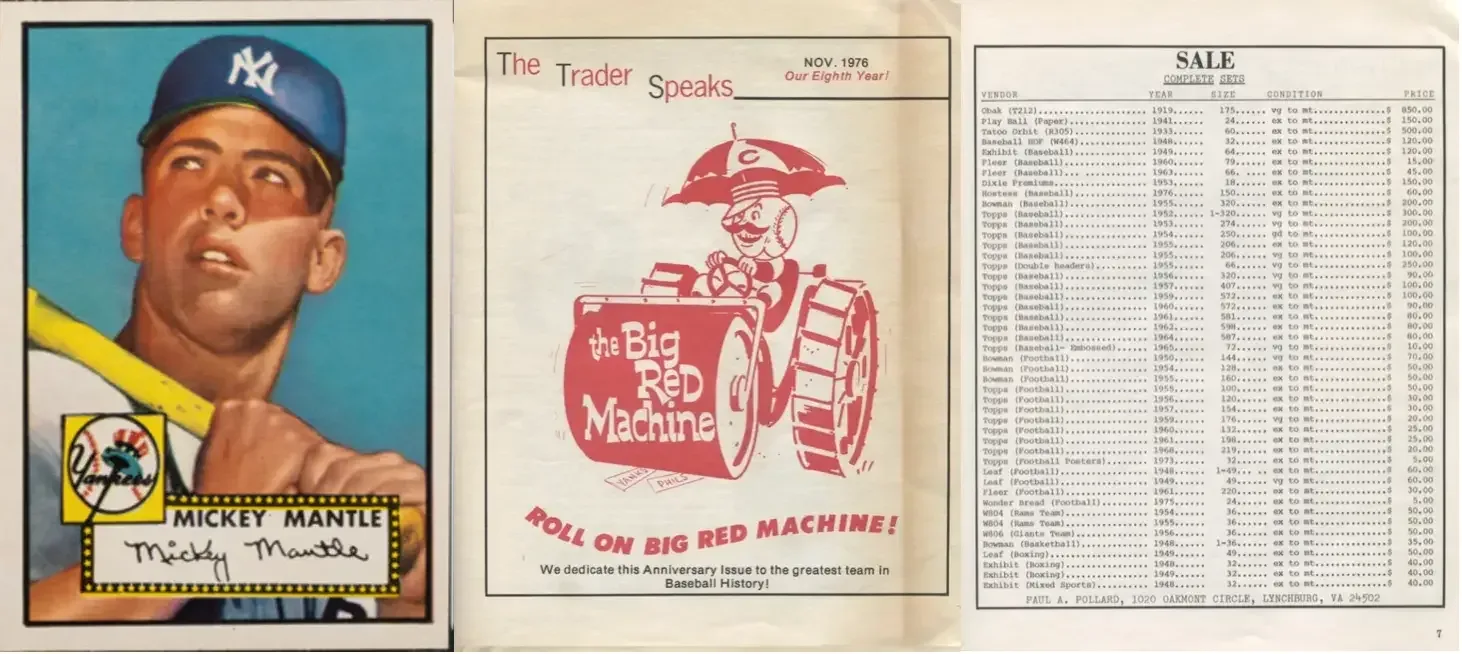
The 1952 Topps set has an outsized place in the hobby, and Robinson’s card is its second most sought-after issue behind the famed 1952 Topps Mantle. In this context, the grade is central to interpreting the sale. An SGC 2 is a much lower condition tier than the PSA 8 and PSA 8.5 examples elsewhere on this list, but Robinson’s historical importance and the significance of the set create demand even at a lower grade.
The contrast with Mantle makes the point. An SGC 2 1952 Topps Mantle recently sold for $97,500. That does not make a $20,400 Robinson inexpensive in absolute terms, but it shows how the hierarchy within one iconic set can affect prices. It also demonstrates why collectors should avoid treating numerical grades as portable across all players and cards. A lower-grade copy of a landmark issue can command considerably more than a higher-grade card with a smaller collector base.
5. Phil Rizzuto 1953 Topps #114 SGC 3: reported gain of 47%
The accessible entry on this five-card list is the 1953 Topps #114 Phil Rizzuto, SGC 3. It sold for $206 on September 15, following $140 on August 22 and $110 on March 22.
Rizzuto spent his full career with the Yankees, won seven World Series championships, and earned the 1950 American League MVP Award. His Hall of Fame status and connection to the Yankees dynasty provide a clear collecting rationale, while his prices remain more attainable than those of other Yankee Hall of Famers from the period.
The 1953 Topps set is also prized for its colorful, hand-colored portraits. That design appeal can matter independently of player stature: collectors often pursue vintage issues because they like the visual identity of a set as much as they value the career of an individual player.
Rizzuto’s sale shows that the vintage conversation is not restricted to five-figure cards. His 47% reported growth is less explosive than the other four examples, but the much lower price point offers a different collecting proposition. “Affordable,” however, is relative, and an increase between a small number of recorded transactions does not mean every SGC 3 copy will sell at the same level.
What collectors can take from the five sales
These 2026 comps highlight the combination that often drives vintage interest: a celebrated player, a defining set, a card with visual character, and a grade that is scarce relative to the number of cards submitted. The balance changes card by card. Robinson’s appeal is inseparable from the 1952 Topps set and his historical significance. Mantle combines immense name recognition with a sharp upper-grade scarcity story. Williams’ position at the end of the 1954 set adds a handling-related explanation for why high-grade examples are uncommon.
For anyone considering a purchase, the most practical takeaway is to keep the comparison narrow. Check the player, year, card number, grading company, grade, and date of each sale before using it as a benchmark. A PSA 8 Mantle is not a substitute comp for a PSA 9 Mantle; a lower-grade Robinson should not be evaluated as though it were simply a discounted version of an 8.5 Clemente.
It is also worth separating collecting enjoyment from market expectations. The cited numbers establish meaningful movement for these specific cards, not certainty about their next sales. Broader uncertainty surrounding MLB’s labor situation may prompt more attention toward established vintage names, but that remains a market possibility rather than a guarantee.
Sports-card demand can produce spectacular headlines across eras and sports. For another recent example of high-end sales activity, see the week’s leading Tom Brady football card sales. The lesson is consistent: rarity, condition and the specific version of a card frequently matter just as much as the athlete on the front.
Among these five baseball cards, the 1954 Ted Williams PSA 8 delivered the largest reported percentage jump, while Mantle’s 1958 Topps card paired major dollar movement with unusually thin supply above PSA 8. Rizzuto, Robinson and Clemente fill out a range of price points and grades, showing that vintage demand is not one uniform market—just a collection of very particular cards, with very particular reasons collectors care.