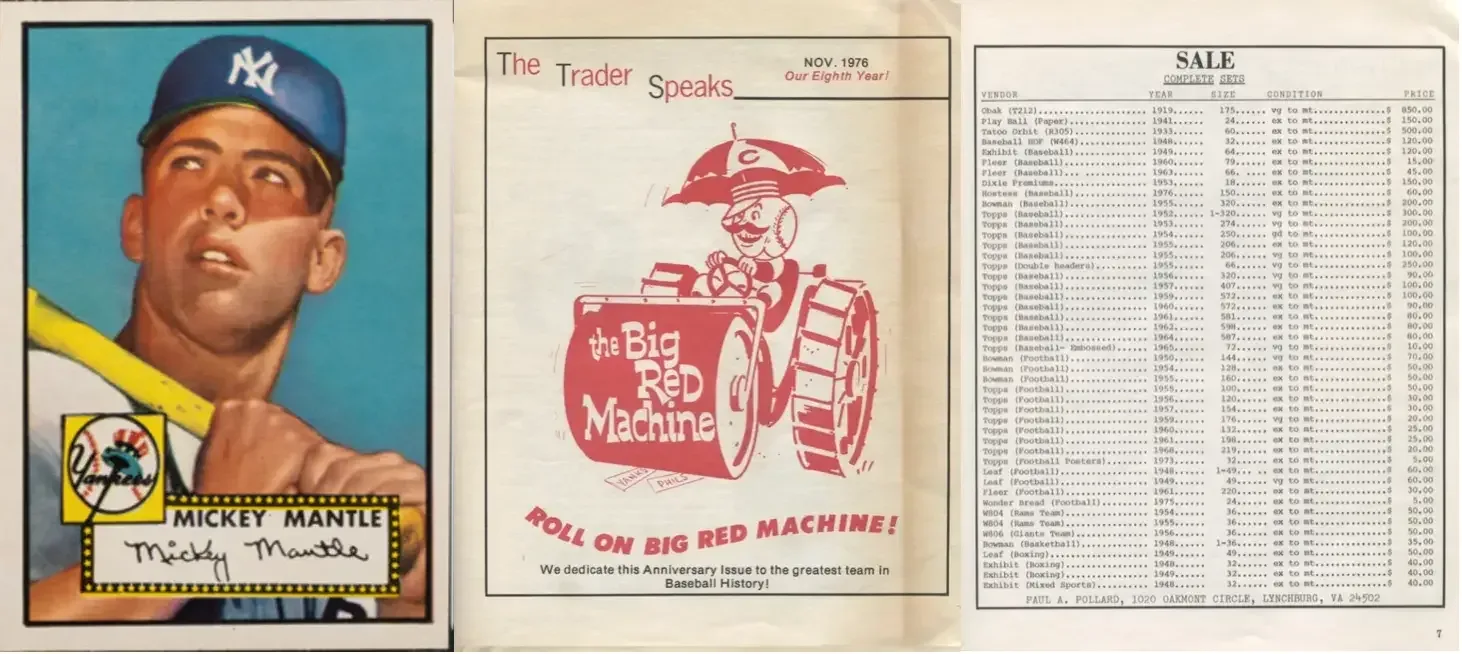
Old baseball-card prices have a special ability to make collectors reach for a hypothetical time machine. A few hundred dollars once covered cards that now command five figures, and in one extraordinary 1976 example, it could buy a near-complete 1952 Topps run that included Mickey Mantle’s No. 311 card. But the genuinely useful lesson is not simply that vintage cards became expensive. It is that the details around a price matter as much as the price itself: exact card, condition, whether the number came from an advertised asking price or a completed sale, and whether a modern grading population reveals real scarcity.
A comparison of $300-ish baseball-card purchases from 1976, 1986, 1996, 2006 and 2016 illustrates the point clearly. Jackie Robinson, Hank Aaron, Mickey Mantle, Carl Yastrzemski, Rod Carew and Cal Ripken Jr. all appear in the historical snapshots, but their cards did not move in lockstep. Some rose dramatically because they combine an essential player with limited surviving examples; others remained recognizable classics without seeing the same acceleration.
For collectors, that distinction is more valuable than the usual “if only I had bought it then” reaction. A historic price is a record of what the hobby valued at a particular moment—not a promise that every old card, every rookie card, or every variation will repeat the same journey. A useful five-decade card-price comparison makes the scale of these changes plain, while also showing why one-to-one math can be misleading.
The 1976 benchmark: $300 for a 1952 Topps group including Mantle
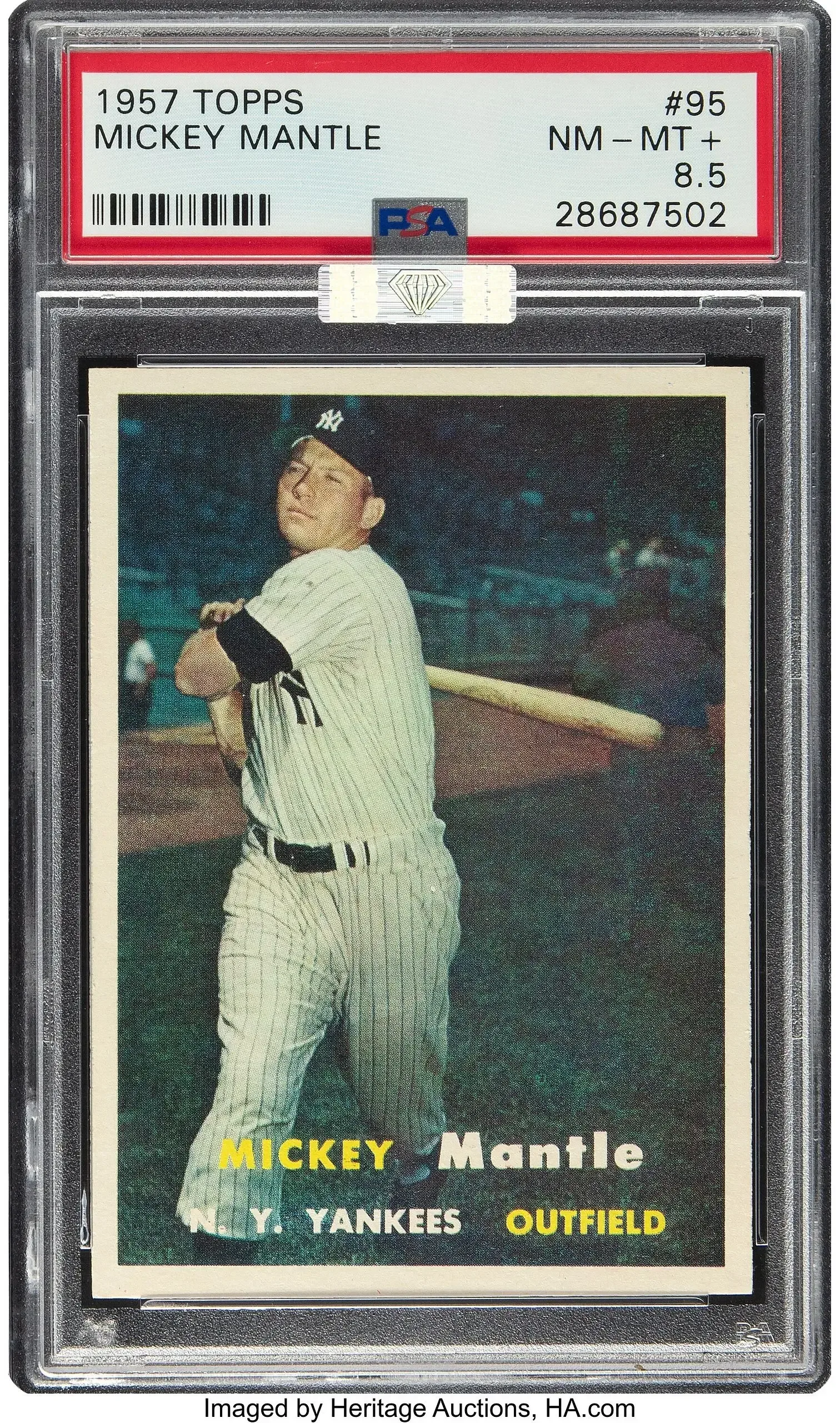
The headline example is a dealer advertisement from November 1976 offering 1952 Topps cards Nos. 1 through 320 for $300. That near-complete group included the 1952 Topps Mickey Mantle, No. 311. A near-complete 1952 Topps set sold for $122,600 on September 27, 2026, a comparison of roughly 408 times the 1976 figure.
For more context, explore Lil Baby Reportedly Targets November 6 for a New Album, With Key Details Still Unconfirmed.
The scale is breathtaking, but it needs to be read precisely. The 1976 number was an advertised price for a large group, not a documented sale of one individually graded Mantle. The 2026 number is a sale of a near-complete set. Neither detail weakens the historical contrast; both explain why the comparison is about more than one card’s value.
Mantle is the central reason the 1952 Topps set has such gravity. Even heavily worn examples of the No. 311 card can sell for more than $50,000, while higher-grade examples routinely reach into the millions. There is also a claim that a PSA 10 copy traded for $50 million in 2026, but that reported figure has not been verified and should not be treated as a settled market result.
That caveat is important. In collectibles, an unverified blockbuster figure can quickly become a misleading shorthand for an entire market. Completed, identifiable sales and clearly described condition remain far better reference points than a rumor, no matter how memorable the rumor may be.
1986: four notable cards for $286.50
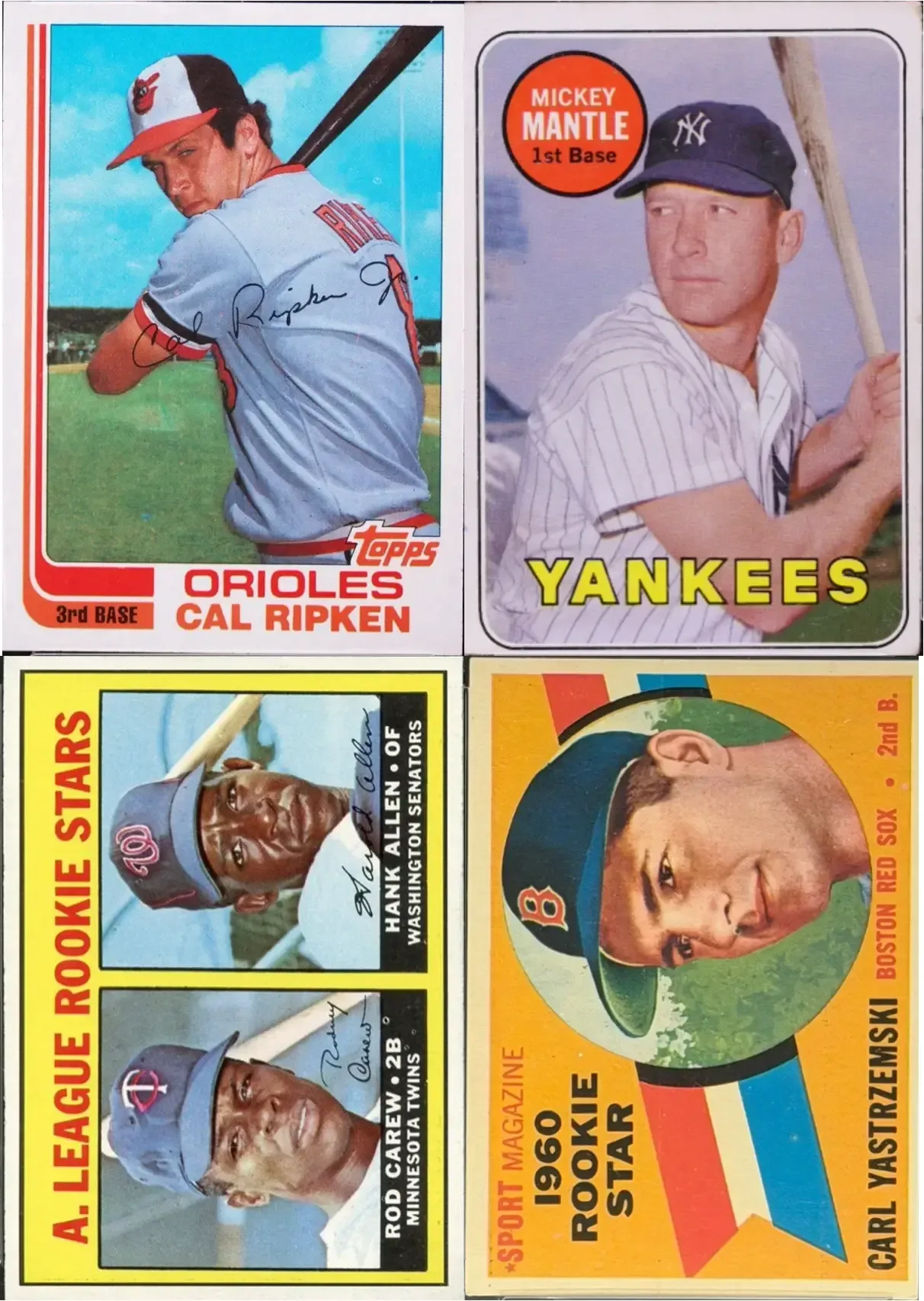
By 1986, price guides had become a useful lens into how collectors ranked major names. Four cards—each listed in EX condition—were valued together at $286.50:
- 1960 Topps Carl Yastrzemski rookie: $100
- 1967 Topps Rod Carew rookie: $95
- 1969 Topps Mickey Mantle White Letter variation: $85
- 1982 Topps Cal Ripken Jr. rookie: $6.50
Comparable 2026 values described as EX, or PSA 5, were $340 for Yastrzemski, $650 for Carew, $3,799 for the Mantle White Letter variation, and $24 for Ripken. Each card remains a recognizable piece of baseball-card history. Yet the Mantle stands apart by a substantial margin.
The 1969 Topps Mantle White Letter variation had only 1,731 PSA-graded copies, compared with 14,841 graded copies of the standard yellow-name version. This is a clear example of why the word variation carries weight but is not sufficient by itself. A variation is a version of a card that differs from the standard issue in a specific way. Its market significance depends on whether collectors identify it, want it, and encounter it less often than the standard version. Here, the much smaller graded population provides a concrete scarcity signal alongside Mantle’s enduring appeal.
The 1986 guide values also show why it is risky to treat all Hall of Fame rookie cards as equivalent. The same starting basket contained four prominent players, but the later values differ widely. Mantle’s base cards from his playing career have become especially powerful hobby objects, and the White Letter version pairs that demand with a distinct scarcity profile.
1996: Jackie Robinson’s 1947 Bond Bread card before its surge
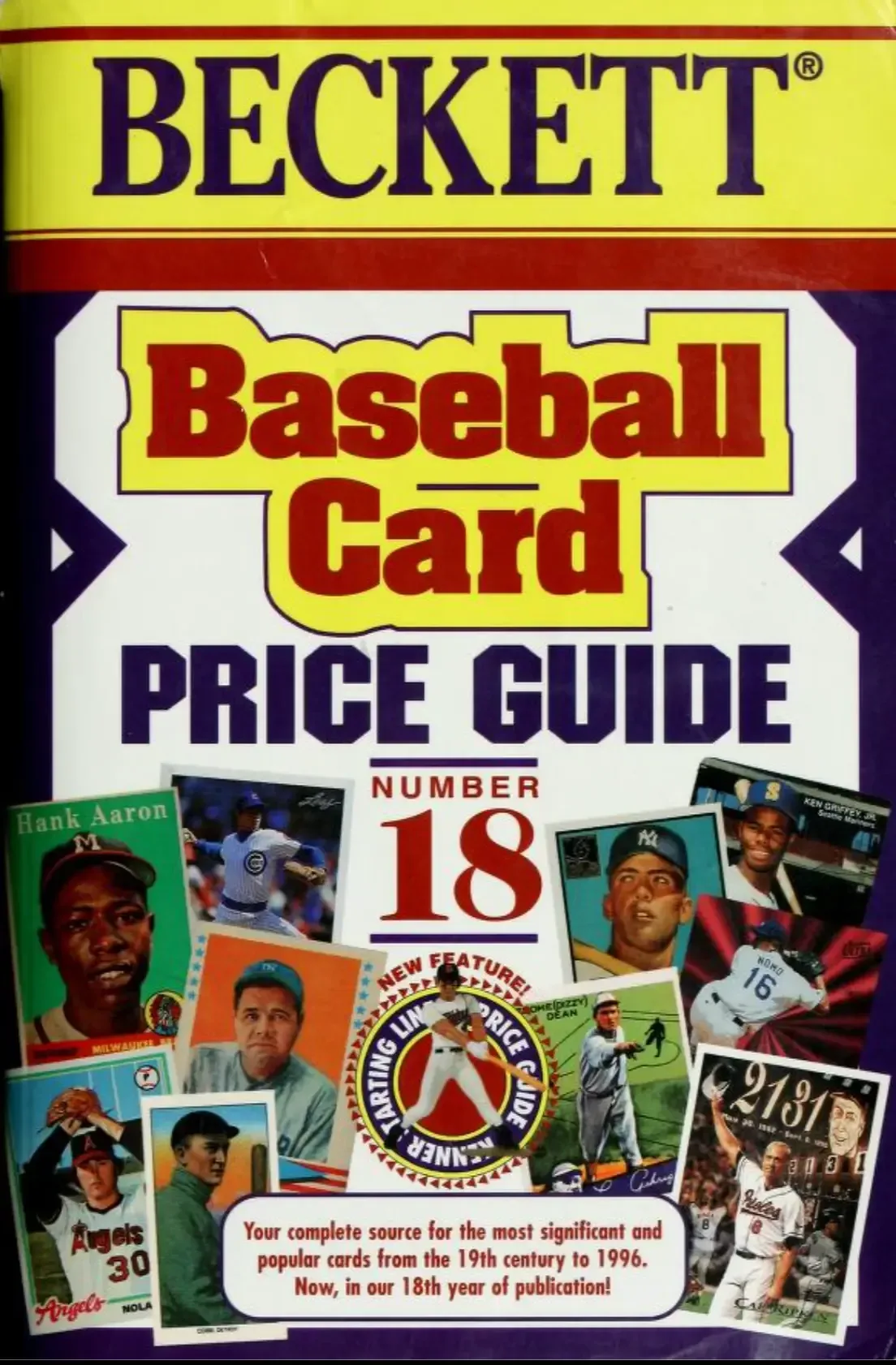
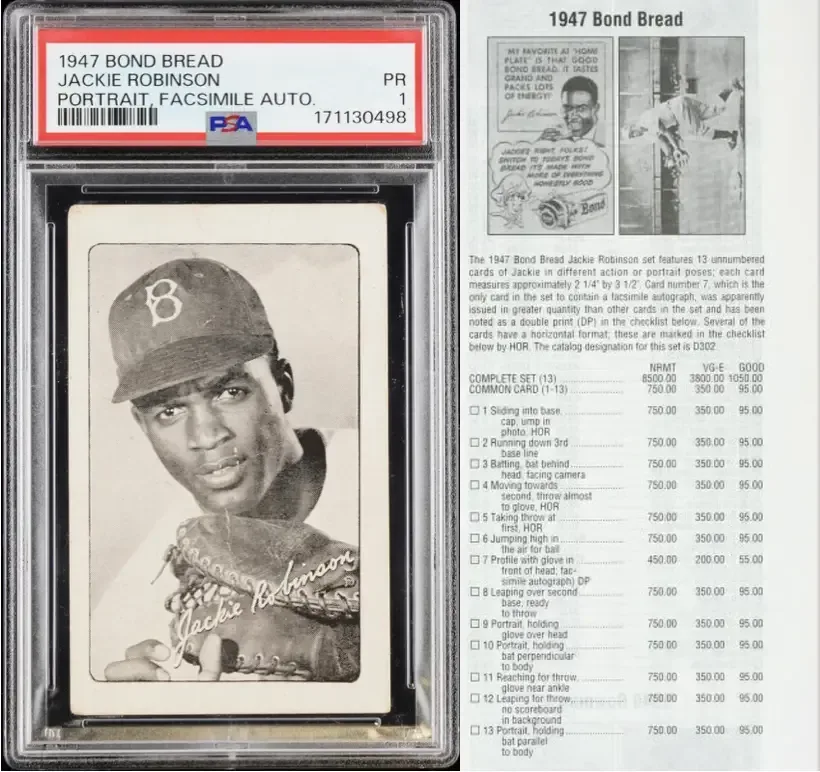
In the 1996 Beckett Baseball Card Price Guide, the 1947 Bond Bread Jackie Robinson No. 7, the “Portrait, Facsimile Autograph” card, carried a $200 value in VG-EX condition. That card comes from the year Robinson broke baseball’s color barrier and won Rookie of the Year. It is also identified as his first rookie card.
Bond Bread is not a mainstream Topps or Bowman release. It was distributed with loaves of bread in the 1940s, making it an example of what collectors call an oddball card: a card issued outside the familiar major-card-company format. “Oddball” does not mean insignificant. In this case, the issue’s distribution method, early date and connection to Robinson’s historic 1947 season have contributed to collector interest.
The PSA population is just 151 graded copies. A PSA 5 sold for $29,372 in March 2021, while a PSA 1 sold for $12,000 in August 2026. Those sales should not be blended into a false single number. A PSA 1 and PSA 5 are different condition points, and the 1996 guide’s VG-EX value is not automatically identical to either slab grade. Still, the figures establish a broad direction: the card moved far beyond its 1996 guide valuation, with the comparison described as 60 times or more.
There is an additional complication: the last public PSA 5 sale cited occurred in 2021, not 2026. Any claim about what an EX-level copy would bring today is therefore an estimate, not a confirmed result. That is an excellent real-world reminder for collectors building a value history. The most recent sale may be for a lower grade, while the best condition match may have sold years earlier. Both entries are informative, but neither should be presented as a perfect substitute for the other.
2006: Hank Aaron’s lone mainstream rookie card
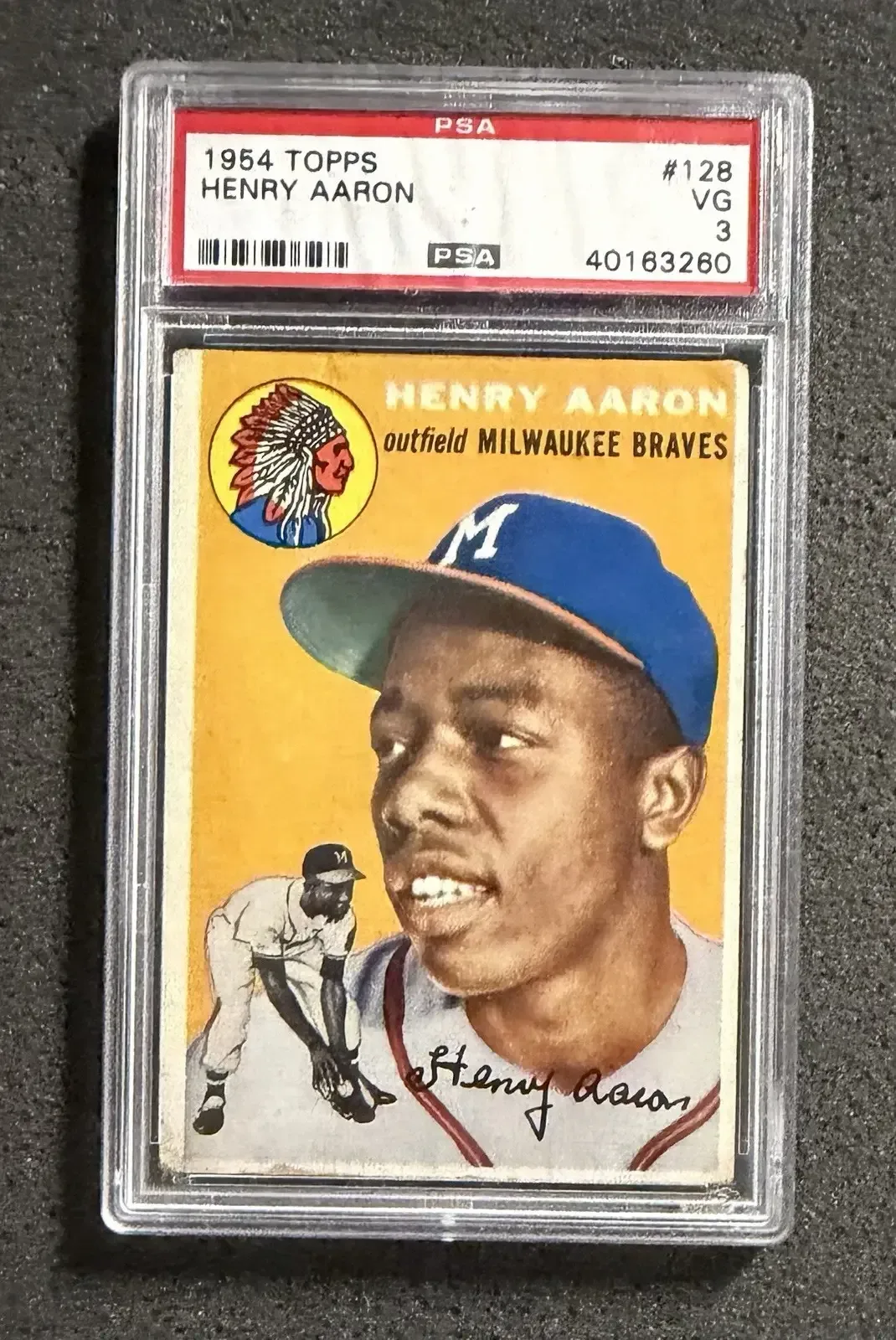
A 1954 Topps Hank Aaron rookie graded PSA 3 sold for $263 on March 26, 2006. By 2026, a PSA 3 example had reached $5,400—about a 20-times increase.
The appeal is straightforward but unusually strong. The 1954 Topps issue is Aaron’s only mainstream rookie card, and it is widely treated as one of the hobby’s most iconic baseball cards. Its case is built on both card identity and player identity: collectors do not need to choose among several comparable mainstream rookie cards for Aaron.
PSA 3 is a third-party grade describing condition, and the matching grade in the two reported sales makes this one of the cleaner historical comparisons in the group. The card, the grading company and the numerical grade line up. That does not erase every variable—individual cards can still differ within the same grade—but it reduces the condition mismatch seen in some other examples.
The practical takeaway is not that every player with a sole mainstream rookie will appreciate similarly. It is that exact-card comparisons are strongest when they control for grade. The Aaron figures do that better than a comparison between an old guide value in one descriptive condition and a modern sale in another numerical grade.
2016: a low-grade 1950 Bowman Jackie Robinson rises sharply
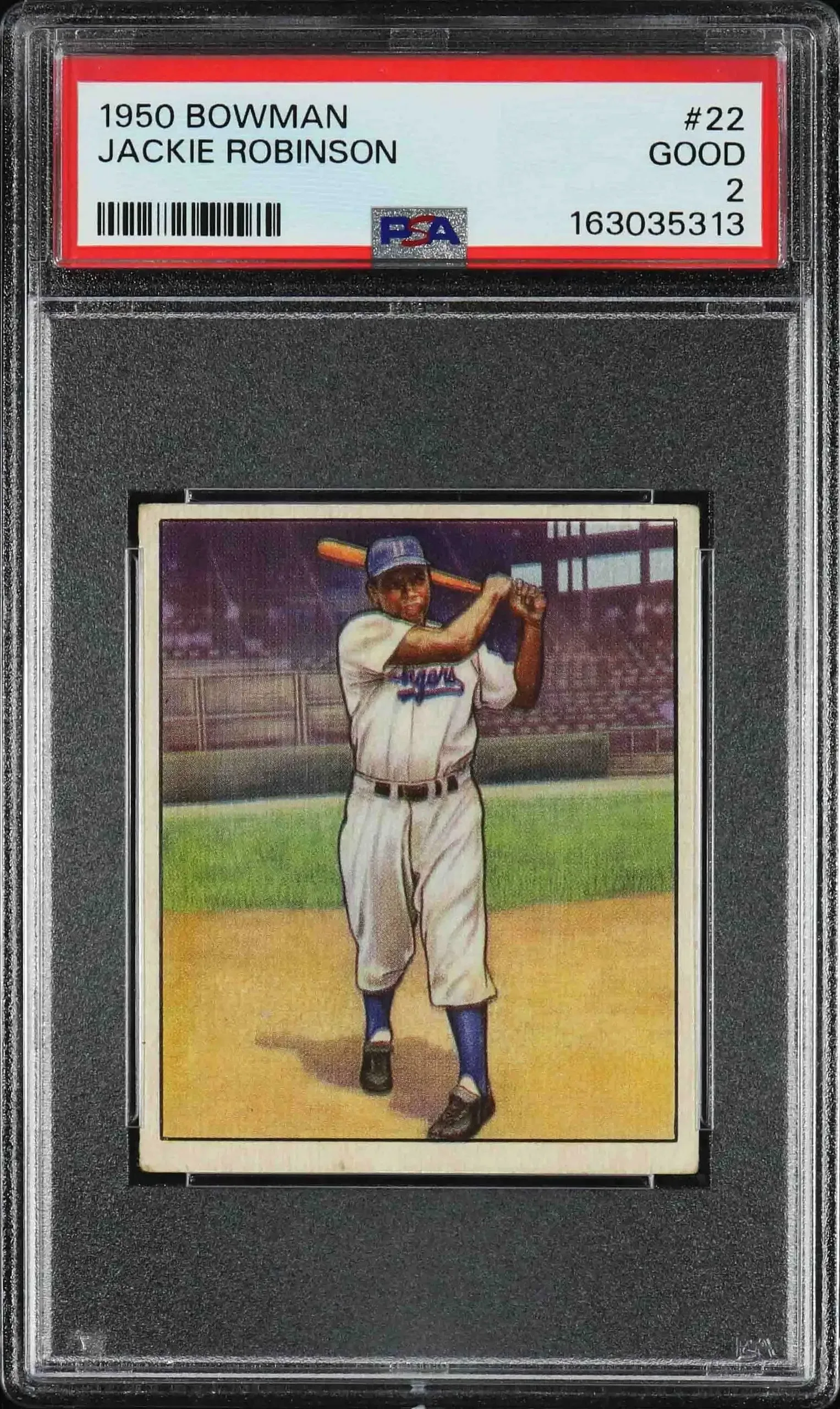
In 2016, a 1950 Bowman Jackie Robinson No. 22 in PSA 2 sold for $212. A PSA 2 copy sold for $4,080 on August 8, 2026, representing a 19-times increase. The matching PSA 2 grade again makes the direction of the change easier to understand.
This is Robinson’s third-best-known mainstream card behind the 1948 Leaf and 1949 Bowman rookie cards. His major-league career began at age 28 and ended at 37, leaving only eight mainstream cards from his actual playing years. PSA has graded 1,857 copies of the 1950 Bowman card.
That count is far larger than the 151 graded Bond Bread No. 7 cards, but population figures are not a simple leaderboard. A card’s supply has to be considered alongside its historical importance, its place in a player’s card chronology, and the conditions in which it is usually found. The 1950 Bowman’s 2026 sale at $4,080 is especially notable because it involves a PSA 2, a low grade. Demand for an important card can remain substantial even when the surviving example is visibly worn.
The more recent movement also shows that values do not rise on a tidy, evenly paced schedule. A copy sold for $1,658 in December 2025, then the cited PSA 2 sale reached $4,080 in August 2026. Two results alone cannot define every sale in the market, but they demonstrate how sharply individual transactions can change over a short interval.
How to read historic card-price comparisons without fooling yourself
The five snapshots share a simple premise—what could roughly $300 buy?—but they use different kinds of evidence. The 1976 figure is a dealer advertisement. The 1986 figures are price-guide estimates. The 1996 number is also a guide value. The 2006 and 2016 examples are completed sales, as are the later comparison results. These are all worthwhile records, but they answer slightly different questions.
- Dealer advertisement: what a seller offered at that time.
- Price guide: a period estimate of market value, useful for tracking hobby consensus.
- Completed public sale: a documented price achieved for a specific copy on a specific date.
- PSA population: the number of copies PSA has graded, not necessarily the total number in existence.
Condition is the other critical variable. Terms such as VG-EX and EX describe condition bands, while PSA’s numerical scale is a third-party grading system. The supplied comparisons equate EX with PSA 5 in the 1986 group, but collectors should still read each data point closely rather than assume every descriptive grade maps perfectly onto every numerically graded card.
The biggest numbers in this retrospective belong to cards with unusually strong combinations of historical importance, collector recognition and limited supply in particular forms. Robinson’s 1947 Bond Bread card is scarce and tied to a landmark season. Aaron has one mainstream rookie card. Mantle’s 1952 Topps card is the defining centerpiece of an iconic set, while the 1969 White Letter variation is notably scarcer in PSA’s population than its yellow-name counterpart.
That does not turn the past into a buying formula. It does, however, offer a sounder collecting habit: document the exact version, preserve the condition details, distinguish asking prices from completed sales, and be candid when a modern comparison relies on an older sale or an unmatched grade. The historic $300 examples are astonishing precisely because they are specific. Their real value is not in fueling regret; it is in teaching collectors to look closely at what a card actually is before deciding what it may be worth.