High-end baseball cards have a particular way of turning a routine product-page refresh into an event. 2026 Topps Museum Collection Baseball is positioned for exactly that kind of attention, with pre-orders scheduled to open on Tuesday, September 8 at 2 PM EST through the Topps website. The listed pre-order timing is firm, while the product’s official price had not been confirmed in the available early details.
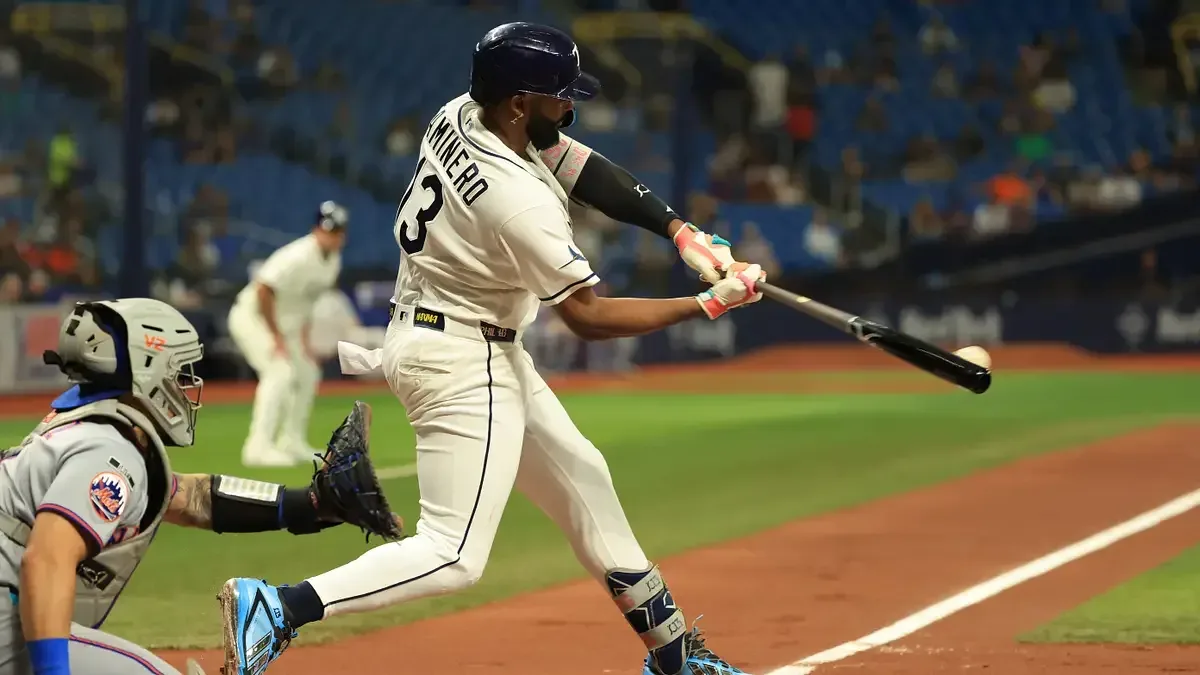
Museum Collection occupies a familiar premium lane in modern baseball: the appeal is built around signed cards, substantial memorabilia pieces and the especially desirable instances where those two elements meet on a single card. Early images for the 2026 edition point squarely toward that formula. An autographed bat relic for Roman Anthony, a Derek Jeter patch autograph in the 3000 Hit Club subset and a Junior Caminero triple relic autograph numbered to 20 are among the cards already placed in the spotlight.
That does not make every box a shortcut to one of those headliners, of course. Cards shown in advance are designed to illustrate the ceiling of a release, and the Anthony example is a one-of-one. Still, the previews give collectors a useful read on the kind of premium chase structure Museum Collection intends to bring back in 2026: low serial numbers, established legends, current stars and memorabilia with a more tangible visual presence than a standard swatch window.
Pre-order is scheduled for September 8 at 2 PM EST
Collectors looking for 2026 Topps Museum Collection Baseball should mark Tuesday, September 8, at 2 PM EST for the Topps website pre-order. No confirmed price was included with the early information. A projected range of roughly $500 to $700 has been suggested based on the preceding year’s product, but that is an expectation rather than an announced MSRP or a guarantee of what will appear at checkout.
For more context, explore Call of Duty Pep Talk Disaster and Red Dead Redemption 2’s Flying Alligator Win August Replay Honors.
That distinction matters more than it might for a lower-cost release. A product in this class represents a substantial sealed-box decision. Buyers weighing a pre-order may want to separate the knowns from the assumptions: the scheduled time and several previewed card concepts are known; final price, wider configuration details and the complete checklist were not established in the early preview material.
The previous edition was described as having retained value well, while also proving popular with collectors. Those observations may help explain why interest could be elevated for the new edition, but they should not be read as a promise about future box value or single-card prices. The market for modern sports cards is driven by a moving mix of player performance, print and serial-number scarcity, condition, collector demand and the eventual checklist composition.
Roman Anthony’s bat relic auto represents the top-end hunt
The most dramatic early card is Roman Anthony’s Autographed Bat Relic, shown as a one-of-one. It combines an on-card-style presentation of a player signature with a piece of game-used bat, or lumber, displayed as the card’s memorabilia centerpiece. Bat relics stand out because the material is immediately recognizable: instead of fabric texture or a patch’s stitching, collectors see wood grain and the visual suggestion of the tool used at the plate.
Related coverage includes 2026 Topps Museum Collection Baseball Preview: Pre-Order Timing and Early Chase Cards.
Autographed bat relics are not exclusive to Museum Collection, but they are a natural fit for a set whose identity leans toward elaborate memorabilia cards. The one-of-one serial number establishes this particular Anthony card as the sole copy of that exact parallel or version. It also makes it an intentionally difficult pull, not a typical expectation for someone opening the product.
For collectors, the appeal is layered. Anthony brings current-player interest, the autograph adds a direct player connection, and the relic gives the card a physical baseball component. When all three attributes appear on a one-of-one, the card becomes the sort of high-ceiling chase that can define online breaks, personal rip decisions and the early conversation surrounding a product.
Derek Jeter leads the 3000 Hit Club patch autograph cards
Museum Collection’s early highlights also include Patch Autographs in a 3000 Hit Club subset, with Derek Jeter identified as a key name. The premise is appropriately selective: the subset celebrates players who reached 3,000 career hits, a benchmark reserved for a small group of baseball’s most accomplished hitters. Pairing that milestone-based theme with a game-used patch and autograph creates a card that is both player-centered and achievement-centered.
Jeter is an obvious draw for the concept. His place in the 3,000-hit group provides the historical hook, while his enduring collector profile supplies the headline name. A patch generally offers more visual variation than a basic relic because it can include color, seams, lettering or other features from the uniform material. The exact appearance can differ from card to card, which is part of the appeal for memorabilia-focused collectors.
The 3000 Hit Club cards also show why Museum Collection can attract collectors with different priorities. Some will pursue current talent and prospect momentum. Others will focus on a legendary player and a career milestone that will not change with a season’s hot streak or slump. A Jeter autograph with a game-used patch offers the latter group a chase rooted in baseball history as much as modern release excitement.
Junior Caminero’s triple relic auto is numbered to 20
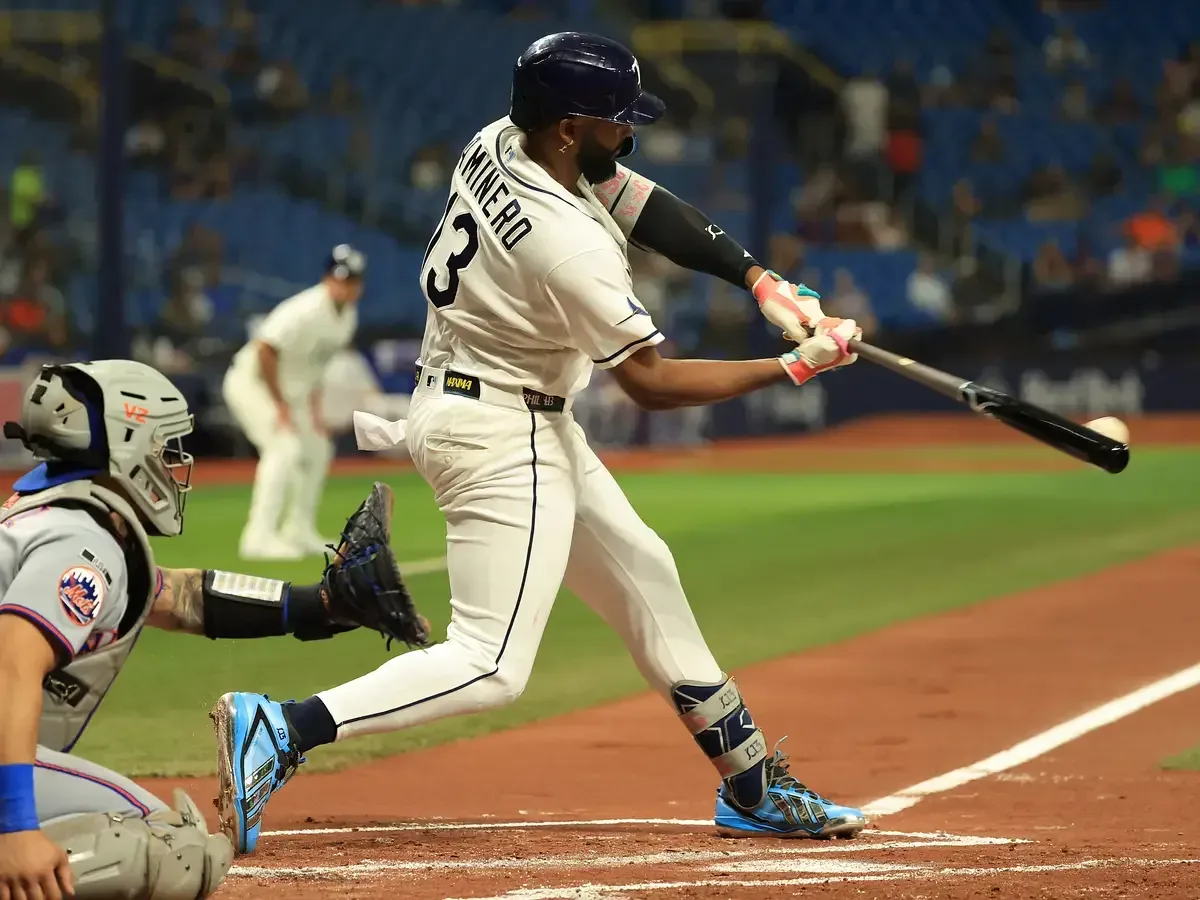
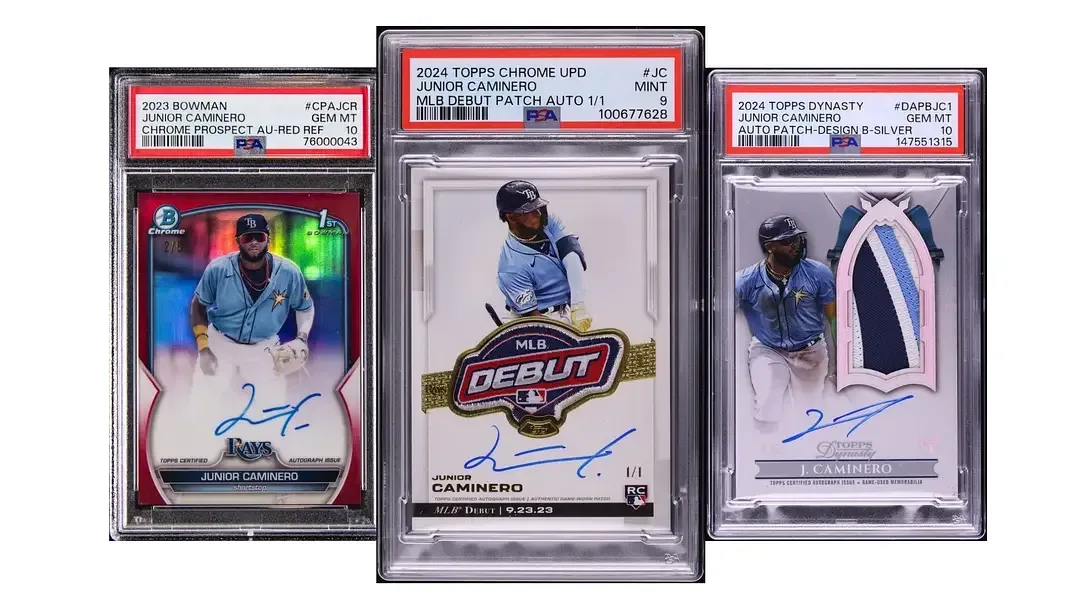
Junior Caminero is featured on a Triple Relic Autograph numbered to 20. Rather than centering the design on one memorabilia element, the format incorporates three relic pieces alongside the signature. That gives the card a fuller display and, depending on the individual materials used, potentially more color and texture across the front.
The /20 numbering makes clear that this is also a limited card, even if it is not at the one-of-one level of the showcased Anthony bat relic. A run of 20 copies remains narrow enough that collectors who decide they want a specific player-and-format combination may encounter serious competition in the secondary market. Caminero’s strong season is another reason the previewed card could draw attention, though collectors should always distinguish a player’s present momentum from a permanent guarantee of long-term card performance.
Triple relic autographs capture the main Museum Collection proposition in miniature: premium finish, an autograph and memorabilia given enough space to feel like more than a small add-on. For collectors who value card design and materials as much as pure player selection, that combination can be as important as the serial number.
What the preview tells collectors—and what remains open
The early look provides a clear sense of the release’s star-driven, memorabilia-heavy direction. These are the major elements presently visible:
- Autographed Bat Relics: Roman Anthony is shown on a game-used bat relic autograph that is a one-of-one.
- 3000 Hit Club Patch Autographs: Derek Jeter headlines a milestone-themed subset pairing an autograph with a game-used patch.
- Triple Relic Autographs: Junior Caminero has a previewed version with three relic elements and a serial number of 20.
- Pre-order timing: September 8 at 2 PM EST on the Topps website.
Equally important are the details that remain unresolved in the early information. An official pre-order price was not confirmed. The complete checklist, all parallels, full box configuration and the precise odds or distribution of the highlighted cards were also not detailed. Those factors will shape how collectors assess the product once more information arrives.
That leaves two sensible approaches for different kinds of hobbyists. Sealed-product collectors can treat the September 8 window as the key date and watch closely for final price and configuration. Player collectors, meanwhile, may prefer to track the eventual singles market for Anthony, Jeter, Caminero or other names once the full checklist is public. Neither route eliminates uncertainty, especially in a premium product built around scarce hits, but knowing which chase matters most helps prevent a flashy preview from making the decision by itself.
For now, 2026 Topps Museum Collection Baseball looks set to continue the line’s emphasis on statement cards rather than subtle ones. A one-of-one game-used bat relic autograph, a 3,000-hit legend with a patch auto and a /20 triple relic auto are a strong early indication of the collection’s intended upper tier. The next meaningful details will be the official price and the broader product breakdown when the September 8 pre-order opens.