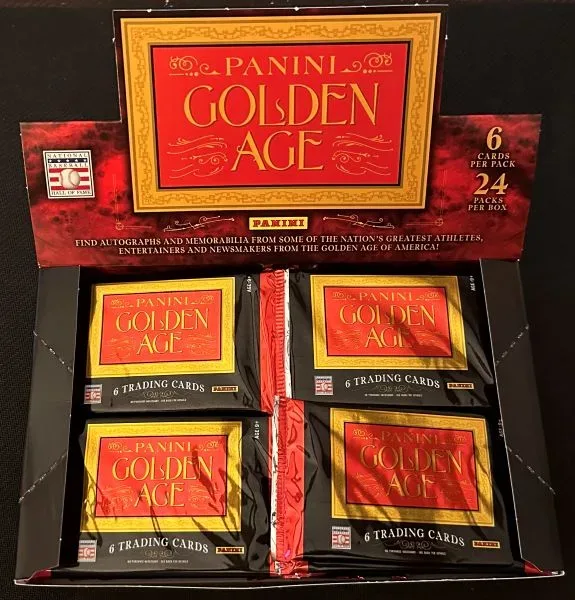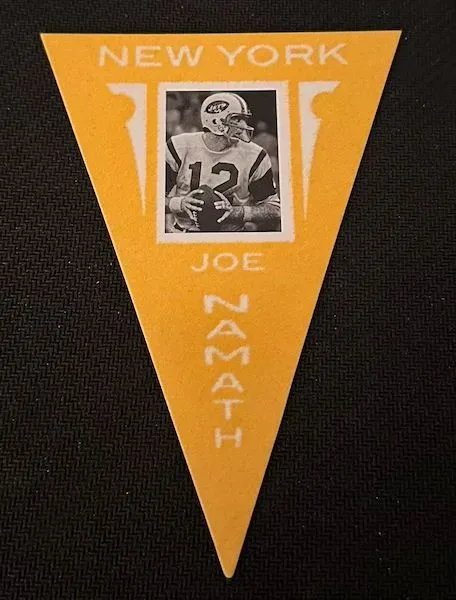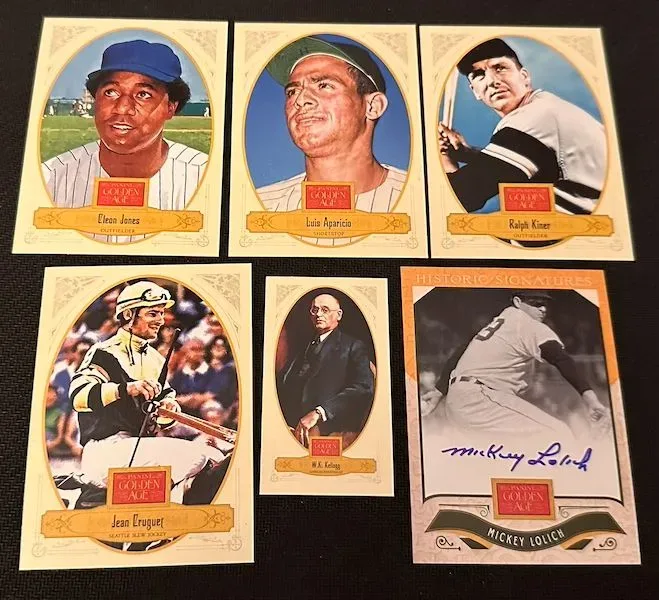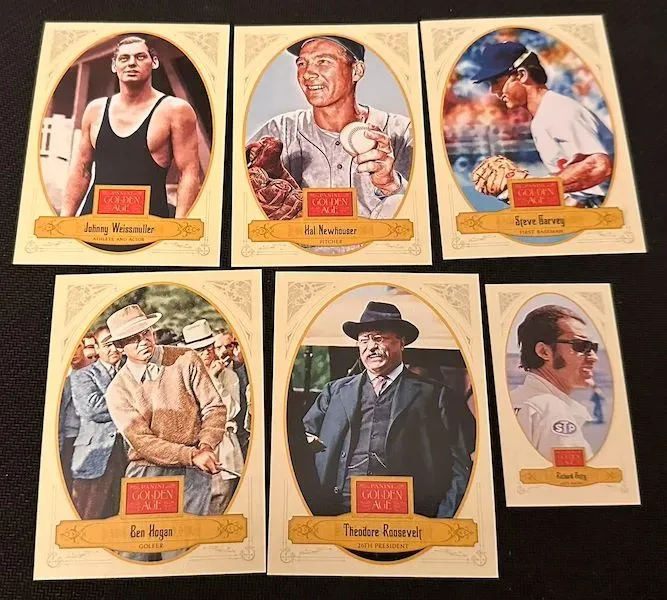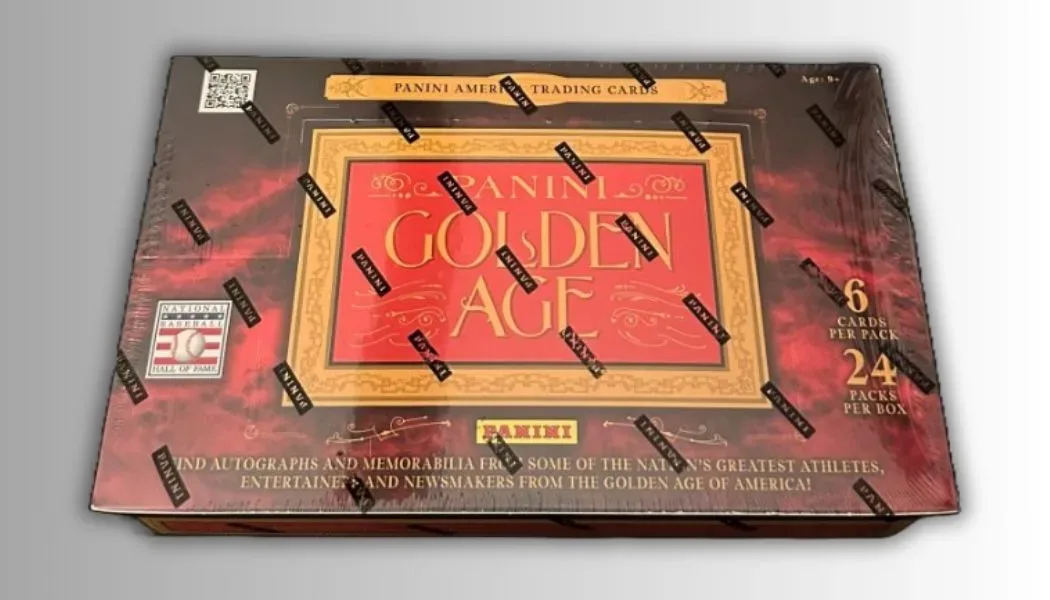
Calling 2012 Panini Golden Age Baseball a baseball-card release is accurate, but it barely tells the whole story. The product is built around diamond legends, yet its 146-card base checklist wanders enthusiastically through boxing, racing, basketball, golf, horse racing, politics, film, television, music, famous vessels and even cryptid territory. It is the kind of set where a collector might turn over cards for Ty Cobb, Edgar Allan Poe, Theodore Roosevelt and the Titanic before they have had time to decide what album page they belong in.
That unusual scope is the chief appeal. Golden Age has the vintage portrait sensibility associated with broad, curiosity-driven card sets: sepia-adjacent mood, historical figures beside athletes, and card backs intended to provide a useful nugget of context. Panini made Golden Age for only three years, from 2012 through 2014, which gives the first edition a compact place in the company’s catalog. It also arrived without MLB licensing, though the photography selected for the set generally minimizes attention on missing team marks.
A documented opening of one 24-pack box, purchased for $89, captures the product’s personality especially well. With six cards in each pack, the box delivered a full parade of baseball greats alongside names and subjects that could never fit neatly into a conventional sports-card release. The result was less a one-sport checklist than a paper museum with a very peculiar gift shop.
A checklist that refuses to stay in one lane
The beginning of the base set establishes Golden Age’s rule-breaking agenda. Edgar Allan Poe, Ty Cobb, heavyweight champion Jack Johnson and Theodore Roosevelt occupy the first four numbered spots. From there, collectors can find stars such as Jackie Robinson, Ted Williams, Joe DiMaggio, Nolan Ryan, Tom Seaver, Stan Musial, Willie McCovey, Warren Spahn and Bob Gibson, while also encountering Charlie Chaplin, Grace Kelly, Duke Ellington, Ava Gardner, Buster Keaton, the Three Stooges and Dawn Wells.
For more context, explore Audio-Technica ATH-AL5NC Brings Open-Back Wireless Audio to a $279 Headphone Package.
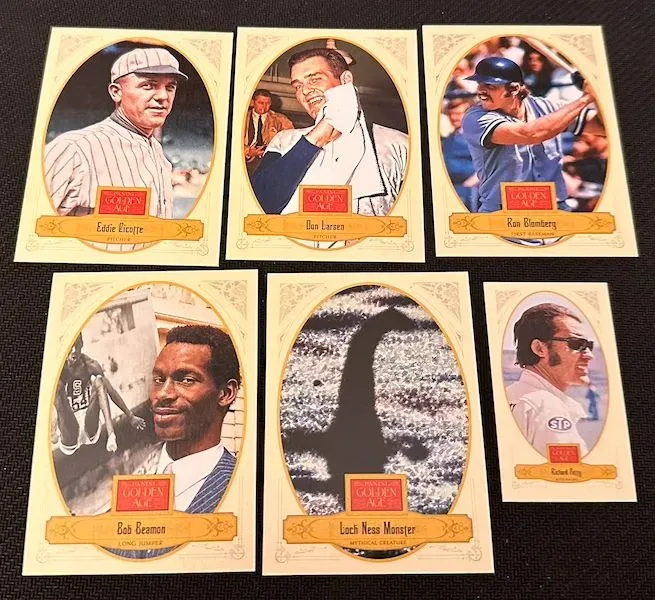
Other sports get meaningful representation rather than token cameos. The recorded box included Richard Petty and NASCAR Hall of Famer Bobby Allison; Olympic figures Bob Beamon, Dick Fosbury and Mark Spitz; basketball icons Bill Russell, Jerry West, Kareem Abdul-Jabbar, Bill Walton and Meadowlark Lemon; golfers Ben Hogan, Walter Hagen, Byron Nelson and Bobby Jones; and boxing names including Battling Nelson, Jack Dempsey and Jack Johnson.
The non-human selections may be the most memorable part. Man o’ War, Seattle Slew, Citation and Secretariat make horse racing an important thread, while the Hindenburg, Spirit of St. Louis and RMS Titanic broaden the set’s historical canvas. The Loch Ness Monster appearing in a pack beside Eddie Cicotte, Don Larsen, Ron Blomberg, Bob Beamon and Richard Petty is not an error in sorting. It is simply Golden Age doing Golden Age things.
That mix makes every base card back more valuable than it might be in a standard release. The set includes biographical or historical information, an important feature when the pull could be a Hall of Fame pitcher one moment and an ocean liner the next. For a collector building a broad sports-and-history binder, the educational element helps turn duplicates and lesser-known subjects into something more than filler.
Minis make the parallel chase part of the design
Golden Age’s mini cards are not merely downsized base cards. They use six back variations, giving the release a distinctly old-school parallel chase. Broad Leaf Blue is the standard mini-back style, followed by Broad Leaf Brown, Croft’s Candy Blue, Croft’s Candy Red, Ty Cobb backs and Black one-of-ones.
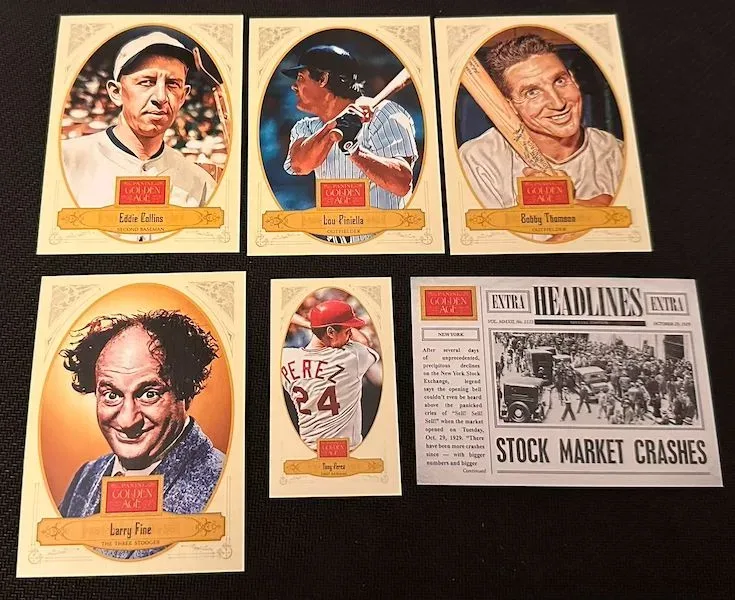
The box produced several examples of the variety: Tony Perez and Larry Fine minis, a Richard Petty Croft’s Candy Red, a second Tony Perez in Croft’s Candy Red, Denny McLain with the Croft’s Candy Blue treatment, Eddie Collins in Croft’s Candy Red, and a Bob Beamon Broad Leaf Brown. The run demonstrates why mini parallels suit this concept. Different back designs add collecting texture without requiring the front of every card to become an explosion of colored borders and numbering stamps.
For set builders, this is also where ambition needs a budget check. Completing the 146-card base checklist is one job; assembling mini versions and identifying all six back styles is another. The Black 1/1 version, by definition, is the sort of card that can turn a casual parallel project into a long-term scavenger hunt. Collectors who like variations, printing-era aesthetics and checklist archaeology will find plenty to organize. Those who want a simple master set may prefer to set a clear stopping point before the tiny cards take over the binder.
Box highlights: autograph, relic and newspaper-style inserts
The major hits in the 24-pack opening landed across several of Golden Age’s insert concepts. In Pack 3, the box yielded a Mickey Lolich Historic Signatures autograph. Historic Signatures is primarily baseball-focused, but the autograph checklist also extends to figures from elsewhere in sports, including Al Unser, Bill Walton, Gordie Howe and Mark Spitz. That choice is consistent with the product’s central idea: baseball may be the anchor, not the fence.
Pack 24 contained a Rod Carew Museum Age relic. Museum Age is likewise led by athletic subjects, while also extending to relic cards connected to Secretariat and Titanic. The Titanic material is a particularly notable curiosity in a sports-adjacent product. One Titanic relic from the set reportedly sold for $1,500 two years before this box-break account, though a single sale should be treated as a historical data point rather than a blanket value for every Titanic card, relic or parallel.
Several inserts brought period-document presentation to the box. A Stock Market Crashes Headline card appeared in Pack 1, while Pack 17 supplied Titanic Headlines. Both were listed at one per 12 packs. The Batter Up cards for Man o’ War and Walter Hagen also appeared at that stated 1:12 rate. A Steve Cauthen Newark Evening World Supplement card came in Pack 23, with stated odds of 1:24 packs. Taken together, those pulls make the release feel less like a straightforward hit-and-parallel configuration and more like an anthology with trading-card packaging.
The pack trail tells the story
The individual packs moved rapidly between eras and interests. One stretch paired Joe Jackson and Catfish Hunter with John F. Kennedy, Russell Johnson and Man o’ War. Another contained Early Wynn, Carl Yastrzemski, Nolan Ryan, the Hindenburg and Seattle Slew. Seattle Slew’s placement is fitting for a set that prizes accomplishments: the horse swept the Kentucky Derby, Preakness Stakes and Belmont Stakes to claim the Triple Crown in 1977.
Elsewhere, Pack 16 put Whitey Ford, Grace Kelly, Charlie Chaplin, Bill Russell, Titanic and Ron Turcotte together. Pack 21 combined Dwight D. Eisenhower, Jack Johnson, Byron Nelson, Rudolph Valentino, Carl Bernstein, Secretariat and a Ralph Kiner mini. Johnson’s inclusion carries real historical weight: he held the world heavyweight championship from 1908 through 1915 and was the first African American man to hold that title.
There is a coherent philosophy beneath the apparent chaos. Golden Age collects people, events and objects that left a mark on American sports or culture, then lets a pack’s collation create unexpected conversations between them. The cards do not need every subject to share a stadium to share a sense of historical significance.
Who should chase 2012 Panini Golden Age?
This is not a release for collectors seeking current rookies, MLB logo precision or a modern chromium spectacle. Its strongest audience is the person who enjoys baseball history but also has room in their collecting brain for old Hollywood, presidential history, championship horses and newspaper-inspired inserts. The mix of base cards, mini backs, autograph subjects, relics and themed inserts means a box can offer several different kinds of collecting satisfaction at once.
It is also a useful reminder to match a purchase to a goal. A baseball-only collector could focus on singles featuring the set’s substantial lineup of Hall of Famers. A variation collector can pursue the mini backs. A memorabilia-minded collector can look toward Museum Age. And a collector who wants a binder that surprises visitors every time a page turns may find the full base set especially rewarding.
For anyone evaluating the set after seeing this box, the key is to appreciate its breadth rather than expecting clean genre boundaries. A Rod Carew relic and Mickey Lolich autograph provide recognizable baseball payoff, but cards such as Titanic Headlines, Man o’ War Batter Up and Steve Cauthen’s newspaper-style insert are not distractions from the experience. They are the experience. The recorded box-break details offer a pack-by-pack look at how that variety unfolded.
In the end, 2012 Panini Golden Age is a collectible time capsule with baseball as its starting lineup. Its best quality is that opening a pack can feel like browsing several different hobbies simultaneously—and somehow pulling a mini card of a racing legend after a television actor and before a historic disaster still feels exactly as intended.