There was a point in the mid-1980s when Transformers did not merely feel popular; they felt inescapable. The robots were on toy packaging, television screens, comic racks and bedroom floors, and their conflict between Autobots and Decepticons rapidly became a shared language for a generation. In 1985, that momentum also reached wax packs through a card release from Hasbro and Milton Bradley.
More than four decades later, the 1985 Transformers set is drawing renewed scrutiny from collectors. That does not mean every loose card has suddenly become a retirement plan—condition, character selection, completeness and authentication still matter enormously—but recent sales show there is meaningful demand at the high end. The set is also arriving back in the conversation as licensed Transformers cards return in 2026, giving longtime collectors and newer fans an obvious on-ramp to look backward.
For anyone whose childhood collection went through the usual hazards of bent corners, bike spokes and overstuffed shoeboxes, that renewed attention has a particularly familiar sting. Those cards were made to be enjoyed, traded and handled. Finding the right one in exceptional condition now is a very different mission.
The anatomy of the 1985 Transformers release
The original release consists of 192 cards and 24 stickers. Each pack held eight cards and one sticker. It is a substantial checklist rather than a tiny novelty issue, which makes a finished run a real collecting project even before condition enters the equation.
Its content gives the set two related appeals. Some cards center on individual characters, using the recognizable visual language of Generation 1 Transformers. Others present moments from the animated series. The character cards are especially compelling because their reverse sides include profile-style information reminiscent of the Tech Specs found on the original toy packaging. In other words, these were not simply pictures of robots. They extended the imaginative world that made the toy line work: identities, capabilities, allegiances and the little details that let a kid decide which Transformer was absolutely going to win an argument no one else understood.
That design makes the cards an unusually direct snapshot of the brand’s early American explosion. Hasbro introduced the Transformers toy line in the United States in 1984. The animated series also began that year and ultimately ran for four seasons, while Marvel’s Transformers comic launched in 1984 and reached 80 issues. For collectors interested in the wider comics side of that era, there is a useful bridge to Joking Joystick’s coverage of Marvel’s X-Men and the performers shaping its characters: these franchises shared an era when comics, cartoons, toys and collectible ephemera constantly fed into one another.
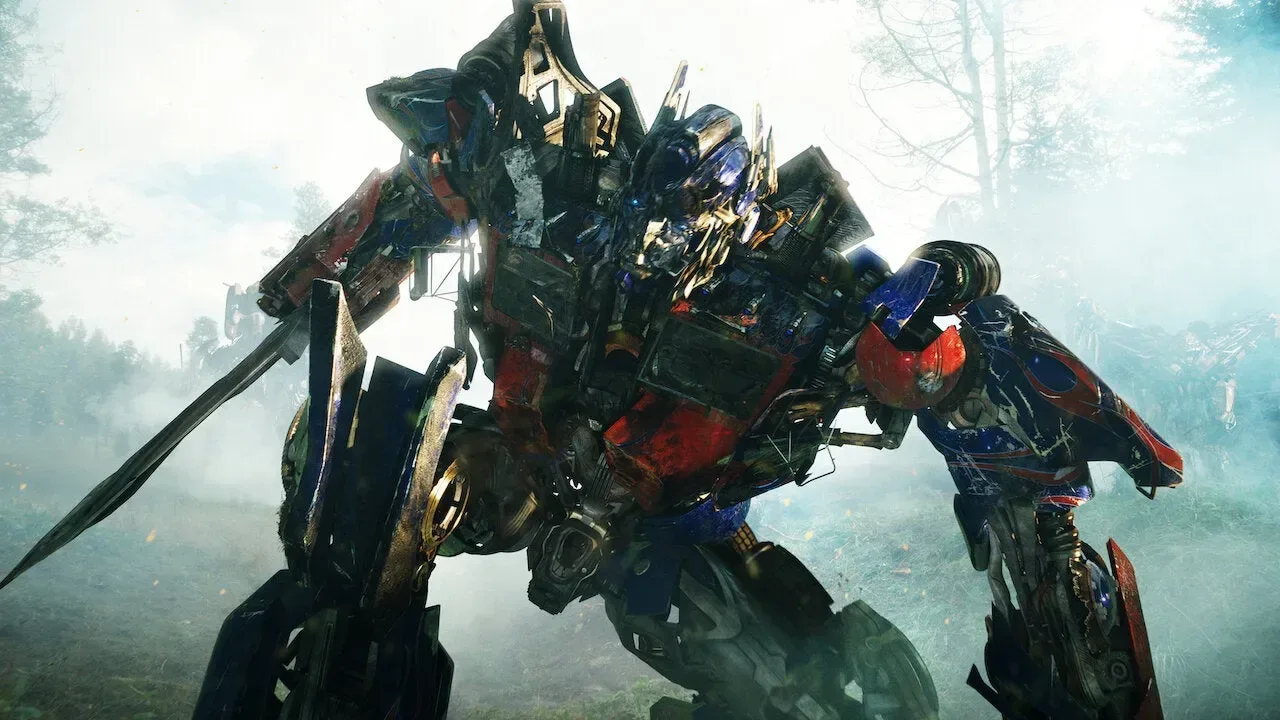
Transformers: The Movie arrived in 1986, preserving the original era’s drama in feature form. Decades afterward, the 2007 live-action Transformers film brought the property to another enormous audience. That movie earned more than $700 million worldwide, and the resulting film franchise has generated billions at the box office. The 1985 cards therefore sit at an interesting intersection: old enough to be vintage, but connected to characters that never truly left popular culture.
Why character cards lead the conversation
Like many entertainment-card releases, the checklist is not valued as a flat field. The biggest names attract the strongest focus. Optimus Prime, Bumblebee, Megatron and Grimlock are natural focal points because they remain immediately recognizable across cartoons, toys, comics and movies. A key character in genuinely pristine condition can command more attention than a broad but less immaculate group lot.
Related coverage includes 1985 Transformers Cards Are Heating Up as Vintage Non-Sports Collectors Revisit the Original Set.
Recent reported transactions underline the point:
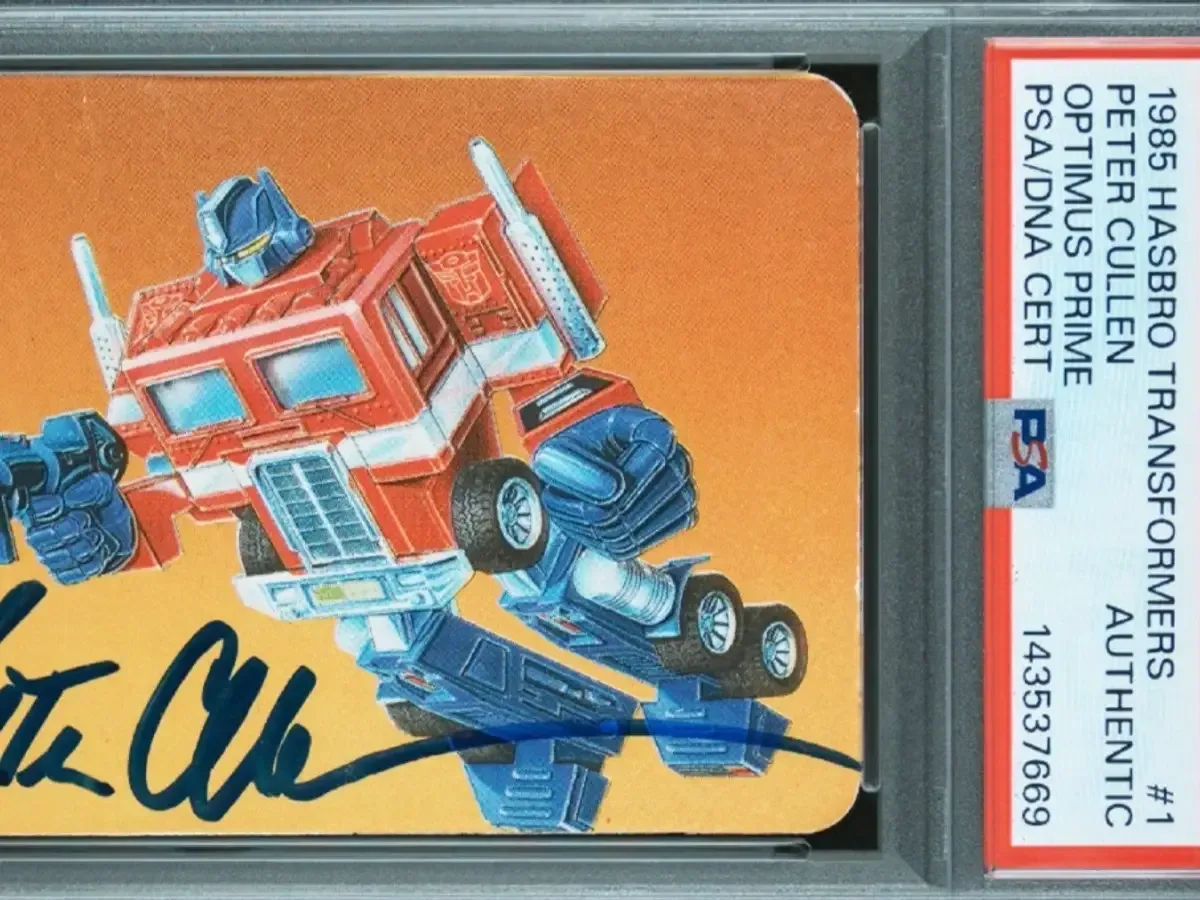
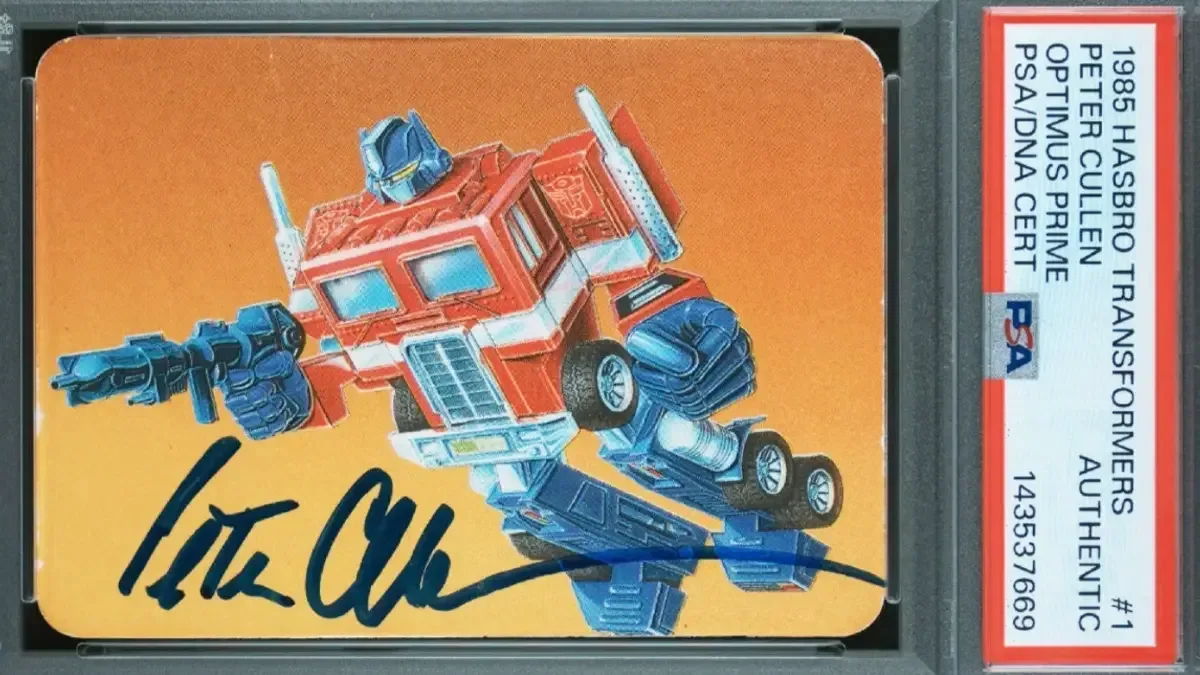
- Optimus Prime #1, PSA/DNA authenticated Peter Cullen autograph: sold for $2,499.99 on eBay on August 28.
- Bumblebee #28, PSA 10: sold for $1,910 on eBay on September 1.
- Megatron #97, PSA 10: sold for $1,500 on eBay on August 31.
- A high-grade 192-card set with 23 of the 24 stickers: sold for $1,650 on eBay on August 30.
The comparison is instructive, not a universal price guide. A near-complete high-grade run changed hands for less than the graded Bumblebee and only slightly more than the graded Megatron. That gap illustrates how much scarcity and demand can concentrate around a favorite character at the highest certified grade. It also illustrates why collectors should resist treating one large sale as a guaranteed floor for raw copies, lower grades or cards with centering and surface problems.
Optimus Prime #1 brings another layer to the hobby story. Peter Cullen voiced Optimus Prime in the 1984 animated series and later returned to the role for the live-action movies. He died on August 26 at age 85. The authenticated autograph sale two days later combines the appeal of a first-numbered card, the franchise’s central Autobot and the signature of the actor most associated with that voice. It is a singular kind of collectible, and it should not be used to estimate the value of an unsigned Optimus Prime card.
Condition can rewrite the math
Vintage non-sports collectors know the basic rule, but the 1985 Transformers cards make it impossible to ignore: condition is not a footnote. These were originally low-cost pack items made for children. Clean surfaces, sharp corners, strong color, accurate centering and unmarked backs are difficult to preserve across 40-plus years. Stickers introduce their own concerns, including edge wear and any damage tied to storage or prior use.
A professional grade can make a major difference where a character is popular and the certified population at the top level is comparatively limited. That said, grading is not an automatic upgrade button. A collector building a binder set may prefer attractive, ungraded examples. Someone chasing the finest known character card has a different goal entirely. The better approach is to decide which collection is being built before spending: a complete raw set, a complete set with stickers, a character-focused display, graded key cards, or authenticated autographs.
A practical checklist for prospective collectors
- Confirm what is included. A complete card run means 192 cards; a fully complete card-and-sticker project also requires 24 stickers.
- Read listings precisely. “High grade” is descriptive language, while a third-party numerical grade is a particular assessment. Neither removes the need to look closely at the item.
- Separate card value from autograph value. Authentication, signature placement and the signer’s connection to the franchise all affect signed-card appeal.
- Prioritize the characters you genuinely enjoy. Prime, Bumblebee and Megatron are obvious targets, but an enjoyable collection does not need to follow every headline sale.
- Use individual sales as reference points, not promises. Date, grade, venue and exact card all matter.
New Transformers cards put the vintage set in a new light
The timing is notable because Upper Deck has announced a licensing agreement with Hasbro for new Transformers trading cards in 2026. A Transformers: The Movie 40th Anniversary Special Edition is scheduled as a Target-exclusive September release. Each box is set to include the whole base set and a Stellar System insert, with parallels and chances at Peter Cullen autographs.
Later in 2026, Upper Deck’s Fleer brand is planned to release a broader 100-card Transformers: The Movie 40th Anniversary product. Its stated lineup includes characters and scenes from the 1986 film, lenticular inserts, parallels and autographs from select voice actors.
Those releases are distinct products, not continuations of the 1985 checklist, and modern inserts should not be confused with vintage cards. Still, new product can revive discussion around the foundational material. A fan who opens a 40th-anniversary box may decide they want the era-specific card that puts Optimus, Bumblebee or Megatron in the original 1985 context. Conversely, a veteran collector who remembers the old set may have another reason to revisit the franchise.
A collectible with history, not just heat
The most durable case for the 1985 Transformers cards is not that every card will keep rising. Markets move, tastes change, and top-grade examples often behave differently from ordinary raw copies. The stronger argument is that this is a defined vintage release tied to the moment a lasting entertainment phenomenon was taking shape.
It offers a sizable checklist, original-era art, animated-series imagery and character data that echoes the toys themselves. It also has a clear hierarchy of fan-favorite cards, a sticker component for completionists and demonstrated interest in high-grade or signature-driven examples. For collectors who remember choosing sides between Autobots and Decepticons long before they learned words like population report or parallel, that is more than enough reason to start looking through the boxes again.