For a hobby that has spent years asking players to accept long stretches of cold packs in exchange for a remote shot at one ornate card, Pokémon TCG 30th Celebration appears to be taking a very different approach. Early community opening data points to a set with dramatically friendlier hit rates than recent releases—and the most immediate consequence is not just happier pack openings. It is a steep early fall in resale prices for cards that initially commanded enormous premiums.
The figures are preliminary, not official pull-rate disclosures, and collectors should treat them as such. Individual openings can run hot or cold, while even samples in the hundreds can move as more packs are opened. Still, the early pattern is consistent enough to be striking: more than half of packs are reportedly yielding an ex card or a higher-tier pull, while the set’s Special Illustration Rares appear substantially more common than they have been in recent Pokémon TCG expansions.
That outcome is especially notable because 30th Celebration packs contain five cards internationally, rather than the larger pack count many players are accustomed to outside Japan. Fewer cards per pack could have made the product feel lean. Instead, the reported slot distribution seems designed to make each opening feel eventful. Put bluntly: five cards can feel like plenty when they are not five cards leading directly to the bulk box.
A celebratory set built around more than one kind of hit
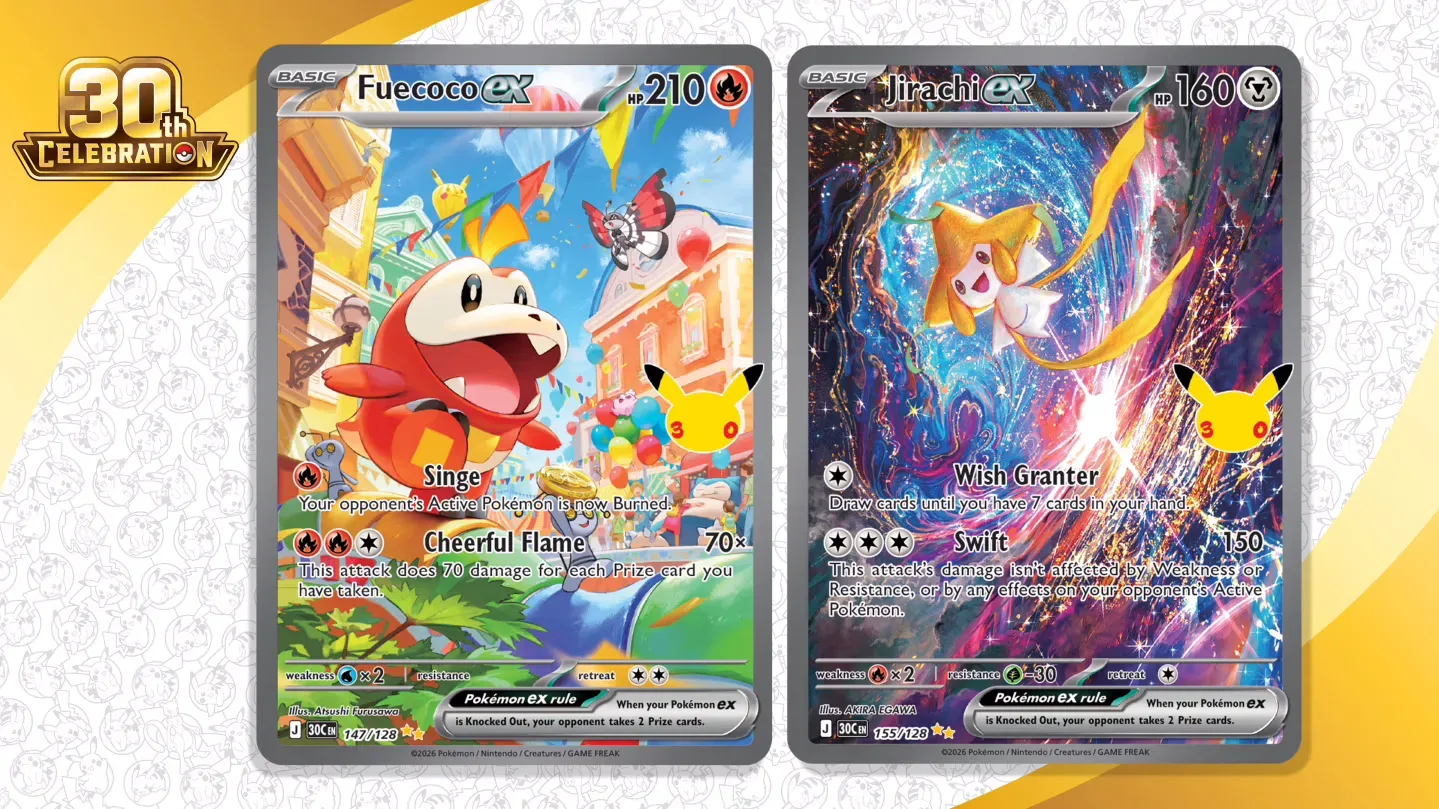
30th Celebration follows the recurring anniversary-set formula of mixing new material with familiar cards from Pokémon TCG history. Every card carries a Pikachu stamp, putting a visible anniversary marker on even the lower-profile pulls. The product also arrives internationally alongside Japan, a first for this type of release, while retaining the five-card pack format common there.
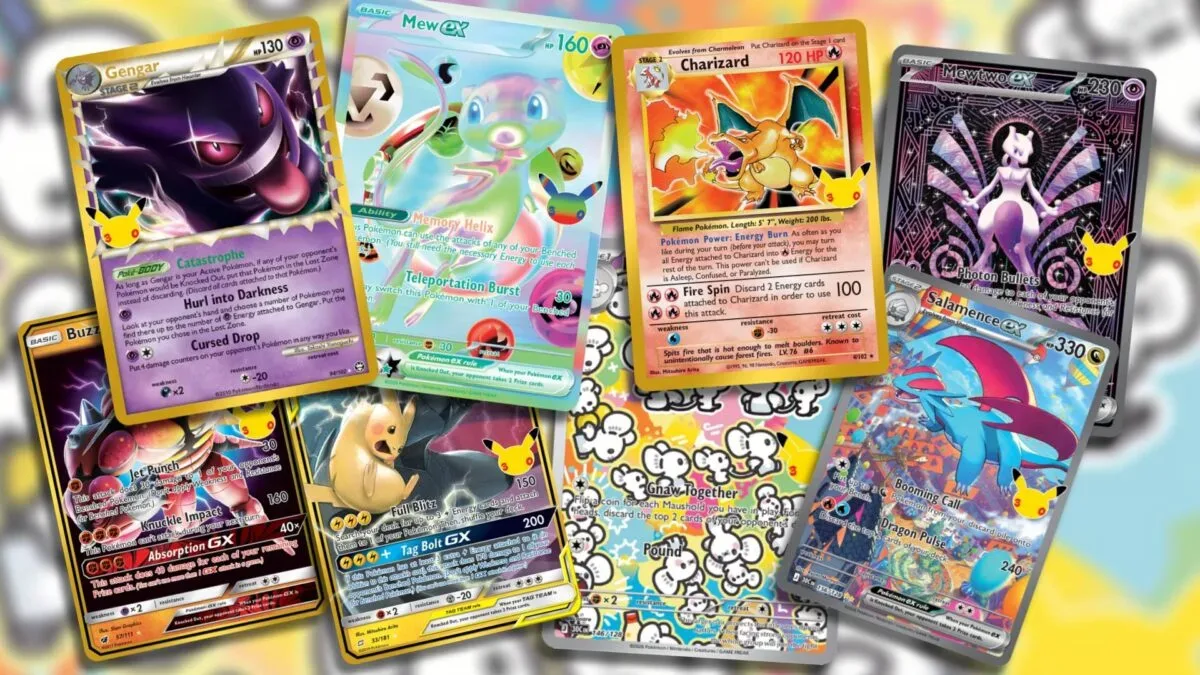
Its contents are doing much of the work. Every card in every pack is at least holo, each pack includes a holo Energy card, and it also includes a guaranteed holo Pikachu drawn from a 30-card subset. Those guarantees matter because they establish a baseline: an opening cannot be entirely empty of shine or themed material, even before a player reaches the more valuable rarity tiers.
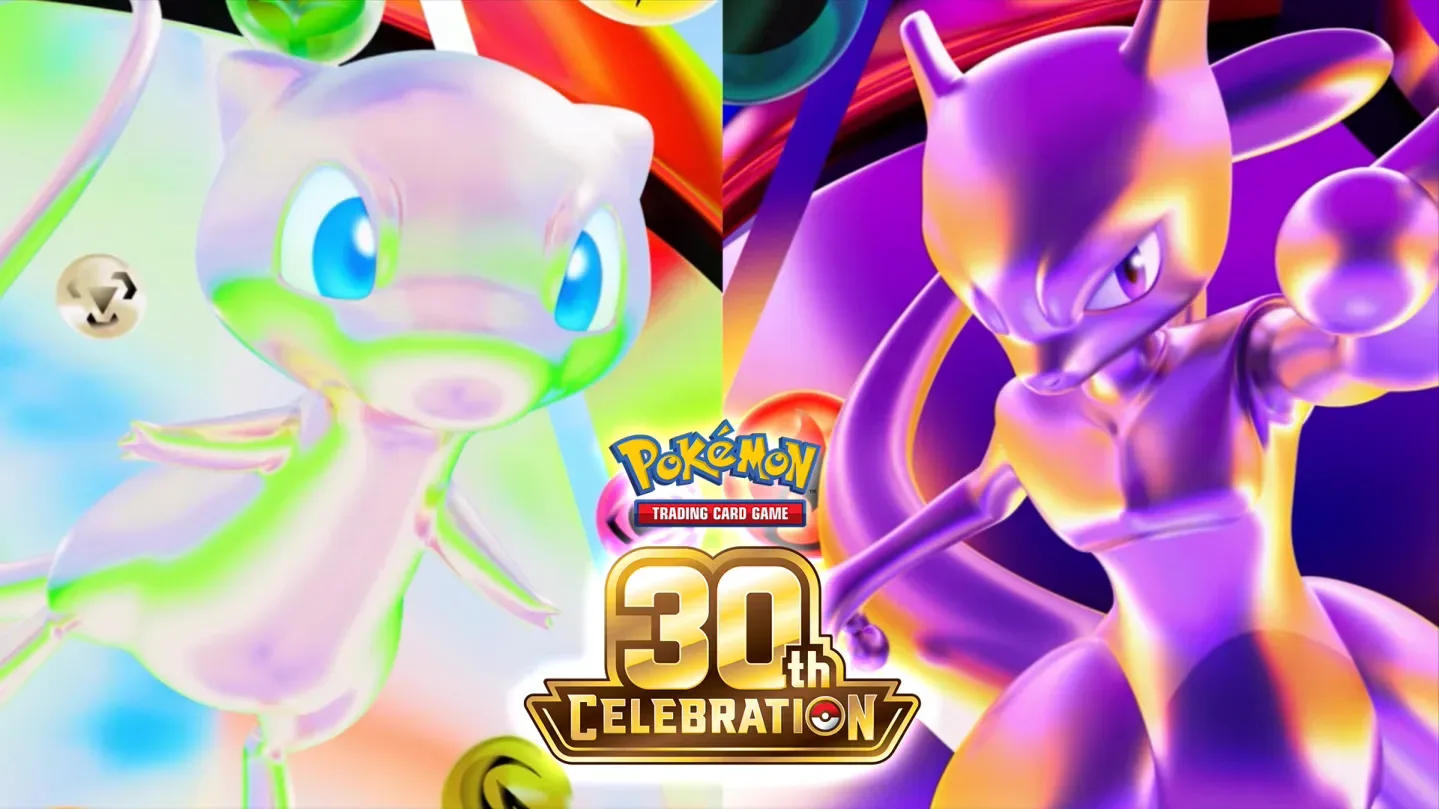
Above that floor are familiar ex cards, Illustration Rares, Special Illustration Rares, Future Rares featuring Mew and Mewtwo, and the 30-card Classic Collection. The latter reaches across the game’s history with returning favorites including the original Base Set holo Charizard, Gengar Prime and the Magikarp previously seen in Paldea Evolved. That mix gives collectors several lanes to pursue rather than focusing all value on a single chase card.
There is also a reported trio of RGB Mew cards, described as so scarce that they have not been formally acknowledged. No dependable probability is available for those cards. A rumored rate of one in 20,000 packs is exactly that: a rumor, not a figure on which anyone should base a purchase decision. Their existence, if confirmed, preserves an ultra-long-shot chase for people who want one; it should not redefine expectations for the rest of the set.
What the early numbers actually suggest
One early data collection covering 420 packs reportedly places the combined Mew and Mewtwo Future Rare appearance rate at close to 1%. It also places Special Illustration Rares, commonly shortened to SIRs, at 5.24%. If that rate holds as the sample grows, it would mean an SIR shows up a little better than once every 20 packs.
Related coverage includes Pokémon TCG 30th Celebration Early Pull Data Points to a Friendlier Set for Collectors.
That would be a sharp departure from the approximate one-in-80-pack experience associated with recent Scarlet & Violet and Mega Evolution-era sets. Illustration Rares, or IRs, are reportedly appearing at roughly one per five packs, rather than around one per 10 packs. Together, those two changes are more important than a single headline-grabbing Mew pull: they suggest collectors have a credible chance to see attractive full-art cards through normal opening rather than treating every beautiful card as a nearly unreachable lottery result.
Pull rate is simply the estimated frequency at which a card or rarity category appears in packs. It is not a promise that buying 20 packs guarantees an SIR, or that 100 packs guarantees any specific Mew. Random distribution does not politely organize itself around a buyer’s budget. A one-in-20 average means that across a very large number of packs, the category may appear near that frequency. It does not erase streaks.
That distinction is vital with early community data. A sample of 420 packs is useful evidence and far more informative than a handful of lucky social posts, but it is still an estimate. It may include particular product configurations, and the exact mix of rarity categories needs continued tracking. The most responsible reading is that 30th Celebration looks unusually generous so far, not that its final odds are settled.
Even the lower bar is meaningful. An ex card is a modern ultra-rare-style Pokémon card category, while an IR emphasizes an illustrated full-card treatment and an SIR is generally a more elaborate, more desirable version of that illustrated approach. The terminology can sound like a private club’s dress code, but the practical difference is simple: increased availability of IRs and SIRs gives more people access to the artwork that collectors most want to display and trade.
Why prices fell so quickly
Early pricing for the Mew and Mewtwo Future Rares shows the direct relationship between scarcity expectations and resale listings. The cards were initially offered around $1,000 on release day, but sales had moved to roughly $150 soon afterward. That is a startling slide, but the logic is not mysterious. A card cannot sustain a massive scarcity premium if people continue pulling it at a noticeably higher rate than the market anticipated.
Resale market here means transactions between collectors after sealed products have entered circulation. It is separate from the product’s original retail sale, and it is extremely sensitive to supply. At release, sellers and buyers are often guessing: they do not yet know how many chase cards will emerge, how many collectors will want them, or how quickly fresh supply will arrive. Early price tags can therefore reflect panic, hype and thin supply more than a stable long-term value.
More pulls do not make a card worthless. A strong illustration, a popular Pokémon and the appeal of an anniversary set can all support demand. But greater supply makes it harder for flippers to treat a desirable card as an artificial emergency. That is the consumer-friendly part of these reports. Players who want a Mew, Mewtwo, classic reprint or full-art illustration may have a more realistic route to it, whether they open a reasonable amount of product or wait to buy a single card after the market settles.
There is an important timing warning attached to all of this. Prices commonly take two to three weeks after release to find something closer to equilibrium. Some cards may decline further as more inventory enters circulation. Others may rebound if demand proves stronger than expected. A first-week price is a snapshot, not an engraved verdict. That makes the current market a poor place to assume a card will fund anyone’s retirement, a car payment or even a slightly ambitious lunch.
A different experience from recent sets
The closest comparison in spirit is Crown Zenith, the special set that closed the Sword & Shield era in January 2023. That release reportedly offered about a 50% chance of a V card or better and paired its generous distribution with the visually rich Galarian Gallery. Its reputation came not merely from having rare cards, but from making distinctive art feel attainable.
Subsequent Scarlet & Violet-era releases moved in the opposite direction for many collectors. Holos became guaranteed in packs, which made them a routine inclusion rather than a standout pull, while the most coveted IRs and especially SIRs became far harder to find. A guaranteed holo gives an opening a minimum visual flourish, but it does not automatically create excitement if the meaningful rarity tiers remain scarce.
30th Celebration appears to address that imbalance by combining a high baseline of holo material with higher reported odds of coveted art cards. This is not a technical innovation so much as a distribution choice. The number of cards in a pack is only one part of the experience; the rarity allocation is what determines how often a pack feels memorable. On the present evidence, this anniversary release is trying to make the ordinary opening more rewarding while reserving the truly extraordinary chase for cards such as the reported RGB Mews.
What collectors should take from the early evidence
- Do not confuse a friendly set with guaranteed results. Better category odds still allow bad runs, and no early percentage guarantees a specific card.
- Wait before treating early listing prices as market value. The quick Mew and Mewtwo decline demonstrates how volatile release-week pricing can be.
- Choose the target before buying packs. Packs make sense for people who enjoy the opening and are happy with a range of possible pulls. Someone who wants one exact card may be better served by watching the developing single-card market.
- Separate the RGB Mew chase from normal expectations. With no official odds and only rumor-level estimates, it is not a sensible target for budget planning.
- Keep the sample size in mind. The reported 420-pack analysis is promising, but continued tracking is needed before declaring final odds.
For collectors, the encouraging part is not simply that high-end cards may cost less. It is that a set can support opening as a hobby rather than making it feel like a prolonged toll booth before the artwork appears. Classic Collection nostalgia, stamped Pikachus, guaranteed holo content and frequent illustrated pulls form a broader proposition than chasing one card with an absurd price tag.
There is no reason yet to assume this will become the new standard. Crown Zenith’s welcome generosity did not establish a permanent pattern for the sets that followed. But 30th Celebration’s early results offer a persuasive argument that higher pull rates and desirable collectibles do not have to be enemies. In fact, the falling premiums suggest that making cards more obtainable may be exactly what allows more collectors to enjoy the set on its own terms.
And if the packing pattern has readers in the mood to organize a rapidly growing card pile, there is at least a thematic detour in a PC sorting sim about a cat scattering thousands of fake classics. The real Pokémon cards may be shinier; the sorting challenge is likely just as inevitable.