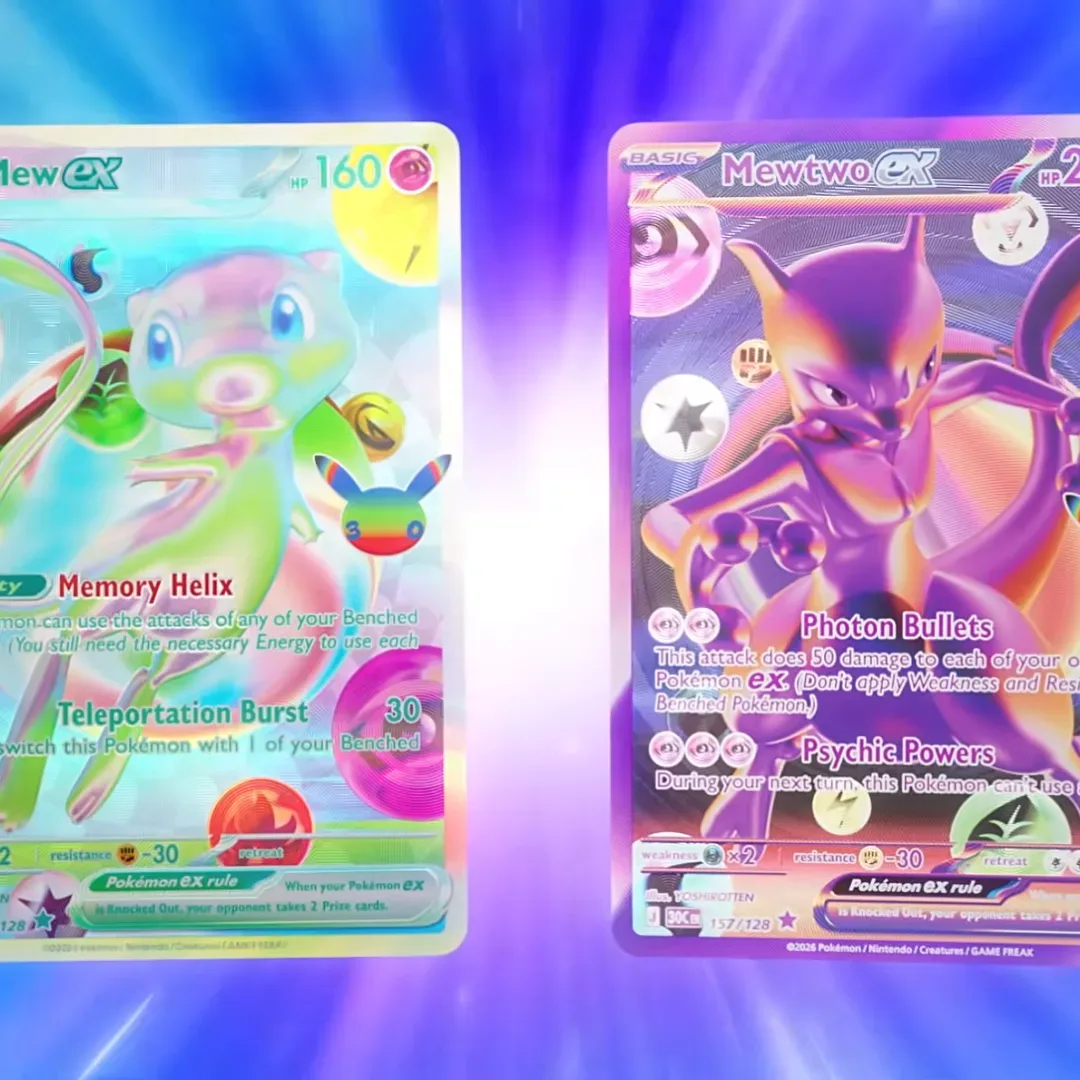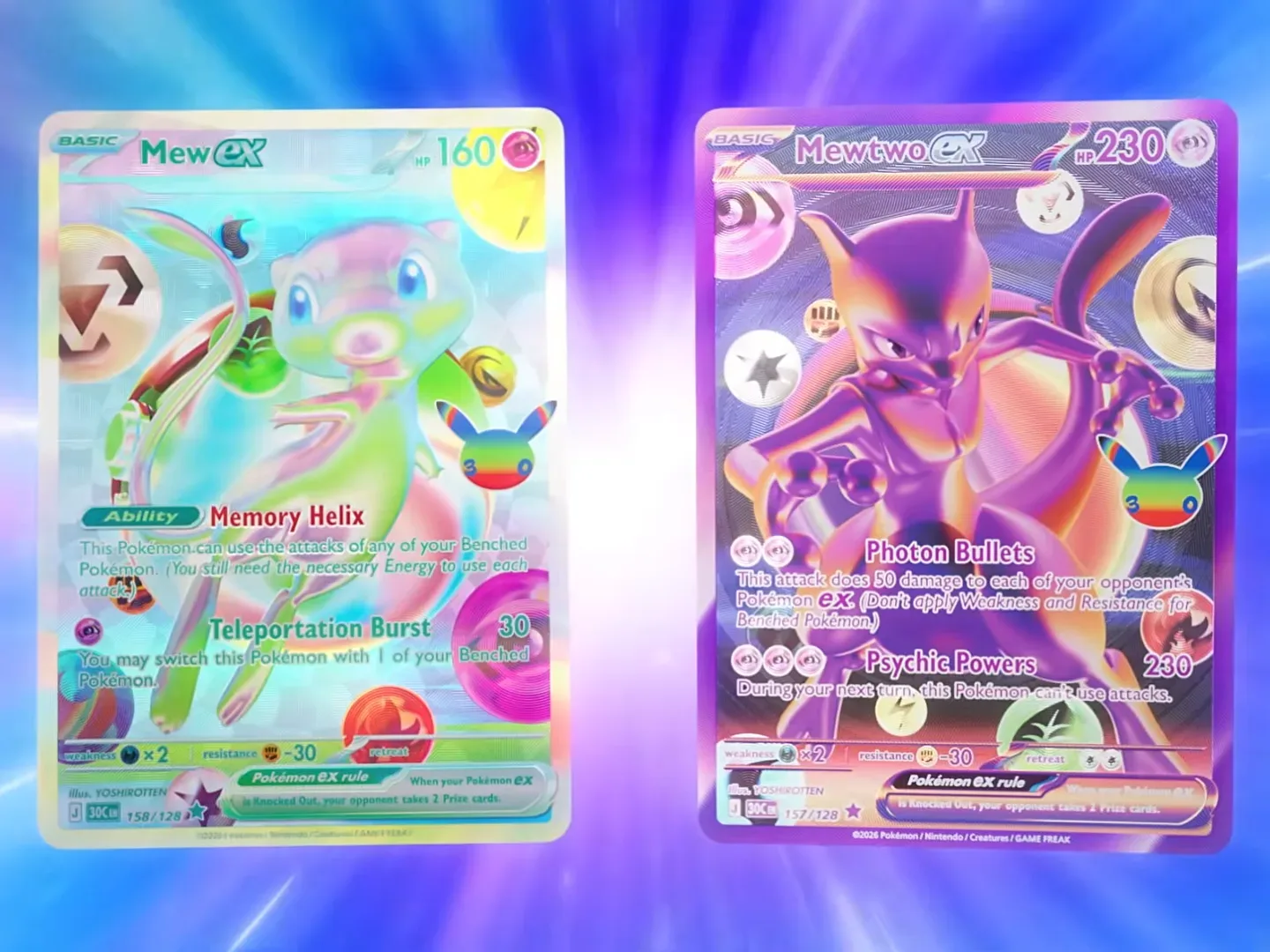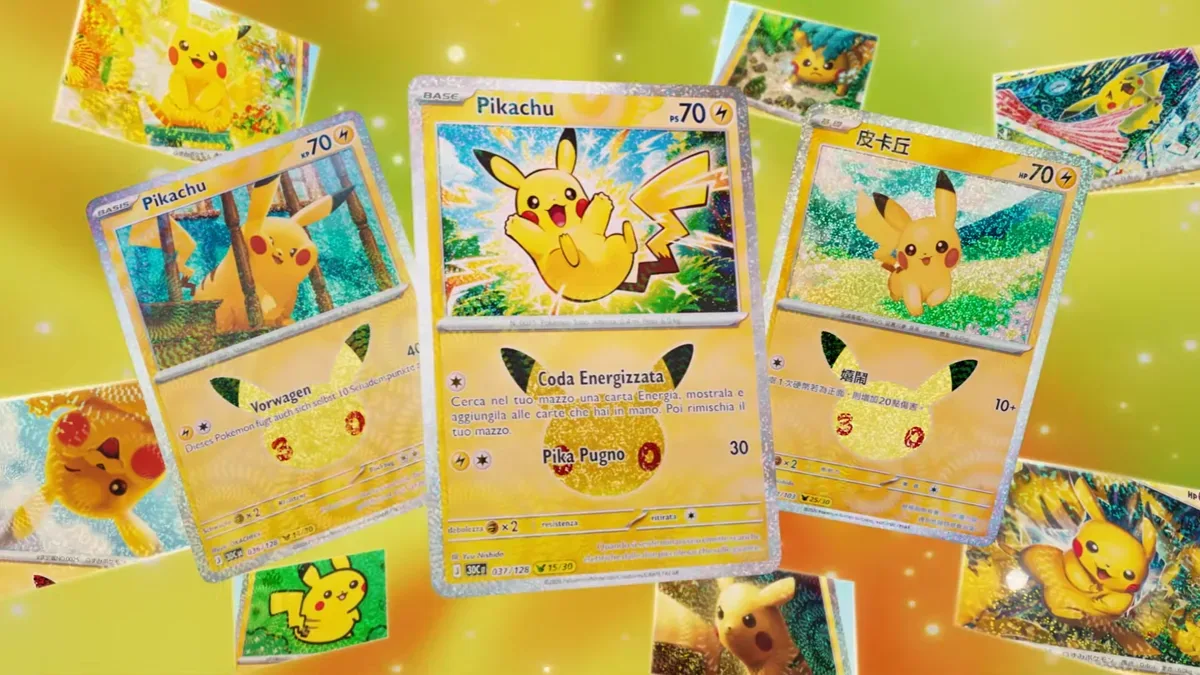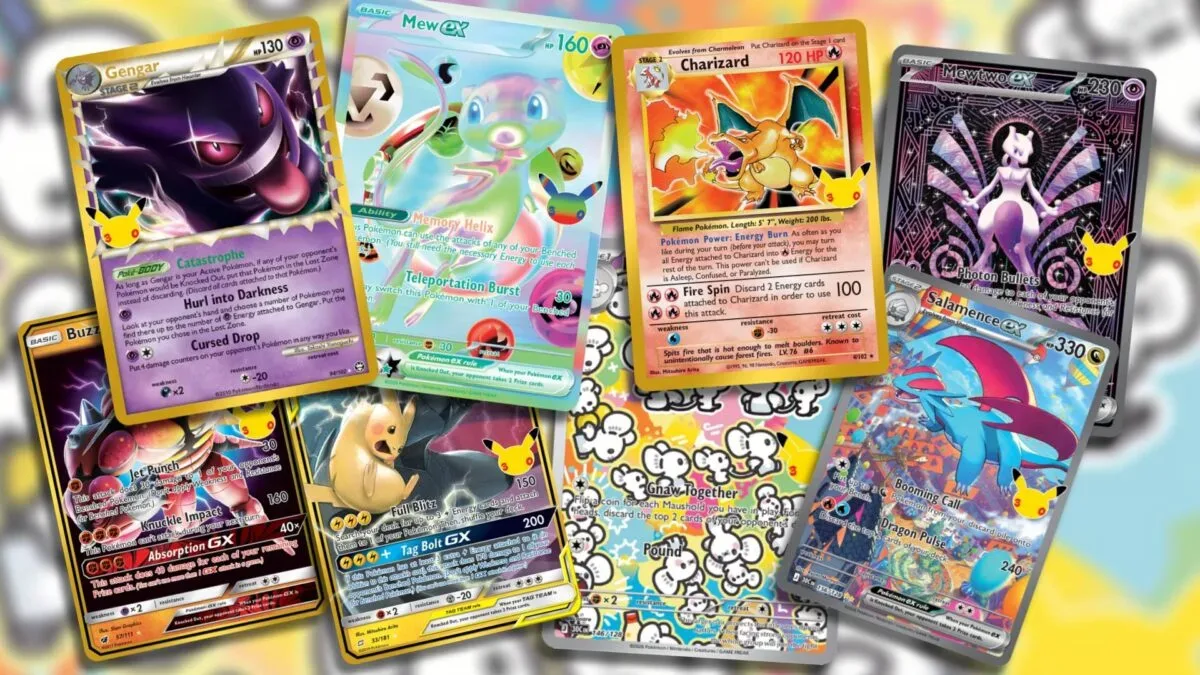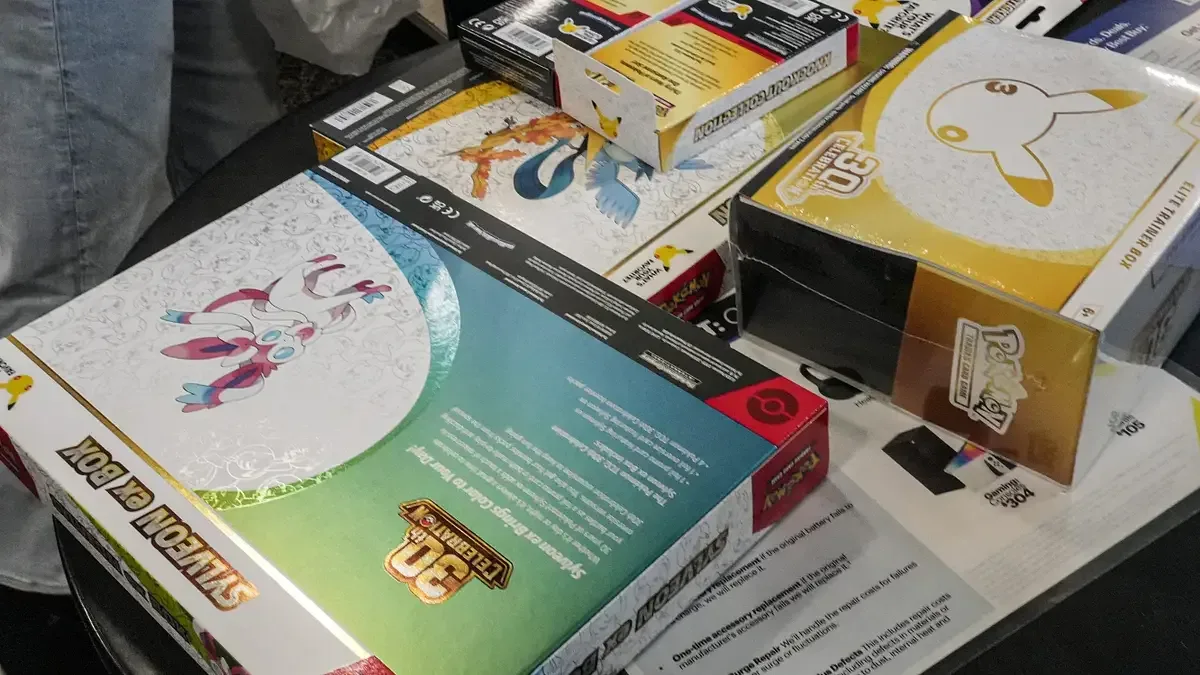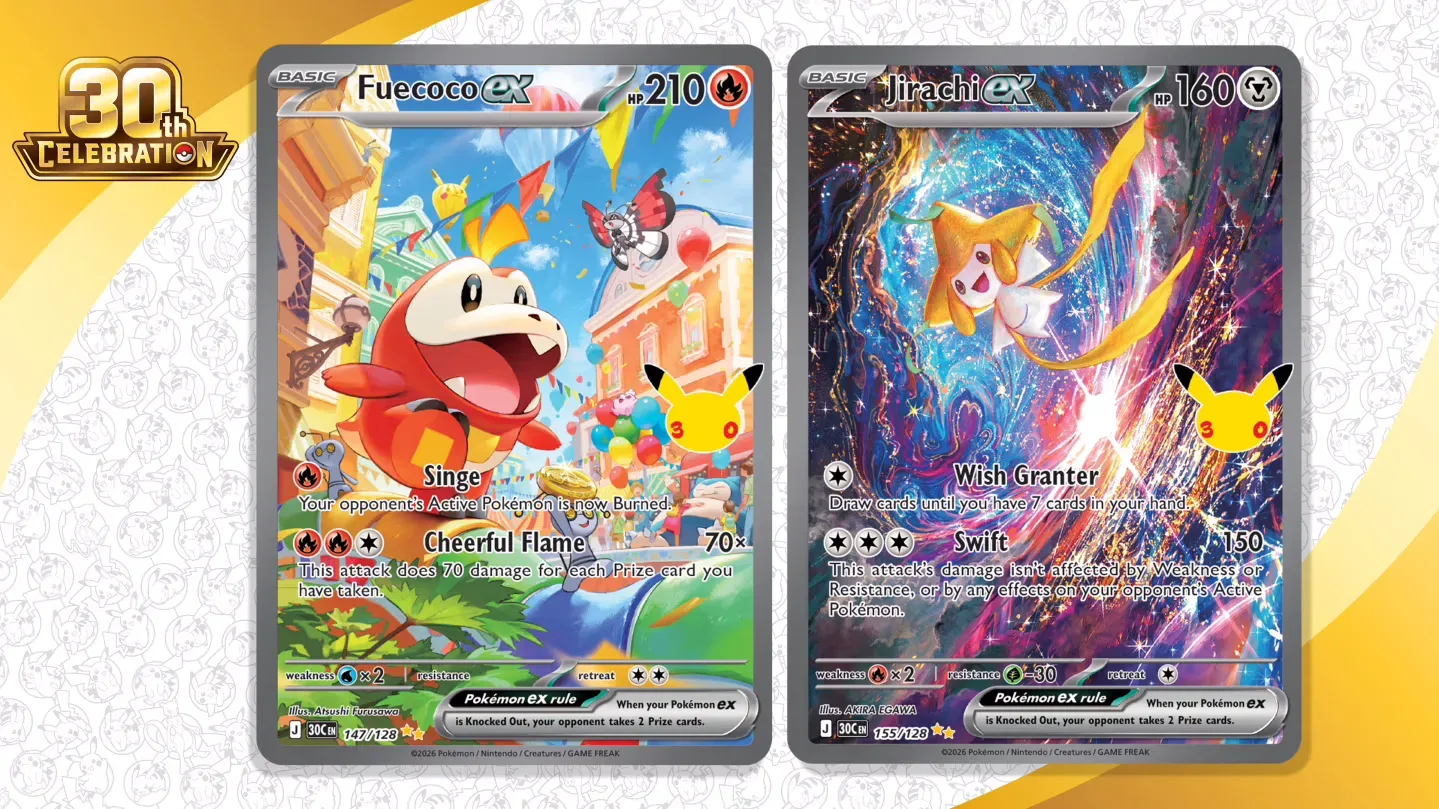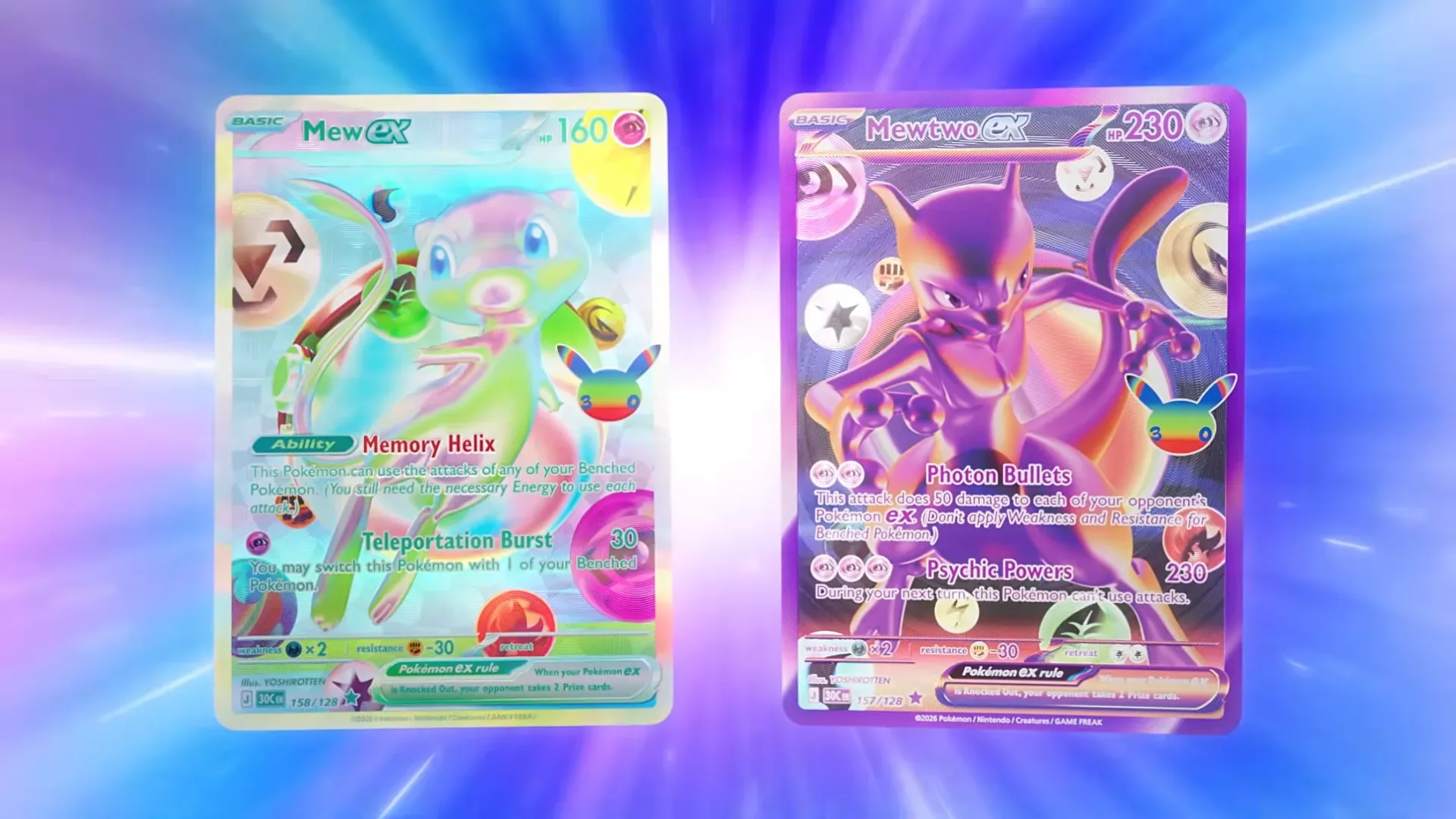
Pokémon TCG 30th Celebration has barely had time to settle into binders, sleeves and trade folders, yet one theme is already dominating community pull posts: people believe the set may be unusually generous.
Players and collectors have shared repeated reports of pulling high-rarity cards that would normally be expected to appear far less often. The examples circulating include consecutive Mewtwo Special Illustration Rares, as well as posts pairing the new effect Mew ex with a sought-after Pikachu ex. That does not establish an official pull-rate figure, and it should not be treated as one. It does, however, create an early and potentially meaningful question: is the anniversary set putting more headline cards into circulation than collectors anticipated?
For a hobby that can turn a rare card into a speculative prize before many fans have even found product at retail, that possibility has practical consequences. A plentiful chase card can still be beautiful, exciting and desirable. It simply has a better chance of being obtainable by people who want to play with it, collect it, or enjoy the art without treating every pack as a tiny lottery ticket with a resale spreadsheet attached.
What people mean by a “hit rate”
In trading-card shorthand, a hit rate is the apparent frequency at which packs produce cards perceived as major pulls: high-rarity cards, special treatments, alternate-style artwork, or other premium entries in a set. It is not necessarily a formally published guarantee. In casual discussion, it is often a community estimate built from opened packs and the memorable results people choose to post.
For more context, explore Wardogs CEO Acknowledges Blue Team Problem as Early Access Data Points to Uneven Three-Way Matches.
That distinction matters especially here. A feed filled with spectacular pulls can look like a pattern even when it is partly shaped by selection bias. Put simply, someone who pulls an ordinary pack may be less likely to photograph it, make a post and invite strangers to admire their extremely standard cardboard rectangle. Someone who pulls three Mewtwo SIR cards in succession is much more likely to share the moment.
That does not mean the reports are meaningless. When similar stories arrive in substantial volume—particularly reports involving the same tier of card—it can be a reason for the community to pay attention. But it remains an early signal, not settled evidence. Without verified, broad opening data or an official rarity breakdown, no one can responsibly declare the set’s pull rates confirmed from social posts alone.
Special Illustration Rare, explained
SIR stands for Special Illustration Rare. It identifies a premium rarity category associated with elaborate, illustration-focused card treatments. In the discussion around 30th Celebration, Mewtwo SIR is among the cards repeatedly mentioned as appearing more often than expected.
Related coverage includes Pokémon TCG 30th Celebration Pull Reports Point to a Surprisingly Friendly Anniversary Set.
The label tells collectors why a pull draws attention: rarity categories help organize a set’s hierarchy, and the highest-profile artwork tends to become a focal point for opening videos, trade conversations and secondary-market interest. It does not, by itself, reveal a card’s exact print quantity, its condition, or its eventual price. Those are separate questions—and early excitement can make all three easy to blur together.
Why a seemingly friendly set could be good news
If the anecdotes eventually reflect a genuinely stronger supply of premium cards, the immediate benefit is straightforward: more people may get to enjoy the anniversary set on its own terms.
That is important when sealed product is difficult for ordinary buyers to locate because resellers buy heavily. A generous distribution of desirable cards cannot solve stock availability on its own. Fans still need a fair chance to buy packs in the first place. Yet higher circulation could reduce one of the more frustrating outcomes of a restricted market: a card becoming financially out of reach simply because it is both popular and scarce.
The effect could be even more noticeable for people who prefer buying individual cards rather than opening packs. Singles are individual cards sold separately from sealed products. Buyers who want one particular illustration, character or deck piece often choose singles because opening packs is uncertain by design. If more copies of an in-demand card circulate, prospective buyers may have more listings to choose from and less pressure to chase it through sealed product.
One community response captured the hope neatly: plentiful SIR pulls could lead to cheap singles. That is not guaranteed; demand, card condition, character popularity and the scale of available supply all influence prices. Still, the basic market logic is sound. When supply rises relative to demand, extreme scarcity becomes harder to sustain.
For Pokémon fans, that could be a small but meaningful correction. The point of a card does not disappear because it is less expensive. Artwork remains artwork. A favorite Pokémon remains a favorite Pokémon. A card intended for play remains useful to players. In fact, accessibility can make a set feel more social: more trades, more binder sharing, and fewer conversations that begin and end with a price check.
The caveat: viral pulls are not a complete sample
There is a temptation, whenever a new set begins producing dramatic posts, to make a quick verdict. The cards look plentiful. The chase is over. Prices will collapse. Or, on the other side, the lucky openings must be isolated anomalies. None of those conclusions follows cleanly from the evidence currently available.
Early reports can be distorted in multiple directions. A small number of very fortunate openings can create a wave of attention. People may open different product configurations, and their results may not be directly comparable. Some posters might define a “hit” more broadly than others. And a run of exciting posts says little about how cards will circulate once the initial burst of opening, trading and listing activity has passed.
There is also an important difference between pull frequency and market availability. A card might appear frequently in openings yet still command considerable demand if many people want it. Conversely, even a genuinely rare card may not become especially expensive if collector interest is limited. Supply and demand move together; neither one provides the whole story.
The sensible approach is to watch the trend while keeping expectations in check. Fans can celebrate a terrific pull without assuming every box, bundle or pack is likely to reproduce it. Collectors interested in a specific card can also resist the panic-buy cycle that often accompanies an exciting launch, particularly while the community is still trying to understand what is actually in circulation.
Accessibility versus the resale race
The excitement around 30th Celebration is not solely about statistics. It reflects a broader tension in the hobby between collecting for enjoyment and collecting primarily for financial upside.
High-value cards, grading and resale are all part of the trading-card ecosystem. But some Pokémon TCG fans have voiced frustration that an intense focus on grading and investment can make the hobby less enjoyable. When every premium pull is evaluated first as an asset, it can shift attention away from the card’s character, illustration, deck use or personal significance.
Grading, in this context, is the process of submitting a physical card for condition assessment and encapsulation. A card’s assessed condition can affect its appeal to certain buyers, but grading is not a requirement for enjoying or collecting cards. It also does not magically make a card scarce. If a high-rarity card is printed and opened in substantial numbers, a gem-condition example may be distinguished from a played copy, but the broader availability of that card can still affect market dynamics.
A healthier supply of desirable cards would not eliminate speculation, nor should it be expected to. It could, however, lower the temperature around particular chase cards. That matters for newcomers and younger collectors, for players seeking copies without paying a premium, and for longtime fans who would rather have a favorite illustration in a binder than watch it vanish behind a resale listing.
What to do if you are interested in the set
At this stage, the best response to the pull-rate chatter is curiosity rather than certainty. Keep an eye on a range of community openings over time, rather than using one viral pull as a buying signal. If your goal is a particular Mewtwo, Mew or Pikachu card, compare the cost and uncertainty of sealed packs with the option of waiting for single-card availability to develop.
- Open packs for the experience if the thrill of discovery and the broader set appeal are worth the cost to you.
- Consider singles if there is one specific card you want and you would be disappointed by a stack of non-chase pulls.
- Do not assume early listings are final prices. Initial demand and limited visible supply can make the first days of a release unusually volatile.
- Protect the fun of the hobby. A card does not need to become a graded investment piece to earn a spot in a collection.
The most encouraging part of the current discussion is not a proven numerical rate—it is the possibility that an anniversary set could put more memorable cards into more hands. Community reports around Pokémon TCG 30th Celebration are intriguing, particularly the recurring SIR stories, but the evidence is still anecdotal. Time and larger samples will show whether the apparent generosity holds.
Until then, a rare card appearing more often than expected is hardly a crisis. For fans who have felt squeezed out by scarce product and escalating chase-card culture, it may be the kind of good surprise that lets Pokémon cards feel like Pokémon cards again.