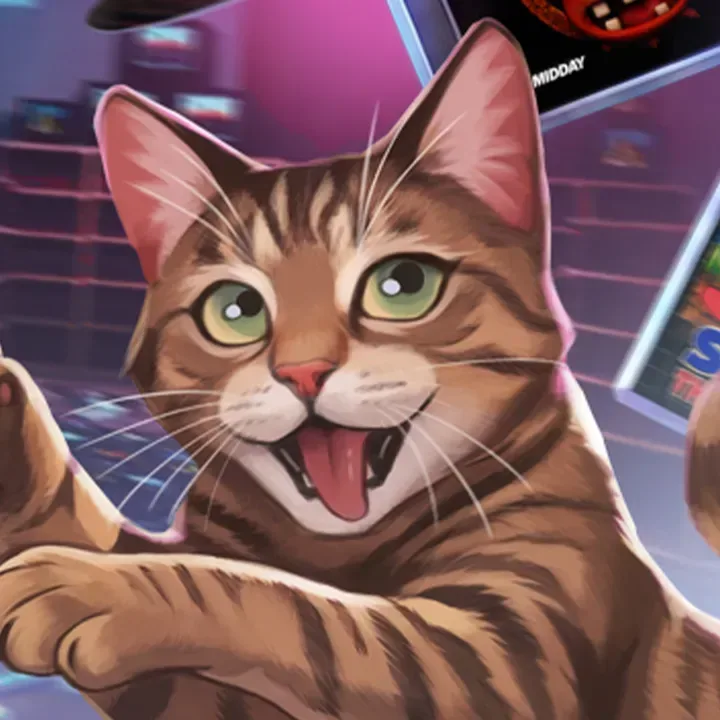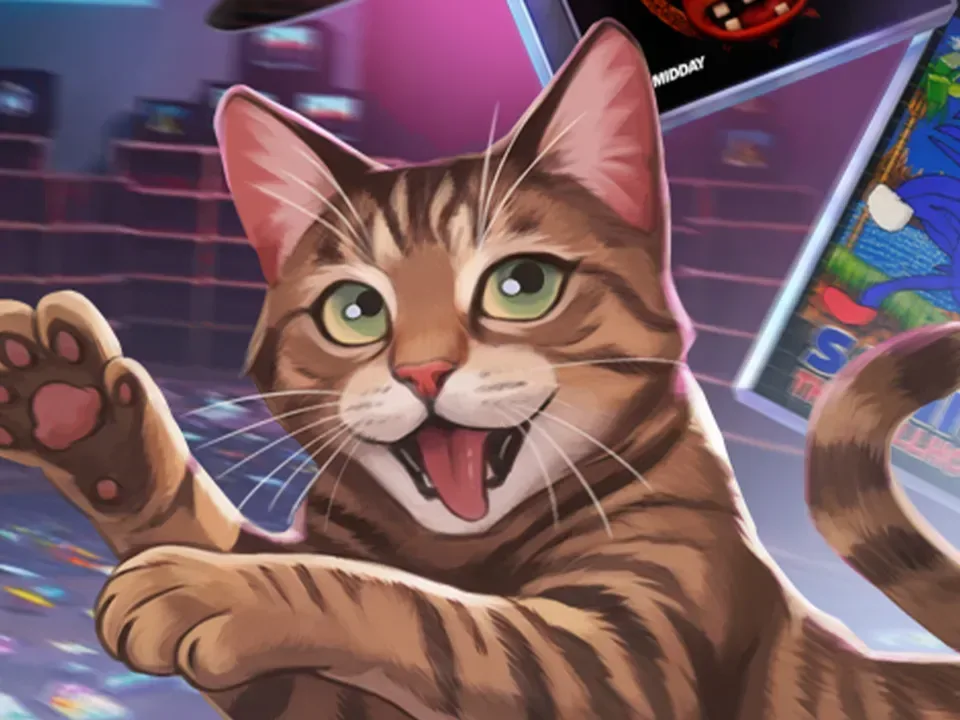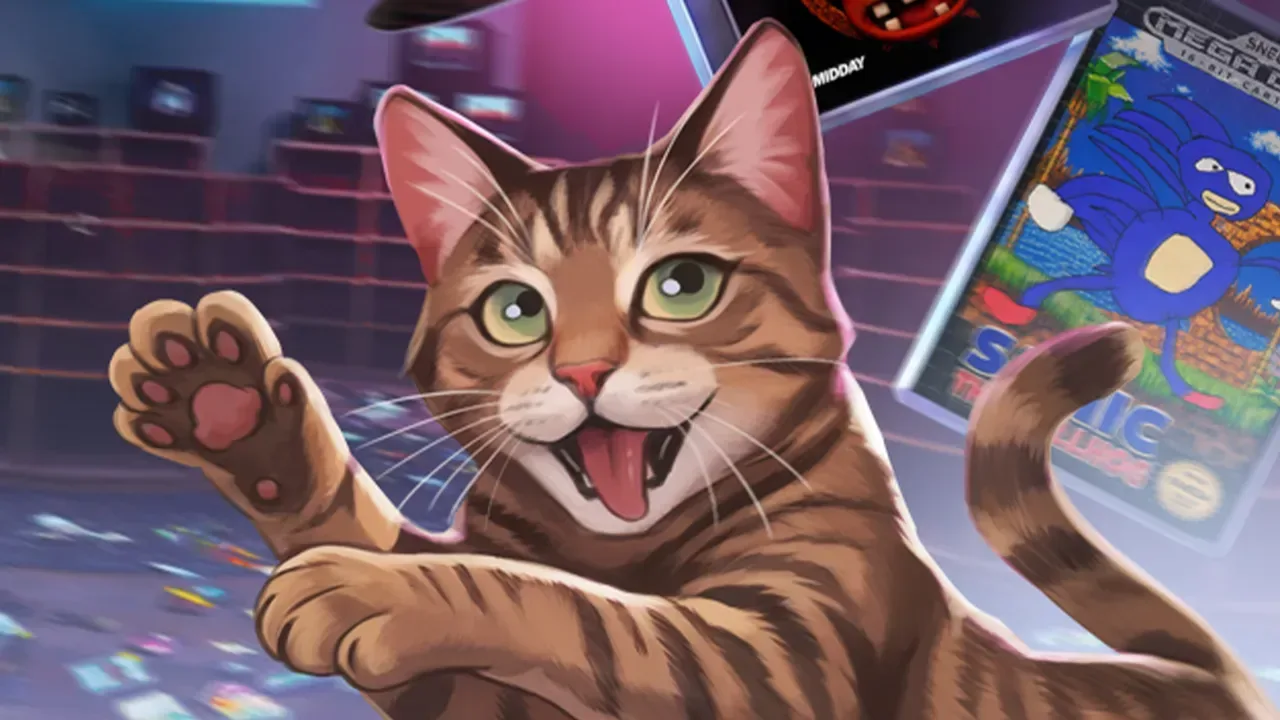
There are two kinds of game-library disorder. One is the familiar real-world version: cases stacked beside a console, discs in the wrong boxes and a shelf that has quietly stopped making any sense. The other is considerably worse: a cat has scattered more than 6,000 games and consoles around a videogame supermarket, then become trapped in a claw machine.
My Cat Scattered Games: Tidy Videogame Supermarket is built around fixing exactly that second problem. Developed by ODIUS and published by Loopr Partners, the PC game is due October 9. Its central task is intentionally straightforward: pick up an item, work out the platform it belongs to, take it to the appropriate section and return it to a shelf. The scale, the deliberately goofy imitation game history and the cat-related emergency are what turn that basic loop into the game’s premise.
It is a cozy organization game rather than a test of survival under pressure. The game has no fail state and no way to lose, while progression opens tools intended to make the sorting process faster. That means players can approach its enormous inventory at their own speed rather than treating every misplaced case as a looming penalty.
A supermarket-sized cleanup with a collection theme
The word “supermarket” matters here. This is not simply a small bedroom shelf that needs straightening. The setting is a store-scale space filled with discs, cartridges, consoles and other gaming items. The collection is fictional, but it is designed to evoke the wide sweep of physical-game culture through parody names and cover art.
Examples include Lovable Kombat, Mega Bavario 64 and Red Spirit 2, along with hardware such as the Kekstation 2 and Y-box. The names are playful stand-ins, not licensed games or systems. That distinction lets the game reference recognizable eras and habits of game collecting without making its shelves a literal catalogue of real products.
There is practical value in that approach beyond the joke. A fictional library can mix formats, genres, platforms and eras freely, giving the sorting loop plenty of visual variety. Players are not just matching identical boxes; they are expected to identify an item’s platform and place it in the relevant area. As the supermarket takes shape again, the parody covers, references and jokes provide small discoveries alongside the larger task of restoring order.
What the sorting rules actually mean
At its core, the game uses a classification-and-placement loop. Classification means recognizing which platform an item belongs to. Placement means returning it to the shelf section assigned to that platform. The rules leave room for player choice after that: each shelf can hold up to three different games, with as many as 10 copies of each title.
Those limits are a meaningful part of the design. If every shelf accepted every item with no constraints, the job would be simple filing. By setting a cap on distinct titles and copies, the game asks players to develop a system for the space available. One person might group compatible-looking titles in a neat retail-style arrangement. Another might favor a more compact approach that keeps copies together. The stated rules do not prescribe one correct aesthetic layout; they establish boundaries within which players make their own decisions.
The result is closer to the satisfaction of arranging a collection than to an inventory-management game built around scarcity. There is no indication that players must protect a timer, balance cash, meet customer demand or preserve a combo. Instead, the reward is the visible transformation of a scattered store into a readable, orderly place.
Why the absence of failure changes the feel
“Cozy” can mean many things, but here the term is supported by a clear mechanical promise: sorting cannot end in a loss. A player can take time examining a ridiculous cover, revise an earlier shelving choice or simply work through the room gradually without having their progress erased by an error.
That does not necessarily make the project empty of decisions. A big collection still creates questions about where things belong and how to use limited shelf slots efficiently. It instead changes the stakes of those decisions. The challenge is organizational and self-directed rather than punitive.
Unlockable ways to accelerate sorting add a sense of advancement without changing that relaxed foundation. The specifics of those upgrades have not been detailed, so it is too early to say how dramatically they will alter the routine. What is clear is the intended structure: initially, the player rebuilds the supermarket item by item; later, the same basic work can be handled more efficiently.
The cat is both culprit and objective
The title is unusually literal. The player’s cat caused the huge mess, and the cleanup has a second objective: rescue it from the claw machine in which it is stuck. It is an appropriately silly setup for a game about re-shelving thousands of fictional videogames. More importantly, it gives the project a concrete goal beyond reaching a tidier room.
That framing also keeps the potentially obsessive appeal of sorting lighthearted. This is a mess created by a mischievous pet, not an audit or a warehouse crisis. The world is designed to invite players to linger over references from different periods of gaming while steadily making the space look better.
A PC release for players who enjoy the process
My Cat Scattered Games is headed to PC on October 9, with a Steam wishlist available ahead of release. For players who enjoy a game chiefly because its routine is calming, the pitch is unusually direct: a huge mass of game-related items, a simple organizing task, parody nostalgia and no failure pressure.
It may also appeal to people who like the idea of a physical game collection but not the storage demands, dust, damaged cases or shelf geometry that accompany a real one. The simulation draws on the visual language of collecting—cases, cartridges, consoles, duplicate copies and platform sections—while making the entire operation digital and intentionally comic.
There is still plenty not specified, including the exact form of the unlockable sorting aids and how the cat rescue is structured. But the core proposition is already easy to understand. ODIUS is not asking players to save a kingdom, dominate a leaderboard or memorize combat strings. It is asking them to put Mega Bavario 64 back where it belongs, thousands of times over, until the supermarket once again looks like a place a game enthusiast could happily browse.
For more on recently announced and upcoming computer releases, see our coverage of Main Sequence’s Steam playtest.