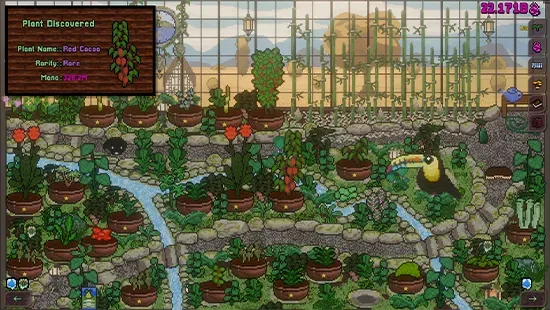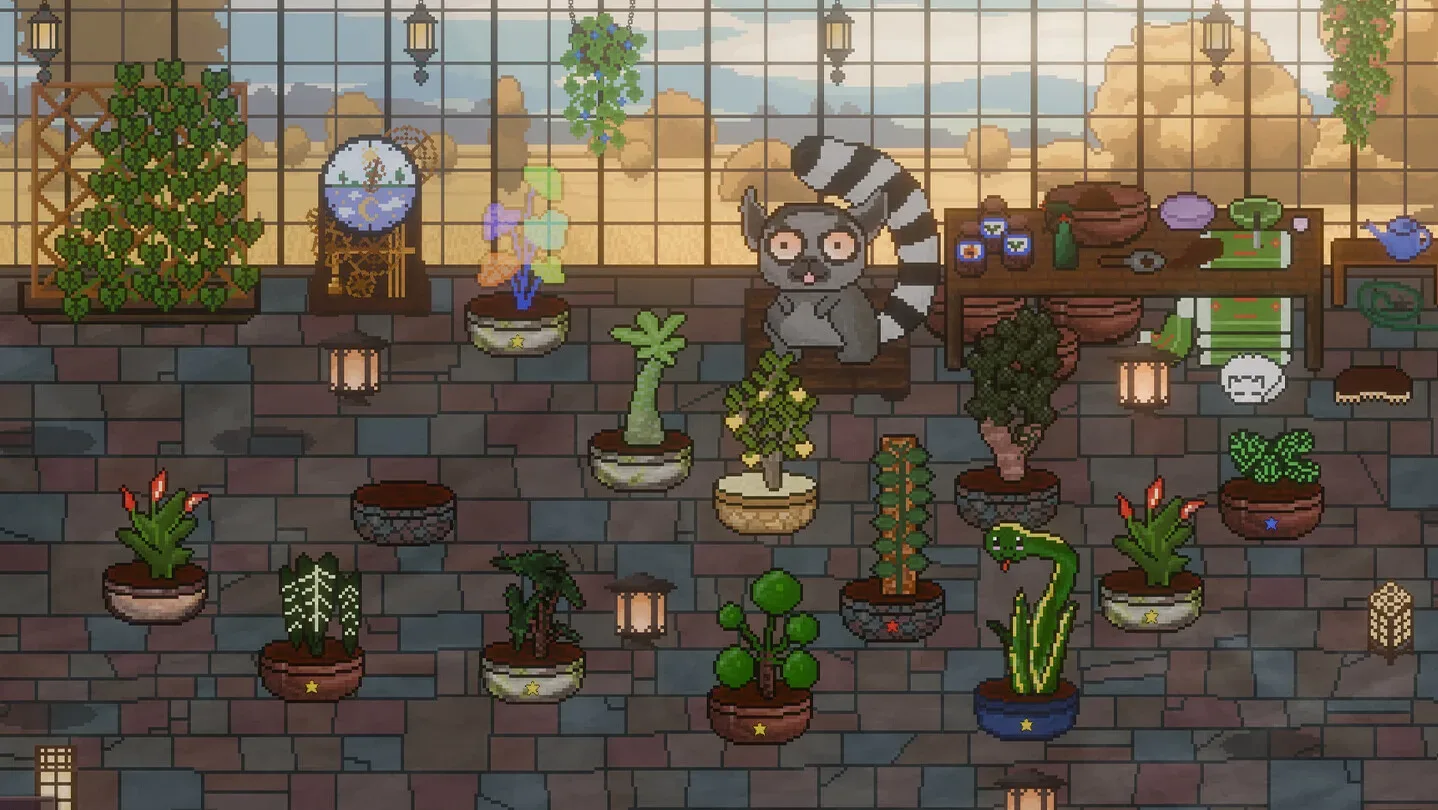
Gargoyle Garden has been revealed for Steam as a cozy pixel-art gardening simulation built around restoring a collection of neglected greenhouses. Its central pitch mixes active gardening tasks with idle progression: players grow magical flora, open enchanted seed packs, build up mana, improve their tools and gradually fill their gardens with an expanding plant collection.
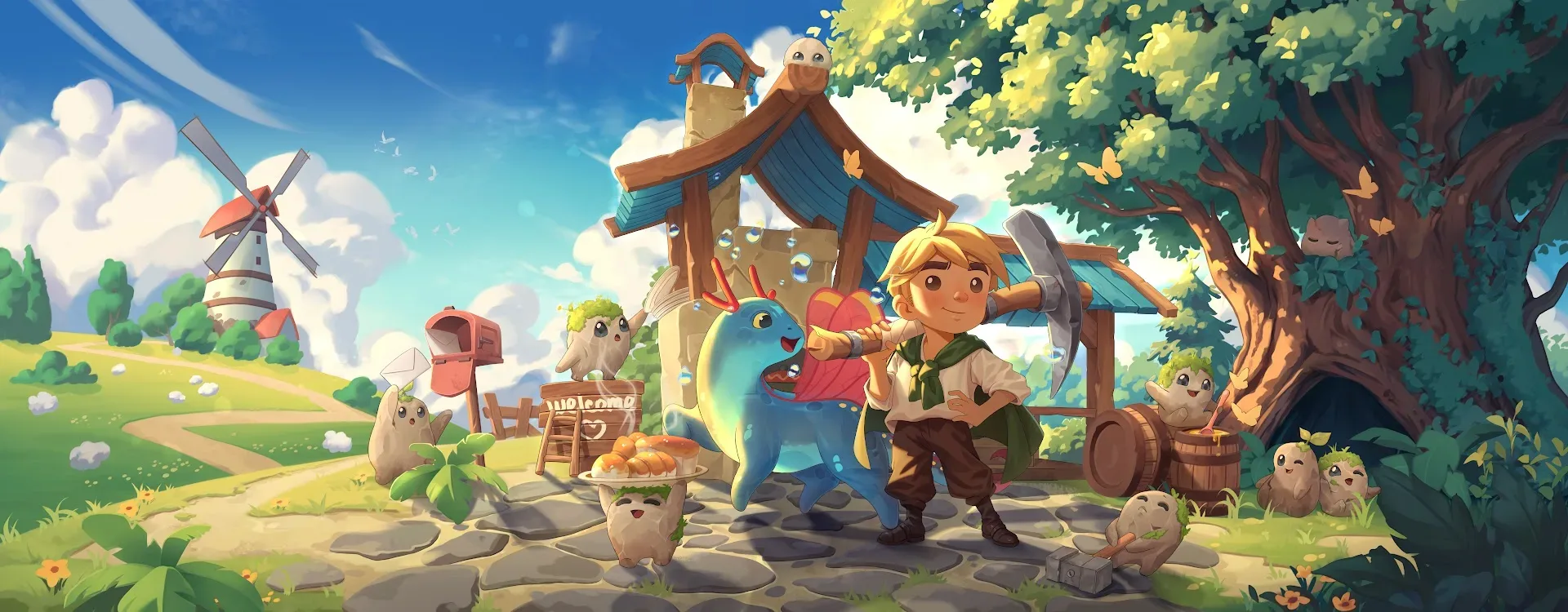
The premise begins with an inheritance of forgotten greenhouses that need to be brought back to life. Helping oversee that project is Gidian the Gargoyle, a talkative shopkeeper who creates magical seedlings, sells gardening supplies and supplies what is described as gargoyle wisdom. It is an appropriately stone-faced job title for someone responsible for plants, although Gidian sounds considerably more conversational than the average garden ornament.
More than 250 handcrafted plants are planned for the game, ranging from recognizable houseplants to stranger mythical specimens. The stated progression also includes up to five greenhouses to unlock, with each one having its own biome and atmosphere. Rather than presenting the garden as a single static room, the setup suggests that expanding the collection and expanding the available spaces will be closely linked.
A greenhouse restoration loop with room to idle
Gargoyle Garden’s key idea is the blend of hands-on and idle play. In this context, idle progression means some progress can continue through systems that do not demand constant direct input. The game still frames gardening as something players actively do—growing plants, opening seed packs and upgrading equipment—but it also includes ways to make the work less manual over time.
That distinction matters for a gardening sim. A fully hands-on growing loop can make every new plant feel earned, but it can also turn routine care into repetition once a collection becomes large. An idle layer can reduce that routine without removing the appeal of arranging, discovering and nurturing the garden in the first place. Gargoyle Garden appears to be aiming for that balance: direct involvement at the start, then a gradually more self-sustaining operation as its systems open up.
The listed resource is mana, which is earned as part of the core loop and used alongside tool upgrades and magical seedlings. No detailed economy or upgrade tree has been outlined, so it is not yet clear exactly which actions generate mana or how individual upgrades will affect gardening. What is clear is the intended sequence: cultivate plants, acquire more opportunities through seed packs, earn resources and improve the capacity to keep growing.
Seed packs are also where rarity enters the design. Players will discover increasingly rare plants through enchanted packs, giving the collection a built-in long-term chase. That is a useful structure for a game centered on botanical collecting: a familiar plant can establish the rhythm early on, while unusual and mythical varieties give later gardens something more distinctive to pursue.
Over 250 plants, five greenhouses and a few very busy animals
The announced plant count is more than 250 handcrafted entries. That number gives Gargoyle Garden a clear collector focus, but it should not be confused with real-world collecting: these are plants to discover and cultivate inside the game. The appeal is likely to rest on seeing a personal greenhouse evolve from a sparse restoration project into a varied display of ordinary, magical and mythical flora.
The five greenhouse limit is equally important. Each location is said to have its own biome and atmosphere, implying that new spaces should offer more than extra shelf room. Biomes generally refer to distinct environmental themes or habitats. Here, the term signals that the greenhouses are intended to differ in mood and setting, even though the specific biomes and their mechanical differences have not been detailed.
Plant care can eventually be assisted by five animal gardeners. The animals are described as helpers that automate plant care, making them the practical counterpart to the game’s relaxed idle systems. Their presence should help the gardens feel inhabited as well as functional, while giving players a way to reduce maintenance as their operation grows.
Automation is a technical term worth separating from “idle” in this case. Idle progression describes advancement that is not entirely dependent on continuous player actions. Automation is the mechanism that can handle particular repeated jobs—in Gargoyle Garden’s case, plant care—on the player’s behalf. The two ideas often work together, but they are not identical: one is the broader pace of progression, while the other is a specific solution to recurring tasks.
Small environmental motion may do substantial work
The game’s greenhouse world is also being presented as reactive rather than completely still. Lamps sway, birds deliver gifts and plants respond to movement. These are small details, but they are well suited to a pixel-art garden where atmosphere is a major part of the reward. A greenhouse full of collected plants has more personality if its contents and surroundings visibly acknowledge activity.
Bird-delivered gifts add another notable element, though the contents and rules of those gifts have not been explained. At minimum, they suggest a periodic surprise within the daily garden rhythm. The moving lamps and reactive plants, meanwhile, point toward environmental animation designed to make the spaces feel lived in rather than like a catalog screen with pots.
That attention to environmental behavior fits the game’s cozy framing. “Cozy” is often used broadly, but the revealed features give it a more concrete meaning here: gentle restoration goals, low-pressure accumulation, decorative collecting, charming helpers and visual feedback from the space itself. The announcement does not describe combat, deadlines, failure states or competitive systems. Its emphasis is squarely on building a pleasant routine around plants and greenhouse expansion.
What has been established—and what remains open
Several pillars of Gargoyle Garden are already clear:
- A Steam release is planned.
- Players inherit and restore forgotten greenhouses.
- Gidian the Gargoyle serves as a shopkeeper who crafts seedlings and sells gardening goods.
- The game combines manual gardening with idle progression and automated care.
- There are more than 250 handcrafted plants to collect.
- Up to five biome-themed greenhouses can be unlocked.
- Enchanted seed packs lead to rarer plant discoveries.
- Five animal gardeners can help with plant care.
There are still meaningful unknowns. No release date has been given in the available details. Specific greenhouse biomes, the identities of the animal gardeners, the full function of mana, and the exact nature of the tool upgrades have not been laid out. The announcement also does not establish whether seed packs are obtained through particular milestones, resources or other activities. Those details will determine how quickly the collection grows and how much choice players have in shaping their greenhouses.
For now, the strongest read is that Gargoyle Garden is designed for players who enjoy progression measured in a steadily richer space rather than a single dramatic finish line. Its hook is not just planting a seed, but turning a sequence of greenhouses into an increasingly strange and personal botanical archive—with Gidian nearby to ensure the magical horticulture department remains adequately gargoyled.
For a wider look at the day’s game activity, see games releasing today on October 1, 2026.