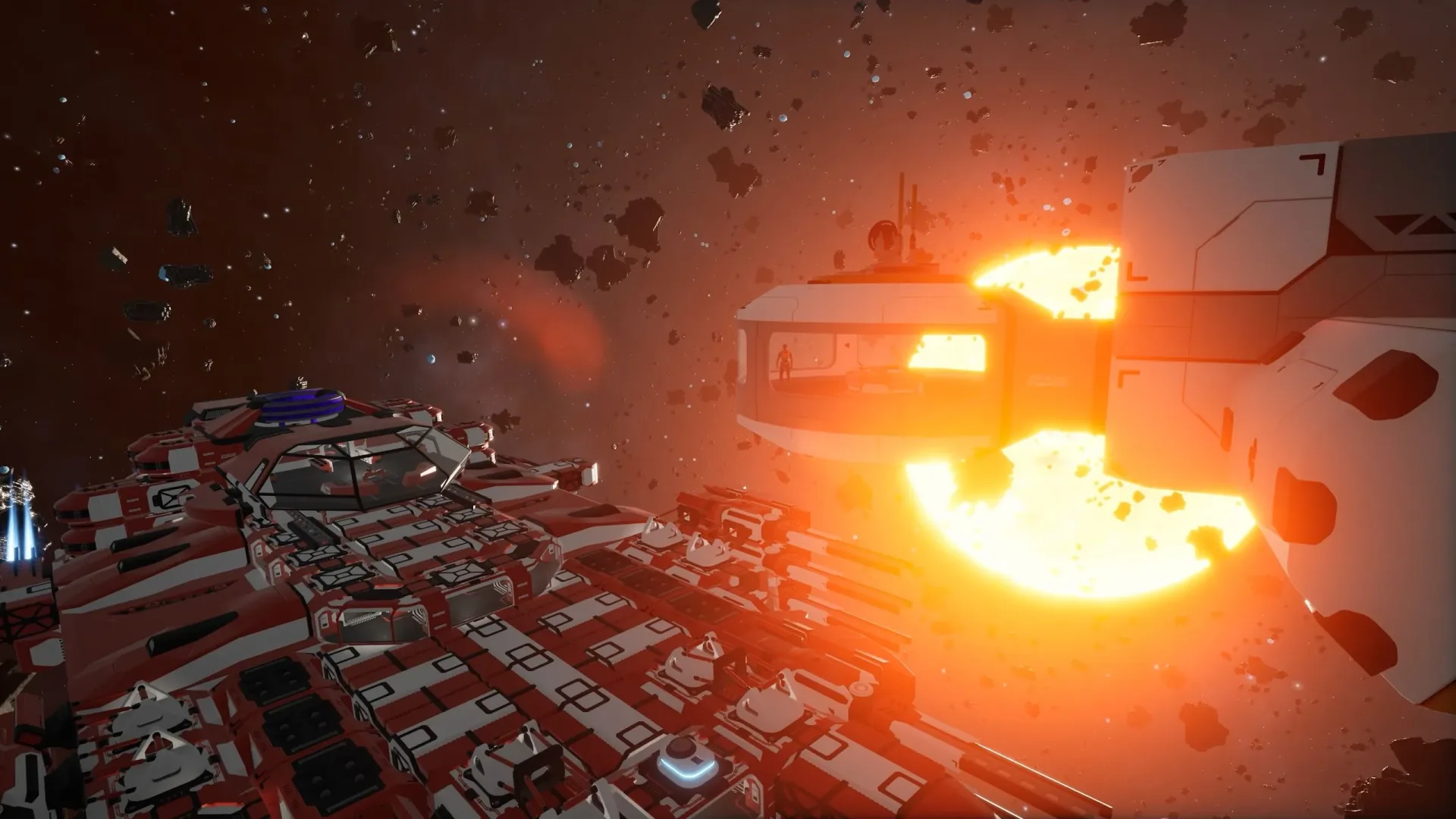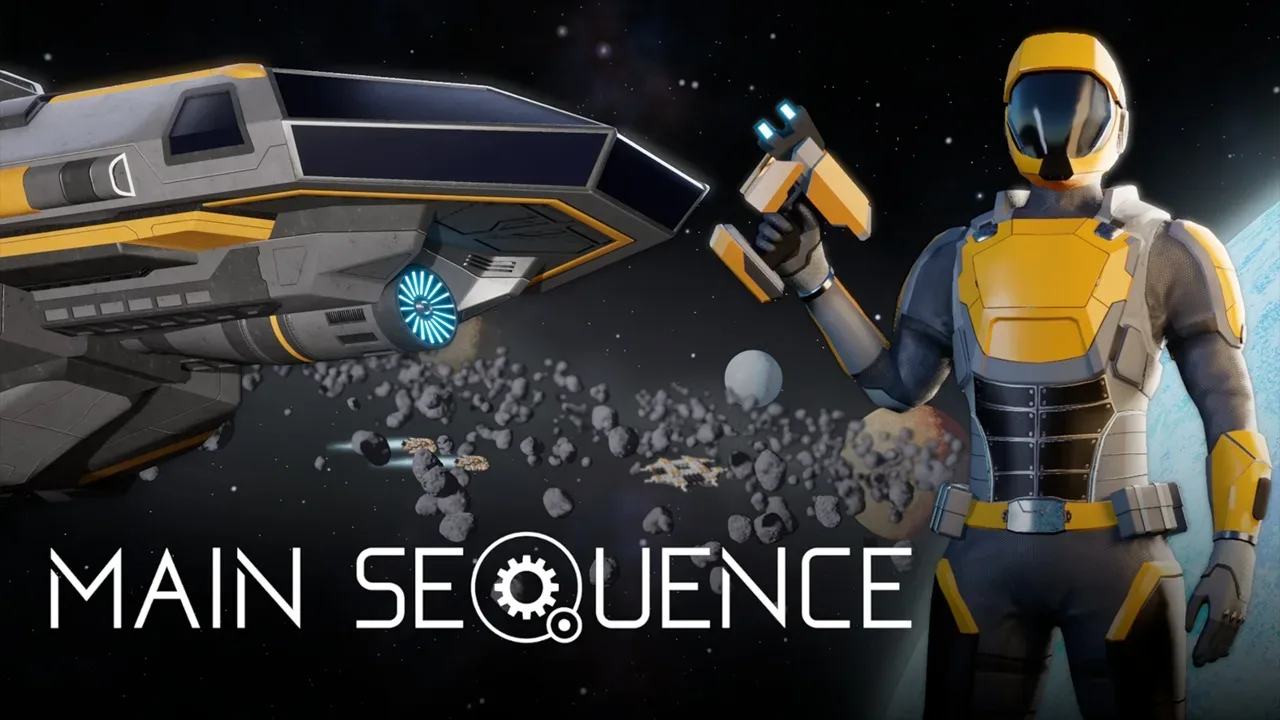
Main Sequence, a first-person space simulation and factory-building game from Tumbling Dumpling Studio, has opened a free Steam playtest running through September 25, 2026. Publisher Mythwright describes the test as an unrestricted opportunity to play the full work-in-progress version, ahead of an Early Access launch planned for later this year.
The pitch is expansive but rooted in a deliberately small opening position: players start in a resource-rich asteroid belt with one mining ship. From there, the intended progression is to gather raw materials, refine them, build production infrastructure, automate factories, unlock technologies, and assemble new ships and station modules piece by piece. Solo play and co-op are both supported.
For players who regularly keep an eye on Steam experiments and in-development PC releases, the short duration matters. This is not described as a demo limited to an opening slice; it is presented as access to the current full build, with enough material for dozens of hours of exploration. That does not mean every system should be treated as final, but it does make the playtest a meaningful look at the game’s central loop rather than a narrowly scripted introduction.
A factory game where the factory is in space
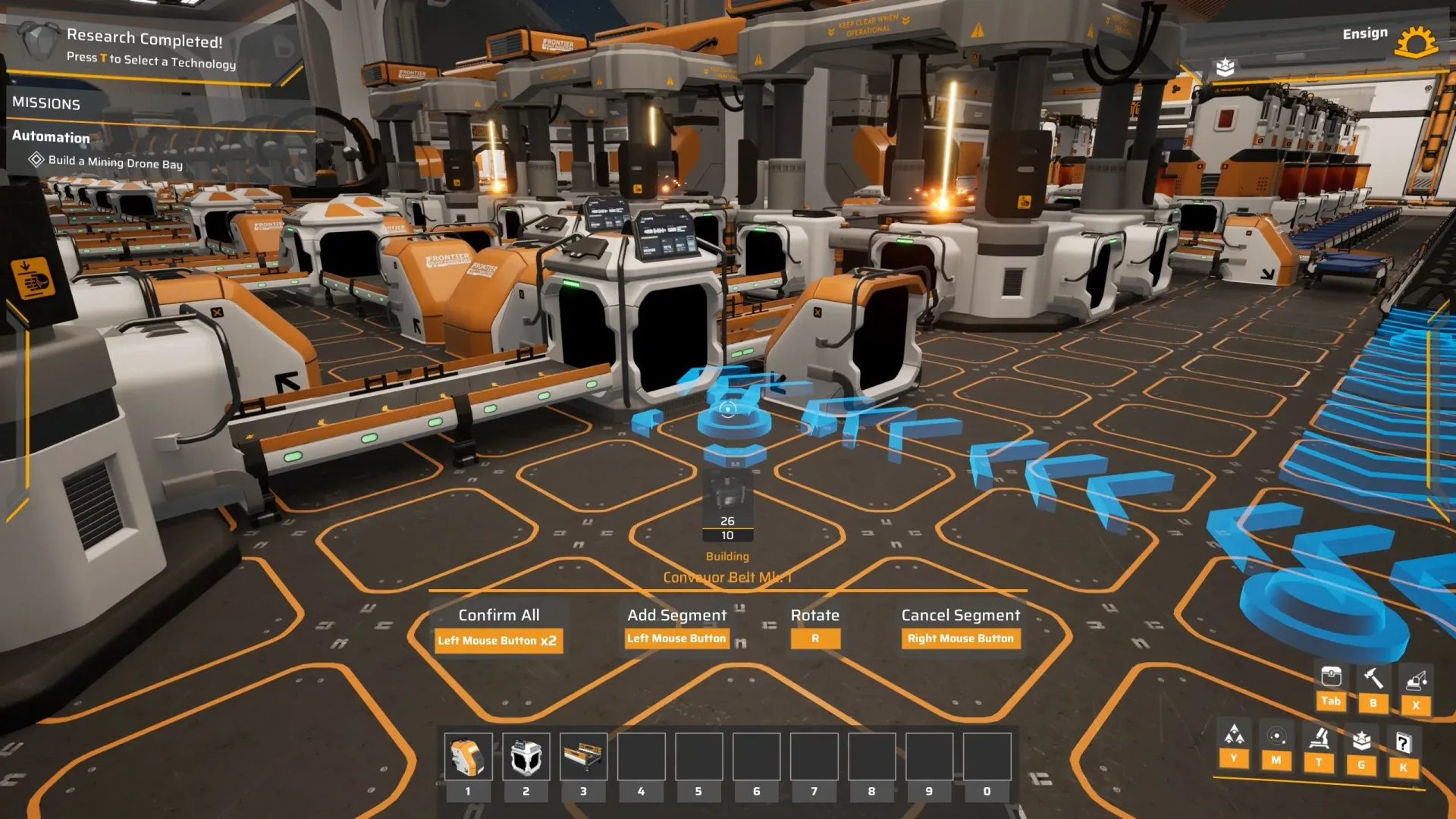
At its core, Main Sequence is built around an extraction-to-production cycle. The first job is mining: taking resources from an asteroid belt with the starting ship. Those materials then need to be refined into useful components. The stated next step is construction, where players create factories and automate their operation instead of personally handling every stage forever.
That term, automation, is central to the genre. In a factory builder, automation usually means designing connected processes that carry out recurring tasks with less direct player input. The appeal is not simply accumulating materials. It is working out how a system should be arranged, identifying shortages or bottlenecks, and expanding the system so it can support increasingly ambitious construction.
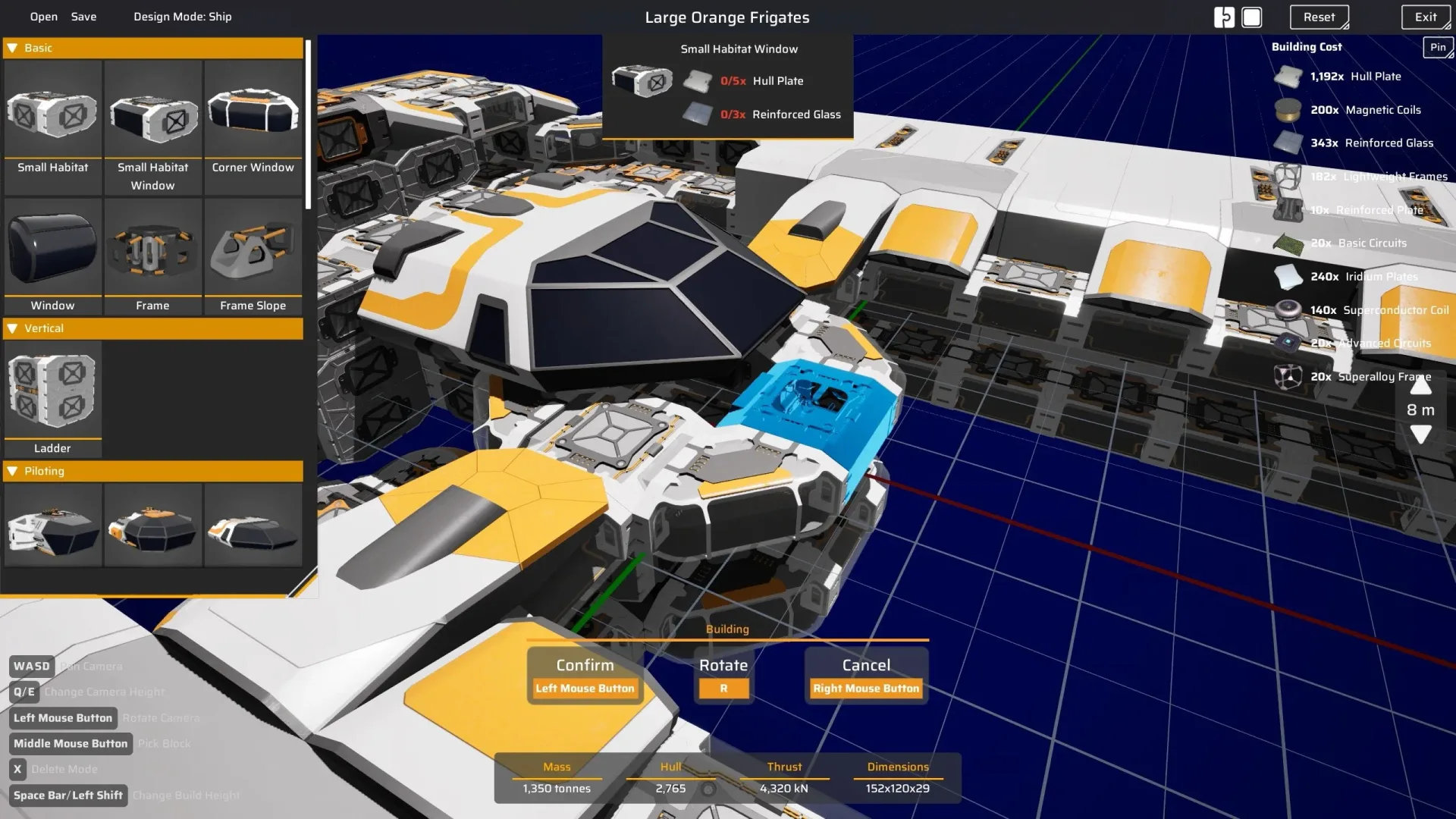
Main Sequence puts that familiar management problem in a first-person, interstellar setting. Its factories do not exist in isolation: the game also asks players to construct ships and space-station modules individually. In practical terms, the player’s industrial capacity and their ability to travel are linked. Better production can feed more complex vessels and station pieces; reaching new places can in turn offer access to new resources and objectives.
The module-by-module construction detail is important because it suggests an emphasis on incremental building rather than selecting a single finished station or spacecraft from a menu. The available information does not specify how granular the construction interface is, how modules connect, or what constraints apply, so those are useful questions for playtest participants rather than assumptions to make now.
From an asteroid belt to distant systems
The intended scope extends well beyond the opening mining zone. Players can travel toward the edge of the solar system and beyond, seeking deep-space resources and eventually reaching distant star systems through research and progression. Research here refers to a progression system in which new capabilities are unlocked over time, likely giving players access to technologies needed for more advanced industrial or exploration goals. The exact research tree and its requirements have not been detailed.
That escalating journey gives Main Sequence a clear structure: begin with survival-scale extraction, establish dependable production, and use that foundation to push farther out. A game with this setup has to make logistics meaningful. The supplied details confirm resource management and deep-space resource hunting, but do not yet define issues such as fuel use, transport limits, power demands, crew management, or the distance between systems. It is best to view those as open design details until the playtest build shows what is actually present.
Still, the broad idea is easy to understand. An asteroid belt offers an accessible beginning and raw materials. Factory automation turns those materials into industrial momentum. Research broadens the player’s options. Ship and station construction provide the tools for crossing longer distances. The overall goal is framed as expanding humanity’s presence across the stars.
Exploration and combat are part of the stated mix
Main Sequence is not being positioned solely as an optimization exercise. Its listed activities include locating abandoned space stations and taking part in deep-space combat. The abandoned stations promise a reason to investigate the wider map beyond resource extraction, while combat introduces an additional risk factor to exploration and expansion.
Crucially, there are no confirmed specifics yet on combat controls, enemies, weapons, station encounters, objectives, failure states, or whether combat can be avoided. Nor is there information on what abandoned stations contain or how discoveries affect the broader factory loop. The playtest’s value is that prospective players can assess those connections directly in the work-in-progress build, instead of projecting a preferred version of the game onto a short feature list.
The first-person viewpoint may also change how the construction-and-management ideas feel. In many factory games, a player views production from a high-level perspective. A first-person approach places the player closer to the ships, modules, asteroids, and installations they are creating. That can make scale and travel more tangible, but it can also make clarity in planning tools and information displays especially important. Whether Main Sequence balances hands-on presence with readable industrial management is one of the more interesting questions this test can answer.
What co-op could add—and what remains unknown
Co-op support is confirmed alongside solo play. For a game based on mining, refinement, construction, research, and exploration, cooperative play potentially allows different people to focus on different parts of the same project: one player gathering materials, another expanding the production chain, and another setting out toward deep-space targets. That is an interpretation of how the listed systems could complement each other, not a confirmed description of player roles.
Details that have not been provided include player limits, hosting arrangements, save sharing, progression rules, and whether co-op participants can work across different locations simultaneously. Players interested primarily in a group experience should therefore use the test period to check the practical basics: how easily a session starts, how construction permissions work, how progression is handled, and whether the game’s objectives remain clear when several people are contributing at once.
For solo players, the other consideration is pacing. Main Sequence says it offers dozens of hours of content in its work-in-progress form, which indicates a substantial build rather than a tiny prototype. But the exact pace of research, the early availability of automation, and the degree of challenge in combat or resource management remain unspecified. A player who likes building systems alone may want to see how quickly the game moves from manual mining to more self-sustaining industry.
What the September 25 deadline means
The playtest is available now on Steam and ends on September 25. Anyone considering it should treat that as a limited testing opportunity rather than confirmation of the final product’s feature set. A playtest is a chance for developers to put an unfinished build in front of players; systems, balance, performance, interface design, and the breadth of available content can change before and during Early Access.
The announcement says Early Access is planned for later in 2026, but it does not give a date, price, roadmap, or a list of features scheduled to arrive after the playtest. It also does not confirm how playtest progress will carry over, if at all. Those omissions are normal details to clarify closer to an Early Access release, but they are worth keeping in mind for anyone deciding whether to invest heavily in a temporary test save.
The wider PC landscape has made storefront access and release details a regular point of attention; for example, Steam availability has recently been central to reporting around PC storefront changes involving major releases. In Main Sequence’s case, the immediate information is straightforward: the current test is on Steam, is free to download and play, and has a stated September 25 end date.
Who should take a look
Main Sequence may be worth a download for players drawn to the overlap between factory simulation and science-fiction exploration. Its loop is aimed at people who enjoy beginning with limited tools and turning a basic resource operation into a larger, more autonomous network. The added promises of ship construction, station modules, research-led expansion, derelict discoveries, and combat give it ambitions beyond a static building sandbox.
At the same time, this is explicitly a work-in-progress version. The most productive way to approach it is to test the elements that matter personally: whether mining feels satisfying, whether factories are understandable to plan, whether automation has enough depth, whether first-person navigation serves the construction systems, and whether solo or co-op play fits the desired pace.
Those who want a quick visual overview can also watch the official Main Sequence trailer. The Steam playtest remains open until September 25, with Early Access set to follow later in 2026.