A 1997 Japanese Pokémon telephone card has claimed the biggest reported Pokémon-related collectible sale of the October 17–24, 2026 period, reaching $2,255,000. The item is a CoroCoro phone card made to mark the magazine’s two-million-copy milestone, and its result is notable for a simple reason: it is not a conventional Pokémon Trading Card Game card.
That distinction did not prevent it from topping a week in which the five largest reported Pokémon-related transactions totaled $5,353,000. The full top five included two Japanese telephone cards, two Charizards and an Art Academy competition Pikachu. Together, they show that the top end of Pokémon collecting is not confined to booster-era chase cards, even when familiar TCG icons remain a huge part of the market.
The result also exceeded the prior week’s combined top-five total of $3.98 million. That comparison describes a short run of high-value sales, not a guaranteed measure of the broader market’s direction. Still, the makeup of this week’s list is meaningful: more than half of its reported dollar total came from phone cards rather than traditional cards.
The five reported sales
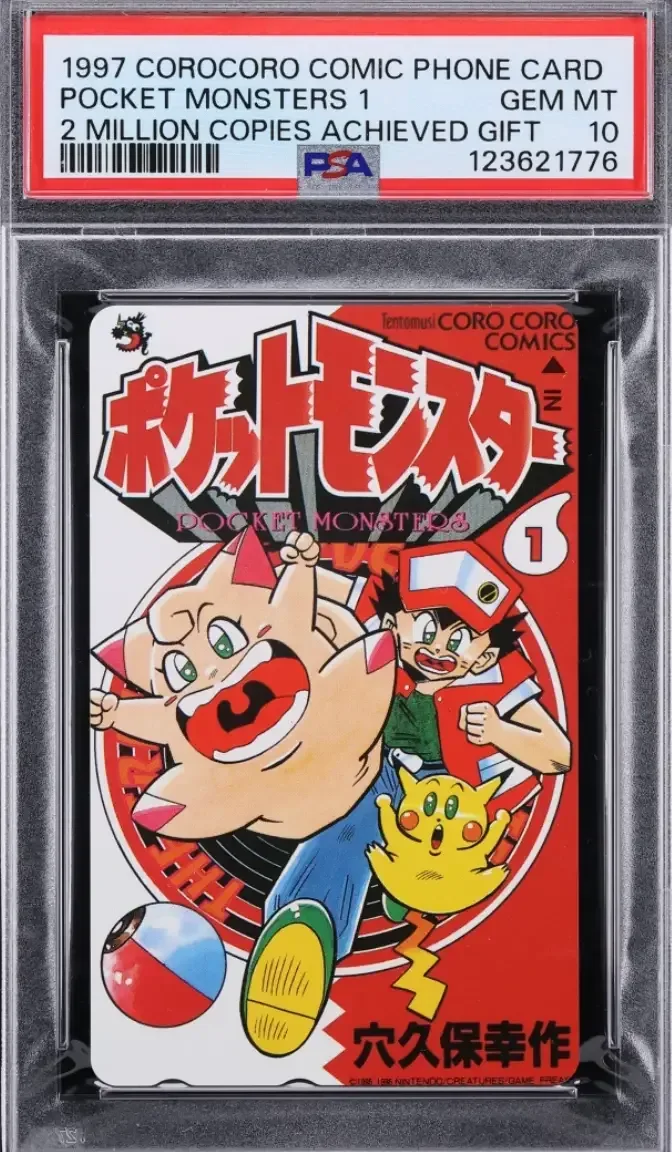
- 1997 Pokémon Japanese CoroCoro “2 Million Copies Gift” Pocket Monsters Phone Card, PSA 10: $2,255,000, sold October 23 through Fanatics Buy Now.
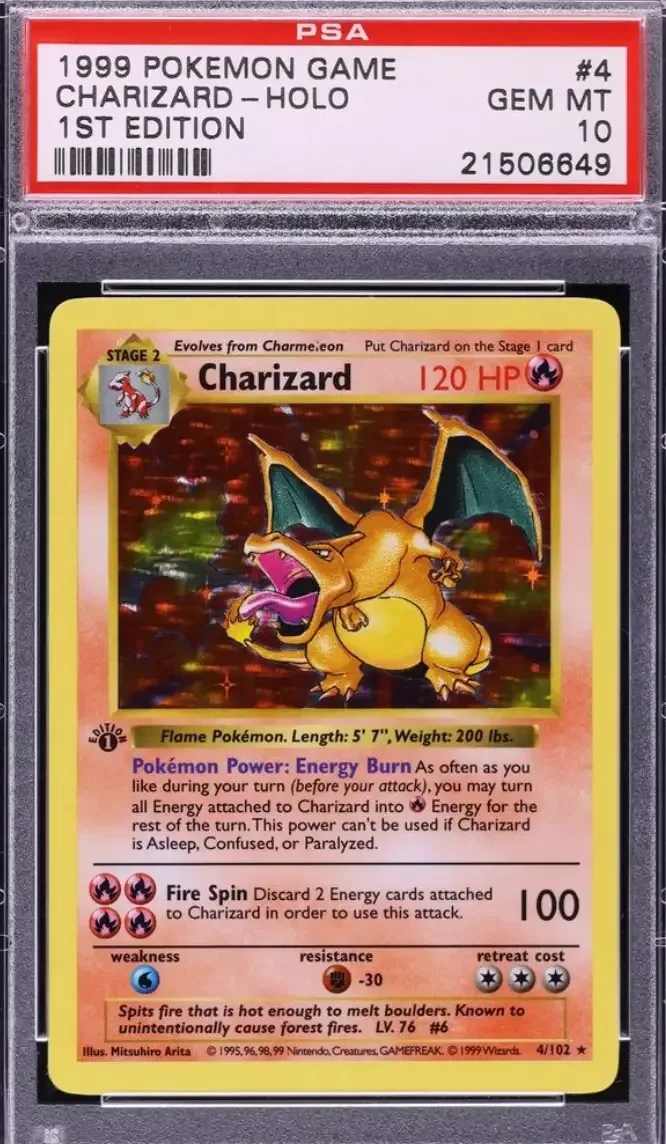
- 1999 Pokémon Base Set 1st Edition Shadowless Holo Charizard #4, PSA 10: $1,380,000, sold October 23 through Fanatics Premier.
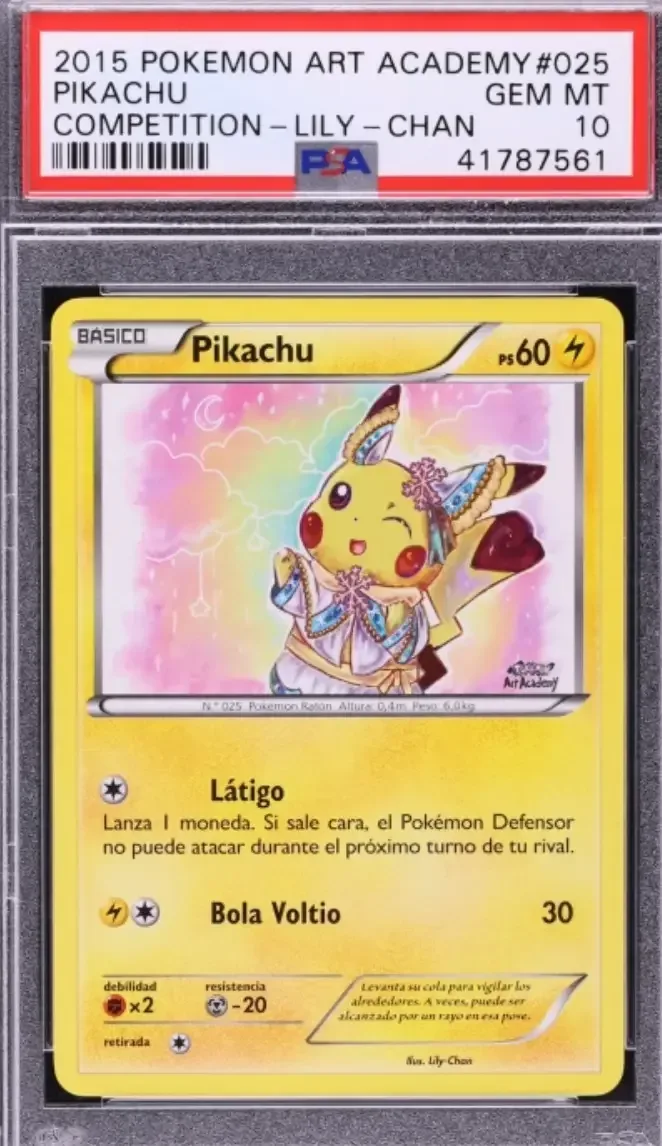
- 2015 Pokémon XY Art Academy Competition Lily-Chan Pikachu #25, PSA 10: $660,000, sold October 18 through Fanatics Weekly.
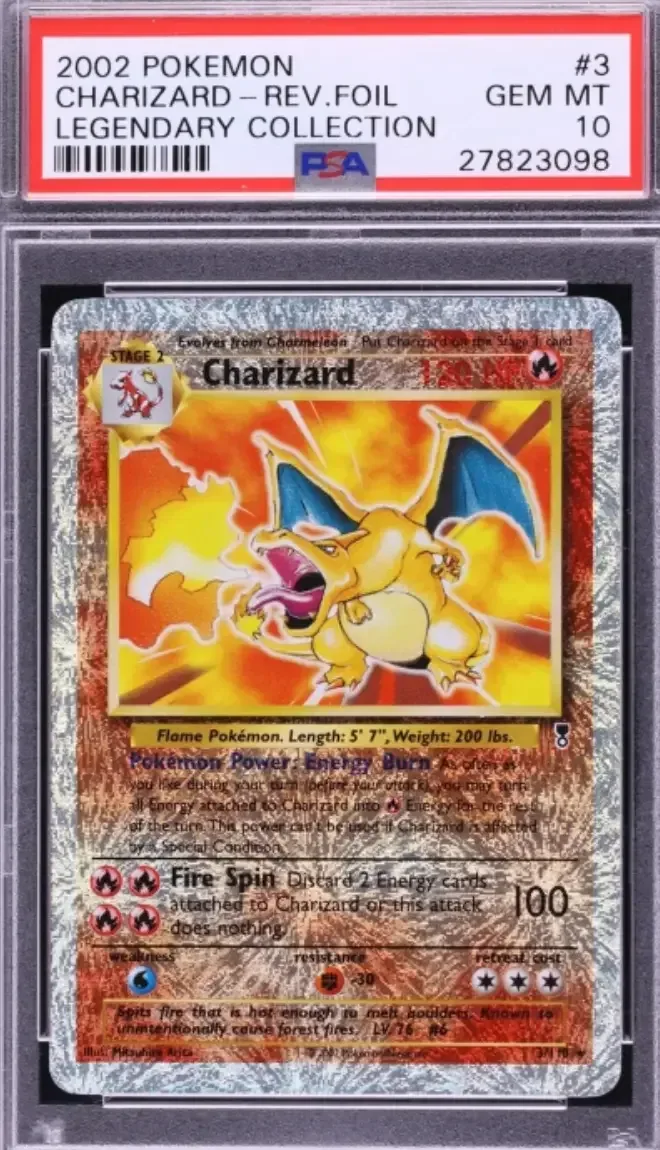
- 2002 Pokémon Legendary Collection Reverse Holo Charizard #3, PSA 10: $576,000, sold October 18 through Fanatics Weekly.
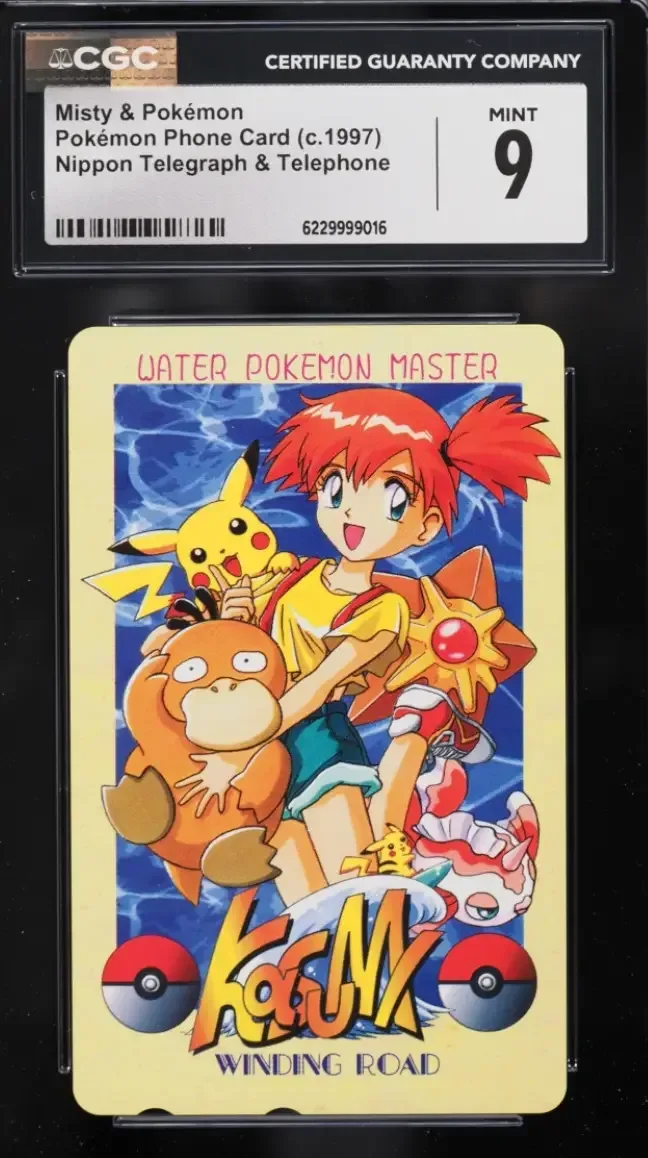
- 1997 Pokémon Nippon Telegraph & Telephone Phone Card featuring Misty and Pokémon, CGC 9: $482,000, sold October 23 through Fanatics Buy Now.
Each sale is tied to a particular item, grade and venue. That matters. A headline price is never a universal price tag for every copy bearing the same character or release name. Condition, the exact version, provenance and the route of sale are all material details in high-end collecting.
The $2.255 million CoroCoro phone card is the week’s defining result
The No. 1 item was a Japanese 1997 CoroCoro telephone card commemorating a two-million-copy circulation milestone. It received a PSA 10 grade and sold for $2.255 million on October 23.
Telephone cards occupy a different physical and collecting category from standard Pokémon TCG releases. The two examples in this ranking were promotional collectibles associated with Pokémon’s early rise in Japan, rather than cards designed for deck building and regular play. Their utility as telephone cards is not the story here; their appeal at these prices is rooted in their rarity, their early-Pokémon context and their unusual place in the franchise’s collectible history.
For collectors, the result is a reminder to read a listing’s item description before mentally comparing it to a familiar trading card. “Pokémon card” can refer to many kinds of paper collectibles in casual conversation, but a telephone card, a tournament or competition promo, and a regular set card can have entirely different origins and collector audiences.
The CoroCoro card was not alone. The No. 5 sale was another 1997 Japanese telephone card, this one featuring Misty and Pokémon characters and carrying a CGC 9 grade. It brought $482,000. Combined, the two phone cards accounted for $2,737,000, or slightly more than half of the $5.353 million total across the five sales.
Related coverage includes Rare 1997 Pokémon Phone Card Sells for $2.255 Million to Lead a $5.353 Million Week.
What PSA 10 and CGC 9 mean here
PSA and CGC are third-party grading companies. Their numeric grades summarize an evaluator’s assessment of an item’s condition. In this list, PSA 10 represents the top grade cited, while CGC 9 is also a high grade but not directly interchangeable with a PSA 10. Different companies use their own grading standards and labels, and collectible formats can present their own condition challenges.
The practical takeaway is not that every graded item is automatically comparable across companies. Rather, the grade should be read together with the grader, collectible type, exact issue and sale history. At the level represented by this list, those distinctions can be central to value.
Classic Charizard still delivered the largest conventional TCG sale
The week’s second-largest transaction was a 1999 Pokémon Base Set 1st Edition Shadowless Holo Charizard #4 in PSA 10 condition, which sold for $1.38 million on October 23. It is the most recognizable conventional trading card on the list, joining historical significance with one of Pokémon’s most enduring character draws.
The name contains several descriptors collectors should separate rather than treat as one generic label. “Base Set” identifies the original English-language set. “1st Edition” denotes the early edition referenced in the sale title. “Shadowless” identifies a specific visual version associated with early Base Set printing. “Holo” means the card uses holographic foil treatment. Each term narrows down the particular collectible being discussed.
Its seven-figure result gives this week’s eclectic leaderboard an important anchor. High-end buyers clearly showed interest in rare promotional formats, but a flagship early Charizard in gem-mint condition remained one of the largest transactions by a substantial margin.
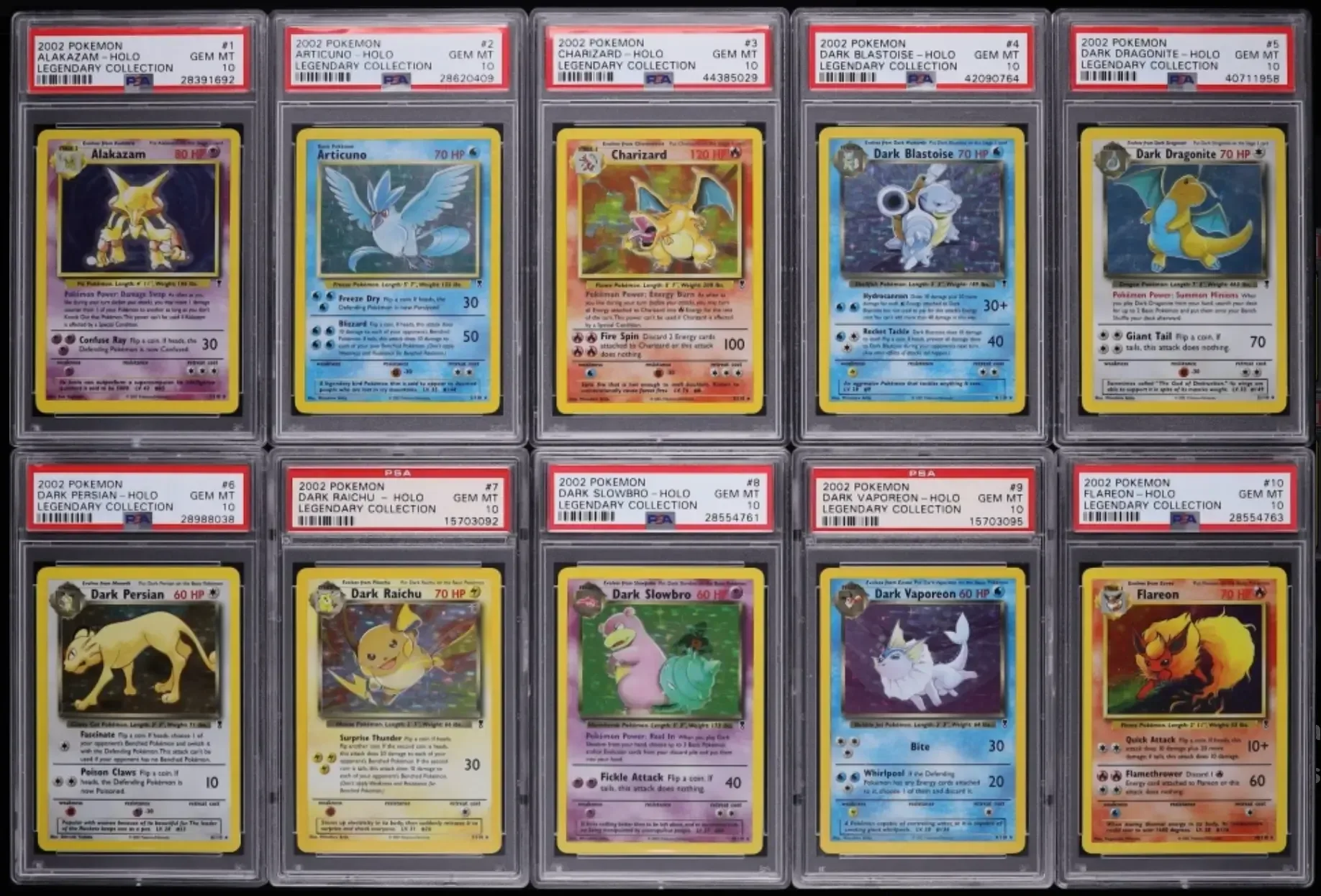
The other Charizard was a 2002 Legendary Collection Reverse Holo Charizard #3, also graded PSA 10. It sold for $576,000 on October 18. Legendary Collection reverse holos are visually distinct from standard holographic cards because the foil treatment is on the reverse-holo design rather than functioning like a traditional holo presentation. That visual identity helps explain why collectors often treat it as a separate, recognizable version rather than merely another Charizard with a similar image or name.
There is useful recent context for the $576,000 individual sale: the previous week featured a 19-card Legendary Collection holo lot, all graded PSA 10, that sold for $960,000. The new result does not establish a direct per-card comparison—the earlier transaction was a multi-card lot—but it does underscore how much attention an individual top-grade Charizard from the release can command.
An Art Academy Pikachu keeps appearing at the high end
At No. 3, a 2015 Pokémon XY Art Academy Competition Lily-Chan Pikachu #25, graded PSA 10, realized $660,000 on October 18. This is another item whose origin separates it from normal set releases. The Art Academy cards came from a Pokémon-themed art competition, giving them artwork and a route to collectors that differ from the regular TCG production pipeline described by set names and booster releases.
The Lily-Chan Pikachu followed another Art Academy Pikachu into major-sale territory. During the preceding week, a version featuring artwork by Y. Fujishima sold for $1.037 million. The two results should not be collapsed into a single price benchmark: they feature different artwork and are separate sales. What they do demonstrate is persistent high-end interest in competition-linked Pokémon art.
That interest makes sense within the narrow evidence of this week’s ranking. The top five were not simply five variants of the same kind of card. They spanned early promotional telephone cards, a foundational English-language Charizard, a 2002 reverse holo and a later competition piece. The common thread was Pokémon, while the objects themselves represent several collecting lanes.
How to interpret a week of blockbuster sales
A list of major transactions is useful market evidence, but it is not a full market report. It records specific completed sales for unusually desirable items, often in elite grades. It does not tell a collector what an ungraded copy, a lower-grade copy or a related item will necessarily sell for.
- Identify the exact issue: A year, set or promotion name can be insufficient. Edition, foil treatment, artwork and region may materially change what the item is.
- Keep grading details attached to the price: “PSA 10” and “CGC 9” should not be omitted when repeating these results. The grade is part of the transaction, not a footnote.
- Separate sale formats: A buy-now result, weekly sale and premier sale are reported through different formats. A price realized in one should not be assumed to predict every other venue.
- Do not mistake a five-sale total for an index: The $5.353 million figure is the sum of these five reported transactions during this period. It is a focused snapshot of top-end activity.
For collectors who are primarily familiar with game hardware, Pokémon’s cross-generational place in Nintendo culture is also worth viewing alongside the broader history of the company’s physical gaming ecosystem; this Nintendo controller history provides that wider hardware context.
A Pokémon sweep with a broader collecting message
Pokémon took every position in the week’s top five, but the phone cards are the real headline. The CoroCoro item’s $2.255 million sale was the largest result, while the Misty telephone card added another $482,000. Together they shifted the center of gravity away from ordinary assumptions about what a “top TCG sale” must look like.
At the same time, the list did not displace the classics. The 1999 1st Edition Shadowless Holo Charizard remained a $1.38 million centerpiece, and the 2002 Legendary Collection Reverse Holo Charizard added $576,000. The $660,000 Art Academy Pikachu supplied a third route to premium value: distinctive artwork tied to a competition rather than a usual set release.
The clearest reading of the week is therefore not that one format has replaced another. It is that high-end Pokémon demand was spread across several very specific kinds of scarcity and identity: early Japanese promotional material, legendary character appeal, top third-party grades, visually distinctive releases and competition-origin artwork. In this particular set of sales, the oldest and most unconventional item won the week.