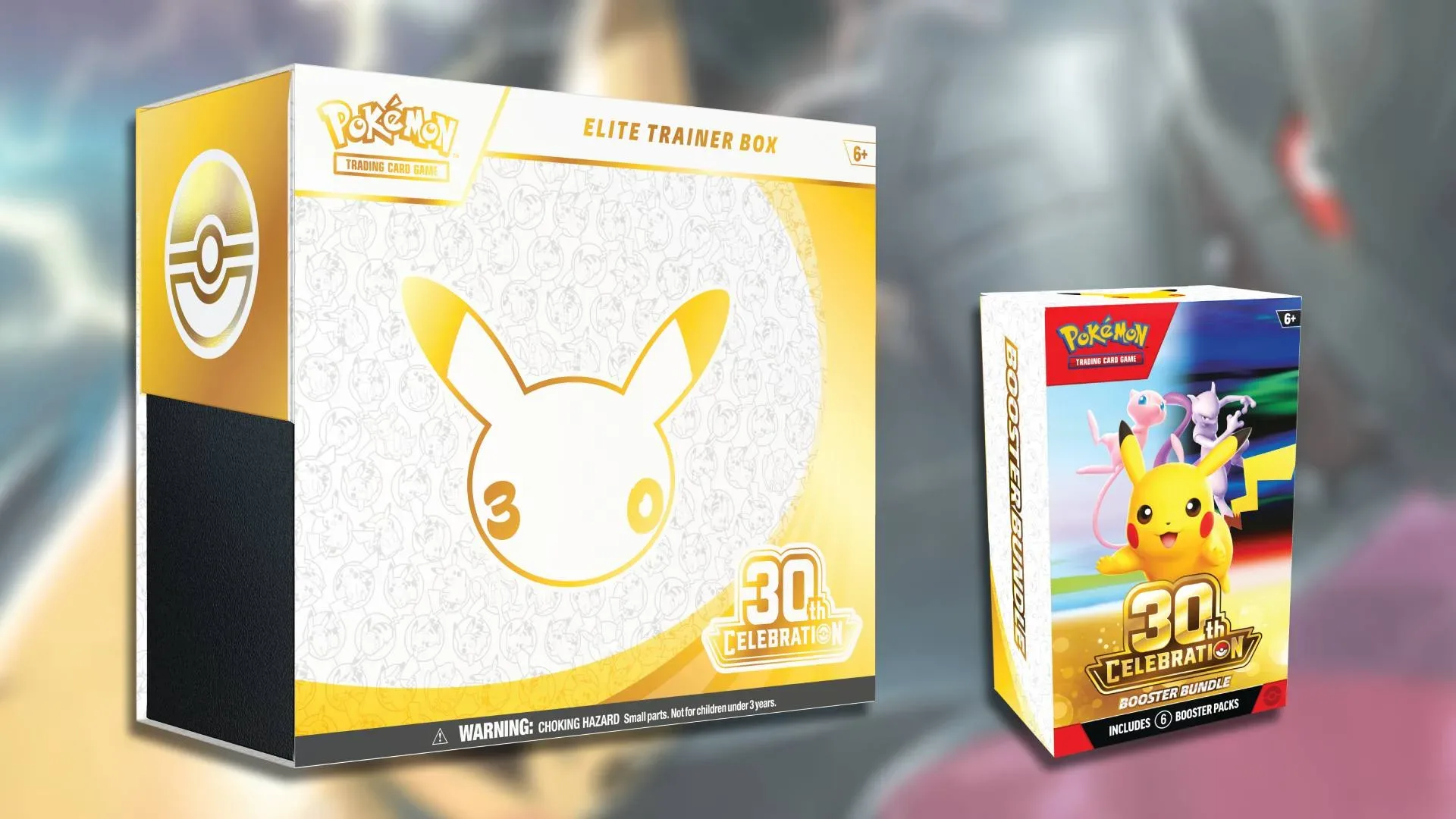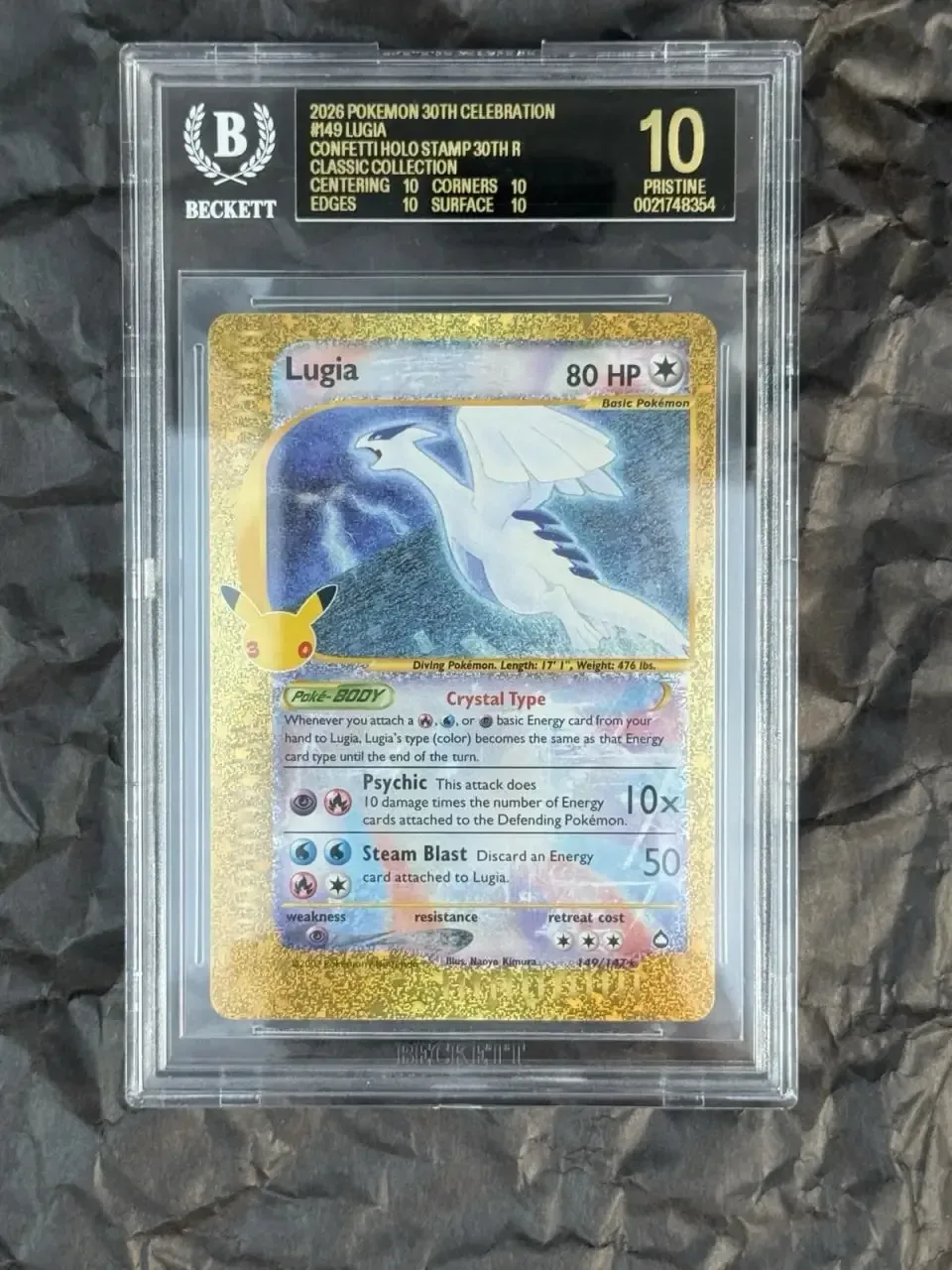
Pokémon 30th Celebration arrives with plenty to occupy collectors: Classic Collection reprints, a dedicated Pikachu subset and Illustration Rares all make the anniversary release feel built for the binder. But the set also has a practical side. Several cards named in the release can matter to players assembling, updating or simply personalizing a Pokémon Trading Card Game deck.
That distinction is worth making before the foil catches everyone’s attention. A card’s visual treatment, rarity and secondary-market appeal do not necessarily determine its usefulness in play. Conversely, a relatively inexpensive regular printing can be the version a player needs most, because it makes a deck function consistently rather than merely look spectacular in a display case.
In 30th Celebration, Ultra Ball and Poké Pad stand out as the cards with broad deckbuilding implications, while Mew ex, Greninja ex and Jirachi ex offer more direct offensive roles. Their appeal is not identical: some are general-purpose consistency pieces, some are alternate attackers, and one is described as a centerpiece for its own strategy. That spread gives the set value beyond its marquee collectible treatments.
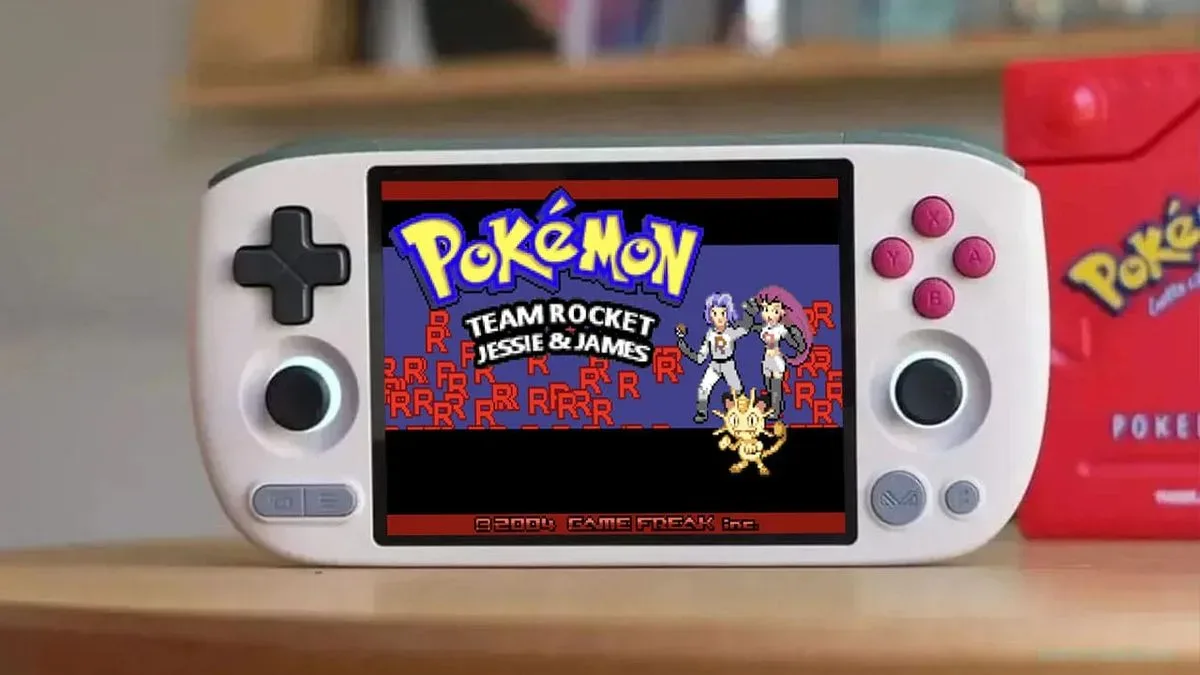
For more Pokémon news across the franchise, see the English translation news for Pokémon Team Rocket’s Jessie and James.
What “playable” means in a collector-forward set
In trading-card-game terms, a playable card is one that contributes meaningfully to a deck’s game plan. That can mean finding the right Pokémon quickly, establishing a board, providing a backup attacker or delivering enough damage at an acceptable Energy cost. It does not mean every playable card belongs in every deck.
Consistency refers to how reliably a deck reaches its important pieces. Search-oriented cards are often valuable because they reduce the chance that a player is left waiting for a needed Pokémon. Board state, meanwhile, is the practical arrangement of Pokémon and resources a player has established during a game. A card that helps locate a basic Pokémon or an evolution piece can matter well before damage totals enter the conversation.
That is why the two Trainer cards below may have the widest relevance. The three ex Pokémon are more dependent on an individual deck’s plan, Energy requirements and matchups. Here, ex identifies a class of Pokémon card in the set; it should not be read as a guarantee that every ex card will become a tournament fixture.
Ultra Ball is the all-purpose workhorse
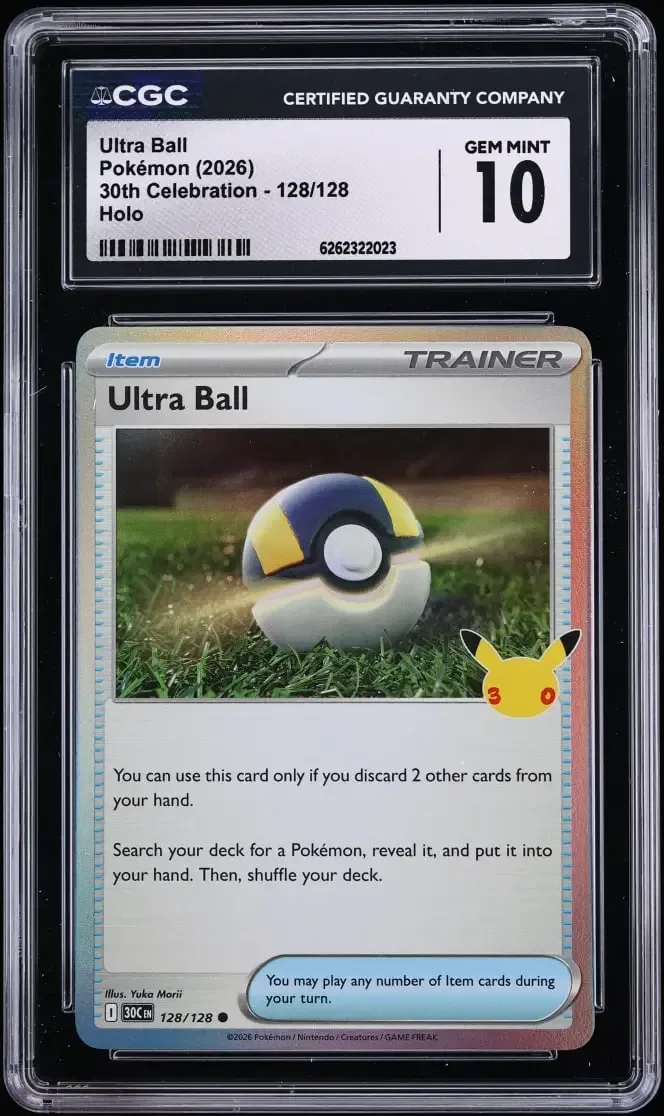
Ultra Ball remains one of the most recognizable Trainer cards in the Pokémon TCG, and its 30th Celebration inclusion extends its presence in the card pool. Its appeal is straightforward: versatile, familiar Trainer cards can support a wide range of deck concepts, making them useful even when a player is not building around a particular Pokémon from the set.
Related coverage includes Five Playable Pokémon 30th Celebration Cards for TCG Decks.
The anniversary printing is available in a common paper version and a holographic version. Both use art unique to 30th Celebration, so players who care about presentation can choose a more distinctive printing without moving away from a useful deck staple. For a collector-player, that is a particularly tidy overlap: the card can be part of an active list while still representing the identity of the anniversary set.
The practical takeaway is restraint, not hype. A special printing can be an enjoyable upgrade, but players generally need the card’s function before they need its finish. Ultra Ball’s significance comes from its established usefulness as a Trainer, while the unique 30th Celebration art is the added appeal.
Poké Pad supports setup, especially for Dragapult ex lists
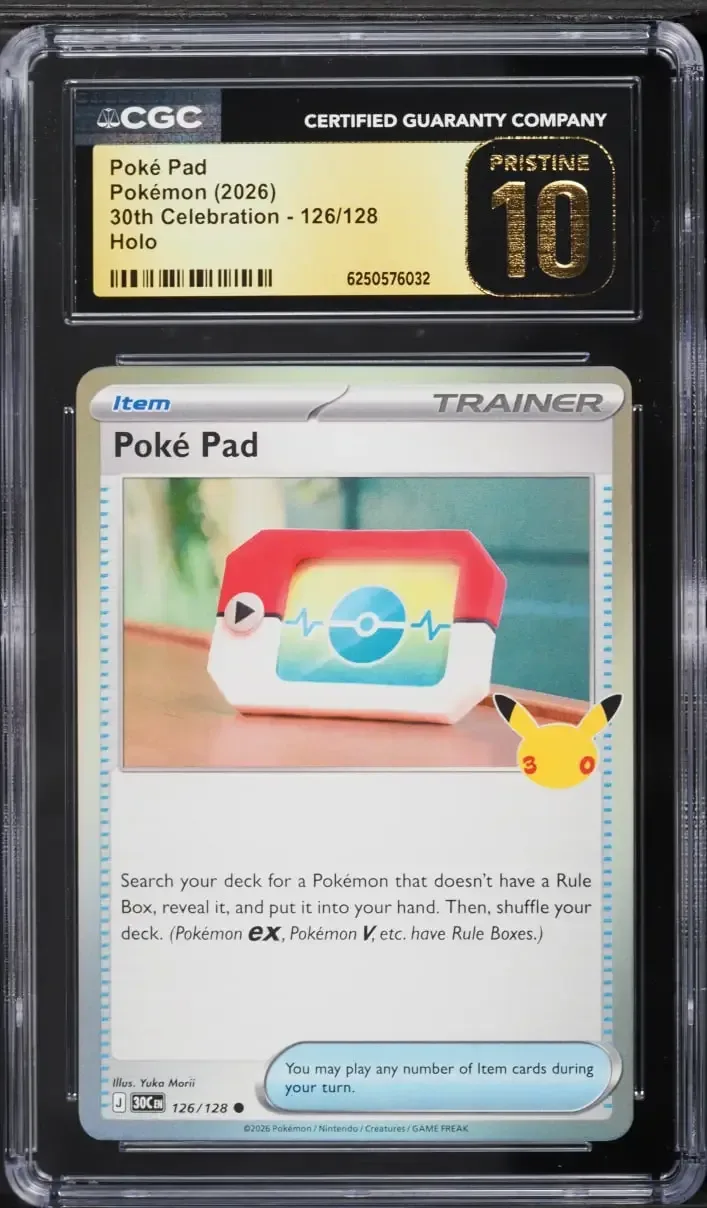
Poké Pad is presented as another staple-level Trainer and as a card frequently played in sets of four. When players refer to a “four-of,” they mean using the maximum commonly permitted number of copies of a card in a deck, a signal that the card is central to a list’s consistency rather than a niche one-off option.
Its stated use in Dragapult ex variants illustrates why setup cards matter. Those decks need to locate Dreepy or Drakloak in order to develop toward their preferred board state. Finding those pieces is not the same thing as winning immediately, but it helps the deck perform its intended sequence rather than spend turns hoping the right Pokémon arrives naturally.
Like Ultra Ball, Poké Pad receives unique art in 30th Celebration. That makes it one of the more attractive cards for a player who wants a coherent anniversary aesthetic across a deck’s utility slots. The more important point, however, is its function: it is a setup enabler, and setup determines whether a strategy gets the chance to do its job.
Mew ex brings an alternate attacking option
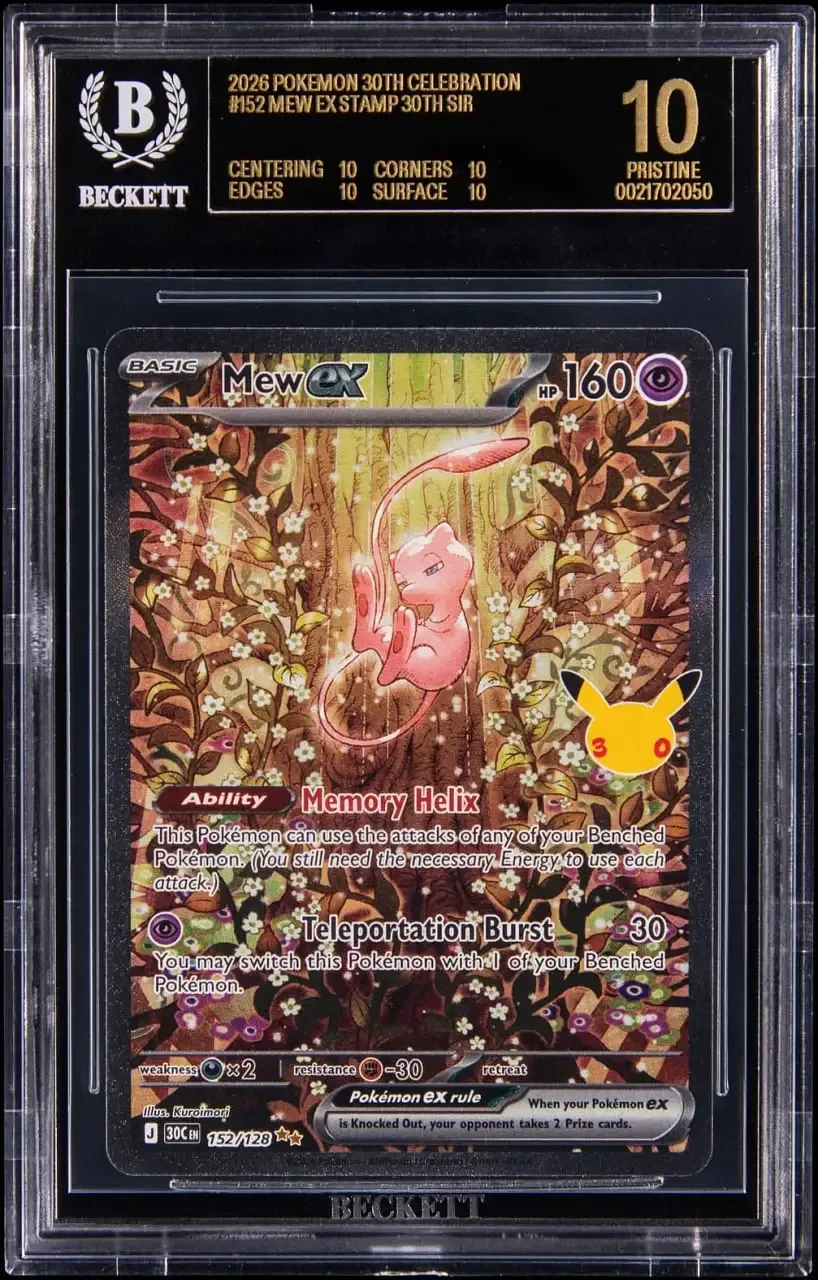
Mew ex has been used as a deck staple and can operate as an alternate attacker through its Memory Helix Ability. An alternate attacker is a Pokémon included to give a deck another way to apply pressure or cover situations where its main attacker is not the best fit. It is a role defined by flexibility: the card need not be the deck’s headline act to earn a place.
30th Celebration offers Mew ex as a standard ex card, a Futuristic Rare and a Special Illustration Rare. The Special Illustration Rare, often shortened to SIR, is a premium rarity treatment centered on artwork. For someone buying to play, the reported price gap is the key consideration. The least expensive version sits just above $1, while the Futuristic Rare is listed around $30 and the Special Illustration Rare around $55.
Those figures make the choice unusually clear. Each version represents the same named playable card, but their market cost reflects their collectible presentation rather than a different tactical role. Players who want Memory Helix as part of a deck can focus on the low-cost version. Collectors who want the set’s chase presentation are making a different purchase decision, one that should not be confused with competitive necessity.
Greninja ex is built to be the focal point
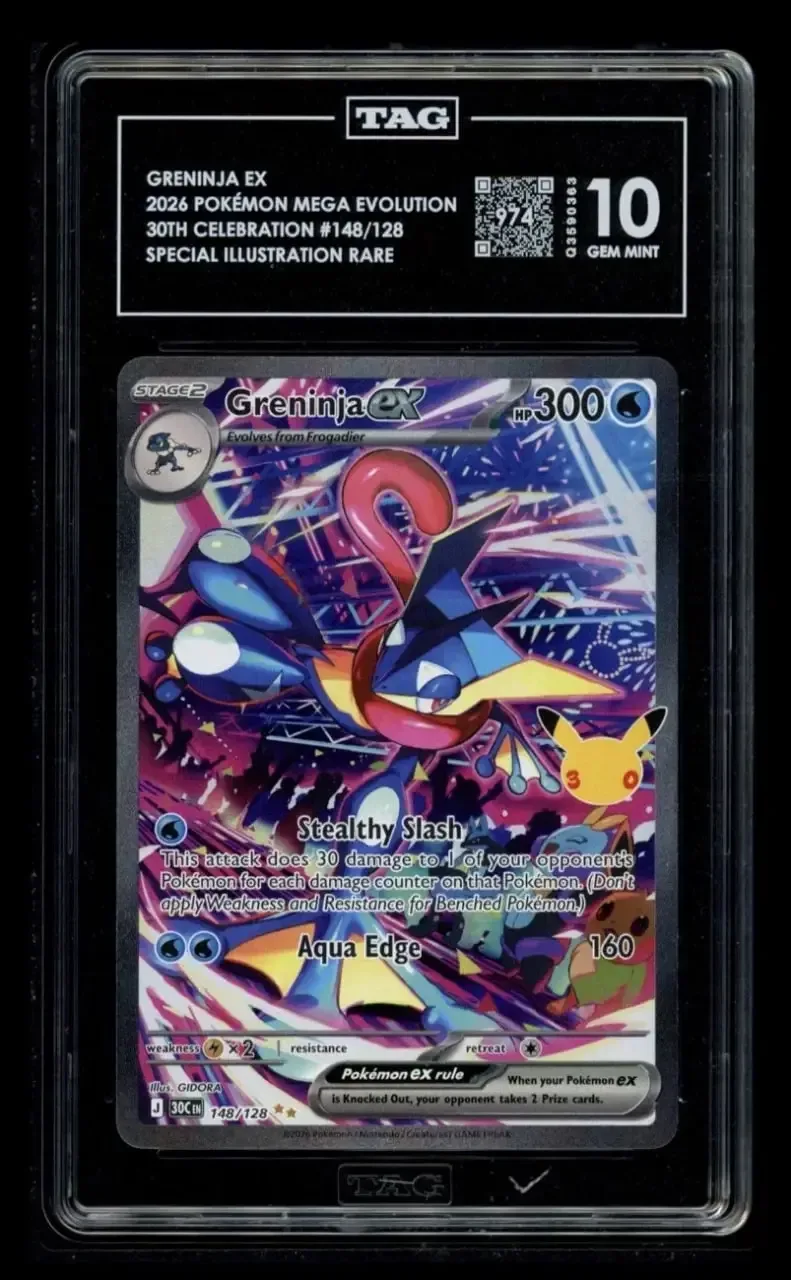
Greninja ex is described differently from Mew ex because it can serve as the cornerstone of its own deck. A cornerstone card is one around which the broader list is organized: it is not simply included for a situational turn, but helps define what the deck is trying to accomplish.
The supplied attack profile gives a useful snapshot of that ambition. Greninja ex can deal 160 damage for two Water Energy. Energy efficiency matters because attaching Energy is a core constraint of Pokémon TCG play; a lower requirement for a meaningful damage number can make an attacker more practical to deploy. That does not make it universally dominant. Matchups still matter, and the card’s effectiveness is explicitly dependent on facing the right opponents.
For players who want to try the strategy without turning it into a premium-card project, the regular Greninja ex is reported at less than $1. Its Special Illustration Rare counterpart trends around $12. Compared with Mew ex’s SIR gap, Greninja’s presentation upgrade is notably less expensive, but the underlying principle is unchanged: the regular card offers the gameplay entry point, while the SIR is the art-forward upgrade.
Jirachi ex is a usable option with a real constraint
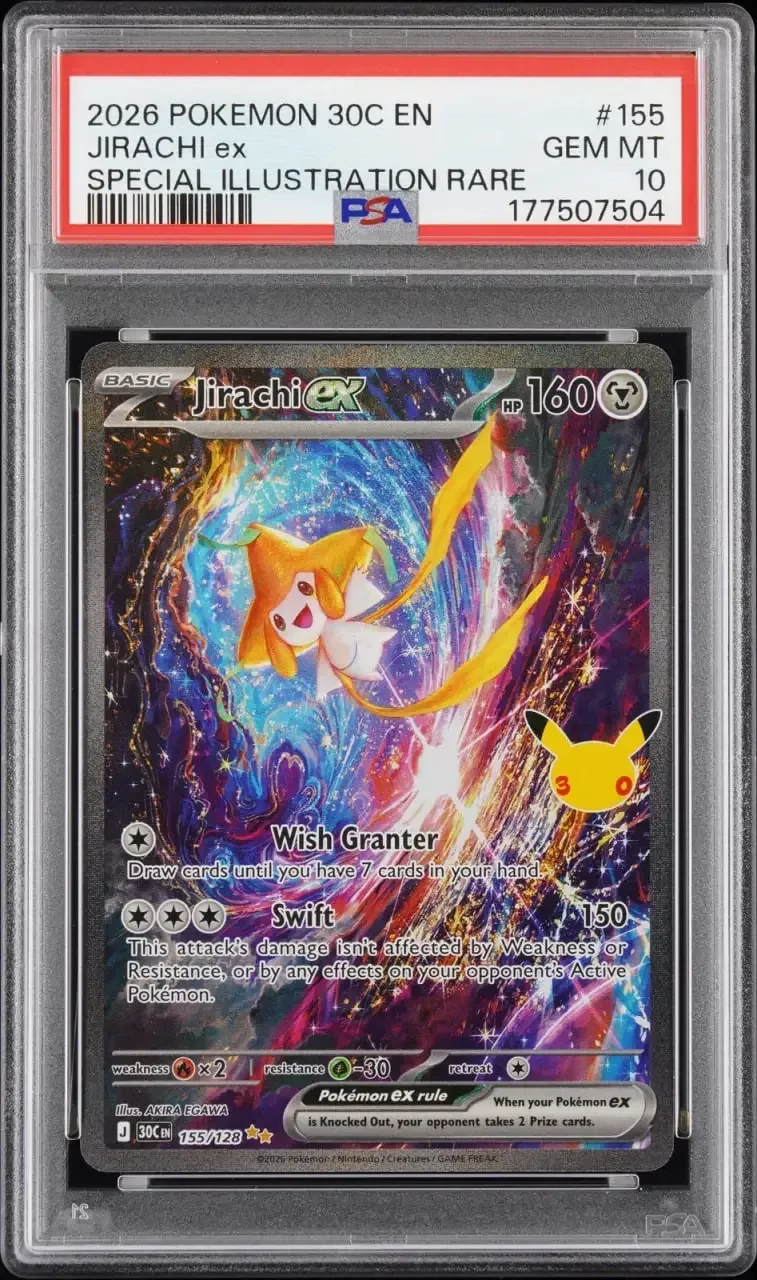
Jirachi ex is the most qualified recommendation of the five. It still appears as an extra card in many decklists, but it is not framed as one of the strongest cards here. Its attack deals 150 damage for three Energy, a respectable output that is limited by a relatively high cost. In practice, that cost can slow down how readily a deck puts Jirachi ex to work, which helps explain why its tournament use is less extensive.
This is a helpful reminder that damage is only one part of evaluating an attacker. Two cards can produce solid numbers yet occupy very different places in competitive deckbuilding because of the resources required to attack. Greninja ex’s two-Water-Energy, 160-damage profile and Jirachi ex’s three-Energy, 150-damage profile show how a one-Energy difference can influence a card’s prospects.
As with the other ex cards, 30th Celebration offers two routes: a regular version for less than $1 and a Special Illustration Rare known as “Avery’s Jirachi” at roughly $30. The low-cost regular version leaves room for experimentation. The SIR makes more sense for someone who specifically values its illustrated treatment and character association, not for someone merely seeking the least expensive route into a decklist.
How players can approach 30th Celebration
- Start with the role, not the rarity. Decide whether the deck needs general setup, a backup attacker or a Pokémon to build around.
- Prioritize inexpensive printings for testing. Regular Mew ex, Greninja ex and Jirachi ex versions are all reported below or close to the $1 mark, allowing players to try ideas without paying a premium for presentation.
- Use Trainer cards to improve consistency. Ultra Ball and Poké Pad have value because they support a deck’s ability to find and establish its needed pieces.
- Treat Illustration Rares as optional upgrades. They can make a deck feel personal, but the evidence here does not make them mechanically necessary over standard printings.
- Keep matchup and Energy demands in view. High damage alone does not settle a card’s quality; the resources needed to access that damage and the opponents faced remain important.
30th Celebration therefore offers two parallel attractions. Its special subsets and rare artwork give collectors reasons to chase standout cards, while its Trainer reprints and ex Pokémon provide functional material for deck builders. Ultra Ball and Poké Pad are the broadest utility choices; Mew ex offers flexible attacking support; Greninja ex invites a dedicated strategy; and Jirachi ex is a more selective option whose Energy requirement tempers its appeal.
For anyone opening or shopping the set with games in mind, the inexpensive standard versions deserve as much attention as the SIRs. The flashier card may belong in a binder, but the humble copy is the one most likely to get shuffled, played and asked to do the actual work.