Pokémon 30th Celebration is already producing the sort of numbers that make binder collectors stare at their pulls like they have suddenly begun speaking in stock-market tickers. The five largest reported sales so far are all graded cards, and every one landed between $13,700 and $18,100.
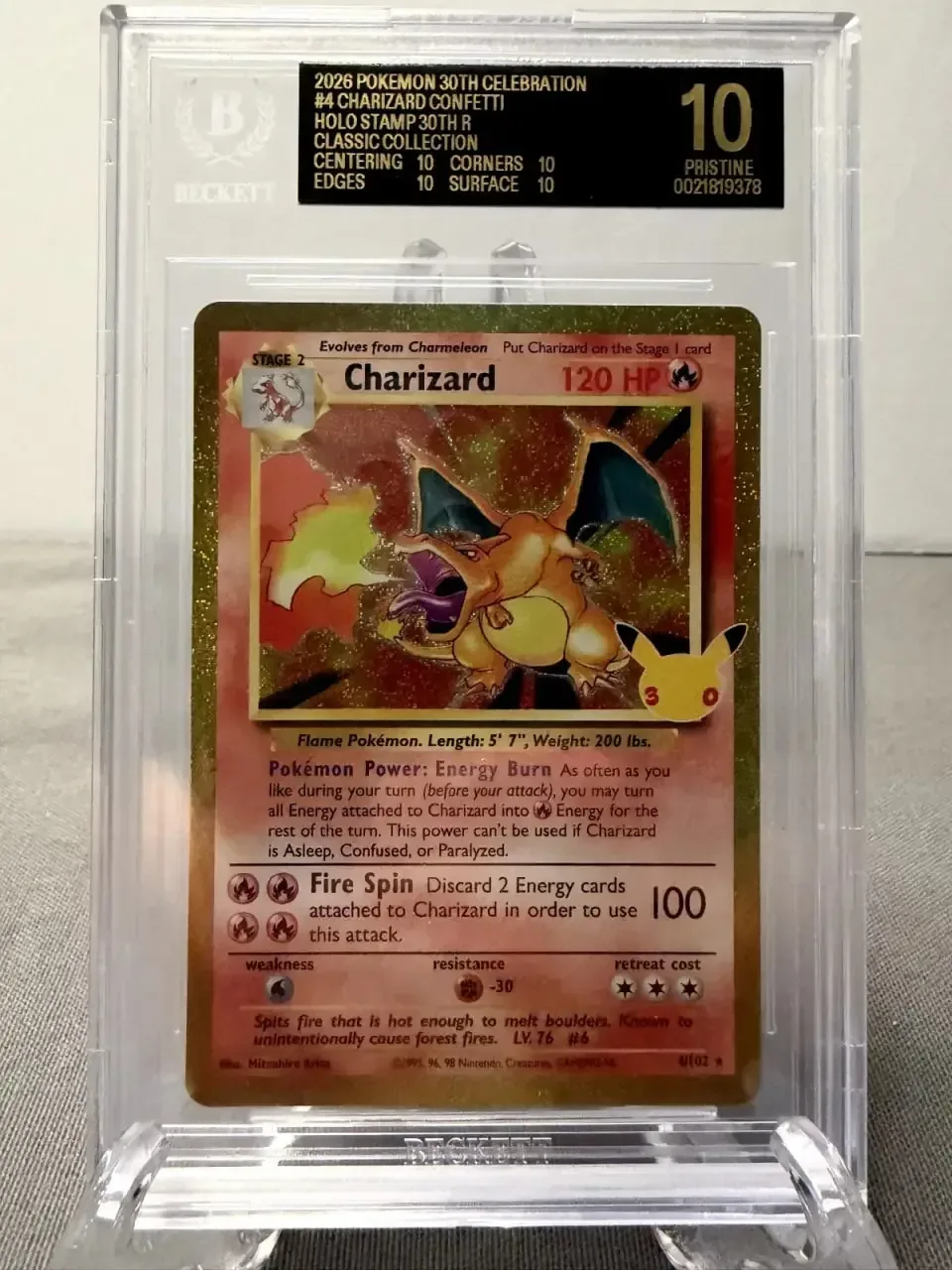
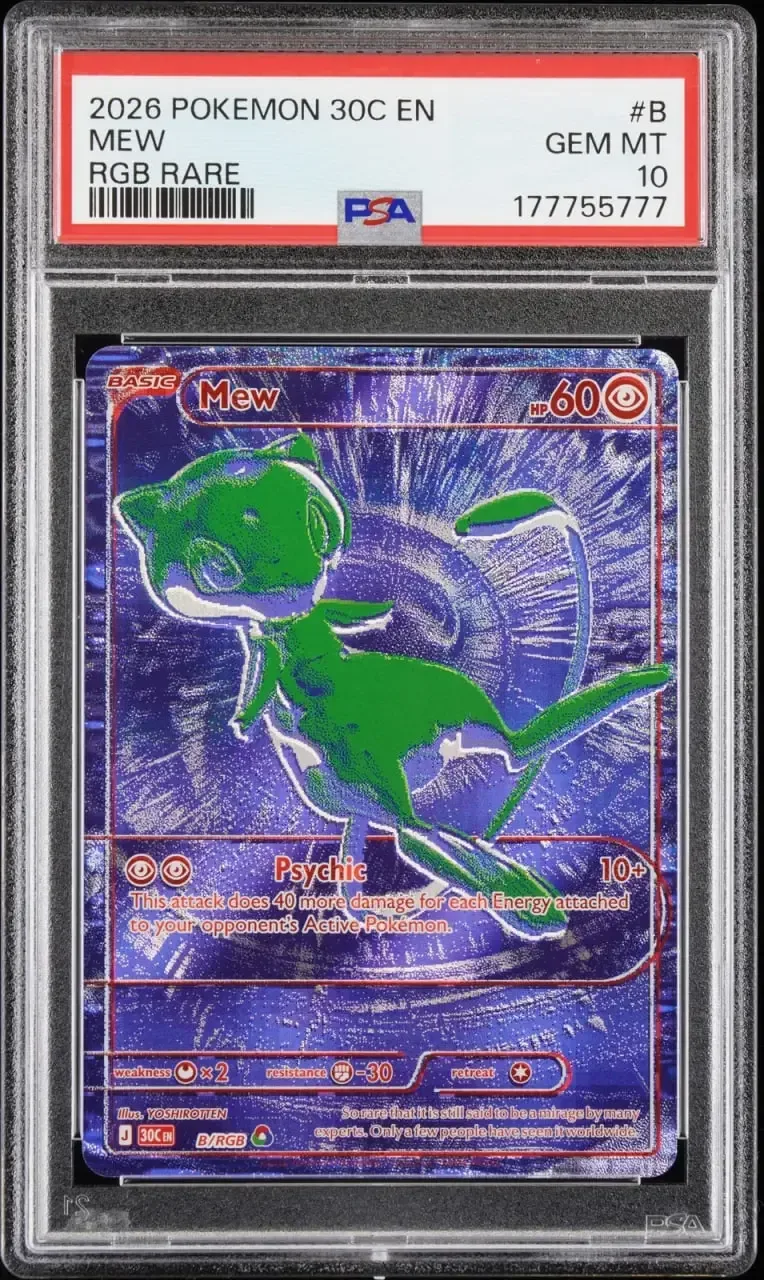
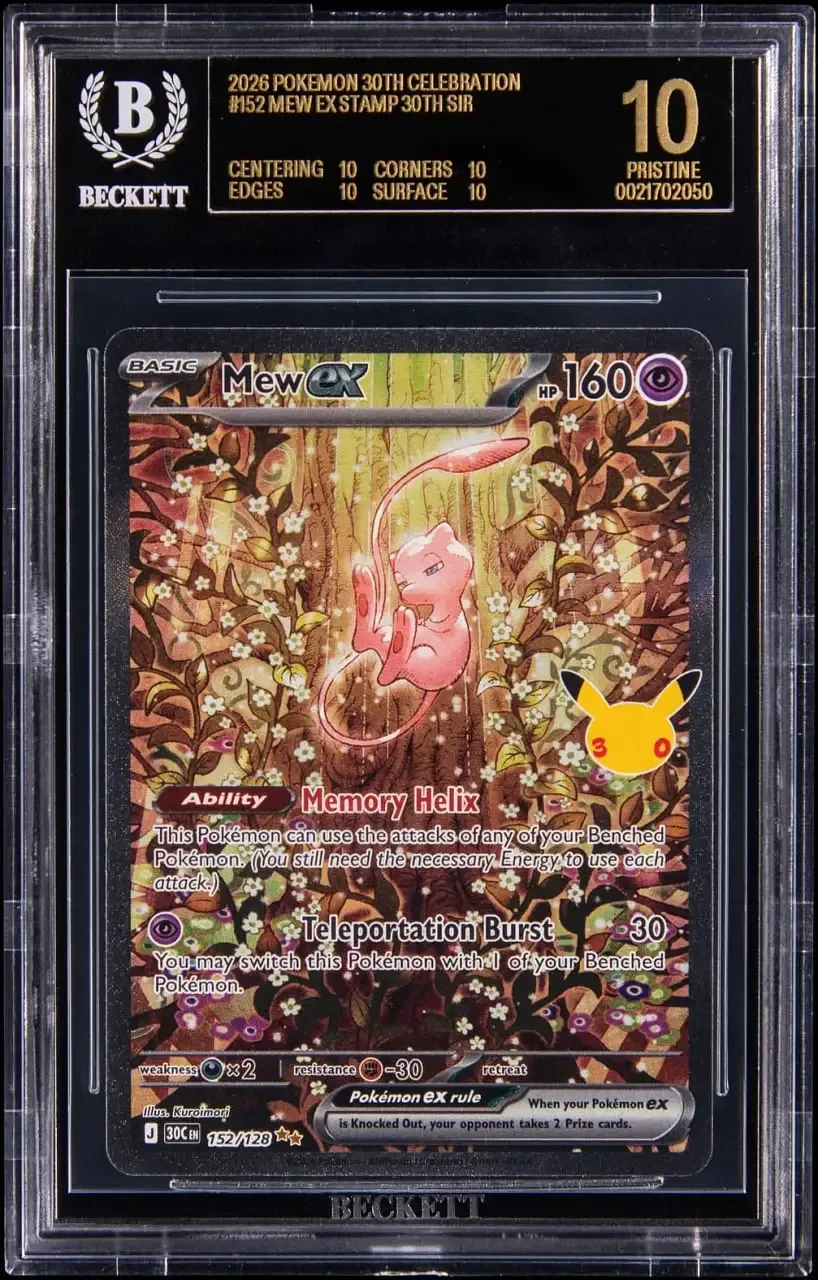
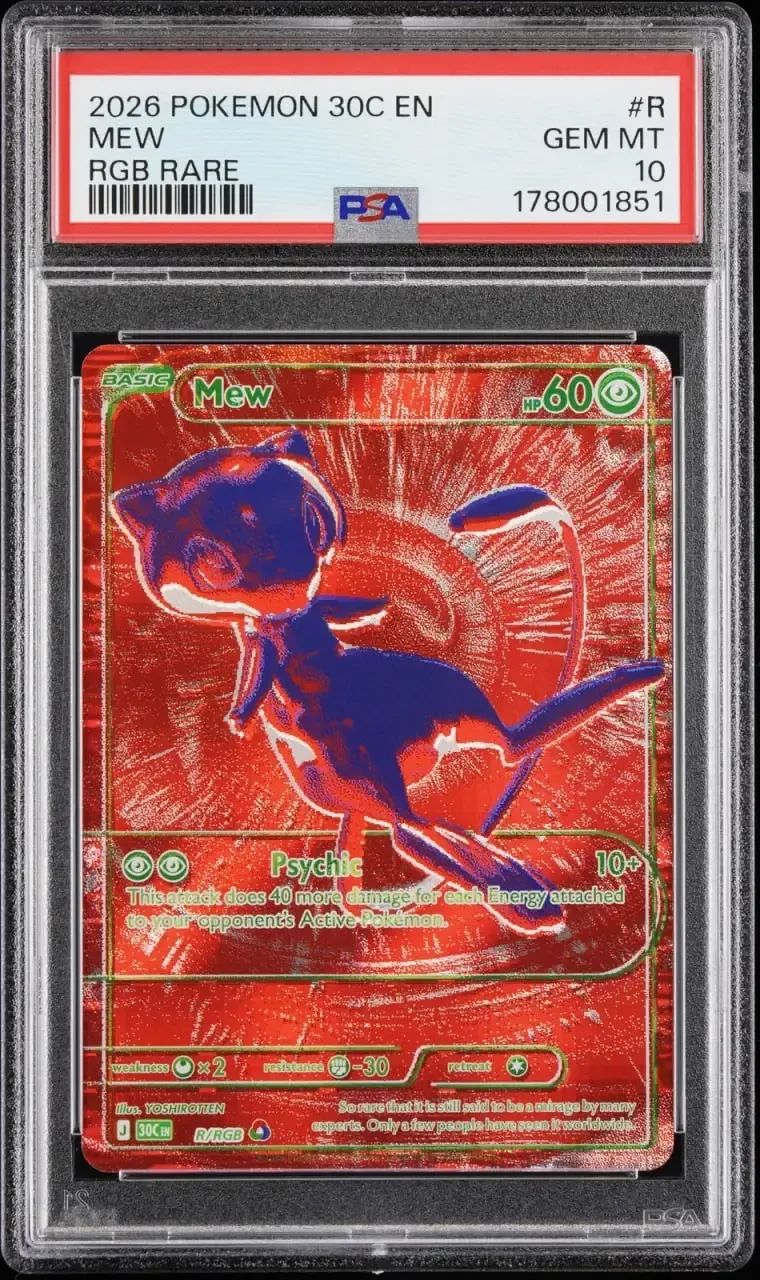
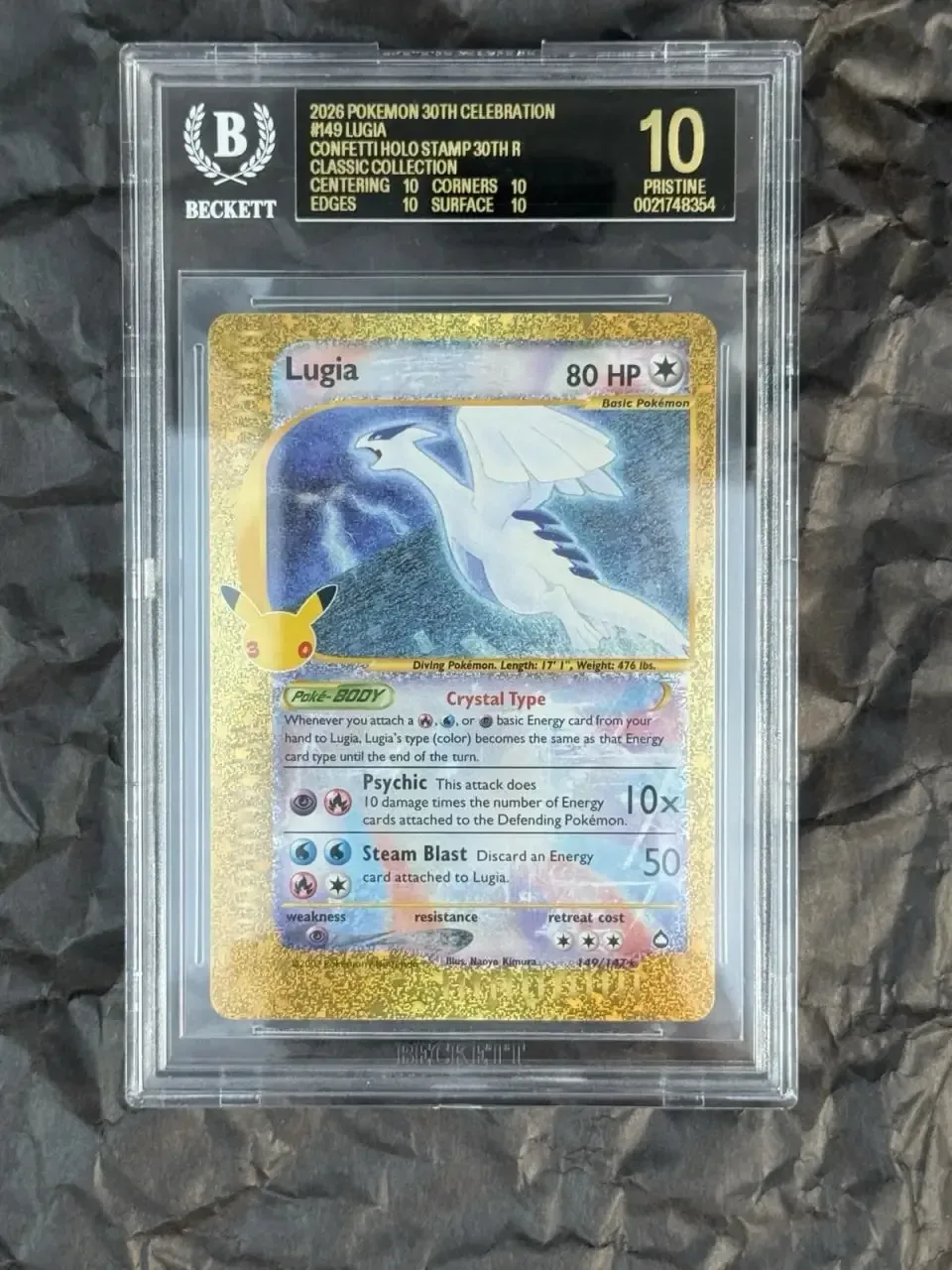
The headline result belongs to a 30th Celebration Classic Collection Crystal Lugia reprint graded BGS Black Label 10, which sold for $18,100. It is followed by a BGS Black Label 10 Base Set Charizard reprint at $15,000, then a PSA 10 Blue RGB Mew at $13,850.69, a BGS Black Label 10 Mew ex Special Illustration Rare at $13,725, and a PSA 10 Red RGB Mew at $13,700.
Together, those five transactions total $74,375.69. That is a striking early snapshot of demand for the set, but it is not a universal price guide for every copy of these cards. The common factor is condition: the list is not merely about which cards are hard to pull or visually popular. It is about the premium collectors will pay when those cards also receive the highest grades discussed here.
The five largest reported Pokémon 30th Celebration sales
- Classic Collection Crystal Lugia, BGS Black Label 10 — $18,100
- Classic Collection Base Set Charizard 4/102, BGS Black Label 10 — $15,000
- Blue RGB Mew, PSA 10 — $13,850.69
- Mew ex #152 Special Illustration Rare, BGS Black Label 10 — $13,725
- Red RGB Mew, PSA 10 — $13,700
Crystal Lugia takes the early crown
The $18,100 Lugia is a Crystal Lugia reprint from Aquapolis appearing in 30th Celebration’s Classic Collection. The underlying card is already described as the costliest re-released piece from the set in raw, ungraded form, but the auction result came from a copy with an extra ingredient that can overwhelm ordinary card-market logic: an exceptionally scarce grade at the time of sale.
When this Lugia sold, it was a POP 1 in BGS Black Label 10. “Population,” often shortened to “pop,” means the count of cards recorded by a grading company at a given grade. A POP 1 label means one example had been listed at that grade at that moment. For collectors who pursue the top registry-level copy of a card, that kind of scarcity can be as exciting as finding an extra booster pack in the laundry.
That circumstance changed quickly. The reported BGS population for 30th Celebration Crystal Lugia Black Label 10 copies had reached 53 by the time of writing. The shift is important context for anyone treating the $18,100 result as a standing benchmark. The sale captured a moment when the specific combination of card and grade was far more scarce on the population report than it later became. It demonstrates demand for an early top-graded Lugia, not necessarily what the next 53 copies will command.
Charizard remains a heavyweight, with a much smaller Black Label count
The Classic Collection’s Base Set Charizard 4/102 reprint is the second-largest sale on the list. A BGS Black Label 10 copy brought $15,000 early in the month. Charizard’s place near the top will surprise precisely nobody who has ever seen a Pokémon card display case, but the reported population gives the result particular context: only four 30th Celebration examples were listed as BGS Black Label 10 at the time noted.
This is also a useful reminder that a reprint can still have a collector story of its own. The Charizard uses a card design connected to the first Pokémon TCG release, and it has been revived more than once. Here, the appeal is layered: a recognizable historic design, a 30th Celebration Classic Collection appearance, and a scarce high-end grade. The $15,000 figure reflects that specific stack of qualities rather than establishing that all versions of the reprint belong in the same price neighborhood.
Related coverage includes Top 3 Biggest Sales From Pokémon 30th Celebration So Far.
There is a practical divide between a card’s identity and its condition census. Many collectors may enjoy a raw Charizard because it represents an old-school favorite brought into a current set. A buyer pursuing a Black Label 10 is competing for something much narrower: a copy viewed by the grading service as pristine enough to earn its most demanding label. Those are adjacent collecting goals, but they are not the same market.
The RGB Mew chase has two places in the top five
Mew accounts for three of the five sales, beginning with the Blue RGB Mew in PSA 10. It sold for $13,850.69 on October 11 and was the top recorded result for 16 days, before the first Black Label 10 sale moved ahead of it. The RGB Mew cards are described as the rarest cards available from an individual 30th Celebration pack, giving the chase an obvious pull before grading even enters the conversation.
The Blue version had a PSA 10 population of 171 at the time noted. That makes the sale substantial while also showing a very different scarcity picture from the then-POP 1 Lugia. A PSA 10 is still a top grade, but a population count in the hundreds means collectors should be cautious about attaching an automatic one-of-one-style premium to every subsequent copy. Individual auction outcomes can vary with timing, bidder overlap and how many comparable examples are presently available.
The Red RGB Mew, also in PSA 10, completes the top five at $13,700. Its cited PSA 10 population was 229. The $150.69 difference between the Blue and Red results is tiny relative to the overall sale prices, especially compared with the much more dramatic differences in their stated PSA 10 populations. It is a neat illustration of why collectors should avoid using population alone as a complete ranking system. Rarity, visual preference and the specific people bidding in a given sale can all matter.
Mew ex shows the premium for a scarce pristine Special Illustration Rare
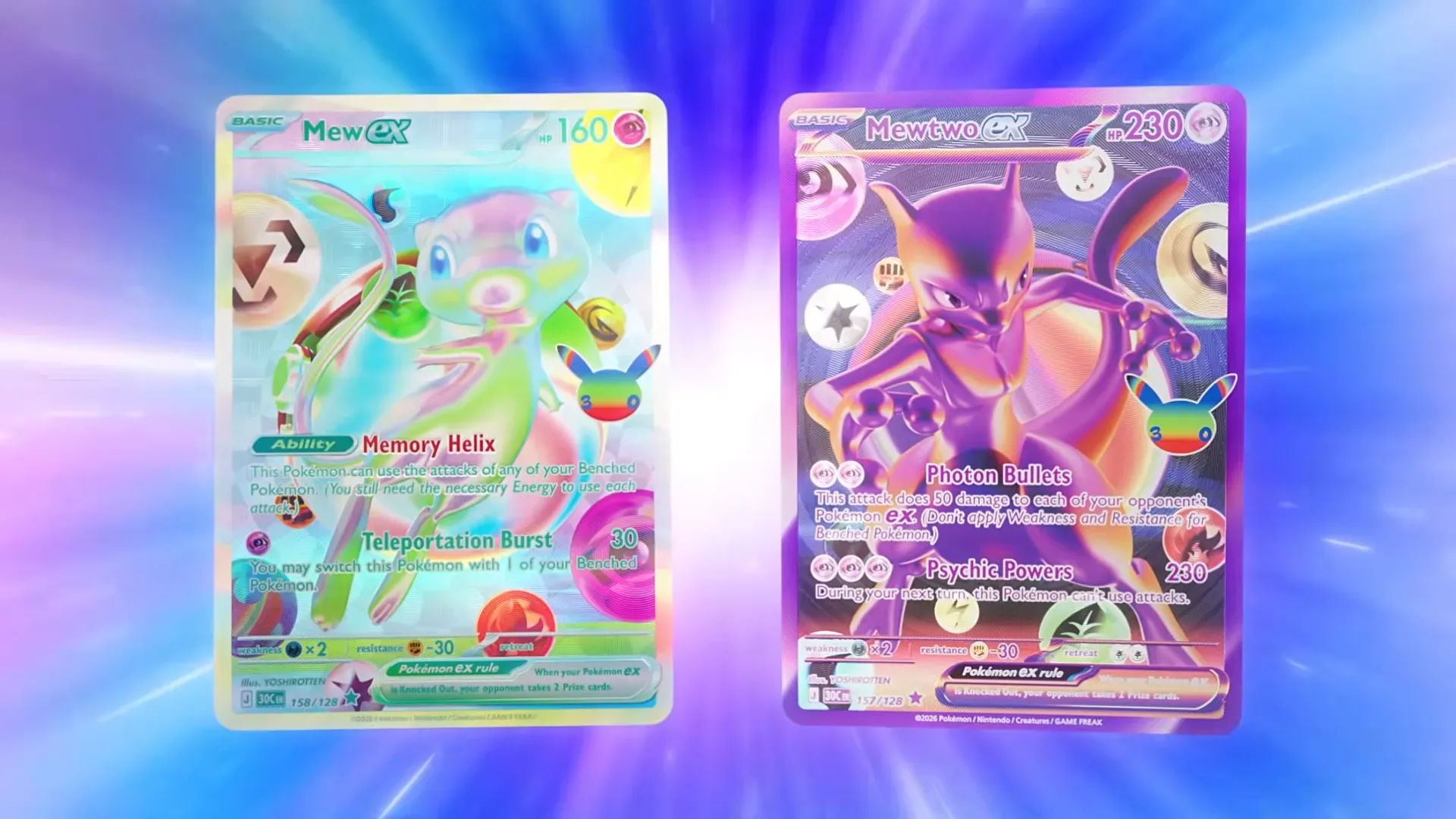
The other Mew result belongs to Mew ex #152, a Special Illustration Rare with the Memory Helix ability. Its BGS Black Label 10 sale reached $13,725 in early November. The reported Black Label population was only five, making it another example where the grade scarcity is central to the number.
A Special Illustration Rare, or SIR, is a rarity designation used here to distinguish this Mew ex from other versions in the release. It matters because collectors are not simply buying the character name or the gameplay text; they are buying a particular premium-card treatment. Pair that with a Black Label 10, and the auction is effectively pricing a specific card version in an exceptionally difficult condition tier.
That does not mean every Mew ex #152 carries a five-figure valuation. It means this five-figure result belongs to the small subgroup that combines the SIR card with the Black Label 10 slab. Keeping those details together is the difference between sensible market reading and accidentally turning a nice binder card into a family-budget spreadsheet.
What these sales do—and do not—say about 30th Celebration
The early leaderboard has a clear pattern. Classic Collection nostalgia is present through Lugia and Charizard. Pack-level rarity is present through Blue and Red RGB Mew. New-card artwork appeal is represented by Mew ex. But every sale is amplified by high-end grading, whether PSA 10 or BGS Black Label 10.
For collectors, the most useful lesson is to separate three questions:
- Which cards are desirable? Lugia, Charizard and Mew dominate this early list.
- Which versions are scarce? The RGB Mew variants are identified as the rarest single-pack pulls, while particular top grades can be scarce in a different way.
- What exactly sold? The grade, the grading company, the population at the time and the sale date all shape the comparable.
Population reports are moving targets, as the Lugia figure makes especially clear. A card can be extraordinarily scarce when an auction closes and noticeably more available after a wave of submissions returns. That does not erase the earlier transaction; it simply means the market conditions surrounding it may no longer be identical.
The same principle applies to these five results as a group. They establish that exceptional 30th Celebration copies have attracted serious money early on. They do not establish a floor for raw cards, lower-grade slabs, or even every PSA 10 and Black Label 10 that may appear later. Collectors comparing listings would do well to match card number, color variant where applicable, grading company and exact grade before treating one sale as a direct substitute for another.
High-dollar graded cards are hardly confined to Pokémon, either. For another example of how a singular pull can become an auction event, see this report on an Abraham Lincoln 1/1 Allen & Ginter cut autograph. In 30th Celebration’s case, though, the early drama is less about one card being literally unique and more about the collision of familiar characters, difficult pulls and pristine-condition scarcity.
For now, Crystal Lugia owns the largest reported sale at $18,100. Whether it remains the set’s defining price point will depend on future auction results and, crucially, whether the top-grade population continues to climb. In the card world, the creature may be legendary; the population report is the part that keeps changing forms.