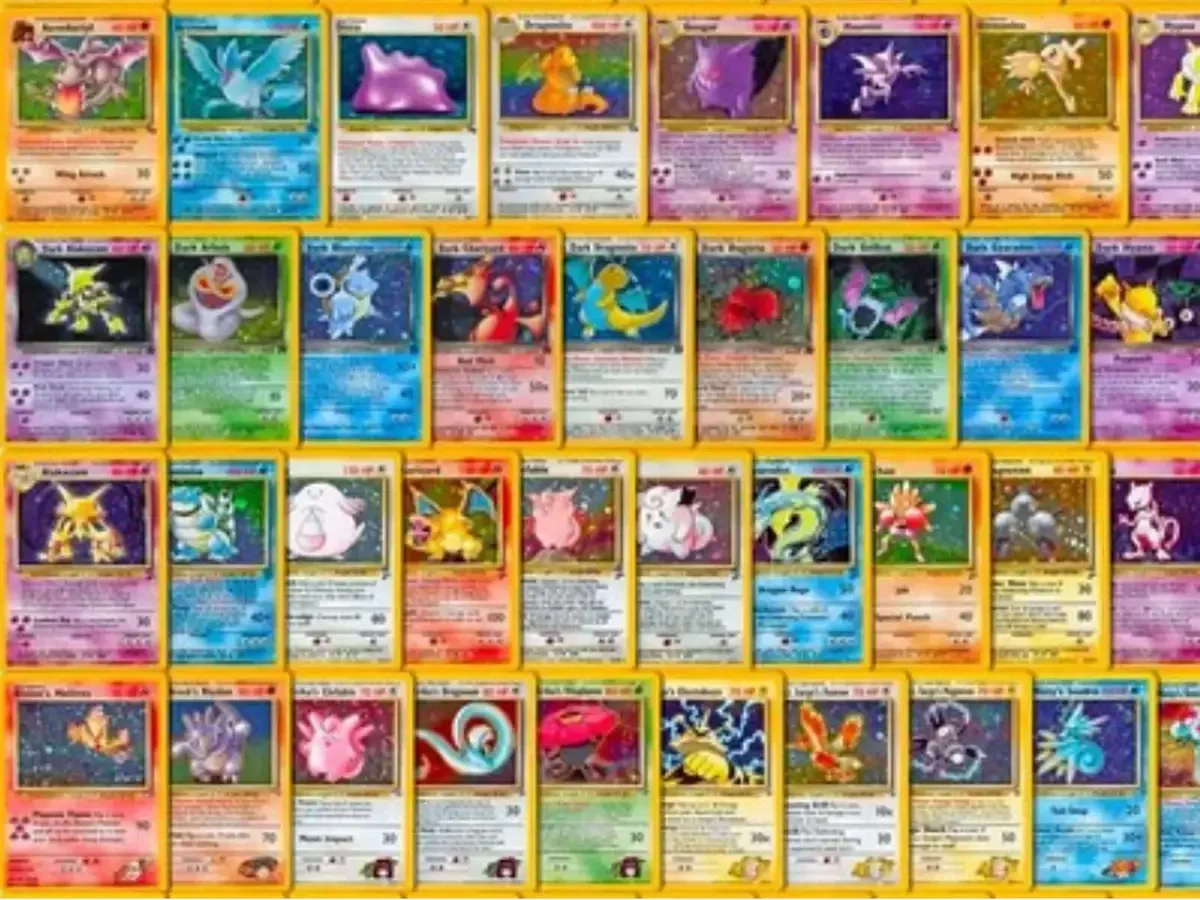
The upper tier of the trading-card market had another enormous week, with a 1999 Pokémon 1st Edition Shadowless Charizard in PSA 10 crossing the million-dollar line. Its $1,000,952.84 result on Sept. 9 was not merely the largest sale among the week’s five reported deals; it was bigger than the combined gap separating most of the remaining leaderboard.
Five major transactions together reached $2,193,672.77. Pokémon occupied four positions, spanning an early Japanese Gengar promo, a 2011 Lugia, and two extremely desirable Charizards. The exception was an artifact from another foundational game: a complete 295-card 1993 Magic: The Gathering Alpha set.
That mix makes the list more interesting than a simple parade of familiar Pokémon names. Condition, issue type, age, set history, and the challenge of assembling a complete run all matter at this level. Yet Charizard remains the star with the broadest instant recognition—and this week’s seven-figure result underlines why.
The five biggest reported TCG sales of the week
- 1999 Pokémon 1st Edition Shadowless Charizard #4, PSA 10 — $1,000,952.84
- 2006 Pokémon EX Dragon Frontiers Charizard Gold Star #100, PSA 10 — $384,000
- 2011 Pokémon Call of Legends Lugia #15, PSA 10 — $367,220
- 1993 Magic: The Gathering Alpha complete set — $234,499.93
- 1999 Pokémon Japanese Vending Masaki Promo Gengar #94, PSA 10 — $207,000
The second-place amount is $384,000 when calculated from the five-sale total and the four other disclosed figures. It edged the Lugia by $16,780, meaning the contest for the runner-up spot was far closer than the distant battle to challenge the Shadowless Charizard.
1. Shadowless Charizard passes the seven-figure threshold
The No. 1 card was a 1999 Pokémon Base Set holographic Charizard #4: a 1st Edition, Shadowless copy carrying a PSA Gem Mint 10 grade. It sold through eBay for $1,000,952.84 on Sept. 9.
“Shadowless” is an important part of that description, not decorative collector jargon. Early English Base Set printings can be identified by the absence of the later shadow effect around the Pokémon’s artwork frame. Combined with the 1st Edition designation, it identifies a version positioned at the earliest and most sought-after end of English Pokémon collecting.
A pristine grade adds another crucial layer. The original English Pokémon cards were made to be opened, handled, traded, and played with by children in 1999. Decades later, a high-grade example of the franchise’s marquee monster from its first English set represents an unusually narrow intersection of character appeal, era, condition, and print variation.
This sale finished more than $600,000 ahead of the No. 2 card. It alone accounted for roughly 45.6% of the $2.19 million five-sale total, a concentration that demonstrates just how heavily a premier Charizard can tilt a weekly auction snapshot.
Related coverage includes $1 Million Charizard Headlines a $2.19 Million Week for Pokémon and Magic Card Sales.
2. Charizard Gold Star holds the runner-up position
The other Charizard in the top five came from 2006’s EX Dragon Frontiers: the holographic Charizard Gold Star #100 in PSA 10. Its $384,000 sale placed it second for the week.
Gold Star Pokémon are major chase cards from their era, and Charizard is naturally among the most prominent names in that category. The card’s standing is further shaped by its top-grade population: 98 copies have received PSA 10 grades. That does not establish how many copies exist in every condition, or how many might appear for sale at any given time, but it does convey why Gem Mint examples attract attention.
The result also illustrates the range of collectible eras that can support premium Charizard demand. The million-dollar leader is tied to Pokémon’s earliest English release. This No. 2 card comes from a set issued years later, proving that collectors at the top end are not focused on the Base Set alone.
3. Call of Legends Lugia surges to $367,220
Lugia was close behind in third. A PSA 10 2011 Pokémon Call of Legends holographic Lugia #15 realized $367,220 in an auction that drew 49 bids and closed early Thursday morning.
The final number was notable both on its own and within the auction. It was reported to have reached nearly twice the amount of that event’s next-highest sale. On the weekly chart, it landed just $16,780 behind the Charizard Gold Star, putting a relatively later Pokémon release within reach of a card often considered one of its era’s major prizes.
Lugia has enduring significance for Pokémon fans, but the PSA 10 designation is again essential context. A card’s numerical grade does not turn every copy into a record contender; rather, the market distinguishes sharply between ordinary circulated examples and specimens that satisfy stringent standards for centering, surfaces, corners, and edges. At the peak, a small change in condition can separate a recognizable card from a headline-making one.
4. A full Magic Alpha set represents a different kind of trophy
Pokémon did not sweep the slate. The week’s fourth-largest deal was a complete English Alpha set from 1993 Magic: The Gathering, which sold on eBay for $234,499.93 on Sept. 11. The seller described the 295-card group as excellent/lightly played.
Alpha was released in August 1993 as the first Magic: The Gathering set. Its importance therefore differs from the individual-card focus seen elsewhere on this list. Buying a complete Alpha set means acquiring the entire first set from the game that became a cornerstone of tabletop gaming, rather than pursuing one iconic character or one top-graded single.
Condition still matters, of course, but a complete set also carries the distinct appeal of completeness. It is a daunting collecting target more than three decades after release, and it captures a format of collecting that cannot be reduced to one serial number on one grading label.
For readers who follow cardboard markets across game lines as well as eras, our coverage of 2026 Topps Update Series Baseball pre-orders and chase cards offers another view of how scarcity, set-building, and recognizable names shape modern collecting conversations.
5. Masaki Promo Gengar closes the list at $207,000
Fifth place belonged to a 1999 Pokémon Japanese Vending Masaki Promo Gengar #94 in PSA 10. It sold through eBay for $207,000 on Sept. 12.
The card originated through Japan’s Communication Evolution Campaign, giving it a distribution story far removed from a conventional booster-pack pull. Promo cards often gain their character from precisely that sort of unusual route to collectors, and the Masaki Gengar has become one of the key early Gengar pieces.
PSA has graded 84 copies at Gem Mint 10. As with the Dragon Frontiers Charizard figure, that population number is most useful as one clue to the card’s high-grade profile rather than as a full census of every surviving card. Still, it helps explain why a top-condition example of this distinctive Japanese promo can command $207,000.
What the week’s numbers show
The five sales span 1993 through 2011, two major trading-card games, individual graded cards and a complete set, English and Japanese releases, and several distinct routes to desirability. Despite those differences, all five reside in a market where provenance, preservation, and cultural recognition can converge at extraordinary price points.
The dominant headline remains simple: a PSA 10 1st Edition Shadowless Charizard exceeded $1 million. But the supporting figures give the week its real texture. A Gold Star Charizard reached $384,000, Lugia hit $367,220, Alpha set completion brought $234,499.93, and an unconventional Gengar promo finished at $207,000. Together, they form a $2,193,672.77 reminder that the hobby’s highest end remains driven by far more than one card—even if Charizard is still very capable of owning the spotlight.