The highest end of the trading card market just staged an extremely expensive five-card combo attack. The five largest reported TCG sales recorded from September 13 through September 20 reached $11,339,471, with every entry clearing $500,000.
Pokémon supplied four of the five results. The exception was hardly a lightweight: a PSA 10 copy of Magic: The Gathering's Alpha Black Lotus sold for more than $2.2 million. Even that landmark-grade card finished third, behind two examples of Pokémon's elusive Pikachu Illustrator promo.
It is a startling weekly concentration of value. The prior week's five biggest TCG transactions combined for nearly $2.2 million, meaning this top-five total was more than five times higher. That does not establish a universal price move for every card, sealed box or collector. It does, however, show what can happen when unusually scarce, culturally famous pieces in elite condition arrive for sale at the same time.
The five reported sales
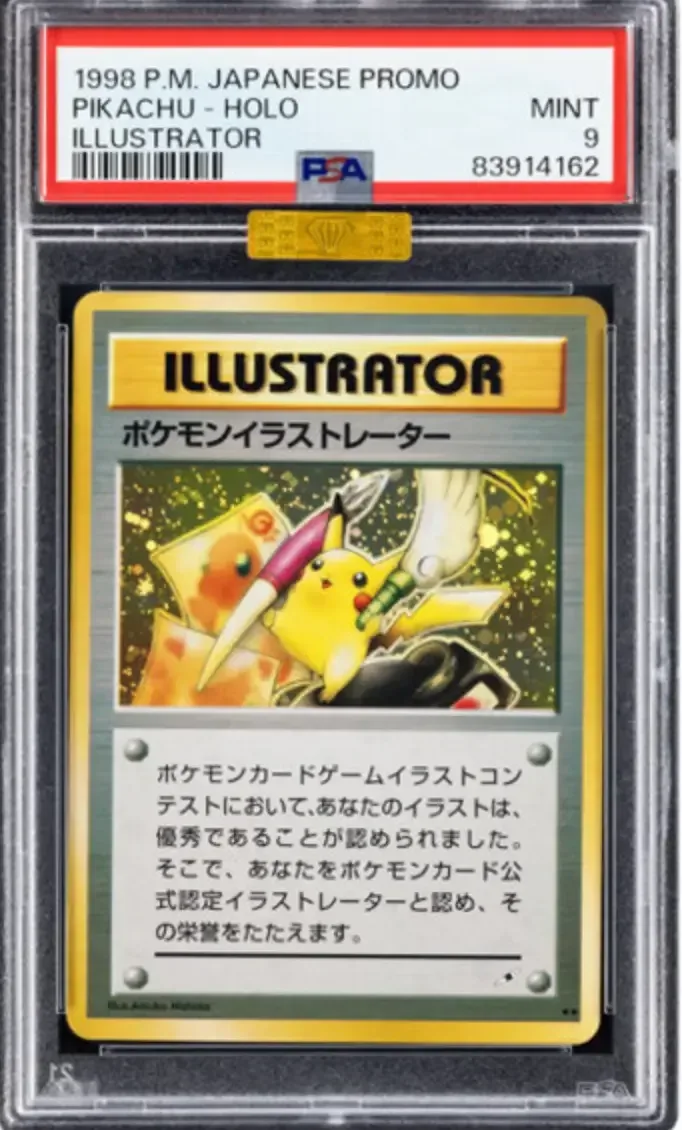
- Pokémon Pikachu Illustrator Unnumbered Promo CoroCoro Comics, PSA 9 — $5,000,000. This PSA 9 copy sold through Heritage on September 18.
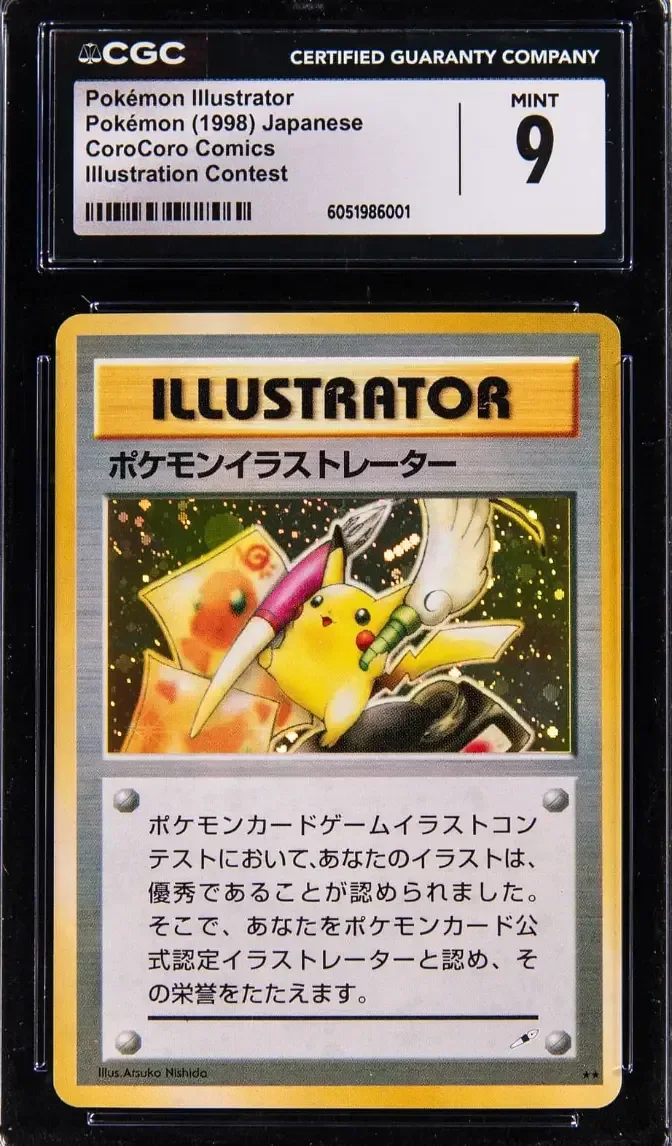
- 1998 Pokémon Japanese CoroCoro Comic Promo Illustrator Pikachu, CGC 9 — $2,806,271. This CGC Mint 9 example sold through Goldin on September 19.
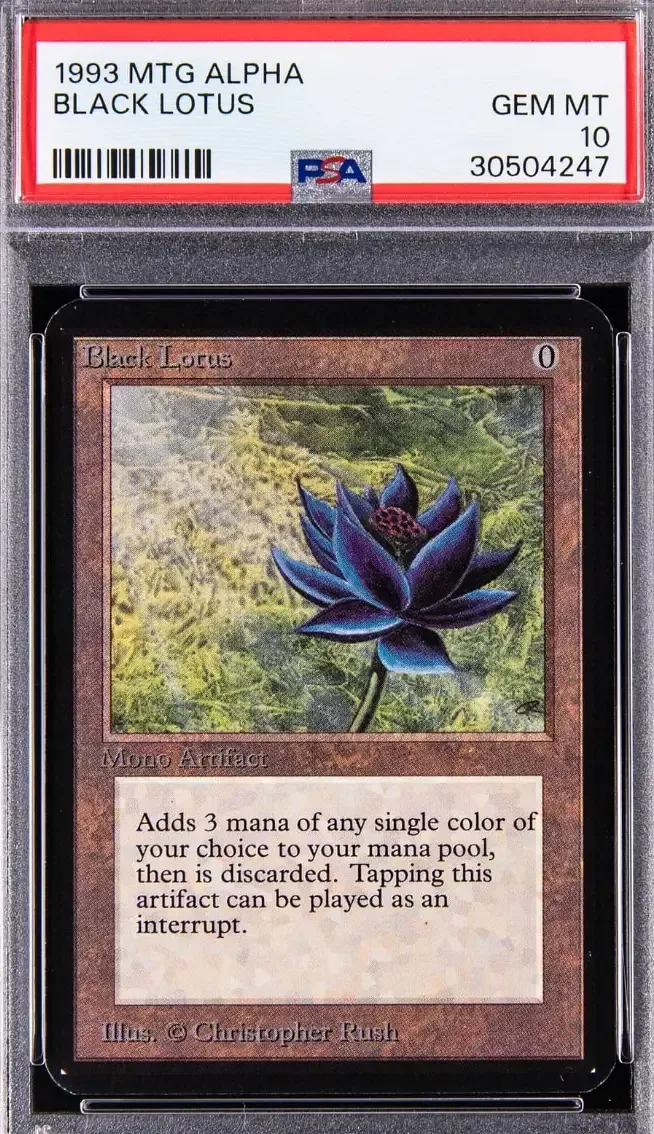
- 1993 Magic: The Gathering Limited Edition Alpha Black Lotus, PSA 10 — $2,208,200. The Gem Mint 10 Alpha card sold through Goldin on September 19.
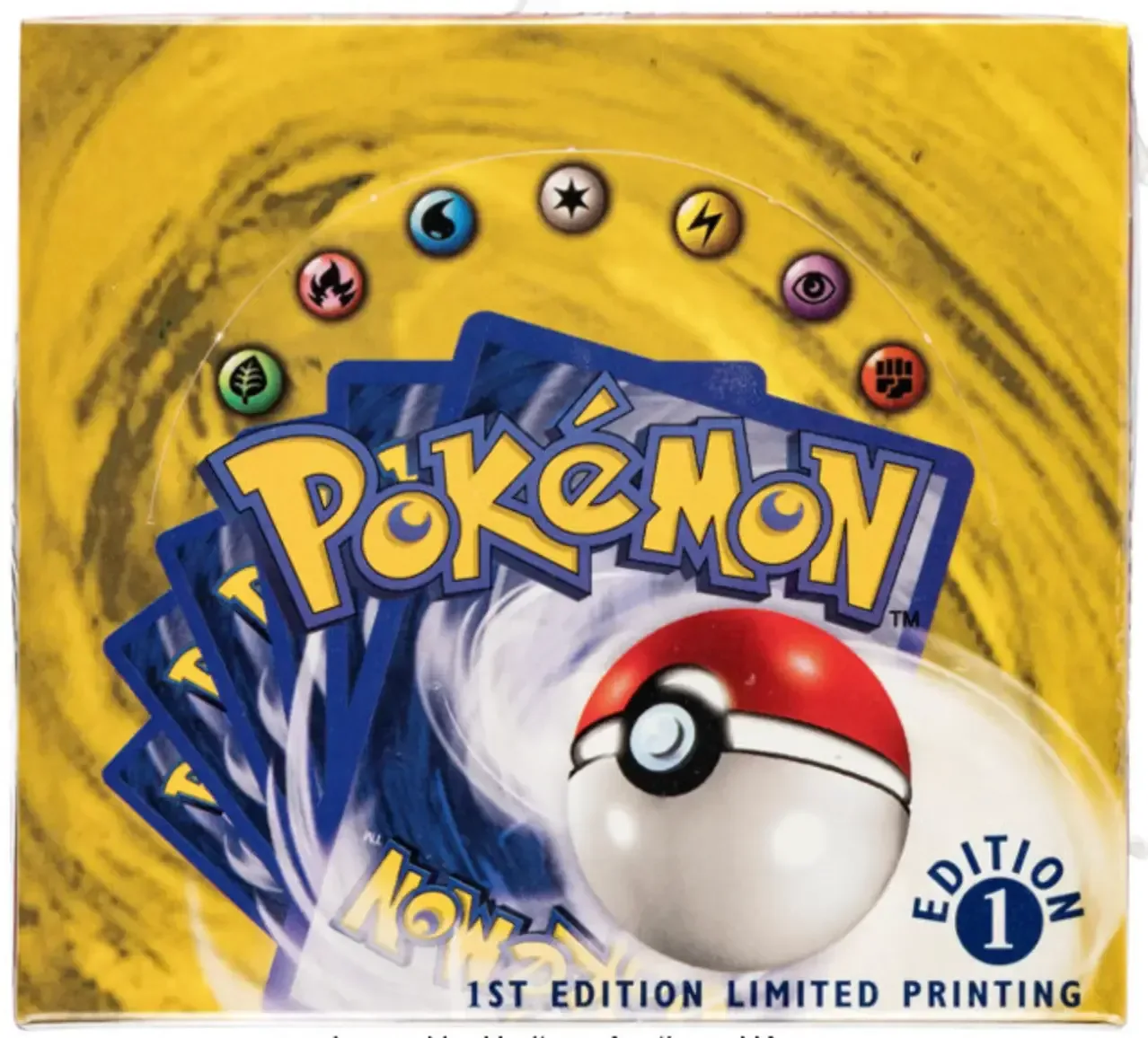
- 1999 Pokémon 1st Edition Base Set sealed booster box — $750,000. The unopened box sold through Heritage on September 18.
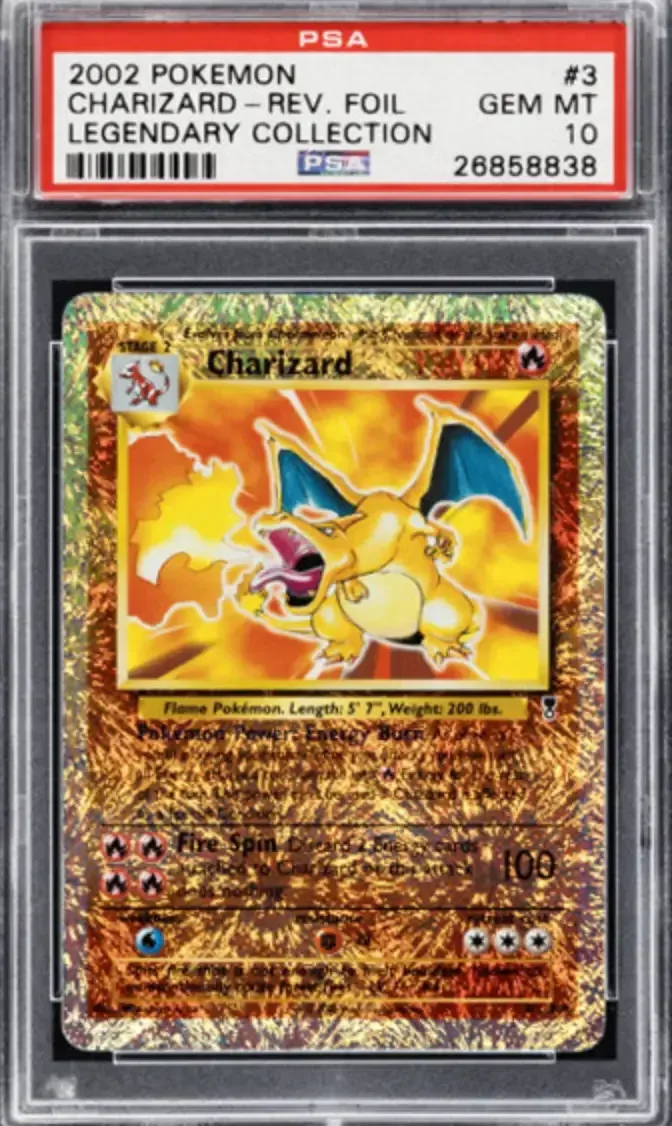
- 2002 Pokémon Legendary Collection Charizard Reverse Holo #3, PSA 10 — $575,000. This Gem Mint 10 Charizard sold through Heritage on September 18.
The combined $7,806,271 for the two Illustrator Pikachus accounts for just under 69% of the five-sale total. The $5 million PSA 9 alone represents roughly 44% of the group. In other words, this was not merely a very strong Pokémon week. It was a week dominated by a single trophy-card name, with a Black Lotus massive enough to feel almost like supporting cast.
Why Pikachu Illustrator sits in a separate conversation
Pikachu Illustrator is not a typical set chase card. The promo was awarded through illustration contests run by Japan's CoroCoro Comic, rather than distributed in booster packs or ordinary retail channels. That origin matters because it gives the card a different kind of scarcity story from a card that collectors could theoretically pull from a mass-produced product.
The available evidence points to three forces converging behind the enormous results: its contest-prize distribution, the limited number of copies that entered collectors' hands, and Pikachu's extraordinary visibility as Pokémon's defining character. A card can be old, graded and rare without becoming a seven-figure object. Pikachu Illustrator has the much harder-to-replicate combination of rarity and immediate recognition. Even a casual observer understands who Pikachu is; dedicated collectors understand why this particular card is not something that appeared in ordinary packs.
The two results also offer a useful reminder about grading labels. The first-place card was a PSA 9; the second was a CGC 9, designated Mint. A numerical grade is an assessment of condition by a third-party grading company, while the company name is part of the item as buyers encounter it in the market. These sales do not prove that every PSA-graded card will command more than an equivalent CGC-graded card. The two Illustrator cards are separate copies with their own visual qualities, provenance, presentation and bidder interest. Still, the $5 million PSA 9 sale and $2.806 million CGC 9 sale are a dramatic example of how the holder and grade can sit alongside rarity in a buyer's valuation.
That is especially relevant in trophy-card collecting. At this level, the collectible is not interchangeable simply because another copy has the same printed character, name and grade number. Collectors can place value on the exact specimen, the grading company, the listing and the moment it appears in the market. A $5 million result is a record of one completed transaction, not an automatic menu price for every Pikachu Illustrator.
Related coverage includes Pikachu Illustrator Sales Drive $11.34M TCG Week.
Black Lotus breaks the Pokémon run
The card at No. 3 needs no apology tour. A 1993 Magic: The Gathering Limited Edition Alpha Black Lotus graded PSA 10 sold for $2,208,200. Alpha was the game's original 1993 release, and Black Lotus has long held signature-card status within Magic collecting. Pair that status with a PSA Gem Mint 10 grade and the result cleared $2 million.
“Alpha” is important terminology here. It identifies the original release named in the sale, not merely an early printing in a broad informal sense. “PSA 10,” meanwhile, is the listed Gem Mint condition grade. Together, the original-release designation, the game's most famous card name and an elite grade create the specific object buyers were bidding on.
Its third-place finish says more about the exceptional week than it does about Black Lotus. In a normal ranking of major TCG transactions, a $2.208 million card would be the central event. Here, it was bracketed by two contest-prize Pikachus worth a combined $7.8 million. Pokémon occupied four places in the top five, but Magic still supplied the only non-Pokémon entry—and one of the largest individual TCG sales in the period.
Sealed Base Set product becomes a top-five heavyweight
The fourth-place item was not a single card at all. A sealed 1999 Pokémon 1st Edition Base Set booster box sold for $750,000. The box contains 36 unopened booster packs, preserving the possibility of opening cards from the set, including the iconic 1st Edition Charizard.
That possibility is precisely what makes sealed material different from a graded single. With the PSA 10 Legendary Collection Charizard, the buyer knows the identified card and assigned condition. With a sealed booster box, the buyer is purchasing an intact product whose contents have not been revealed. The box's value is tied to its status as unopened vintage product, its connection to the U.S. launch-era Pokémon card phenomenon, its first-edition designation and the potential contents across its 36 packs.
Of course, “potential” should not be mistaken for a guarantee. A sealed box offers possibilities, not a promised Charizard or a promised grade. For a collector, that makes the decision to keep a box sealed or open it unusually consequential: opening permanently changes the item from one preserved product into individual packs and, eventually, individual cards. At $750,000, the box also demonstrates that the most expensive collectible in a card hobby need not be a slabbed single.
Collectors interested in the broader comic-adjacent side of card culture can also see how character recognition shapes attention across categories, whether the subject is Pikachu, Charizard or heroes such as those in Superman #42’s Kryptonite Kingdom story. The details of scarcity and distribution remain crucial, but instantly recognizable characters can make those details matter to a much larger audience.
Charizard's $575,000 “floor” for the week
Fifth place went to a 2002 Pokémon Legendary Collection Charizard Reverse Holo #3 in PSA 10, sold for $575,000 on September 18. That is an enormous result on its own, yet it became the least expensive entry in this particular ranking.
Legendary Collection is recognized for its distinctive reverse-holographic cards, and this Charizard represents that visual parallel in a Gem Mint 10 grade. A reverse holo is a variant treatment where the foil effect appears in areas different from the standard holographic presentation. Here, the designation is not a minor footnote: it identifies the particular version of Charizard that sold, from a set known for that style.
The sale also gives the week a useful lower boundary. No card in the top five sold for less than $575,000. Put another way, an elite-condition, early-2000s reverse-holo Charizard had to reach more than half a million dollars just to take fifth. It is a number that captures the unusual density of major sales without requiring anyone to assume every vintage Charizard behaves the same way.
What the numbers actually say—and what they do not
The clearest finding is narrow: a small group of exceptionally scarce or iconic TCG collectibles produced $11.339 million in five reported transactions during one seven-day window. Pokémon was the dominant franchise by count and by total value. Pikachu Illustrator was the defining card, with two copies filling the top two positions. Black Lotus confirmed its enduring place among the most valuable names in the category. Sealed 1st Edition Base Set product stood beside individual cards, and a PSA 10 Legendary Collection reverse-holo Charizard rounded out an unusually costly field.
The results should not be read as a blanket instruction to buy any Pokémon card, any sealed box or any high-grade slab. The five items are highly specific: contest-awarded promo cards, an original-release Magic icon in PSA 10, unopened 1st Edition product and a distinctive Charizard variant in PSA 10. Their prices reflect a rare alignment of item type, condition, historical position and bidder demand.
But the week does make one thing unmistakable: at the hobby's uppermost tier, provenance and presentation can be just as important as the character on the front. Pikachu may be the headline, yet the real co-stars are contest distribution, original-era status, an untouched seal and premium third-party grades. In the sort of week where $575,000 is fifth place, even the cardboard is probably checking its portfolio.