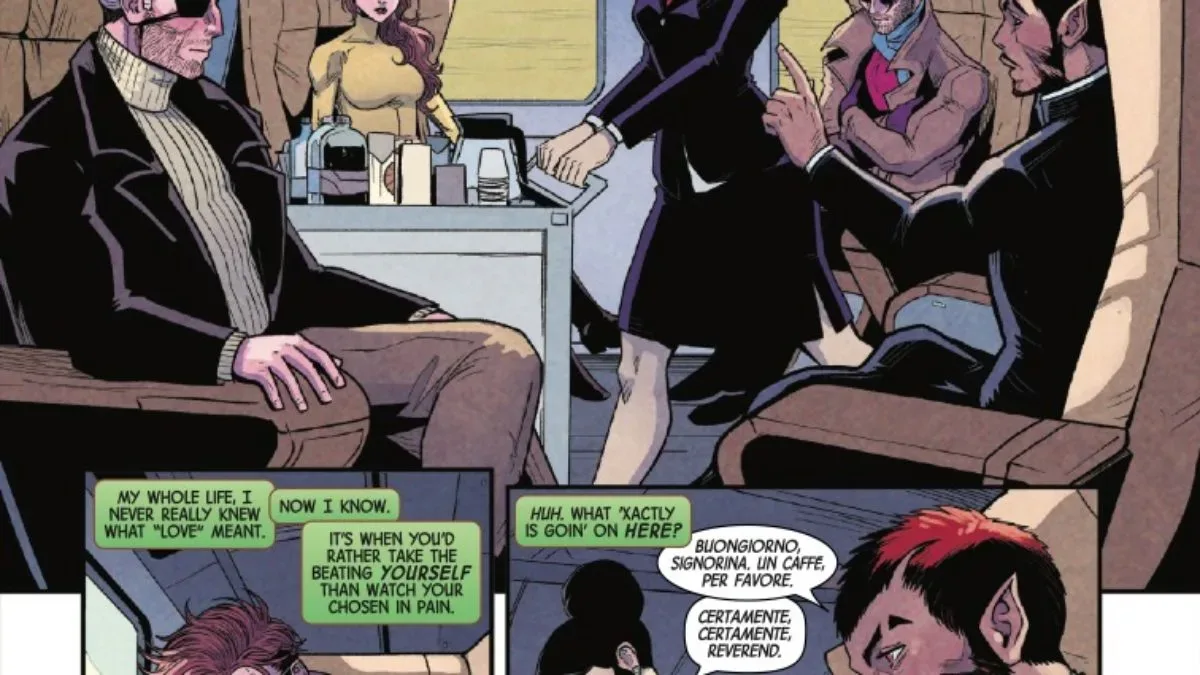
Uncanny X-Men #39 is set to continue “The Scavenged” on November 25, 2026, bringing a particularly personal threat to Wolverine. The issue’s central premise is not simply that Logan faces dangerous young mutants; it is that four damaged young mutants want to inherit what he represents, and intend to remove him before doing so.
Gail Simone writes the 32-page Marvel issue, with interior art and the main cover by Juan Frigeri. The book is rated T+ and listed at $4.99 in the U.S. Its solicited description frames the conflict around Wolverine’s long history as a mentor: he has offered guidance and protection to young mutants, but this new group sees his survival as an obstacle to their own path.
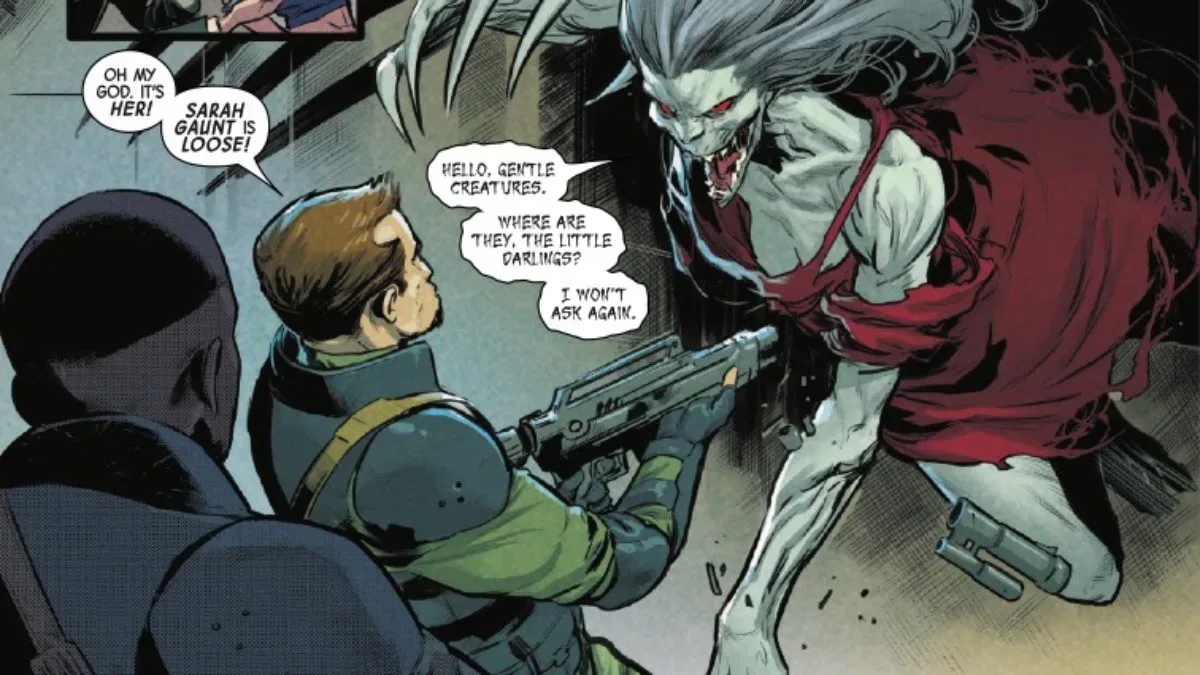
“The Scavenged” Part Two asks what happens when four young mutants want to follow Wolverine’s footsteps only after ensuring he is out of the way for good.
A legacy story with a lethal premise
“Legacy” can mean many things in superhero comics. It may concern a costume, code name, mission, team position or moral responsibility. In this case, the setup is more pointed: the young mutants are not merely inspired by Wolverine or trying to prove that they can match him. Their stated aim is homicidal, turning an apparent succession story into a direct confrontation over who has the right to define Wolverine’s influence.
That distinction matters. Wolverine’s mentorship is described as protection and guidance, which establishes more than a fighting pedigree. The conflict consequently has room to explore a fundamental tension: whether people can claim the ideals or methods of someone who helped them while rejecting the person himself. The four young mutants may aspire to Wolverine’s reputation, but their willingness to eliminate him creates an immediate question about how much of that legacy they truly understand.
The issue also positions the group as “damaged,” a description that signals complicated motivations rather than a simple contest of strength. Damage does not excuse their plan, but it can explain why mentorship, authority, safety and identity may become fraught subjects. The premise gives “The Scavenged” an inherently unstable emotional center: the person who has spent time safeguarding young mutants is being challenged by young mutants seeking control of his place in their world.
Haven House faces an urgent crisis
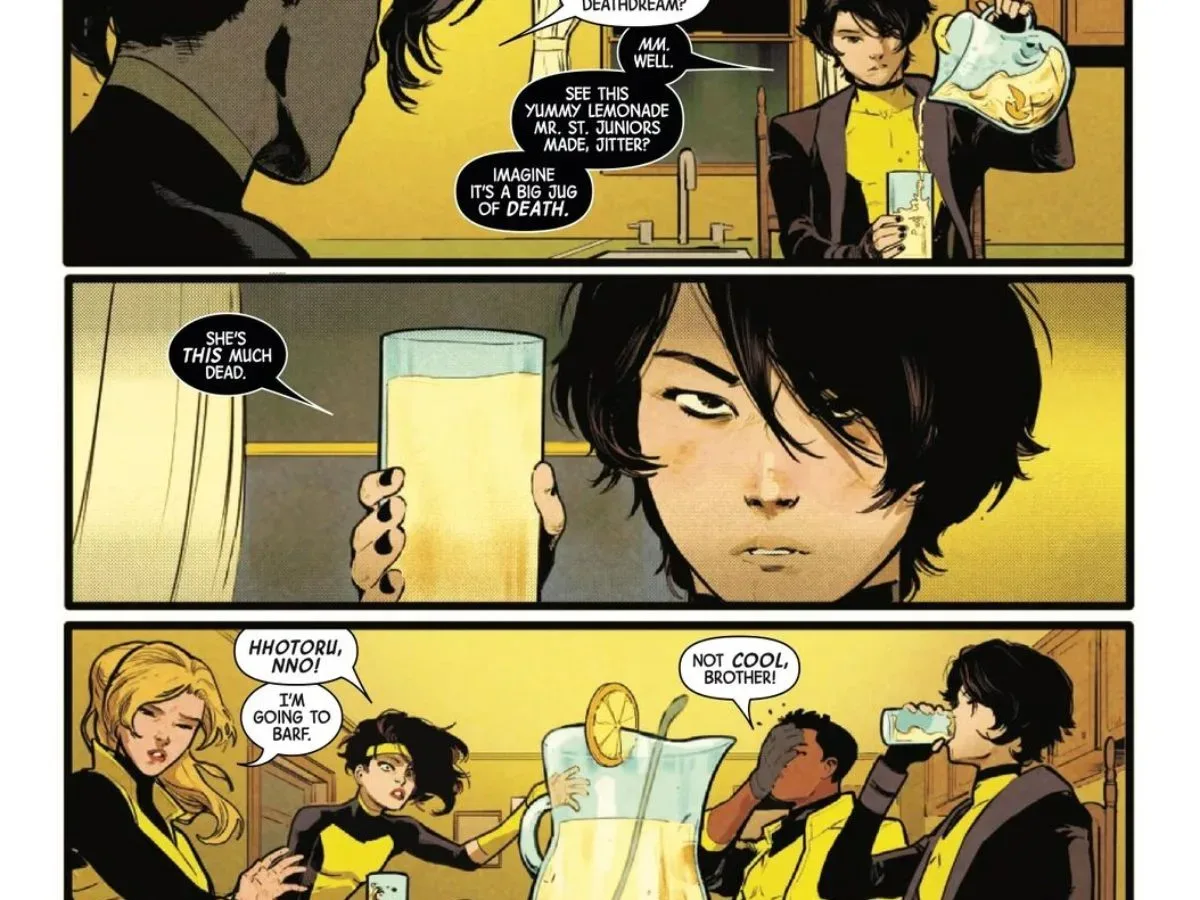
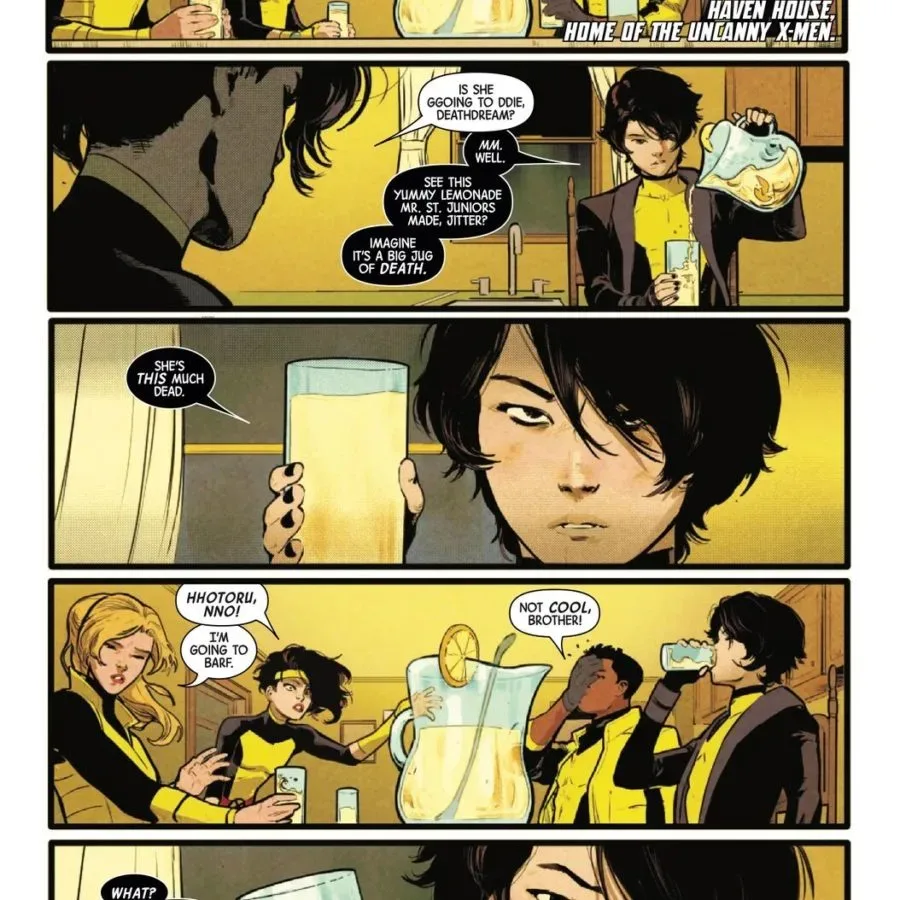
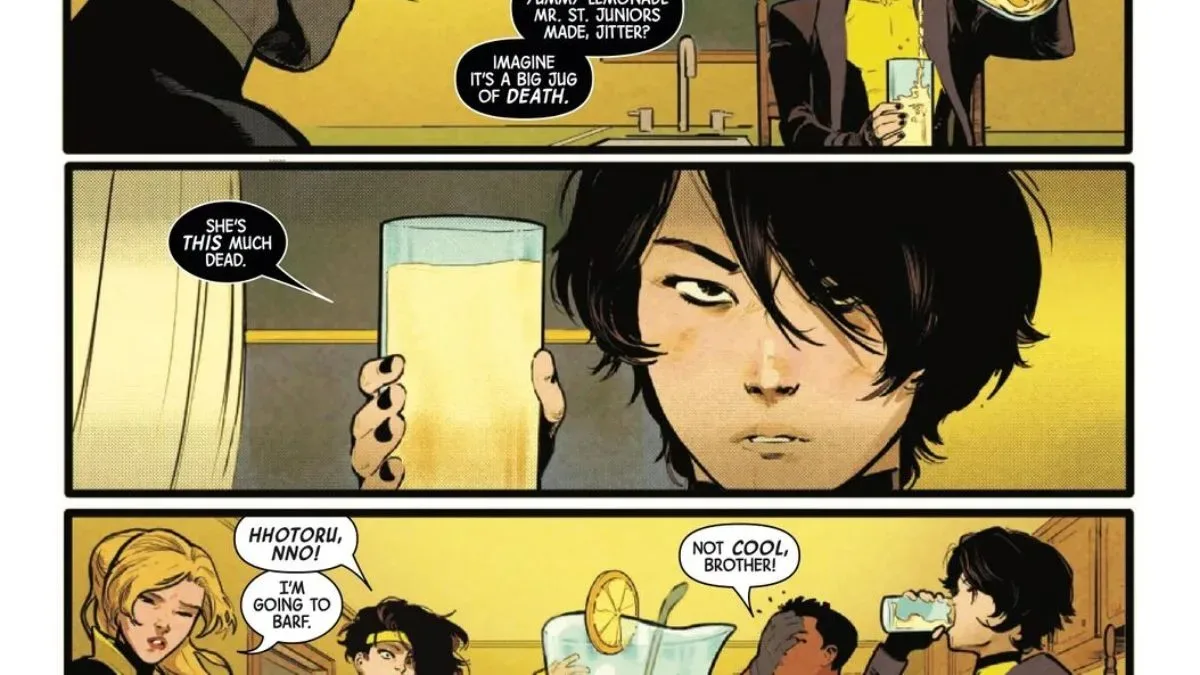
Alongside Wolverine’s escalating problem, the preview setup places Leticia Leech in critical condition. A crowd gathers outside Sacred City Hospital, where security is holding people back, while the situation at Haven House is shaped by conflicting reactions to her medical emergency.
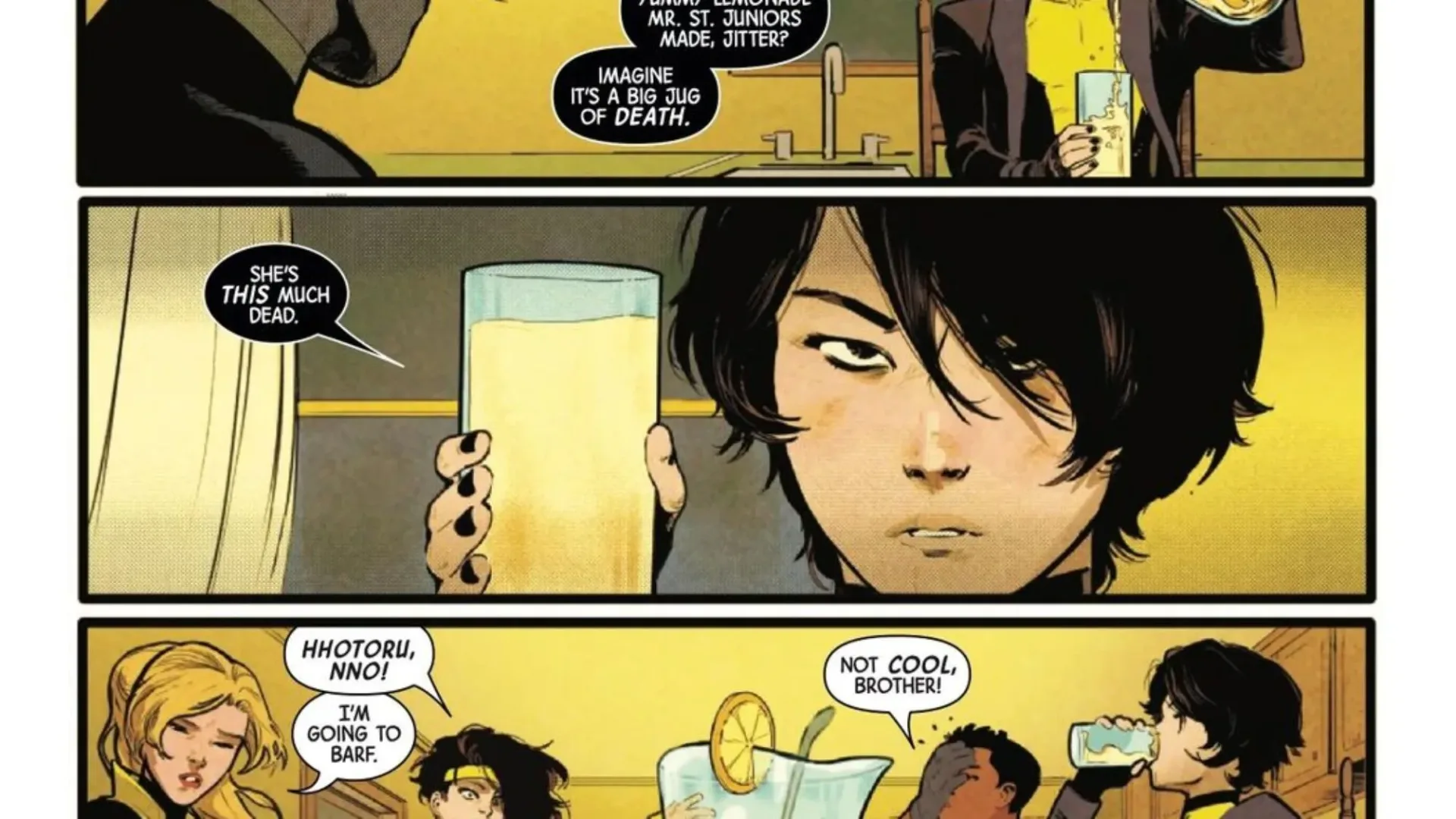
The young mutants discuss why they should care about someone who previously threatened them. Their answer is not presented as uncomplicated affection or forgiveness. Instead, the concern is tied to her age and to a shared mutant identity. That makes the situation a useful counterpoint to the Wolverine storyline: both threads involve connection within a community where fear, injury and past conflict have made trust difficult.
There is also a deliberately colder response from Leticia’s agent, who weighs the potential public-relations value of the tragedy. The contrast is sharp. Haven House’s discussion concerns whether empathy can exist despite personal history, while the agent’s interest shifts toward reputational consequences. By placing those reactions near each other, the issue’s setup emphasizes that a crisis can expose radically different priorities in the people standing around it.
What “Part Two” means for readers
As the second chapter of “The Scavenged,” issue #39 is positioned as a continuation rather than a standalone resolution. Readers already following the series should expect the threat to Wolverine’s role to move forward, while the Haven House and hospital material adds pressure beyond the central pursuit.
For readers returning after a break, the core conflict is direct enough to understand from the solicitation: four young mutants are pursuing Wolverine’s legacy, and Wolverine himself is in their way. The larger emotional stakes rest on why they believe removing a mentor is necessary, and on how the surrounding mutant community responds when a vulnerable figure is in critical condition.
Wolverine stories can often be reduced to a reputation for violence and endurance, but the premise here foregrounds his capacity as a guide. That is the key practical reason this issue may stand apart for readers interested in character relationships. The danger is not only physical. It is a challenge to whether Wolverine’s protection has changed the people around him, or whether the same legacy can be twisted into justification for a new cycle of harm.
Creative team, formats and covers
Simone is credited as writer, while Frigeri provides the art and main cover. In comic-book terms, the main cover is the standard front cover associated with the regular edition. Marvel has also listed three alternate covers:
- A German Peralta 1:25 variant
- A Michele Bandini variant
- A Peach Momoko Momo-Tone variant
A 1:25 variant is a retailer incentive cover: shops generally order a specified number of qualifying copies of the standard issue to be eligible to order one copy of that alternate version. It is distinct from an ordinary alternate cover that is simply listed as another edition. The provided listing gives all three variants a $4.99 U.S. price, though individual comic shops may make their own decisions about stocking and selling them.
The issue carries the product code 75960620917003911, with the Peralta, Bandini and Momoko variants listed under related codes. For readers simply looking to follow the story, the standard issue remains the clearest entry point; the alternate covers are presentation choices rather than evidence of different story content.
A mutant-community conflict, not just a Wolverine fight
The central selling point of Uncanny X-Men #39 is its collision between inheritance and hostility. The four young mutants are said to be skilled enough to evoke Wolverine’s famous status, but their method makes the claim to succession deeply suspect. At the same time, the Haven House material introduces a more communal question: what people owe one another when someone vulnerable has hurt them, frightened them or otherwise complicated the possibility of sympathy.
That pairing gives “The Scavenged” two different forms of legacy pressure. One concerns what younger mutants do with the example Wolverine has set. The other concerns whether a shared identity can still create responsibility amid conflict. Both threads are rooted in difficult relationships rather than a clean hero-versus-villain divide.
Readers watching Marvel’s mutant line more broadly may also want to note that Jean Grey has her own upcoming spotlight; Jean Grey #1 brings the Phoenix back to Earth after DNX. For Uncanny X-Men, though, the immediate concern is Wolverine’s dangerous would-be successors and the crisis unfolding around Leticia Leech.
Uncanny X-Men #39 goes on sale November 25, 2026, from Marvel. It is a 32-page, T+ issue by Gail Simone and Juan Frigeri, with “The Scavenged” moving into its second chapter.