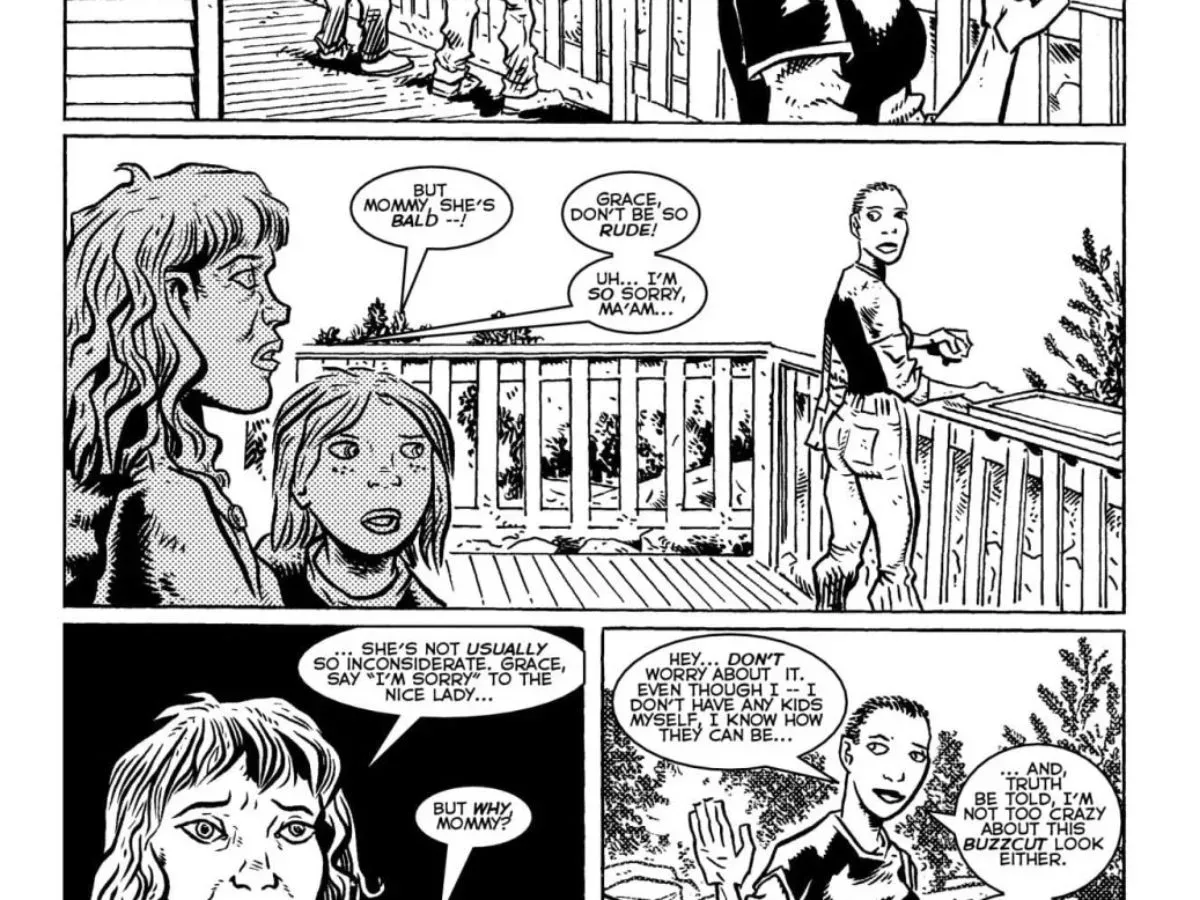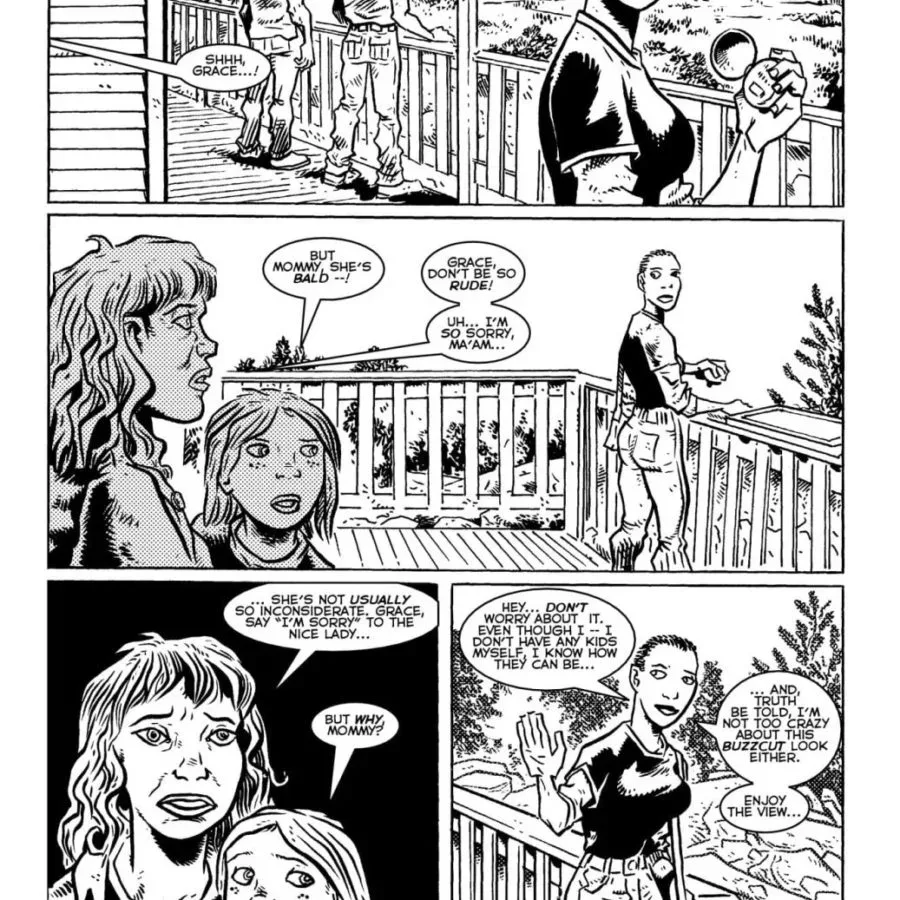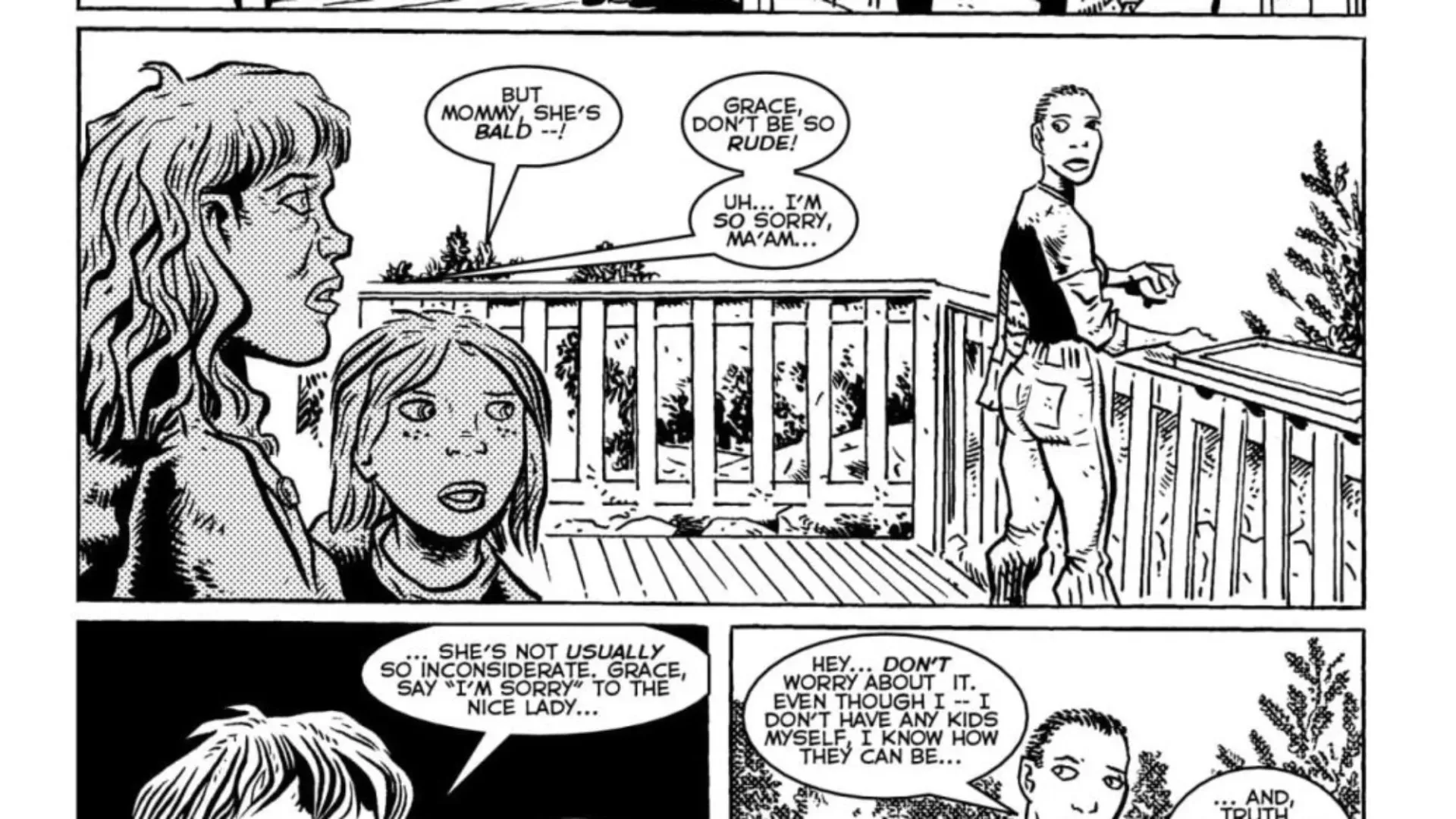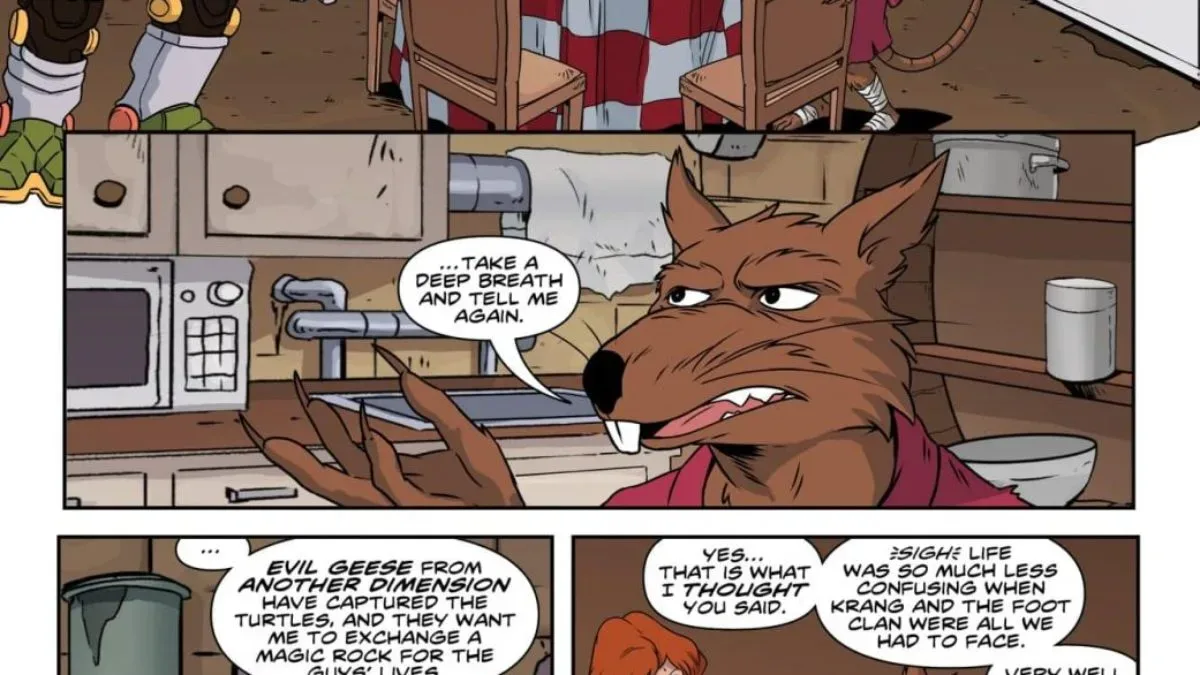
TMNT: Journeys #14 is scheduled to arrive from IDW Publishing on October 7, 2026, bringing several ongoing Teenage Mutant Ninja Turtles threads into sharper focus. The 36-page, Rated T issue places April O’Neil’s increasingly frustrating hunt for the truth about her origins alongside a dangerous escalation for Raphael, continued diplomacy for Michelangelo, Donatello’s scientific work with the Utroms, and Leonardo’s pursuit of a fresh threat.
The issue is credited to Peter Laird, Jim Lawson and Michael Dooney, with a cover by Lawson. Its central hook is April’s decision to seek extraordinary help after ordinary leads fail: she makes a call through space and time to summon Renet. That premise does more than add a science-fiction device to the issue. It frames April’s search as a personal mystery that has reached a point where conventional investigation is no longer enough.
April’s unanswered questions take priority
The solicitation is direct about April’s situation: she has hit dead ends while trying to uncover the truth of her origins. Her answer is to contact Renet, a move that suggests the mystery may require knowledge or access unavailable in April’s present circumstances.
“Origins” can mean more than a simple biographical detail in a serialized comic. It is the information that explains where a character comes from, but it can also reshape how that character understands their identity, relationships and role in a much larger conflict. The available details do not reveal what April will learn, whether Renet has the answer, or what consequences may follow from reaching across time. They do establish that April is no longer merely waiting for answers to surface.
Renet’s involvement also makes the issue’s title-worthy premise feel suitably expansive. A call that crosses space and time is not normal communication; it is a narrative shortcut into a broader set of possibilities. It can connect characters separated by distance, chronology or both. That does not guarantee an immediate resolution, but it gives April a potentially vital new direction when every other route has closed.
Raphael’s mutation is getting worse
While April investigates the past, Raphael is dealing with a crisis that is immediate and physical. His mutation is described as growing out of control. The wording matters: this is not presented as a completed transformation or a stable new condition. It is an escalating problem, one that may become more dangerous as it continues.
In this context, “mutation” refers to an abnormal transformation or alteration of Raphael’s body. The solicitation does not specify its cause, its exact effects, or whether it can be reversed. Readers should therefore avoid assuming a particular cure, villain or final form. What is clear is that Raphael’s condition is one of the issue’s major sources of pressure, adding urgency to a story already concerned with origins, alien technology and interspecies relations.
That setup gives the ensemble a useful contrast. April is looking backward for missing truth; Raphael’s problem demands attention in the present. One thread is investigative and personal, while the other is an unfolding emergency. The issue’s other plotlines sit between those poles, involving research, negotiation and surveillance.
The Utrom story remains a major connective thread
Donatello continues his scientific pact with the Utroms, while Michelangelo remains Earth’s ambassador to them. The Utroms therefore occupy two distinct but related parts of the issue: they are partners in Donatello’s technical work and the focus of Michelangelo’s diplomatic responsibilities.
A pact is an agreement between parties, and the description identifies Donatello’s as scientific. Beyond that, the terms, purpose and risks of the arrangement have not been specified. The important point is that Donatello’s work is ongoing rather than a one-scene detour. Scientific collaboration with an alien group can raise obvious questions about trust, objectives and the uses of any resulting knowledge, but the issue information does not confirm how those questions will be answered.
Michelangelo’s role as Earth’s ambassador carries a different kind of responsibility. An ambassador is a representative tasked with maintaining relations between different sides. Here, Michelangelo is positioned not simply as a participant in events but as Earth’s representative in dealings with the Utroms. The title implies communication, mediation and accountability, all of which can become difficult when the people represented have their own priorities.
These two threads make the Utrom relationship feel broader than a single alliance. Donatello’s work appears to operate through science; Michelangelo’s operates through diplomacy. Their stories may be separate in the issue, but both concern how the Turtles engage with an alien power and what those ties mean for Earth.
Leonardo finds someone worth watching
Leonardo is staking out a new enemy and is said to be yearning for battle. A stakeout is surveillance: waiting, observing and gathering information on a target rather than openly confronting them. That detail implies a more patient approach at first, even if Leonardo’s desire to fight threatens to turn observation into confrontation.
The identity of this enemy has not been disclosed. Neither has the reason Leonardo considers them a threat. Still, the phrase “new enemy” signals an addition to the issue’s immediate conflict rather than a simple continuation of a known fight. It also places Leonardo in a notably different mode from his brothers. Donatello is collaborating, Michelangelo is representing, Raphael is struggling with an uncontrolled mutation, and Leonardo is watching someone he may soon need to face.
The combination could give Journeys #14 a deliberately divided structure: each Turtle has a responsibility or danger pulling them in a different direction. April’s time-spanning appeal to Renet then serves as another line of action rather than a detached side story. The issue has several moving parts, but each one concerns a character trying to respond to something that cannot simply be ignored.
What readers can confirm before release
- Title: TMNT: Journeys #14
- Publisher: IDW Publishing
- On-sale date: October 7, 2026
- Format: 36 pages, Rated T
- Cover price: $4.99 US
- Creators: Peter Laird, Jim Lawson and Michael Dooney
- Cover artist: Jim Lawson
- Variant B: Cafaggi, listed at $4.99 US and $6.99 CAN
- Variant RI (10) Foil: Dooney & Lawson, listed at $12.99 US and $17.50 CAN
The “RI (10)” label identifies an incentive variant tied to a retailer-ordering threshold. The supplied listing describes it as a foil variant by Dooney and Lawson, but does not provide print-run information or any claim about future scarcity. Readers interested in a particular cover should check with their preferred comic shop about ordering options and availability before release.
Why this issue’s setup stands out
The solicitation does not promise that every question will be settled in one installment. Instead, it presents TMNT: Journeys #14 as an escalation issue. April’s mystery has become serious enough to call on Renet. Raphael’s mutation is worsening. The Donatello–Utrom scientific arrangement and Michelangelo’s ambassadorial duties continue. Leonardo has a target under watch and is eager for conflict.
That is a lot of tension in a 36-page comic, but the shared theme is clear: every major character is confronting a situation that requires a response. April reaches beyond her own time for assistance. Donatello works within an agreement whose scientific implications remain open. Michelangelo carries a representative role. Raphael faces a change he cannot currently control. Leonardo tries to turn vigilance into action.
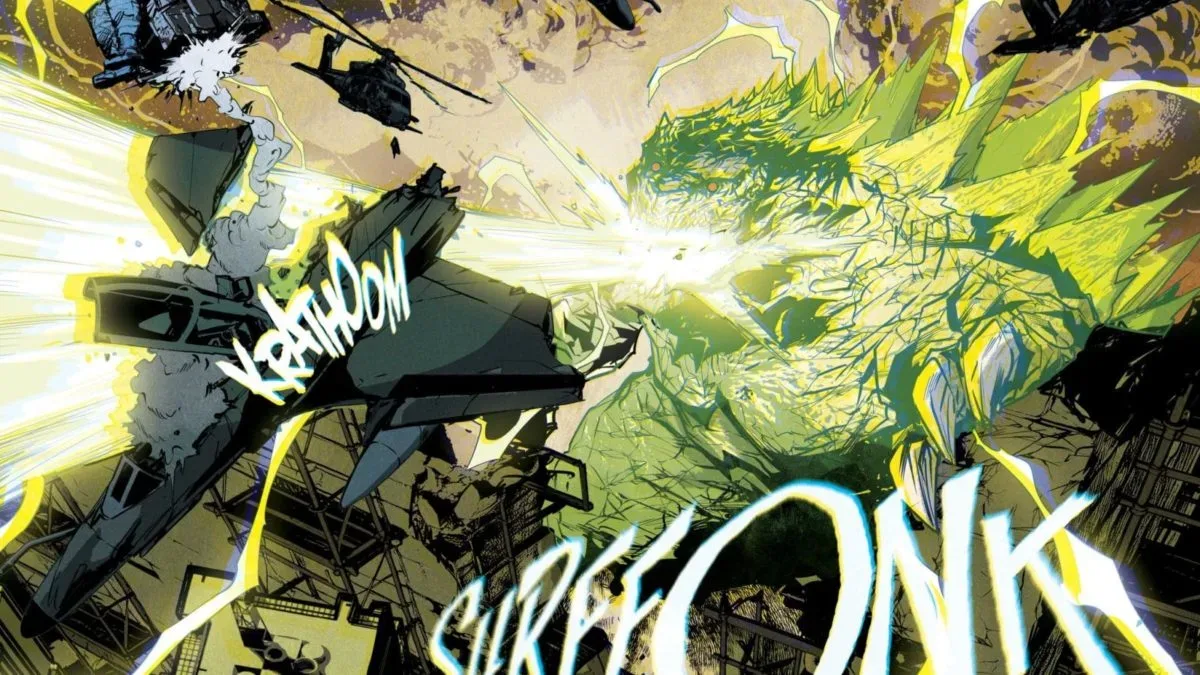
For readers following comic-book developments beyond the sewer, the arrival of a fresh arc in Godzilla #13 offers another recent example of how a single issue can use an emerging threat to reset momentum. TMNT: Journeys #14, however, is defined less by one clean reset than by multiple continuing pressures converging at once.
Until the issue is released, the specifics of April’s origins, Renet’s assistance, Raphael’s condition, the Utrom pact and Leonardo’s new adversary remain unresolved. The available material supports a straightforward expectation: this chapter is built around characters reaching the limits of their current options, then taking risks to find a way forward.