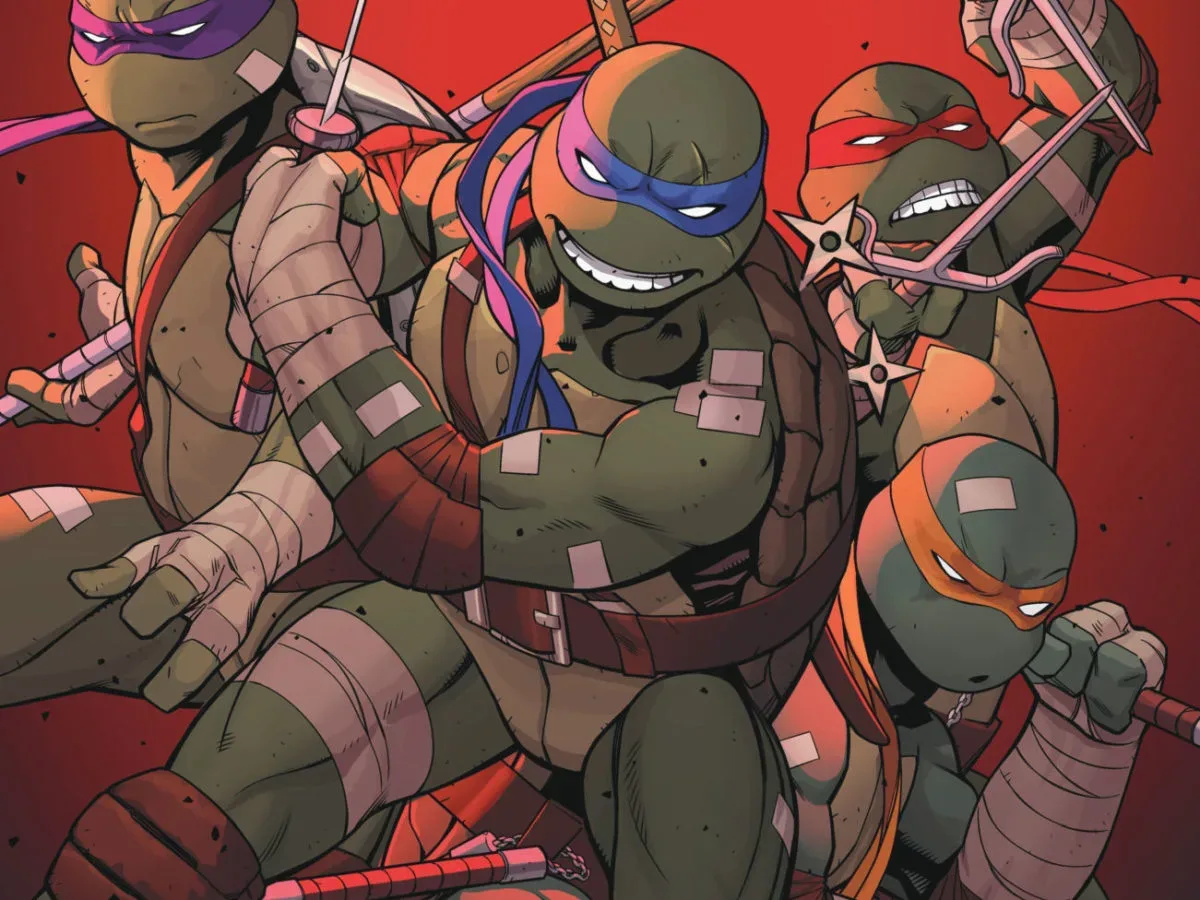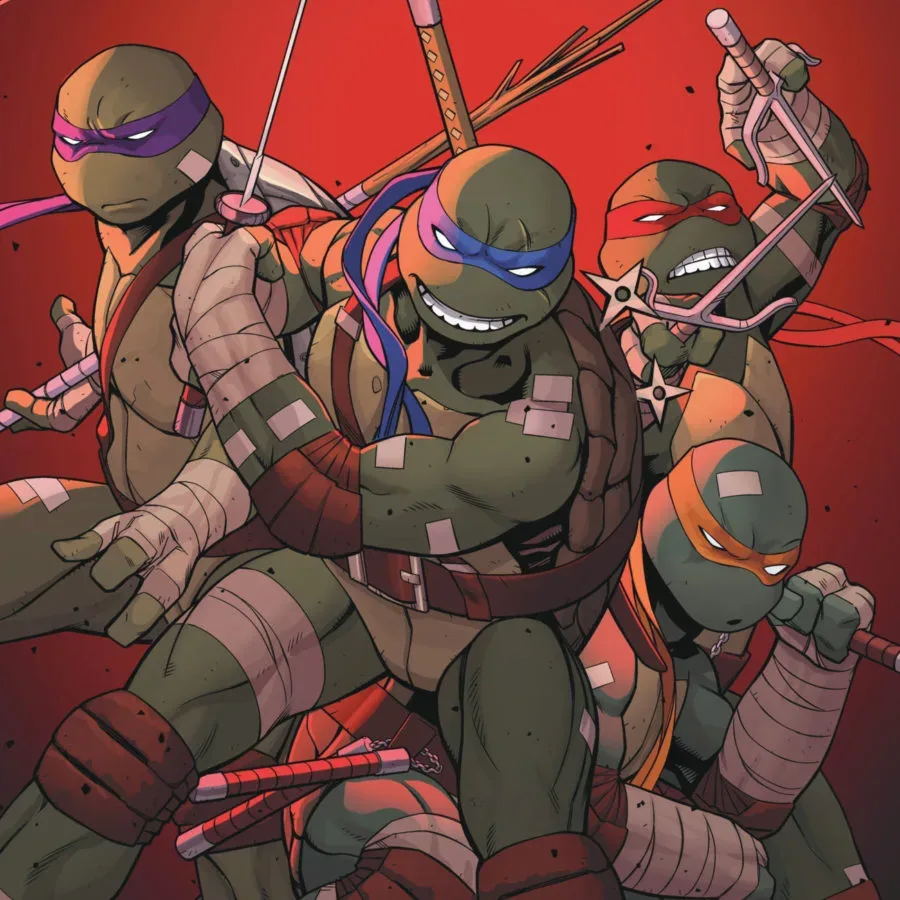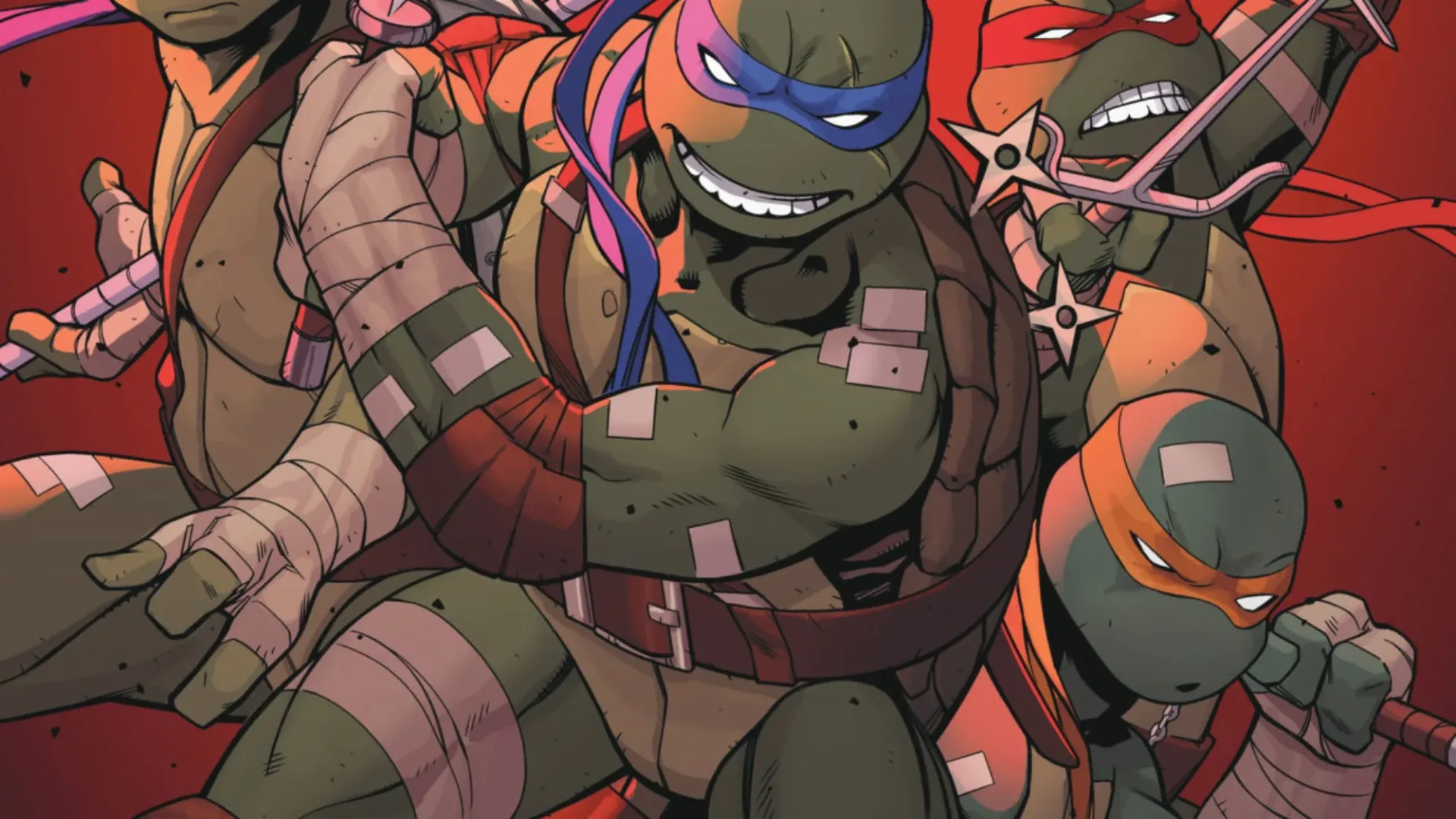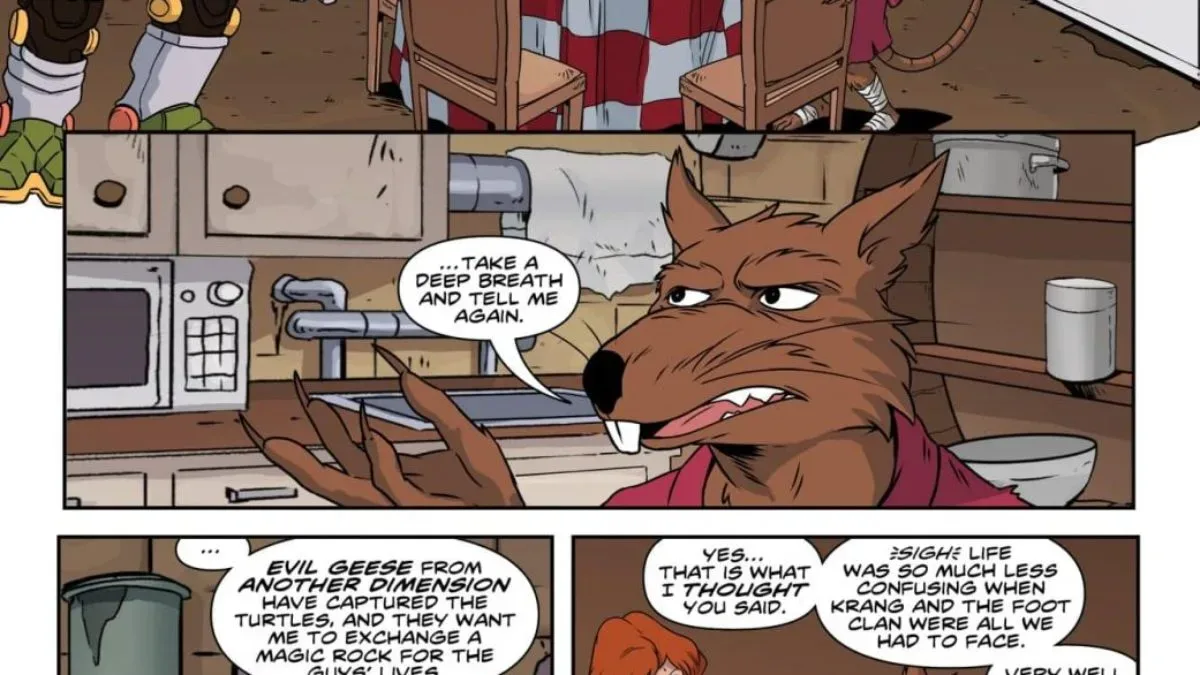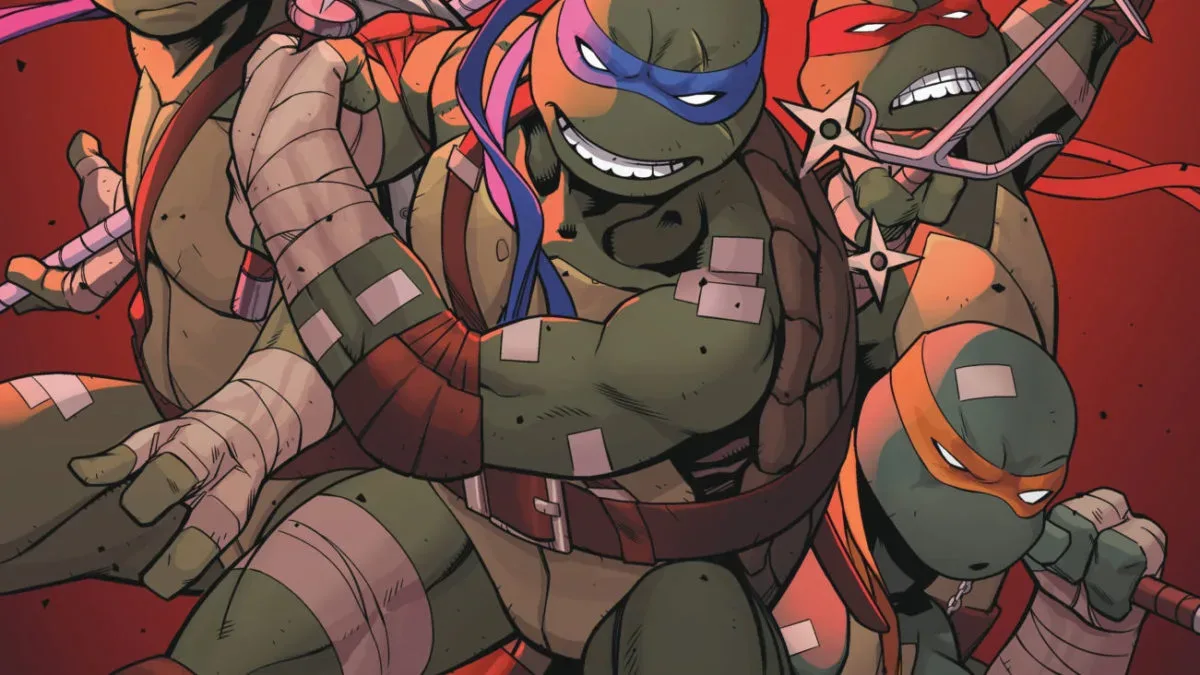
The upcoming December 2026 and January 2027 comics schedule is a remarkably broad one, but Teenage Mutant Ninja Turtles #25 is plainly its headline release. The January issue starts a new creative run from writer Matthew Rosenberg and artist Juann Cabal, launching a storyline titled War All the Time. The premise is appropriately un-subtle: after New York has become unnervingly quiet following The City That Never Dies, a resurrected adversary returns and the Turtles find themselves facing an all-city conflict involving countless villains.
It is a significant relaunch point without being a new first issue. That distinction matters to readers who follow serialized comics. A numbered issue such as #25 retains the momentum and continuity of the existing series, while the arrival of a new regular writer and artist provides a clean creative handoff. New readers may see it as a natural jumping-on issue; established readers get the promise of a larger escalation built from what came before.
TMNT #25 is scheduled for January 2027 at $4.99 for 32 pages. Its cover program is expansive, with work listed from Cabal, Godtail, Dan Panosian, Mark Bagley, Cyanide & Happiness, Attack Peter, Hannigan, Morian and Daniel Acuña, plus a Cabal full-art version. Bagley’s contribution is billed as his first Turtles cover, while Cyanide & Happiness is also making its first comic-cover appearance here. A 1-in-20 net-priced bundle of 10 will include an exclusive full-art edition of the main cover. In comics-distribution language, a retailer incentive is generally a variant tied to a store’s order quantity or a specific ordering arrangement; it is not automatically an edition every shop will carry on the rack.
A particularly busy Turtles winter
The ongoing title is only one corner of an unusually dense Turtles offering. Tales of the Teenage Mutant Ninja Turtles: Tear in Time #1 arrives in December, written by Andrew Joustra with art by Louie Joyce. It sends the Turtles to the year 2037, where the Triceratons control the world. Renet recruits them to help their older, no-longer-teenage allies survive the threat. The second issue follows in January, with Fugitoid and Lonae joining the effort as the group searches for an underground resistance while evading Triceratons. Both issues are 32 pages and $4.99.
The premise puts a useful spin on one of the franchise’s defining strengths: its ability to use a familiar core cast in radically different genres. Here, the story has a future-war framework and time-travel mechanics rather than a street-level New York setup. The solicited details do not reveal how the adventure connects to the main series, so it is safest to regard it as its own accessible Turtles story until further issues clarify any relationship.
Teenage Mutant Ninja Turtles: Shredder #15, by Dan Watters and Sid Kotian, has a more knowingly comic setup. As head of the EPF, Shredder must navigate an international diplomatic meeting. The pitch contrasts formal statecraft with a character normally associated with violent solutions, while warning that the quiet is unlikely to last. It is due in December for $4.99.
Meanwhile, TMNT: Journeys #17 continues in January with Peter Laird and Jim Lawson. Its plot threads include an interrupted swim involving Michelangelo and Regenta, Leonardo’s interrogation of a mysterious opponent, Raphael’s continued rampage after mutation, and Donatello learning more alongside other shrunken prisoners. At 52 pages and $4.99, it is notably longer than the standard 32-page monthly issues in the lineup.
Two paperbacks make the slate useful for readers catching up rather than following every single issue. Teenage Mutant Ninja Turtles: The Last Ronin II—Re-Evolution reaches paperback in December. Written by Kevin Eastman and Tom Waltz, with art by the Escorza Brothers and Ben Bishop, the 232-page, $19.99 book follows Casey Marie and her pupils in a declining New York more than a decade after the Last Ronin defeated the Foot Clan. The next generation must attempt to stabilize a city fractured by gangs seeking economic and political control.
Also in December, TMNT: Journeys, Vol. 2 collects issues #6-10 in a 200-page paperback priced at $19.99. The collection continues the reissue program for material originally produced as TMNT: Volume 4 at Mirage Studios. Its story brings the Utroms back into contact with the Turtles while also focusing on April O’Neil’s lineage and Master Splinter confronting his role as an elder.
Star Trek stakes rise beyond the galaxy
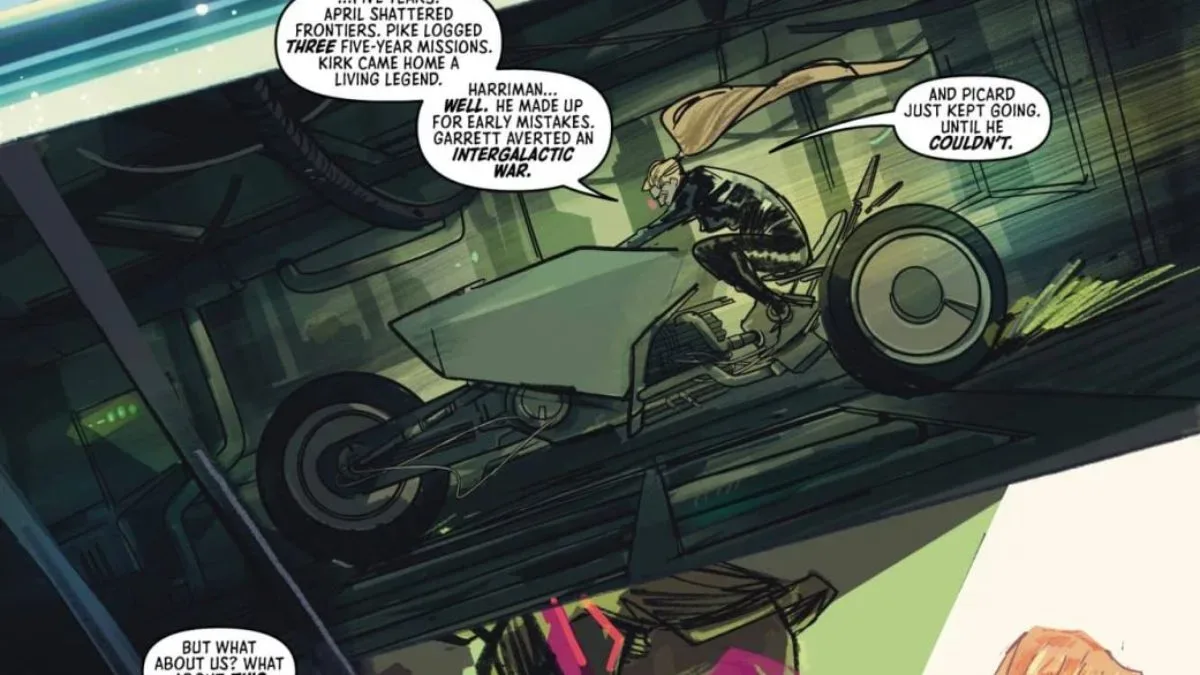
The new Star Trek series by Christopher Cantwell and Dennis Menheere hits a crisis point in issues #3 and #4. December’s #3 puts Captain Seven of Nine in command of a divided and diminishing crew as a mission to establish a home for the Revlavan colonists becomes increasingly dangerous in the Epsilon Corridor. A distress beacon from Trinity II forces a choice: it may be a lifeline, or it may be a trap.
January’s #4 removes the comfortable option altogether. The route out of the Epsilon Corridor is closed, the four Wagon Train ships have lost warp capability, and their dilithium chambers are drained. The Enterprise-G crew is said to be 14 million light years from its galaxy, with the Hidden now revealed. Both issues are 32 pages and $4.99. The progression from a difficult command decision to total isolation makes the pair one of the clearer two-month arcs in the schedule.
Star Trek: Zero Point #3, from writer Charlie Jane Anders and artist Isaac Sánchez González, is another January $4.99 release. On Orridior IV, the Endeavour faces a humanitarian and diplomatic crisis: the planet’s inhabitants require a deflector replacement before a devastating storm arrives, but distrust humanoids. Derril Zaf, a Caitian raised by Ferengi, and other nonhuman crewmembers must take the lead. In a parallel plot, Tendi follows Captain Raffi Musiker into her reliance on the answers supplied by the AI superintelligence Sybil. That is a pointed use of the term “AI” in a character-driven context: the danger described is not merely a machine malfunction, but the temptation to surrender personal judgment to apparently flawless answers.
Godzilla stories collide, while Sonic closes a crossover
Godzilla’s Kai-Sei Era continues across several titles. Godzilla: Revenge of the Deadzone #3 arrives in December from Ethan Parker, Griffin Sheridan and Pablo Tunica. The Wanderer, described as half man and half kaiju, has escaped confinement in New York but remains far from the young people under his protection in the Deadzone. The issue promises revelations around the Church of Godzilla’s leader and Mother A.
January’s Godzilla [Kai-Sei Era] #16, by Tim Seeley and Isaac Goodhart, centers on secrets within G-Force USA and G-Force Japan as Destoroyah rises and the two teams risk open war. Rumi is caught between her former and current teams, while Kai-Sei Energy Godzilla faces the threat of Destoroyah. Starship Godzilla: Invasion X #4, by Chris Gooch and Oliver Ono, also lands in January. It reunites the crew of Starship Godzilla in time to oppose the Xilien Empire’s attempt to terraform the galactic capital using enormous mechanical skyscrapers, with a mechanical kaiju modeled after Godzilla serving as an obvious countermeasure.
For readers tracking the intersection of these properties, Sonic the Hedgehog x Godzilla #5 is the finale of that crossover. Nick Marino writes and Jack Lawrence draws the December issue, which has Sonic, Shadow and their allies confronting Dr. Eggman, Obsidian Mechagodzilla and the Obsidian Horde. It is a $4.99, 32-page conclusion rather than the start of another ongoing branch.
Regular Sonic the Hedgehog #93 follows in January. Mark Bouchard and Natalie Haines send Whisper and Tangle into Spiral Hill after mysterious gas turns the town into a place where perceptions cannot be trusted and friends become enemies. The issue is described as part of the “Road to 100,” identifying it as a milestone-building chapter rather than a standalone anniversary special.
December also offers two different Sonic collections: the 56-page hardcover Sonic the Hedgehog: 35th Anniversary Special—The Deluxe Edition for $14.99, collecting the anniversary one-shot; and Sonic the Hedgehog, Vol. 22: Stealing the Show, a 152-page $16.99 paperback collecting issues #84-88 plus the Sonic Racing: CrossWorlds one-shot. The latter features Sonic, Belle and Sage seeking Metal Sonic while trying to protect the Master Emerald.
Horror, fantasy and standalones fill out the schedule
Several books use horror as a flexible framework rather than a single shared genre. A Quiet Place: Rising Tides #2 arrives in January from Declan Shalvey, Luke Sparrow and Colin Craker. Grace travels through storm-damaged Key West toward a hospital, hoping to locate supplies for her sick, estranged father. The storm offers only temporary cover from creatures on the coast, while the hospital setting intensifies memories tied to her childhood and father’s absence.
Smile: Any Given Smile #3 and #4 continue in December and January from Stephanie Williams and Pablo Collar. Max Dupree is under scrutiny before the AAL championship over a sports-betting scandal connected to his football past, while Rita Nash investigates deaths apparently tied to the championship and betting ring. The January chapter is explicitly the penultimate issue, meaning the series’ resolution remains ahead rather than arriving in this two-month window.
You’ll Never Leave This Place Alive #3 is a January finale by Collin Kelly, Jackson Lanzing and Heather Vaughan. Phoebe Joplin uncovers the truth about the Gold House and generations of violence hidden there, with the story framing its climax around whether she can end a longstanding cycle. It runs 40 pages for $4.99.
Tyler Boss both writes and draws The Twilight Zone #13, also out in January. In “The Exponential Man,” Henry’s clothes stop fitting because he is growing at an unprecedented rate. A seemingly welcome transformation grants him opportunities including professional basketball, but the condition continues beyond any manageable limit. The issue’s “black, white and orange” presentation signals a stylized visual approach within the anthology-like tradition of the property.
Elsewhere, December brings the 120-page Monster High: Boomuda Triangle paperback for $17.99, collecting its five-issue multiverse adventure with Spelldon Cauldronello and Kieran Valentine. Zorro Annual #1 follows a killer who takes the identity of a stagecoach passenger, leaving Bernardo trapped among possible suspects while Zorro races across the California desert. The 48-page December annual is $5.99 and includes a classic short story by Alex Toth.
X-O Manowar Black, White & Gold #3 is a December anthology with three new stories: Fred Van Lente’s 1943-set “Götterdämmerung,” Mike Baron’s “Plant-Based Life” on a bird planet where technology grows from plants, and Roberto Meli’s “Dark Matter,” involving Shanhara and a returning enemy. An anthology is a format built from separate short works rather than one uninterrupted narrative, and this issue’s distinct writer-driven stories make that structure central to its appeal.
Collected editions and art books offer alternatives to monthlies
The remaining releases underline how much of the schedule is aimed beyond weekly single-issue readers. The Unpetables (Book 3): Call of the Weird is a 124-page January paperback by Dennis Messner, following Pigmund and Lizárdo from a petting zoo to the high seas. Badducks, Vol. 2, by Toryumon Takeda, is a 224-page December paperback about Morgan, Lisa and baby Boz reaching the walled mountain city of Ritchil.
War III, by Ricardo Barreiro and Juan Giménez, is a 104-page oversized December release examining war, machinery and the cost in human lives. And The Art of Eduardo Risso is a 112-page $39.99 hardcover scheduled for January, compiling sketches, covers and previously unseen art from the Argentine artist.
The larger pattern is clear: this is a slate built around multiple ways into long-running franchises. There are new monthly installments, obvious entry points marked by new creative teams, finite miniseries conclusions and substantial paperbacks for readers who prefer complete arcs. That approach is especially visible in the Turtles and Sonic lines, but it carries across licensed science fiction, monster comics, horror and original-format collections. Readers watching wider comic-book projects may also be interested in the separate Spider-Man ’94 Annual story, another example of a familiar screen-era property continuing through comics.