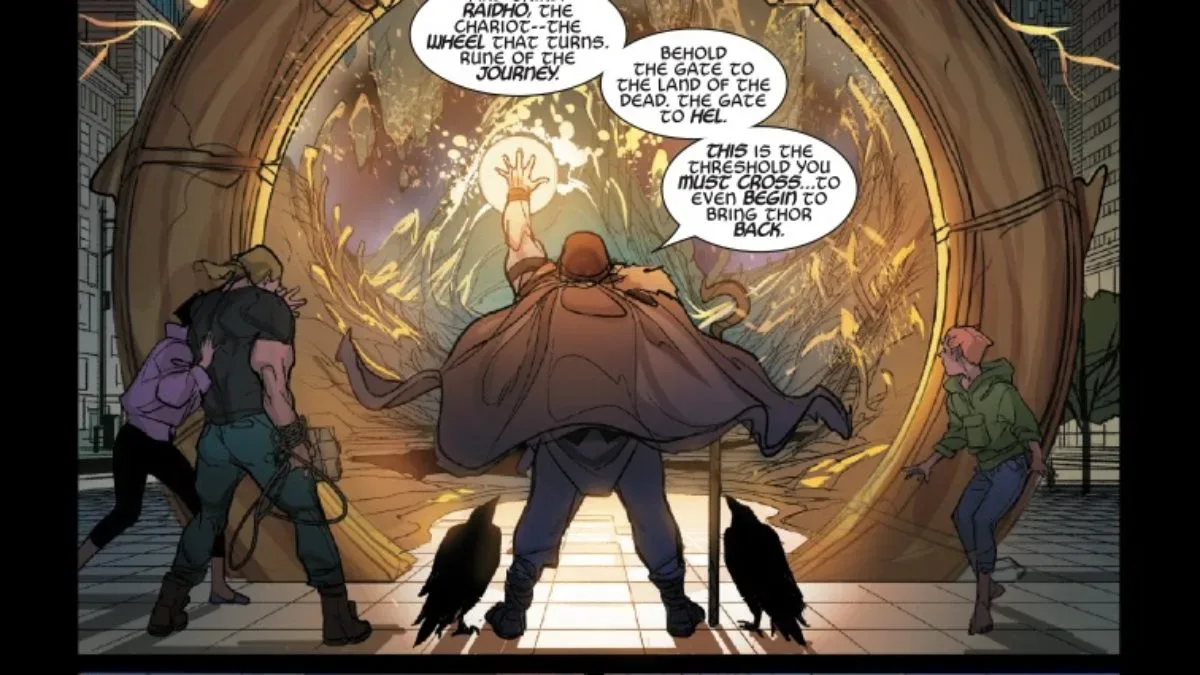
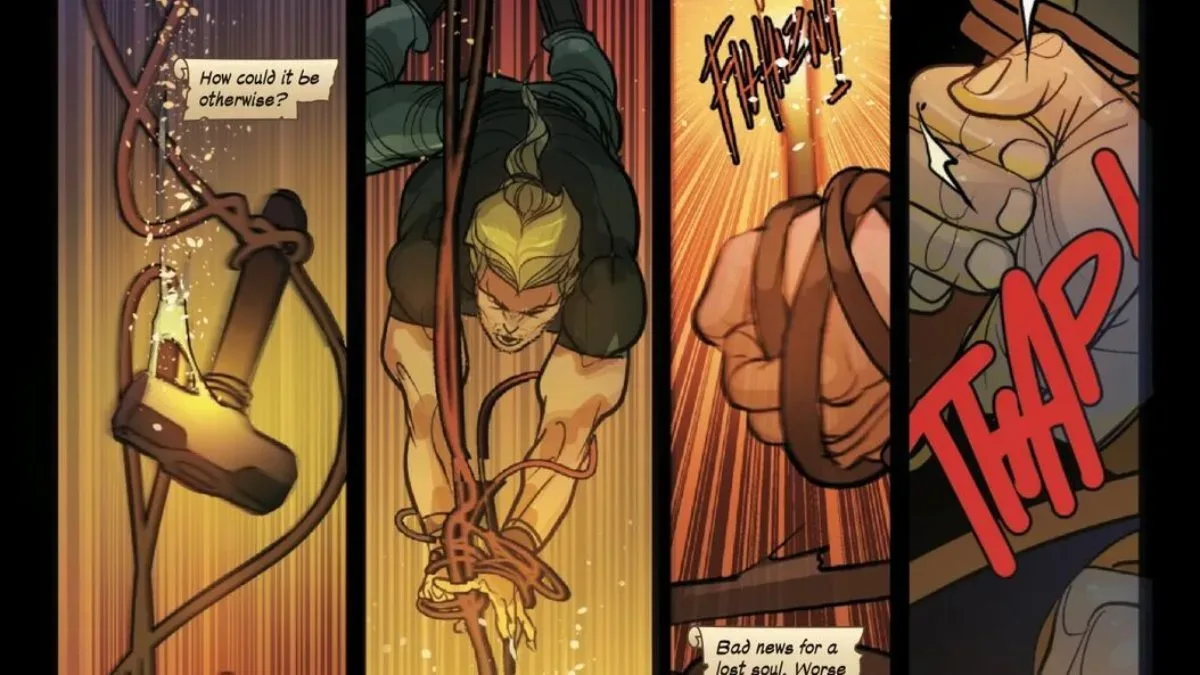
Marvel’s Thor #803 is set to arrive on November 25, 2026, with a premise built around an especially sharp contradiction: a mortal man has been given a task meant for gods. Sigurd Jarlson must travel through all ten realms to restore a God, a mission that explicitly leads him into places a human being cannot naturally survive.
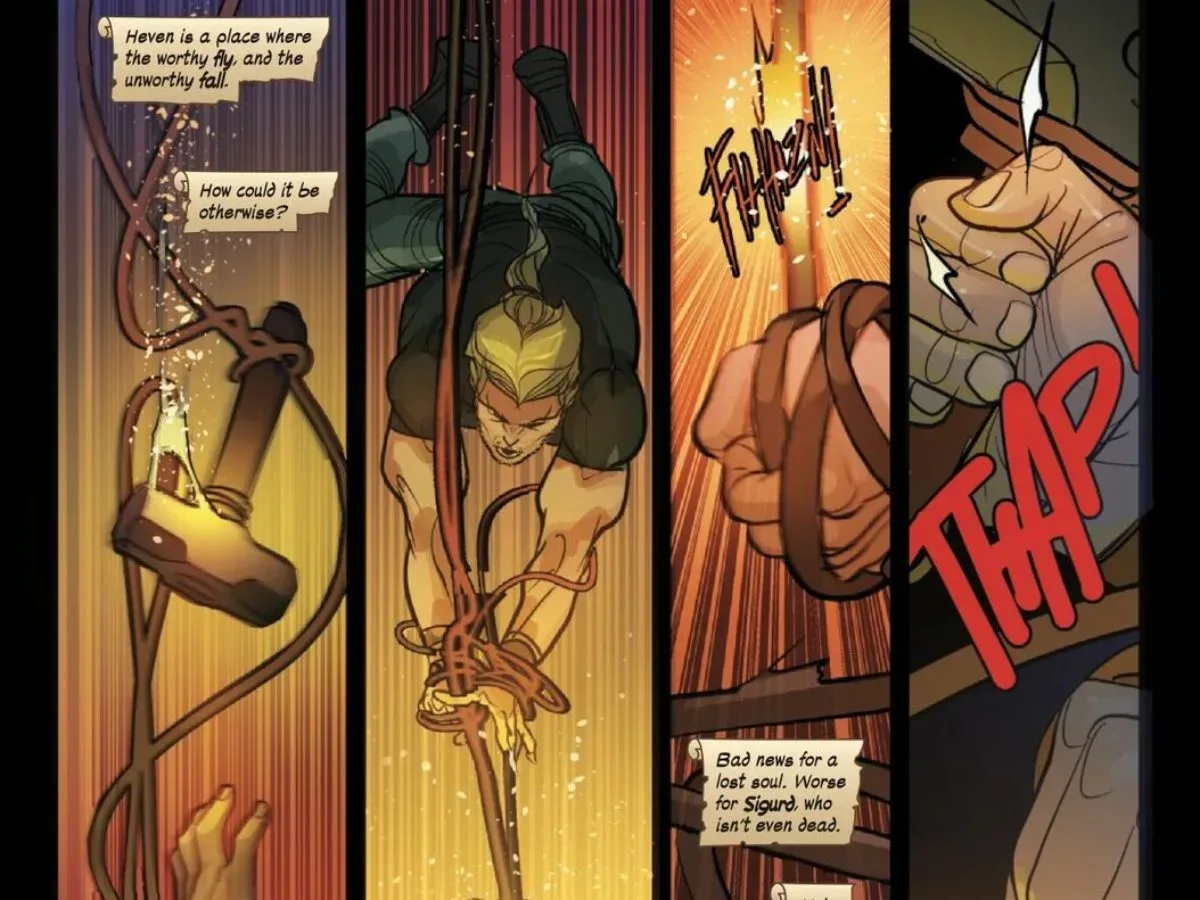
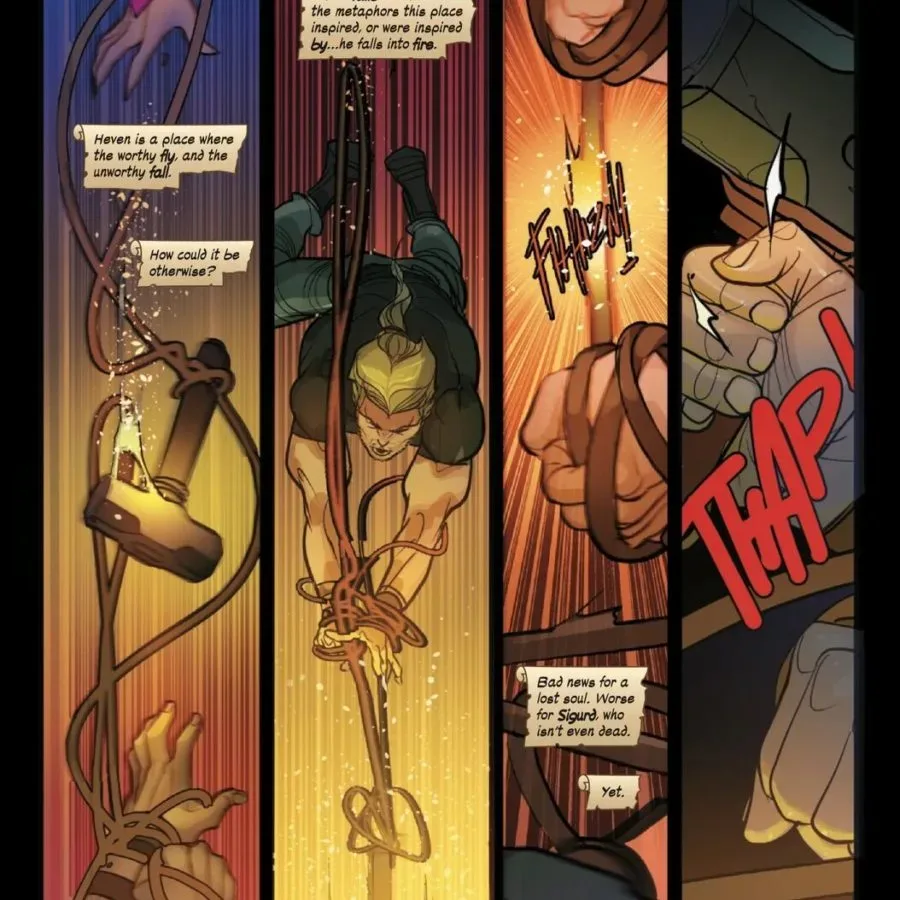
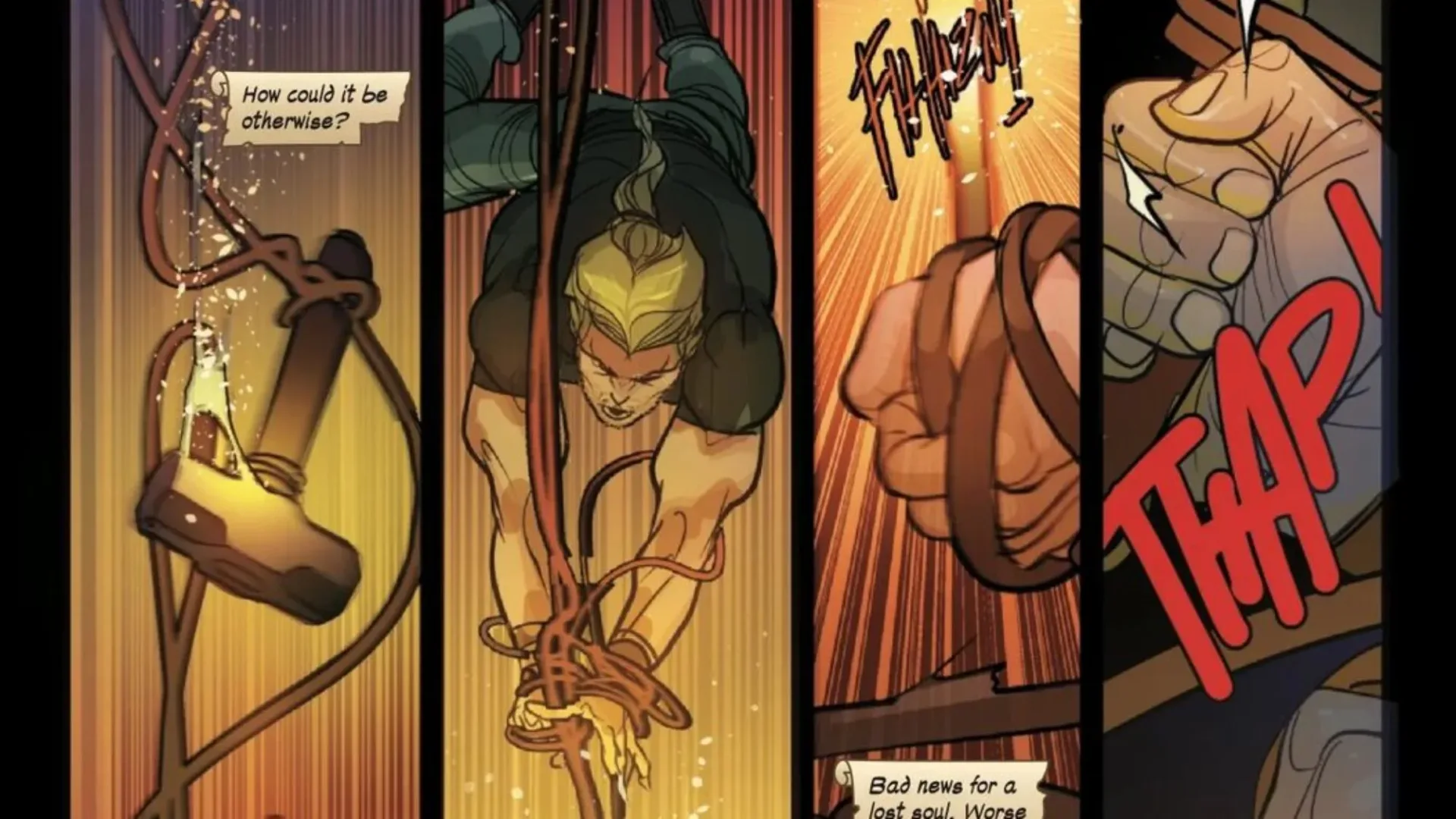
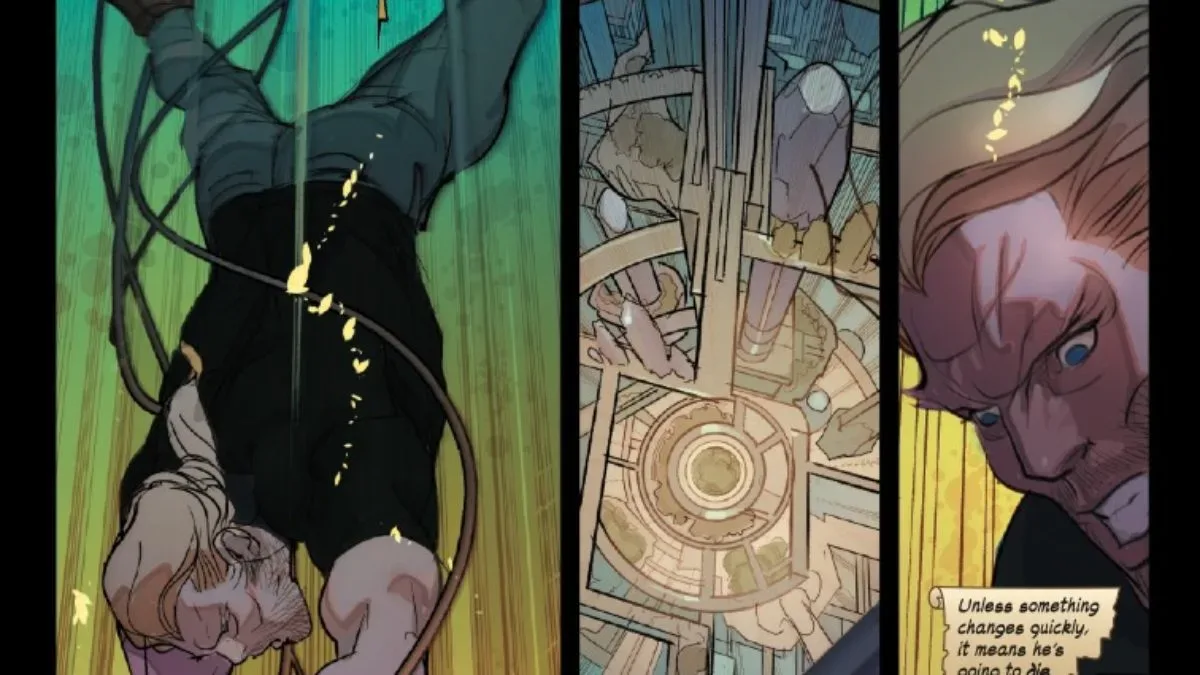
The immediate danger in this issue is Muspelheim, the realm of fire. Solicitation material places Sigurd in a fall from Heven toward that blaze, hammer in hand, with the heat rapidly becoming the central problem. It is a concise setup, but it establishes a story where determination and a familiar symbol of Thor’s power may not be enough to bridge the difference between a mortal body and a divine-scale trial.
Al Ewing writes the issue, Pasqual Ferry provides the interior art, and Alex Ross supplies the main cover. The 32-page comic is rated T+ and carries a $4.99 U.S. cover price.
A mortal quest across the ten realms
The key detail is not merely that Sigurd has to find or aid a god. He has been charged with restoring one, a word that implies loss, damage, absence, or a state that must be reversed. The available setup does not identify the God in question or explain the means of restoration, so readers should be wary of assuming the precise nature of the mission before the issue arrives. What is clear is the scale: Sigurd’s route reaches across all ten realms.
That scope naturally changes the shape of a Thor story. A typical godly adventure can treat the realms as an arena for spectacular combat, travel, or mythology. Here, the premise stresses the physical vulnerability of the person doing the traveling. Muspelheim is not presented as an exotic stop on a cosmic itinerary; it is a place a mortal cannot survive. The distinction gives immediate stakes to the journey without needing to reveal its eventual outcome.
The phrase “a man with a hammer” also deliberately invites a connection to Thor’s iconography while keeping the focus on Sigurd rather than confirming exactly what the hammer represents. A hammer can be a weapon, a tool, a burden, or a visual declaration of who a character is trying to become. With Sigurd falling toward fire, it is at minimum the object he is still holding onto when the trial begins.
Heven, Muspelheim and the pressure of the setting
The preview setup moves Sigurd from Heven toward Muspelheim. The material also suggests that he encounters a harsh assessment of worth in Heven, tied to capital. That detail gives the opening movement a social or moral edge before the issue moves into elemental survival. It is not enough that Sigurd is exposed to physical peril; the journey also appears prepared to confront him with systems that judge value in ways he may reject.
Muspelheim then escalates the pressure into something direct and bodily. Fire is an uncomplicated threat, but it works particularly well for a premise about mortality. There is no room for abstract confidence when the environment itself can kill the protagonist. The solicitation’s wording makes that tension the point: a man may be carrying a hammer associated with the mighty, but the realm does not become less deadly simply because of the symbolism.
For readers, this means Thor #803 looks positioned less as a simple power display and more as a test of endurance, identity, and resolve. That is analysis based on the stated premise, not confirmation of story beats. The preview information does not reveal whether Sigurd reaches safety, what he finds in Muspelheim, or how far he gets in the larger ten-realm objective.
What the creative credits suggest
Ewing is credited as writer and Ferry as artist, a pairing that puts story mechanics and visual scale in close focus. The available information does not provide a detailed breakdown of the issue’s scenes, but its premise has clear visual demands: a fall between realms, an inhospitable fire world, and a mortal protagonist who must remain readable against a setting defined by overwhelming heat and danger.
Ross’s main cover gives the release another distinct visual component, while the issue’s variant lineup offers several alternate approaches for readers who choose covers by artist or theme. The standard edition remains the straightforward option for anyone following the story rather than pursuing a particular cover.
Thor remains one part of Marvel’s wider roster of characters navigating stories where personal identity meets massive genre stakes. Readers interested in another Marvel-adjacent discussion of character, casting, and adaptation can also read this look at Mahershala Ali and Blade.
Release details and cover options
- Title: Thor #803
- On sale: November 25, 2026
- Writer: Al Ewing
- Interior artist: Pasqual Ferry
- Main cover artist: Alex Ross
- Publisher: Marvel
- Format: 32 pages
- Rating: T+
- U.S. price: $4.99
Five named variants are listed alongside the main cover:
- Reese Hannigan 1:25 variant
- Peach Momoko Momo-Tone variant
- Mahmud Asrar Indiana Jones Marvel Artifact variant
- Jonas Scharf Workout variant
- Mauro Cascioli Marvel Studios Doomsday variant
Each listed variant has a $4.99 U.S. price and a $6.25 Canadian price in the supplied release information. The “1:25” label on the Reese Hannigan edition identifies it as an incentive variant, meaning its distribution is connected to retailer ordering rather than functioning as an ordinary open-order cover. The supplied details do not state availability beyond that designation, so readers looking for a specific variant should check with their preferred comic retailer rather than assume every shop will stock every cover.
Why the premise matters
The most interesting part of Thor #803’s setup is the refusal to erase Sigurd’s humanity. Stories involving Thor’s world can easily operate at the scale of gods, realms, artifacts, and cataclysms. This issue’s hook instead insists on the limited survivability of the person undertaking its main journey. That framing makes the god-restoration mission feel less like an assignment issued to a guaranteed winner and more like an impossible demand placed on someone who may have to endure it one hostile realm at a time.
There is also an intentional tension in using the name Sigurd Jarlson for a mortal character tasked with restoring a God. Whether that tension is about legacy, role, disguise, succession, or something else is not established in the release material. Still, the premise asks readers to consider what separates godhood from the person asked to recover it. The fire of Muspelheim makes that question literal: status and myth can matter, but survival still has to happen moment by moment.
Thor #803 goes on sale November 25, 2026. Readers wanting the core chapter can look for the Alex Ross main cover, while those drawn to a specific artist or incentive designation have several alternatives to watch for.