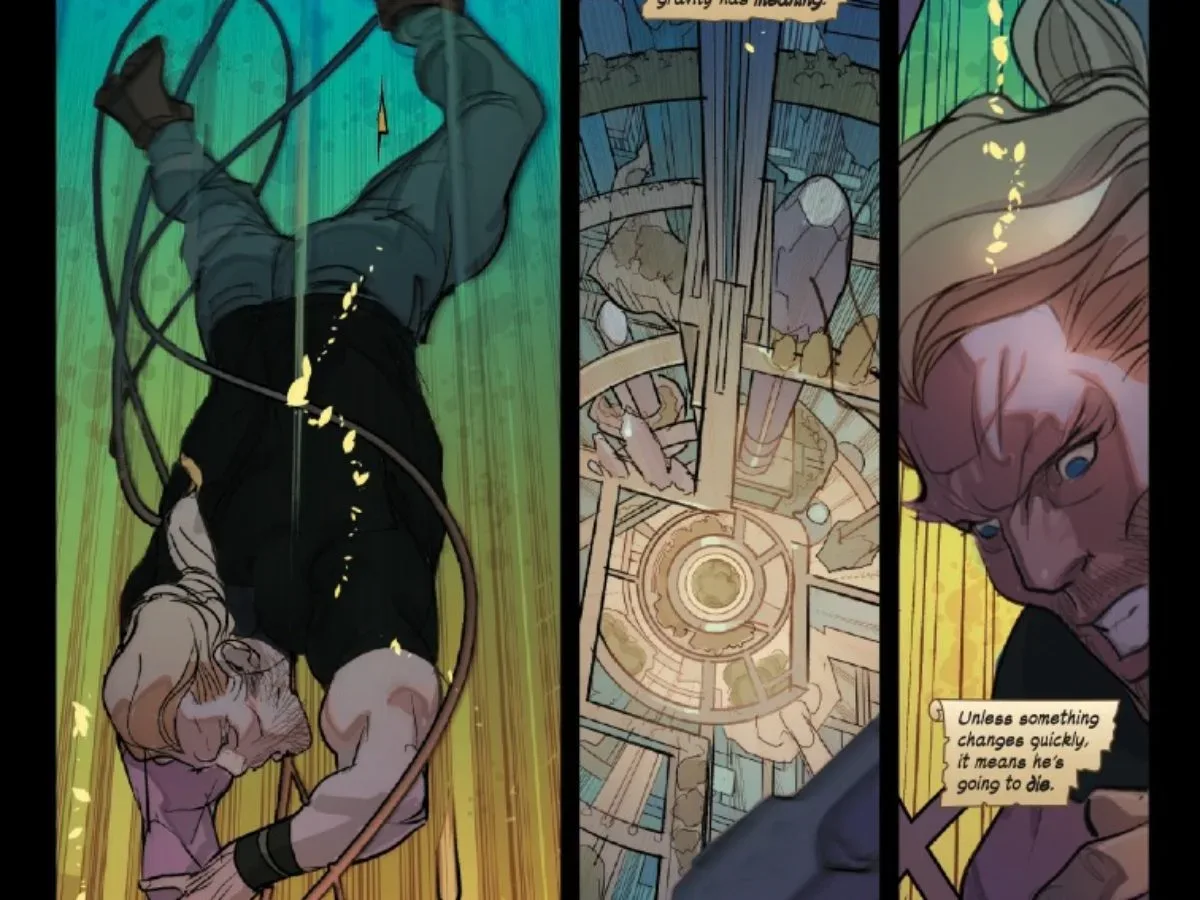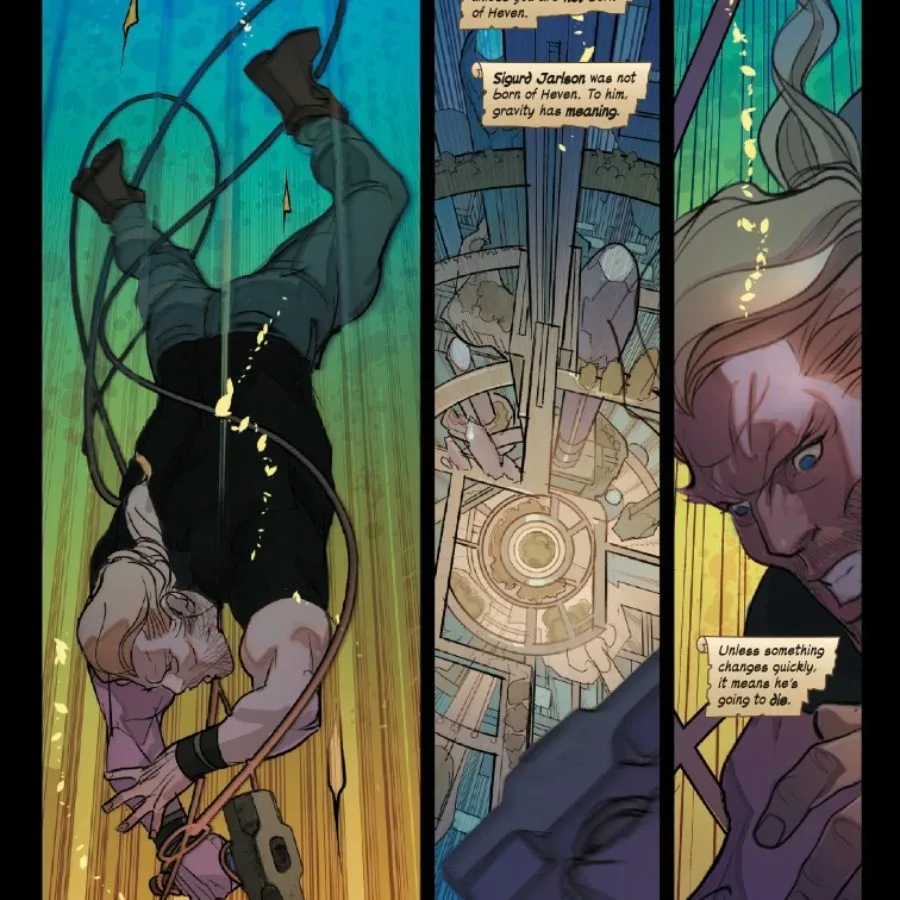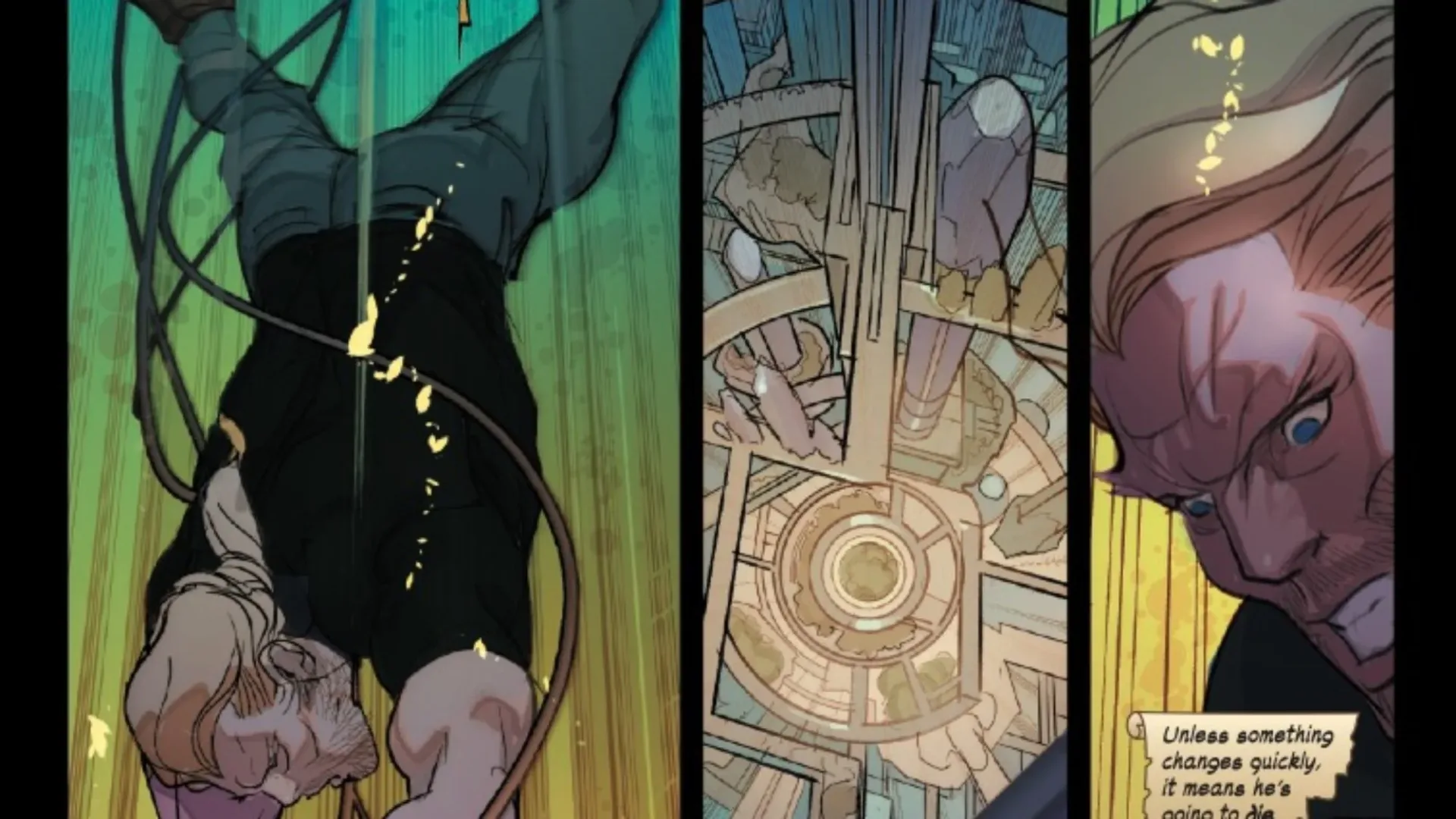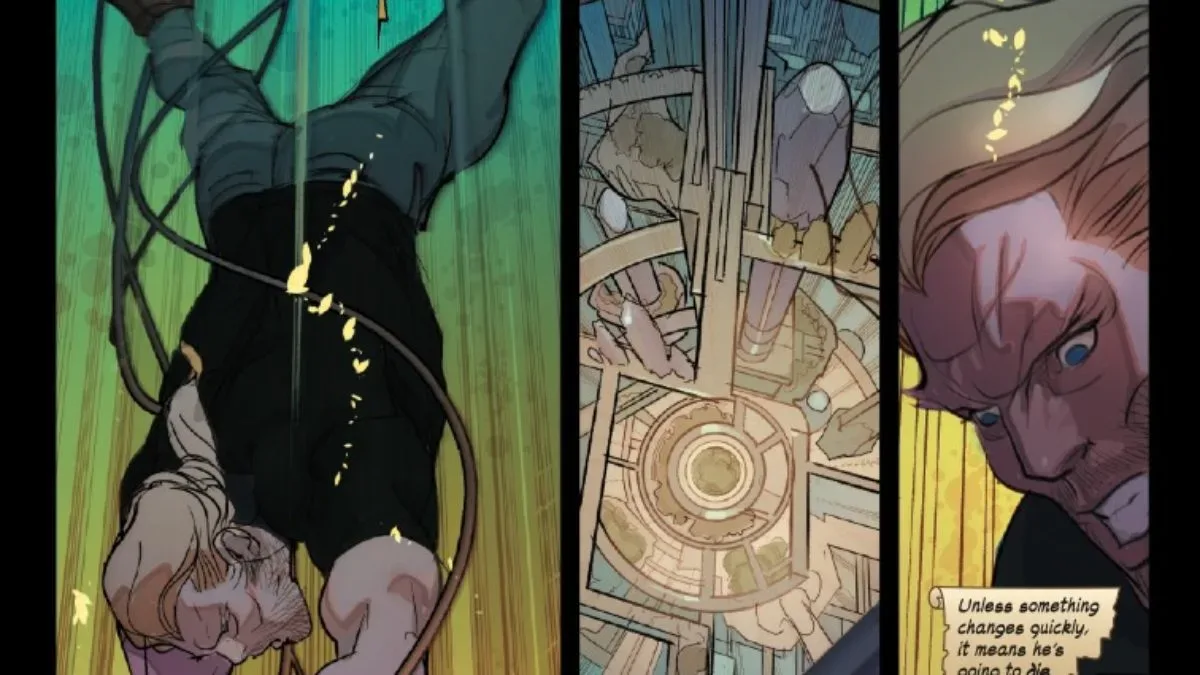
Thor #802 puts Sigurd Jarlson in a setting designed around one very specific advantage: wings. The issue’s setup places him at the highest point of Heven, a realm of floating cities built for angels, while establishing the immediate complication with unusual bluntness—Sigurd cannot fly.
That makes the promised “fall from grace” more than a decorative phrase. It is the central physical problem of an adventure built around altitude, architecture and the limits of a hero who has arrived in a place whose basic infrastructure does not suit him. A hammer may be part of the equation, but the solicitation leaves the outcome deliberately open: somewhere in Heven, a man with a hammer is taking the fall.
Marvel lists Al Ewing and Pasqual Ferry as the issue’s creative team, with a cover by Alex Ross. The 32-page, Rated T+ comic is scheduled to go on sale October 28, 2026, for $4.99 in the US and $6.25 in Canada.
A setting where flight is not a superpower but public access
The available premise makes Heven’s floating cities the story’s key piece of pressure. In many superhero stories, flight is a spectacular ability that separates a character from ordinary people. Here, it is presented more like standard equipment. The cities exist in the air and are intended for winged residents; arriving without wings is not merely inconvenient, but a mismatch between the visitor and the world’s everyday design.
That distinction gives the scenario its appeal. Sigurd is not simply facing a villain or climbing a dangerous building. He is navigating a place where vertical distance is part of normal life for everyone except him. Paths, ledges, entrances and departures that may be effortless for the angels become potential hazards when gravity is the one rule he cannot negotiate away.
The solicitation’s reference to the “highest point” adds urgency. Height is not just background imagery in this setup. It is the condition that turns a lack of flight into immediate jeopardy. The phrase “fall from grace” naturally carries spiritual and moral associations, especially in an angelic realm, but the comic’s description also grounds it in a literal question: how does an earthbound visitor survive a fall from a city that does not touch the earth?
What “fall from grace” can mean here
In fiction, a fall from grace commonly describes a loss of status, favor or certainty. Thor #802’s premise uses the expression as a double meaning. The character is in a heavenly realm, among angels, and yet faces a straightforward fall due to an inability to fly.
That is not enough information to declare the issue a story about disgrace, exile or a moral failure. The published setup does not confirm any of those interpretations. But it does establish a useful tension for readers: a phrase often used for a character’s inner or social decline is being treated as an action problem with real stakes in a realm above the ground.
It is also a reminder that comic-book scale does not eliminate practical obstacles. A divine or mythic setting can be visually immense, but a story can still hinge on positioning, momentum and whether there is anything beneath a character’s feet. Thor #802 appears poised to make that contrast do much of its work. Heven’s grandeur is inseparable from its danger for someone who cannot naturally move through the air.
Sigurd Jarlson and the hammer problem
The solicitation identifies the protagonist as Sigurd Jarlson and describes him as “a man with a hammer.” That wording is intentionally spare, avoiding an explanation of exactly how the hammer will factor into his predicament. It nevertheless gives the issue a compact image: a figure associated with one iconic piece of equipment has entered a location where wings, rather than a hammer, are the expected means of getting around.
For readers, the question is not simply whether the hammer offers an answer. It is whether having a familiar tool changes anything when the environment itself has been built for another kind of body. The premise therefore has a fish-out-of-water quality, but one with much higher stakes than an awkward social visit. The gap is physical and structural: Heven’s inhabitants belong in the sky, while Sigurd’s problem is that he does not.
Pasqual Ferry’s involvement is particularly suited to the story’s announced scale, though the available information does not reveal how the issue will stage its fall or what locations beyond the highest point readers will see. The key visual ingredients are already there: floating cities, angels, height, a wingless visitor and a looming drop. Alex Ross’ cover provides the issue’s lead image, while additional versions offer different collector-facing cover choices.
What is confirmed for Thor #802
- On-sale date: October 28, 2026.
- Publisher: Marvel.
- Format: 32 pages, Rated T+.
- Creative team: Al Ewing and Pasqual Ferry.
- Primary cover artist: Alex Ross.
- US price: $4.99.
- Canadian price: $6.25.
- Premise: Sigurd Jarlson reaches the highest point of Heven’s floating angel cities despite being unable to fly.
Variant cover options
In addition to the Alex Ross cover, Thor #802 is listed with three $4.99 US variants: a Rod Reis variant, an Alessandro Cappuccio art-style variant and a Jorge Fornés variant. These are separate cover editions of the same numbered issue, not separate chapters or extra story pages.
For comic buyers, that distinction matters. A variant is an alternate cover presentation; the listed issue details identify Thor #802 as a 32-page release regardless of which of those covers a reader chooses. Anyone selecting among editions can therefore do so based on the artwork and their own collection preferences rather than an expectation of a different main story.
Thor #802’s opening situation is cleanly defined, even if its resolution is not: Heven’s cities are in the sky, angels can fly, Sigurd cannot, and the issue is pointing toward a descent. That directness gives the comic an accessible hook for readers who want a self-evident threat with mythic scenery around it.
For another current comics-related discussion, readers can explore the debate over generative AI and a No Towers anniversary sticker.