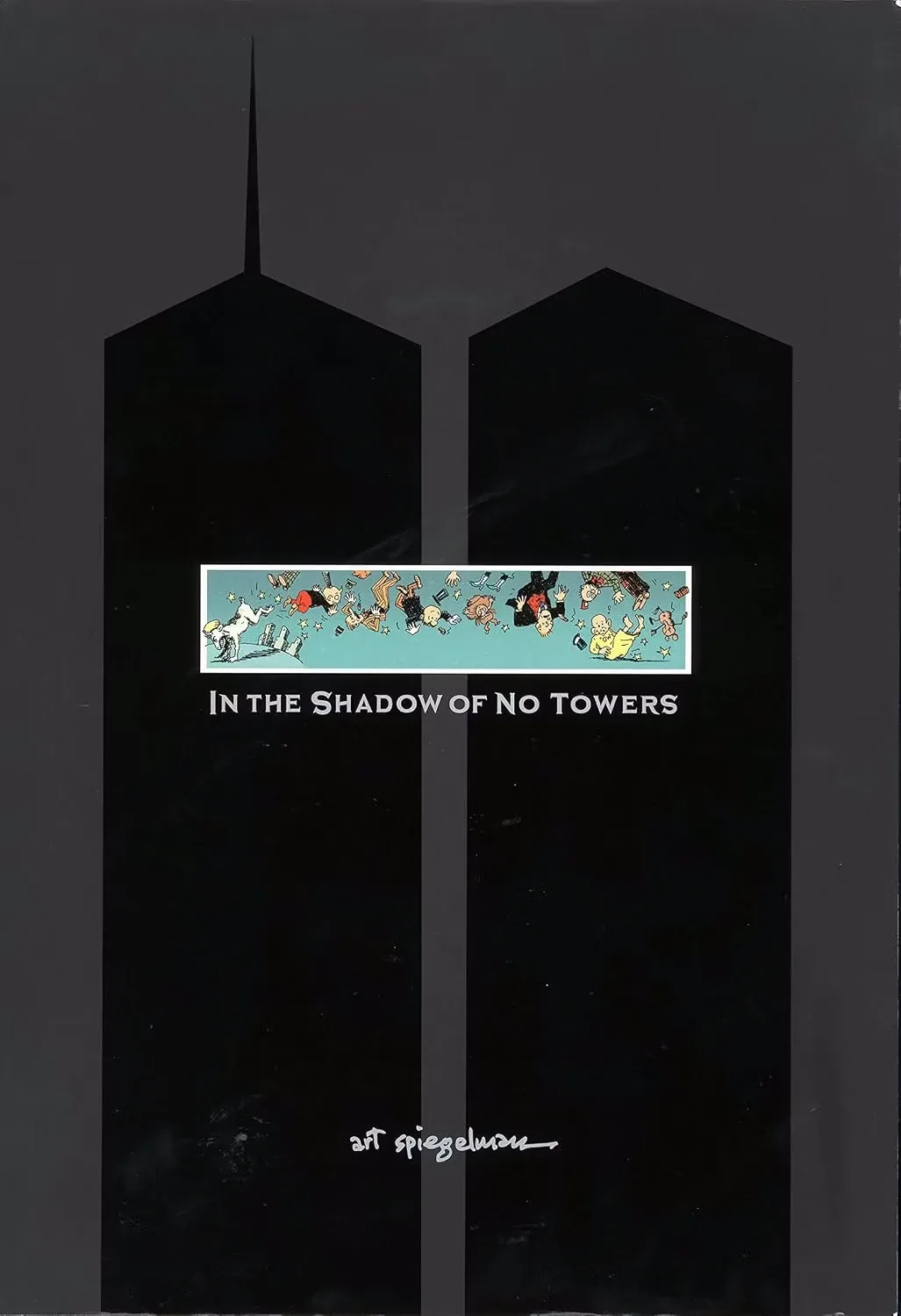
Art Spiegelman has said that a generative-AI image appears on the anniversary edition of In the Shadow of No Towers, his 2004 book about the aftermath of the September 11 attacks. The image is not described as part of the book’s original comics pages: it is a sticker added to the cover of Pantheon’s smaller-format edition, issued for the 25th anniversary of the attacks.
The sticker depicts the burning Twin Towers as candles on a birthday cake. Spiegelman said he wanted an old-engraving look and chose to see what AI could produce, characterizing the decision as laziness. He also said Françoise Mouly helped with prompts, calling her good at “Claude whispering.” The admission is notable not simply because of the technology involved, but because it is Spiegelman’s stated first use of generative AI in a published project and because No Towers is a deeply personal work about memory, grief and political unease.
For comics readers, the issue is likely to be bigger than one sticker. The response from fellow cartoonists and illustrators shows how quickly an ostensibly peripheral design decision can become a question about artistic values, publishing standards and the relationship between an artist’s process and the object readers buy.
What changed in the new edition
In the Shadow of No Towers began as a sequence of strips addressing Spiegelman’s response to 9/11. Its visual language deliberately drew from early-20th-century Sunday newspaper comics, a choice that placed contemporary catastrophe alongside the exaggerated, crowded vernacular of old comic strips. The work encountered resistance from U.S. publishers because of its political material and was initially serialized in Europe.
The original book was an oversized volume. The anniversary edition is smaller, retains the existing material and adds the AI-generated cover sticker as an anniversary component. That distinction matters. There is no supplied evidence that the original interior strips were made with AI, nor that the new edition alters their artwork. The disclosed use concerns the newly added sticker.
Yet a cover element is not artistically invisible. It is part of a book’s public face, its retail presentation and, often, the first image a prospective reader encounters. In a reissue of a work rooted in a national trauma, the choice of a birthday-cake image also intensifies the tension already present in the book’s own anniversary framing. The closing comic observes that the towers appear to become smaller every day before saying, “Happy Anniversary.” The new sticker therefore sits beside material that was already concerned with the uneasy conversion of catastrophe into commemoration.
Generative AI, prompts and the core objection
Generative AI refers here to systems that produce new text or images from user inputs, commonly called prompts. A prompt can describe a subject, composition, visual medium or style-like quality; the system then returns an output based on patterns learned from data. In this case, Spiegelman identified Claude in connection with the prompting process.
The basic practical appeal is easy to understand: a user can obtain a fast visual concept without drawing it from scratch or commissioning an illustrator. But that shortcut is exactly why the process is contentious in art and comics. The objections commonly include questions over training data, imitation of artists’ visual approaches, labor displacement, authorship and whether a generated picture should be treated as equivalent to commissioned or handmade work.
Spiegelman has previously expressed concern about style imitation and copyright in discussions of AI. He had tried an early version of DALL-E when access was limited and said he was disappointed by what it could do at that time, while recognizing that the technology was advancing quickly. He also drew a line between a system producing things from existing products and art as an expression that gives form to a person’s thoughts and feelings.
That prior framing makes the new disclosure especially provocative. It does not settle the wider argument, but it creates a clear contradiction for readers to weigh: an artist can believe that AI lacks inner experience while still use its output in a published visual package. A generated image need not be claimed as fully autonomous art for critics to object to its inclusion. For many artists, the ethical question begins earlier, with how the output was made and what creative work it replaces.
Why the reaction has been so sharp
Several comics figures responded negatively. Polar creator Victor Santos called the use of AI for the cover sad on multiple levels. Journalist and illustrator Erik Thurman criticized Spiegelman and questioned what Mouly’s involvement could imply about AI usage more broadly. Joe Gualtieri argued that Spiegelman was at least unusually candid about his rationale, while Brian Cronin rejected “I was too lazy” as a justification. Adriano Moraes focused on Spiegelman and Mouly’s cultural influence, arguing that their choices may blur the conversation for other cartoonists.
Those reactions are opinions, not proof of a broader policy or broader AI usage. In particular, the supplied information does not establish that AI has been used elsewhere under Mouly’s art-editing work or that any publication has adopted a loose AI policy. The criticism nevertheless identifies why the disclosure carries more weight than a routine experiment by an unknown creator: Spiegelman is a major comics figure, and visible choices by prominent artists can influence what publishers, readers and emerging creators regard as acceptable.
There is also an uncomfortable asymmetry in the “lazy” explanation. Many artists see effort, judgment and material skill not as optional polish but as part of what a commissioned or published image is supposed to represent. Calling the decision lazy may be forthright, but candor does not remove the concern that a publisher used a generative system where it could have employed a human illustrator, designer or engraver-inspired artist.
The difference between experimentation and publication
Private experimentation with an image model and publication are not identical acts. Artists can test tools for reference, brainstorming or curiosity without asking audiences to treat the result as part of a finished commercial object. Once an AI-generated image appears on a book’s cover presentation, the conversation changes from personal workflow to publishing practice.
That does not mean every use raises the same stakes. A placeholder mock-up, a clearly labeled experiment and a final cover asset serve different purposes. Here, the supplied facts identify a finished anniversary-edition sticker. Readers therefore have reason to ask practical questions even where the available information does not answer them: Was the element disclosed in the book itself? How should publishers describe AI-assisted art in catalog copy? What degree of human revision, if any, separates a prompted output from a final printed image? And should an edition of a significant comics work be evaluated differently when its new packaging uses a contested production method?
None of those questions requires assuming bad faith or claiming facts not in evidence. They follow from the ordinary reality that covers, stickers and supplemental packaging help define an edition. Collectors and readers often care about edition-specific differences precisely because those changes affect the object’s identity. In this case, the added image may become a point of distinction between the oversized original and the smaller anniversary printing.
Disclosure and provenance are becoming part of visual literacy
AI debates often become stuck on a blunt question: “Is this art?” That can be philosophically interesting, but it can obscure more concrete concerns. Readers may instead want to know who performed the work, what tools were used, whether the technology was disclosed, and whether the visual presentation matches their expectations of a creator’s work.
Provenance means the record of where an item or image came from and how it reached its current form. In art, it is often discussed in relation to ownership and authenticity. For AI-era imagery, it can also mean information about creation and editing: whether an image was drawn, photographed, generated, altered, or some combination of these. That does not automatically determine quality, but it gives audiences information with which to make their own judgments.
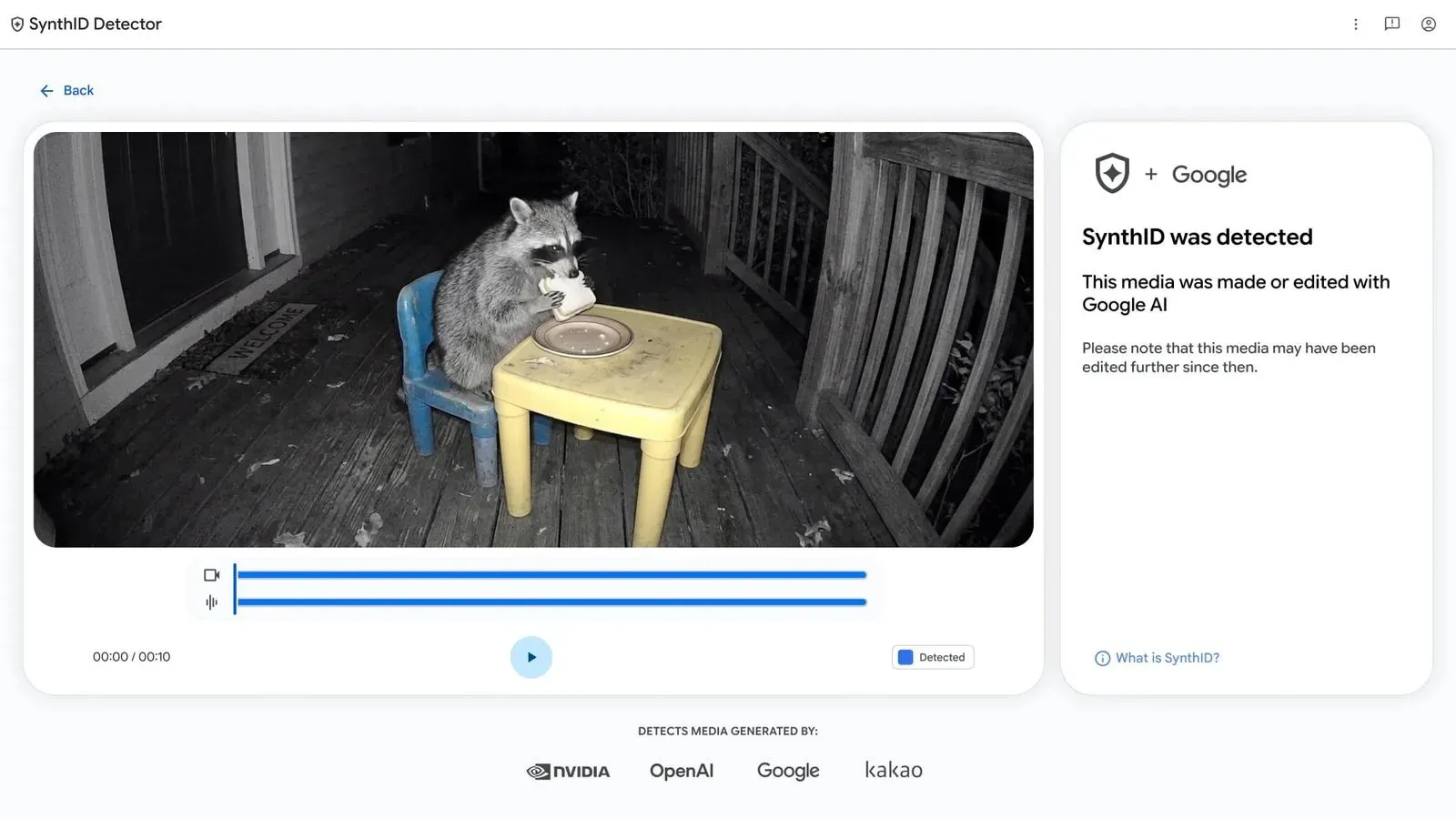
Technical efforts to identify or signal AI-created imagery are evolving alongside the cultural debate. For related context on one approach to image marking, see our coverage of hidden SynthID marks in certain AI image creations and edits. Such systems do not resolve disputes about training data, consent or artistic labor. They do show why provenance is becoming a practical issue rather than a purely theoretical one.
What Gail Simone and Luciano Vecchio’s X-Men page adds—and what it does not
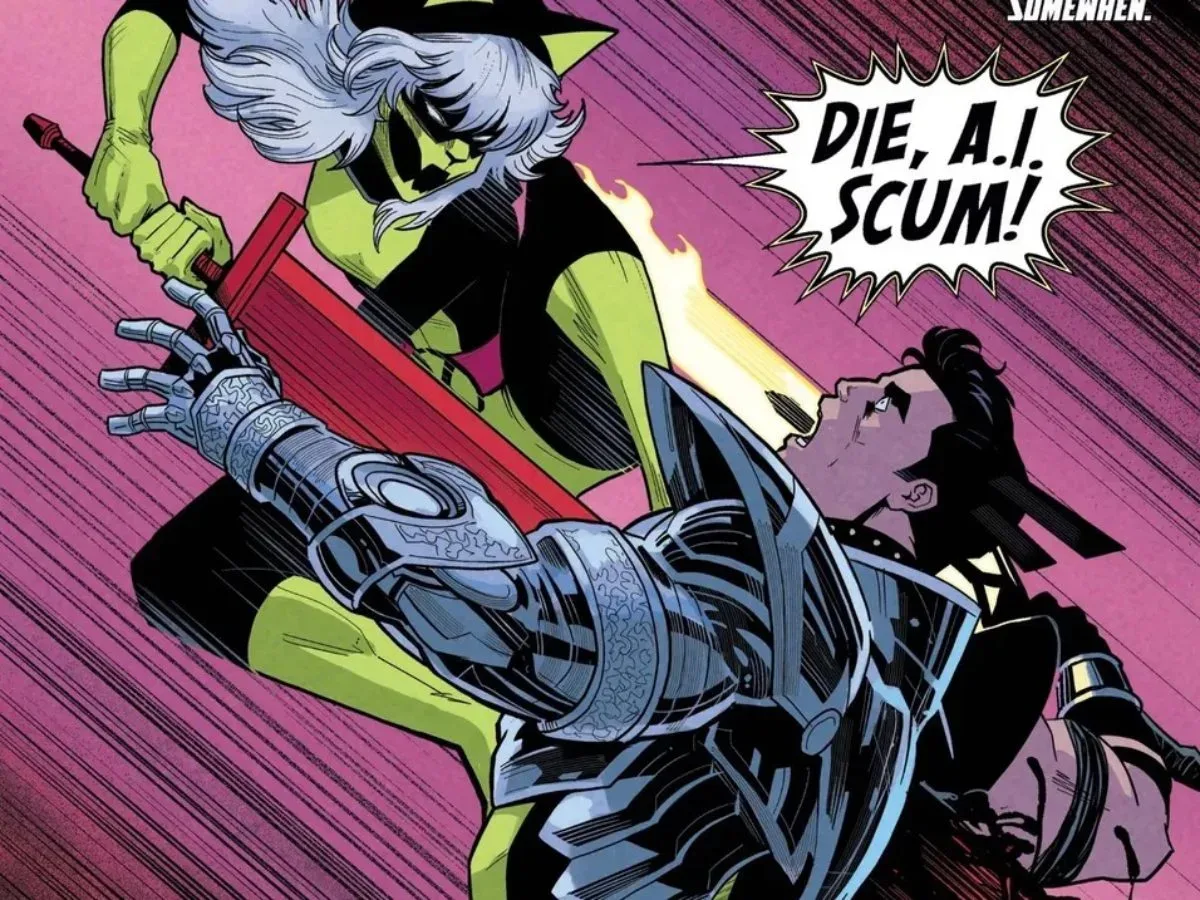
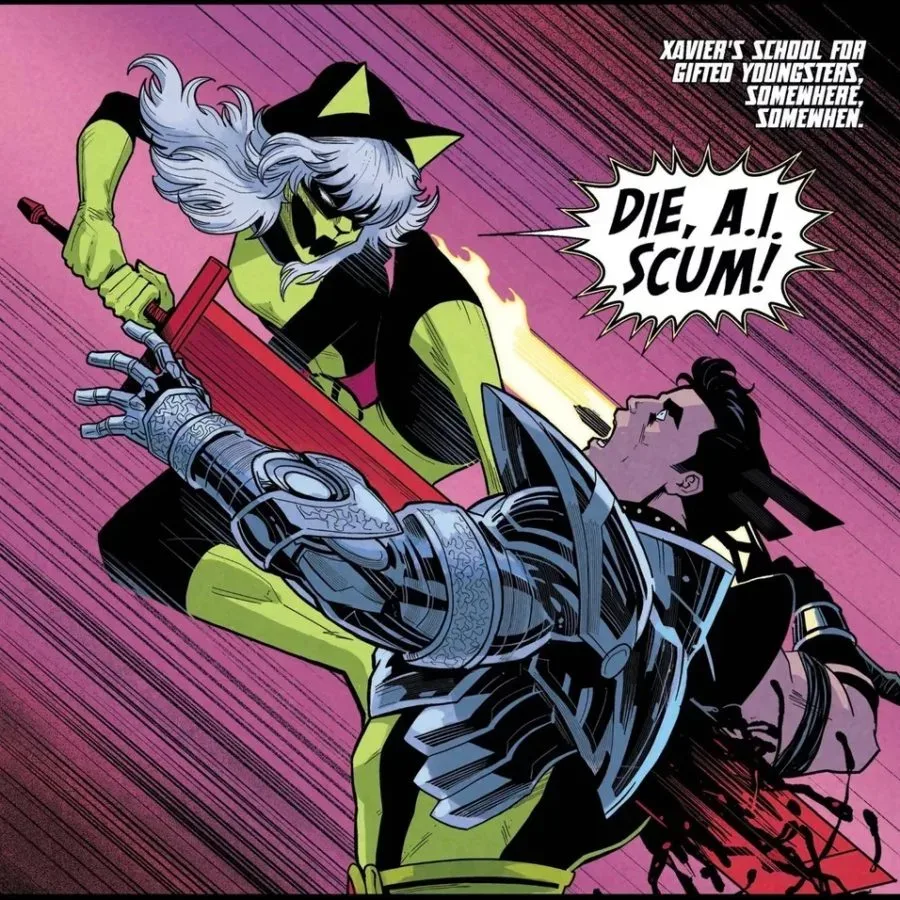
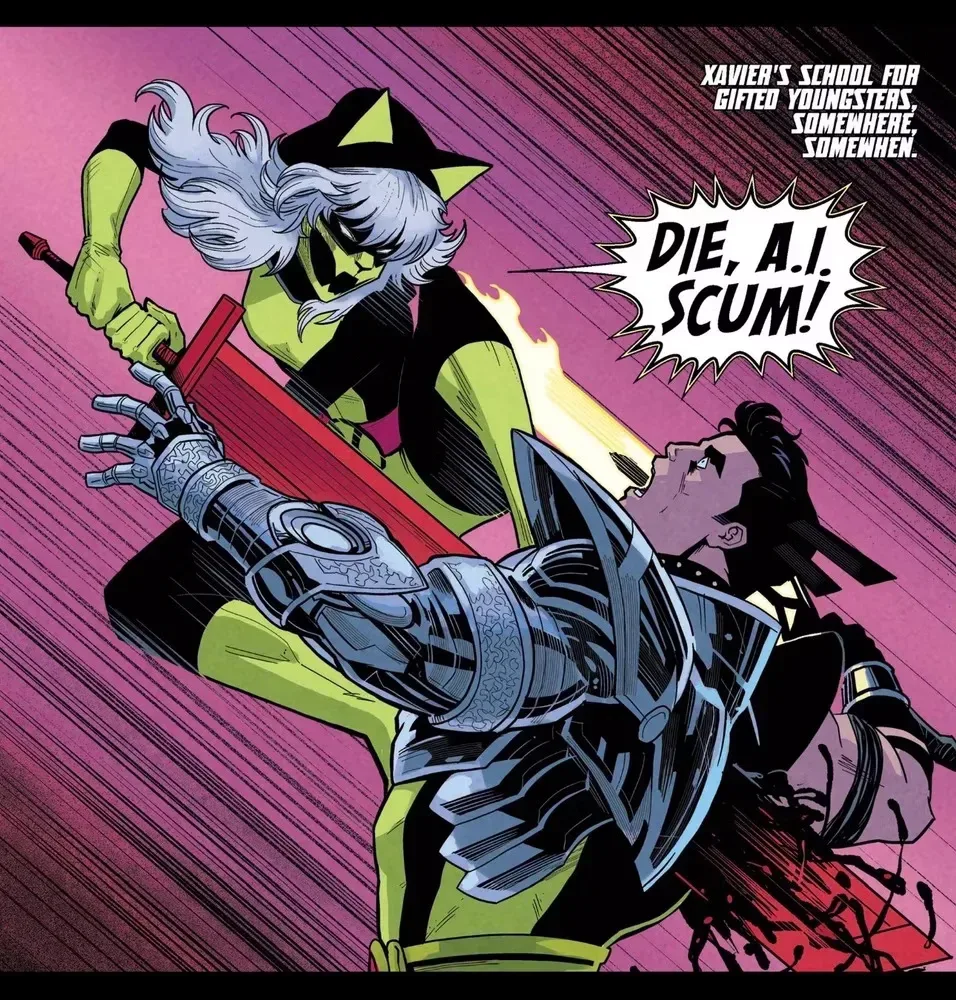
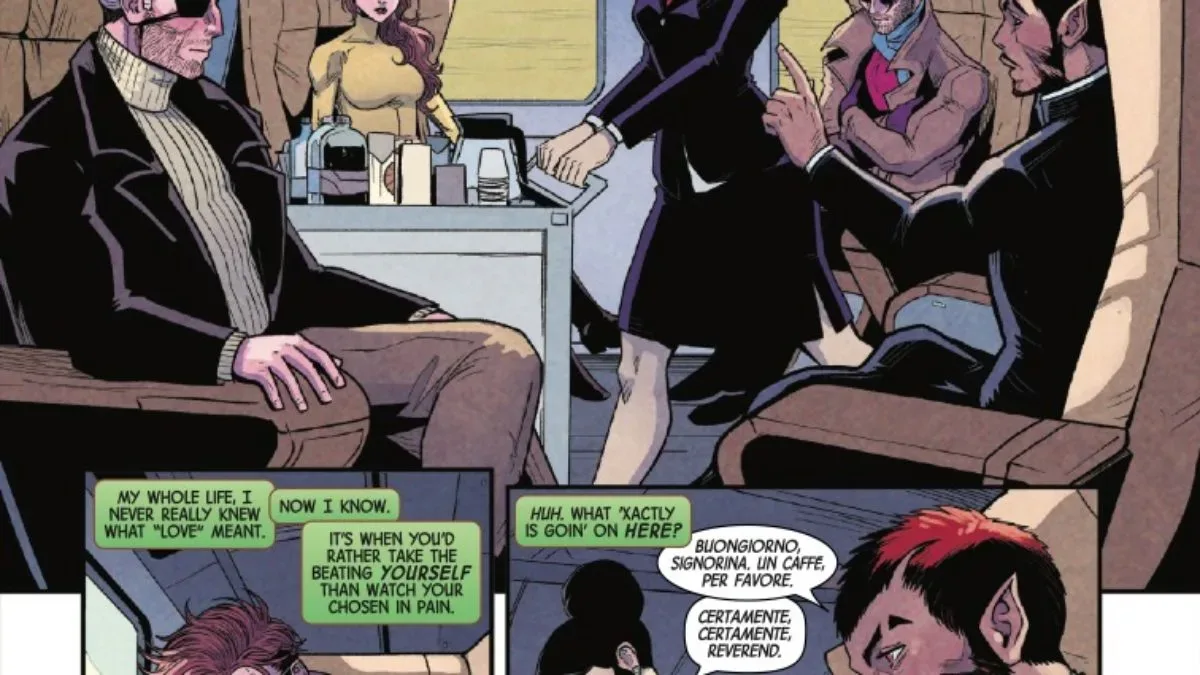
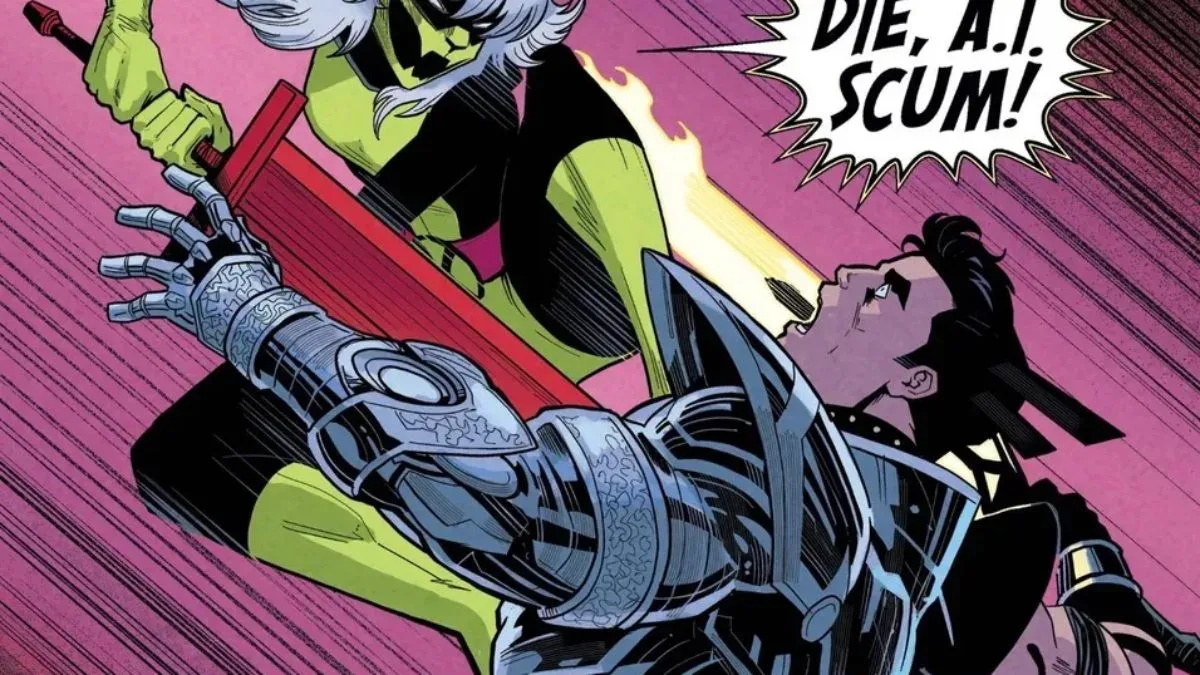
The discussion was accompanied by a reference to a recent page from Uncanny X-Men by Gail Simone and Luciano Vecchio. The provided information does not specify the page’s dialogue, imagery or intended relation to Spiegelman’s AI disclosure. It would be a mistake to assign it a definitive message or claim that it was created as a response without supporting evidence.
Its inclusion does, however, underline a broader cultural contrast at the center of the dispute. Mainstream superhero comics remain a medium where scripts, pencils, inks, colors, lettering and editorial choices are understood as linked human contributions. A conversation about AI in comics inevitably touches that collaborative structure: not only whether a machine can generate an appealing image, but whose expertise is being recognized, credited and paid when visual work is made.
For now, the narrow factual record is clear. Spiegelman says an AI-generated illustration was used for a sticker on the new anniversary edition of In the Shadow of No Towers. He has explained the decision in terms of speed and convenience, with Mouly assisting on prompts. Other comics professionals have objected forcefully. The original work remains distinct from the new add-on, but the sticker has ensured that a book about the persistence and shrinking of public memory is now part of another lasting argument: what responsibility a comics creator has when a new technology can produce an image quickly, but cannot carry the human experience the image is meant to represent.