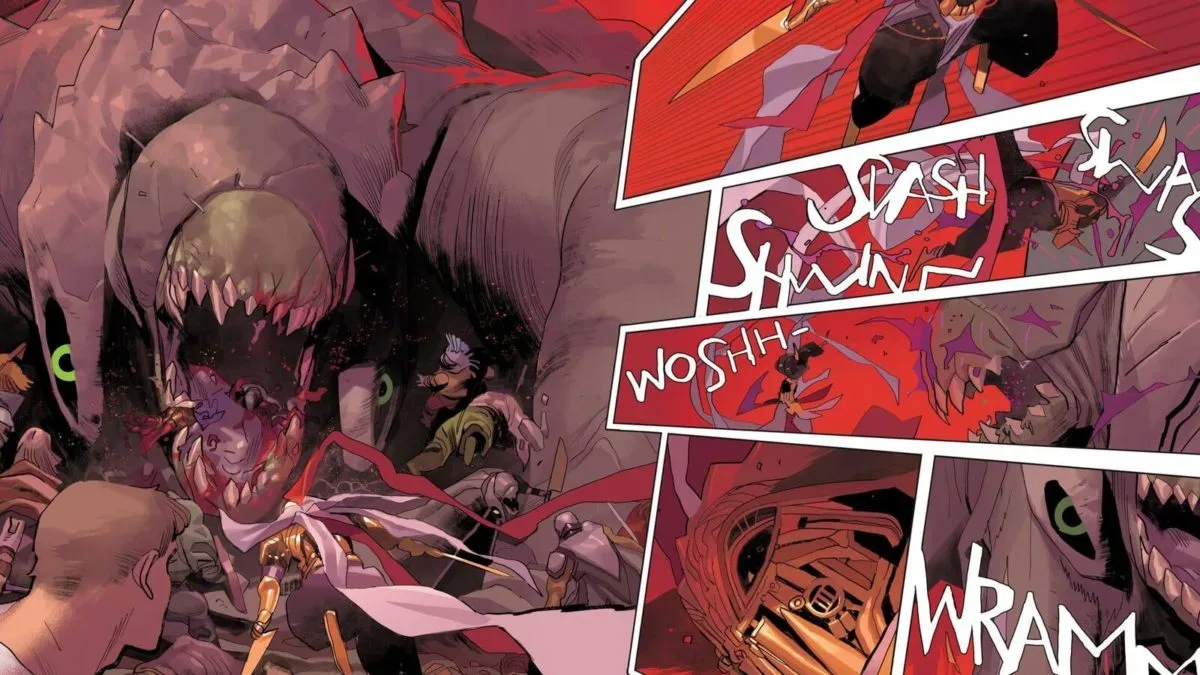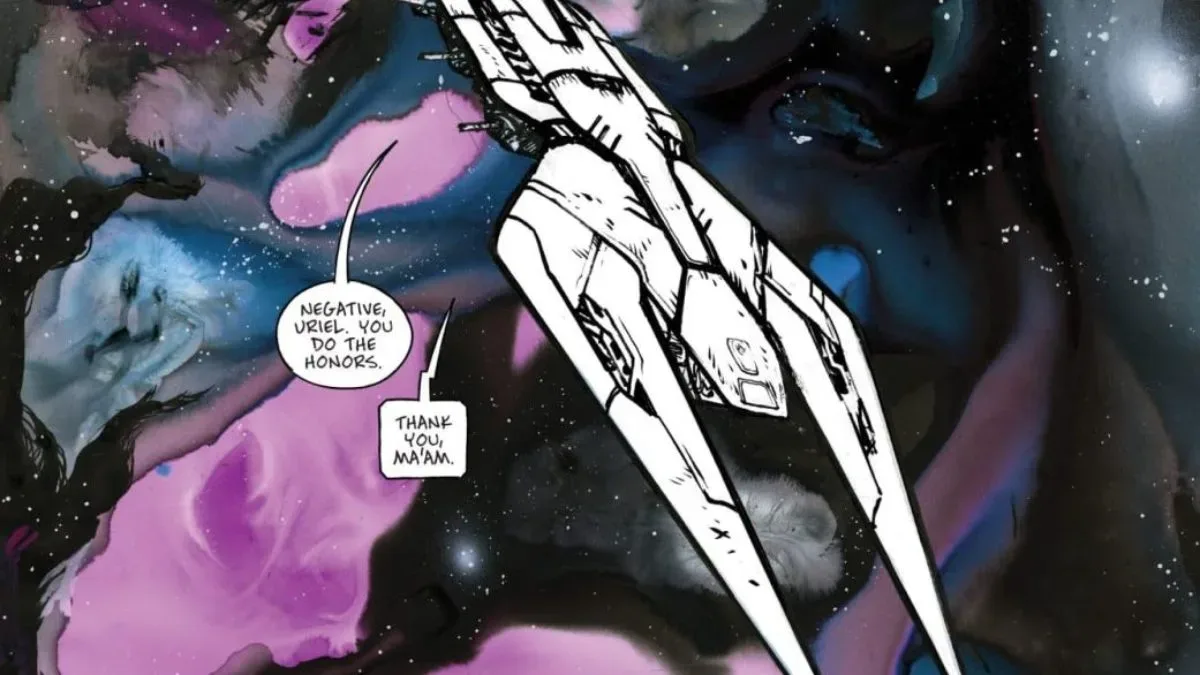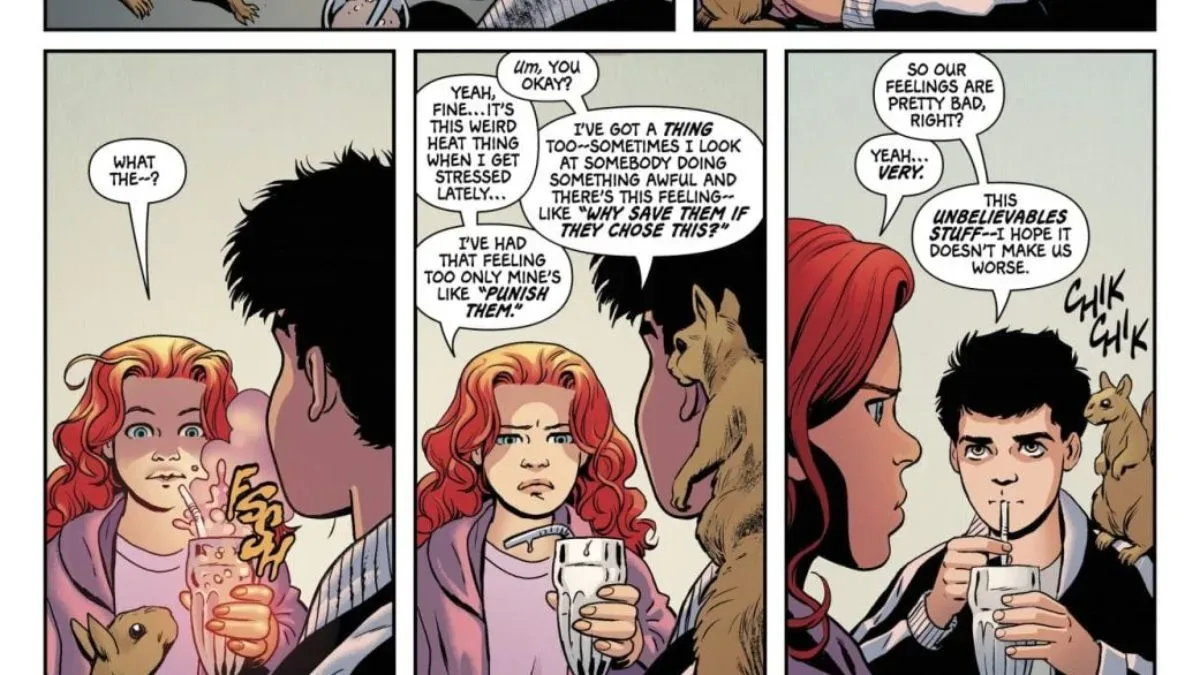
The Rocketfellers #15 is set to push its unlikely alliances into more dangerous territory. The next chapter, subtitled “INVADERS, Y’ALL,” Part Two, places a fugitive family from the future and a disguised alien military force in the Appalachian mountains, where both groups are being pursued by a bio-engineered hellhound. As if the giant science-fiction survival problem were not enough, the visitors must also avoid attracting too much attention from residents of a close-knit trailer park community.
Image Comics lists the issue for release on Wednesday, November 25, 2026. It is written by Peter J. Tomasi and Francis Manapul, with Manapul also handling the interior art and main cover.
One monster, several reasons to run
The central setup of issue #15 is built around enforced cooperation. The family on the run and the alien soldiers have their own differences, but the hellhound makes those conflicts temporarily secondary. It is hunting both sides, leaving survival as the immediate shared objective.
“INVADERS, Y’ALL,” Part Two follows a fugitive family from the future and a military group of aliens in disguise as they try to survive a deadly bio-engineered hellhound in the Appalachian mountains while avoiding the scrutiny of their trailer-park neighbors.
The phrase bio-engineered is important here. In broad terms, it describes an organism that has been deliberately altered or designed through biological methods rather than occurring naturally. The available story details do not explain who made the hellhound, what it was intended to do, or how it tracks its prey. But the label signals that this is not simply a supernatural animal loose in the woods; it is a threat with an artificial origin.
That distinction gives the monster a different kind of menace. A natural predator has instincts. A manufactured one raises bigger unanswered questions: was it designed as a weapon, was it created to locate a particular target, and does it have a mission beyond feeding? Those are questions the issue may explore, but they remain questions rather than established answers ahead of release.
The title’s use of “hellhound” still brings a useful layer of genre shorthand. Traditionally, a hellhound is a fearsome dog-like creature associated with the supernatural, danger or pursuit. Putting that familiar horror image next to the clinical idea of bio-engineering lets the series occupy an intriguing space between creature feature, science fiction and action-adventure.
Appalachia is more than a backdrop
Issue #15’s Appalachian setting does practical work for the premise. Mountain terrain, foliage and remote spaces can make an active pursuit feel harder to read from the outside—especially for people trying to keep a low profile. Yet the trailer-park setting ensures the cast is not truly isolated. A tight neighborhood is its own kind of pressure cooker, where unfamiliar people, unusual activity and too many vehicles can become subjects of immediate interest.
That contrast is the comic’s sharpest stated hook: an enormous, high-concept danger is unfolding close to ordinary domestic life. The fugitives and aliens may be dealing with time travel, disguises and engineered predators, while their neighbors could be more focused on the unexplained behavior happening nearby. Keeping secrets in such a space can be as demanding as surviving the monster itself.
It also makes the word disguised matter. The alien military group is not merely passing through. It is operating in a form intended to conceal what it is, and any encounter with local residents creates the possibility that the cover story will not hold. The issue’s tension therefore has multiple layers: evade the hunter, work beside people you might not trust, and do not let the neighbors figure out why any of this is happening.
A prehistoric detour adds another predator
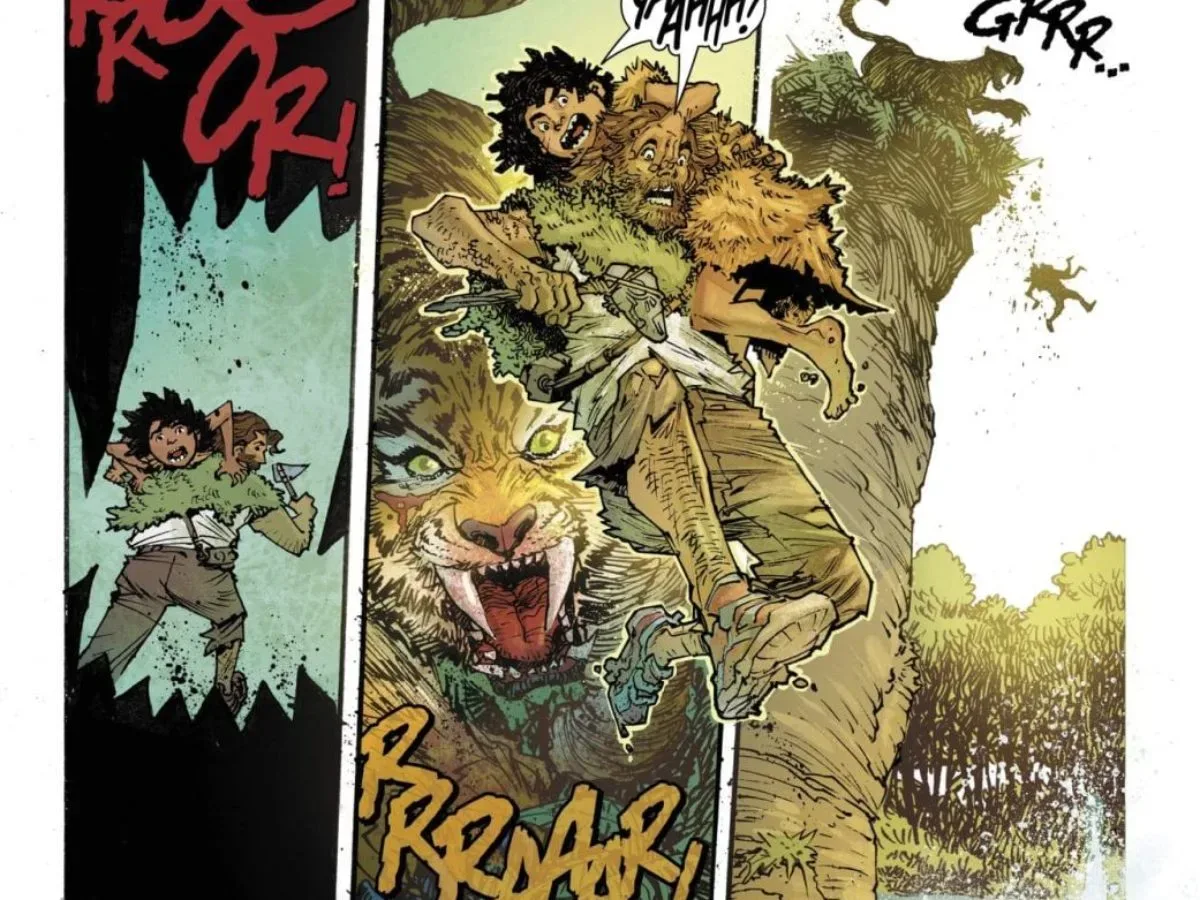
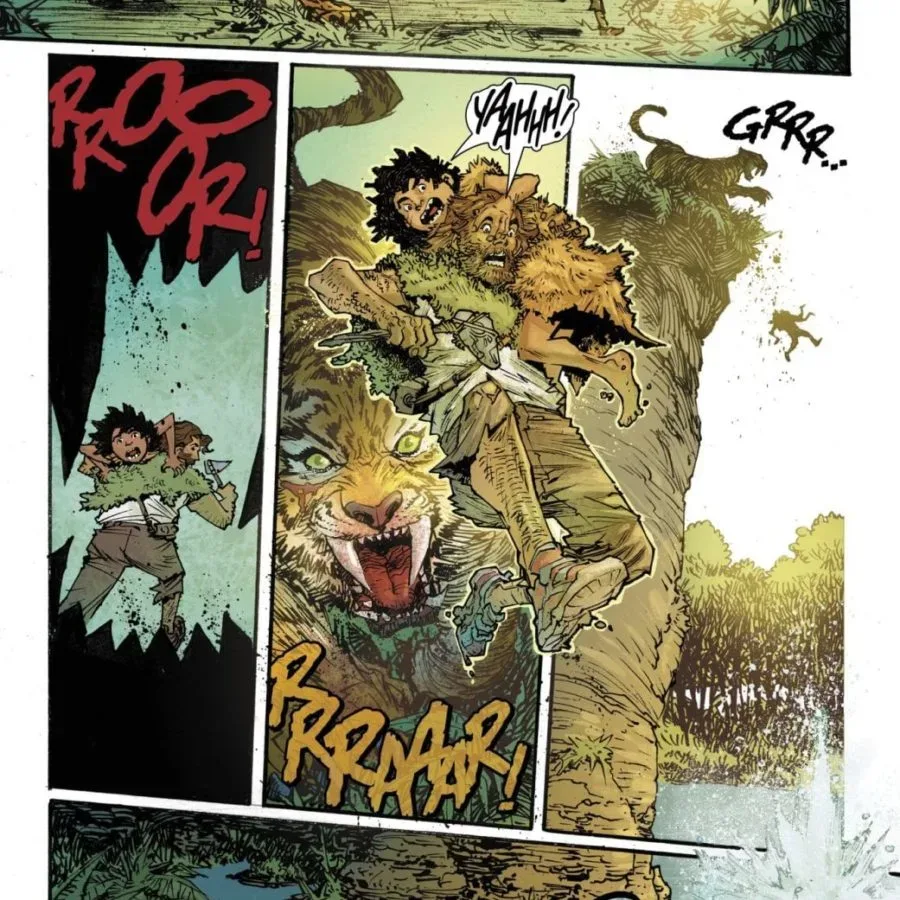
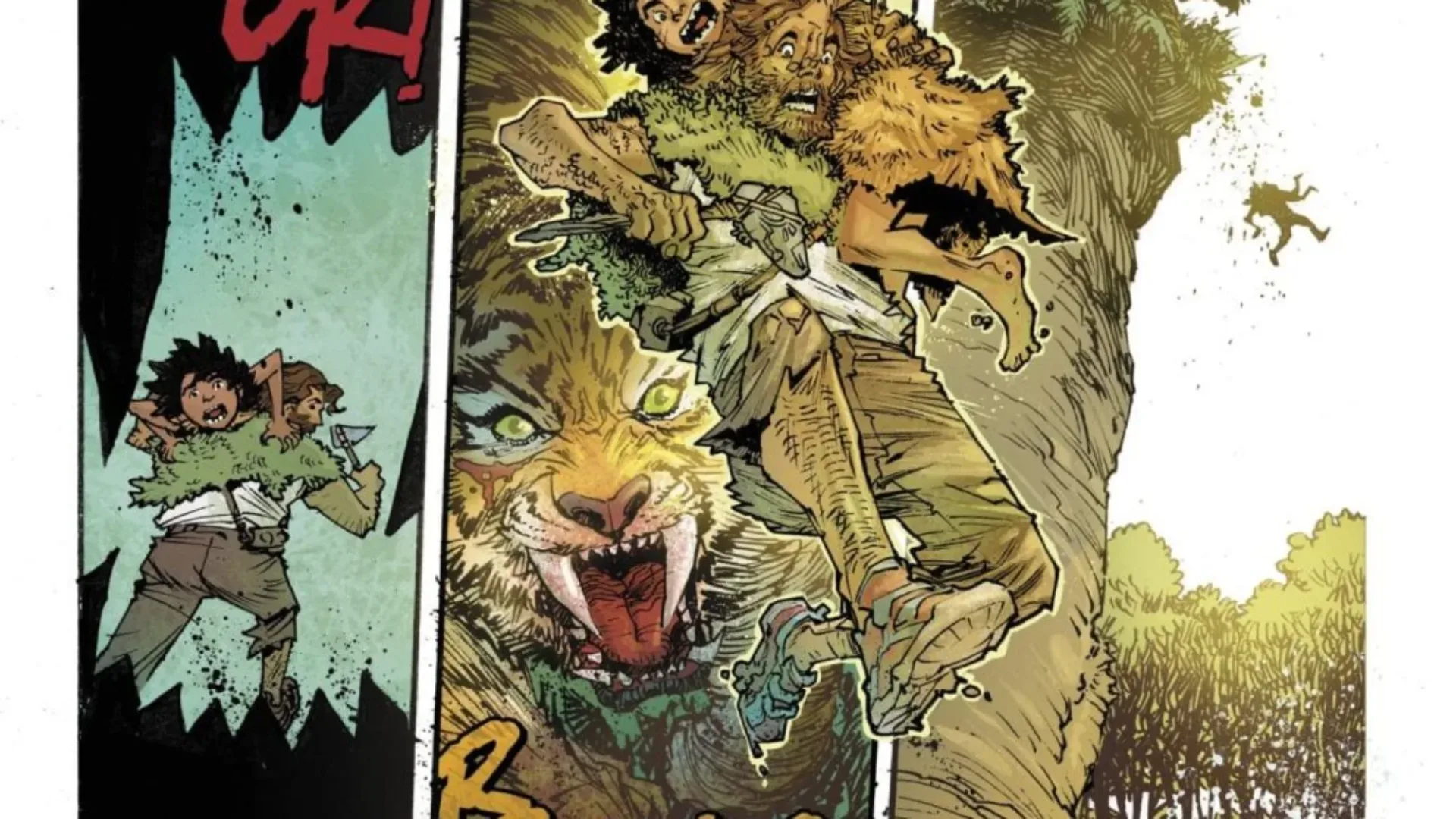
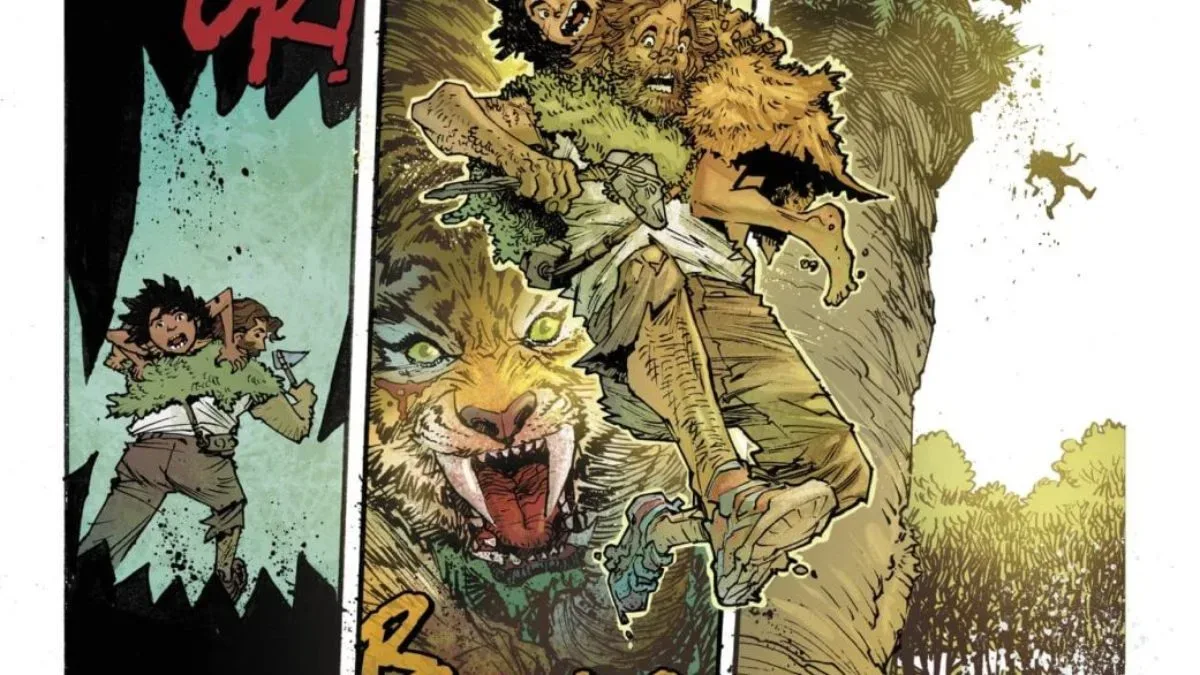
The preview material also opens with a sequence set in the Pleistocene Epoch, involving a camouflaged hunter and a saber-toothed cat. The Pleistocene was a period of Earth’s prehistory associated with repeated ice ages and extinct animals, including saber-toothed cats. In narrative terms, its presence creates a conspicuous contrast with the modern Appalachian setting and the family from the future.
The material provided does not establish exactly how that earlier sequence connects to the present-day plot, so it would be premature to call it a time-travel explanation, an origin story or a direct encounter with the Rocketfellers. What it does establish is a repeated survival image: a person trying not to become prey in an environment ruled by a powerful animal hunter.
That thematic echo is clear even without a confirmed plot connection. A saber-toothed cat and an engineered hellhound are very different threats in origin and genre, but both turn concealment, terrain and split-second choices into matters of survival. The issue appears poised to use predation as a through-line, from deep prehistory to a contemporary story already crowded with visitors from elsewhere.
Francis Manapul’s double role
Manapul is credited as both co-writer and artist, a combination that can give an issue a close connection between its story beats and visual execution. The credits do not reveal how Tomasi and Manapul divide the scripting process, and there is no basis to assume a particular method. Still, the formal billing confirms that Manapul has a major hand in shaping the installment on both the page and the script side.
For a story that moves among future fugitives, covert extraterrestrial soldiers, a local community and a monster hunt, visual clarity is especially valuable. Readers will need to understand not only who is chasing whom, but also when a disguise is holding, where characters are positioned in mountain terrain and how close danger is to spilling into public view. Manapul’s art credit means the person helping write those tensions is also responsible for rendering them.
Tomasi and Manapul are both credited as writers, while Manapul receives the art and cover credit. The issue is a single comic-book chapter rather than a separate one-shot, and its “Part Two” designation makes its place in the continuing “INVADERS, Y’ALL” storyline explicit.
What readers can expect—and what remains unknown
The official setup supports several firm expectations: a hostile alliance, an active hunt, a setting where secrecy is difficult and a prehistoric opening sequence involving a saber-toothed cat. Beyond that, key details are intentionally open. The available information does not identify the hellhound’s creator, disclose why it is hunting these groups, name the fugitive family members, or say what the alien military unit wants.
That uncertainty is part of the appeal of a mid-arc solicitation. “Part Two” tells prospective readers that the story is in motion rather than beginning from a blank slate. It also suggests that issue #15 will develop the immediate crisis rather than resolve every unanswered question at once. Anyone catching up on new comic releases can also browse another recent comic arc preview for a look at how different series frame their next turning points.
The blend of elements is particularly notable. Future fugitives establish a science-fiction foundation. Aliens in disguise add an infiltration angle. The hellhound brings monster-story urgency. The trailer-park community supplies an everyday social obstacle that cannot be solved simply by outrunning something in the woods. None of these concepts has to carry the whole issue alone; the premise is designed around their collision.
Release and cover options
The Rocketfellers #15 has a listed suggested retail price of $3.99 for the standard issue. A Bryan Hitch and Brad Anderson cover is also listed at $3.99. In addition, a blank sketch cover is listed at $4.99.
- Main issue: $3.99
- Bryan Hitch and Brad Anderson cover: $3.99
- Blank sketch cover: $4.99
A blank sketch cover is a version with substantial empty cover space intended for original drawings or signatures, rather than a fully illustrated alternate cover. It can appeal to readers who attend conventions or want to commission an artist, though whether a particular buyer uses it that way is entirely personal preference.
With an engineered predator closing in and curious neighbors adding complications, The Rocketfellers #15 has a concise but high-pressure objective for its central cast: survive long enough to keep the bigger secrets from becoming everyone’s business. The issue reaches shops on November 25, 2026.