Hornsby & Halo #16 is set to bring “The Deadtones” to Warwick on September 16, 2026, with Rose and Zach confronting a central question around the visiting monster-rock band: are the Deadtones allies, enemies, or the catalyst for something much worse?
The issue is the second part of “The Deadtones,” a storyline in which the band’s arrival coincides with a disturbing change across town. Warwick’s residents begin becoming exaggerated, uglier versions of themselves—and the damage is poised to hit close to home for both leads. Rose and Zach’s parents are among those affected, with the solicitation making a pointed distinction in Zach’s case: his parents are already con artists, so their “worst” selves set an especially ominous baseline.
A mystery built around performance and transformation
The Deadtones premise joins two familiar genre engines: a suspicious musical act arriving in town and a community-wide transformation that turns private flaws into public danger. The important tension is not simply whether the band looks monstrous. It is whether its music, its presence, or some connected force is exposing what Warwick’s people would rather keep contained.
That distinction matters for Rose and Zach’s investigation. A conventional monster threat can be confronted, escaped, or defeated. A threat that pushes people toward their worst impulses is harder to isolate, particularly when the people changing are parents, neighbors, and other figures embedded in everyday life. The Deadtones’ friend-or-foe ambiguity gives the story room to treat the band as more than a straightforward invading menace.
Preview material frames the band’s performances as part of the mystery rather than mere scenery. One unsettling clue concerns Tommy’s missing parents and suggests that they seem truly alive only while they play. That line potentially connects the Deadtones’ stage act to the larger disappearance-and-transformation thread, although the available setup does not establish precisely how.
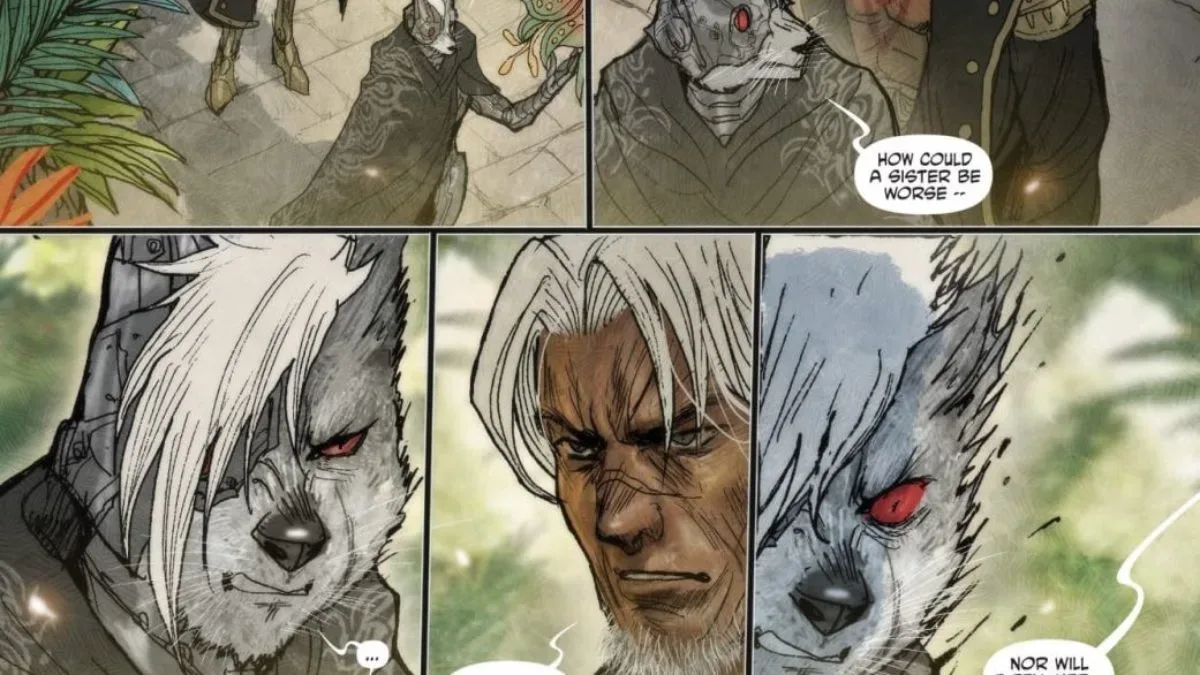
Another detail from the preview is the Deadtones singer’s visually striking presentation: a snake-covered, Medusa-like head paired with an “XOXO” blindfold. It is an image that fits a story where identity is unstable and appearances cannot settle the question of intent. The performance’s message, “be true to the real you,” also takes on a darker edge in a plot explicitly about people becoming their worst selves.
What “worst versions” means for the cast
“Worst version” is the key phrase in the issue’s setup, but it should not be confused with a simple personality swap. The wording implies amplification: existing traits, resentments, selfishness, or destructive urges may become impossible to ignore. Zach’s parents are the clearest example supplied so far. Their con-artist background means the story begins from compromised behavior, then asks what happens when that behavior is intensified further.
That gives the family angle practical narrative weight. If Warwick’s adults become crueler, more reckless, or more driven by their lowest impulses, Rose and Zach cannot assume that adults will offer stability or protection. Their investigation may need to proceed while the usual support systems in town become unreliable. The solicitation does not specify the exact forms these changes take, so readers should treat the extent of each transformation as an open question rather than a confirmed list of monster abilities.
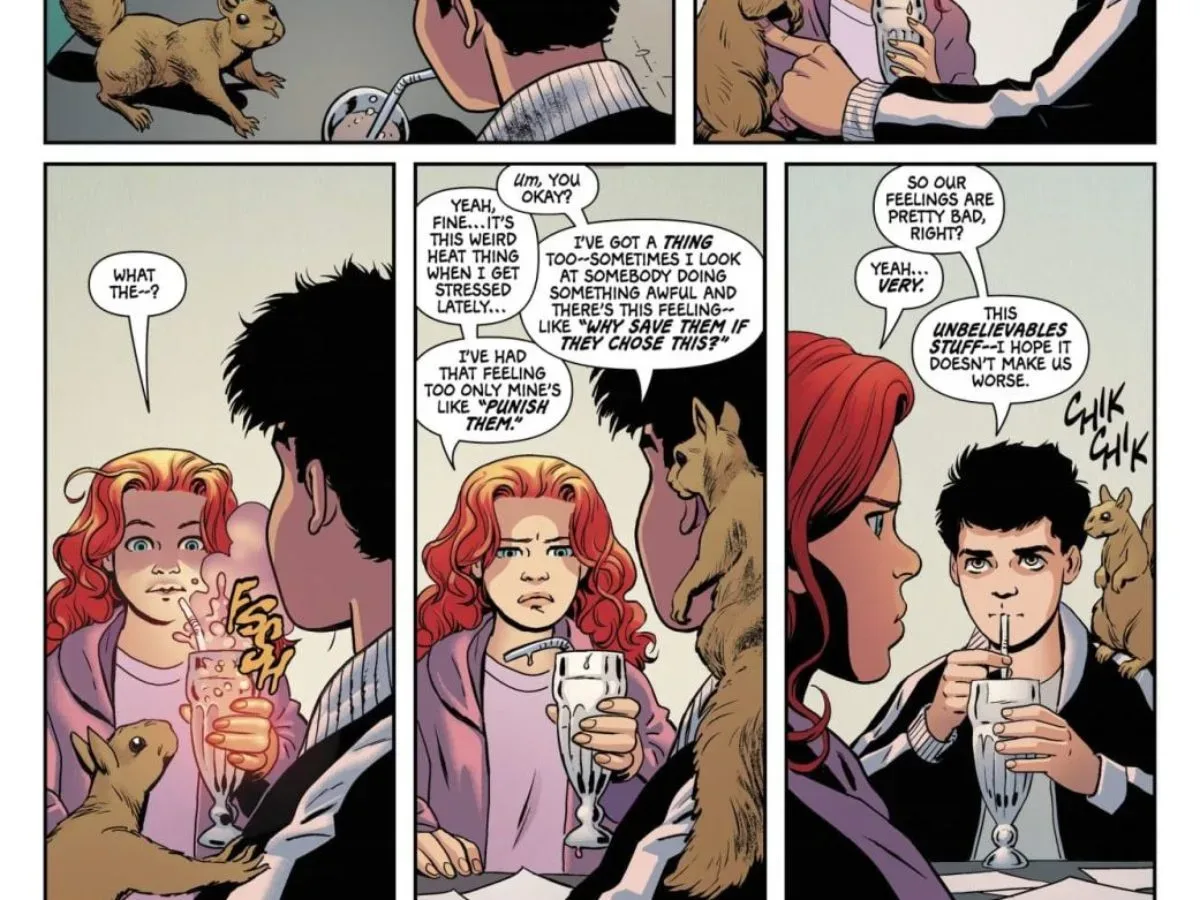
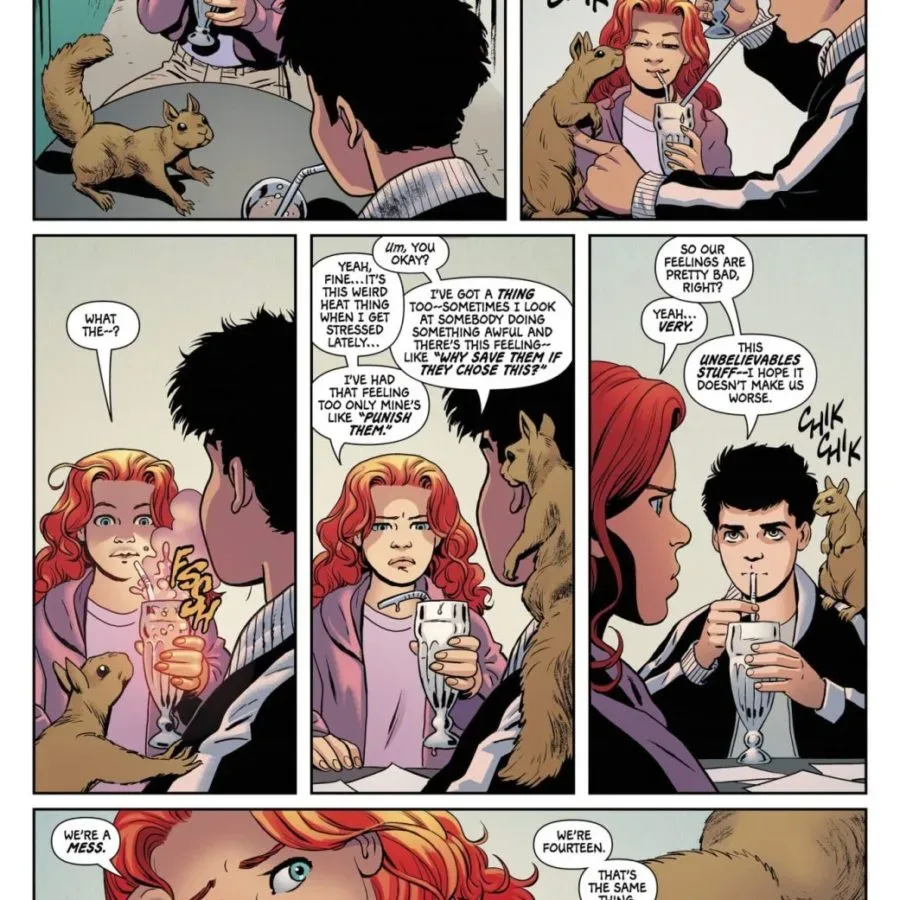
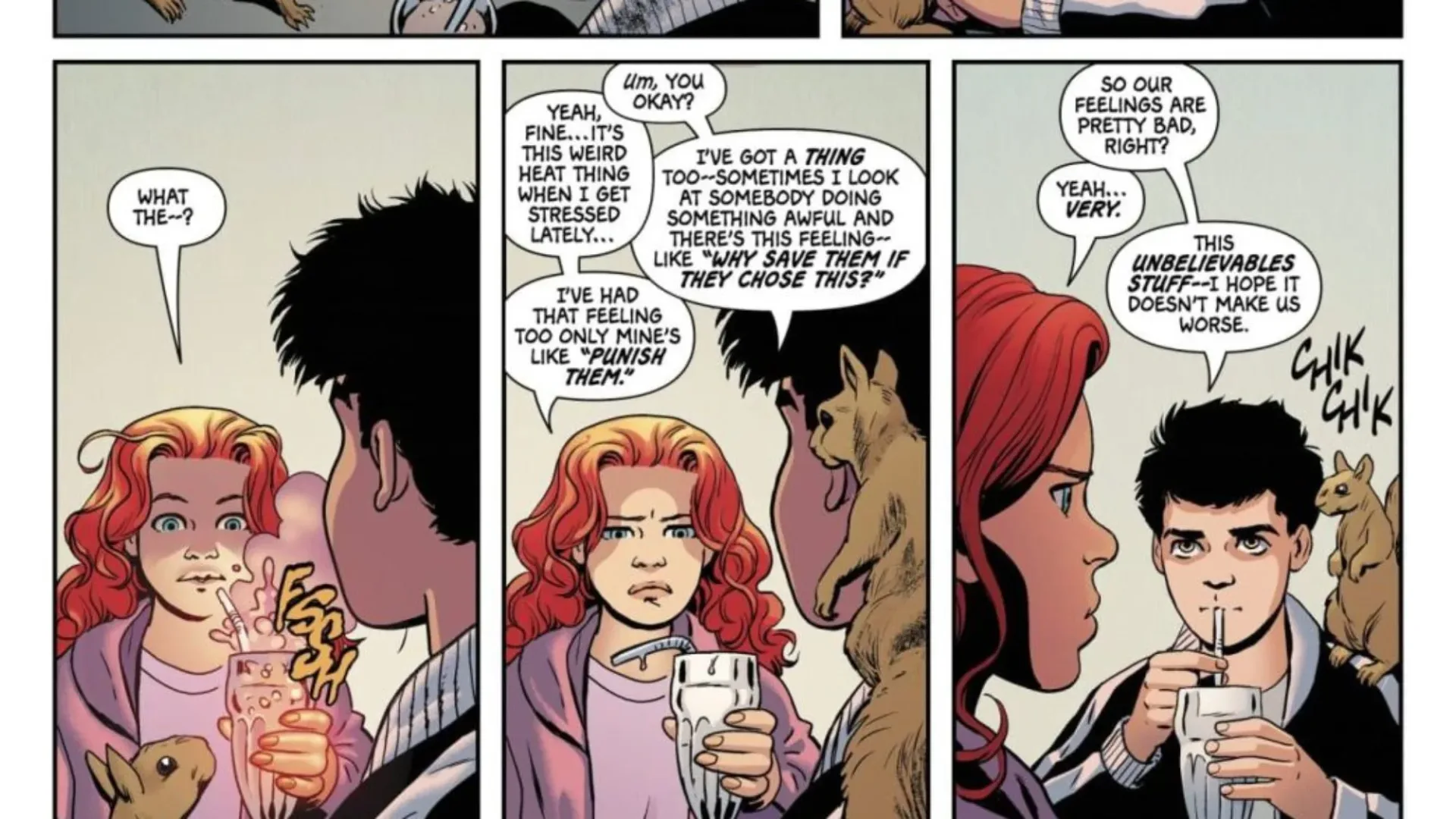
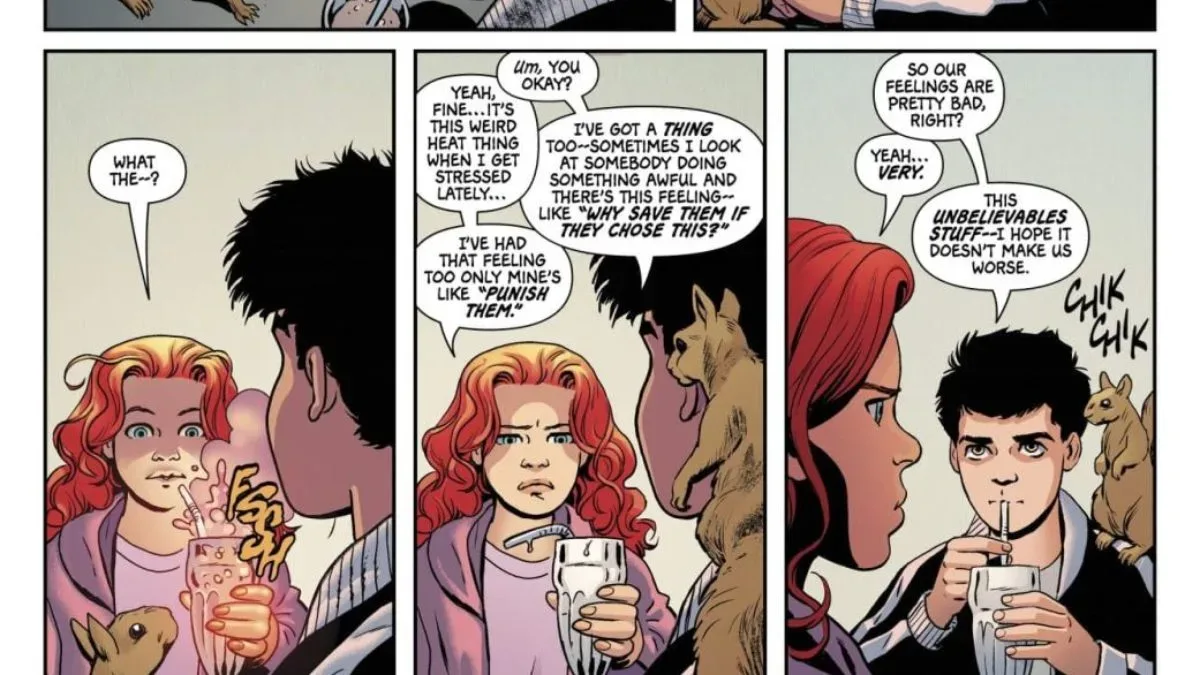
The preview dialogue also points to rising hostility. References to a “heat thing” and a desire to “punish them” suggest that anger is not merely background atmosphere. Whether that impulse is supernatural influence, a symptom of the town’s wider condition, or something else is not yet clear. What is clear is that the story is placing emotional escalation beside its overt monster imagery.
Why the concert setting fits the story
A concert is a useful setting for a tale about contagious moods and uncertain identity. It gathers people into one space, centers attention on a charismatic performer, and turns loud music and spectacle into a shared experience. In Hornsby & Halo #16, those qualities make the Deadtones’ show an especially plausible focal point for Rose and Zach’s suspicions.
The term monster-rock band is doing a lot of work here. It establishes the Deadtones as deliberately theatrical without answering whether their monstrous appearance is an aesthetic, a disguise, a literal condition, or some combination of those possibilities. The “rock” element also gives the story a public event around which Warwick’s changes can accelerate. The town does not have to encounter danger one person at a time; it has an act capable of drawing a crowd.
That framework also makes the title’s “Part Two” designation significant. The issue is not introducing a detached one-shot premise. It is advancing an ongoing investigation in which the band’s role and the residents’ deterioration are already linked by circumstance, even if the exact cause-and-effect relationship remains unresolved.
Creative team, covers, and release details
Peter J. Tomasi writes Hornsby & Halo #16. Peter Snejbjerg provides the interior art and cover art, with John Kalisz credited for color. Image Comics lists the standard edition at $3.99.
Collectors will also have two listed alternatives: a Bryan Hitch and Brad Anderson cover priced at $3.99, and a blank sketch cover priced at $4.99. Francis Manapul is credited for another $3.99 cover. A blank sketch cover is a variant designed with open space intended for an original drawing or signature, rather than a fully illustrated cover image; whether to buy one is primarily a matter of collecting preference, since the listed story is the same issue.
- Title: Hornsby & Halo #16
- Story arc: “The Deadtones,” Part Two
- Writer: Peter J. Tomasi
- Art and cover: Peter Snejbjerg
- Colors: John Kalisz
- Publisher: Image Comics
- In shops: September 16, 2026
- Standard cover price: $3.99
What to watch for in issue #16
The immediate appeal is the collision of scales. On one level, Rose and Zach are trying to determine what the Deadtones want. On another, Warwick itself is becoming a problem as its residents start acting on their most destructive tendencies. The latter raises the stakes beyond a battle with a single band: even a correct answer about the Deadtones may not instantly repair the relationships and behavior already unraveling around them.
Readers following this chapter can look for three questions in particular. First, what does the band’s performance have to do with the condition spreading through Warwick? Second, what has happened to Tommy’s parents, and how does the clue about being fully alive while playing fit the case? Finally, can Rose and Zach separate genuine danger from the unsettling possibility that the Deadtones are not exactly what they first appear to be?
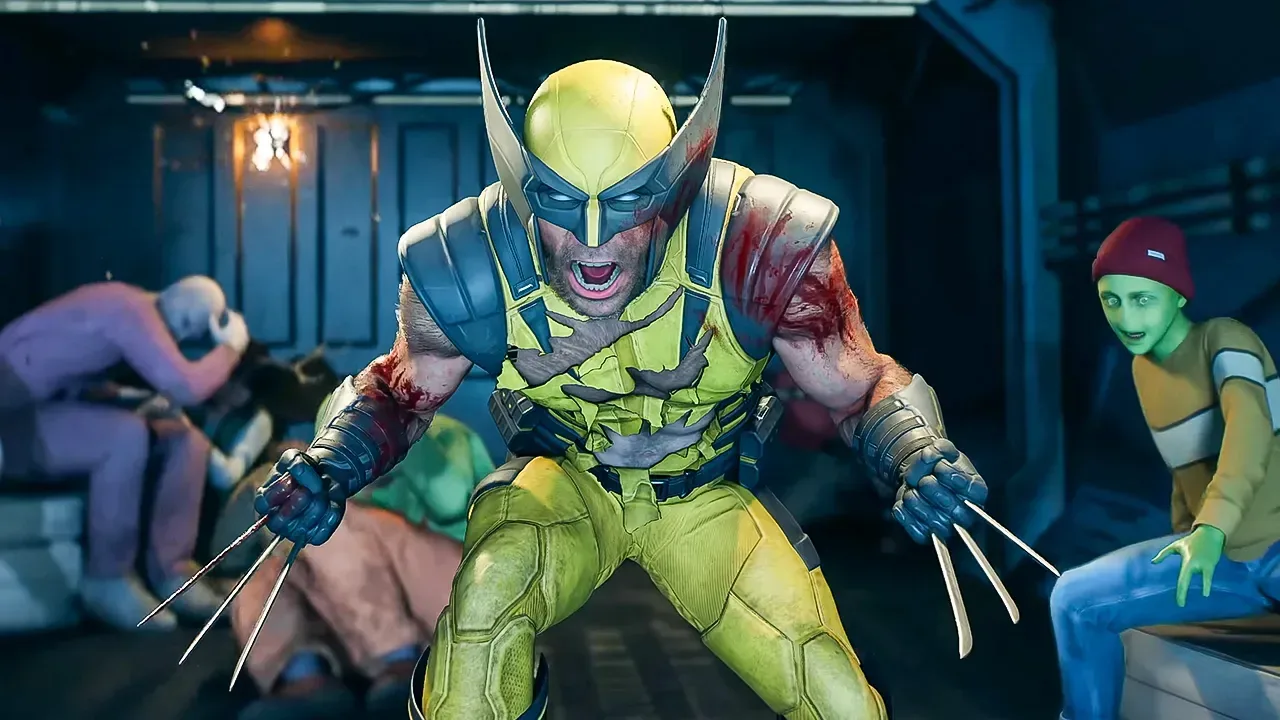
For another current comic-book story built around an iconic character’s altered capabilities, see Marvel’s Wolverine Uses Phalanx Nanotech to Explain Logan’s Self-Repairing Suit. The connection is thematic rather than shared continuity: both setups use a visible genre device to raise questions about what is changing beneath the surface.
Hornsby & Halo #16 arrives with its mystery intact. The Deadtones may be a menace, a misunderstood presence, or something more complicated, while the transformation of Warwick’s residents ensures the investigation has consequences far beyond the stage.