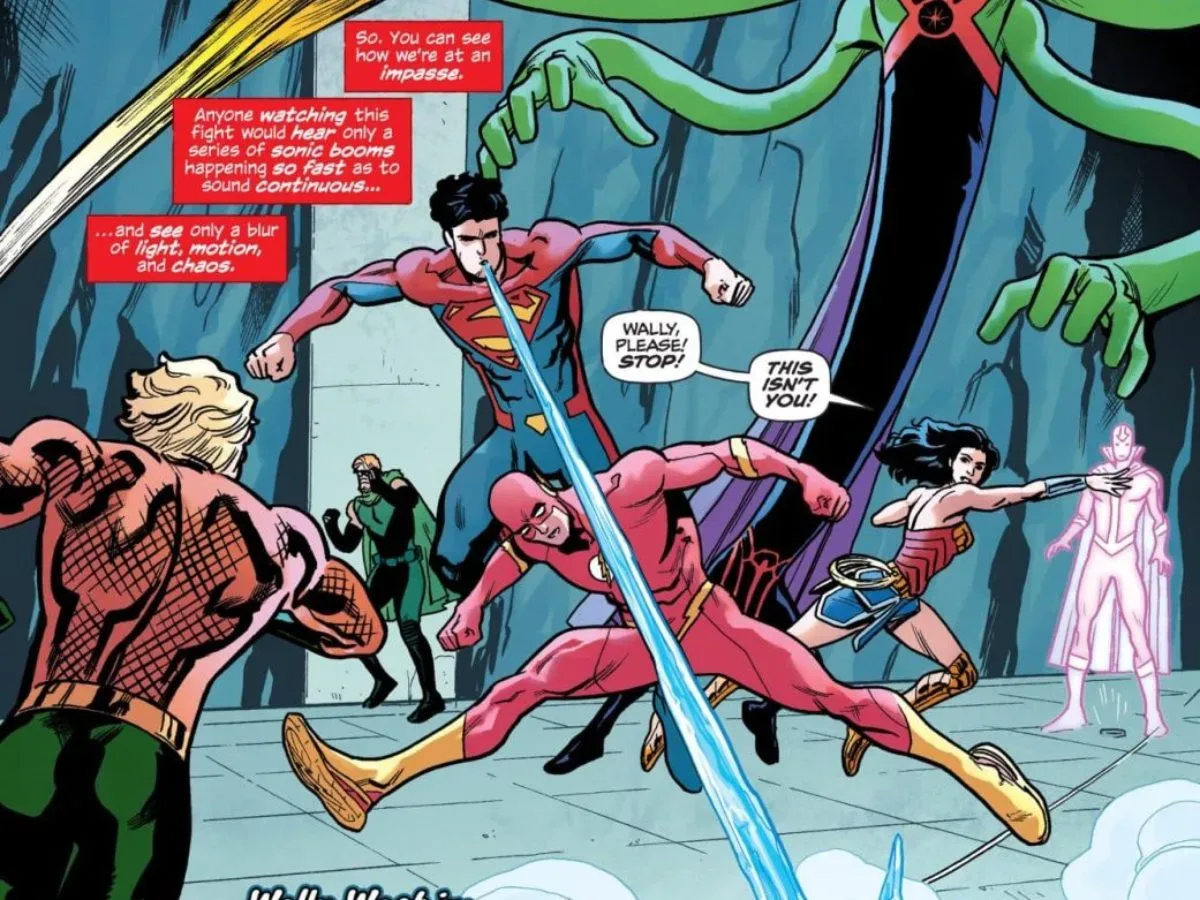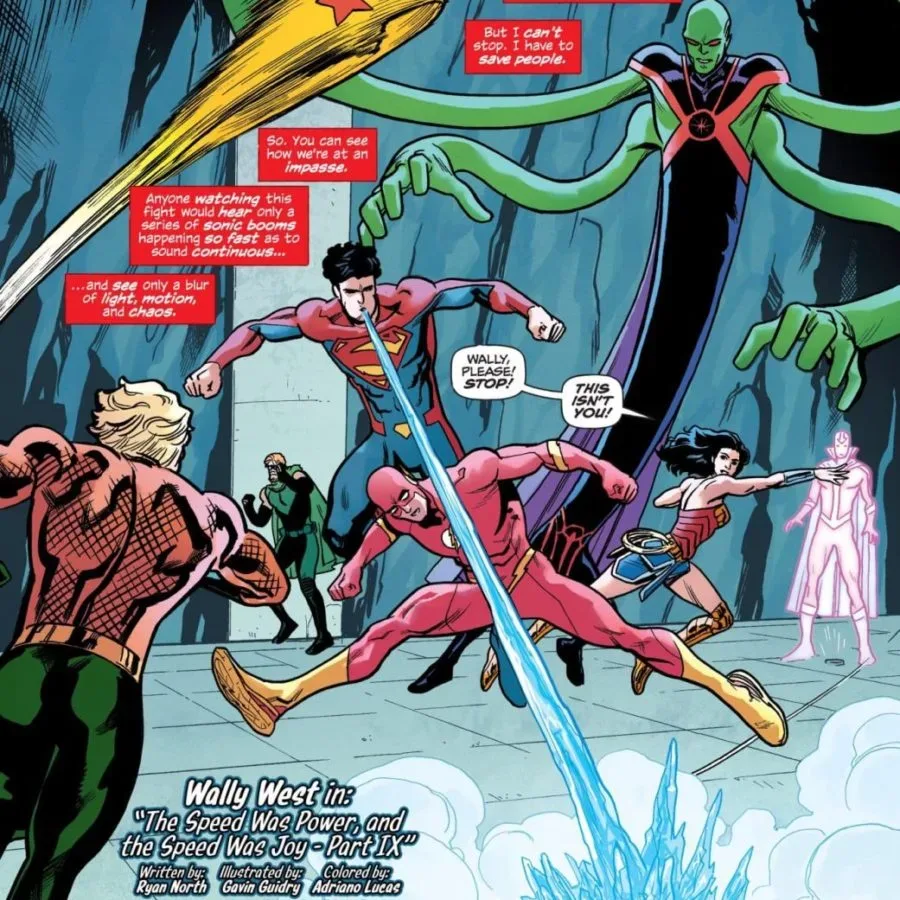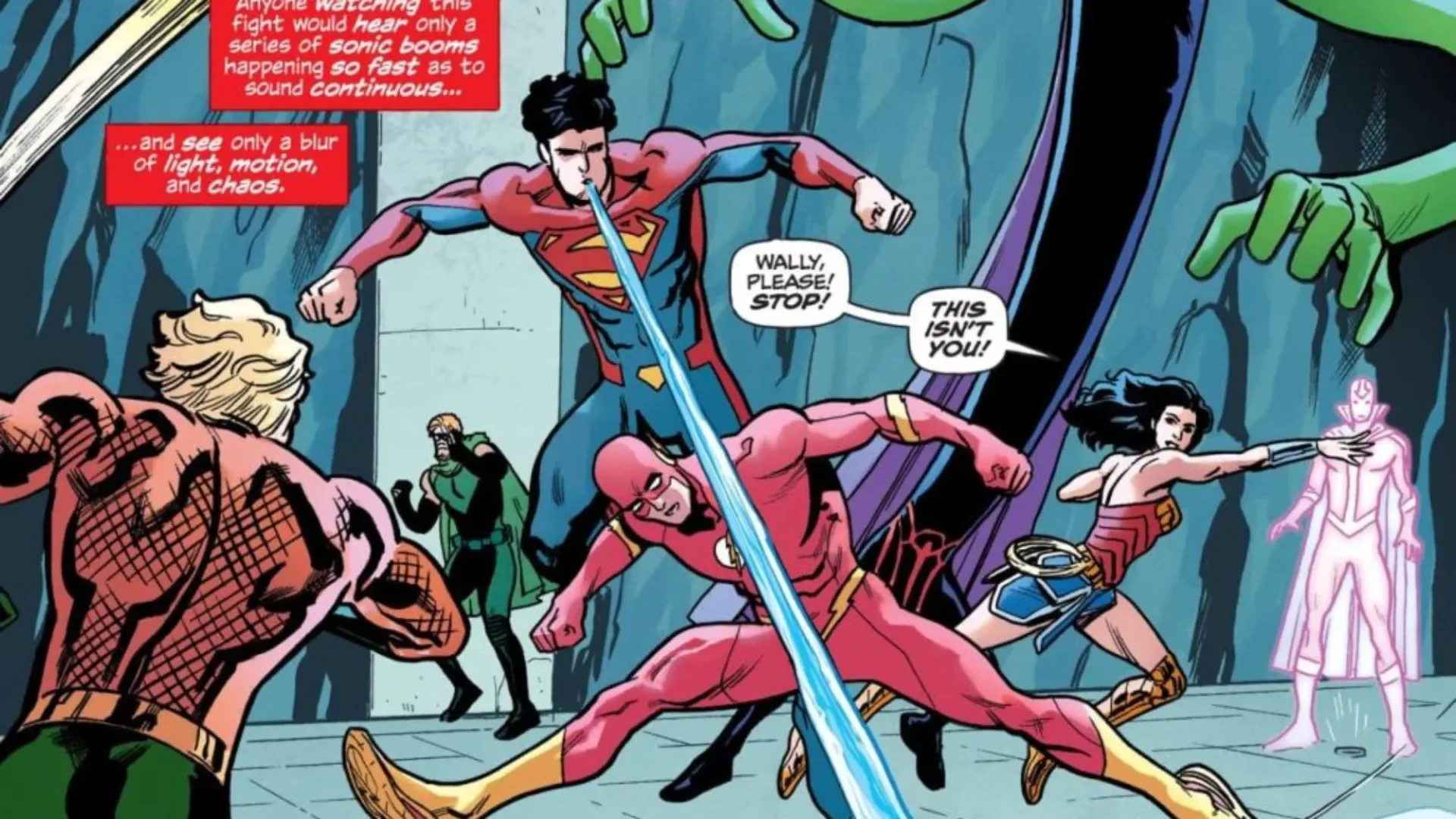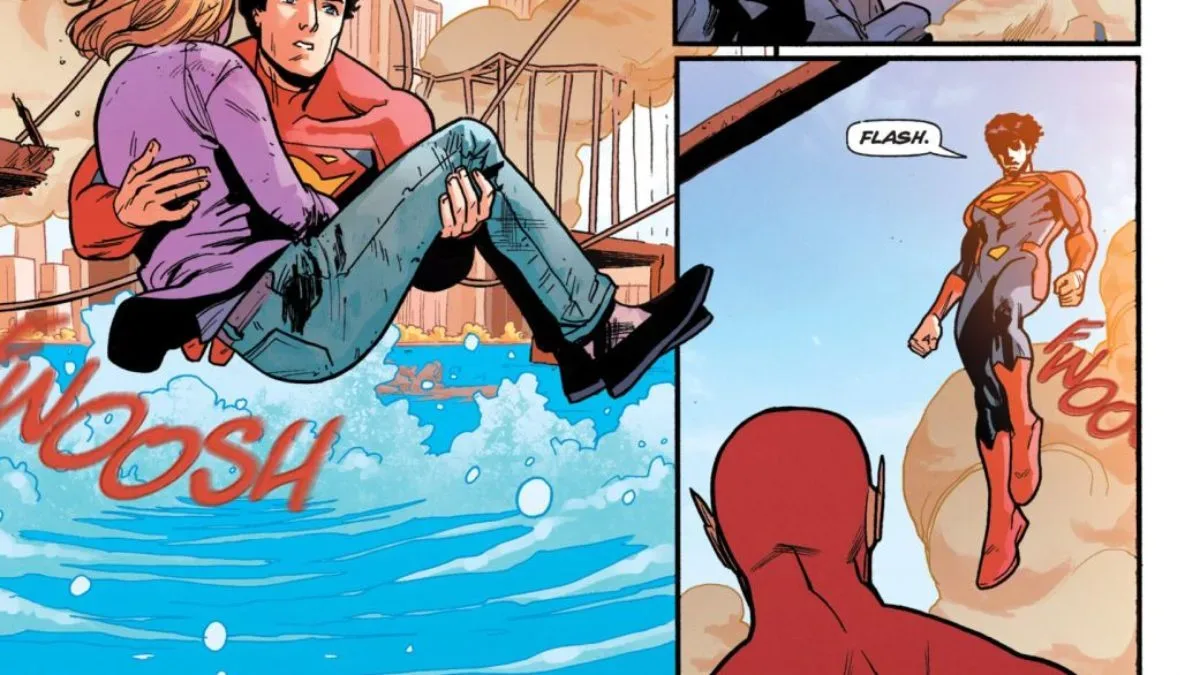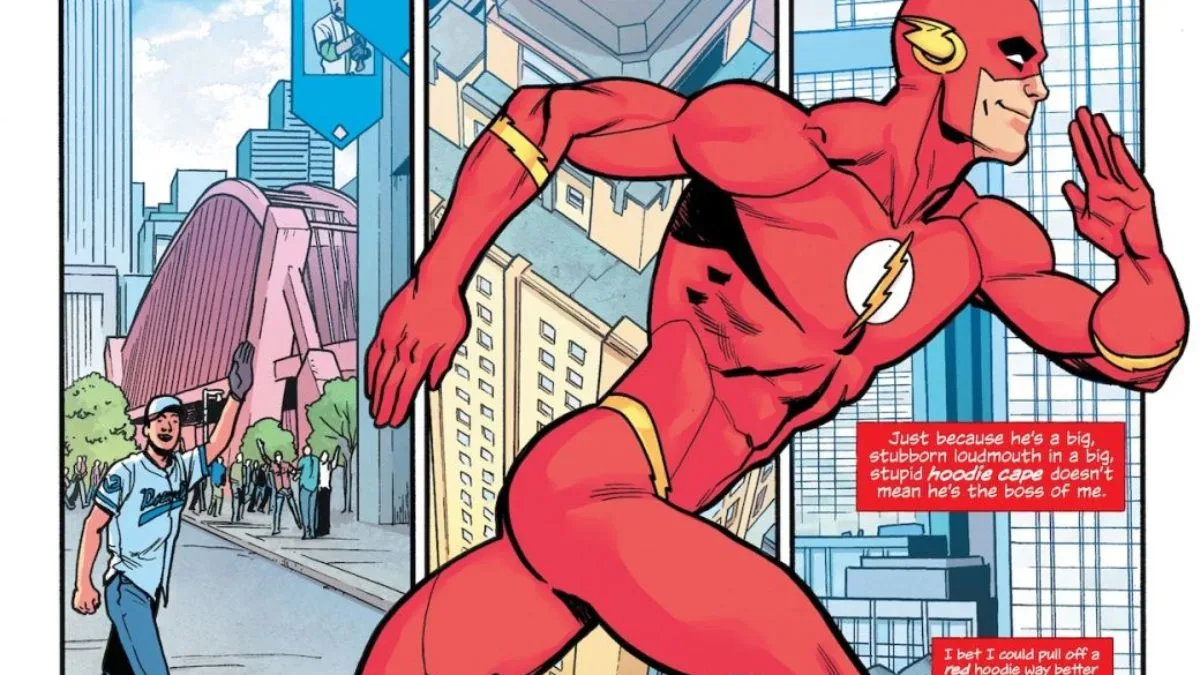
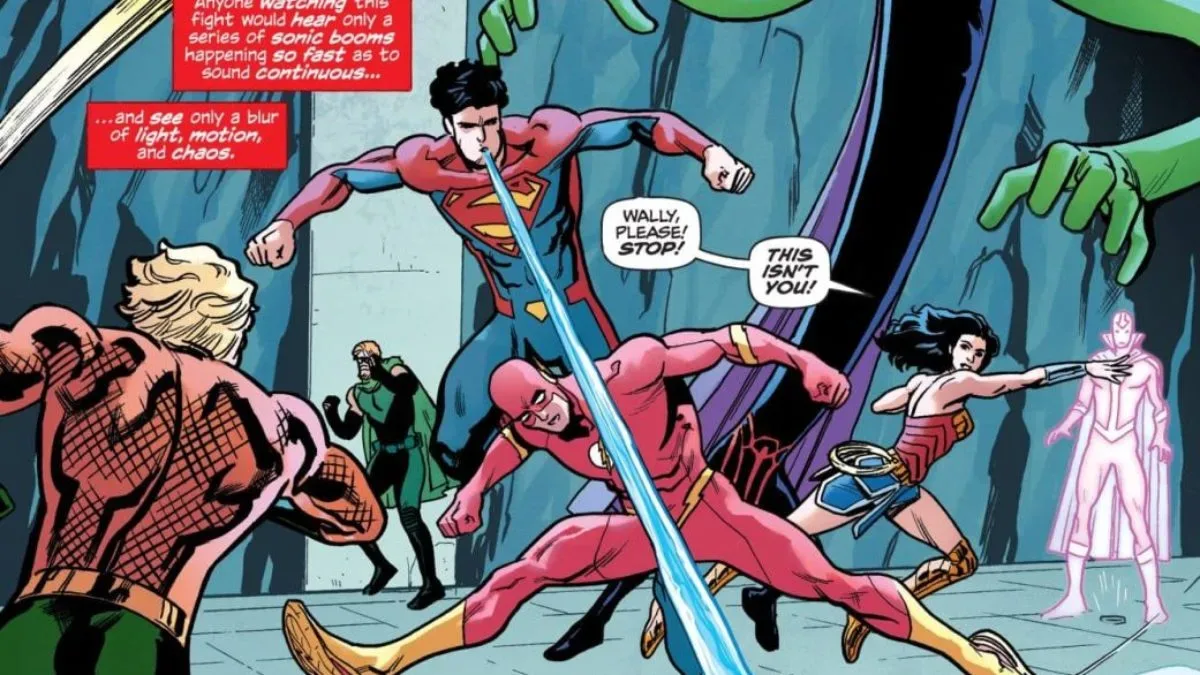
Wally West is headed for a disagreement with the Justice League that is bigger than the usual superhero scheduling conflict. The Flash #39, due in shops on November 25, 2026, centers on Wally’s choice to intervene against crimes before they happen—and the League’s determination that he needs to stop.
The premise is admirably direct: Wally believes his approach is saving lives, while the Justice League sees enough danger in that approach to intervene. Neither side is positioned as casually indifferent to public safety. That is what gives the conflict its hook. The question is not whether stopping crime is worthwhile, but what happens when a hero begins acting on events that have not yet occurred.
DC lists Ryan North as writer and Gavin Guidry as artist and cover artist. The issue also promises the reveal of a new villain, adding an unknown threat to a story already built around a major disagreement among allies.
What The Flash #39 is setting up
The solicitation frames the central dispute in stark terms: the Justice League wants the Flash to quit fighting crimes that have not happened, and Wally refuses because he sees people being saved. When the League attempts to close down the tactic, Wally does not accept the intervention quietly. The result is a Flash-versus-League confrontation rather than a routine team-up.
That setup makes the issue a story about prevention versus certainty. Prevention means taking action early to avoid harm. In ordinary crime-fighting stories, the threat is visible: a villain is attacking, a disaster has begun, or a plan has been discovered. Here, Wally’s method apparently moves the response earlier, into a moment when the underlying crime has not taken place.
The solicitation does not explain exactly how Wally identifies these potential crimes, how reliable the information is, or which League members take which positions. Those are important details the comic itself will need to provide. What is clear is the ethical and practical divide: Wally’s priority is the lives he believes he can protect, while the League’s objection is serious enough to put its members in direct opposition to him.
Why the disagreement matters for Wally
Speed has always made the Flash concept especially suited to questions of timing. A speedster can arrive before anyone else, get civilians out of danger quickly, and change the shape of an emergency in seconds. The Flash #39 extends that logic from reacting faster than everyone else to acting before the crime exists in the normal sense.
For Wally, the emotional case is easy to understand from the stated premise. If he can avert a tragedy, waiting for proof or for an attack to begin could feel like a choice to let harm happen. For the Justice League, an ability or process that identifies future wrongdoing creates a different kind of risk. Acting against someone prior to a crime raises questions of error, accountability, and whether an intervention can itself reshape the outcome it was meant to prevent.
Those are observations drawn from the premise, not details confirmed about the plot. The solicitation keeps its cards close: it establishes the conflict and the new-villain reveal but does not reveal the mechanism behind Wally’s advance warning or the scale of the consequences.
Red Tornado and the story’s technological thread
Red Tornado is also mentioned in the available preview material as offering computerized advice through a hologram, with Wally discarding the generator. That image reinforces the issue’s broader tension around advance guidance and outside control. A warning system can be useful, but the story appears interested in the limits of trusting advice that arrives with an implied claim to know what comes next.
It is worth separating what has been explicitly established from what remains open. Red Tornado’s holographic advice and Wally’s response are part of the preview material. The solicitation itself does not spell out whether Red Tornado’s advice is the source of Wally’s crime-prevention strategy, whether it is tied to the incoming villain, or whether it becomes a major point of the Justice League conflict. Readers looking to avoid assumptions should treat those connections as questions for the issue, not settled facts.
The presence of an advisory system does, however, give the comic a useful angle on a familiar superhero dilemma. Information is not the same thing as wisdom. Knowing—or believing one knows—what will happen next does not automatically resolve what a hero should do with that information. The League’s resistance suggests that the difference will matter.
A new villain enters an already crowded conflict
The new villain is the largest deliberately withheld element in the pitch. No name, powers, motives, or relationship to Wally’s strategy have been provided. That restraint leaves room for the reveal to change the readers’ understanding of the Justice League dispute.
A new antagonist can serve several purposes in a story like this. It can be the hidden pressure behind a heroes-versus-heroes situation, a test of whether either side is right, or simply a second threat that makes a principled disagreement harder to resolve. None of those roles has been confirmed for the character in The Flash #39. But the villain’s arrival means the book is not being sold solely on a debate between teammates; it also has a fresh threat waiting beyond that debate.
That combination may appeal to readers who want internal Justice League friction without losing the possibility of a conventional adversary. The solicitation’s phrasing does not promise a full resolution in this issue, so it is safest to expect a confrontation and a reveal rather than assume the story closes every question it introduces.
Creative team, covers and release details
The Flash #39 is written by Ryan North, with interior art and the main cover by Gavin Guidry. Variant covers are listed for Philip Tan, Sean Izaakse, and Rafael Albuquerque.
- On-sale date: November 25, 2026
- Writer: Ryan North
- Artist and cover artist: Gavin Guidry
- Variant cover artists: Philip Tan, Sean Izaakse, Rafael Albuquerque
- Standard suggested retail price: $3.99
- Listed variant-cover prices: $4.99 each
The distinction between the standard $3.99 suggested retail price and the separately listed $4.99 variants is useful for readers planning a pull-list order. The available listing identifies the variants by artist but does not provide further details about their artwork, ratios, or any other edition-specific features.
For another current superhero-comics preview with a very different premise, see Marvel Zombies: War Zone #3 and its Hell’s Kitchen setup.
What readers should watch for
The strongest reason to watch The Flash #39 is the potential clash between urgency and restraint. Wally’s position is grounded in an immediate human argument: preventing harm is better than responding after it happens. The League’s pushback introduces the counterargument that power, however well-intended, needs limits when it acts on uncertain future events.
The issue will also need to define the stakes of saying “crime before it happens.” Does Wally have a dependable way to see upcoming wrongdoing? Is he acting on imperfect prediction? Are the events being prevented part of a larger manipulation? The solicitation provides no answer, and that uncertainty is central to the appeal rather than a flaw in the announcement.
By putting Wally against the Justice League and holding back a new villain for the issue itself, The Flash #39 has a compact but flexible framework: a moral dispute, an action-ready superhero collision, a technological-advice thread involving Red Tornado, and an unrevealed antagonist. Readers can find out where that collision leads when the issue reaches shops November 25.