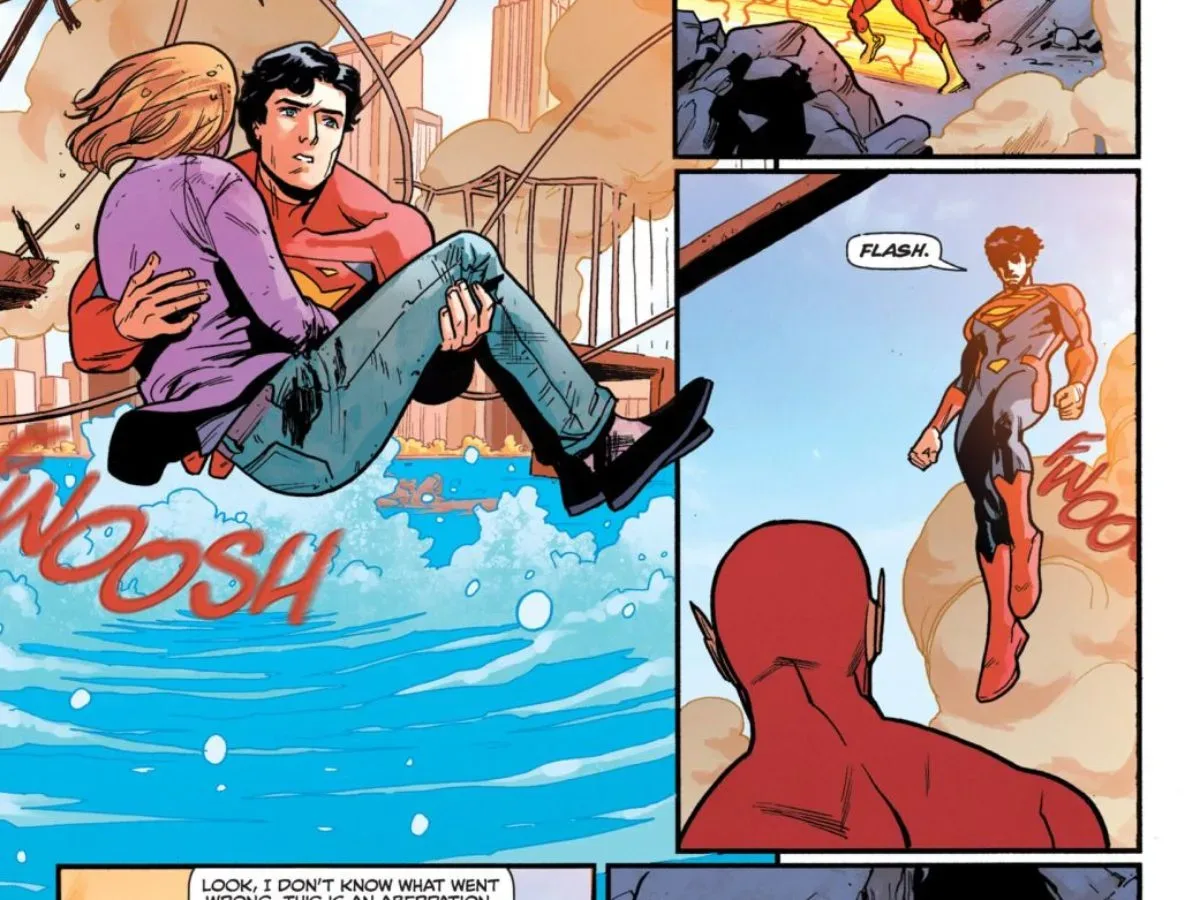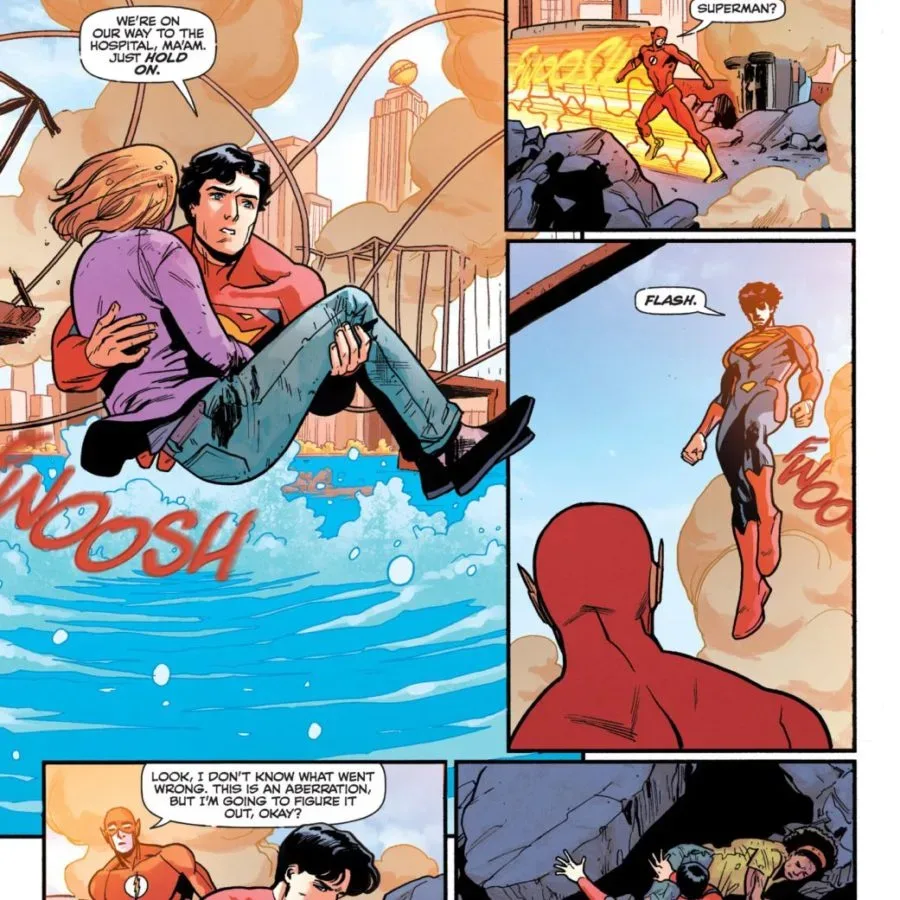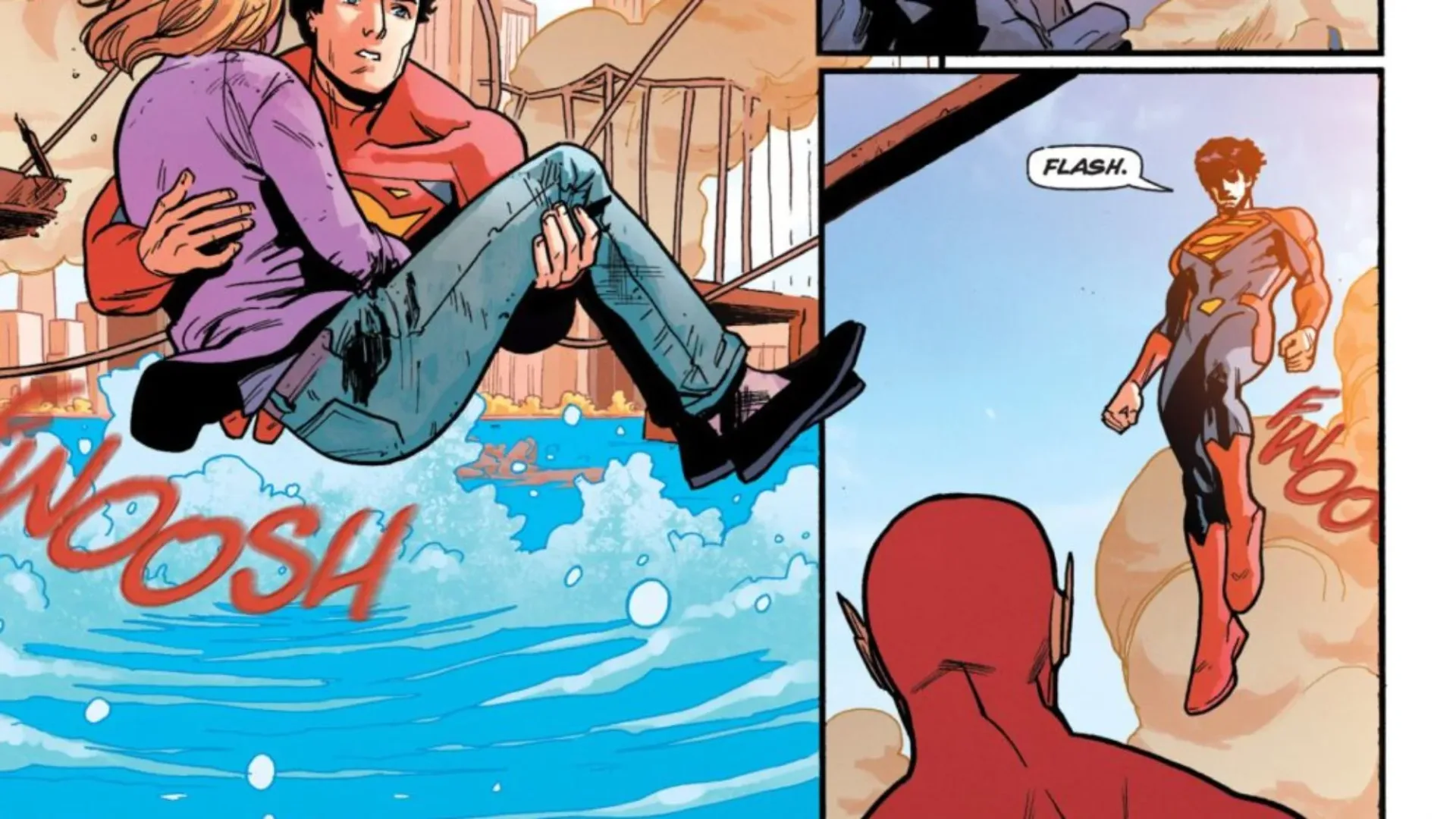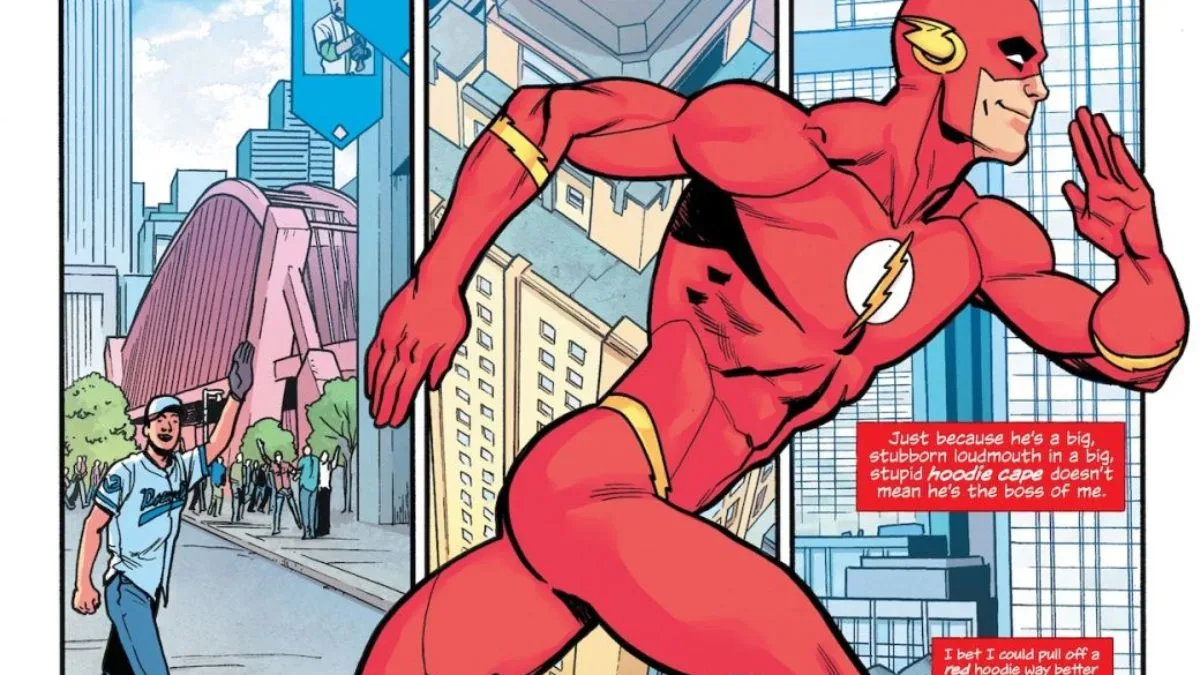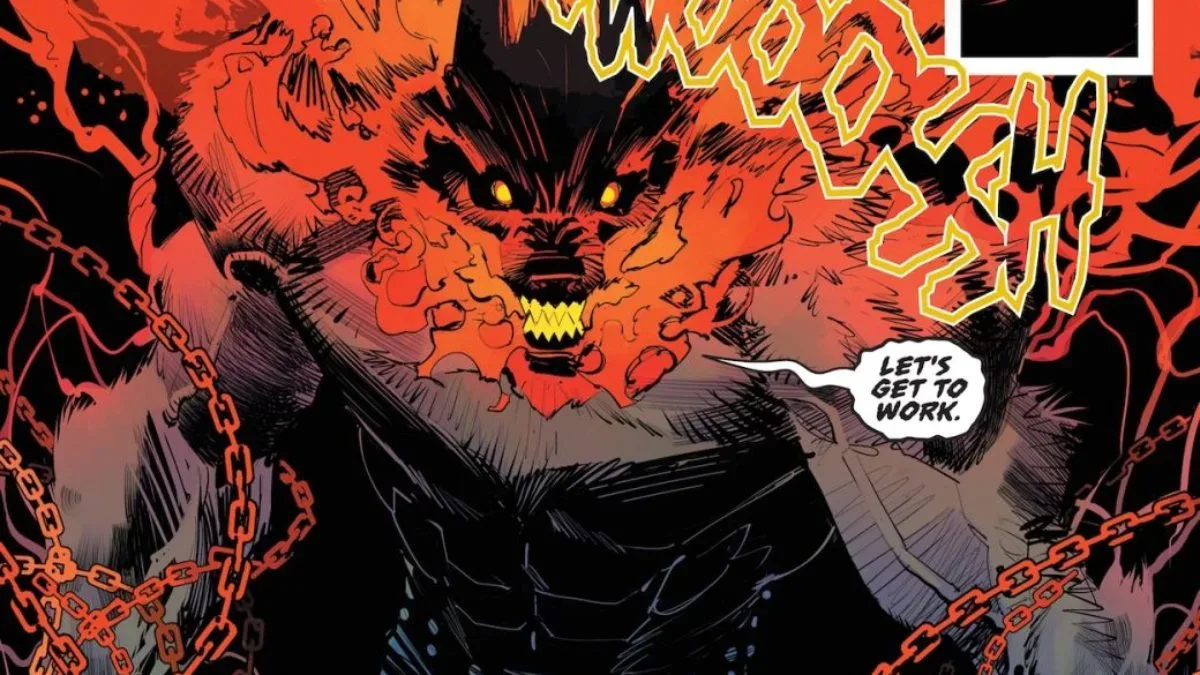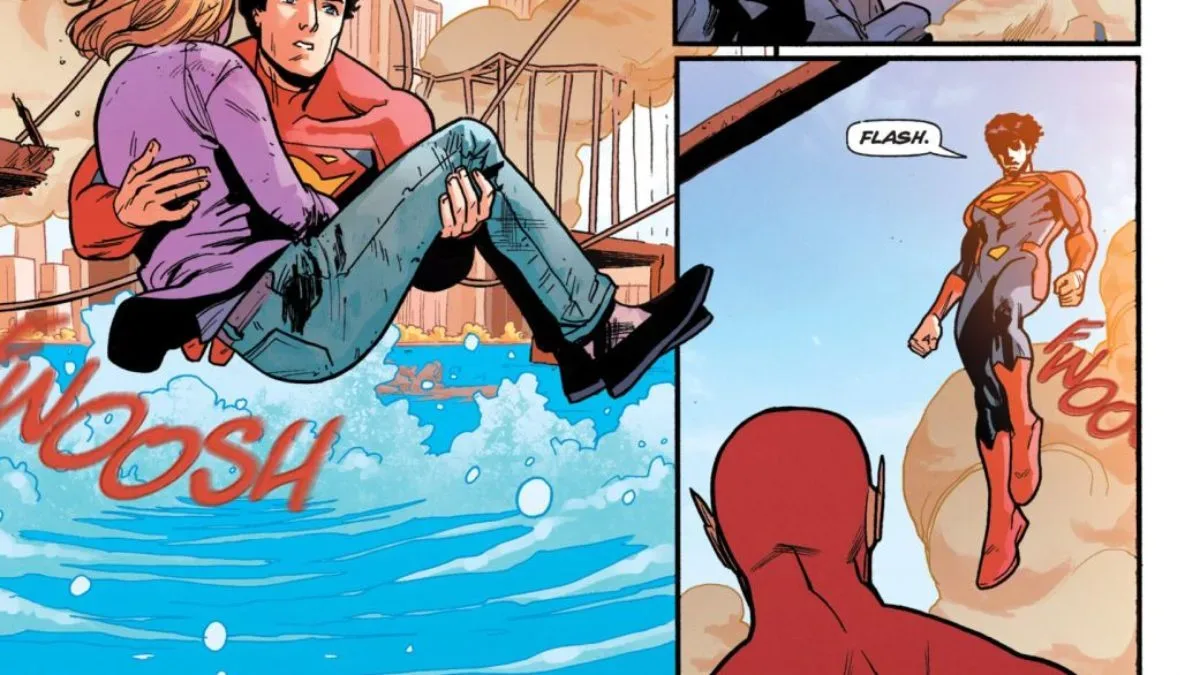
The Flash #38 is set to put Wally West’s confidence, methods and relationship with the Justice League under unusual pressure. The issue, written by Ryan North with art and cover art by Gavin Guidry, is due in comic shops on October 28, 2026.
The central problem is severe: Wally’s visions of the future did not warn him about the destruction of three separate bridges in three separate cities. The solicitation does not explain what caused those disasters, how the visions function, or exactly what Wally has been attempting at such a large scale. It does establish the important consequence, though: people have been hurt, the cost is high, and the League is questioning whether his experiment should continue.
That setup gives the issue a pointed conflict that is not simply about whether the Flash can reach a crisis in time. Wally is one of DC’s defining speedsters, but the immediate question here is whether being extraordinarily fast—or believing he can see what lies ahead—can become a reason to keep pushing a flawed plan after its consequences become impossible to ignore.
A future sight that missed the emergencies
In superhero fiction, a vision of the future is generally a form of precognition: knowledge of events before they occur. Precognition changes the stakes of a disaster story. If a hero has access to warnings, readers naturally expect that knowledge to prevent harm, reduce uncertainty, or at least guide a response.
The Flash #38 hinges on that expectation breaking down. Wally’s visions apparently failed at the most basic level: they did not identify three major bridge destructions before they happened. The synopsis calls the future “compromised,” a description that leaves plenty of room for possibilities without confirming any one explanation. The visions may be incomplete, misleading, disrupted, or simply unreliable; the available details do not say which.
What is clear is that Wally does not treat the failure as a reason to abandon his larger work. He remains convinced that he is doing good, even as other heroes focus on the human and material damage already incurred. That creates a conflict between two ways of evaluating a heroic intervention:
- Wally’s position: a major setback does not automatically invalidate an effort intended to help people.
- The League’s concern: an experiment operating at massive scale must be re-examined when its costs are tangible and people are being harmed.
Neither idea requires the other to be frivolous. Continuing after failure can reflect resolve. It can also become recklessness when the person continuing has extraordinary power and the people affected did not choose to bear the risks. The issue’s premise makes that tension its real engine.
The Justice League’s role is oversight, not just backup
The Justice League is often presented as a team that arrives when a threat is too big for one hero. Here, the group appears to serve another important function: it is the body challenging Wally’s judgment. Their disagreement is not framed as a minor tactical debate. The scale of the undertaking, the expense involved and reported injuries all turn it into a question of accountability.
“Large-scale experiments” is deliberately broad wording. It suggests an ongoing process rather than a single rescue, but it does not specify whether the project is technological, temporal, civic, scientific or something else. Readers should be wary of filling in those blanks before the issue does. Still, the lack of particulars does not make the ethical stakes vague. The premise specifically links the experiment to public harm and a cost the League considers unacceptable.
That distinction matters for Wally as a character. The Flash is being challenged not on whether he wants to help, but on whether good intentions are enough once warning systems have failed and collateral consequences mount. It is a more difficult challenge than a race against a villain because it asks him to judge his own certainty.
The solicitation also ends with an ominous question: can anyone actually stop the Flash? In a literal sense, a speedster is difficult to contain. But the line also works as the issue’s broader dramatic hook. The League may be able to argue, intervene or refuse support, yet Wally’s speed and determination could let him keep moving before anyone reaches a consensus.
Why the bridge disasters matter
Three bridge destructions across three cities immediately push the plot beyond an isolated emergency. Bridges are connective public infrastructure: when one fails, the danger can extend beyond the initial event to travel, emergency response and the communities that rely on the route. The solicitation does not quantify the damage or identify the cities, and it should not be read as confirmation of any wider catastrophe. It does, however, establish a pattern large enough for the Justice League to view Wally’s work as a systemic problem rather than a one-off miscalculation.
For a Flash story, that is an especially sharp choice of imagery. A bridge is made to carry movement from one place to another. The Flash is a character defined by movement. When bridges are destroyed while a speedster’s supposed future knowledge fails, the visual and thematic contrast is straightforward: speed is not the same thing as control.
The issue also appears to be interested in the limits of predictive thinking. A future vision can make a hero feel prepared, but a missed event exposes the danger of treating predictions as guarantees. That is relevant whether the eventual explanation involves superhuman forces, a defect in Wally’s approach, or an unknown outside influence. At this stage, the cause remains unrevealed.
What the solicitation confirms—and what it does not
Comic-book solicitations are designed to establish a premise and entice readers, not to provide a full plot summary. For The Flash #38, the confirmed information is relatively focused:
- Wally West has visions of the future.
- Those visions did not foresee the destruction of three bridges in three cities.
- Wally is continuing a major project or series of experiments despite that failure.
- The Justice League objects because the undertaking is costly and people are getting hurt.
- Ryan North is credited as writer, while Gavin Guidry is credited for art and the main cover.
- The issue is scheduled for October 28, 2026, with a stated $3.99 suggested retail price.
Equally important, the material does not identify the cause of the bridge destructions, the mechanics of Wally’s visions, the exact nature of the experiments, a villain, a resolution, or whether the League succeeds in halting him. Those omissions are the mystery. They also leave the story room to make Wally either more sympathetic, more culpable, or both as its context becomes clear.
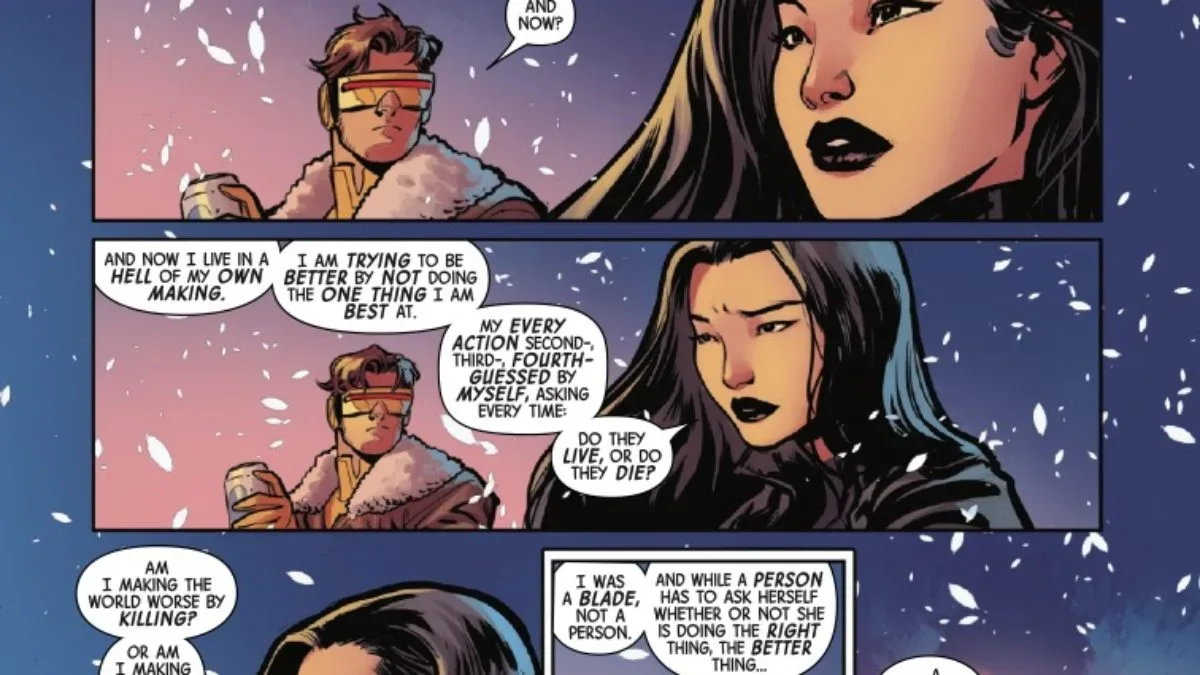
Readers looking for more superhero comic coverage can also see how another team-book-adjacent setup is being framed in X-Men #40’s Psylocke-focused hunt, though the two stories are separate and no crossover is indicated.
Creators, covers and purchase details
Ryan North is listed as the writer of The Flash #38, with Gavin Guidry credited for interior art and the primary cover. Two additional covers are listed: one by Carlo Pagulayan and another by Raúl Allén. The supplied listing assigns $4.99 to each of those named cover editions, while the issue’s stated suggested retail price is $3.99.
That difference is useful for collectors and regular readers to note. A cover-specific listing can carry its own listed price, while the standard issue’s suggested retail price is separately stated. The information provided does not identify print runs, incentives, content differences or retailer-specific conditions for the covers, so those details should not be assumed.
The main appeal of The Flash #38 is therefore not a promised villain reveal or a straightforward rescue mission. It is the prospect of seeing Wally West confronted by a failure he cannot outrun: a future-warning system that did not work, damage that has already occurred, and fellow heroes who think determination has crossed into dangerous refusal.