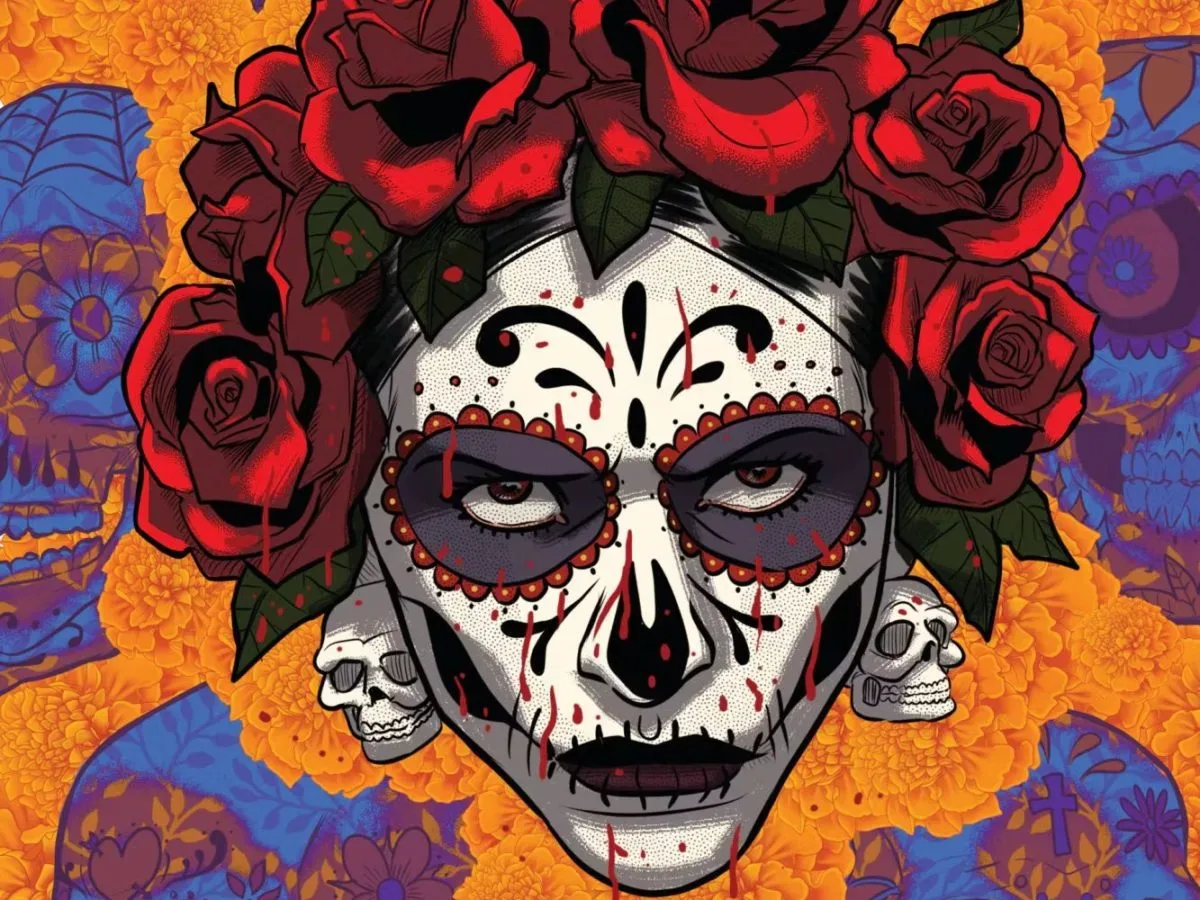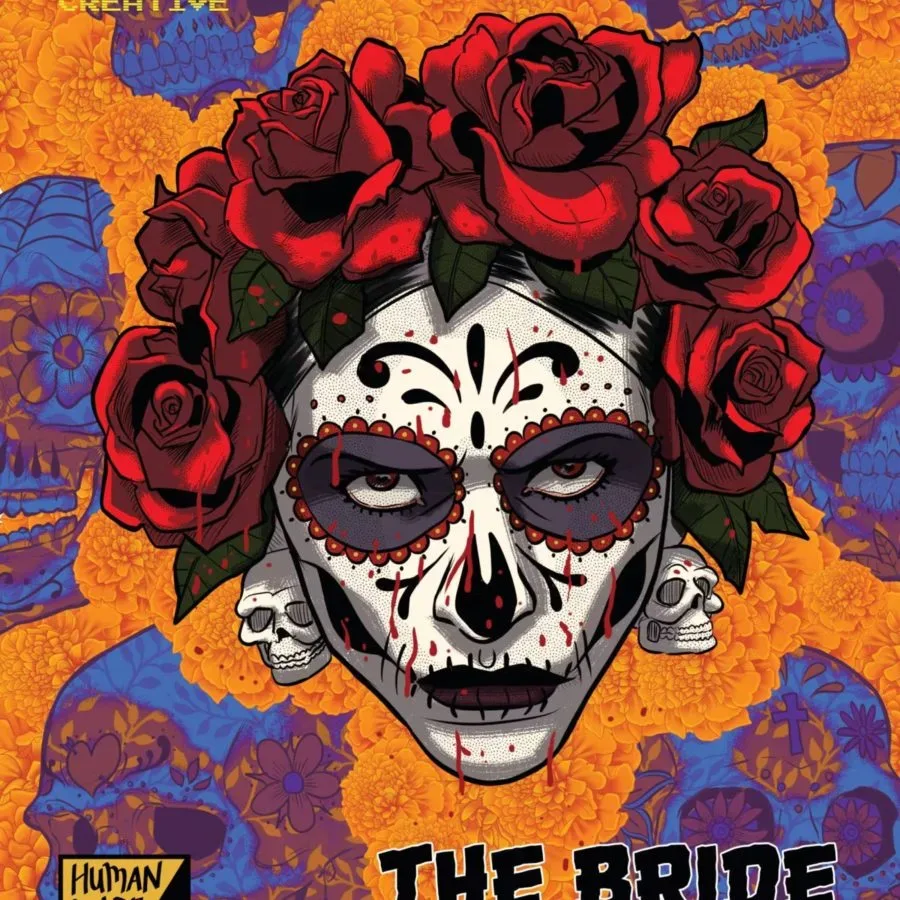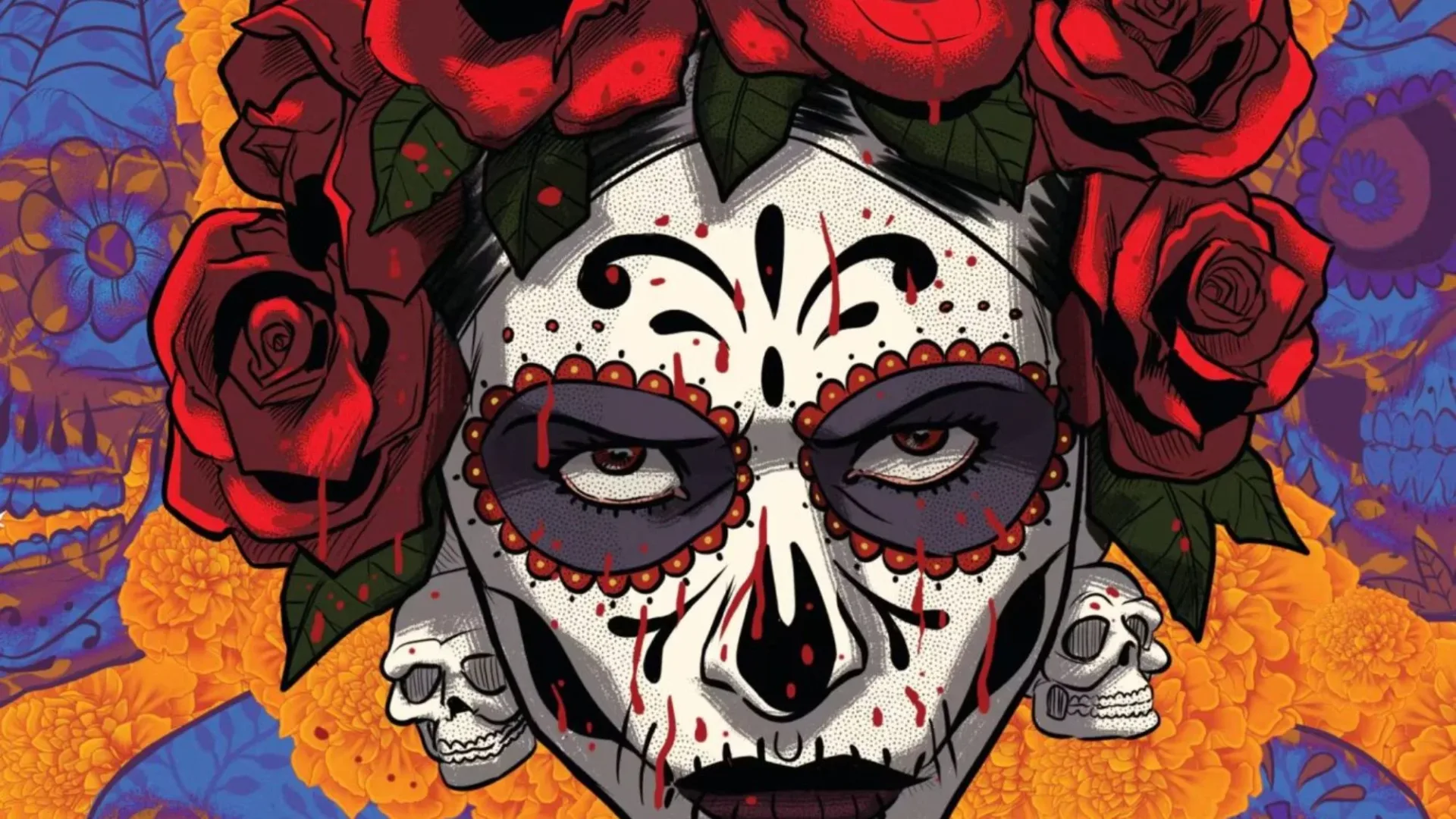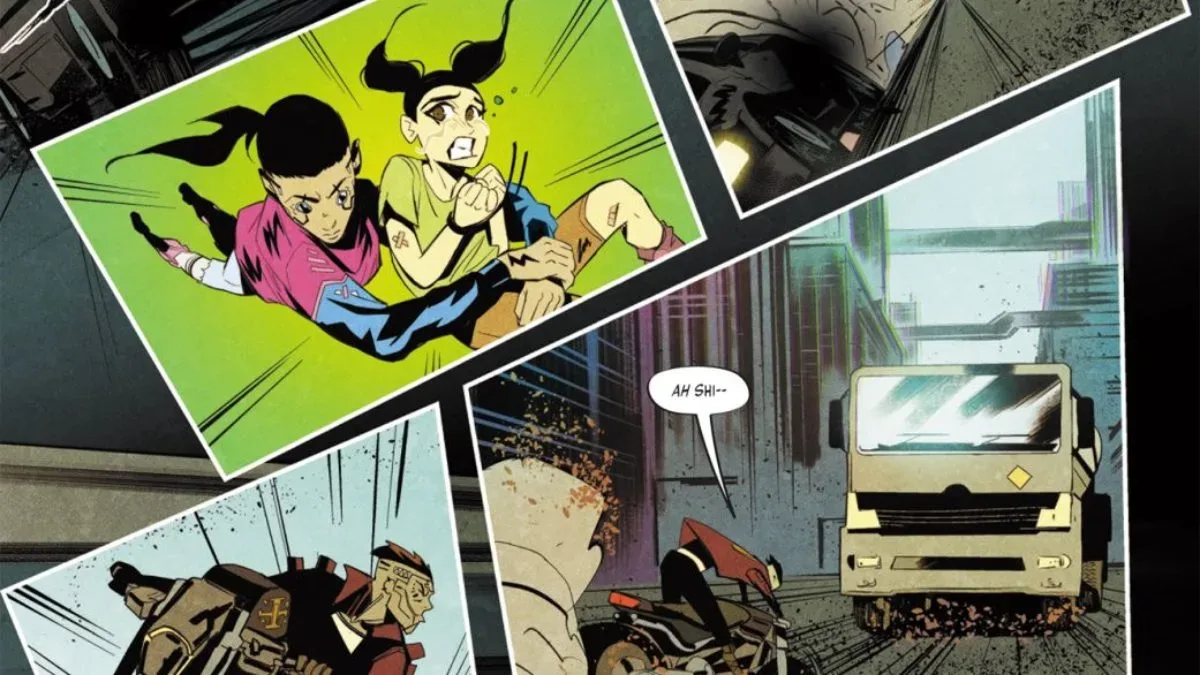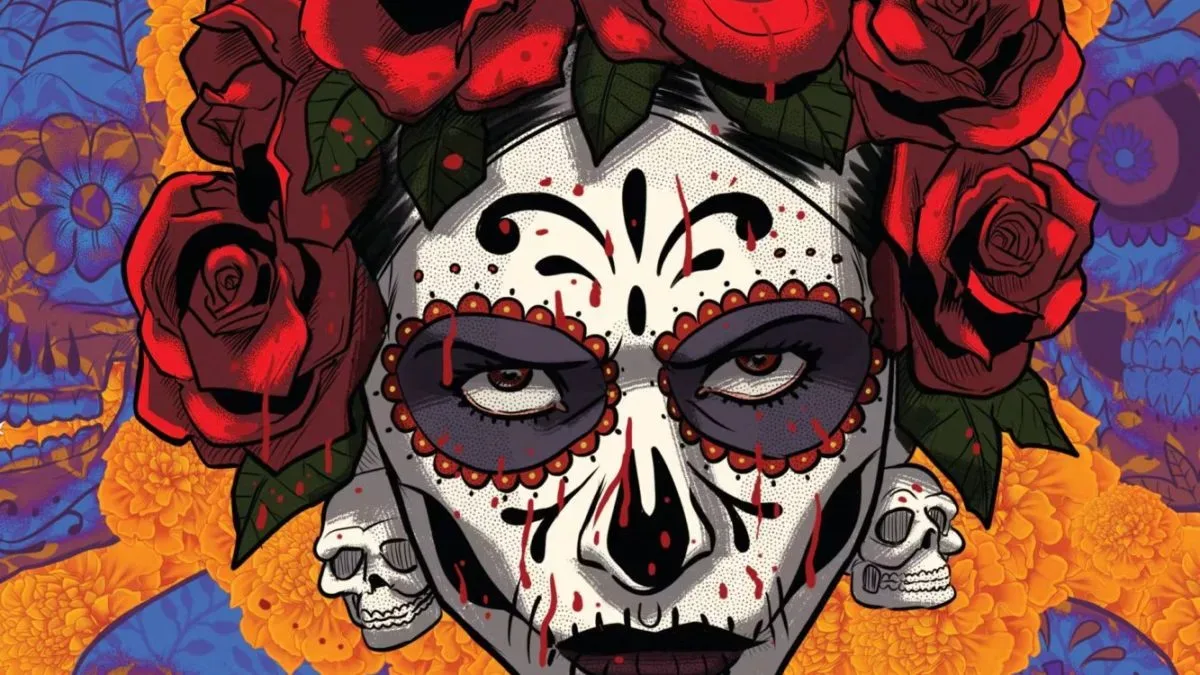
Matsuya Creative will debut The Bride Wore Black, a 44-page original one-shot by brothers John and Ben Matsuya, at LA Comic Con on October 30. Set in 1920s Santa Ana in the days surrounding Día de los Muertos, the comic frames a dark family drama around love, jealousy, grief and generational trauma.
The creative duo, who work out of Orange County, are bringing a distinctly Southern Californian perspective to a legend associated with Chihuahua, Mexico: La Pascualita. The real-world tale centers on a bridal-shop mannequin long rumored to be the preserved body of a shop owner’s daughter, said to have died on her wedding day. That unsettling premise is not simply transplanted whole. The Bride Wore Black uses it as a springboard for its own setting, characters and tragedy.
A wedding dress at the center of the horror
The one-shot follows two childhood best friends from sharply different circumstances: one is born to a wealthy mother, while the other is born to a poor mother. The poorer woman works at a shop and spends years fashioning a wedding dress from scraps for her daughter’s eventual wedding day. Its beauty becomes a source of danger, attracting envy that turns lethal.
That premise places an ordinary object—the dress—at the center of the story’s emotional and supernatural weight. It represents care, labor and a mother’s hopes for her child, but it also becomes something others want to possess. In that way, the comic’s horror appears rooted as much in human desire and class tension as in the ghost-story imagery suggested by its title and inspiration.
The phrase generational trauma describes the ways pain, loss, harmful expectations or unresolved conflict can continue to affect children and families across generations. For a tale built around mothers, daughters, friendship and a handmade heirloom, it signals that the consequences of the dress and the events around it may extend beyond a single act of jealousy. The “urban fable” label likewise suggests a story shaped like a cautionary tale: intimate in its characters, but concerned with the enduring cost of envy and heartbreak.
La Pascualita reimagined through Santa Ana
La Pascualita has endured because it turns a familiar commercial display into an object of unease. A mannequin should be inanimate, yet the legend asks viewers to look closer and imagine something human beneath the bridal presentation. The Bride Wore Black draws from that eerie foundation while changing the frame around it. Rather than setting the story in Chihuahua, the Matsuyas situate it in Santa Ana during the 1920s, near Día de los Muertos.
Día de los Muertos is a Mexican tradition centered on remembrance of loved ones who have died. Its proximity in the comic’s setting gives the story an apt emotional context for a narrative concerned with family, mourning and the boundary between past and present. It should not be reduced to a generic Halloween backdrop: in the material provided, it is part of the Santa Ana cultural setting through which the creators are telling their version of the legend.
John Matsuya has described the project as an effort to bring the atmosphere of urban legends and spooky stories closer to home. He pointed to Southern California’s own history, communities and ghosts, while also noting the region’s connection to Disneyland and the legacy of fairy tales. That is an interesting thematic contrast for a black-clad bride story. Fairy tales can be romantic, ornate and comforting on the surface, even when their older forms contain cruelty, danger and moral punishment. A bridal fable driven by covetousness and murder fits naturally into that darker tradition.
“We grew up on urban legends and spooky stories. La Pascualita is one of those stories that you can’t shake,” John Matsuya said. “We wanted to bring that feeling home to Southern California which has its own history, community and ghosts.”
What readers can expect from the one-shot format
At 44 pages, The Bride Wore Black is presented as a complete, original one-shot rather than the opening installment of a continuing serial. In comics, a one-shot is a self-contained release designed to tell its core story in one book. That format can suit folklore-inspired horror especially well: it leaves room for a focused setting and cast while preserving the compressed, memorable force of a campfire legend.
For prospective readers, the key appeal is likely the combination of a recognizable folkloric spark and a new local interpretation. The comic is not positioned as a documentary treatment of La Pascualita. It is a fictional urban fable inspired by the legend, with an original conflict built around two families and a dress made from scraps. That distinction matters. The value of this approach lies in seeing how the creators use the haunting image associated with the legend to explore their stated themes, rather than expecting a direct retelling.
Its debut date also gives the project an appropriately seasonal arrival. October horror comics often lean on instant iconography; a bride, a dress, death and a story set around Día de los Muertos offer a more specific framework than a broad spooky-season premise. The 1920s Santa Ana setting further gives the comic a historical lens without the supplied details claiming a wider reconstruction of the era.
LA Comic Con debut, pin and signing plans
The Bride Wore Black is set to debut at the Los Angeles Convention Center during LA Comic Con on October 30. The brothers will have a limited-edition La Calavera Catrina Halloween enamel pin alongside the comic. Readers interested in a physical convention release should note that the pin is described as limited edition, but no edition size, price or wider distribution plan has been specified.
Matsuya Creative will also have copies of Midnight Massacre, its previous 160-page graphic novel, available at the upcoming appearances. That book was a 12-year passion project and is now in its second printing. Both books are planned for the shows, with signings available.
After LA Comic Con, John and Ben Matsuya are scheduled to appear at the OC Book Fair in Old Town Tustin on November 14. The two stops give readers separate opportunities to pick up the new one-shot and the earlier graphic novel directly from the creators. For fans following other limited physical media releases, Joking Joystick has also covered a soundtrack-included physical edition of STARDUST: Wish of Witch.
Why this debut stands out
Independent comics often thrive when creators take a familiar cultural image and make its perspective personal. Here, the Matsuya brothers’ stated connection to Orange County is more than a production footnote: it is central to the creative premise. Santa Ana is the chosen home for a story inspired by a Mexican legend, and the themes of wealth, poverty, maternal devotion and resentment make that relocation meaningful rather than cosmetic.
The resulting hook is simple and potent: a mother makes an extraordinary dress for her daughter, and beauty becomes the catalyst for catastrophe. With its 44-page length, its folklore-rooted horror and its Southern California setting, The Bride Wore Black aims to deliver a concise, mournful tale whose haunting begins long before any mannequin enters the picture.