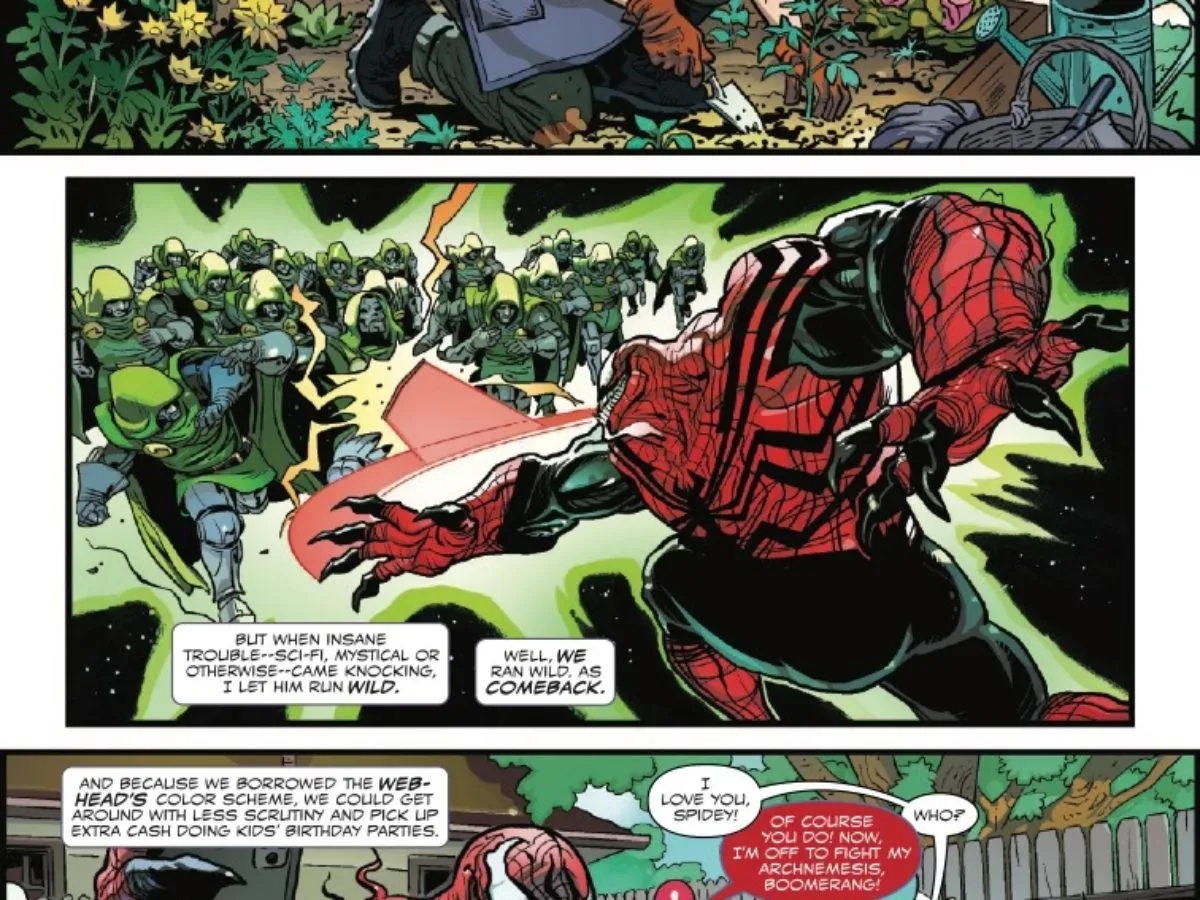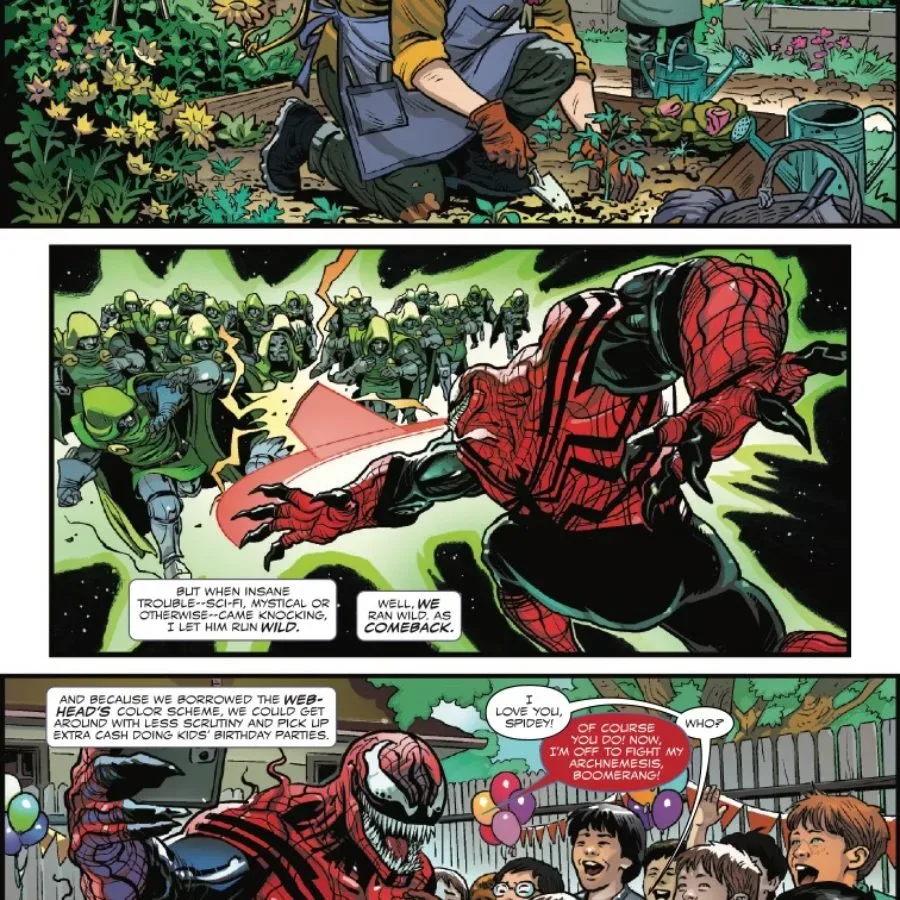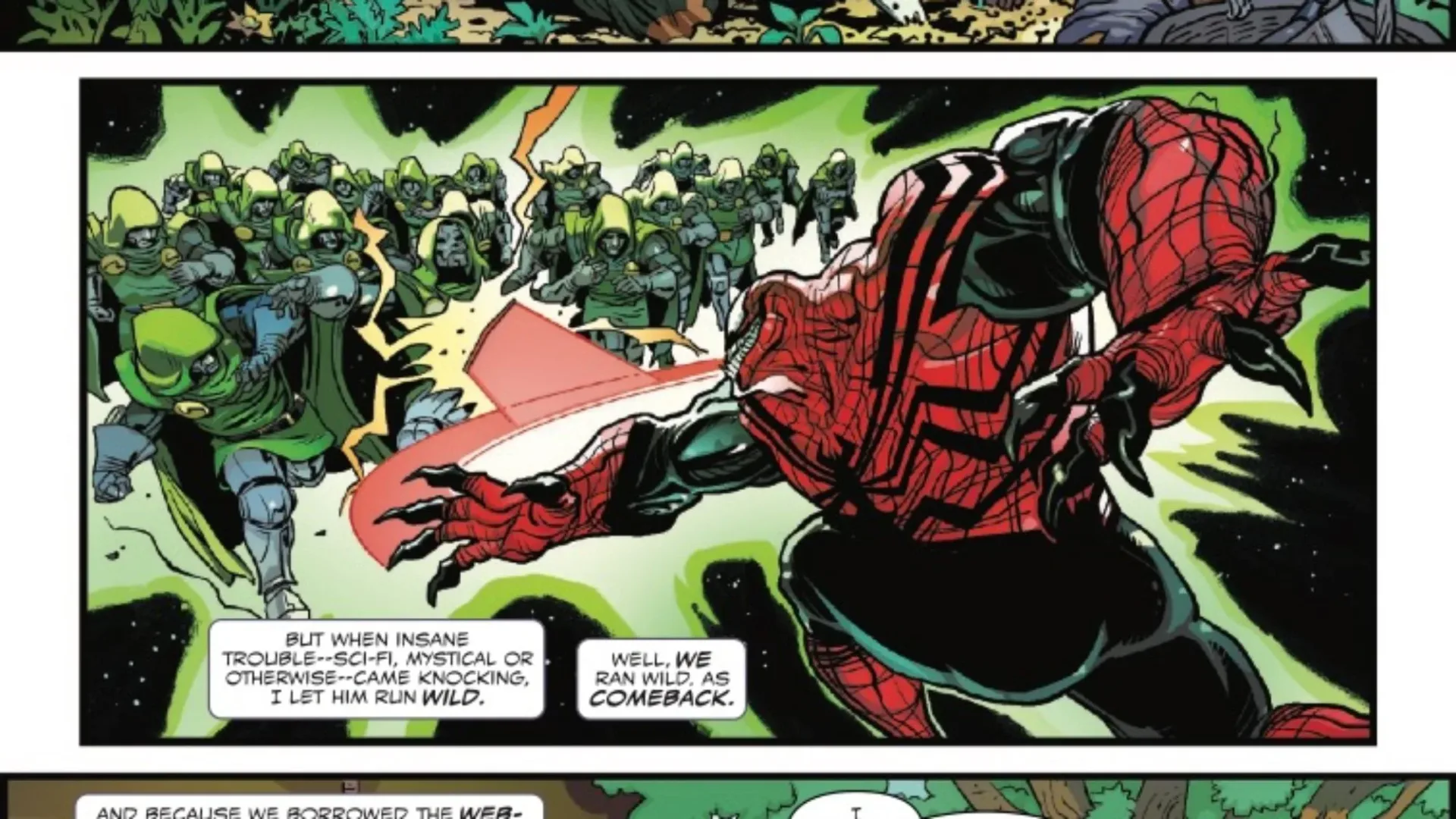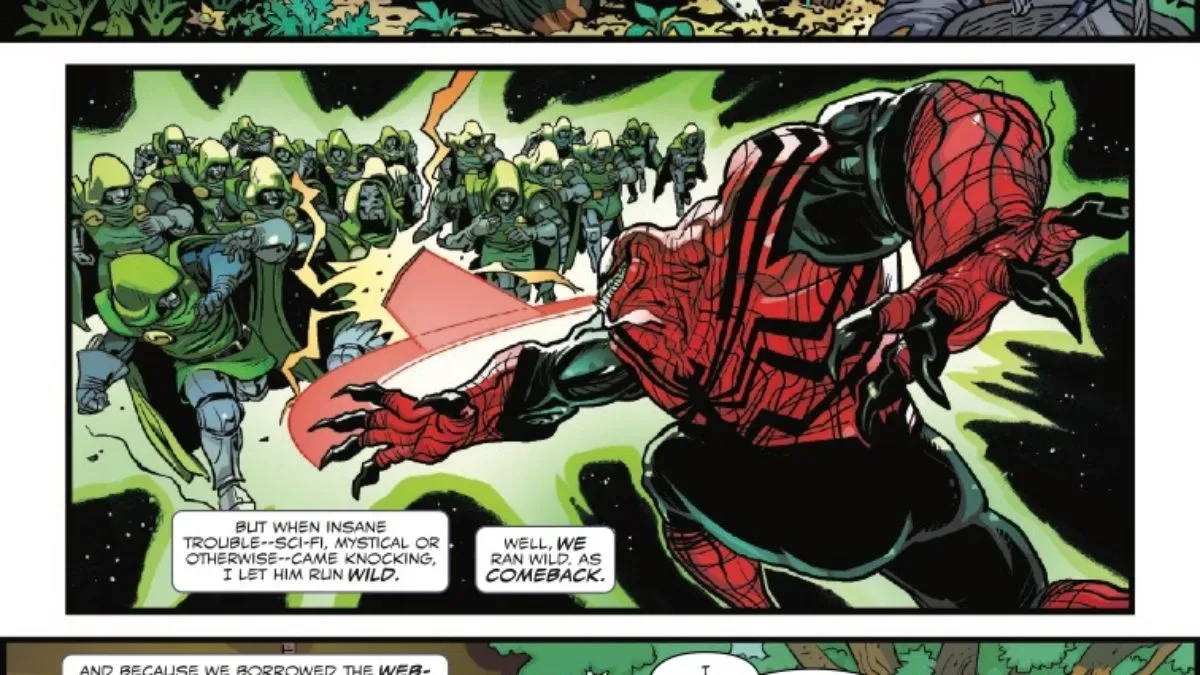
Fred Myers is trying to simplify his life. That would be a more promising goal if he were not a former supervillain, newly operating under the name Comeback, and bonded to an alien symbiote called Passenger. The Amazing Venom #1 puts that contradiction at the center of its premise when it arrives from Marvel on September 30, 2026.
The 32-page, Rated T+ issue is written by Jordan Morris with art by Luke Ross and a cover by Stefano Caselli. Its stated setup picks up with a red-and-blue symbiote-powered Fred in the aftermath of Hela and Knull’s war over Earth. Fred wanted no part of the broader symbiote upheaval. Circumstances, however, have other plans: he and Passenger are headed for a mission described as far beyond what an ordinary “Venorang” can handle.
That last word is a playful shorthand for the central concept. Fred’s former identity, Boomerang, meets his present connection to Venom-adjacent symbiote mythology. The result is a superhero premise built around someone who is not entering the chaos as a spotless, classically noble figure. He is an ex-criminal attempting to move forward while literally sharing space with a creature tied to a dangerous and sprawling corner of the Marvel Universe.
A new name does not mean a clean slate
Fred’s move from Boomerang to Comeback is the most immediate signal that this series is interested in reinvention. A codename change can mean several things in superhero comics: a sincere effort to outgrow an old reputation, a practical new public identity, or a way of admitting that the past will keep returning. Here, all three readings can comfortably coexist.
The solicitation frames Fred as someone seeking an uncomplicated existence after major cosmic events have already disrupted it. That aspiration matters because it gives the series a personal baseline. The looming threat is not simply that another strange creature needs to be punched. It is that a person trying to define himself beyond a former villainous role is unable to escape the consequences of the world he inhabits—or the alien partner attached to him.
“Comeback” also has a useful double edge. It implies Fred’s return to prominence, but it can also suggest the persistent return of old trouble. For a character formerly known as Boomerang, that is an especially appropriate idea: things thrown away have a habit of coming back.
What Passenger changes in the equation
A symbiote in Marvel terms is an alien organism that bonds with a host, creating a combined being with shared physical and often psychological stakes. The supplied premise identifies Passenger as Fred’s symbiote, making their relationship the engine of the book rather than a simple costume upgrade.
That distinction is important. When a character is bonded to a symbiote, the story can examine partnership, dependency, conflicting priorities and personal boundaries without separating the participants into opposite sides of a room. Fred cannot neatly walk away from Passenger when things become uncomfortable. Passenger, in turn, is not merely an item that can be stored in a closet until the next fight. The two are navigating the aftermath of a world-shaking conflict together.
The setup points toward alien symbiotes and cosmic fallout, placing the pair’s problems within a larger-scale conflict while retaining a protagonist with fairly grounded desires. Fred would prefer a quiet life; the premise instead assigns him a complicated mission. That tension is likely the book’s clearest tonal advantage. The world may be full of cosmic threats, but its lead is someone measuring that disaster against the modest possibility of peace and normality.
There is also a pointed difference between a “passenger” and a teammate. A teammate can leave. A passenger travels with you, whether the route is sensible or not. The title character’s relationship with Passenger may therefore provide the series with both its action framework and its room for character comedy.
The fallout from Hela and Knull’s war
The issue is explicitly situated after Hela and Knull’s war over Earth. That background establishes that the crisis affecting Fred and Passenger is not isolated. It is fallout: the consequences left behind when a larger conflict has formally moved on but has not truly stopped affecting those caught in its wake.
Cosmic fallout is a useful genre term here. It describes the lingering effects of an enormous event—damaged relationships, displaced threats, unresolved enemies, altered circumstances or new obligations—that become the problem of a smaller, more personal story. The Amazing Venom #1 appears to use that structure to connect Fred’s bid for a fresh start to the wider symbiote landscape without making the former Boomerang’s ambitions any less central.
For readers following Marvel’s broader output, that placement offers a clear entry point: the issue acknowledges a major conflict but centers a particular character and his bond with Passenger. For readers drawn primarily to Fred Myers, it offers a premise in which the name change and new symbiote status are not detached from the plot. The aftermath is precisely what prevents his uncomplicated future from beginning.
Marvel comics have plenty of room for stories that begin once the supposedly decisive battle is over. This one appears positioned to ask what happens when a lower-profile figure has to live among the debris—literal or otherwise—left by people and forces operating at mythic scale. That perspective can make the stakes legible even when the threats are alien and cosmic.
Creative team and edition details
Morris and Ross are credited on the main issue, with Caselli on the primary cover. The standard edition is listed at $4.99 in the United States and $6.25 in Canada. It carries the item number 75960621550800111.
Collectors looking at the launch have several alternate cover editions listed, though the source material does not provide their print runs or any availability guarantees. The announced variants are:
- Stephen Segovia variant — $4.99 US / $6.25 CAN
- Ito virgin variant — $4.99 US / $6.25 CAN
- Matteo Lolli foil variant — $7.99 US / $10.00 CAN
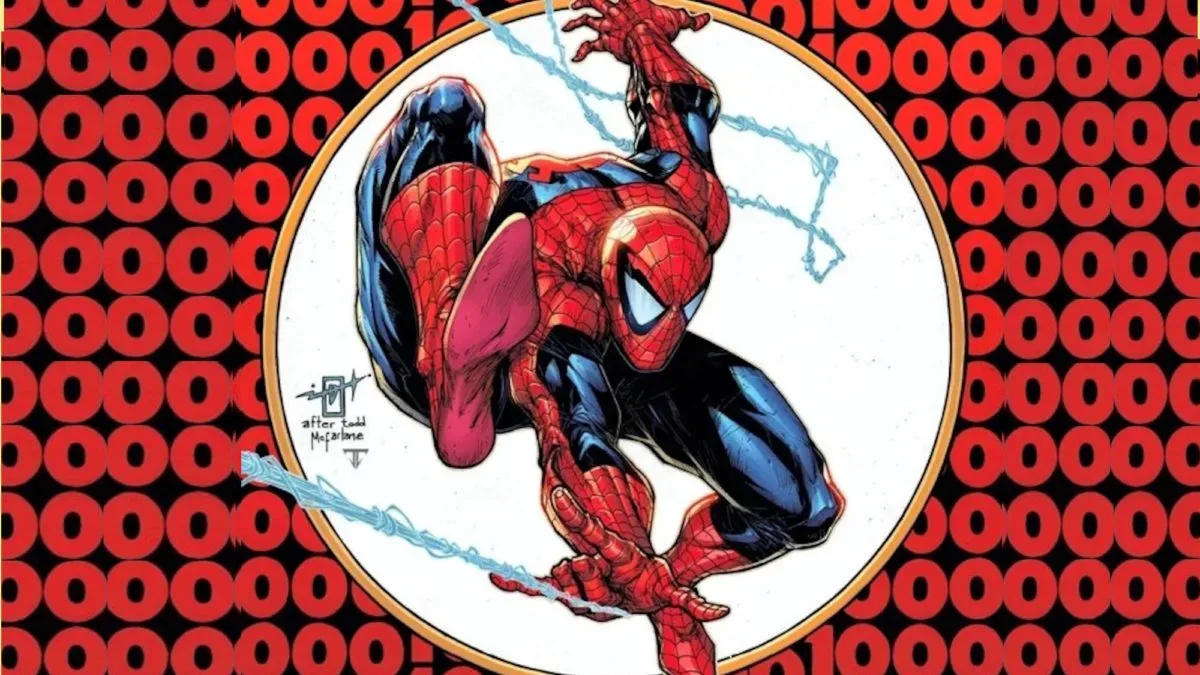
- Erik Larsen homage variant — $4.99 US / $6.25 CAN
- Ito variant — $4.99 US / $6.25 CAN
- Luke Ross variant — $4.99 US / $6.25 CAN
- Ryan Brown variant — $4.99 US / $6.25 CAN
The foil edition is the listed outlier in price at $7.99 US and $10.00 CAN. The rest are listed at the same price as the standard edition. A virgin variant generally refers to cover art presented without the usual logo and trade dress, while a foil variant refers to a reflective cover treatment. An homage variant, meanwhile, is typically designed to evoke a recognizable earlier comic cover composition or visual idea.
None of those labels alone establish rarity or future value. They do, however, give readers different presentation options for a first issue built around a notably unusual Venom-side lead. Those keeping an eye on other Marvel comic coverage can also find a related comic-book story in our look at Geiger #25’s “Radioactive Revolution” setup.
Why Fred Myers is a fitting lead for this kind of series
The appeal of The Amazing Venom #1 is less about presenting a character with an effortless heroic image and more about letting a messy figure attempt to build one. Fred’s past as Boomerang supplies baggage. Passenger adds an inescapable new relationship. The aftermath of a war involving Hela and Knull ensures that the wider world is not interested in letting either problem remain private.
That makes “Comeback” a more meaningful name than a straightforward rebrand. A comeback is not a declaration that the old life never happened. It is an effort to move after it happened, with all the complications still attached. On the available details, this first issue places Fred and Passenger exactly where a symbiote book can be most interesting: caught between a desire for ordinary life and a mission that promises nothing ordinary at all.
The Amazing Venom #1 goes on sale September 30, 2026.