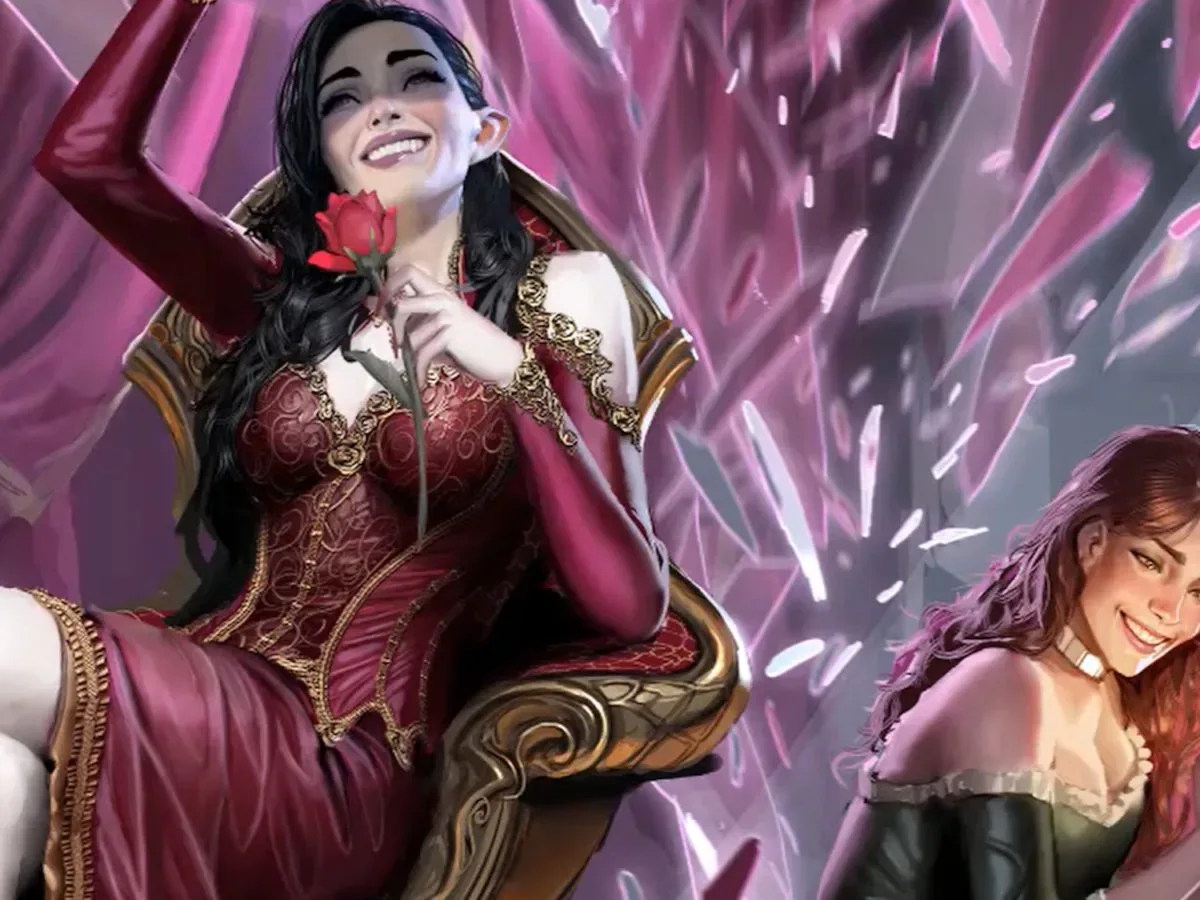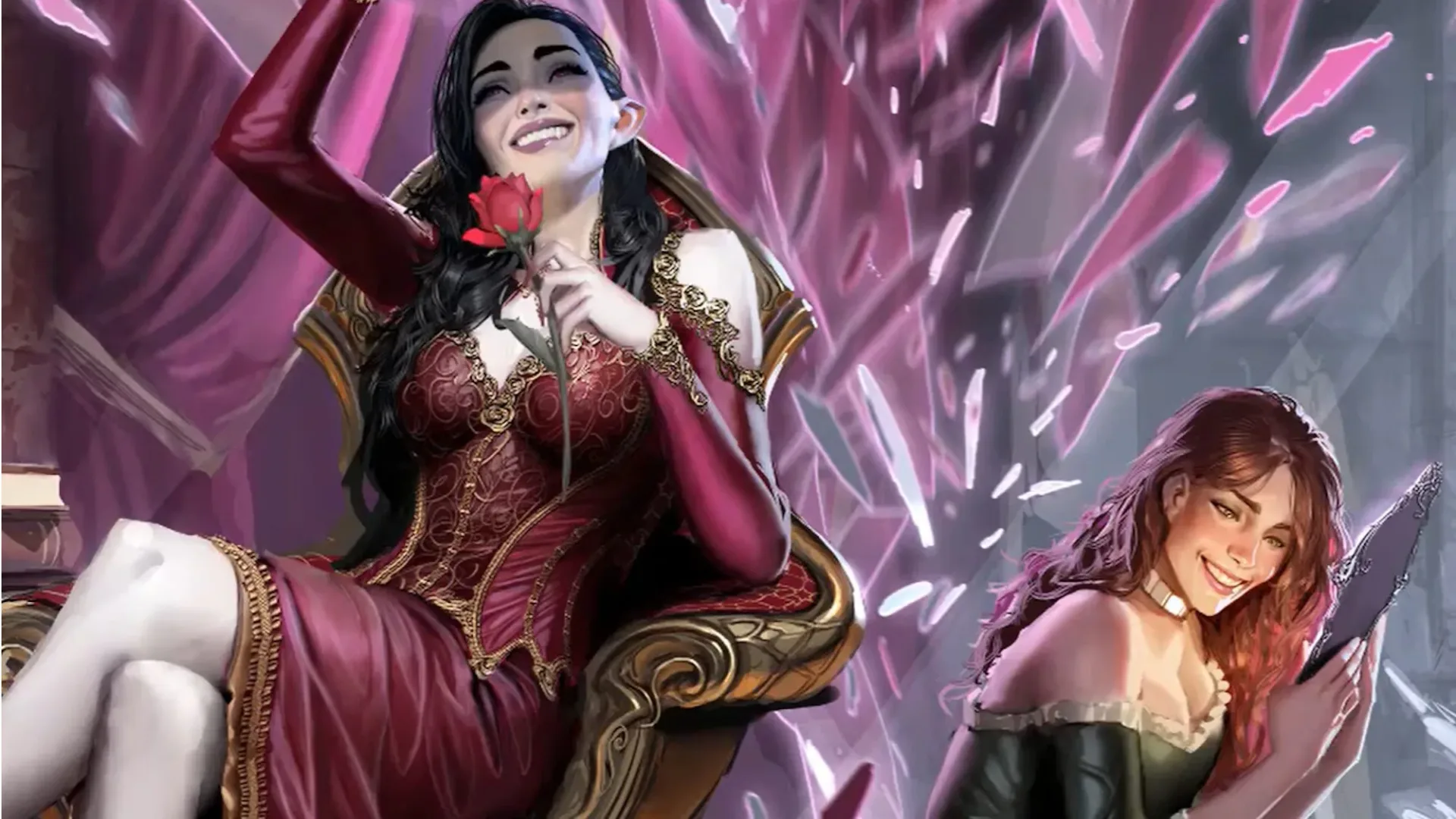
Stjepan Šejić is taking the world of Sunstone in a markedly different direction with Letters To The Vampire Queen: Book I — The Bloodsilver Collar. The new dark-fantasy project is described as an illustrated novel rather than a conventional comic, and is planned for Kickstarter through a partnership involving Top Cow Productions and Rocketship Entertainment.
It is an especially notable format change for a creator chiefly associated with sequential art: storytelling built through an ordered run of comic panels. Šejić’s previous work includes Sunstone, Death Vigil and Harlee, while Letters To The Vampire Queen had previously been serialized through Patreon. The project is now being presented as the first book in an illustrated-novel series, with an October release indicated.
That distinction matters. An illustrated novel uses prose as its primary storytelling vehicle, with artwork selected to underscore particular scenes, characters or images. A comic instead relies on the relationship between panels, dialogue, captions and page layout to control moment-to-moment pacing. Neither approach is inherently more intimate or more visual; they simply put different tools in the foreground. For a writer-artist whose work is closely tied to expressive character art, the hybrid format offers room both for extended interior narration and for carefully chosen illustrations.
A letter to a monster, not a simple vampire tale
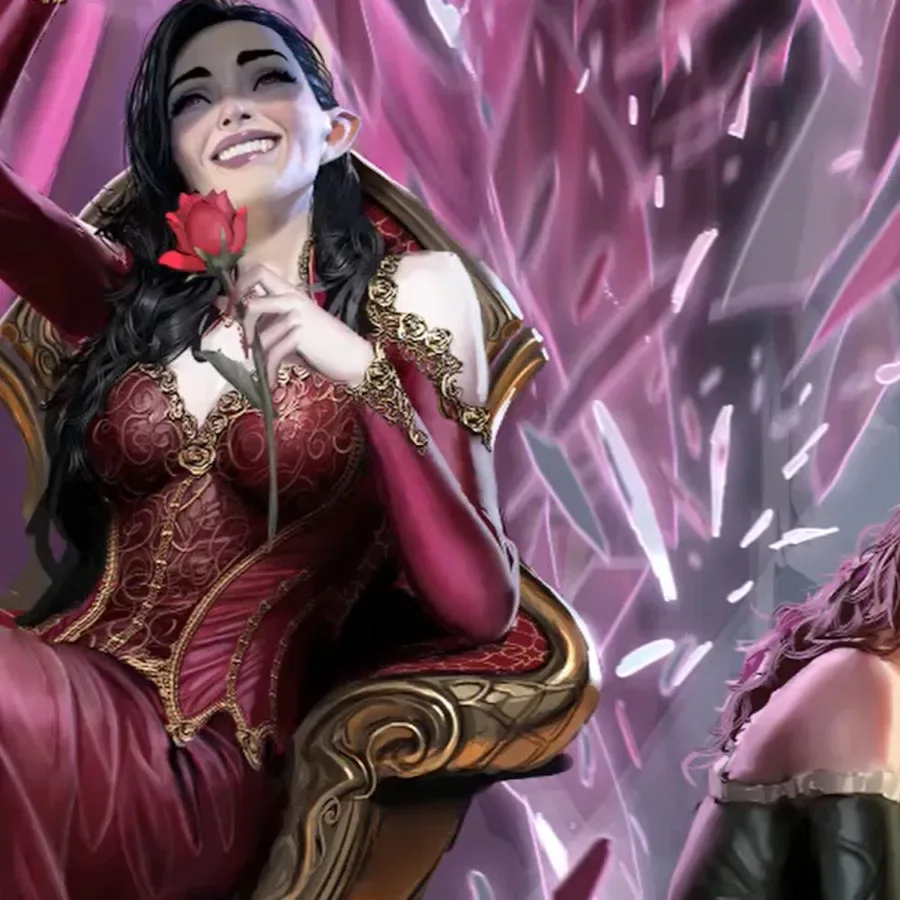
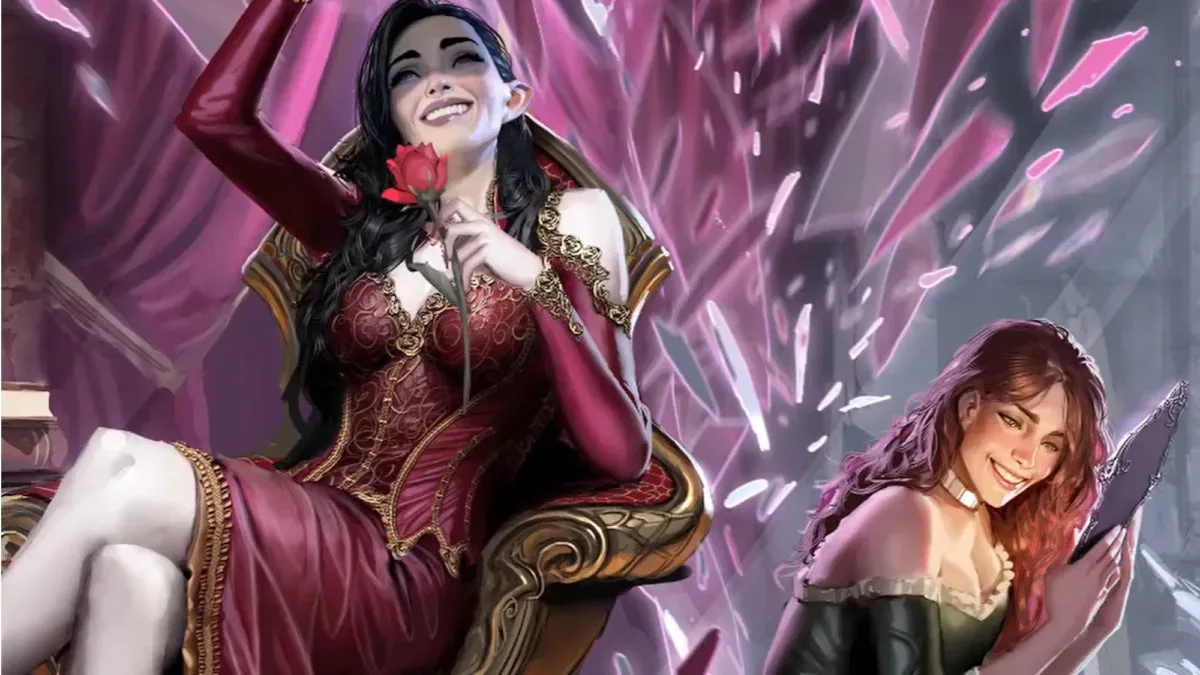
The first volume centers on Lysandre, a young woman persecuted by her city because of the women she loves. She is labeled a Lilian, also called a Nightblossom, and is forced to wear a collar made from mystical bloodsilver. The city’s fear is tied to Alyssa Dalkoff, the defeated Vampire Queen of Dalkoffburg: Lysandre is treated as a possible danger because she is believed capable of bringing that queen back.
Crucially, Lysandre does not seek that resurrection. But the situation turns more dangerous when a monstrous killer begins going after people close to her. With ordinary sources of safety apparently exhausted, she starts writing to the Vampire Queen herself. That premise places the book’s central tension somewhere more interesting than a straightforward “hero fights monster” setup. Lysandre is threatened by the civic cruelty surrounding her, by a killer, and by the possibility that the being she approaches for help may be worse than the danger already at her door.
The title also points to the likely importance of perspective. A letter is a deliberately shaped piece of narration: the writer chooses what to reveal, what to avoid and how to frame a request. That naturally suits a story about a character attempting to be understood in a world that has already assigned her a frightening role. The supplied premise does not establish exactly how the correspondence is structured on the page, or whether readers will see replies, so those details remain open. Still, the act of writing to an infamous, vanquished vampire queen gives the novel an immediate personal route into its fantasy stakes.
What “set in the world of Sunstone” does—and does not—promise
The book is identified as taking place in the world of Sunstone, making it a spin-off rather than an unrelated new property. That is useful information for established readers, but it should not be mistaken for a promise that prior knowledge will be mandatory. No reading order, returning cast list or direct plot connection has been specified here. The confirmed connection is its setting and its status as an expansion of Šejić’s existing fictional world.
For newcomers, the more immediate entry point is the premise itself: a persecuted protagonist, supernatural rules embodied by bloodsilver, a vanished vampire monarch, and a new murder threat. For existing readers, the appeal may be seeing a familiar creative universe interpreted through another storytelling grammar.
That sort of format expansion can make sense for a fictional setting with room for multiple tonal lanes. A serialized comic has to continuously manage visual progression, page turns and the economy of dialogue balloons. Prose can linger inside a character’s thinking, clarify social rules, or cover stretches of time without requiring every beat to become a panel. Illustration can then be used where it will have the most impact rather than being required to carry every scene-to-scene transition.
Šejić has characterized that shift in similar terms, explaining that prose lets him spend longer inside characters’ heads and explore parts of a world that comics do not always accommodate, while still allowing him to illustrate the scenes he most wants readers to see. The aim, then, is not an abandonment of visual storytelling. It is a rebalancing: prose handles more of the connective tissue and interiority, while the art punctuates chosen moments.
Why the Kickstarter route is worth watching
The project’s planned Kickstarter launch makes the campaign itself part of the release story. Kickstarter is a crowdfunding platform, meaning supporters pledge toward a project rather than simply buying it through a normal retail listing. The information available identifies the partners involved, but does not provide campaign tiers, pricing, stretch goals, fulfillment details or a precise launch date. Readers interested in backing it should treat those as details to confirm once the campaign materials are available, rather than assumptions to carry over from other crowdfunding releases.
For comic and graphic-story audiences, crowdfunding has also become one route for work that sits between familiar publishing categories. An illustrated novel is not quite a standard prose novel and not quite a standard comic collection, so its presentation, editions and audience pitch can matter a great deal. In this case, the hook is clear without overexplaining itself: Šejić’s art, a new prose-led mode, dark fantasy, romance, humor and blood are all being positioned as parts of the package.
There is wider evidence that audiences will rally around comics and adjacent pop-culture publishing, though every project has its own business model and audience. For an example from the broader single-issue market, recent reporting on high comic order totals and the single-issue market shows why recognizable creative identities and clear formats remain important. That does not predict the outcome of this Kickstarter; it simply helps explain why a creator-led spin-off with a distinct form can be a meaningful proposition.
The creative challenge is part of the appeal
Top Cow president and COO Matt Hawkins has framed the book as recognizably Šejić despite the departure from standard comics, highlighting the creator’s art, world-building, complicated characters, dark humor, romance and violent edge. That is a concise description of the balancing act ahead. The book must give prose enough room to justify its new form, while preserving the visual identity that readers associate with its author.
The known plot already suggests material suited to that balance. Lysandre’s status as a Nightblossom is not mere decorative world-building; it is directly tied to how her city treats her. The bloodsilver collar gives that oppression a physical, supernatural form. The Vampire Queen, meanwhile, functions as both a legend hanging over the city and a possible source of aid. Add an active killer targeting Lysandre’s loved ones, and the story has an external engine to sit alongside its social and emotional conflict.
What remains unknown is equally worth keeping separate from the confirmed details. There is no stated page count, no detailed outline of the larger series, no disclosed list of illustrations, and no confirmed description of how much of the earlier Patreon material will appear in the Kickstarter edition. There is also no reason yet to presume a conventional comic-panel layout just because Šejić is known for comics. The announced format is an illustrated novel, and that wording should set expectations.
Letters To The Vampire Queen: Book I — The Bloodsilver Collar is therefore best viewed as both a new chapter in the Sunstone setting and a test of a different creative toolset for Šejić. Its premise gives it an identity beyond franchise extension: a young woman branded as dangerous writes to the very monster her society fears, because the people she loves are being hunted. The eventual Kickstarter campaign will provide the practical details. For now, the strongest promise is a dark-fantasy story built around voice, persecution, desire and the unsettling question of whether salvation can safely be requested from a vampire queen.