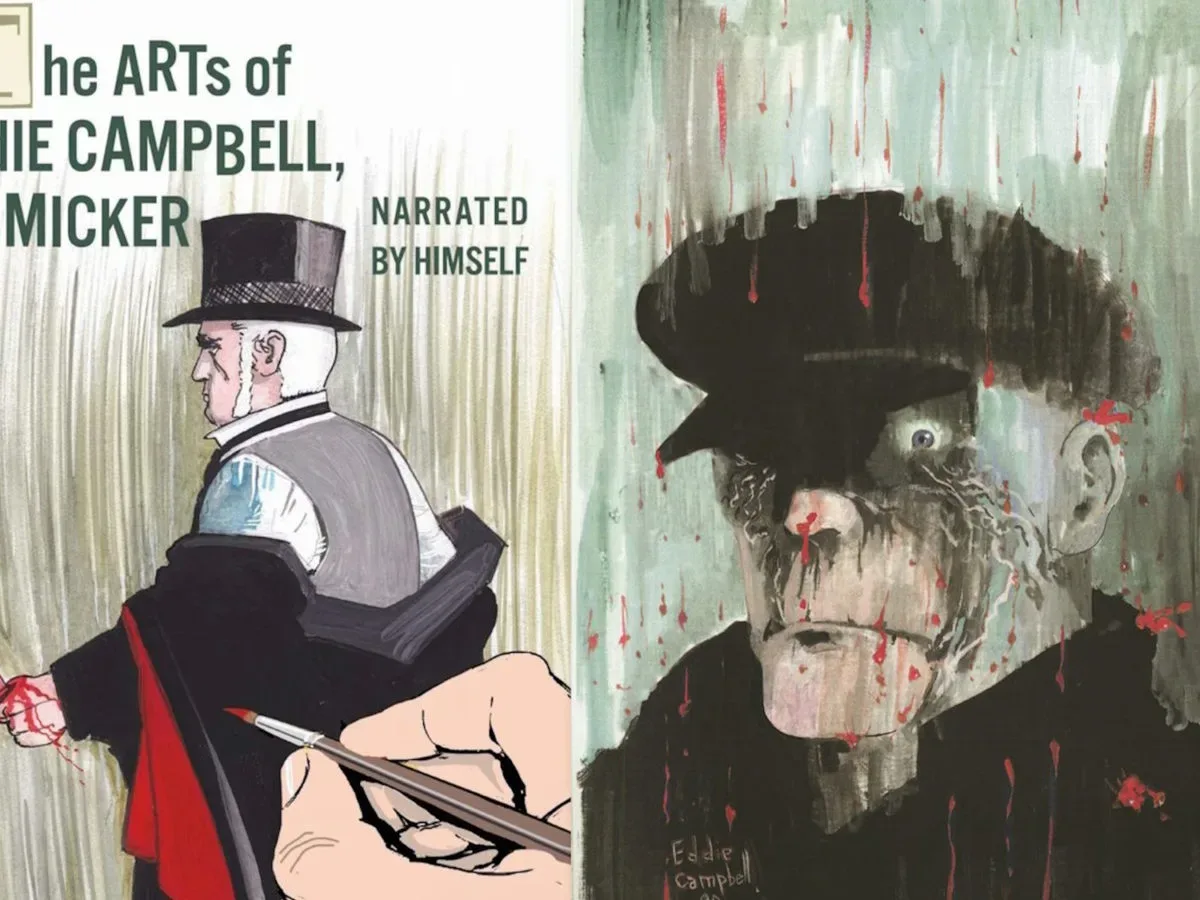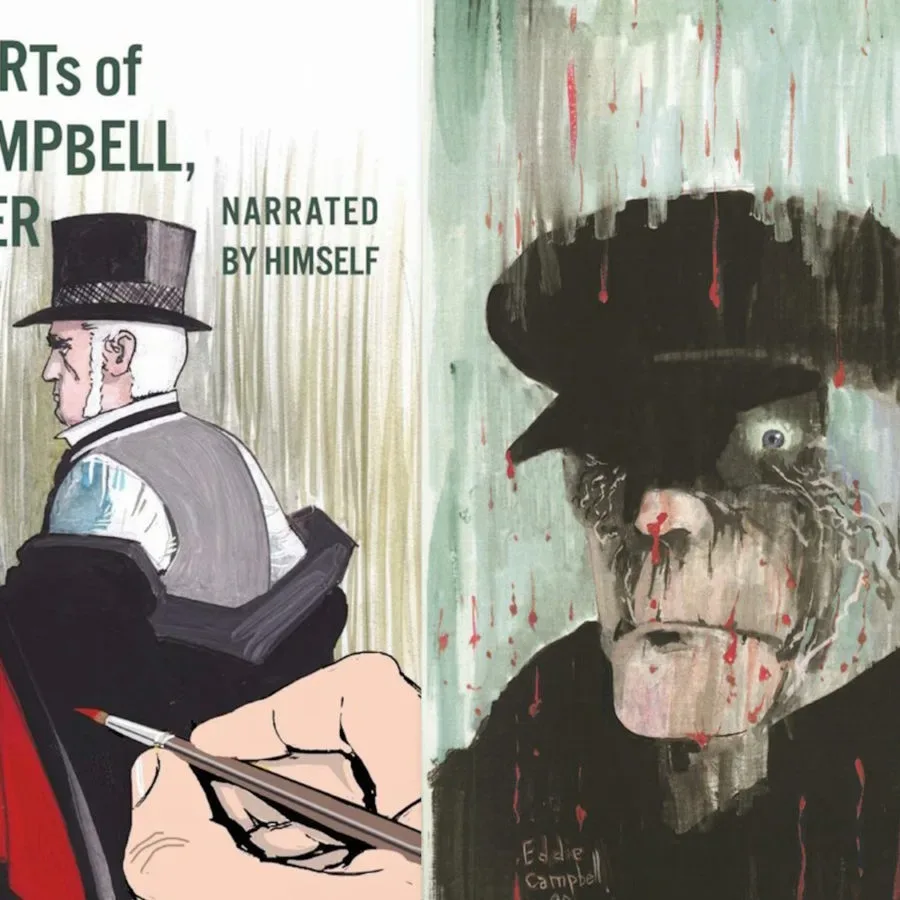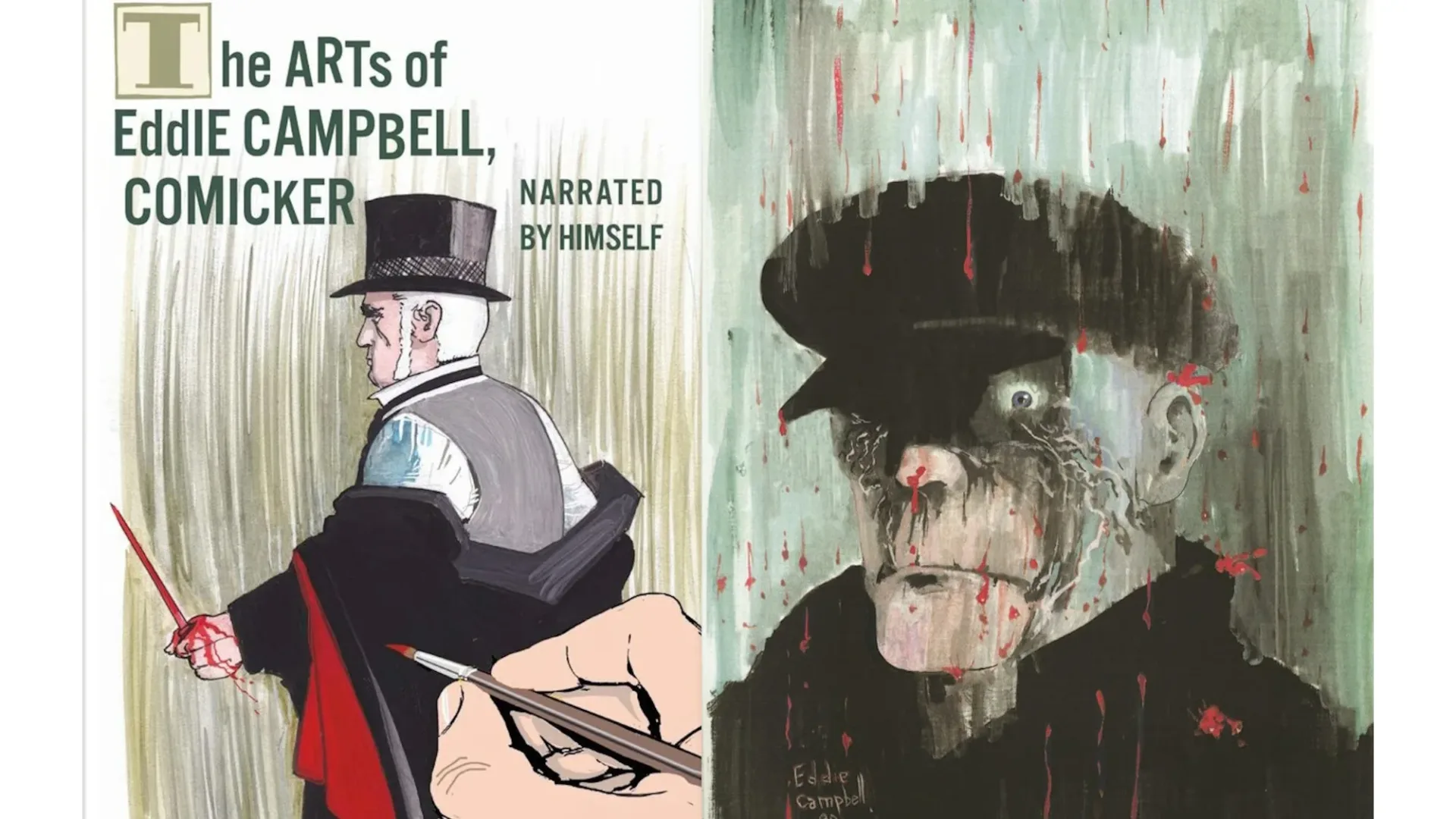
Eddie Campbell’s line has always looked as though it might wander off for a smoke, tell you something devastatingly funny, then return just in time to land the panel. Now that singular body of work is being gathered for The Arts of Eddie Campbell, Comicker, a Kickstarter-backed art book from Nick Neocleous and Moonage Books.
The campaign has already moved well beyond its initial target. At the latest reported count, it stood at $9,141 from 145 backers against a $662 goal, with the campaign scheduled to run through October 20. That is a small-goal crowdfunding story with a very loud “yes, please” attached to it.
More importantly, the proposed book is not framed simply as a gallery of familiar images. Campbell is set to guide readers through his career in his own words, combining commentary on comics-making with art and material that has either not been published before or has rarely been readily available. The project promises around 10,000 words from Campbell alongside the visual material.
What the book is collecting
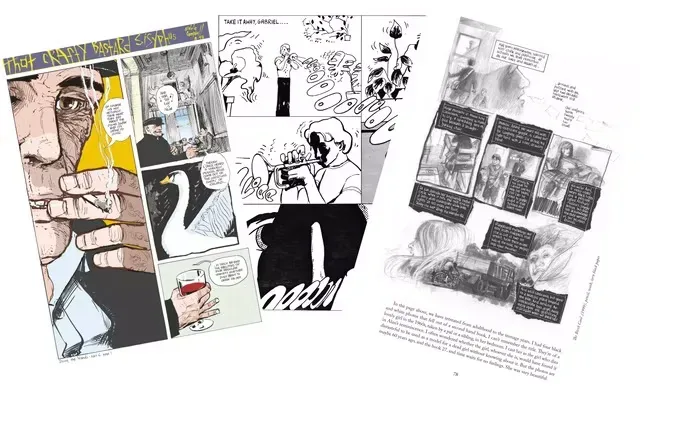
The headline items include full-page, unpublished redraws of scenes from From Hell, Campbell’s major collaboration with Alan Moore. There will also be a new, previously unpublished autobiographical story, rare pencil sketches, and excerpts from painted comics photographed from their original art.
That last detail matters for an art-book audience. Original comic art can preserve qualities that reproduction, lettering and later production stages may obscure: brush texture, paint surface, corrections and the physical character of the marks on the page. The project also promises painted covers presented without their titles or lettering, putting the focus on the image rather than its packaging role.
Other material is being newly edited and coloured for this edition, including a complete Bacchus story. The hardcover version adds 16 pages of further strips, paintings and From Hell character studies.
In practical terms, that makes the distinction between editions meaningful rather than ornamental. Readers mainly interested in Campbell’s commentary, the central selection of pages and the newly revealed work have a substantial base volume to consider. Readers who specifically want the added visual archive—particularly the character studies and extra art—will want to note the hardcover’s additional pages before choosing.
Why Campbell’s career fits an art book
Campbell is associated with a wide range of comics that nevertheless feel connected by an individual voice. His semi-autobiographical Alec stories sit at one end of that range: personal, conversational work shaped by observation and an off-kilter sense of humour. The Fate of the Artist and The Second Fake Death of Eddie Campbell continue that interest in self-portraiture and the unstable boundary between the maker and the work.
Then there is Bacchus, the long-running series involving the Greek god of wine in the modern world. At another scale entirely is From Hell, the monumental collaboration with Moore. An art collection spanning those projects has the potential to show something that individual editions cannot always make obvious: how one cartoonist’s approach changes between autobiography, mythology, painted work and a large historical collaboration.
“Comicker” in the title is a useful term for that breadth. It is less restrictive than calling someone only an illustrator or writer. In comics, the page is an assembled object: writing, drawing, panel rhythm, editing, lettering and the physical evidence of production all participate in the final reading experience. Campbell’s promised commentary can therefore be as revealing as the image selection, especially when paired with redraws, preliminary sketches and newly prepared pages.
A redraw is not merely a reprint
The unpublished From Hell redraws are among the project’s most intriguing inclusions because a redraw is fundamentally different from reproducing an existing page. A reprint returns readers to a work as it appeared in an earlier edition. A redraw revisits a scene through the artist’s later hand and present-day decisions. It can reveal how an artist now sees staging, emphasis, pacing or a particular figure—without erasing the importance of the original.
That does not mean readers should assume the redraws replace anything. The more interesting possibility is comparison. The book is positioned as a retrospective tour of Campbell’s life in comics, and revisiting a landmark work becomes part of that conversation: past pages and fresh interpretation occupying the same volume.
An archival project with a personal voice
Neocleous previously brought Secrets of the Unknown, a book about British reprint publisher Alan Class, to crowdfunding. Moonage Books’ work in this area gives the new campaign a clear archival focus: it is concerned with comics history, but it is also concerned with the materials and makers that can fall outside the most routinely repackaged canon.
That makes Campbell an especially suitable subject. The supplied description emphasizes his scratchy line, wry autobiographical storytelling and career-spanning influence, while the proposed contents avoid reducing him to one famous credit. From Hell is certainly present, and prominently so, but the inclusion of Alec, Bacchus, painted work, pencil sketches and a new autobiographical story broadens the frame.
For newer readers, this should be a navigational volume as much as a display book: a chance to encounter several strands of Campbell’s output in one place and understand that they belong to a career built across roughly five decades. For established readers, the value lies more directly in the unpublished work, the rare material and Campbell’s own account of the craft.
The book’s emphasis on original art photography is also a quiet reminder that comics have a material life before they become a printed object. Pencil lines, paint, edited pages and bare covers are not just curiosities. They document choices made during the work’s creation. For a medium so often encountered as a finished, mass-produced page, that production history can be a major part of the appeal.
Anyone already weighing whether physical reading objects deserve a place beside digital libraries may also appreciate the broader appeal of carefully designed print editions; physical controls are making a case for themselves in e-reading too. Campbell’s project, however, is built around something a screen reproduction may not fully foreground: the art process itself.
A book that treats the page as evidence
The Arts of Eddie Campbell, Comicker is being pitched as a collection of work, but its strongest idea is the connection between work and working. The unpublished story provides a new piece of Campbell cartooning; the sketches offer a look before the finished page; the edited and recoloured material recontextualizes existing comics; and the painted material photographed from original art emphasizes the object behind the reproduction.
That mix should prevent the collection from becoming a greatest-hits lap around a long career. Campbell’s established books remain the foundation, but the campaign’s contents suggest a volume interested in revisions, process and the particular oddities that are usually left outside standard editions.
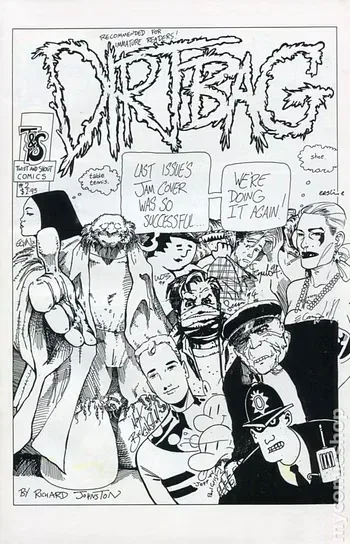
It is also hard not to enjoy the small historical loop around Campbell’s willingness to help gather artists for a convention-drawn cover for Dirtbag #2 in 1994. Contributors included Glyn Dillon, Mark Buckingham, Jeff Smith, Paul Grist, Duncan Fegredo, Sean Phillips and Gary Erskine, among others. That cooperative convention-board spirit feels compatible with a crowdfunded art book: a project made viable by people deciding that an artist’s accumulated pages, sketches and recollections are worth preserving in a form with some weight to it.
For Campbell readers, the central attraction is straightforward: rare and new work from an artist whose bibliography reaches from intimate self-fiction to From Hell. For comics readers who know only one corner of that bibliography, the collection promises a more complete map—drawn, naturally, with a wonderfully restless line.