Marvel’s Midnight Universe is arriving with a substantial retailer-order total: more than one million copies across Midnight Spider-Man #1, Midnight Fantastic Four #1, and Midnight X-Men #1. All three launch books are already scheduled for second printings ahead of their first appearance in comic shops, with those follow-up editions dated for October 28.
That is a big opening statement for a new line built around horror reinterpretations of familiar Marvel concepts. It is also a number that needs careful reading. The one-million figure is a combined total for three separate #1 issues, not a million orders for one comic. By comparison, Absolute Batman is approaching 500,000 orders for a single issue despite being roughly two years into its own run. Both achievements are notable, but they measure different kinds of momentum.
For readers, retailers, and collectors, the Midnight launch illustrates why comic-sales headlines benefit from a little arithmetic before anybody starts declaring a winner. A three-book rollout can build a huge aggregate figure, especially when it is supported by retailer incentives, exclusive variants, discounting, and promotional arrangements involving LED signs. Yet the individual-book picture is the more useful way to judge how much demand each title may have generated on its own.
One million orders, split three ways
The Midnight Universe’s launch total averages to more than 333,000 copies per debut issue if divided evenly. That is only an average, not a confirmed breakdown: there is no supplied per-title order figure, and demand could be meaningfully different from book to book. The essential point is that the combined result should not be casually treated as an individual issue’s circulation.
Absolute Batman, on the other hand, is reported to be nearing 500,000 orders for one issue. On the available figures, that places its single-issue order count above the simple three-way average for Midnight’s three launches. It does not mean Midnight has failed, nor does it establish an exact ranking for every individual Midnight issue. It simply puts the headline total in its proper frame.
That distinction matters because comics are sold through an ecosystem where initial orders are often used as a public shorthand for demand. In this case, the reported order total comes alongside extensive launch support. Heavy discounts, retailer deals, exclusive retailer variants, and LED-sign promotions are all part of the campaign. Those methods can be valuable tools for getting a new shared setting into more stores and in front of more customers, but they also make a pure one-to-one comparison with an established single title less straightforward.
“Orders” are also not interchangeable with individual reader purchases. The supplied information establishes what has been ordered for the market; it does not provide sell-through data, meaning the percentage of ordered copies that customers ultimately buy. Nor does it offer a title-by-title split. The milestone is real, but the information available does not answer every commercial question a million-copy headline may invite.
What the second printings actually signal
A second printing is a new production run of a comic after the first printing has been set. Here, the unusual part is timing: the three Midnight #1 second printings are planned before the initial issues have reached comic shops. That points to a publisher and retail channel preparing for continued demand, or ensuring more copies can be supplied after initial allocations and launch activity.
It should not be mistaken for a review score, a promise of long-term sales, or proof that every first-print copy has vanished. It is, however, a meaningful logistical move. For readers who want to start at issue one rather than pay a premium later, another printing can make entry easier. For stores, it offers a potential restock path during a period when a new universe and three recognizable character brands are arriving at once.
The October 28 editions will use fully “uncloaked” versions of the regular covers. In practical terms, each is a distinct later-printing cover presentation, with art connected to the original regular-cover artists: Steve Beach for Midnight Spider-Man, Kev Walker for Midnight Fantastic Four, and Dike Ruan for Midnight X-Men.
Collectors should separate the facts from assumptions. A second printing is a later printing, and its altered cover treatment can make it easy to identify. But nothing in the available information establishes future rarity, aftermarket value, or print quantities. Anyone buying should do so because they like the cover or want the story, rather than treating the announcement itself as a value forecast.
A horror lens for Spider-Man
Midnight Spider-Man #1 is written by Phillip Kennedy Johnson with art by SciEtronc, and is dated October 7, 2026. Its premise puts a young man through a transformation into a spider-human hybrid, tied to Oscorp’s pursuit of eternal life. The character’s grotesque new form becomes central to resisting Oscorp as the corporation seeks to create more human-animal hybrids using what it has learned from his mutation.
The setup changes the usual emphasis of Spider-Man material. Rather than presenting powers chiefly as an avenue for superheroics, the solicitation foregrounds bodily transformation, corporate experimentation, and the fear of becoming something unrecognizable. That is the basic language of body horror: horror concerned with radical, disturbing changes to the physical self. The description does not tell readers how extreme the final comic will be, but it makes the intended genre direction plain.
The first issue carries a listed price of $4.99. The series continues with Midnight Spider-Man #2 on November 18, where multiple people are missing and Oscorp defense contractors are reportedly reviewing security footage for a spider. Issue #3 follows on December 16 and centers on Peter Parker’s attempt to regain his humanity while Oscorp pursues the figure becoming an urban legend. The same solicitation introduces Doctor Octavius’s work on a second synthetic mutant, a new horror engineered from the so-called Parker Incident.
That three-issue information gives the Spider-Man branch a fairly clear early trajectory: transformation, disappearances and corporate pursuit, then a scientific escalation. “Synthetic mutant” is a story description rather than a real scientific term; in this context, it signals a deliberately engineered being rather than an ordinary person changed by accident.
Fantastic Four and X-Men: familiar names, darker premises
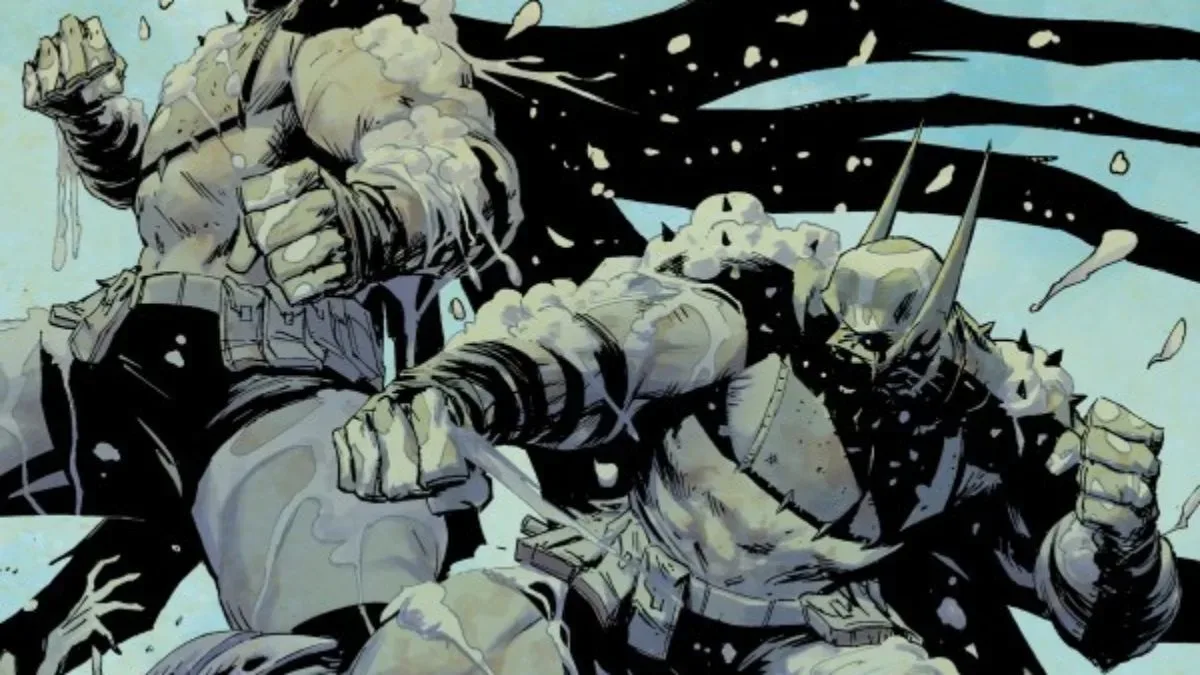
Midnight Fantastic Four #1, from writer Benjamin Percy and artist Kev Walker, is listed for November 18. Its outline begins with an obsessive scientist probing cosmic secrets that may be beyond human understanding, leaving himself and three others warped in frightening ways. The stated stakes concern new dimensions and whether humanity can withstand what is discovered there.
The first two Fantastic Four issues are both listed for November 18, an unusual scheduling detail that should be read exactly as listed rather than extrapolated into a broader release plan. Issue #2 finds Reed Richards struggling with a fractured recollection of his past and a breakthrough he barely comprehends. He begins a tentative professional relationship with Sue, Johnny, and Ben at Storm Systems, before a theory test revisits and reframes the dangers associated with the atomic age.
Issue #3, dated December 16, sends the team to Jornada del Muerto in New Mexico, described as the location of the first atomic-bomb detonation and the Los Alamos laboratories. There they find evidence of another world left after a breach in the firmament. Across those solicits, the Fantastic Four material appears to blend scientific obsession, memory uncertainty, atomic-age anxieties, and interdimensional horror rather than simply revisiting the team’s conventional origin setup.
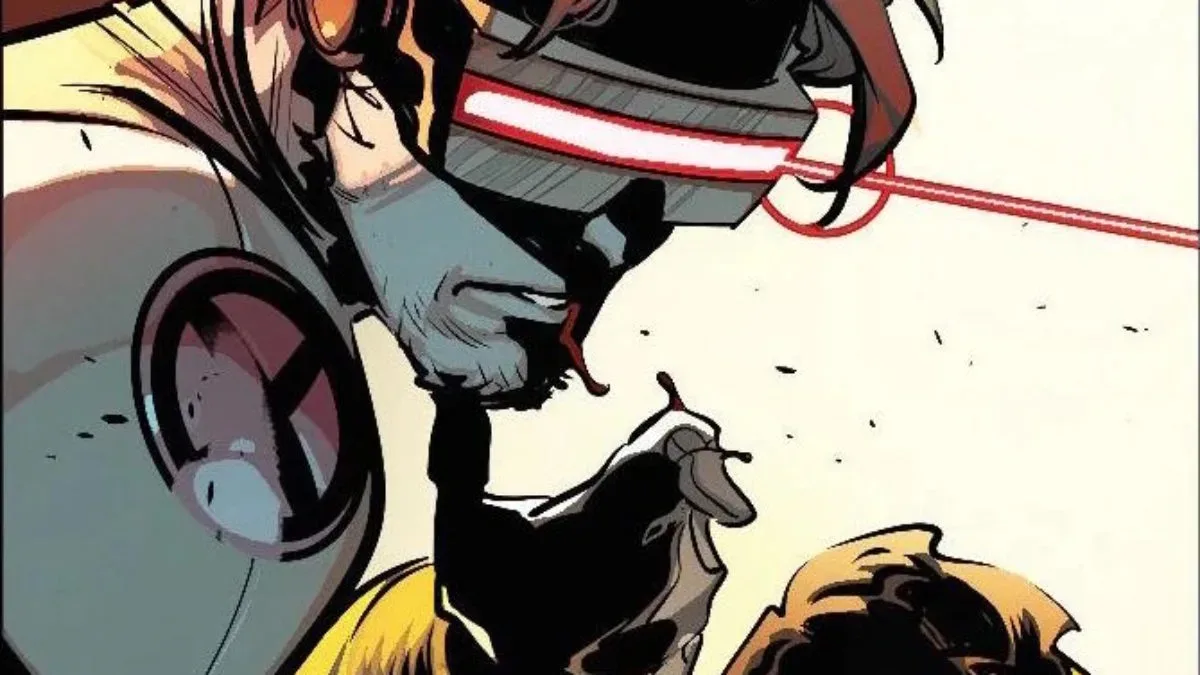
Midnight X-Men #1 is also credited to Benjamin Percy and Kev Walker, with an October 7 date. Its supplied description mirrors the first Midnight Fantastic Four solicitation: an obsessive scientist’s forbidden investigation changes four people in horrifying ways and opens a threat related to new dimensions. The matching text is worth noting because the available listings do not clarify whether that reflects a deliberate shared premise, placeholder material, or some other connection. Readers should avoid assuming more than the text supports.
The later Midnight X-Men issues shift creative credits to writer Jonathan Hickman and artist Matteo Della Fonte. Issue #2 is dated November 18 and is promoted only with the compact line “Eat. Prey. Love.” Issue #3 arrives December 16 with the harsher promise of “No Mutants. No Mercy,” invoking weapons of Earthly and Heavenly construction and realms existing between old failures and newer sins of expedience. Those sparse descriptions establish mood and conflict, but not enough plot detail to define the series’ full setup.
Why the launch strategy is worth watching
Launching Spider-Man, Fantastic Four, and X-Men books in a common horror-branded umbrella is an effort to make a new line feel immediately large. Each name carries its own recognizable corner of Marvel’s fiction, while the Midnight label supplies an intended shared genre identity. The rollout also ensures that a reader drawn in by one character may encounter the wider line at the same time.
That approach has a trade-off. Three #1s create a larger event and contribute to a large aggregate order number. They also ask readers to make several buying decisions close together. The series have different creative teams and different listed premises, so the strongest practical advice is uncomplicated: choose the concept and creators that appeal to you, rather than feeling that a seven-figure combined launch means every issue is mandatory.
For a broader reminder that major franchise storytelling is often shaped by the tension between creative work and commercial release, see this look at George Lucas’s comments on changes made before movies are finished. Comics operate through a different production and retail model, but Midnight’s discounts, variants, promotional hardware, and rapid reprints underline how much a launch can be a business operation as well as a creative proposition.
The cleanest reading of the numbers is therefore twofold. Midnight Universe has made an emphatic aggregate entrance, exceeding one million orders for three debut books and moving to second printings before release. At the same time, Absolute Batman’s nearly 500,000 orders for a single issue remain an exceptionally strong benchmark. The first statistic shows broad launch scale; the second demonstrates remarkable single-title pull. Neither needs to erase the other.
Shop the products
Check current price, model and availability at the retailer.