Starfire is heading into a new ongoing comic-book series in April 2027. Writer Alyssa Wong and artist Belén Ortega are attached to the project, which is planned as part of DC’s DC Next Level line. The early elevator pitch is admirably enormous: Wong has described the series as “Red Sonja meets One Piece.”
That is not a plot synopsis, and it should not be mistaken for one. No issue-by-issue story details, supporting cast list, or precise format beyond “ongoing” have been established here. But it is a useful tonal clue. Starfire has always had the raw material for stories that move beyond a conventional superhero patrol: she is a Tamaranean princess, a veteran Teen Titan, a character with starbolt powers, and someone whose history is inseparable from alien worlds and royal conflict. Put those pieces together and the promise is not simply “Starfire, but solo.” It is Starfire with a potentially bigger horizon.
A pitch built for speed, scale and swashbuckling
“Red Sonja meets One Piece” combines two very different shorthand references. Red Sonja evokes a warrior-led fantasy adventure, particularly a central hero capable of settling a problem with a blade, nerve and a willingness to charge directly at danger. One Piece, meanwhile, signals a sweeping journey, strange destinations, a crew dynamic and the sense that a world can keep unfolding well past the next port of call.
Applied to Starfire, the comparison suggests an action-first cosmic book where character relationships and travel may matter as much as any one fight. It is reasonable to read the phrase as an ambition for a broad, energetic adventure rather than confirmation that the book will literally use pirates, swords, ships or any particular genre fixture. A shorthand pitch is a direction sign, not a legally binding itinerary. Comic readers have been burned before by treating a three-word comparison like a complete map of issue #1.
Still, the fit is clear. Starfire’s background offers a ready-made link between personal stakes and galactic scale. Her royal position on Tamaran means that questions of family, duty and power can naturally sit beside the more immediate business of flying into space and firing starbolts at whoever has made the regrettable decision to start trouble. The character does not need to be pulled away from her established history to support a cosmic adventure; that history is already carrying a great deal of cosmic luggage.
What “ongoing” matters for
The word ongoing is significant in comic publishing. It means the project is being positioned as a continuing series rather than a one-shot or a limited run with a predetermined number of installments. That does not establish how long it will ultimately run, nor does it tell readers how frequently issues will arrive. It does, however, signal room for the kind of expanding narrative implied by the pitch: new locations, a wider cast, recurring threats and story arcs that can build on consequences instead of packing every resolution into a fixed endpoint.
For a character frequently associated with teams, a sustained solo series also creates a different storytelling opportunity. Team books divide page space among several leads and often use Starfire’s personality, flight or firepower as part of a larger group rhythm. A title centered on her can examine which choices she makes when there is no Titans meeting to adjourn into a group plan. That need not mean ignoring the character’s relationships; a crew-focused adventure, if that element of the pitch carries into the finished series, could make companionship central in a new way.
There is a practical reader expectation worth keeping in check: the announcement establishes Wong and Ortega as the creative pairing and April 2027 as the launch window. It does not establish a debut issue title, variant-cover program, retailer information, collected edition, digital release plan or a final story description. Those details may arrive later. For now, the useful certainty is the creative team, the line, the character and the intended launch month.
Why Tamaran is more than a backdrop
Starfire is an alien princess from the planet Tamaran. That single part of her premise does more work than a decorative origin label. It provides a built-in political dimension to a character often recognized first for her Teen Titans role. Royal status can mean a claim to authority, a reason for rivals to care about her, and a source of obligations that do not vanish just because someone has found a chosen family elsewhere in the universe.
Her powers also suit a visually ambitious space story. Starfire’s starbolts give an artist a direct, immediately readable expression of force: energy projected outward, often while the character is airborne. Ortega will have the chance to define how the series handles not only combat but motion, distance and alien settings. A premise sold on warrior energy and interstellar scale needs images that make a planet, a ship or a confrontation feel like more than a different-colored city block. The art is not a secondary consideration in that equation; it is how much of that promised scale becomes tangible on the page.
Wong’s role, conversely, is to turn the broad comparison into a story with its own identity. “Meets” pitches are useful because they communicate a mood quickly, but they can only be the starting point. Starfire’s voice, her choices and the emotional logic of her conflicts are what will separate a new run from an interesting sentence on a convention stage. The strongest possibility in the available premise is that Starfire’s royal history and her adventure-forward present can collide rather than operate in separate lanes.
Blackfire is the obvious pressure point
The announcement also raises the possibility of Blackfire, Starfire’s older sister and rival for the throne, returning to the picture. At this stage, that is a tease rather than a confirmed role or a complete statement of the book’s antagonist structure. Readers should not assume that Blackfire will be the sole villain, the opening-arc opponent or even necessarily appear in the first issue.
But the possibility is narratively meaningful. A sibling who is also a claimant and rival can make a royal conflict personal in a way that an outside invader cannot. The stakes are not only about who controls a planet or wins a battle. They can become questions of inheritance, identity and the version of Tamaranean responsibility Starfire wants to embrace. In an adventure pitched around action and a larger universe, Blackfire could provide a grounding counterweight: a conflict that remains sharp because it is intimate.
That is analysis based on the established relationship named in the announcement, not confirmation of a specific forthcoming plot. The distinction matters. Teases are fun precisely because they invite readers to imagine the nastiest family reunion in the galaxy; they are not a substitute for announced creative specifics.
Starfire’s long road from DC Comics Presents
Starfire was created by Marv Wolfman and George Pérez, debuting in DC Comics Presents #26 in 1980. She subsequently became a founding member of The New Teen Titans. That history explains why a fresh Starfire ongoing has a different shape from a debut for an entirely new hero. The character arrives with decades of associations: Tamaran, the Titans, starbolts, royalty, displacement and major interpersonal conflict. A new series has material to draw from, but it also has to make room for a story that does not merely replay the greatest hits with a new logo.
The Wong-Ortega book’s early pitch points toward one answer: lean into Starfire’s cosmic identity rather than treating it as background texture. A Teen Titans icon can still be a Titans icon while being the center of an independent adventure. In fact, a strong solo story can clarify the qualities she contributes when she later appears alongside other heroes. The group dynamic tells readers how Starfire interacts with a team; a solo title has the potential to show what kind of world she builds around herself.
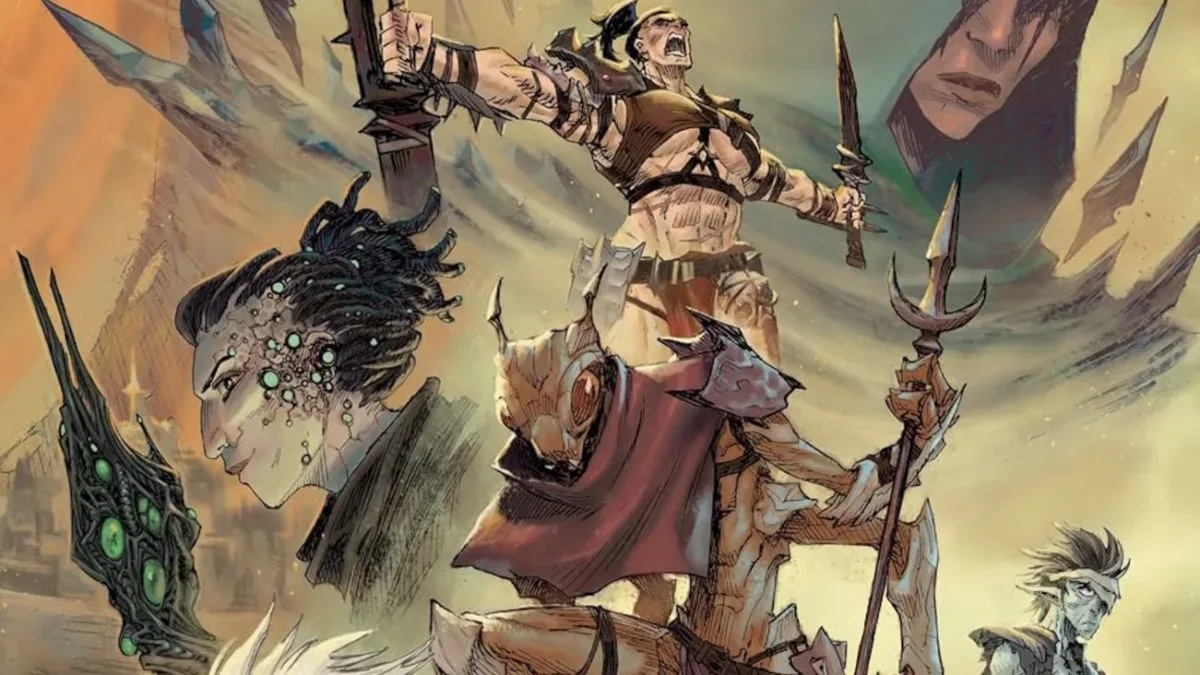
The April 2027 timing also places the project among a growing set of future comic announcements. Readers keeping an eye on that publishing horizon can also see the planned April 2027 launch of a Dark Sun graphic-novel trilogy. The projects are unrelated, but together they illustrate how far ahead comics publishers may sketch their schedules when introducing new genre work and creative teams.
The sensible level of excitement
There is plenty to like in the confirmed information without inventing the rest. Wong and Ortega are the announced writer-artist team. The title is an ongoing Starfire series in DC Next Level. It is slated to begin in April 2027. Its stated creative shorthand promises a collision of warrior action and expansive, crew-minded space adventure. And Blackfire has been signaled as a possible element around Starfire’s Tamaranean conflicts.
Everything else remains a question mark, which is fine. A solo Starfire book should have room for a little mystery; the character is, after all, entering a premise where the universe appears to be the size of the playground. The real test will be how the series defines its own crew, its own threats and its own take on a hero who has spent much of her history balancing royal legacy with the family she has chosen. Until further details arrive, April 2027 is the date to put on the cosmic calendar.