Star Wars: The Book of Boba Fett #6 is set to put a deeply personal delivery beside a far more dangerous meeting in the desert. The 40-page Marvel issue, due November 25, 2026, sends Din Djarin to Ahsoka Tano with a gift for Grogu while the young foundling weighs two possible paths: continuing Jedi training under Luke Skywalker or returning to Din’s side for more Mandalorian travels.
That choice is the emotional center of the issue’s premise. On the other side of the story, Cobb Vanth is headed toward a tense encounter with Cad Bane. One plotline is about belonging, mentorship and an offered future; the other promises a confrontation between a local lawman and a bounty hunter. It is a useful two-track setup for a Boba Fett-branded story, balancing the intimate stakes around Grogu with the hard-edged Western atmosphere represented by Vanth and Bane.
A delivery that carries more than an object
The solicitation identifies Din’s destination clearly: Ahsoka Tano receives the gift intended for Grogu. That detail matters because the delivery is not merely a side errand. Grogu’s decision is explicitly framed as a choice between Master Luke Skywalker’s training and traveling with Mando. The gift therefore arrives at a moment when Din and Grogu’s bond is being placed against the pull of Jedi education.
The provided material does not specify the gift itself, so readers should be cautious about treating it as a confirmed armor piece, weapon, garment or any other particular item. What is confirmed is its narrative function: Din brings something for Grogu to the place where Grogu is training, and that act coincides with a question about where Grogu belongs next.
That restraint is important in a franchise story built around recognizable iconography. A Mandalorian delivery can invite assumptions about beskar, armor, family crests or inherited gear, but none of those specifics are established here. The confirmed information supports a more interesting reading anyway: the item is a tangible expression of Din’s connection to Grogu at a time when physical distance and separate training are testing that connection.
Why the choice has real dramatic weight
The solicitation does not present Grogu’s situation as a simple test he can pass. It presents two valid directions. Jedi training with Luke suggests discipline, instruction and a commitment to a particular tradition. Rejoining Din means a return to life on the move, defined by companionship and the wider galaxy beyond the training site.
In practical storytelling terms, that creates a character decision rather than a puzzle with one obviously correct answer. Grogu is not only being asked what he can become; he is being asked what kind of life he wants to live and who he wants beside him. Din’s gift can naturally make that decision more immediate without reducing Grogu’s agency. A gift expresses the giver’s care, but the stated premise still makes Grogu’s eventual decision his own.
The image of Din making the journey also gives the issue a clear emotional route. Rather than receiving news from afar, he goes to Ahsoka in person. That creates room for the comic to dwell on the distance between Din and Grogu, and on the different responsibilities represented by Ahsoka and Luke. The solicitation stops short of revealing conversations or outcomes, but its setup gives the journey a purpose beyond simply moving the plot from one scene to another.
R2-D2 and the Jedi academy construction setting
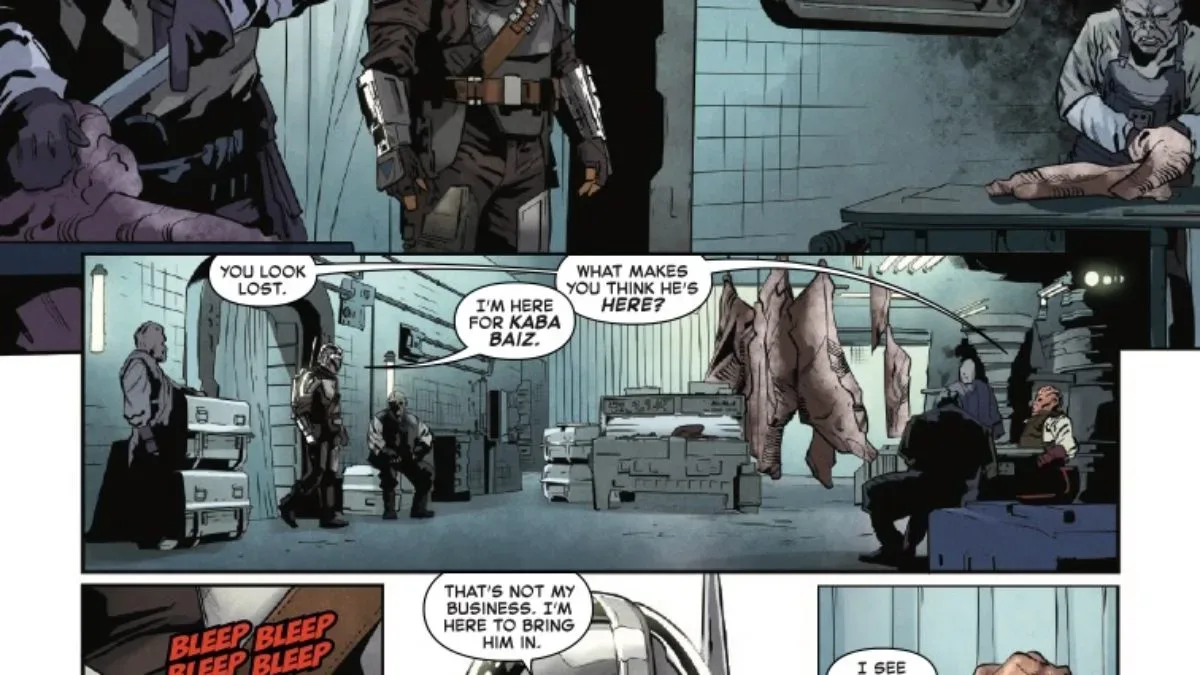
The preview material places Din at a construction site, where R2-D2 leads him before shutting down as builder droids continue their work. The location is a useful visual anchor for Grogu’s crossroads. Construction is literal in the scene, but it also suits a story about foundations: Luke’s training environment is being built while Grogu considers whether his own future should be built there.
Builder droids are simply automated machines assigned to construction work. Their presence establishes that the site is active and unfinished, rather than a polished institution operating at full capacity. R2-D2’s role in guiding Din also links the visit directly to the Jedi side of Grogu’s decision without needing a lengthy explanation of directions, permissions or arrival logistics.
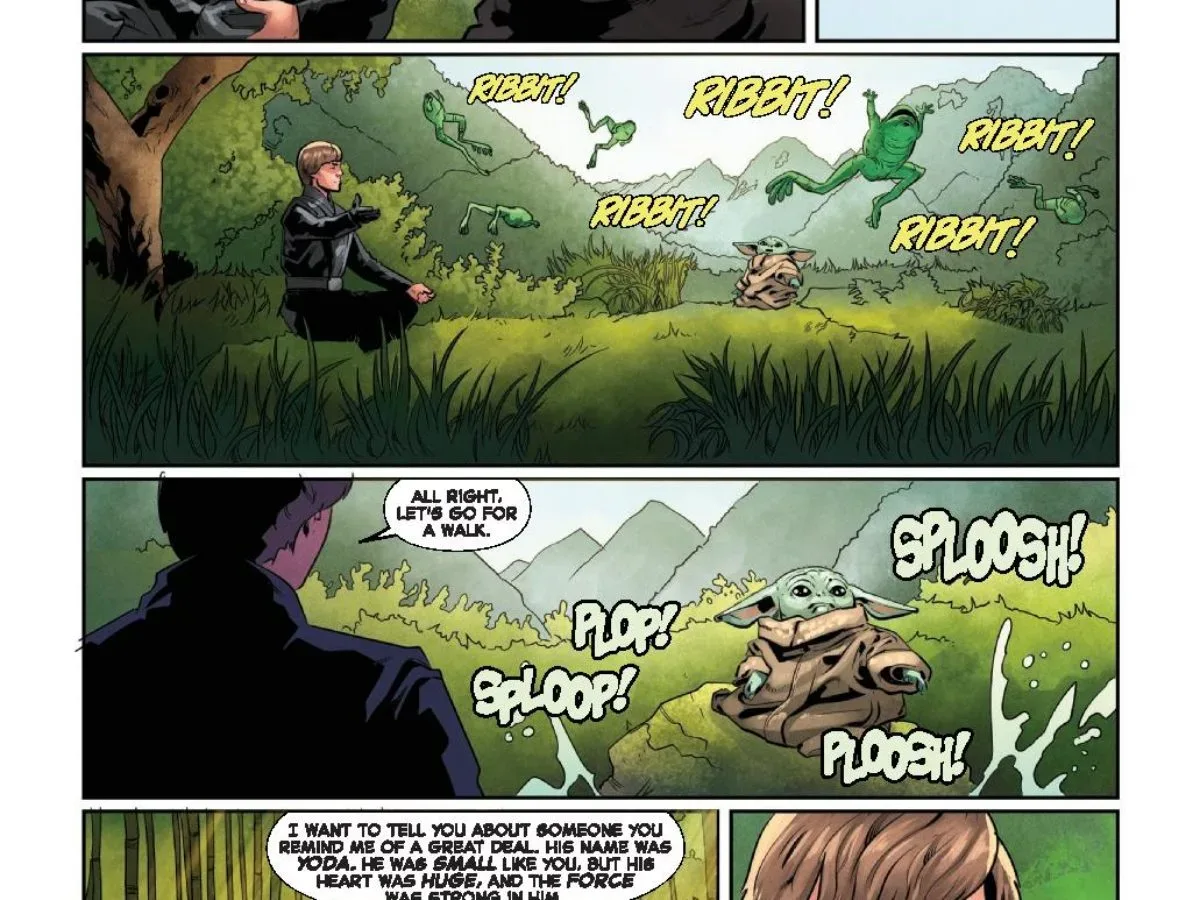
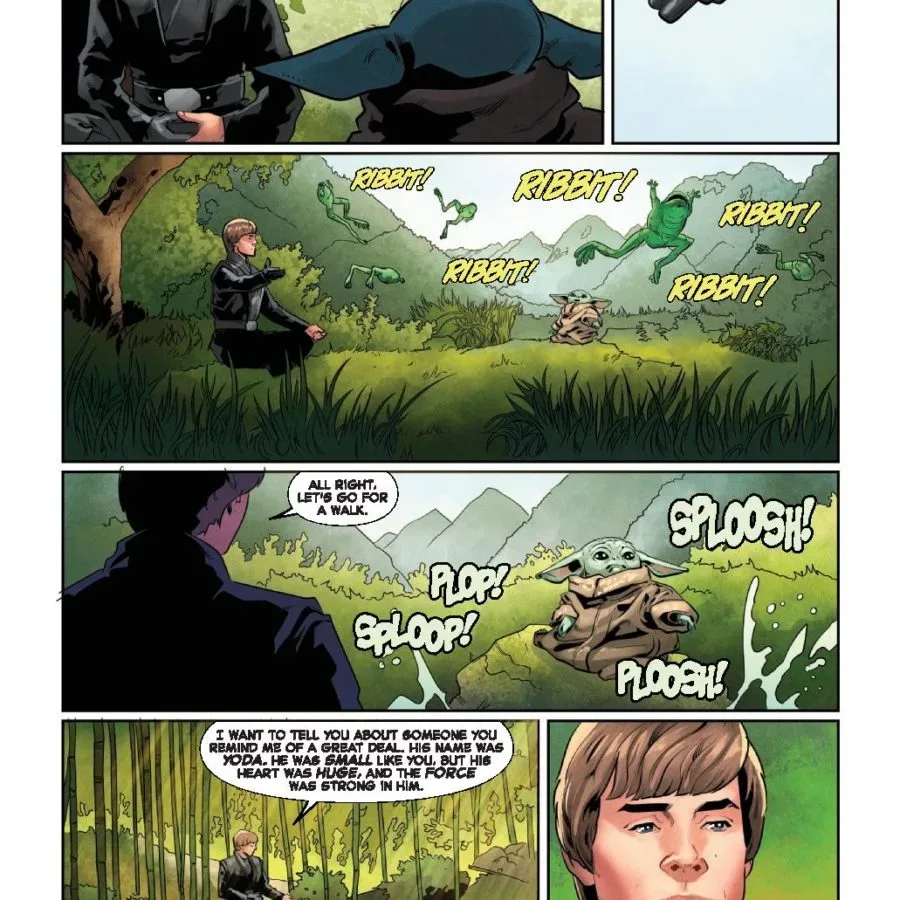
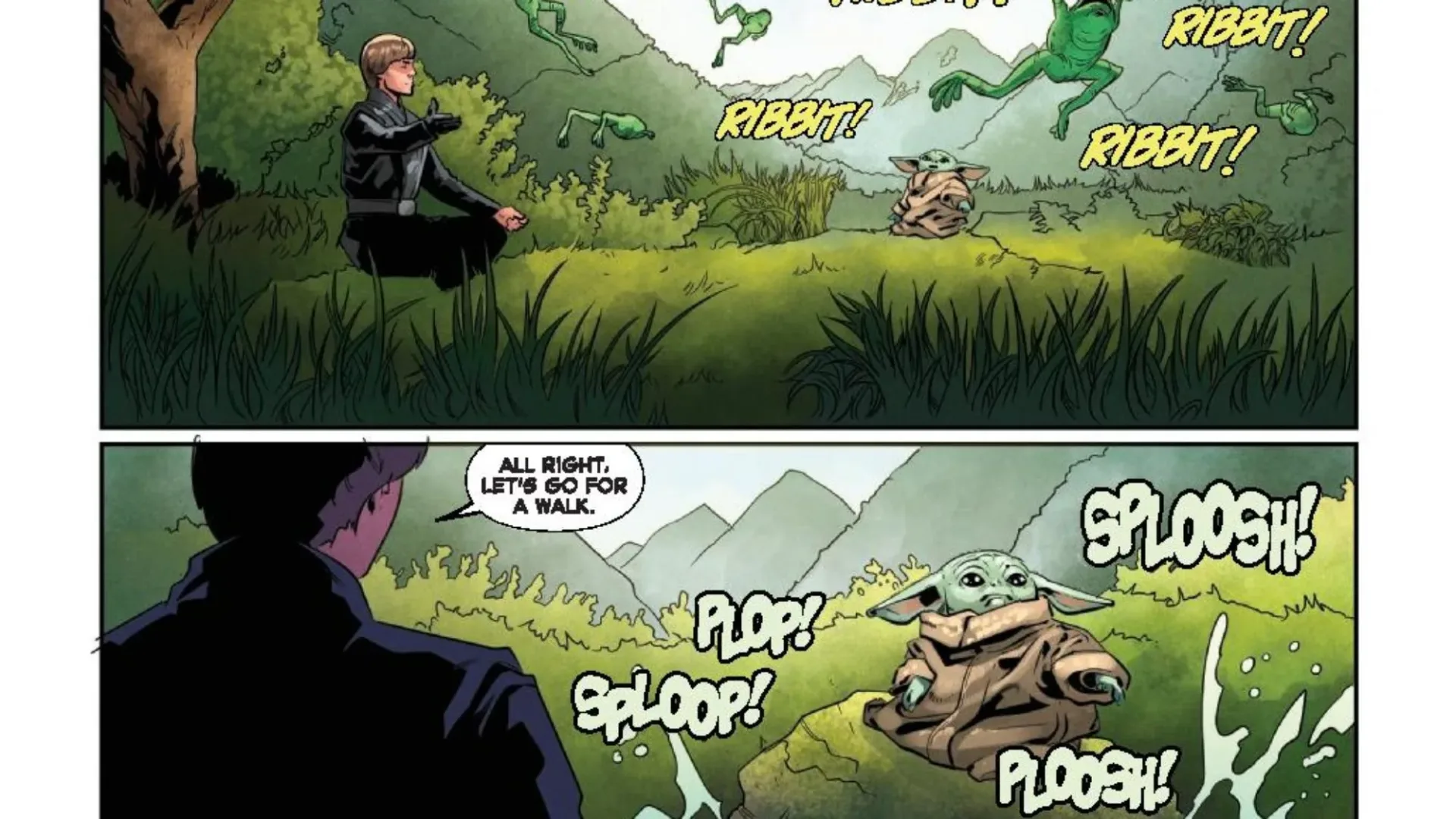
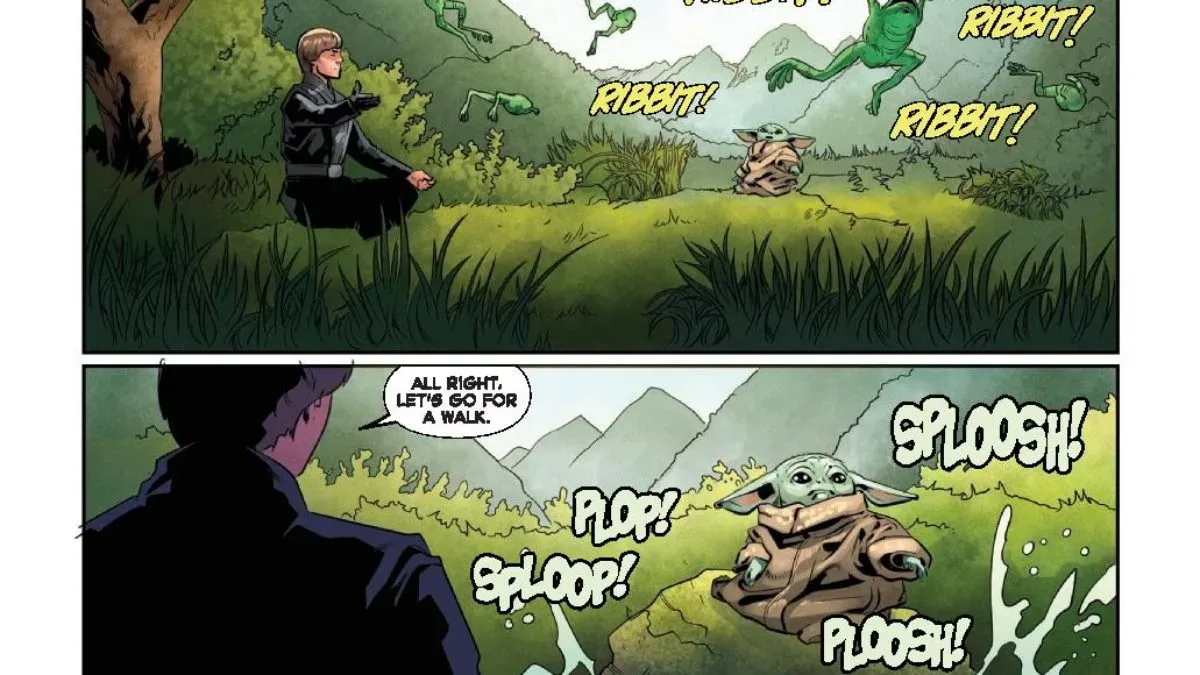
Luke is also described as levitating frogs before Grogu. This is a Force-training image, with the Force referring to the power associated here with Jedi instruction and Luke’s mentorship. It gives the preview a compact visual contrast: machinery continues physical construction in the background, while Luke demonstrates an ability central to Jedi teaching. Grogu’s immediate environment is therefore defined by both a developing academy and a highly personal lesson.
None of this guarantees the issue will take a broad architectural or institutional view of Jedi training. Still, the construction backdrop does make the choice feel less abstract. Grogu is being shown a path while its setting is visibly taking shape, and Din’s arrival introduces the alternative represented by their travels together.
Cobb Vanth and Cad Bane bring the danger
While Din’s story carries the emotional question, the issue’s other stated thread promises a “chilling standoff” between Cobb Vanth and Cad Bane. The wording signals confrontation, but it does not confirm a fight, a winner or the circumstances that put them face to face. That distinction matters: a standoff can be powered by threat, negotiation, history or the possibility that violence could begin at any moment.
Cad Bane is identified here as a bounty hunter, which makes the professional dimension of the encounter explicit. Cobb Vanth, meanwhile, occupies the opposing side of the issue’s desert conflict. Their presence gives the comic a sharper counterpoint to the quieter tension around Grogu. Where Din’s thread asks what a child should choose, Vanth and Bane’s thread asks what happens when two figures with incompatible aims share the same space.
The split structure also fits the title’s broader territory. Boba Fett is not named as the active focus of the solicitation’s plot summary, yet the issue remains positioned within a Star Wars story where the desert, bounty-hunter pressure and local stakes are all significant ingredients. Vanth and Bane can sustain that tone while Din, Ahsoka, Luke and Grogu carry the issue’s family-and-training storyline.
For readers hoping to avoid spoilers, the safest expectation is not a promised shootout but a collision waiting to happen. The setup is intentionally more revealing about the people involved than the resolution. That makes the issue’s tension part of the appeal: the question is not only whether a conflict occurs, but how long each figure can hold the line before the situation changes.
The creative team and edition details
Rodney Barnes writes Star Wars: The Book of Boba Fett #6, with interior art by Will Sliney. Rachelle Rosenberg is credited on colors, and VC’s Joe Caramagna provides lettering. Phil Noto supplies the main cover.
Those credits describe distinct pieces of comic-book production. The writer shapes the script and scene construction; the interior artist turns that script into the drawn sequential narrative; the colorist determines the issue’s color presentation; and the letterer places dialogue, captions, sound effects and other readable visual information on the page. A cover artist, meanwhile, creates the primary front-facing image used to represent the issue. Each role contributes differently to how readers experience a story that moves between quiet emotional decisions, Jedi instruction and a high-tension desert confrontation.
The issue is rated T, runs 40 pages and carries a US price of $5.99. Two listed variant editions feature covers by Mike McKone and Rickie Yagawa. A variant cover is an alternate cover option for the same numbered comic issue; it is not automatically a separate story or additional chapter. The McKone edition is listed as a 1:25 variant, a retailer-incentive format generally tied to retailer ordering quantities. The supplied listing does not establish how many copies any individual store will stock, so availability may vary by shop.
- On sale: November 25, 2026
- Publisher: Marvel
- Format: 40-page comic book
- Rating: T
- US price: $5.99
- Main cover: Phil Noto
- Variant cover artists: Mike McKone and Rickie Yagawa
What this issue’s setup suggests
The strongest aspect of the announced material is how cleanly it divides its stakes without making either thread feel disposable. Din’s mission carries a soft but consequential tension: a gift has to cross the distance between him and Grogu, and Grogu must decide whether Jedi training or life with Din speaks more strongly to him. Vanth and Bane’s meeting supplies the opposite energy, where an apparent face-off can make every pause feel dangerous.
It is also a reminder that a Star Wars comic can make a large galaxy feel focused by grounding its issue around a pair of encounters. One is an arrival with something to give. The other is a meeting where nobody may be inclined to give ground. The solicitation does not reveal how either story ends, which leaves the book’s main questions intact: what will Grogu choose, what does Din’s gift mean to that decision, and how will Cobb Vanth handle Cad Bane?
Readers tracking comic announcements can find more comic-book coverage and upcoming issue details. For this release, the important point is simple: issue #6 puts Grogu’s future and a dangerous desert confrontation on the same 40-page stage.