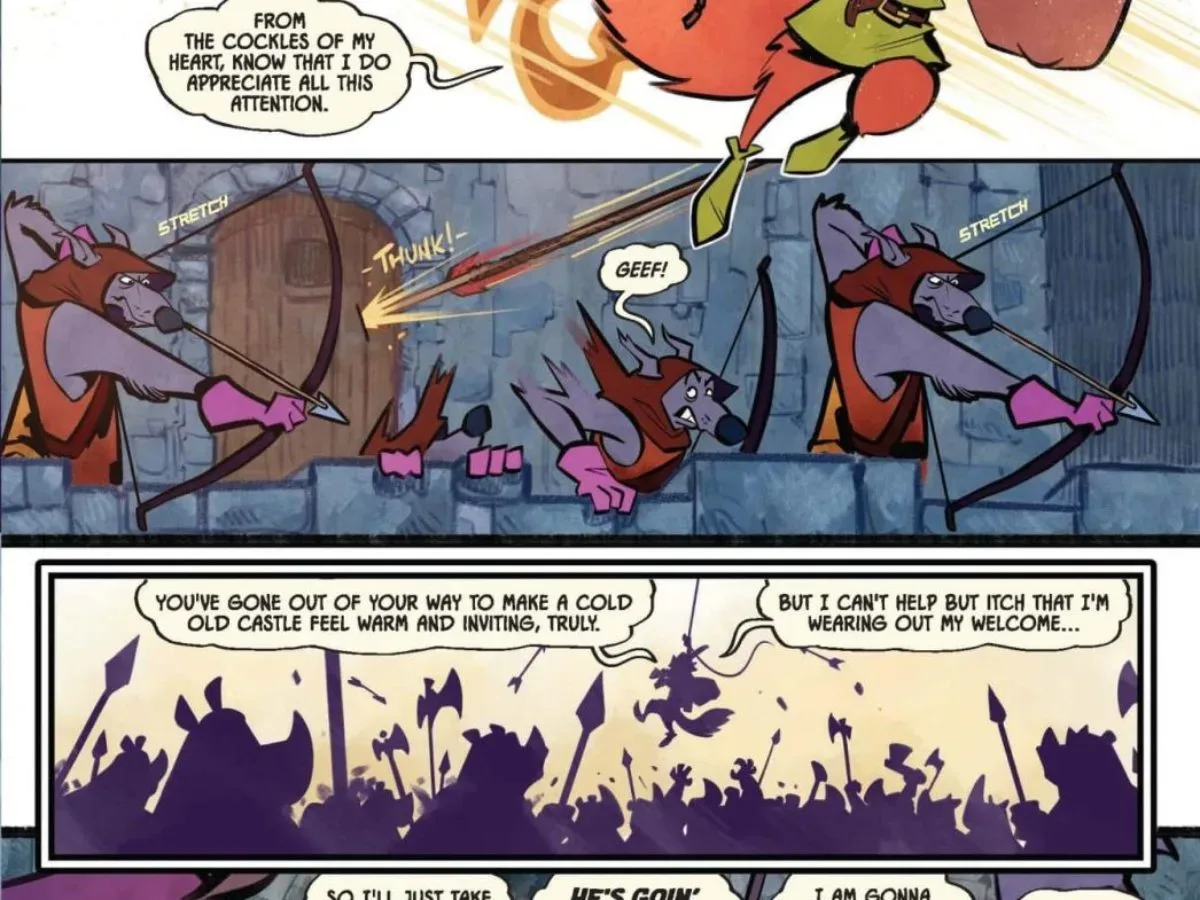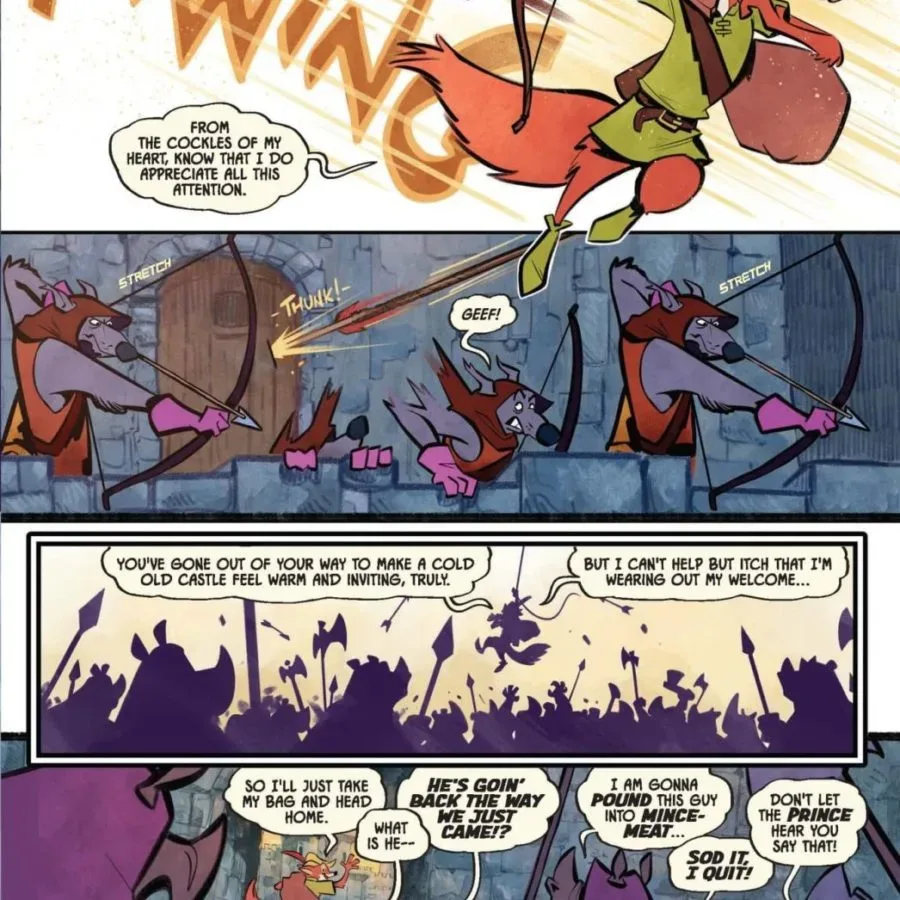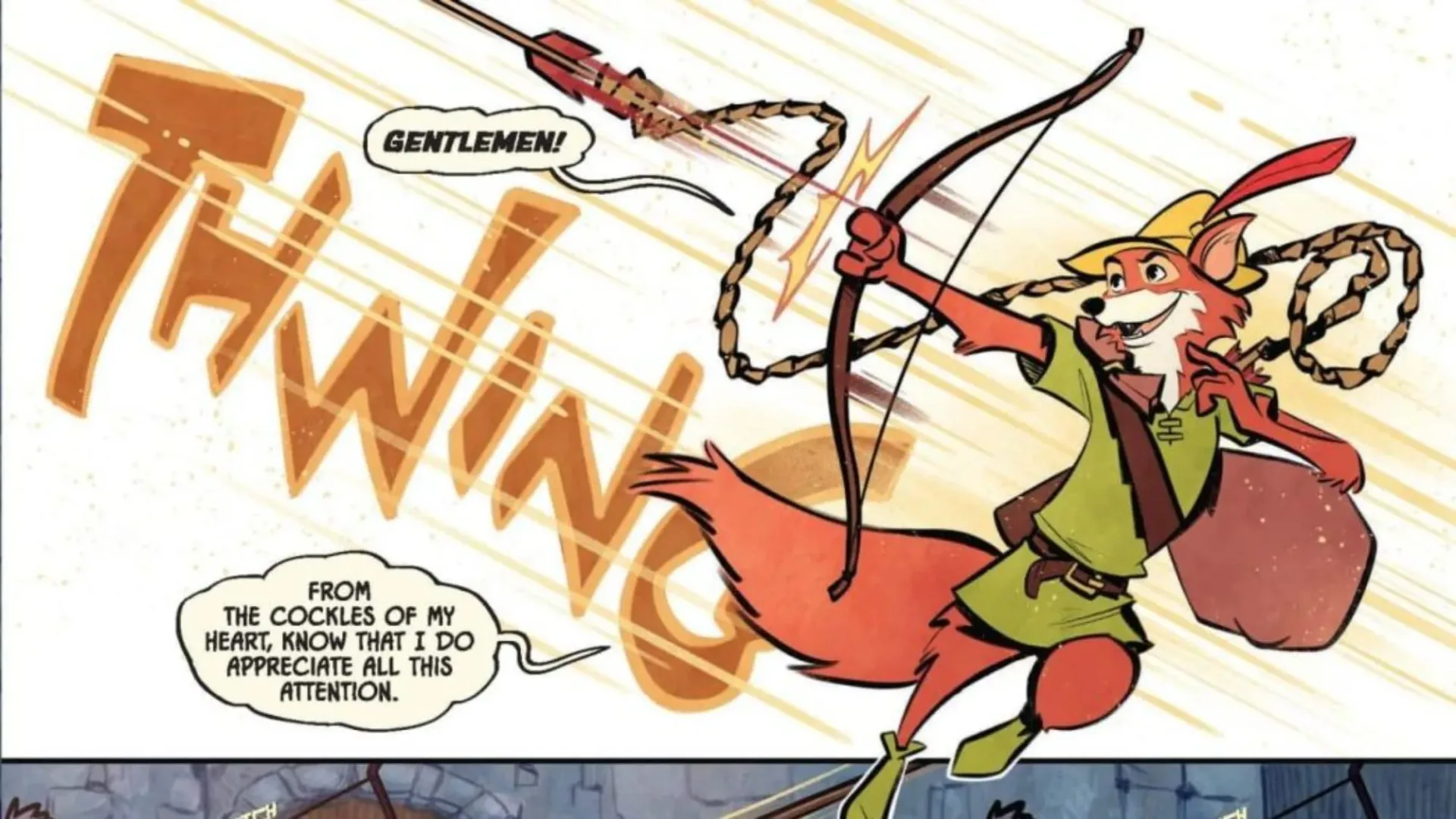
Dynamite Entertainment is sending Robin Hood back into Sherwood Forest, but this time the familiar legend is being told through an animal kingdom. Robin Hood #1, due in comic shops on November 25, 2026, launches a new series built around an immediately useful question for a debut issue: what exactly is Robin stealing from Prince John?
The setup is more complicated than a single daring raid. Robin enters Prince John’s castle day after day for a week, repeatedly evading its security. Yet the castle’s defenders cannot identify what has gone missing. That makes the first issue less a straightforward outlaw adventure than a mystery with an increasingly irritated ruler at its center. The eventual discovery is positioned as the moment that puts Robin in serious trouble.
A familiar legend with a deliberately different frame
Robin Hood is a character shaped by retellings. The broad strokes are instantly recognizable: Sherwood Forest, an expert archer, a corrupt authority figure and an outlaw willing to defy the system. This series uses that flexibility to present the tale as the animal kingdom’s account of what happened.
That distinction matters. The premise does not merely place animal versions of the usual cast into a medieval setting; it pitches its story as a version of the legend that has not been told before. The result gives the creative team room to use the audience’s assumptions about Robin Hood as part of the hook. Readers know to expect a theft from Prince John, but the issue’s central tension comes from withholding the object of that theft.
For more context, explore Meta Brings Muse to Instagram DMs for Saved-Post Organization, Recipe Lists and Catch-Ups.
The castle break-ins also establish Robin’s capabilities without needing an extended origin story. Successfully getting inside once signals skill. Doing it repeatedly, despite a castle’s guards being alert to the problem, raises the stakes and turns the security failure into a running complication. Prince John’s people know their enemy is active, but their uncertainty over the target prevents an obvious response.
The mystery is the engine of issue one
A heist mystery is a story structure in which the question is not only whether someone can steal something, but what was taken, why it was taken, and what consequences follow once the truth emerges. Robin Hood #1 appears to lean on that structure. The repeated incursions are the visible crime; the missing item is the concealed piece of the puzzle.
That is an effective fit for a Robin Hood story. Theft is central to the character’s mythos, but the series can create suspense by making the prize itself uncertain. Prince John’s eventual realization suggests that Robin’s target carries consequences beyond ordinary treasure. The premise does not identify the missing object, its use or who else may be affected, so readers should regard those details as intentionally unrevealed rather than assume a conventional riches-to-the-poor plot.
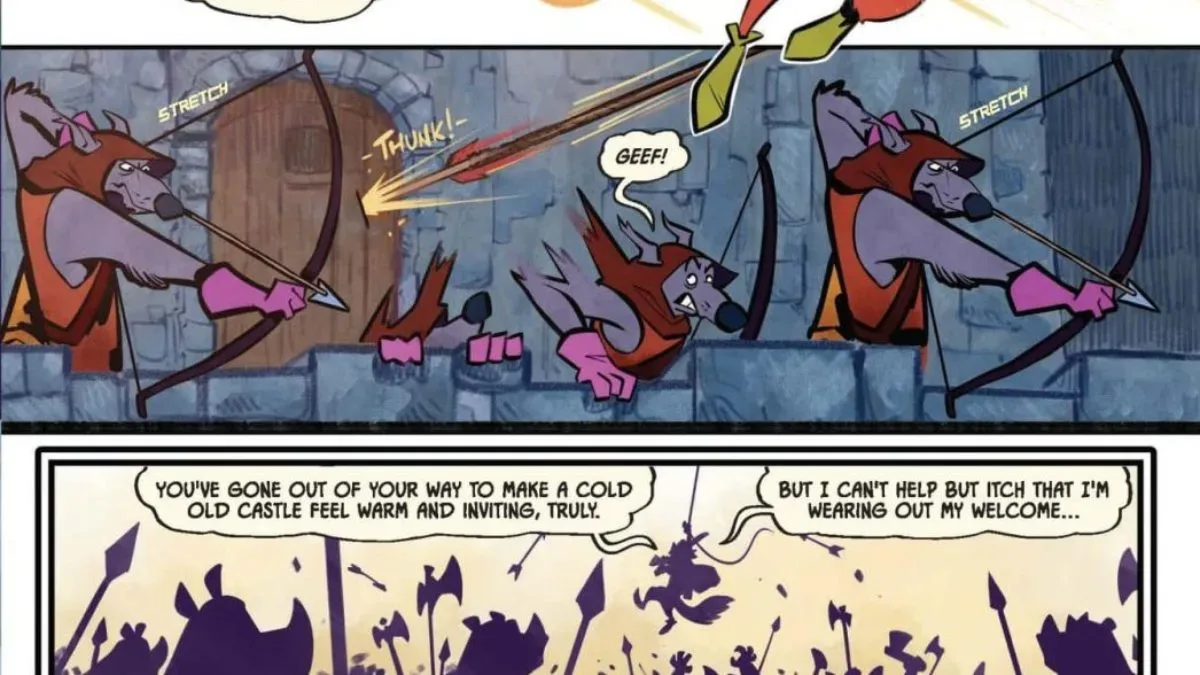
The animal setting can also sharpen the physical comedy and visual identity of a castle intrusion without changing the core conflict. The supplied premise specifically notes confusion among Prince John’s guards and a rhino guard who reaches a breaking point. That small detail points toward a lighter, rowdier tone around the castle’s inability to stop its persistent visitor, even as the discovery of the missing item promises more significant danger for Robin.
The creative team behind the series
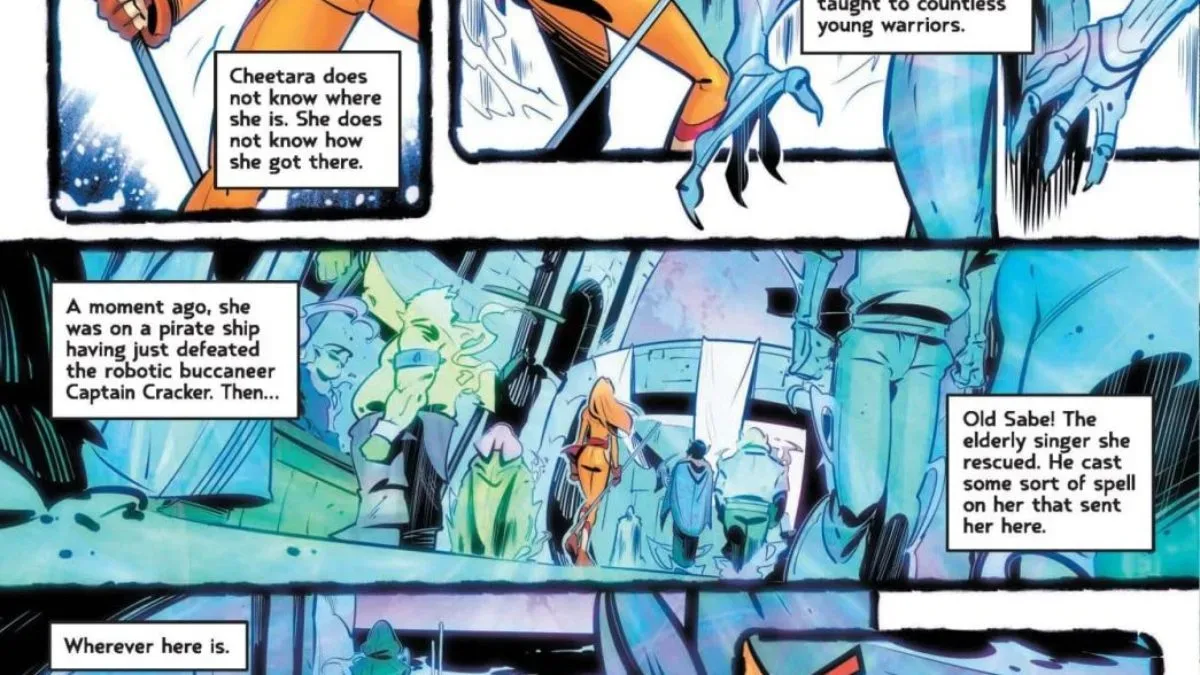
Nate Cosby and Greg Weisman are credited as writers on Robin Hood #1. Cosby is identified with Cheetara: Worldbreaker, while Weisman is identified as the creator of Gargoyles. Their shared credit indicates a collaborative writing effort for the launch rather than a solo-scripted take.
Alessandro Ranaldi provides the interior art and is identified as an illustrator of Zootopia. In the context of a comic centered on animal characters, that background is especially relevant: clear animal acting, readable silhouettes and expressive body language are important storytelling tools when a series must distinguish personalities across a non-human cast. The premise alone cannot establish how the finished pages handle those elements, but the assignment gives the book an artist with directly relevant animal-character experience.
Joshua Middleton is credited as the cover artist for the standard listing. The issue will also have named cover editions from David Nakayama, David Aja, Phil Hester and Nathan Szerdy, in addition to a Blank Authentix cover. Variant covers are alternate cover artworks for the same comic issue; they do not indicate separate story chapters or additional interior material in the information provided.
What is confirmed for Robin Hood #1
- Publisher: Dynamite Entertainment
- On-sale date: November 25, 2026
- Writers: Nate Cosby and Greg Weisman
- Interior artist: Alessandro Ranaldi
- Cover artist listed for the main edition: Joshua Middleton
- Suggested retail price: $4.99
- Premise: An animal-kingdom telling of Robin Hood in which Robin repeatedly breaks into Prince John’s castle while the target of the theft remains unknown.
Cover choices and what buyers should know
The listed editions all carry a $4.99 suggested retail price. Alongside the primary listing, the announced variants are credited to Nakayama, Aja, Hester and Szerdy, with a Blank Authentix option also listed. A blank cover is designed with open space for original sketches or signatures; it is an alternative presentation, not a separate installment of the narrative.
For readers primarily interested in the story, the relevant point is simple: the supplied details describe one first issue with multiple cover choices. The narrative hook, writing team and interior art credit remain associated with Robin Hood #1 itself. For readers who choose comics based on cover art, the range of credited artists offers several distinct visual approaches without requiring anyone to miss the beginning of the series.
Why the opening premise has room to grow
Issue-one premises often need to introduce a world and create a reason to return. Robin Hood #1 has a clean mechanism for both. The animal kingdom recasts a widely known legend, while the unknown stolen object provides a specific question that can carry readers past the introduction. It also puts Robin in a precarious position: even a successful outlaw can be in trouble if the consequences of a theft turn out to be larger than expected.
The story’s language frames the series as a “romping” adventure, which suggests that the repeated castle raids are intended to have energy and humor rather than function only as grim political intrigue. At the same time, the premise is careful to say Robin gets into trouble once Prince John learns what is gone. That creates a useful shift in momentum. Initially, the castle seems unable to contain Robin; afterward, Robin may need to deal with the response his own success has provoked.
Robin Hood #1 arrives November 25 at a $4.99 suggested retail price. Its opening mystery is clear, its animal-kingdom perspective gives the legend a distinct frame, and its creative team brings together Cosby, Weisman and Ranaldi for the beginning of Dynamite’s new Sherwood Forest adventure.