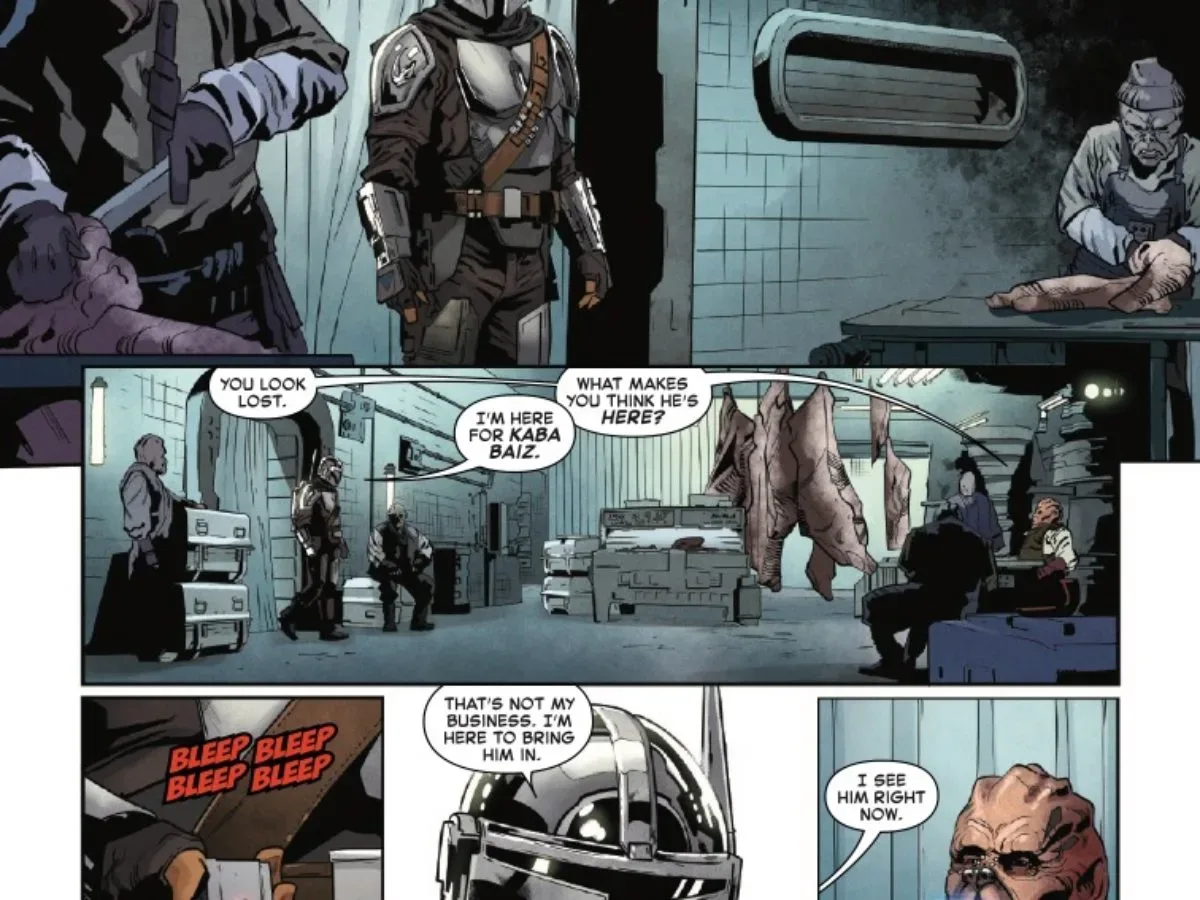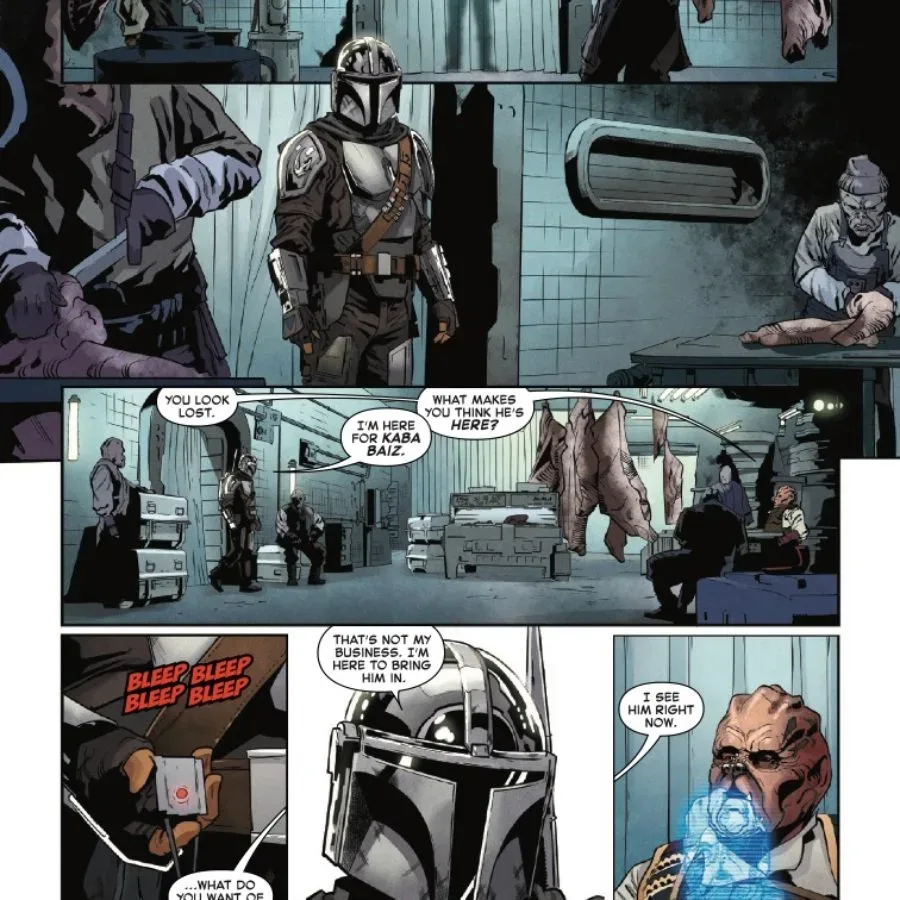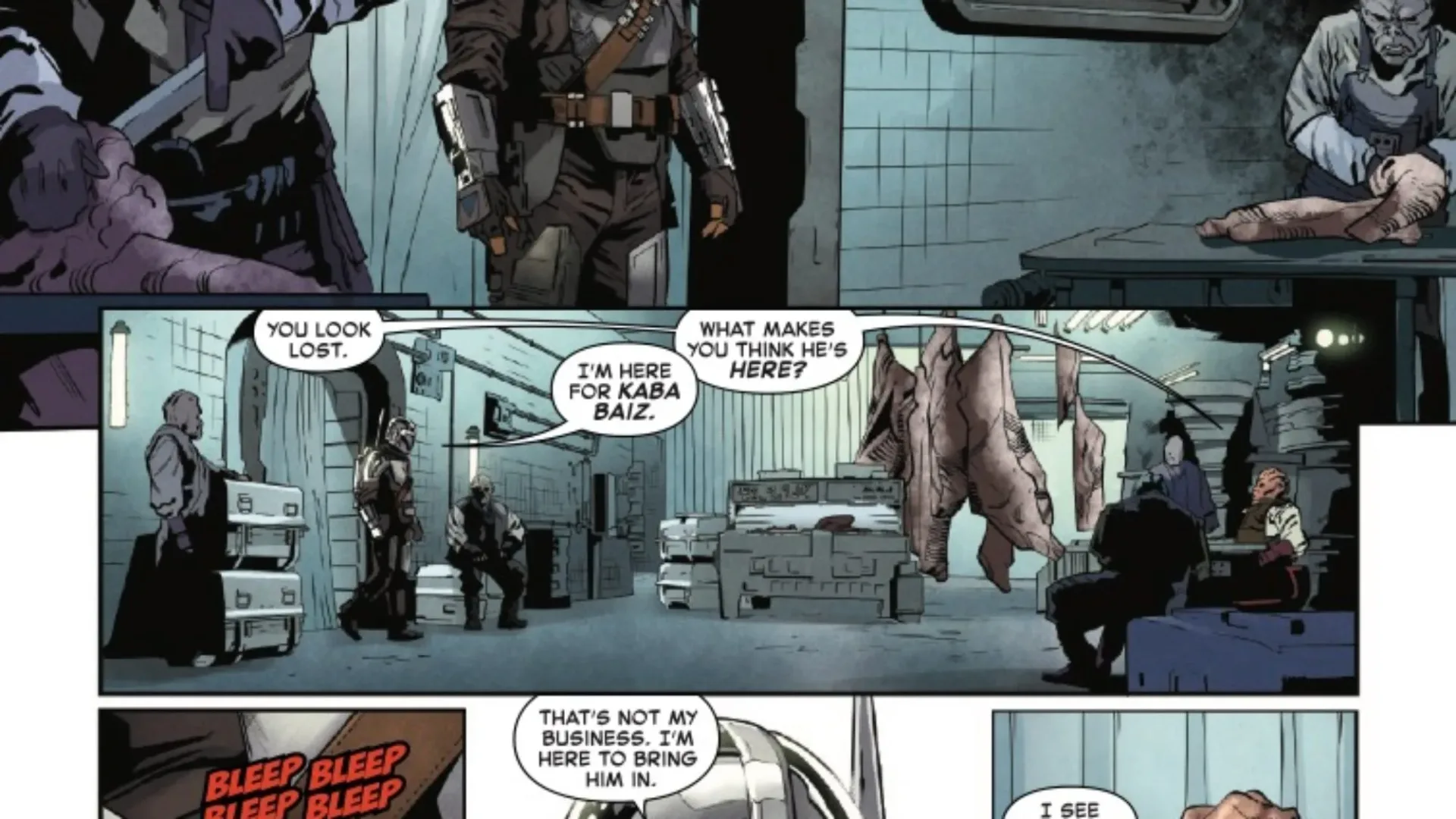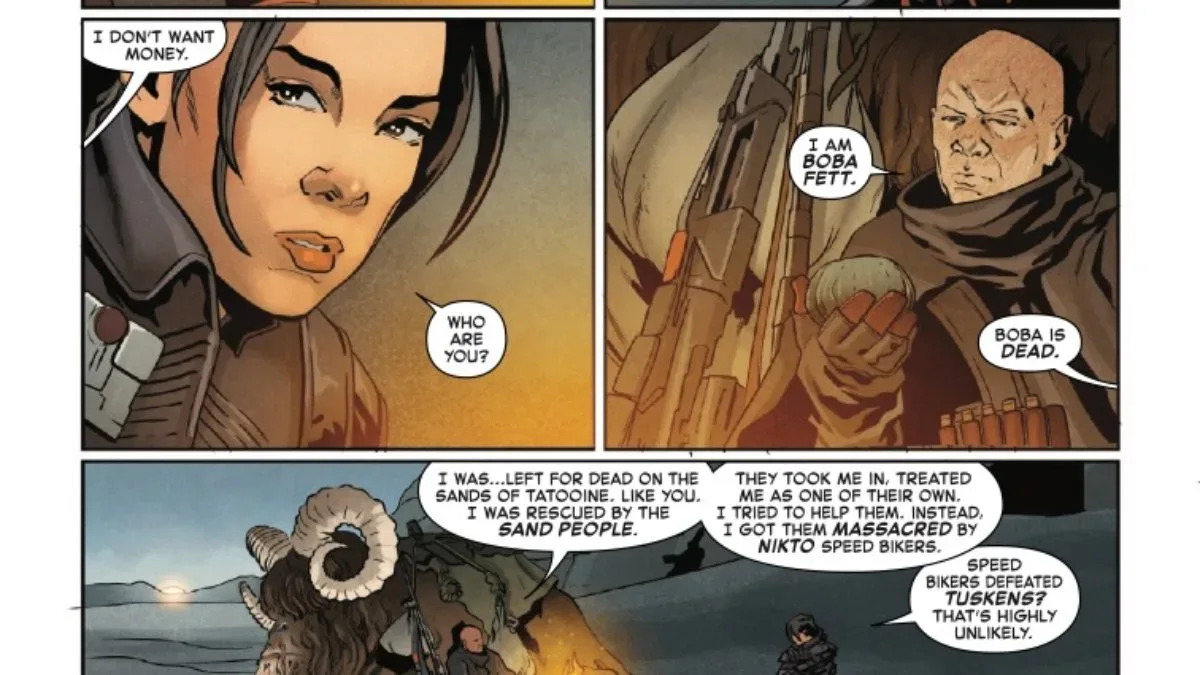
Din Djarin’s relationship with the Darksaber is set to take center stage in Star Wars: The Book of Boba Fett #5, a Marvel Comics issue scheduled for sale on November 11, 2026. The 40-page, Rated T comic is written by Rodney Barnes, illustrated by Will Sliney, and has a cover by Rickie Yagawa.
The issue’s central conflict is unusually direct: Din must learn to master the Darksaber while facing possible banishment from the Armorer. The premise also sends him to Tatooine to repair his ship and puts an offer from Boba Fett and Fennec Shand on the table. That combination makes the issue about more than a weapon lesson. It brings personal discipline, belonging, work and mobility into the same stretch of Din’s story.
The Darksaber problem is bigger than combat
The Darksaber is not simply another piece of gear for Din to carry. In the setup for this issue, his inability to master it is explicitly tied to a threat of banishment from the Armorer. That raises the stakes beyond whether he can use the blade effectively in a fight. The question becomes whether he can remain connected to the Mandalorian identity and community represented by the Armorer’s judgment.
“Mastery” in this context should not be reduced to sword technique alone. In fiction, a character’s difficulty with a signature weapon often functions as a visible expression of an internal conflict. The issue description does not explain precisely why Din is struggling or what form the Armorer’s standard takes, so readers should not assume a particular training method or final outcome. But the conflict clearly places Din under a kind of cultural and personal pressure: the blade has to be handled, and its meaning has to be reckoned with.
For more context, explore DJ Akademiks Floats an Independent Hip-Hop Awards Show With Adam22, Trap Lore Ross and Other Final Verdict Panelists.
That is a promising framework for Din because his appeal has long rested on restraint and resolve rather than showiness. A character accustomed to surviving through preparation can be especially compelling when presented with a task that cannot be solved through equipment alone. The comic’s premise positions the Darksaber as an obstacle that demands adjustment, not merely an upgrade that makes its owner more powerful.
The Armorer’s judgment gives the story its tension
The prospect of banishment means the Armorer is not just a supporting presence in #5. Her judgment is the pressure bearing down on Din’s training. The available solicitation language does not establish that she has already exiled him, only that he is facing that possibility. That distinction matters: the issue is framed around a looming consequence, leaving room for the story to focus on the test itself rather than treating the outcome as settled.
For readers following the comic as an adaptation connected to the Disney+ storyline, this is a key dramatic beat. Din’s predicament is not a generic mission briefing or bounty-hunting assignment. It centers on a conflict in which his place among his people is in doubt. The stakes are intimate even as the setting remains expansive.
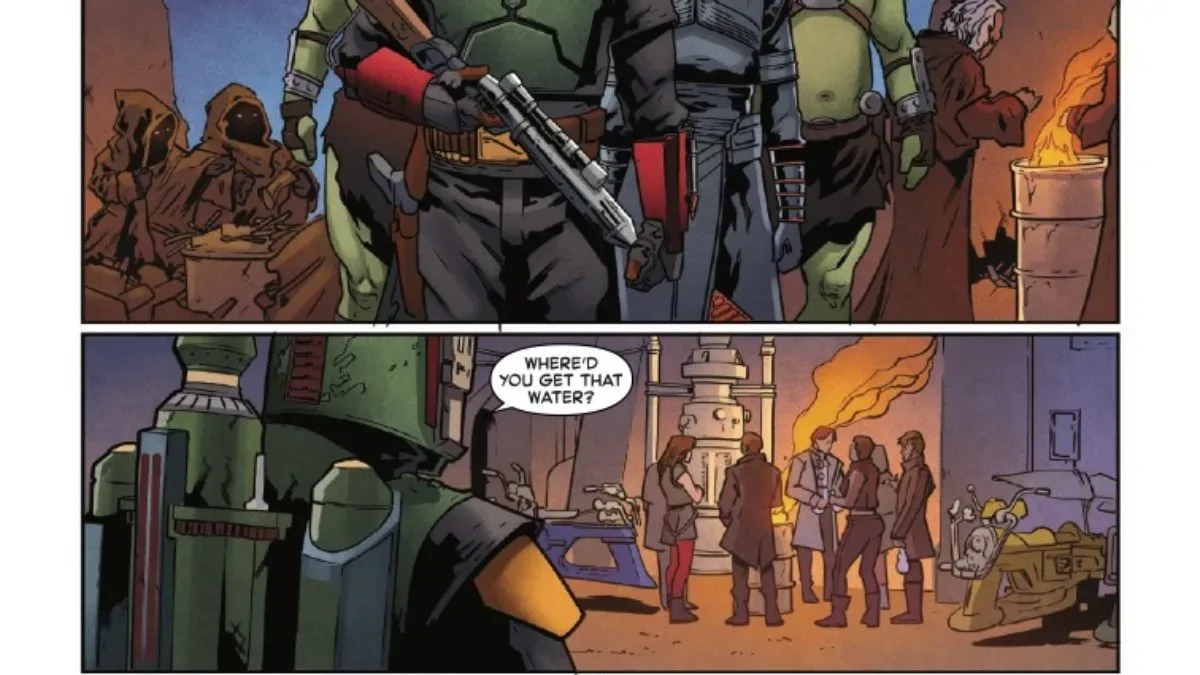
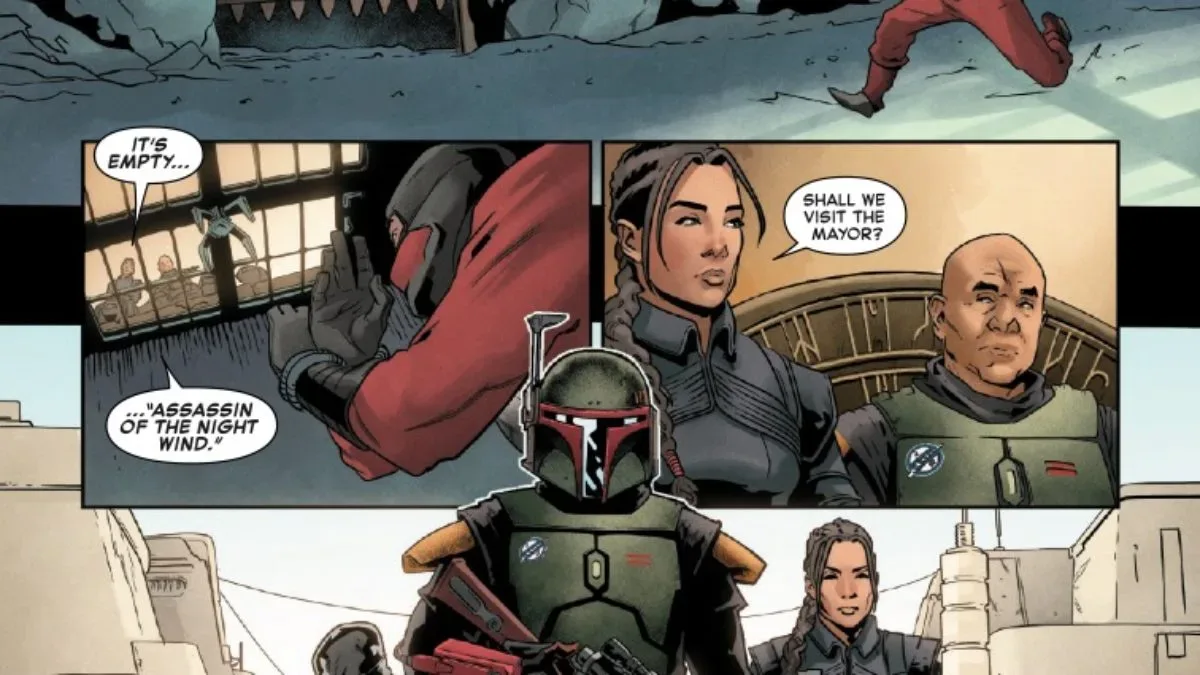
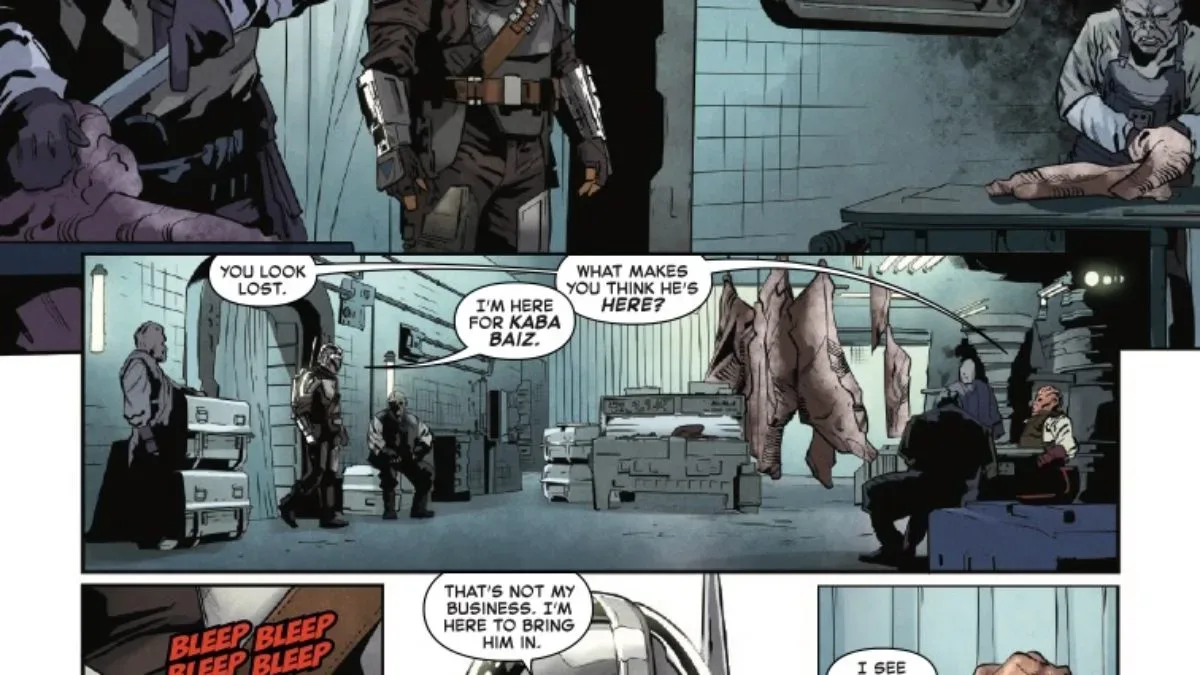
The Darksaber also offers artist Will Sliney a clear visual focal point. A comic can linger on posture, hesitation and motion in ways a prose synopsis cannot. Whether a page emphasizes the blade’s unwieldiness, Din’s effort to control it, or the Armorer’s assessment, the object gives the issue a strong visual throughline. That is analysis based on the premise rather than a claim about specific pages; no interior-page details have been provided.
Tatooine repairs add a practical complication
Alongside the Darksaber storyline, Din travels to Tatooine to repair his ship. That detail is small but consequential. A damaged ship limits a traveler’s choices, and repairs turn a galaxy-spanning protagonist’s problem into a grounded logistical task. Din cannot simply move on from the larger situation if his transportation needs attention.
Tatooine also creates a natural meeting point for the issue’s other major development: an offer from Boba Fett and Fennec Shand. The solicitation does not state what the offer involves, whether Din accepts it, or how it intersects with his struggle over the Darksaber. It is best viewed as an open narrative hook rather than a confirmed new arrangement.
Still, the timing is notable. Din is navigating uncertainty around his Mandalorian standing while an alternative opportunity arrives through Boba Fett and Fennec Shand. The issue therefore appears poised to contrast obligation with choice. One thread concerns what Din may lose; another concerns what he may be able to do next. Readers should expect those pressures to share the page even if their eventual connection remains undisclosed.
What the issue is and what collectors should know
Star Wars: The Book of Boba Fett #5 carries a US cover price of $5.99 and a Canadian price of $7.50. Marvel lists the standard issue under UPC 75960620601800511. Two variant editions are also listed: a Dave Wachter 1:25 variant, UPC 75960620601800516, and a Luke Ross variant, UPC 75960620601800521. Both variants are listed at $5.99 US and $7.50 CAN.
For comic buyers, “1:25 variant” is a retailer-incentive designation. It generally means a retailer’s access to that edition is tied to ordering a specified quantity of the standard-cover comic—in this case, 25 copies for one incentive copy. It does not by itself establish a resale value, print total or future scarcity; it describes the ordering arrangement. Anyone specifically seeking the Wachter cover should check with a local shop about its ordering and allocation approach rather than assume every store will have one available.
The Luke Ross variant is listed separately, but the supplied details do not attach a ratio designation to it. Covers can be a meaningful reason to choose one copy over another, especially for readers who display their books, but the core story credits remain Barnes and Sliney across the listed editions.
At 40 pages, #5 has room to advance multiple threads without its premise being limited to a single Darksaber sequence. The issue is rated T, providing a straightforward guide for readers and parents who use publisher age labels when selecting comics.
Why Din’s return matters in this chapter
The hook for #5 is effective because it puts a recognizable hero in a position where reputation and readiness do not automatically solve the problem. Din has the Darksaber, but possessing an important object is not the same thing as mastering its demands. The Armorer’s possible punishment ensures that failure has a cost, while the Tatooine stop and Boba Fett–Fennec Shand offer keep the plot moving outward.
That structure should make the issue accessible on two levels. Readers invested in Mandalorian custom have a direct reason to follow the Armorer and Darksaber conflict. Readers looking for forward momentum have ship repairs, Tatooine and the prospect of a new job or alliance. The solicitation avoids disclosing resolutions, which is appropriate for a preview, but it gives #5 a distinct identity: this is a chapter about Din confronting the weight attached to a weapon he cannot yet fully wield.
Star Wars: The Book of Boba Fett #5 goes on sale November 11, 2026 from Marvel Comics.