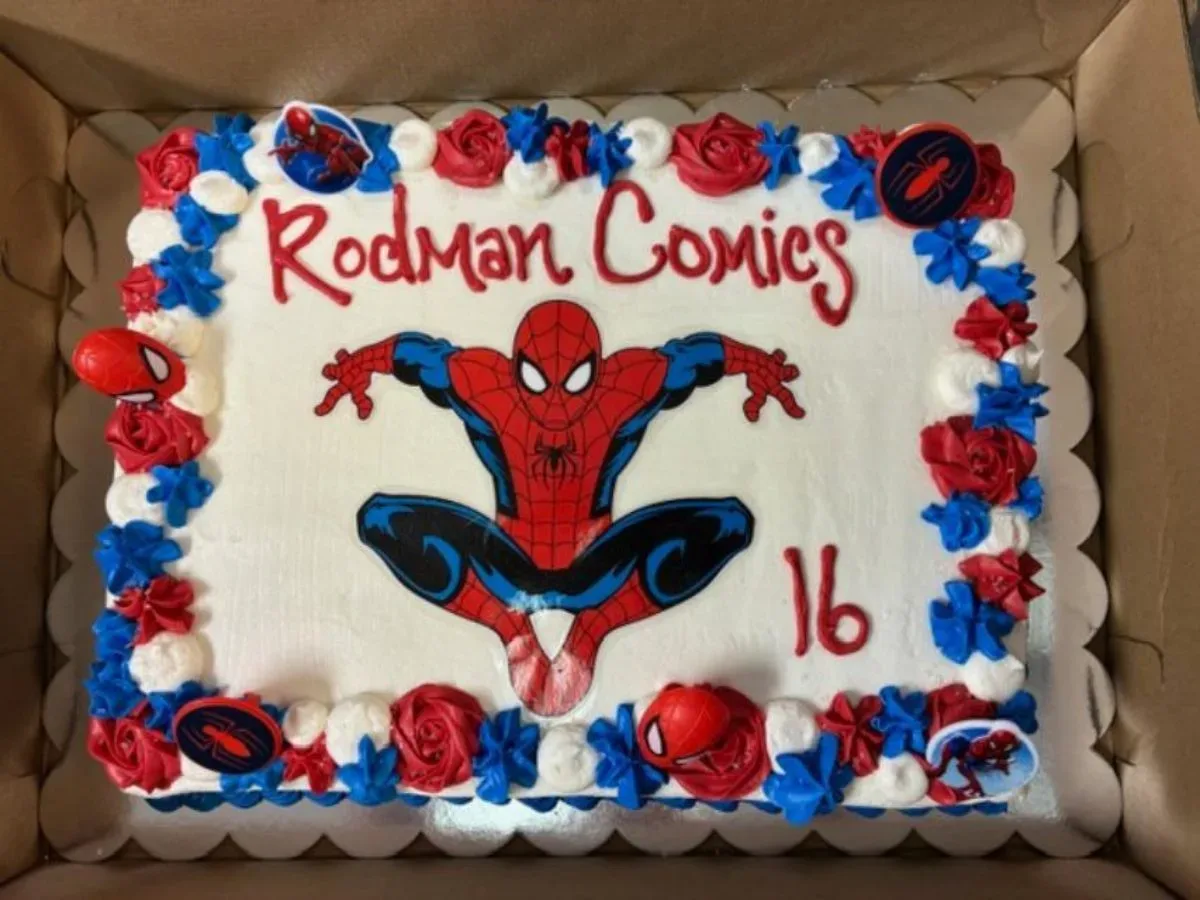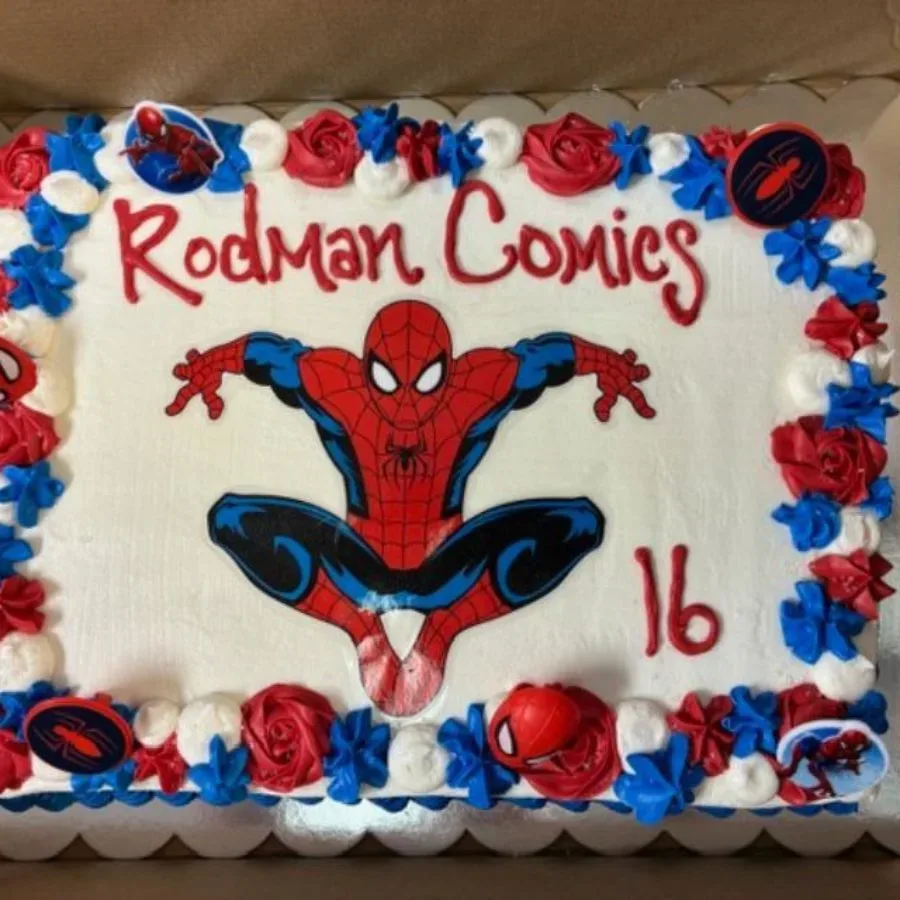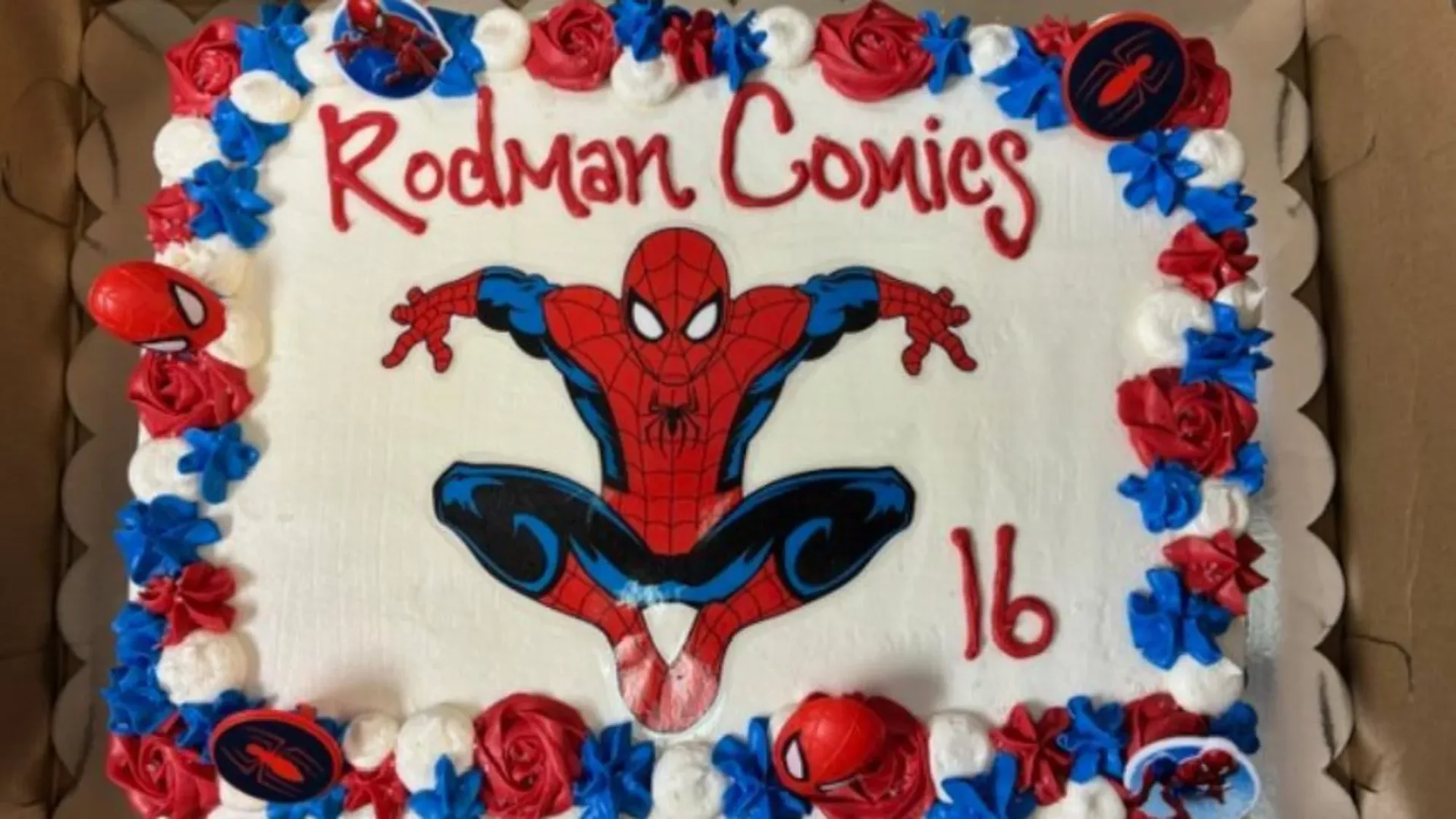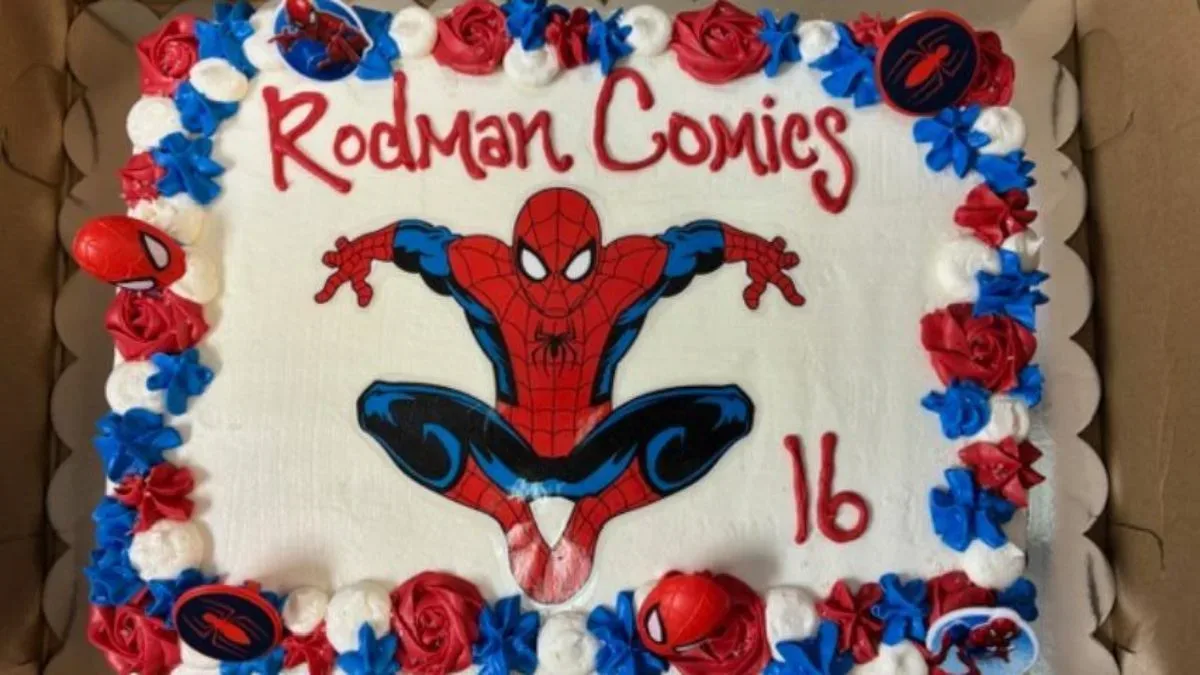
Rodman Comics has reached its 16th year in business, an anniversary that carries equal parts celebration and hard-earned retail realism. The store’s experience this year was shaped by roadwork, lane closures and the ongoing uncertainty that comes with operating a small business when access to the front door is not entirely in its own hands.
The anniversary drew fewer visitors than the previous year, a result the shop owner believes may be tied to the expected construction disruption. Yet the lower turnout did not translate neatly into a weaker day: average spending per customer rose enough to largely offset the change in attendance. It is a compact but useful reminder that a store event is not measured only by the number of people walking through the door. How engaged those visitors are, what they came to find and whether they feel welcomed can matter just as much.
Sixteen years, and the variables keep changing
Road construction is especially difficult for a destination business. A comic shop can have regulars who know exactly where it is, but cones, lane closures and confusing turns still add friction to a visit. That friction is not necessarily dramatic enough to stop every customer. It can simply turn a planned stop into “maybe next week,” which is enough to affect an anniversary gathering.
The situation around Rodman Comics illustrates the point. The road in front of the store has not yet been broken up despite construction activity and closures, and nearby businesses have also closed: a neighboring strip-mall tenant and a fast-food location to the north. The owner has observed people using the shop’s lot before crossing the street to reach another restaurant because southbound drivers cannot directly enter that restaurant’s parking lot.
Those details are not evidence that construction alone caused any one closure. They do show why access and visibility are practical concerns rather than background noise for local retail. A customer who must rethink a turn, park elsewhere or cross a busy road has been asked to do more than make a purchase. For a specialty shop built around repeat visits, every extra obstacle can make familiar habits less reliable.
That reality is why the 16-year milestone is notable. The store has already navigated the beginning of COVID in 2020 and now faces a different kind of disruption. Neither challenge has a simple in-store fix. What a retailer can control is the clarity of its communication, the quality of its events and the reasons it gives people to return.
The anniversary revealed a communication lesson
One of the clearest lessons from this year’s event was promotional rather than logistical. The anniversary details were posted to Facebook and displayed on fliers in the shop. But the owner also departed from a long-standing practice: personally mentioning the anniversary to people who came in.
Afterward, the conclusion was straightforward. Direct conversation remained more effective than relying on posts and signage alone. That does not make social media or fliers useless; both can establish the basic information and give interested customers something to share or revisit. But neither guarantees that a person notices, remembers or acts on an event announcement.
For an independent comic retailer, the distinction matters. Face-to-face communication is not just advertising. It is a chance to answer an immediate question, remind a customer about the date and make the invitation specific rather than abstract. In a business where customers may visit for a particular issue, a favorite character or a weekly routine, a brief personal invitation can turn ordinary foot traffic into participation.
The higher average spend offers a separate, more encouraging signal. It suggests that those who did attend were willing to support the occasion meaningfully. It does not prove why they spent more, and it should not be read as a universal retail formula. Still, it reinforces the value of building events for committed customers instead of treating raw attendance as the only measure of success.
Why the in-store auction format stuck
The most successful evolution described by the shop may be its monthly private auctions. The store previously ran livestream auctions, but a recurring problem emerged: some winning bidders did not pay after outbidding people who would have completed the purchase.
An auction only functions cleanly when a winning bid carries a dependable obligation to pay. When that fails, the consequences spread beyond one missed transaction. The seller may need to relist an item or contact the next bidder, while buyers who were ready to pay can lose confidence that the process is fair. The issue becomes especially frustrating in a collectible category, where interest can be time-sensitive and each item may have a limited pool of buyers.
The current approach is deliberately smaller and more controlled. The private events happen in person, with participants selected by the store, and winners pay before they leave. That removes the unpaid-winning-bidder problem at the point where it matters most. It also eliminates fees associated with the former format, while shifting the event from a remote transaction into a social gathering.
The practical benefit is accountability; the community benefit is atmosphere. Attendees laugh, socialize and, in some cases, travel hours to take part. A store auction in this model is not merely a sale channel. It is an event with a clear set of expectations: bid, pay and enjoy the room with people who came for the same reason.
That is a meaningful distinction for comic shops and other specialty retailers. Online selling can extend reach, but it can also create distance between the bid and the buyer’s commitment. An in-person event narrows the audience while making the experience more tangible. Rodman Comics’ result suggests that the trade-off can be worthwhile when reliability and repeat participation are more valuable than maximum scale.
What “private” changes in practice
Here, private does not mean secret. It means the shop has more control over who takes part than it did in an open livestream setting. That control is important because the goal is not just to produce a high bid; it is to produce a completed sale in a setting customers enjoy returning to.
- For bidders: there is greater confidence that the room is populated by people prepared to follow through.
- For the shop: payment is resolved before the item leaves, rather than becoming a later chase.
- For the event: the social element can become part of the appeal, not a distraction from the sale.
None of that removes the need to curate interesting lots or communicate the rules clearly. It does show why an event format can improve by becoming less broad and more intentional.
Experimentation without the ego tax
The store’s broader operating philosophy is refreshingly plain: not every attempt works, and that is survivable if the lesson is kept. The owner describes some of those lessons as expensive, but has avoided letting embarrassment prevent a useful change.
That mindset is visible in the enduring name of the store’s sales, “Rod Deals.” The name was initially considered too corny, but it stayed, and the sales still use it years later. A retail promotion needs to be understandable and memorable; it does not need to win a boardroom naming contest. If customers recognize it and respond to it, that is the relevant test.
The cake-and-cupcake decision from the previous anniversary offered another, smaller example. Inviting customers to vote on flavors seemed simple, but became a distraction. This year’s flavors were chosen in advance, making the process easier. The lesson is not that customer input has no value. It is that participation works best when the question is proportionate to the decision. A store can welcome feedback on matters that truly benefit from it without turning every operational choice into a poll.
That balance may be particularly useful in collector communities, where enthusiasm is a major strength but preferences are naturally varied. A retailer can make people feel heard while still maintaining a coherent plan and avoiding unnecessary decision paralysis.
What comes next for the shop and its comic shelves
Rodman Comics is looking toward the eventual end of the road project, the challenges of another year, and a larger celebration when the 20th anniversary arrives. The shop owner is also watching Marvel under new leadership and hopes that direction improves. There is interest, too, in whether Marvel’s Midnight titles can maintain the strong start they have had into next year.
Those are open questions, not settled forecasts. The future of a comic line is difficult to call, and no individual shop can control publisher strategy or construction schedules. What Rodman Comics can point to after 16 years is a workable response to uncertainty: keep learning, be willing to revise a process, communicate directly and build events around customers who show up for one another.
That same long-view culture is part of what keeps comics and related fandoms connected across formats. Readers following other serialized worlds, for instance, can find updates such as the current status of Vinland Saga Season 3, while local shops continue to provide the in-person ritual that feeds discovery and conversation.
The immediate picture at Rodman Comics is not a polished success story with every variable solved. Attendance was down year over year, roadwork remains disruptive, and nearby closures are a sober sight. But the anniversary also brought stronger spending per visitor and highlighted an auction program that has become both reliable and enjoyable. Sixteen years in, the store’s most durable asset may be its willingness to keep changing the parts it can control.