Vinland Saga season 3 is not currently in progress. Makoto Yukimura, the creator of the historical manga, delivered that sobering update while replying to a fan asking for news of a third anime season. His wording matters: this is not a formal declaration that the anime will never return, but it does mean there is no active continuation project to point to at present.
For viewers waiting to continue Thorfinn’s story in animation, the immediate practical takeaway is simple: there is no announced production, release window, trailer, staff reveal, or other evidence that a third season is moving through the usual public stages of anime development. The manga itself concluded in mid-2025 after a 20-year run, so the complete source story exists. What is uncertain is whether, when, and by whom the remaining material will be adapted.
What Yukimura actually confirmed
Asked whether there was any good news concerning season 3, Yukimura apologized and said that he had no good news, adding that the project was not currently in progress. That is the clearest available status update, and it should discourage fans from treating wishful social-media posts, speculative release calendars, or recycled rumors as confirmation.
“Not currently in progress” is narrower than “cancelled.” In entertainment reporting, those phrases describe very different states. A cancellation indicates that a previously developing or planned project has been ended. A project that is not in progress may simply have no green light, no committed production schedule, or no team assigned to it yet. The first rules something out; the second leaves the door open while offering no timetable.
That distinction will not make the wait easier for anime-only viewers, but it is important. The information available supports caution, not certainty about the franchise’s long-term animated future.
A finished manga does not automatically mean a finished anime
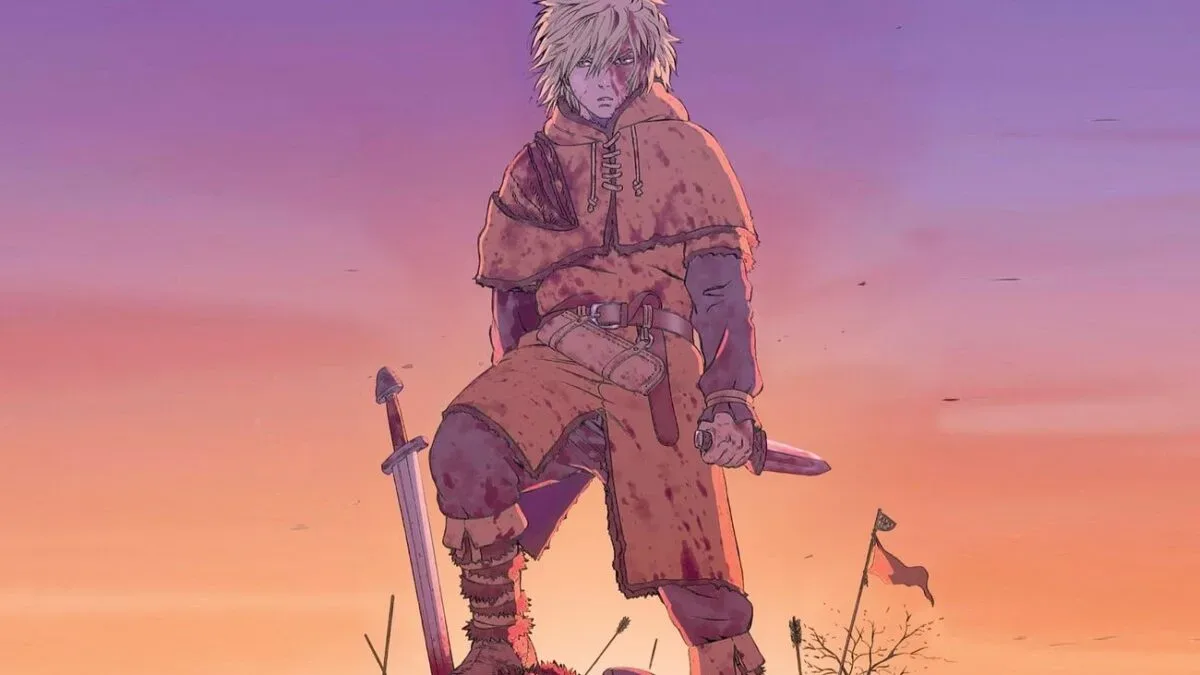
Yukimura’s manga ending in 2025 gives readers a complete version of Thorfinn’s journey. It does not, by itself, trigger an anime sequel. Animation is a separate production undertaking that requires a decision to proceed and the resources to carry it out. A finished source work can be an advantage because later seasons have a complete narrative destination, but it does not settle the commercial and scheduling questions behind an adaptation.
That gap is especially relevant here. More than three years have passed since the second season reached screens, and the creator’s update says no season 3 project is presently underway. Fans therefore should not interpret the completion of the manga as evidence that an anime conclusion has already been secured behind the scenes.
There is also a difference between being optioned and being produced. In broad terms, an option is an arrangement that can reserve or authorize adaptation rights for a prospective project. It is not the same thing as an active production with animators, a release date, and finished episodes. No public detail in this update establishes that a third season has reached either stage, so firm claims about its production status beyond Yukimura’s statement would go beyond the evidence.
Why studio scheduling is part of the conversation
The discussion arrives while MAPPA has a crowded slate. Chainsaw Man: Assassins Arc and the fourth season of Jujutsu Kaisen are in the works, while Beat & Motion, Oblivion Battery, and Fall In Love, You False Angels are scheduled for 2027. That workload does not prove why Vinland Saga season 3 is not in progress, nor does it prove the series cannot return. It does, however, illustrate why a desired continuation cannot be assumed to be immediately available.
Production capacity is often discussed as though it were a simple question of whether a studio is “busy.” In reality, viewers should avoid turning a studio’s announced projects into a definitive explanation for an unannounced one. Public schedules do not reveal every financial, creative, staffing, licensing, or committee-level decision. The responsible reading is more limited: MAPPA’s known commitments provide context for the absence of an immediate follow-up, but not a confirmed reason.
For comparison, long gaps and shifting production realities are not unique to anime continuations. The game side of the site has also covered a follow-up whose scope expanded considerably: Katana Zero’s DLC has grown to sequel-size. The situations are not identical, but both are reminders that audiences can see the finished original work while still having no reliable calendar for the next screen-bound chapter.
Popularity is encouraging, not a guarantee
There is one useful counterweight to the bleakness of the update. The second season ranked as the third most-watched anime on Netflix from January through June 2023. That is a meaningful indication that the show reached a substantial streaming audience during that period.
Still, it should not be converted into a promise of season 3. Streaming viewership is one data point, and the available information does not provide exact second-season Blu-ray sales figures. Nor does it establish the internal thresholds used to decide whether another installment gets funded. Claims that poor disc sales definitively stopped a continuation are speculation, not a conclusion supported by the information at hand.
The same restraint applies to optimistic predictions. A large Netflix audience may strengthen the case fans would make for another season, especially for a completed manga with more story available to adapt. But viewers do not have a confirmed production decision, and the creator’s direct update remains the most important piece of news.
What anime-only fans can responsibly expect
At the moment, the sensible expectation is uncertainty rather than a release-year countdown. There is no basis for treating a date as locked in. Any estimate that places season 3 in a particular year is, at best, outside analysis rather than a formal schedule.
Fans who want to keep an eye on the situation should look for concrete signals instead of reacting to every rumor:
- An official project announcement: confirmation that a new season or other animated continuation exists.
- A named format: whether the next installment is described as a television season, film, special, or something else.
- Production details: a studio, staff, cast information, or a verified promotional visual can indicate that planning has advanced.
- A release window: a season and year, or a more precise date, is more meaningful than unsourced calendar listings.
Until such information appears, the accurate status is unglamorous but clear: the Vinland Saga manga has reached its ending, while its potential animated continuation has not begun active work. That is disappointing news for viewers who have waited years after season 2, yet it is not the same as a permanent goodbye.
For now, Yukimura’s response provides clarity where speculation had filled the gap. There is no season 3 project currently in progress. If that changes, it will require a new, concrete announcement—not just the understandable hope of fans eager to see Thorfinn’s journey continue on screen.