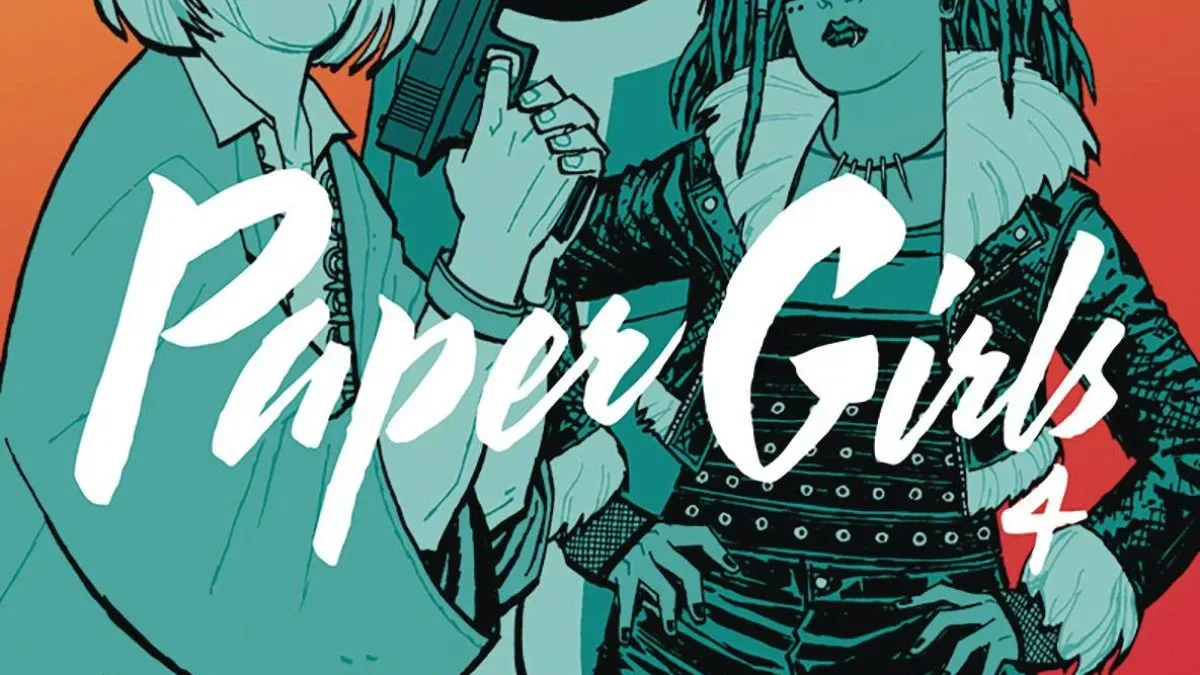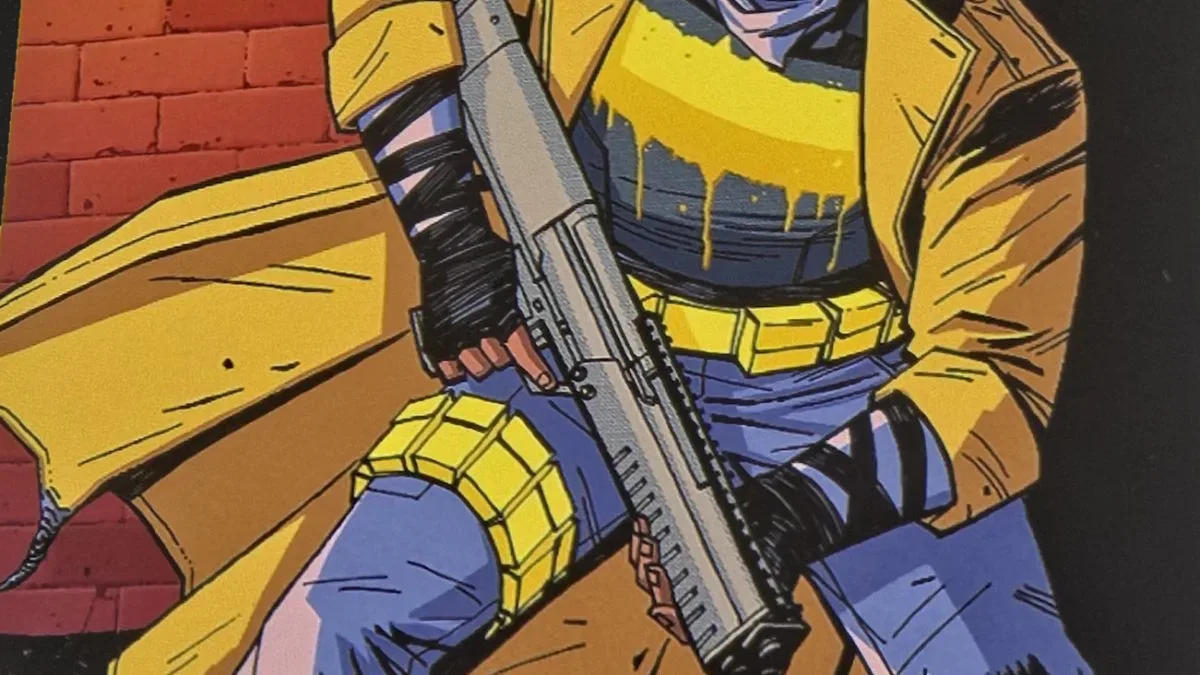
Brian K. Vaughan and Cliff Chiang are returning to the same creative table for Roam, a new ongoing series from Image Comics. The book reunites the pair behind Paper Girls more than a decade after that collaboration began, with Matt Wilson on colors and Jared Fletcher on lettering.
Roam #1 is scheduled to reach comic shops in February 2027. Its debut will be a 50-page issue, and the central premise is immediately high-concept: in its future setting, everyone can become a superhero, but only during their youth.
That idea puts the series’ emphasis somewhere more specific than a conventional story about gaining powers. Roam is framed around the hazards and possibilities of entering adulthood, as well as the search for the people who become one’s team. The premise leaves major story particulars under wraps, but it establishes a potentially sharp question at the center of the book: what does adulthood mean in a world where an extraordinary ability is both universal and temporary?
A reunion with a full four-person creative team
Vaughan and Chiang are the headline names, but Roam is not presented as a two-person production. Wilson and Fletcher complete the announced team, and their contributions are fundamental to how readers will experience the new world.
In comics, the writer typically shapes the script, dialogue, pacing and story structure, while the artist converts that plan into characters, environments, action and page-to-page visual storytelling. A colorist does far more than fill in surfaces: color can establish time of day, distinguish locations, guide the reader’s eye through a page and control the emotional temperature of a scene. A letterer handles dialogue balloons, captions, sound effects and other text elements, making the reading order clear while giving a book’s spoken and environmental sounds their own visual identity.
That division of labor matters especially for a series built around an unfamiliar future. The reader has to understand the rules of its world without being buried beneath explanation. Clothing, architecture, the treatment of powers, the shape of a sound effect, a change in palette or the placement of a caption can all communicate that a setting operates differently from the present. The announced personnel suggest Roam is being approached as a deliberately assembled visual production rather than simply a script paired with drawings.
Chiang has already drawn the first several issues, a useful detail for a new ongoing title. An ongoing series is designed to continue beyond a pre-announced ending, unlike a limited series that has a fixed number of issues from the start. Having multiple issues illustrated before the first arrives gives the creative side of a launch an initial runway. It does not establish a release schedule, total length or any long-term publishing commitment beyond the ongoing designation, but it does indicate that the project has advanced beyond an early-concept announcement.
The premise makes youth a superpower—and a deadline
The crucial phrase in Roam’s setup is not merely that everybody gets powers. It is that those powers belong to people only while they are young. That rule turns age into a built-in limit, and limits are often what give a speculative premise dramatic force.
If an ability can be lost as adulthood arrives, power is no longer solely about who is strongest or most willing to use it. It may also be about who is running out of time. The concept can accommodate action, but it also naturally points toward questions of identity, belonging, responsibility and change. The book’s description explicitly connects its adventure to new adulthood and finding a team, making the emotional transition as important as the superhero element.
There is a distinction worth keeping clear here. The available description does not explain how people become superheroes, what counts as being “young,” whether every person has identical access to powers, or what happens to a hero’s abilities at the threshold into adulthood. Those unanswered details are not gaps to be filled with assumptions; they are part of what the first issue will need to establish. At present, the confirmed foundation is a future in which temporary youth-linked superheroism is widespread.
That restraint is also why the word “everyone” is so consequential. Many superhero stories begin with rarity: a gifted person stands apart from ordinary society. Roam instead starts from the proposition that extraordinary capability is broadly available for a period of life. The tension, then, may not simply be who has power. It may be how a society changes when power is expected, shared and eventually taken away.
There is room in that framework for a story about a group, but readers should not mistake the stated “quest” to find a team for a confirmed roster of characters, mission structure or specific threat. “Team” can carry several meanings in superhero fiction: a formal unit, a circle of friends, a chosen family or a group of people who learn to rely on one another. The announcement identifies the idea as central without locking it into one interpretation.
Why the 50-page opening matters
The first issue’s 50-page length is a concrete part of the launch. A longer opening gives a new series more space than a standard single-issue introduction might provide, particularly when it must introduce a setting, establish characters and create narrative momentum at once.
That does not necessarily mean the debut will function like a complete graphic novel, nor does it reveal its price, format, number of story pages versus supplementary material, or future issue lengths. None of those details have been provided. What can be said is that 50 pages gives Roam #1 more room to lay down the rules of its premise and still deliver the action promised in its description.
For a book with an invented social rule at its heart, space is valuable. Comics must balance worldbuilding—the process of making a fictional setting understandable—with forward motion. An opening can explain too little and leave readers disconnected, or explain too much and stall the story. A larger first installment potentially gives Vaughan, Chiang, Wilson and Fletcher space to let readers infer parts of the world through scenes rather than relying entirely on direct exposition.
That is not a guarantee of any specific storytelling technique. It is, however, a practical advantage for a premise that has to convey both a fantastical system and the everyday consequences of living within it. If powers are a normal part of youth in this future, the series will need to make that normality feel legible: not merely show a spectacular moment, but establish how characters understand it and how it affects their movement into adulthood.
What readers can reasonably expect—and what remains unknown
The announced cover art is by Chiang, and the creative team has characterized the project as distinct from their previous work together while rooted in their enthusiasm for comics as a medium. That makes it reasonable to expect a book built specifically for the comics page: the interaction of imagery, color, lettering and pacing is part of the work, not an afterthought to the plot.
Still, anticipation should stay anchored to what has actually been confirmed. There is no announced issue count, publication cadence, cover-price information, digital-release plan or detailed character breakdown. There is also no revealed synopsis beyond the future superhero premise, the adulthood focus and the search for a team. Readers interested in the project should treat February 2027 as the known release window for the first issue rather than extrapolating a larger schedule.
The word “ongoing” does carry practical significance. It signals that Roam is intended as a continuing comic series rather than a single event or a finite miniseries. That matters for readers deciding whether to start at issue #1: a debut issue is the point where a new world, its core cast and its larger direction begin to take shape. But an ongoing label does not mean every question will be answered immediately. In fact, the premise is well suited to a gradual reveal, because the boundary between youth and adulthood is positioned as a major source of power and peril.
For comics readers who enjoy creator-led speculative fiction, the main appeal is the convergence of a recognizable creative partnership and a premise that has room for both spectacle and personal stakes. Vaughan’s script, Chiang’s art, Wilson’s colors and Fletcher’s lettering will together determine how the book’s world works on the page. The announcement’s emphasis on collaboration is more than promotional framing: comics are a medium in which each of those disciplines directly affects rhythm, clarity and atmosphere.
How to follow the launch
Roam #1 is due in comic shops in February 2027, and readers can ask their local comic shop about preordering it. With the first issue still ahead, a preorder conversation is also a sensible way to confirm the shop’s own ordering process and timing rather than assuming all stores handle advance orders the same way.
The announcement arrives during a period when comics continue to support very different forms of serialized storytelling, from new print launches to digital anthology projects such as the upcoming Gotham By Daylight Webtoon anthology. Roam, however, has a clear identity of its own: a new ongoing print-comics series built around a future in which a seemingly universal gift comes with an unavoidable expiration date.
For now, that is enough to make the key promise of the title easy to grasp. Its characters may be able to do extraordinary things while young. The harder journey appears to be learning what remains when that stage of life—and the powers attached to it—begins to end.