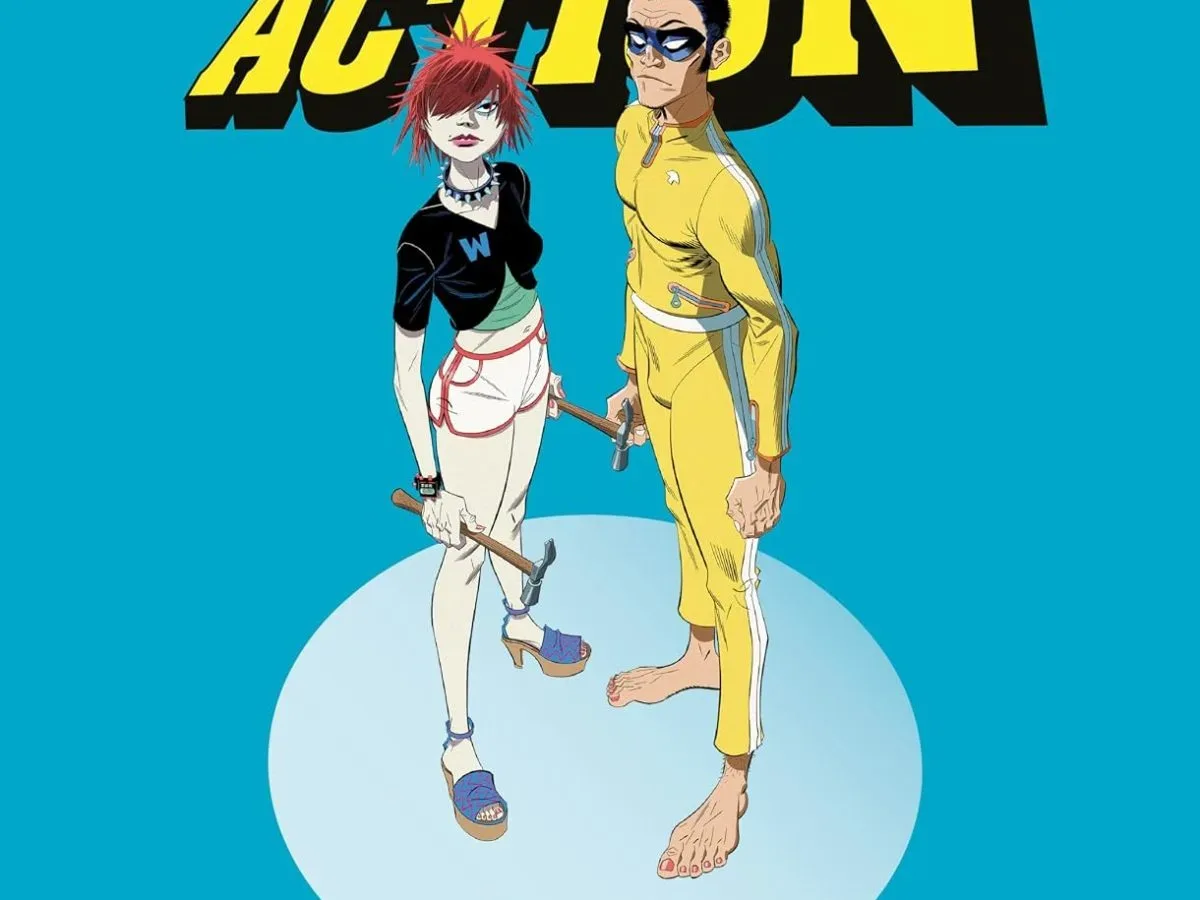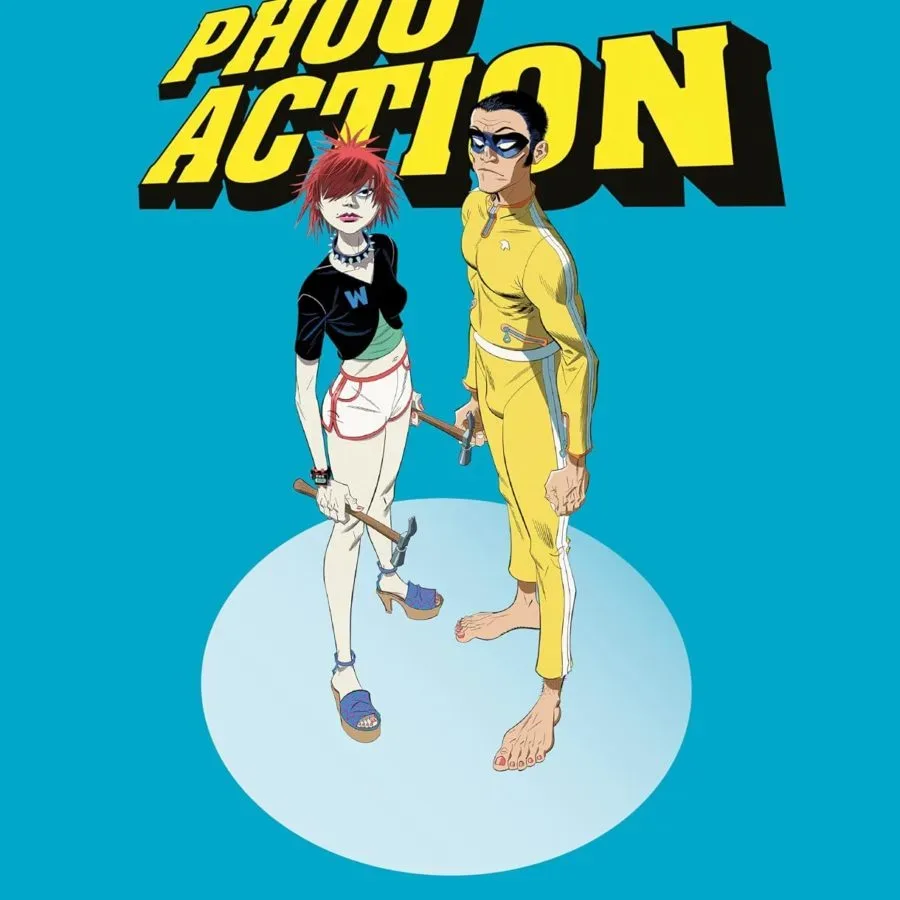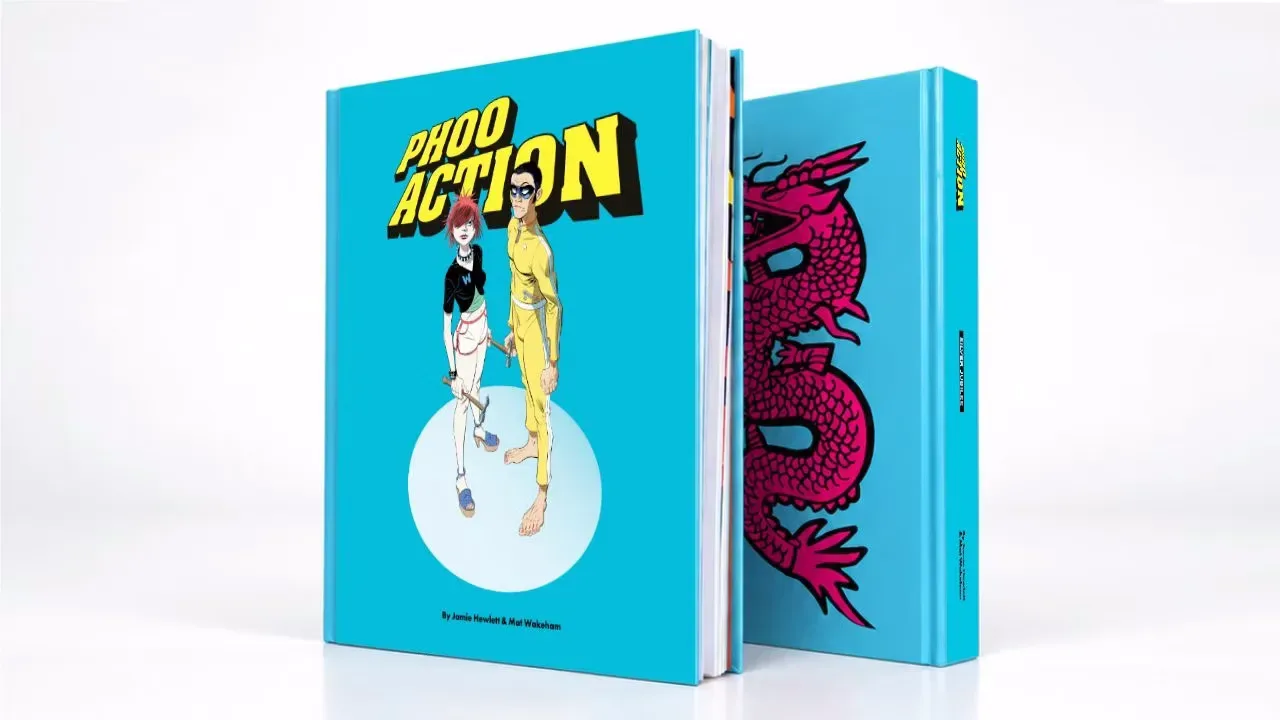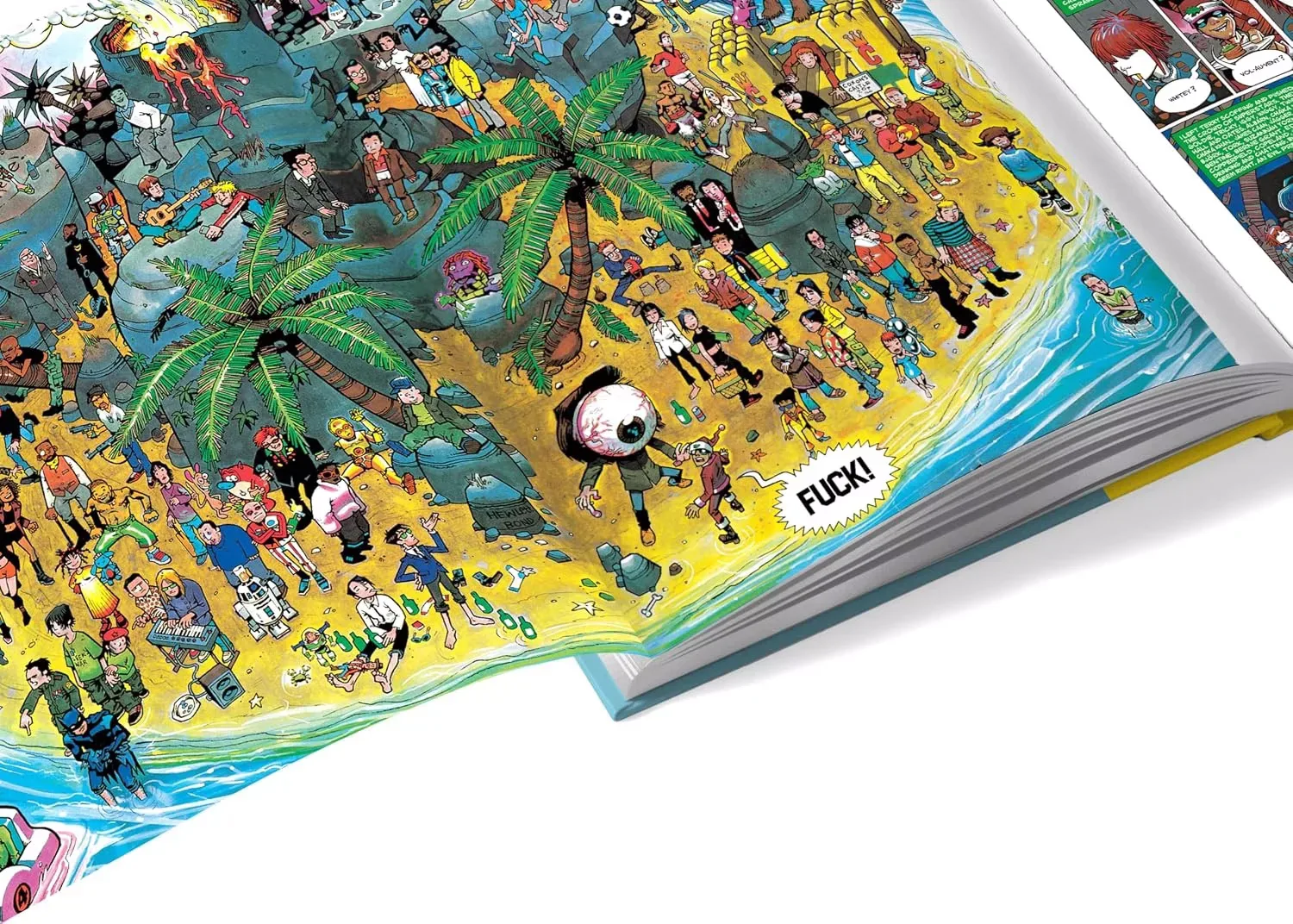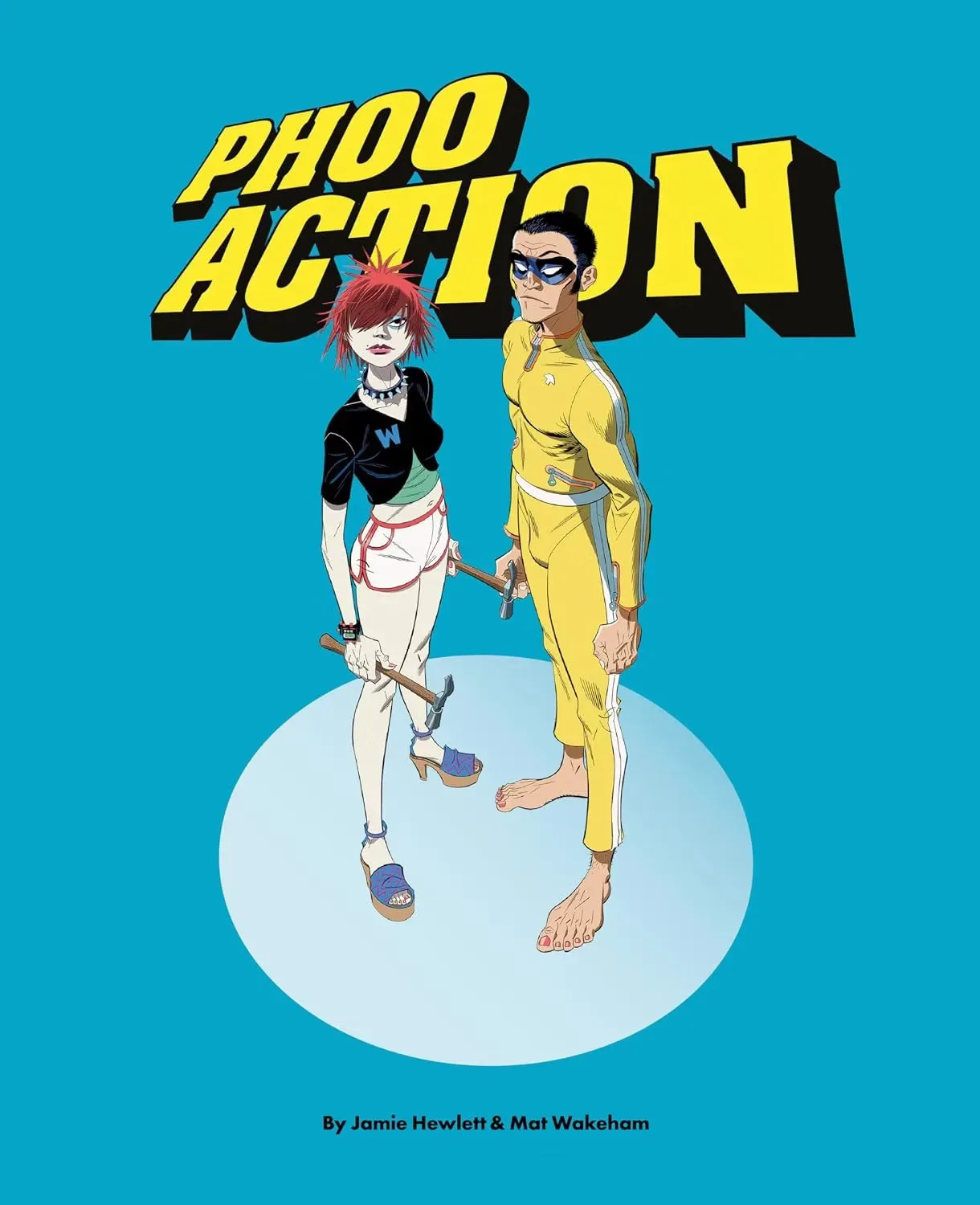
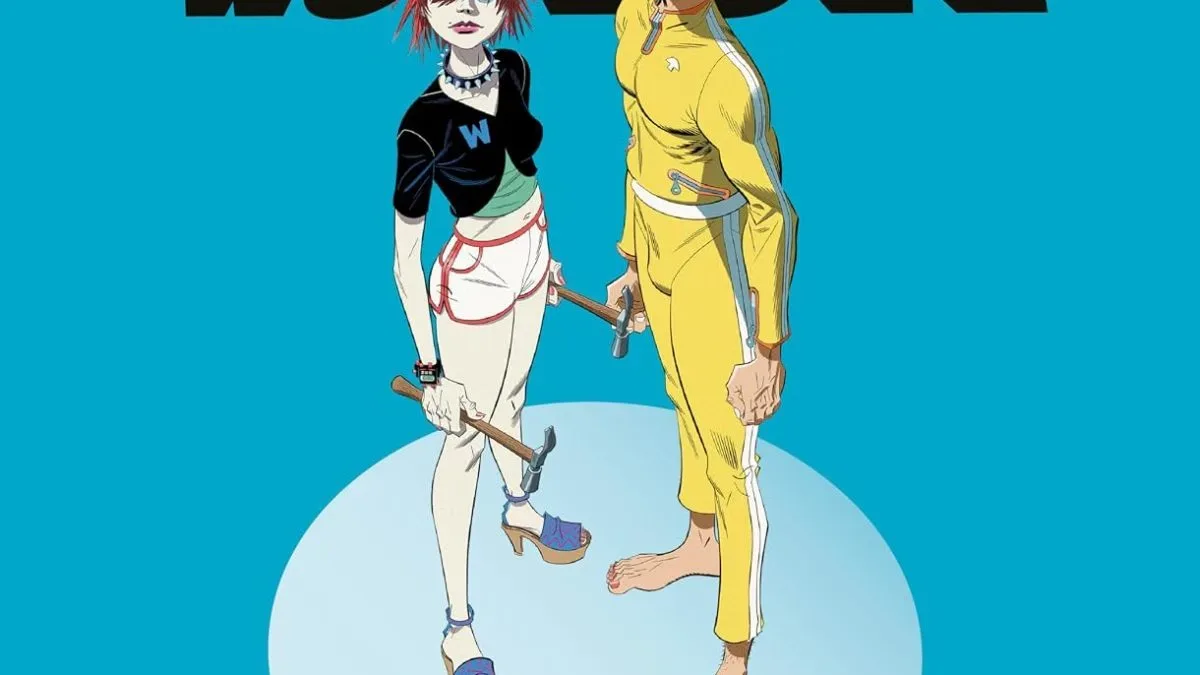
Phoo Action: Silver Jubilee, the substantial retrospective dedicated to Jamie Hewlett and Mat Wakeham’s mutant-filled London comic universe, is now available in a Standard Edition hardback. The new version runs to 463 pages and is positioned as the more attainable counterpart to the earlier deluxe editions, retaining the core comics and archival material while dispensing with high-end collector extras.
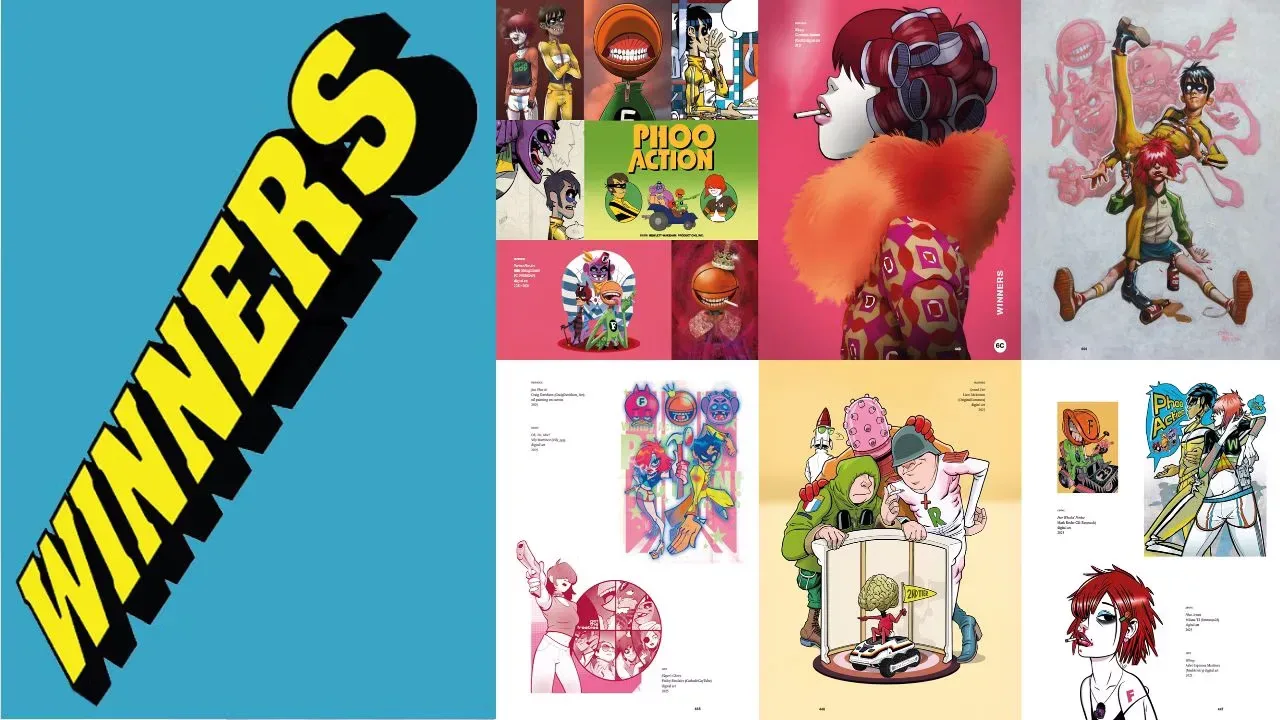
For a property with a notably interrupted publishing history, its arrival matters. Phoo Action began in 1996 as Get the Freebies in The Face, featuring Terry Phoo, Whitey Action, the Freebies and a strange, unruly version of London. The Silver Jubilee collection revisits that work through restored comics, scripts, unseen art and behind-the-scenes material. The Standard Edition also adds two components not simply carried over unchanged from previous versions: a new afterword and a chapter dedicated to the winners of the Phan Art competition.
That makes this more than a stripped-back reprint. It is a reconfigured archive intended to put the work in readers’ hands, rather than exclusively on the shelves of people seeking a premium presentation object.
What the Standard Edition includes
The key number here is 463 pages. This is a large collection, bringing together remastered comic material alongside scripts, artwork and production-facing extras. “Remastered” in this context means the previously published comics have been restored for this collection; it does not indicate a new story or a newly created continuation of the strip.
The edition has a redesigned satin-laminated hardback cover. Satin lamination is a book-cover finish with a softer, lower-gloss appearance than a strongly shiny gloss laminate. It is a practical design detail, but it also signals that this is a distinct physical edition rather than unsold stock placed in a new wrapper.
Its contents are described as including:
- Remastered Phoo Action comics
- Unseen artwork
- Scripts and stories
- Behind-the-scenes material
- An all-new afterword
- A dedicated fan-art chapter featuring Phan Art competition winners
The source material describes the newer edition as retaining the central archival “slab” of the deluxe releases. That is the important practical distinction for readers who missed the first run: the lower-key package is not presented as a severely cut-down sampler. Its purpose is to preserve the reading and reference value of the compilation while changing the luxury physical features around it.
What has changed from the deluxe books
The earlier deluxe and super-deluxe editions leaned into the art-object approach. They included features such as cloth spines, gilded edges, prints, patches and other premium additions. Those kinds of bonuses can be appealing to dedicated physical-media collectors, but they also change what buyers are paying for. A deluxe book is partly a reading copy and partly an elaborate display item.
The Standard Edition removes extras including gatefolds, giclée prints and special bindings. A gatefold is a page or cover panel that folds outward to create a larger image or presentation area. A giclée print is generally a high-quality inkjet art print, often included as a collectible extra rather than as part of the book’s ordinary pages. Neither is necessary to read the comics, but both can contribute substantially to the sense of a limited, premium package.
That trade-off should be clear to potential buyers. Someone who wants every physical flourish from the earlier editions will not get an identical product here. Someone who primarily wants the comics, scripts and development material in a durable hardback has a route in without needing the decorative additions. The supplied product copy lists a price of $49.99, while the Standard Edition is also described as costing roughly half as much as the earlier extravagantly packaged version.
For collectors, this is a useful reminder that “Standard Edition” does not automatically mean “bare bones.” In this case, the contents still sound unusually extensive. The premium is being removed from the presentation, not from the project’s archival ambition.
A long route back to shelves
Phoo Action has had a stop-start existence across publishers. The Standard Edition had been planned for 2025 after the project was dropped by Z2 Comics, but it was delayed by a year. Titan had already released deluxe versions in late 2024, while the more broadly accessible hardback remained unavailable until now.
That background helps explain why a Standard Edition carries weight beyond ordinary format housekeeping. When a smaller cult property moves between publishers or release plans change, a planned book can remain inaccessible for long stretches. A deluxe release can preserve the work in one sense, but it does not necessarily solve the problem for readers who were waiting for the ordinary retail edition. The delayed hardback now fills that gap.
The book’s timing also returns attention to a project that sits at an interesting point in Hewlett’s career: after Tank Girl and before Gorillaz. Wakeham is credited alongside Hewlett as the co-creator, and the collection’s archival focus provides a route into their collaborative process as well as the comic itself.
The story world revolves around Terry Phoo and Whitey Action confronting the Freebies and other mutants in London. The material has also previously crossed into television development: a BBC Three pilot starring Jaime Winstone aired in 2008, though it did not progress to a series. The comic remains the foundation, and the new volume’s value lies in presenting that foundation at scale.
The fan-art chapter is not just an appendix
One of the specific additions to the Standard Edition is its Phan Art chapter. Created with Glowrillazart, the competition invited artists to reinterpret Terry, Whitey, the Freebies and the wider cast. The winning work is included in the book alongside Hewlett’s original material.
Fan art can often be treated as marketing collateral: shared online for a campaign, then quickly buried by the next post. Printing it in a large retrospective gives it a different role. It becomes part of the edition’s record of how the characters have continued to inspire people after their original 1990s publication. It also fits a comic whose history has been fragmented across time, formats and attempted revivals.
There is a reasonable distinction to make here. The fan-art section does not turn these submissions into canonical Phoo Action stories, and it should not be mistaken for new Hewlett and Wakeham narrative material. Instead, it documents audience participation around the property. For fans, that is a meaningful addition; for readers interested only in original strip pages, it is an extra chapter within an already large compilation.
Why this edition may be the practical choice
The appeal of a standard hardback is straightforward: it can be a book that gets opened. Large archival comic editions often create an awkward choice between buying a lavish collector object and settling for a minimal reprint. On the available details, Phoo Action: Silver Jubilee attempts a middle ground: a sizable, durable book with substantial source material, but without features aimed chiefly at scarcity or display.
That approach is especially relevant for readers coming from Hewlett’s other work. Fans who know him principally through Gorillaz, or through the legacy of Tank Girl, may be curious about Phoo Action without wanting the highest-spec edition. The Standard Edition gives them a single-volume introduction to Terry Phoo and Whitey Action’s universe while retaining the scripts and artwork that can explain how the project was built.
It is also another example of comics material returning in a format meant for reading rather than speculation. That broader physical-media question has surfaced around anniversary releases elsewhere, including comic-related celebrations such as BloodRayne’s 25th-anniversary plans. A commemorative edition can be a collectible, certainly, but the most useful edition is often the one that makes the work realistically available.
Phoo Action: Silver Jubilee Standard Edition is available now through bookshops and online retailers. Its 463-page package preserves the core archive, adds a new afterword and fan-art feature, and leaves the luxury trimmings to the earlier editions. For anyone who waited through the delays, that is the release that finally matters.