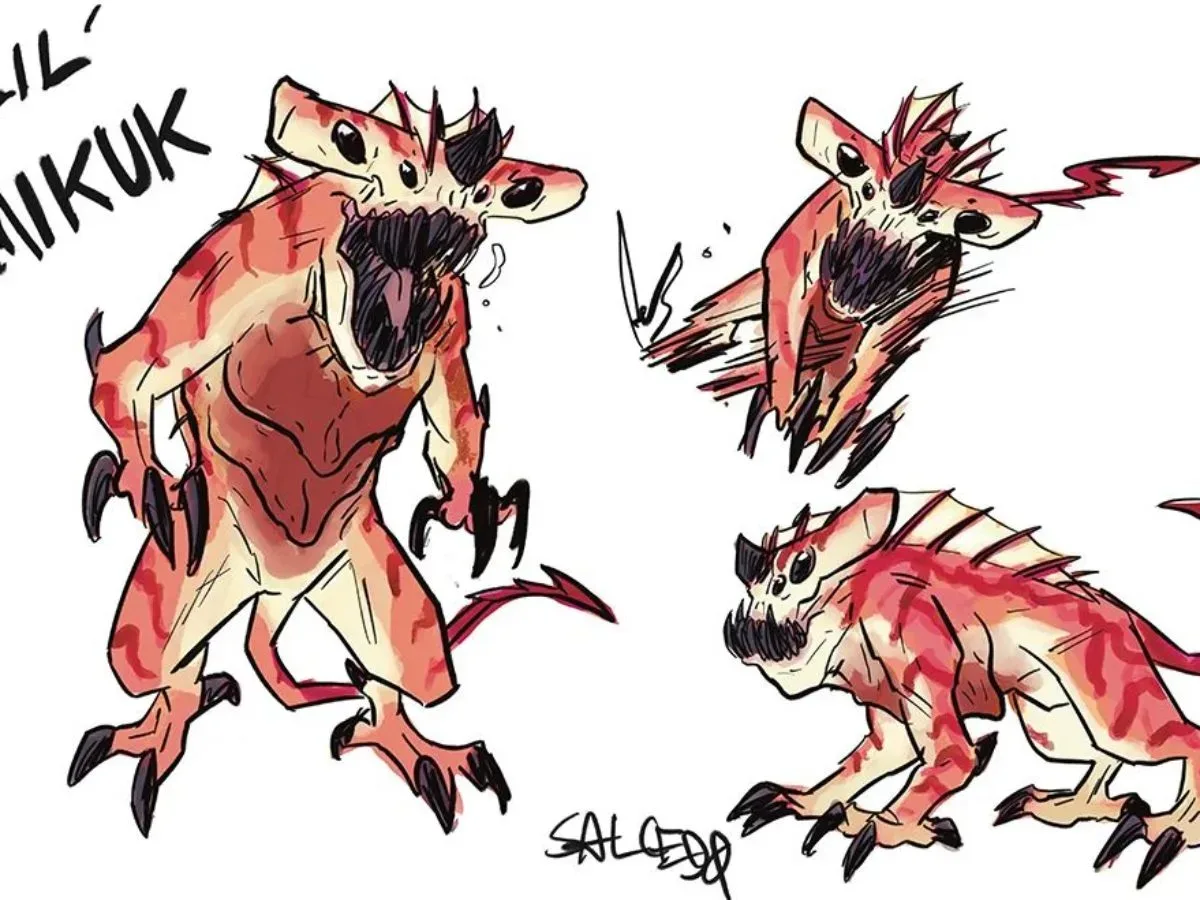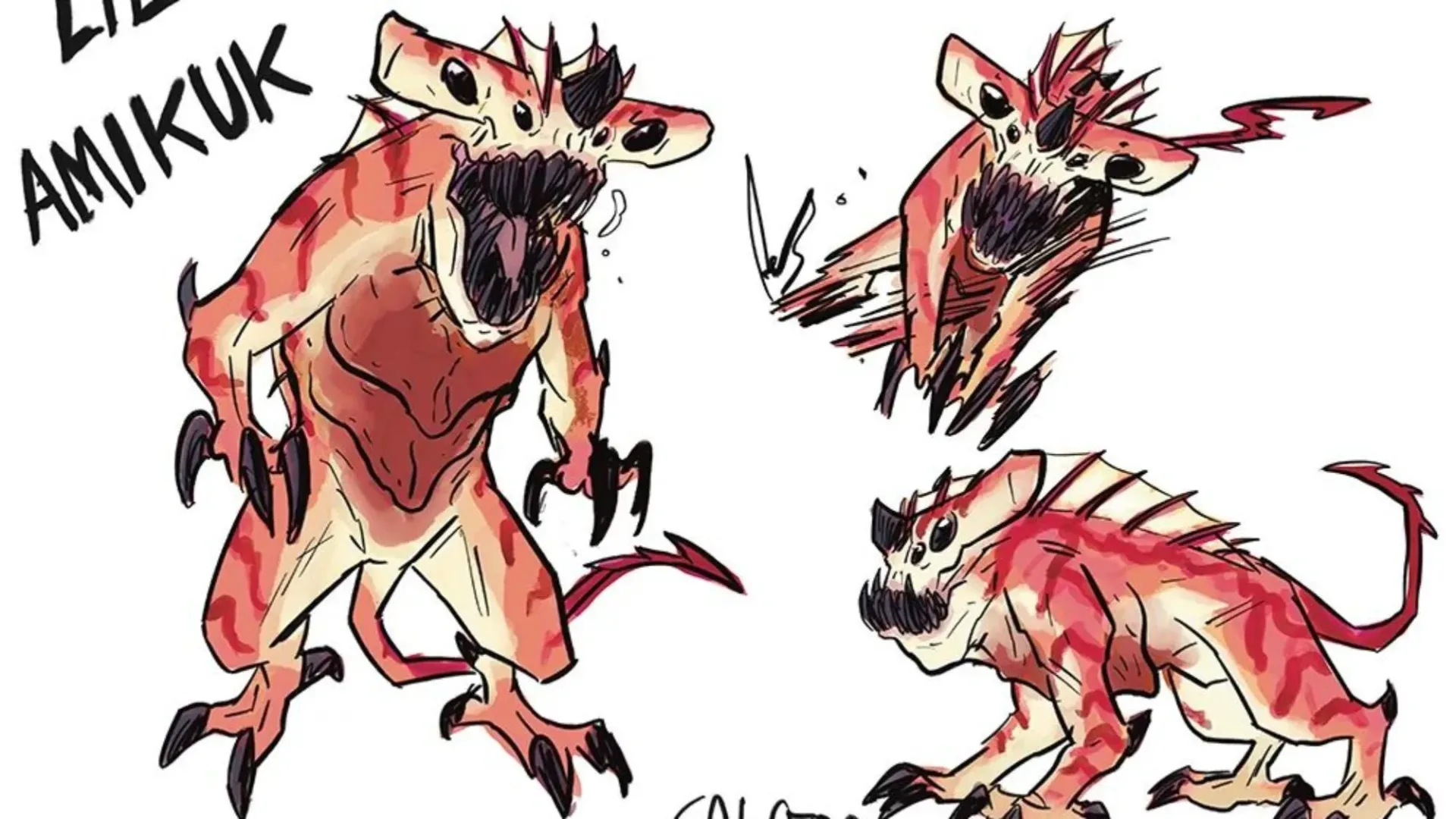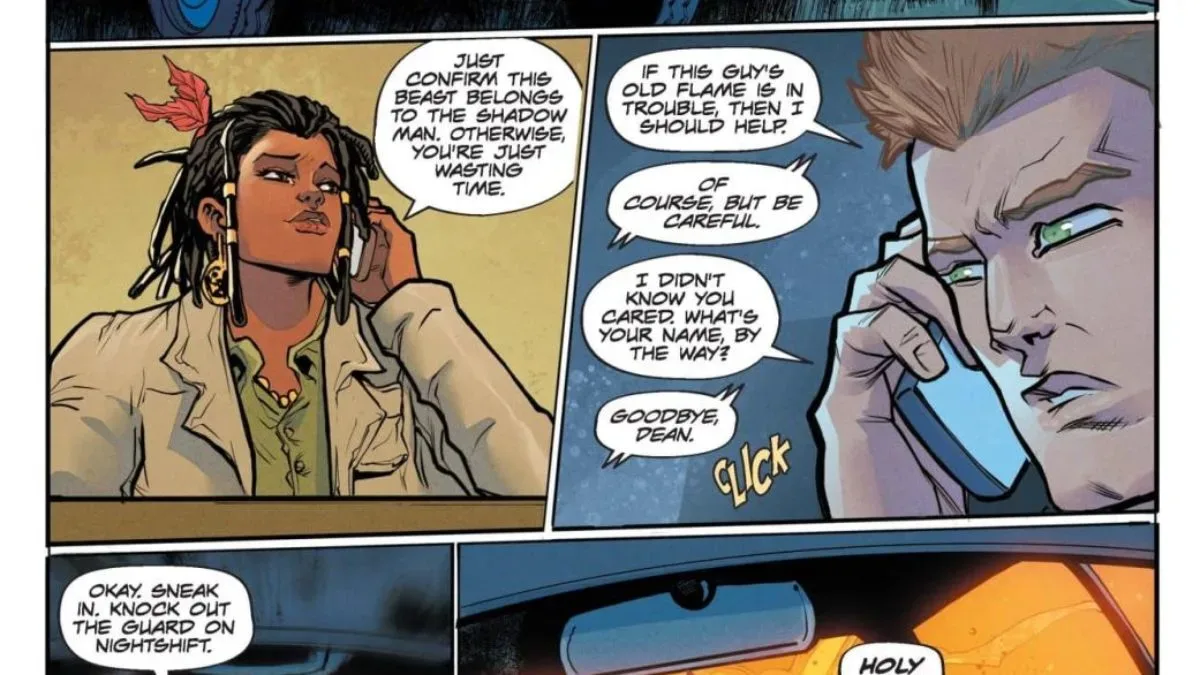
No Gods No Masters #3 is scheduled to reach comic shops on November 11, 2026, and its next chapter comes with a limited reader incentive: find the hidden chibi kaiju in the issue, submit the discovery through the book’s QR-code system, and an early group of successful entrants can receive a Kaiju Card by mail.
The key limitation is speed. The program is set up for the first 150 to 200 responses, rather than for every reader who correctly identifies the hiding place. Hundreds of responses have reportedly arrived on the series’ launch days so far, making the hunt less a casual bonus and more a launch-day race for readers who want the physical card.
How the Kaiju Hunt works
Every issue of the five-part kaiju survival-horror series includes a small, stylized “chibi kaiju” hidden somewhere in its artwork. “Chibi” is a term for a deliberately cute, miniature-looking character design, a sharp visual contrast with the giant-monster danger at the center of the comic’s premise.
Readers who find the creature can use a QR code printed in the back of the issue. The submission asks for an address and for the location of the hidden character. If the response is among the earliest qualifying entries, a Kaiju Card is mailed to that reader.
For more context, explore Apple’s Second-Generation AirTags Are Listed at $80 for Four, With Apple Arcade Trial Eligibility Included.
That structure matters because the card is not described as an item automatically packed with every copy. It is a limited mail-away reward tied to solving an in-comic visual search. Readers interested in participating should therefore do two things after picking up issue #3: inspect the art carefully before moving to the QR code, then make sure their description of the kaiju’s location is clear enough for the submission process.
What readers should and should not assume
- The reward is limited to the first 150 to 200 submissions, so a correct answer alone does not guarantee a card.
- The comic’s QR code is the stated entry route; the supplied information does not describe another method of claiming the promotion.
- The card is a physical collectible sent by mail, not an in-story unlock or a digital bonus.
- Issues #1 and #2 sold out quickly, but a sellout does not itself establish the availability of later printings or copies of issue #3.
The program also gives the issue a second layer of engagement. The main story can be read at a normal pace, while the hunt encourages readers to revisit panels with a different purpose: looking at backgrounds, crowds, signs, rubble, and other visual spaces where a tiny character could plausibly be placed. That is distinct from a puzzle with a story answer. Here, the task is visual observation.
What happens in No Gods No Masters #3
Written by Julio Anta and illustrated by Jacoby Salcedo, No Gods No Masters is a five-issue series set amid a kaiju disaster in New York City. The third issue follows Felipe, Malik, and Jeannie as they head underground into the subway at 14th Street Station in an effort to reach Felipe’s mother.
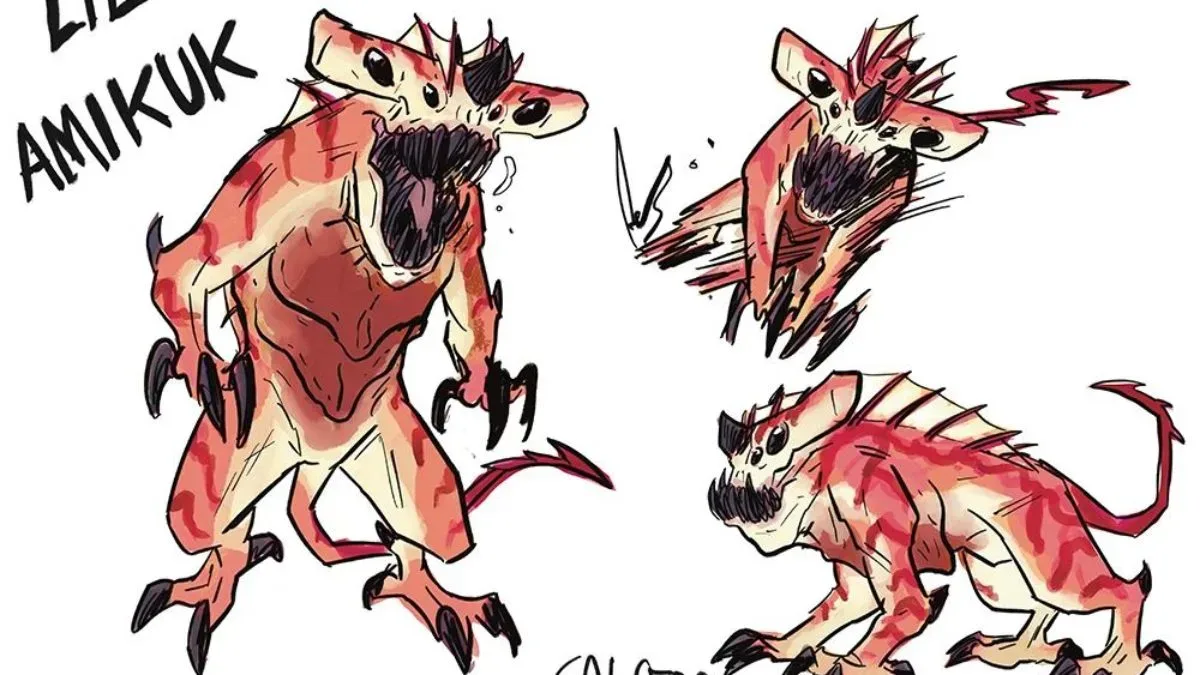
The danger is not limited to the station. Above ground, the government has begun carpet-bombing Manhattan in response to Amikuk, the giant creature threatening the city. The setup places the characters between two forms of peril: the immediate, enclosed horror awaiting below the streets and catastrophic military action occurring overhead.
That makes the subway setting more than familiar New York scenery. Underground transit infrastructure can serve as a route to safety, an obstacle to movement, or a trap when visibility and exits are limited. The issue’s premise specifically promises new threats beneath the city, while the rescue goal gives the descent a personal urgency beyond simple escape.
No Gods No Masters #3 is listed at $4.99. The previous two issues are already out and sold out, an early response that has helped lead to further stories in the setting. The source material describes the comic as kaiju survival horror, a label worth taking literally: “kaiju” refers to giant-monster fiction, while survival horror emphasizes people enduring a crisis where safety, information, and control are in short supply.
A collectible reward built around comic art
The Kaiju Hunt is notable because it asks readers to use the comic itself rather than treating the physical issue solely as packaging for a separate promo. The hidden chibi kaiju is integrated into a panel, and the card claim depends on finding it. For collectors, the appeal is therefore tied to both the card and the story artifact that led to it.
There is also an intentional tension between accessibility and scarcity. Anyone with the issue can search for the character and submit an entry, but only a comparatively small early group receives a card. That can make timing important, particularly when the first two issues’ quick sellouts suggest that interested readers may want to secure their reading copy without waiting.
At the same time, the available details do not establish card quantities beyond the stated first-150-to-200 response window, nor do they describe individual card designs, variations, a checklist, condition guarantees, or resale value. Those are important distinctions for anyone approaching the promotion as a physical collectible. A limited giveaway may be attractive, but the information presently available supports only the basics: a mailed Kaiju Card is offered to qualifying early entrants who identify the hidden figure through the QR-code submission.
The world expands in Hello Darkness #29
The series’ setting is also due to continue outside its core five issues. Hello Darkness #29, dated January 27, 2027 and listed at $5.99, begins a four-month run of No Gods No Masters: Survival Stories shorts.
Each installment is planned as a standalone five-page story told by an everyday New Yorker recounting survival during the kaiju apocalypse. A standalone story is designed to function on its own rather than requiring readers to follow an extended multi-part plot. In this case, the format provides a way to widen the disaster’s viewpoint beyond Felipe, Malik, and Jeannie without displacing the main comic’s central narrative.
The first short, “The Circle Line,” is described as a survival-horror story set on the open seas. It will appear within the horror anthology Hello Darkness, alongside other short-form horror material. The anthology placement changes the scale of the storytelling opportunity: rather than remaining solely with one group navigating Manhattan, the setting can show how a citywide kaiju emergency reaches people in very different locations and circumstances.
For readers deciding where to start, the distinction is straightforward. No Gods No Masters #3 advances the main story and contains the latest hidden-kaiju hunt. Hello Darkness #29 launches an adjacent sequence of short stories set in the same catastrophe. The latter is an expansion of the world, not a replacement for the numbered series.
Why issue #3 is a pivotal release
Issue #3 sits at the midpoint of a five-issue run, but its immediate appeal is unusually split between narrative momentum and physical participation. On the story side, the characters’ rescue mission moves to the subway while Manhattan faces escalating destruction. On the collectible side, the issue continues a hunt that has already drawn heavy response activity.
That combination makes the practical takeaway simple for prospective readers: the comic is the required starting point, the artwork contains the clue, and a prompt, accurate QR-code submission is necessary to have a chance at the card. The offer is limited, so it should be treated as a possibility rather than a promised extra with purchase.
With its underground rescue scenario, Amikuk’s threat above Manhattan, and another concealed chibi-kaiju challenge on the page, No Gods No Masters #3 is positioned as both the next survival-horror chapter and the next opportunity in the series’ limited mail-away card program.