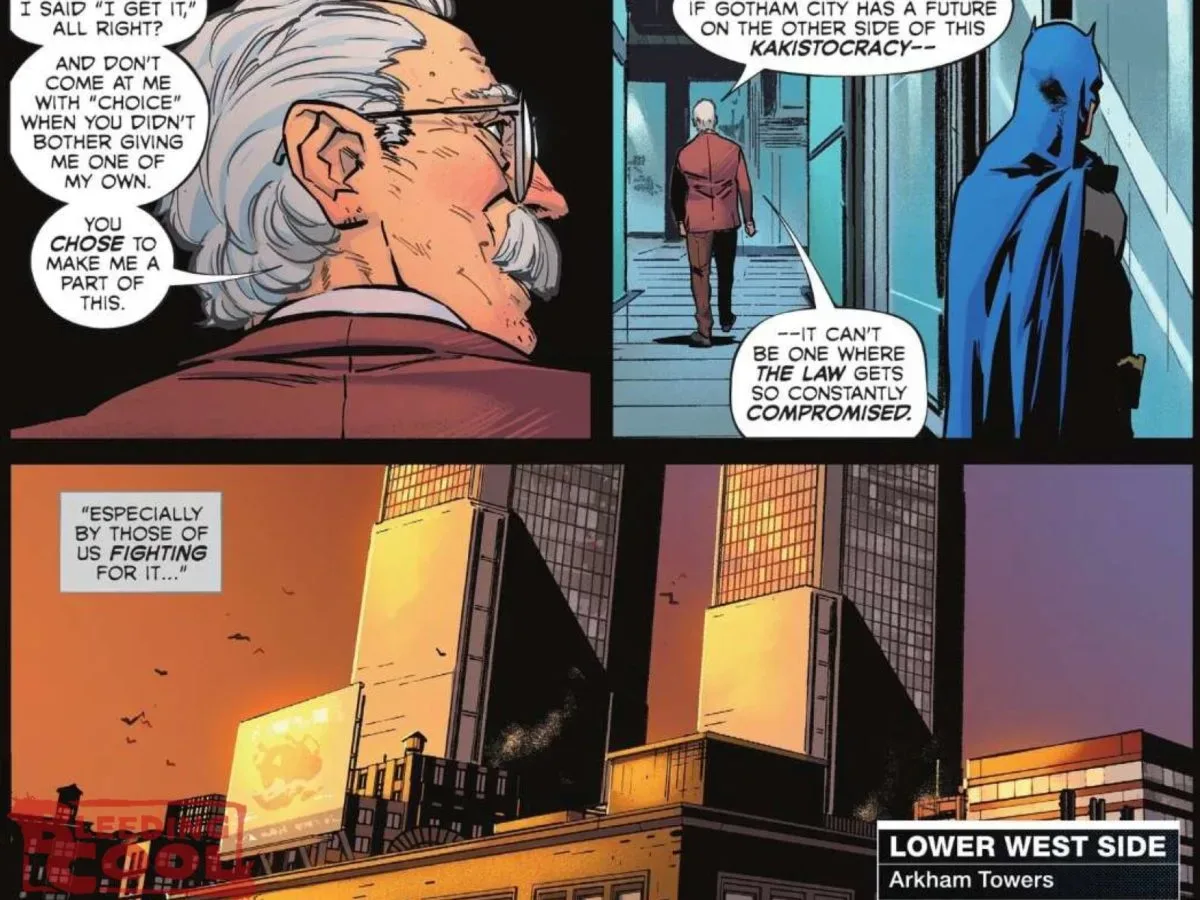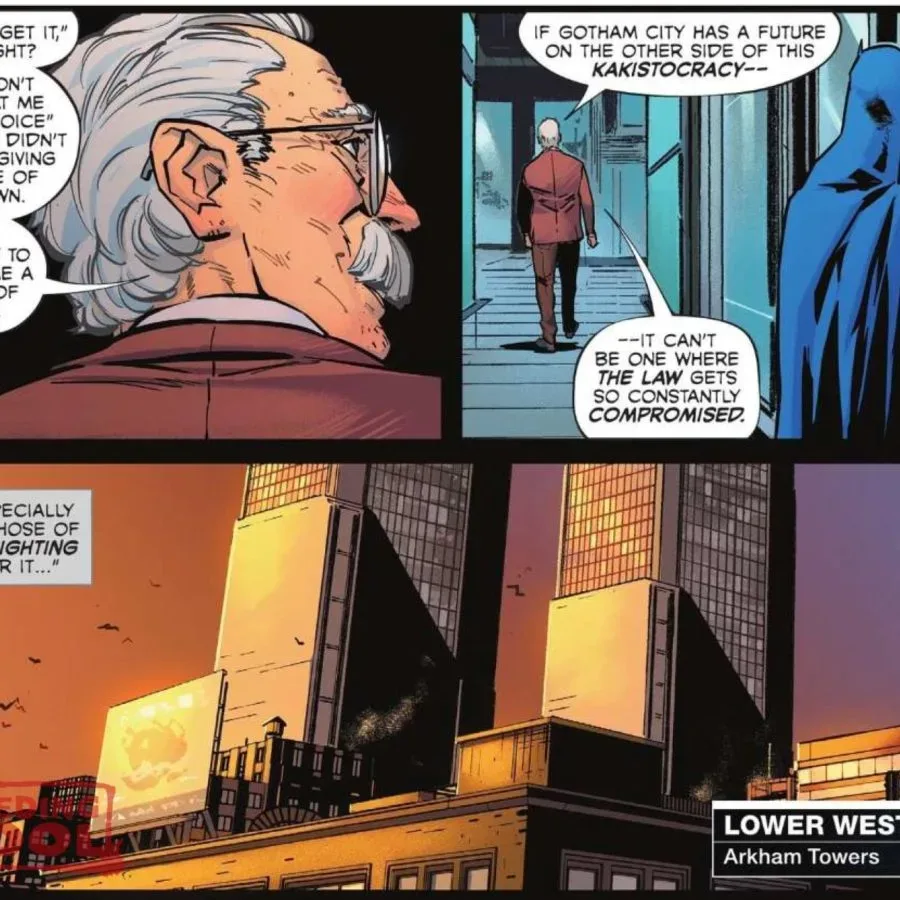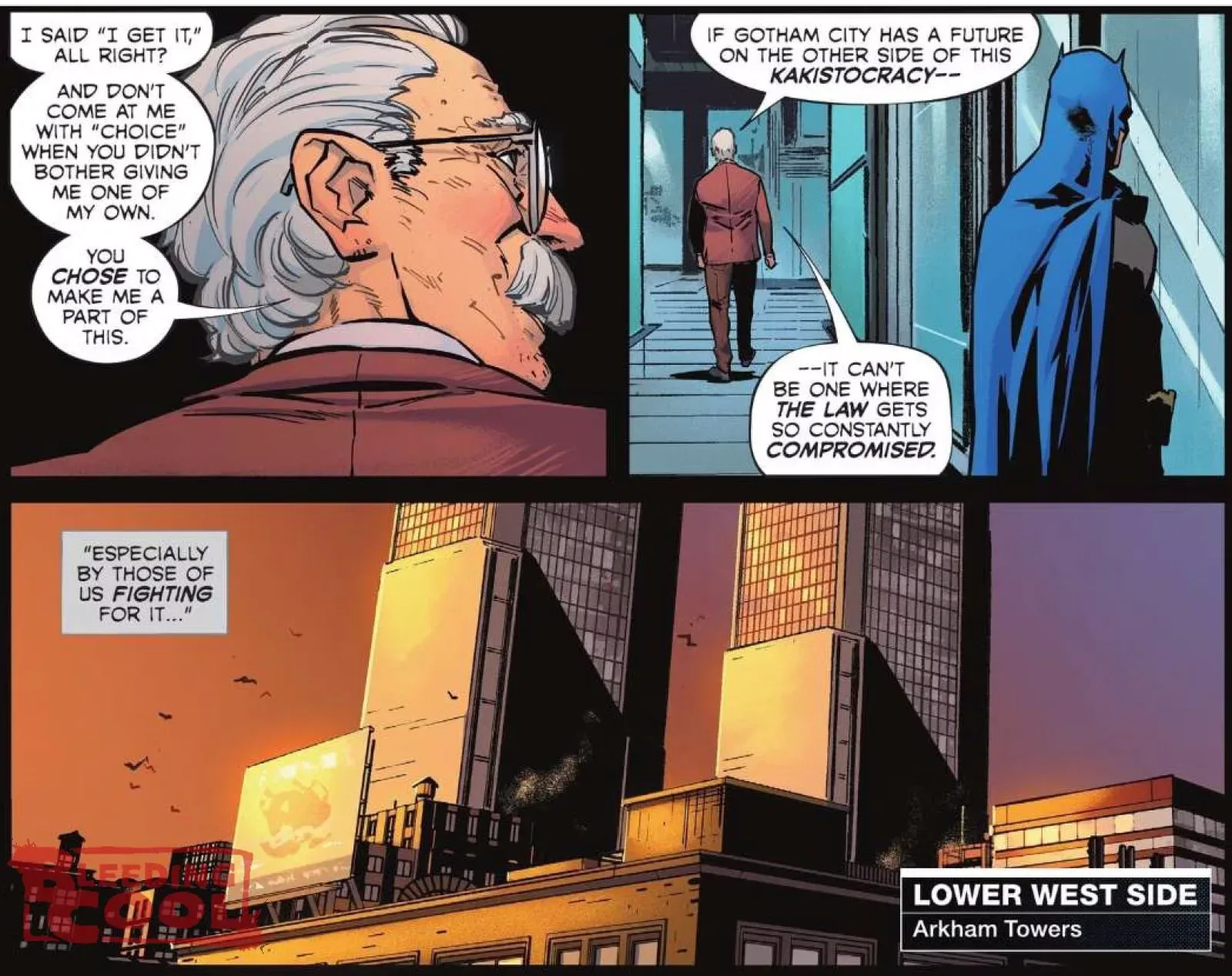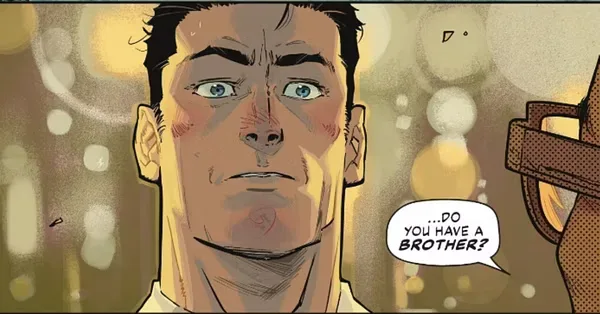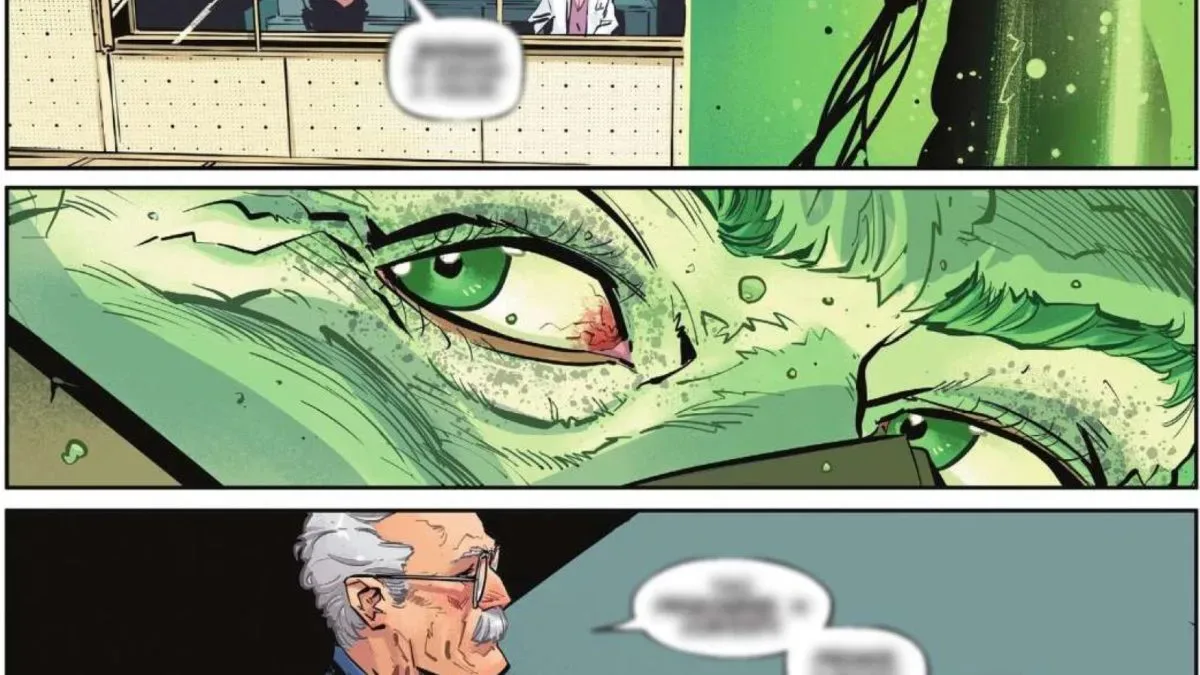
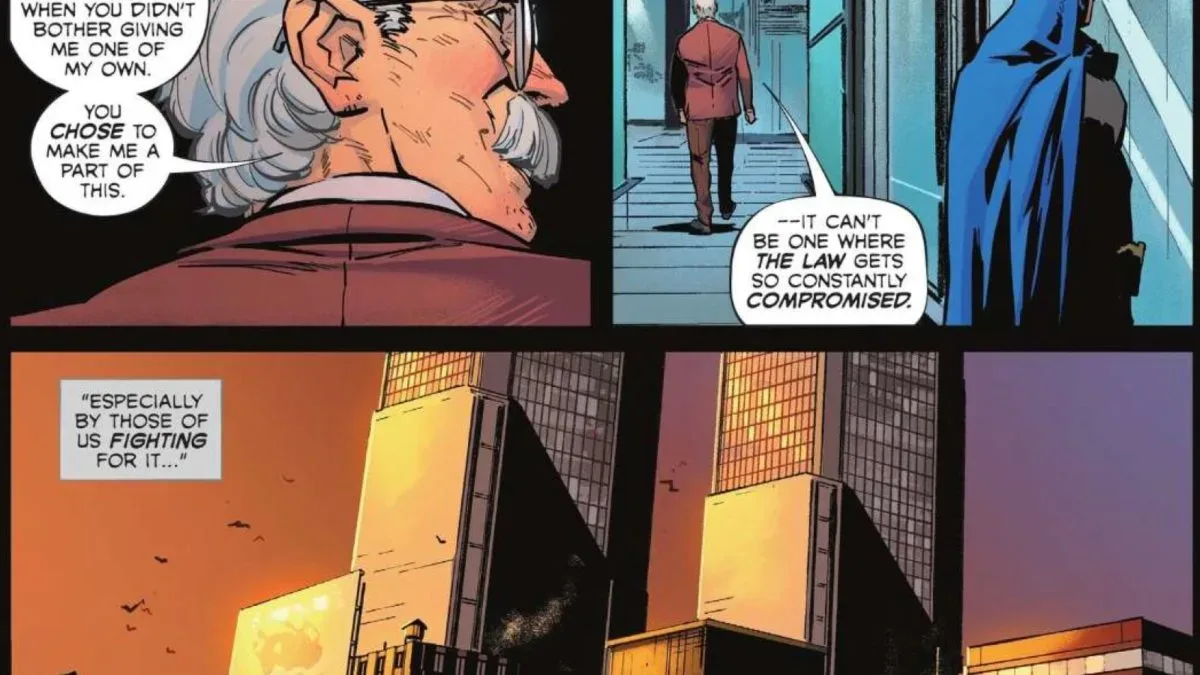
Batman #15, credited to writer Matt Fraction and artist Jorge Jiménez, has put Commissioner Jim Gordon at the center of a major reader conversation. A spoiler-focused discussion of Gordon’s apparent corruption was the most-read item in a November 5 comics roundup, leading a day where Gotham developments, Marvel speculation, retail business stories, games, collectibles and pop-culture announcements all competed for attention.
The key fact is necessarily a narrow one: the discussion concerns the corruption of Jim Gordon in Batman #15. The material available does not establish the cause, scope, duration or outcome of that storyline, so readers who want to go in unspoiled should stop there. But even that limited premise carries obvious weight in Batman fiction. Gordon is not simply another Gotham supporting player; he is one of the character’s most enduring institutional allies. Putting his integrity in doubt changes the pressure around Batman, the Gotham City Police Department and the very idea of lawful authority in the city.
Why a compromised Gordon matters in a Batman story
In superhero comics, “corruption” can mean several very different things. It may refer to moral compromise, coercion, public suspicion, criminal influence, a deliberate framing operation, or a character making a catastrophic decision while trying to serve a larger good. Those possibilities should not be treated as confirmed plot details here. They do, however, explain why the word has such immediate dramatic force when attached to Gordon.
Gordon has traditionally represented a difficult but essential bridge between Batman’s extra-legal vigilantism and Gotham’s legitimate civic structures. Batman investigates from the shadows; the commissioner can turn information into official action, protect victims through the department, and signal that the city has not entirely surrendered to its worst people. If that bridge weakens, Gotham becomes a much more unstable setting. Batman may lose an ally, but the bigger narrative consequence is that the city itself loses a trusted point of reference.
That is the useful distinction between a character twist and a status-quo twist. A character twist changes what audiences think they know about one person. A status-quo twist changes how multiple characters can act from that point forward. A compromised commissioner potentially affects investigations, public trust, police conduct and Batman’s ability to operate. That broad ripple effect makes the premise tailor-made for spoilers, debate and fast reader interest.
It also fits the wider Gotham material appearing in the same news cycle. Other Batman-related items pointed to unrest involving riots and Anarky over gasoline prices, while another centered on Batman preparing for a Long Halloween-themed McFarlane figure. The former suggests a Gotham story environment preoccupied with civic strain; the latter shows how readily Batman’s visual and narrative history continues to move between current comics and the collector market. Neither item clarifies what happens to Gordon in Batman #15, but together they show why Gotham remains an unusually flexible setting: it can support political anxiety, detective fiction, superhero spectacle and merchandise nostalgia at once.
Spoiler headlines are a signal, not a substitute for reading
The day’s most prominent comics stories were explicitly framed around spoilers: Gordon’s situation in Batman #15, the fate of an original X-Man in DNX #4, an election-day Avengers development in New York, and questions around Aunt May and the Spider-Marriage. That label matters. A spoiler report often captures the moment that is easiest to discuss out of context, but it cannot automatically convey pacing, art, characterization or whether the issue earns its surprise.
For readers, the practical response is simple: decide which experience matters more before opening links or browsing social feeds. If discovering the turn on the page matters most, mute keywords and pick up the issue first. If joining the live discussion matters more, understand that a headline may reduce a multi-page narrative development to a single provocative proposition. Comics are a visual medium, and an event’s meaning can depend on panel order, expressions, captions and what a creative team chooses not to show.
That same caution applies to the word corruption. In serialized comics, an accusation, a revelation and a permanent transformation are not interchangeable. A story may initially present one as another; it may also turn on information the audience has but the cast does not. Until the story develops further, treating a spoiler-hook as a final verdict can flatten the story before it has had room to do its work.
A crowded day across the comics business
The Gordon discussion led the attention chart, but the November 5 roundup also illustrates how comics news crosses several different ecosystems. One item reported that DC Comics took almost 50% market share of the prior week’s comic-shop sales. That is a business-performance claim about a specific period, not a statement that DC held that share across an entire year or every sales channel. The distinction is important because weekly specialty-retail data is a snapshot, not a complete map of all reading or buying habits.
Another business story involved new owners withdrawing an objection to a Diamond bankruptcy settlement. The supplied information does not provide the settlement terms or explain the broader legal consequences, so it would be premature to infer an effect on retailers or publishers. Still, its presence beside Batman spoilers is a reminder that comics readers follow more than fictional universes. Distribution, retailer health and ownership changes can shape what reaches shops and how reliably it gets there.
The day also included the reported return of the convention formerly known as Angoulême in January 2027, as well as a San Diego dispute involving a Gaslamp District sign connected to Avengers: Doomsday. These entries sit at a very different point on the comics-to-entertainment spectrum. A festival concerns the community space around the medium, while a contested promotional sign shows how comic-book properties become large-scale public marketing. Both are part of the same wider culture, even if neither belongs to the panel-to-panel storytelling that made Gordon’s status the day’s biggest hook.
Games, collectibles and comics keep sharing the same conversation
The roundup’s most visible gaming item was the official release of a Godzilla pack for Sonic Racing: CrossWorlds. Elsewhere, the list included Marvel arcade games arriving at Dave & Buster’s ahead of Avengers: Doomsday. These are separate products and should not be read as evidence of a connected game initiative, but their coexistence demonstrates a familiar reality: game audiences increasingly encounter comic-book characters through racing expansions, arcade cabinets and film-adjacent promotions as often as through monthly issues.
Physical collecting was present as well. Batman’s Long Halloween connection returned through a new McFarlane figure, and the day’s broader conversation included a free Kaiju card for the first 200 readers of No Gods No Masters #3. These are distinct kinds of incentives. A figure turns a comic icon into a displayable object; a limited card uses scarcity to encourage early readership and participation. For buyers, the sensible approach is to separate personal interest from assumptions about future value. A limited quantity may make something harder to obtain, but it does not by itself establish lasting demand or condition-sensitive value.
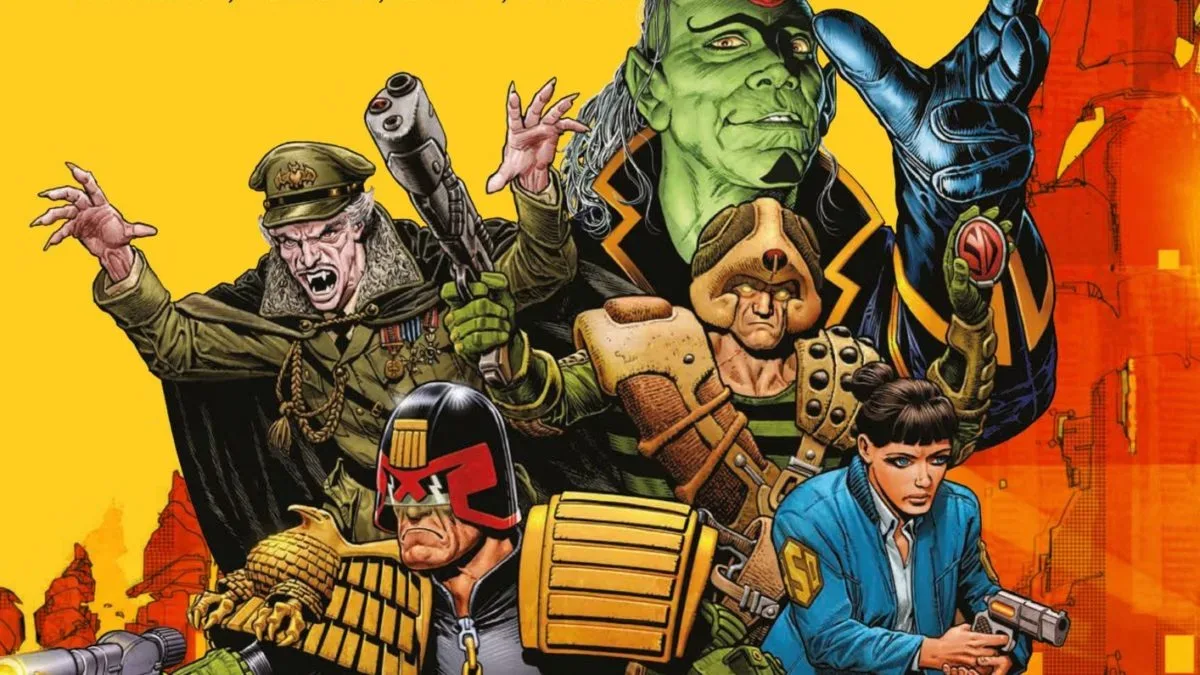
That intersection of comics, exhibitions and collecting also makes a related London event worth watching: Judge Dredd and 2000 AD’s Cartoon Museum exhibition focuses attention on how comic art moves beyond the page into public display. The link is contextual rather than a direct connection to Batman #15, but it reflects the same broader point: comic culture is simultaneously publishing, art, fandom, retail and adaptation.
Eight years of November 5 snapshots
The historical lookback attached to the November 5 roundup is revealing because it does not present a single, tidy narrative. Instead, it shows recurring patterns in what captures attention: Batman shocks, Marvel continuity questions, Pokémon updates, entertainment adaptations, market concerns and retailer issues.
One year earlier, the conversation included reports around a comic-shop owner allegedly arrested after distributing Grendel comics at Halloween, along with discussion of Tim Drake’s boyfriend Bernard Dowd, a Fallout: New Vegas Desert Ranger replica helmet and Marvel’s Secret Wars Kickstarter material. Two years earlier, Batman #154 speculation about a forgotten child of Thomas Wayne appeared alongside Absolute Superman developments, Wonder Woman #15 spoilers and questions about a DC vs. Marvel omnibus cover.
Three years back, Pokémon and Batman were prominent together: coverage ranged from Scarlet & Violet 151 trading-card values to Pokémon GO’s Genesect drives, plus discussion of Batman #139 and the Joker. Four years back, the list mixed The Sandman, Steel’s 30th anniversary, Swamp Thing: Green Hell, TMNT: Shredder’s Revenge and a Scrooge McDuck Glasgow-origin graphic novel. The pattern is not that every November 5 delivers the same franchises. It is that comics readership routinely overlaps with games, toys, television, film and collecting.
The older snapshots reinforce that point. In 2021, discussions moved between comic-collection planning, comic-store sales practices, comic auctions, new graphic novels and figures. In 2020, Pokémon GO guides appeared beside Avengers #38, Thor #9, X-Men and Marauders spoiler coverage. The 2019 list included Magic: The Gathering’s Pioneer format, an X-Men statue and a Joker review. In 2018, Immortal Hulk #8 shared space with The Walking Dead and Superman.
For an audience trying to understand why one Batman spoiler can dominate a mixed entertainment feed, that history offers a straightforward answer: a major comics development is rarely isolated. It lands in a community already discussing games, collecting, adaptations, retailers and creative careers. A recognizable character in a destabilizing premise gives all of those adjacent audiences something immediate to react to.
Creators in the day’s spotlight
The November 5 creator-birthday list included Ram V, Jim Steranko, Diana Tamblyn, Ron Fortier, Robert Loren Fleming, Adriane Nash, Trevor Mueller and artist Andy Smith. The names span writers, artists, editors and cartoonists, a useful reminder that the comics field is much broader than the superhero headlines that dominate a daily traffic list.
Ram V was noted for work including Swamp Thing, Justice League Dark and Laila Starr. Steranko was recognized for Nick Fury, Agent of S.H.I.E.L.D.. Fortier’s credits cited Green Hornet and The Terminator comics, while Fleming was identified as a co-creator of Thriller and a Keith Giffen collaborator. The range matters because each role contributes differently to the medium: a writer establishes narrative direction, an artist turns that direction into readable visual storytelling, an editor coordinates a book’s production and continuity, and cartoonists may build a work through an entirely different set of creative traditions.
Batman #15’s Gordon premise may be the day’s attention-grabber, but it sits within that larger ecosystem. The story is a reminder of how strongly a long-established supporting character can still drive debate. The surrounding headlines are the reminder that comics culture never stops at the last panel: it continues through shops, games, figures, events, cards, archives and the people who make the work possible.