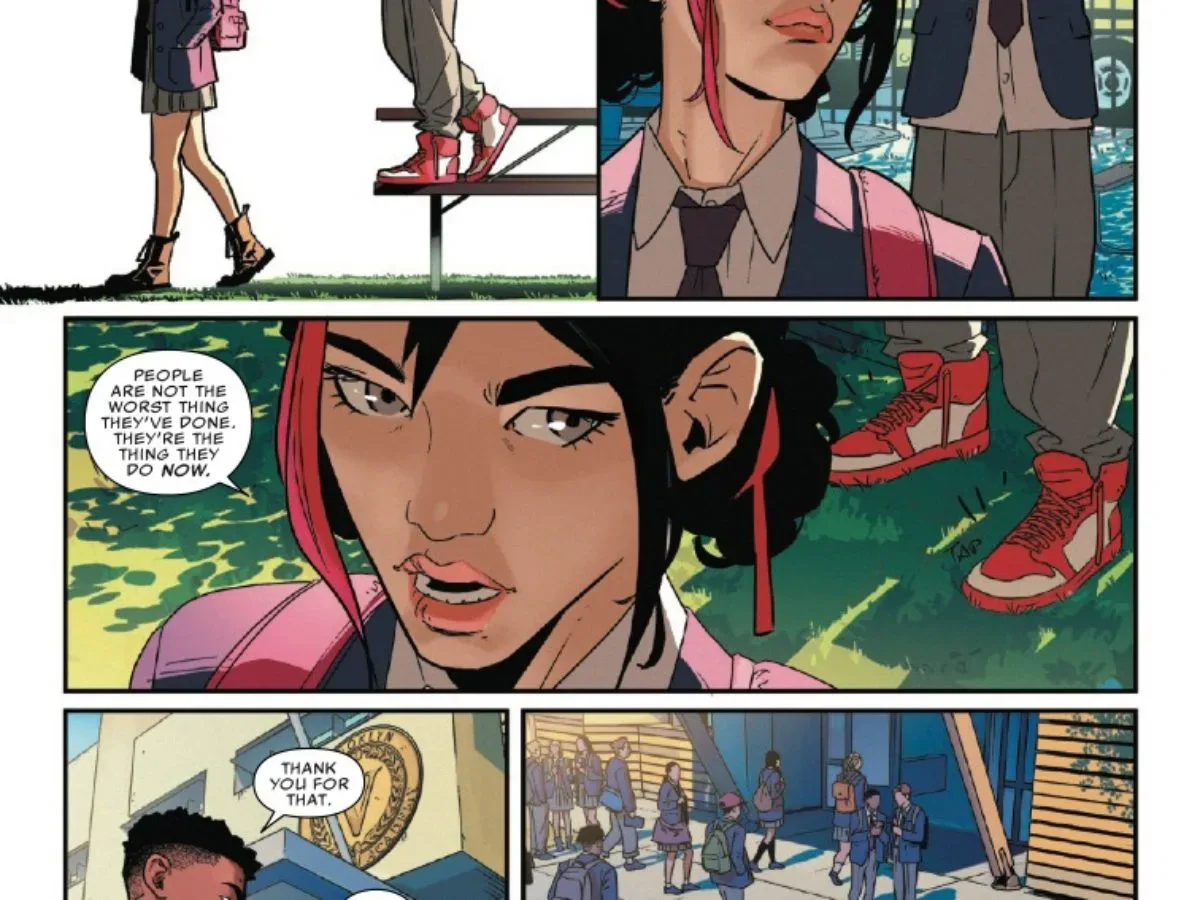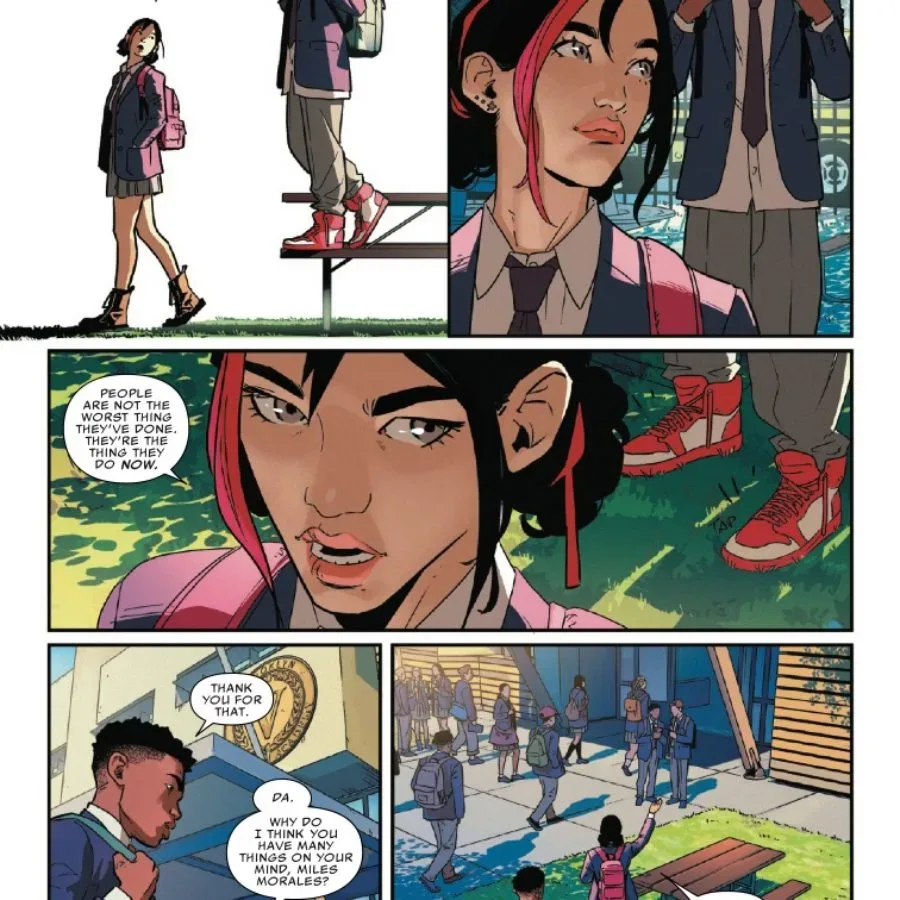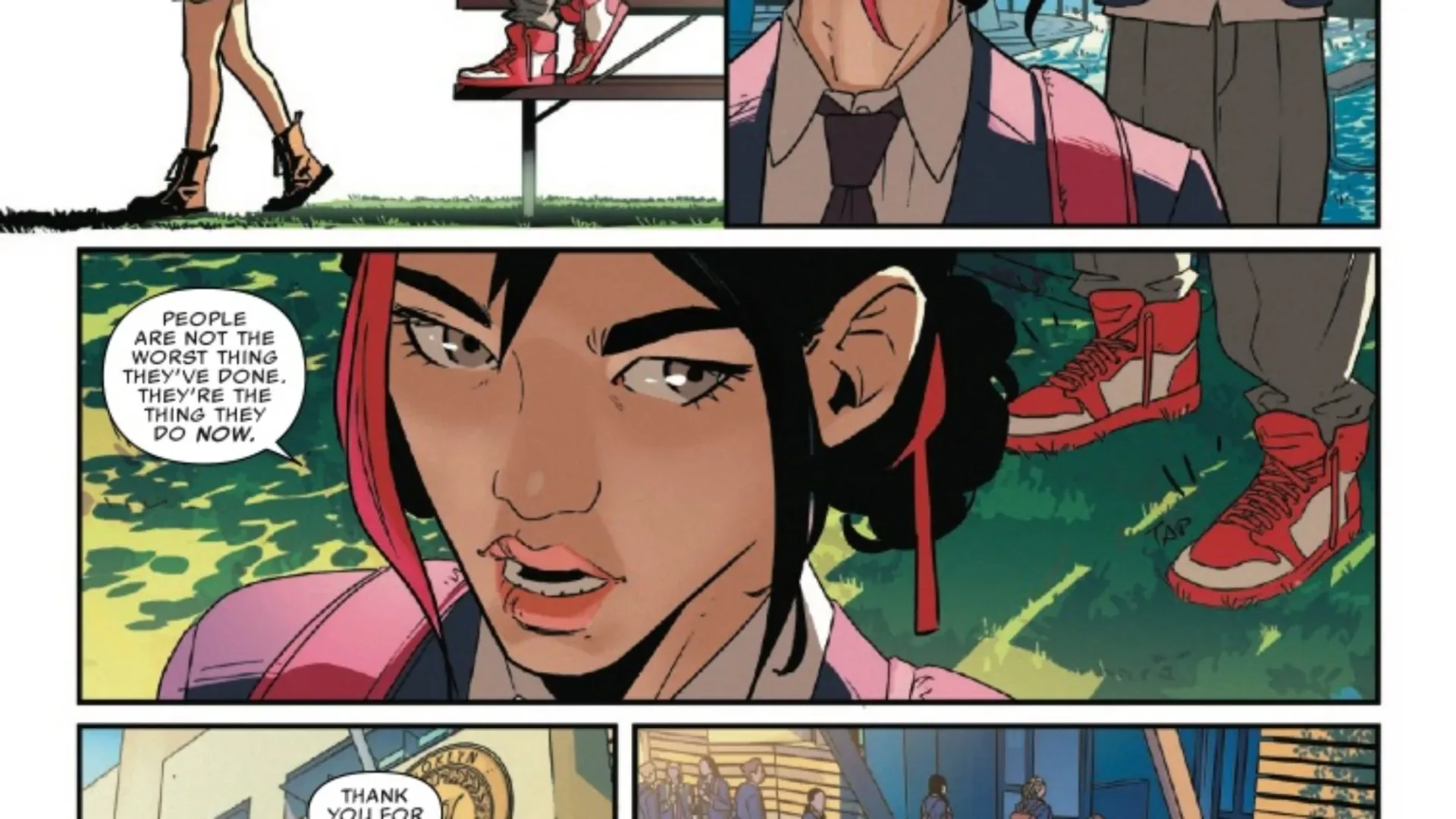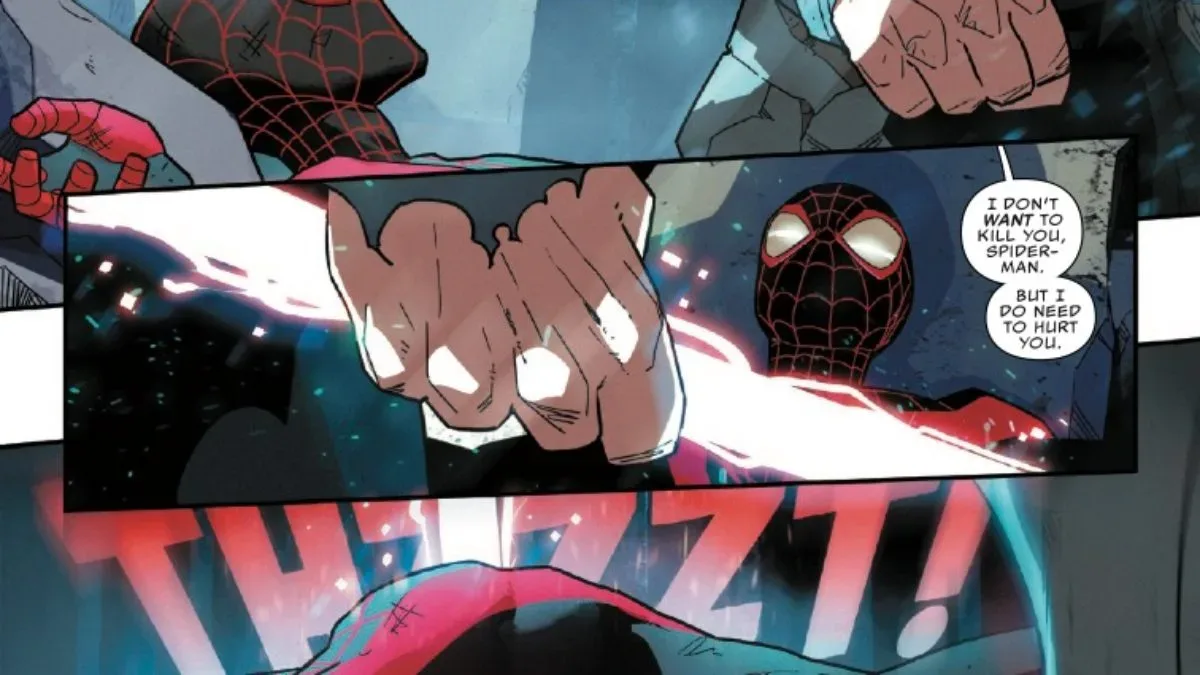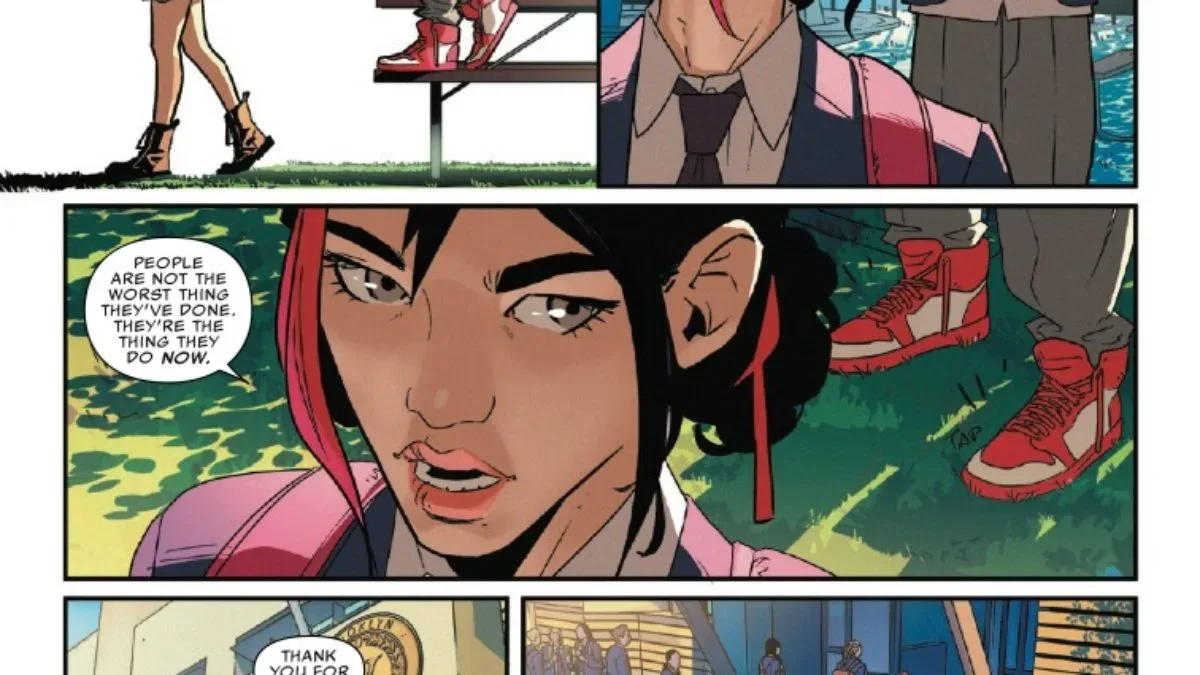
Miles Morales: Spider-Man #4 is built around a particularly nasty superhero problem: what happens when the person behind the mask becomes the weapon used against the hero? The issue, due on sale November 4, 2026, introduces a trap that does not simply challenge Spider-Man’s strength, speed, or web-slinging reflexes. Revenant has found a route toward Miles through the person Miles Morales is when he is not Spider-Man.
The preview’s central hook is deliberately circular and unsettling. Spider-Man can recognize a trap, but he cannot casually avoid this one because Revenant is targeting someone Spider-Man may trust: Miles Morales. In other words, the villain is not just threatening the hero’s world. He is exploiting the separation between Miles’ private life and his costumed one—and making that separation impossible to maintain.
That gives the issue a strong premise for a Spider-Man story. Secret identities are not merely a costume-change convenience in superhero fiction; they are a boundary that is supposed to protect loved ones and ordinary life from extraordinary danger. When that boundary fails, every decision becomes more complicated. Miles cannot treat the danger as somebody else’s problem, because the intended target is his own civilian identity.
Revenant’s trap is aimed at the person beneath the mask
Revenant is described as a new foe forged by Kingpin, and the conflict is set to bring collateral damage. The supplied preview material also frames Miles’ imprisoned father, Jeff Morales, as part of the villain’s leverage. Revenant’s message is blunt: Jeff has a debt to him, and Miles is expected to feel the consequences.
That detail matters because a “debt” can function as more than a financial obligation in a comic-book plot. It is a claim of power: an assertion that the villain can define what someone owes, then punish the people around them when payment is impossible. In this case, the threat appears designed to pressure Miles from two directions at once. As Spider-Man, he has a crisis to stop. As Miles, he has family caught in the blast radius.
The preview does not spell out the exact mechanics of Revenant’s scheme, and that uncertainty is part of what makes the solicitation effective. Readers know the antagonist has access to a vulnerable point in Miles’ personal life, but not yet how far that access reaches or what price the villain intends to demand. It leaves room for the issue itself to define the immediate stakes rather than giving away the whole confrontation before release.
“Think like a super villain” is the story’s dangerous assignment
The official setup says Spider-Man will have to think like a super villain to beat Revenant. That is a familiar phrase, but it carries real thematic weight here. It does not necessarily mean Miles must become cruel or abandon his principles. It means he may need to anticipate the kind of manipulative, indirect logic that an enemy like Revenant uses.
A supervillain’s plan is often less about winning a fair fight than restricting every acceptable choice. The trap becomes powerful when the hero believes that acting decisively will hurt innocents, while refusing to act will do the same. Revenant’s apparent use of Jeff Morales and Miles’ civilian identity suggests exactly that kind of pressure campaign: the conflict is structured to make a straightforward Spider-Man solution insufficient.
For Miles, the risk is not simply physical defeat. The solicitation asks whether he can stay in control while operating close to the darkness he is trying to defeat. That is the moral threat at the center of the issue. A hero can learn how an enemy thinks without accepting the enemy’s values, but stories such as this one get their tension from the narrow distance between strategy and compromise.
It also makes the title’s focus on Miles Morales especially apt. The drama is not being presented solely as “Spider-Man versus a new villain.” It is about the consequences of being Miles: a son, a person with a life beyond the mask, and someone whose connections can be turned into pressure points. The costume may offer abilities, but it cannot make private pain disappear.
What “collateral damage” signals for this issue
In its most direct sense, collateral damage means harm caused as an unintended consequence of pursuing a target. In superhero stories, the term often describes broken streets and endangered bystanders after a large battle. Here, however, the solicitation gives it a more personal emphasis. When a villain’s plan is aimed at Miles Morales rather than only Spider-Man, the collateral damage can include trust, family stability, and the safety of people who did not choose to join a superhuman conflict.
That distinction could shape the issue’s tone. A city-scale crisis asks whether Spider-Man can save people in time. A targeted identity crisis asks whether Miles can protect the people closest to him without allowing the villain to dictate who he becomes. Both forms of danger can coexist, but the latter makes every rescue feel less abstract.
There is also a practical reader-facing implication: this looks like an issue driven by character pressure rather than a self-contained showcase for a new opponent. Revenant’s arrival is important, but the preview is selling the villain primarily through the kind of dilemma he can force on Miles. The question is not only “Can Spider-Man beat him?” It is “What does victory cost when the enemy knows where the mask ends?”
Creative team and issue details
Miles Morales: Spider-Man #4 is credited to Bryan Hill, Nico Leon, and Val de Landro, with a cover by Simone Di Meo. The standard issue is listed at 32 pages, rated T, and priced at $4.99 in the United States. Its listed item code is 75960621462400411.
Three additional covers are listed alongside the standard edition:
- Sergio Davila 1:25 variant — item code 75960621462400416
- Peach Momoko Momo-Tone variant — item code 75960621462400421
- Alessandro Cappuccio variant — item code 75960621462400431
The “1:25” wording identifies the Sergio Davila cover as an incentive variant designation. The provided listing gives it a $4.99 U.S. price and $6.25 Canadian price, as it does for the other listed variants, but it does not establish how many copies any individual shop will stock. Readers interested in a particular cover should check with their preferred comic retailer rather than assuming each option will be on every shelf.
Why the civilian-identity angle lands now
There is an uncomplicated reason threats to a hero’s identity remain effective: the mask is a shield, but it is never a perfect one. Once an adversary can connect the public hero to the private person, a fight no longer has clean borders. Every friend, relative, routine, and unresolved conflict can become tactical information.
That broader concern is not limited to capes and comic panels. The importance of understanding what personal information devices may collect—and how to control it—is a useful real-world privacy reminder; our guide on checking a smart TV’s camera and privacy settings covers a practical version of protecting personal space. Revenant’s methods are fictional, but the underlying unease is recognizable: a person’s private life becomes far more fragile when somebody else gains access to it.
For Miles, that anxiety is sharpened by the connection to Jeff Morales. The preview promises a conflict where the villain is not waiting on a rooftop for Spider-Man to arrive. He is already trying to reshape the emotional terrain around Miles, using a family bond and an alleged debt to make escape feel impossible.
Whether Miles can outthink Revenant without sacrificing what makes him Spider-Man is the key question heading into issue #4. The preview’s best move is that it refuses to frame cleverness as automatically safe. In a trap designed around identity, the challenge is not simply seeing the villain’s next move. It is finding an answer that does not let the villain rewrite Miles Morales in the process.