Marvel’s Midnight line is leaning into concealment for its second issues. Midnight Spider-Man #2, Midnight X-Men #2 and Midnight Fantastic Four #2 are all scheduled for November 18, but the standard cover art for each remains obscured by black bars in the material currently shown to readers and retailers.
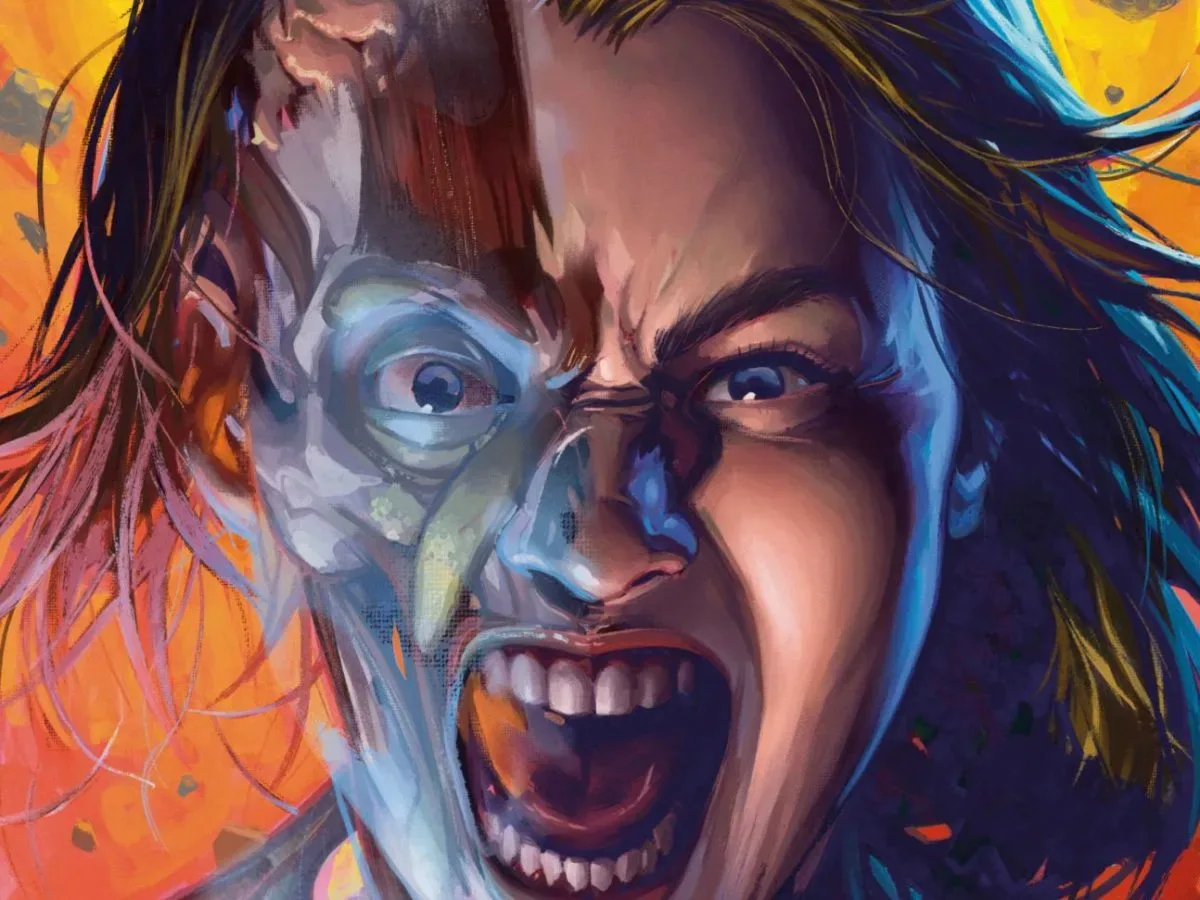
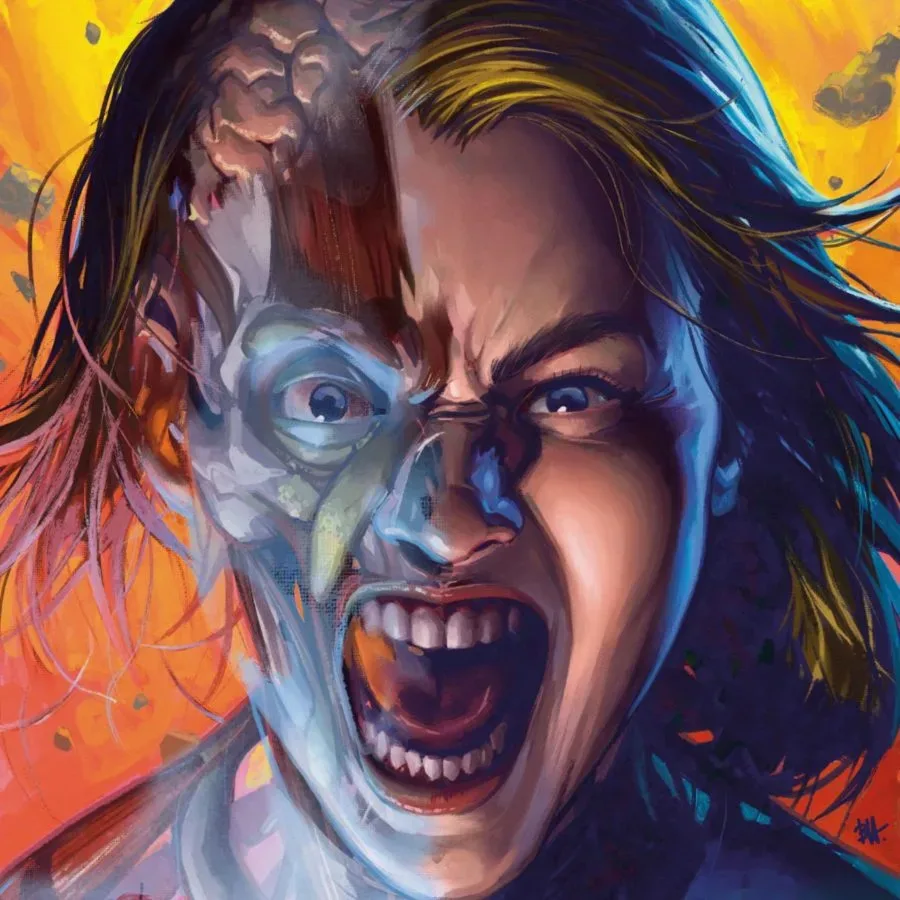
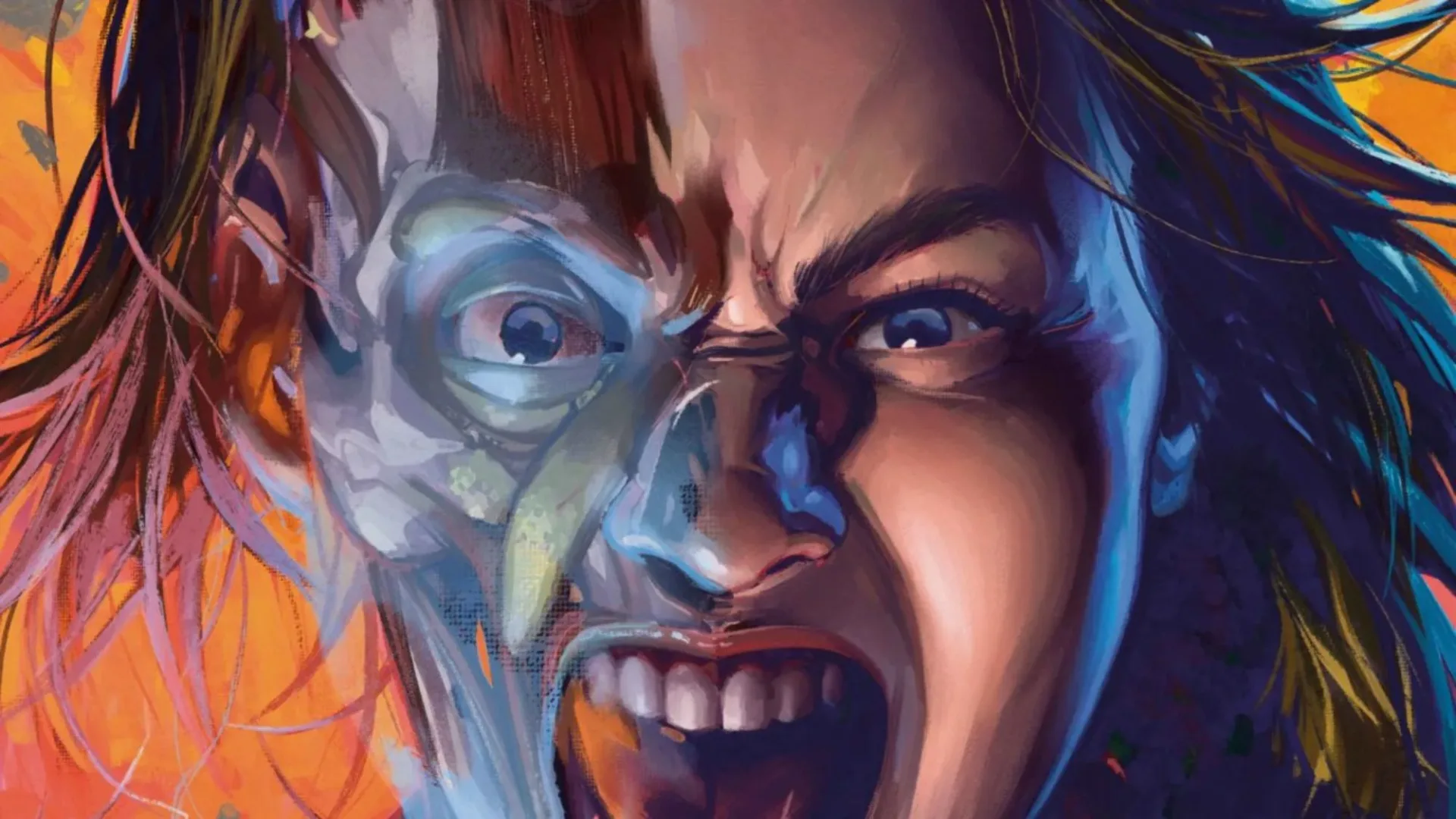
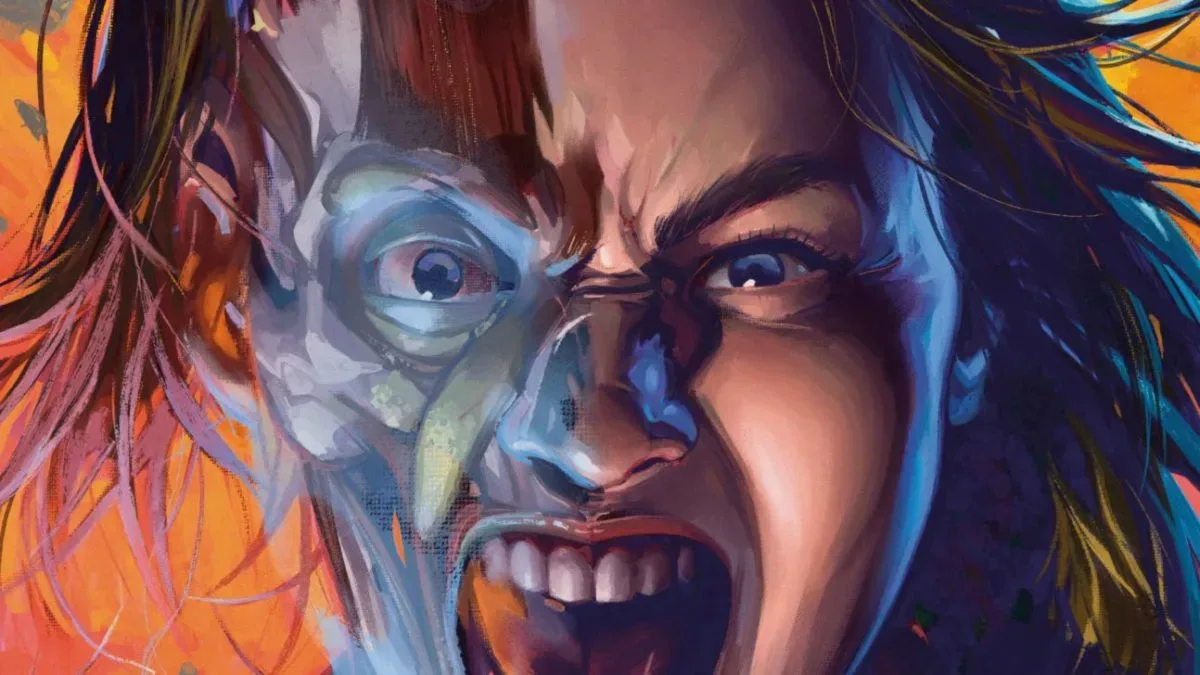
That does not mean the books are entirely without a visual preview. Variant covers for the trio have been shown, including lines called Midnight Bloodbath, Midnight Special, Midnight Horror Homage and Midnight Gallery. The approach creates an unusual split: the central, standard-cover image is being held back, while alternate interpretations of the new horror-tinged Marvel setting can be seen in advance.
For a line presented around mystery and terror, that is a suitably theatrical rollout. It is also a practical wrinkle for readers deciding which edition to order or buy. The variants provide a sense of the Midnight Universe’s aesthetic, but they do not fully replace knowing what sits on the cover of the regular issue.
The main covers are part of the mystery
The regular covers of these second issues are presented behind black bars. The stated idea is that the full images will be revealed when readers pick up the comics in stores. Earlier solicitation material had displayed the complete standard art for the first issues, making the issue-two blackout a deliberate change rather than a general lack of imagery for the project.
In comics publishing, a solicitation is advance material used to identify and promote an upcoming issue. It commonly includes the title, creative team, premise, cover information and release timing. A cover can do substantial storytelling work in that format: it may establish a character’s altered look, flag an antagonist, or simply tell a buyer what kind of story awaits. Withholding it here turns even the act of displaying the book into part of the Midnight concept.
There is a trade-off. A hidden cover can preserve surprise, particularly if the art contains a reveal intended to land alongside the issue itself. But it gives readers less information when choosing a copy ahead of release. That makes the disclosed variants more important as early indicators of mood and visual direction.
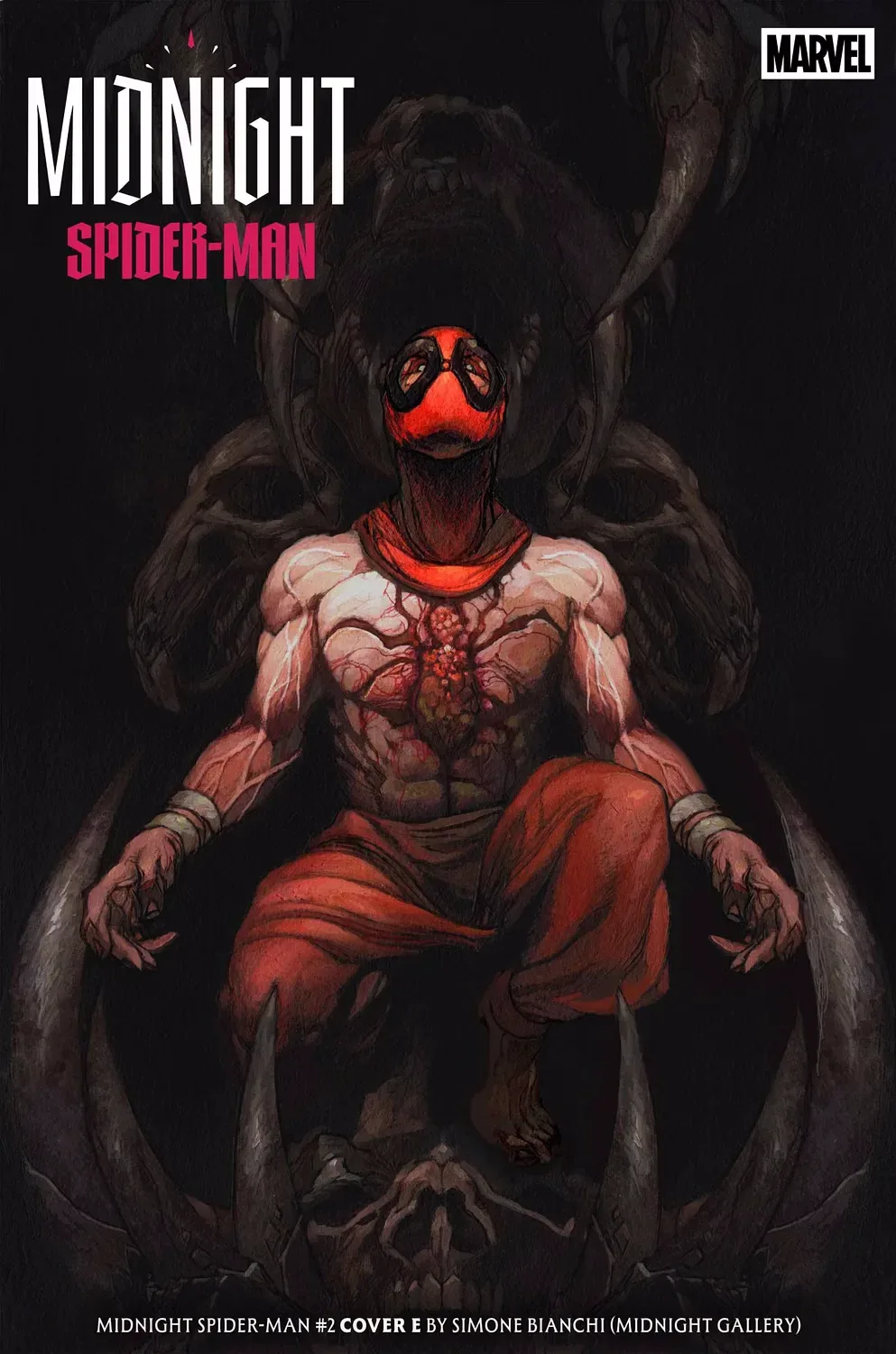
The supplied cover information identifies a Midnight Spider-Man #2 E Cover by Simone Bianchi. The lettering is significant as a way of distinguishing cover offerings, not as a separate story issue: the comic’s interior narrative remains #2, while the cover designation identifies which exterior edition is being discussed.
What the named variant lines suggest
The line’s revealed alternates are organized around four named concepts:
- Midnight Bloodbath Variant Covers (B): blood-soaked artwork intended to emphasize the terror of the Midnight Universe.
- Midnight Special Variant Covers (C): spotlight images centered on Midnight reimaginings of Marvel heroes.
- Midnight Horror Homage Variant Covers (D): another spotlight-oriented line focused on Midnight versions of heroes, framed through horror homage.
- Midnight Gallery Variant Covers (E): prestige painted art built around the setting’s haunting atmosphere.
A variant cover is an alternate exterior for the same comic issue. It does not inherently mean a different script, different continuity or extra story pages. For readers who mainly follow the narrative, the essential decision is usually which visual presentation they prefer. For people buying through a local comic shop, asking for a particular lettered cover is the clearest way to distinguish an edition when multiple versions share the same issue number.
The Midnight rollout is described as using ten variants per title at launch, with five continuing covers identified alphabetically, in addition to retailer exclusives. The available information does not list every cover or explain each ordering arrangement, so readers looking for a particular edition should verify its availability with their preferred retailer rather than assuming every shop will stock every version.
“Retailer exclusive” generally means a cover edition connected to a specific seller or retail partner instead of the standard cover program. It is separate from the main reading order: the relevant issue is still Midnight Spider-Man #2, Midnight X-Men #2 or Midnight Fantastic Four #2. The distinction matters because cover variety can look intimidating in a listing, even though it does not require buying multiple copies to follow the plot.
Midnight Spider-Man #2: a missing-person pattern points toward Oscorp
Midnight Spider-Man #2 is written by Phillip Kennedy Johnson with art by ScieTronc. Its setup begins with the conspicuous absence of Peter Parker, then expands into a string of missing people: an Oscorp employee, a New York City teaching assistant and a municipal-services technician in Queens.
The apparent connection is not yet explained, but the premise ties the disappearances to Oscorp’s response. Defense contractors linked to the company are searching security footage for a spider. That last detail supplies the story’s central image without clarifying whether the spider is Peter, something hunting him, or evidence of a wider threat.
It is a concise mystery structure. The personal question—where Peter Parker is—sits alongside mundane absences that make the danger feel dispersed through the city. The occupations named in the premise also suggest that the missing are not presented as a single social group or one obvious superhero circle. Meanwhile, the search of surveillance footage gives Oscorp an active role in the story’s pressure, even before the reason for its concern has been disclosed.
The “Midnight” branding suggests an unsettling reinterpretation, and the issue description supports that tone without giving away an answer. Rather than presenting a conventional Spider-Man set piece, the material emphasizes people who have failed to arrive at work and footage scrutinized for an inexplicable creature. The horror element is thus rooted in absence, institutional surveillance and uncertainty.
Midnight Fantastic Four #2 revisits the atomic age
Midnight Fantastic Four #2 comes from writer Benjamin Percy and artist Kev Walker. Reed Richards is described as haunted by a past he can barely remember and a scientific discovery he can barely comprehend. He is also beginning a fragile working relationship with Sue, Johnny and Ben at Storm Systems.
The group is preparing to test one of its theories, a test that is positioned to revisit and redefine the dangers of the atomic age. That phrase offers the strongest thematic clue in the available description. “Atomic age” commonly evokes the era in which atomic science and the prospect of nuclear power and weapons reshaped public life; here, the supplied premise specifically treats it as a source of peril to be reconsidered through the Midnight setting.
What that means for the Fantastic Four’s powers, history or relationships is not stated. Still, the language establishes two simultaneous tensions. One is scientific: Reed cannot fully understand the breakthrough in front of him. The other is interpersonal: the quartet is not simply operating as an established, effortless unit, but attempting to form a tenuous professional arrangement. A theory test can therefore carry both experimental risk and relationship risk.
That framing is well suited to a horror-inflected Fantastic Four story. The team’s scientific curiosity is not discarded; it is made uncertain. Reed’s intellect remains central, yet the description stresses the limits of his recall and comprehension, placing discovery alongside dread rather than mastery.
Midnight X-Men #2 keeps its cards close
Midnight X-Men #2 is written by Jonathan Hickman with art by Matteo Della Fonte. Its entire published story tease is only: “Eat. Prey. Love.”
That brevity leaves far more open than it resolves. It may signal appetite, pursuit and attachment; it may be a tonal joke; or it may simply be a deliberately cryptic slogan. None of those readings should be mistaken for confirmed plot detail. What is confirmed is that the issue belongs to the same November 18 release group and shares the Midnight Universe cover strategy, including the obscured standard cover and revealed variant program.
For readers, the minimal pitch makes the cover blackout especially notable. The Spider-Man and Fantastic Four solicitations offer specific narrative hooks: disappearances around Oscorp, and an alarming scientific theory at Storm Systems. Midnight X-Men #2 instead relies on three words and the wider line’s horror presentation. Its actual cast, conflict and setting have not been outlined in the information available here.
How to approach the November 18 releases
Readers who want the stories rather than every exterior variation need only identify the relevant #2 issue and their preferred cover. Those who care most about the regular editions should be aware that the standard art is intentionally not yet visible in the preview material. Those who prefer a known visual direction can look toward the Bloodbath, Special, Horror Homage and Gallery variants, while remembering that variant availability may differ from shop to shop.
Most importantly, the three titles are separate books with separate creative teams and separate immediate hooks. Midnight Spider-Man #2 follows Peter Parker’s disappearance and the strange spider search surrounding Oscorp. Midnight Fantastic Four #2 focuses on Reed Richards, Storm Systems and a theory connected to atomic-age dangers. Midnight X-Men #2 remains intentionally unexplained beyond its compact “Eat. Prey. Love.” line.
The common thread is not a confirmed crossover plot but the Midnight Universe presentation: horror-minded reinterpretations, a large cover program and standard covers kept in the dark until copies reach shelves. Marvel has recently been drawing attention to multiple corners of its screen and comics ecosystem, including the release of early WandaVision episodes on YouTube ahead of VisionQuest. For the Midnight books, though, the immediate focus is narrower and stranger: three issue twos, a November 18 on-sale date, and a major piece of their visual identity still hidden behind black bars.