Spoilers for Iron Man #10 follow.
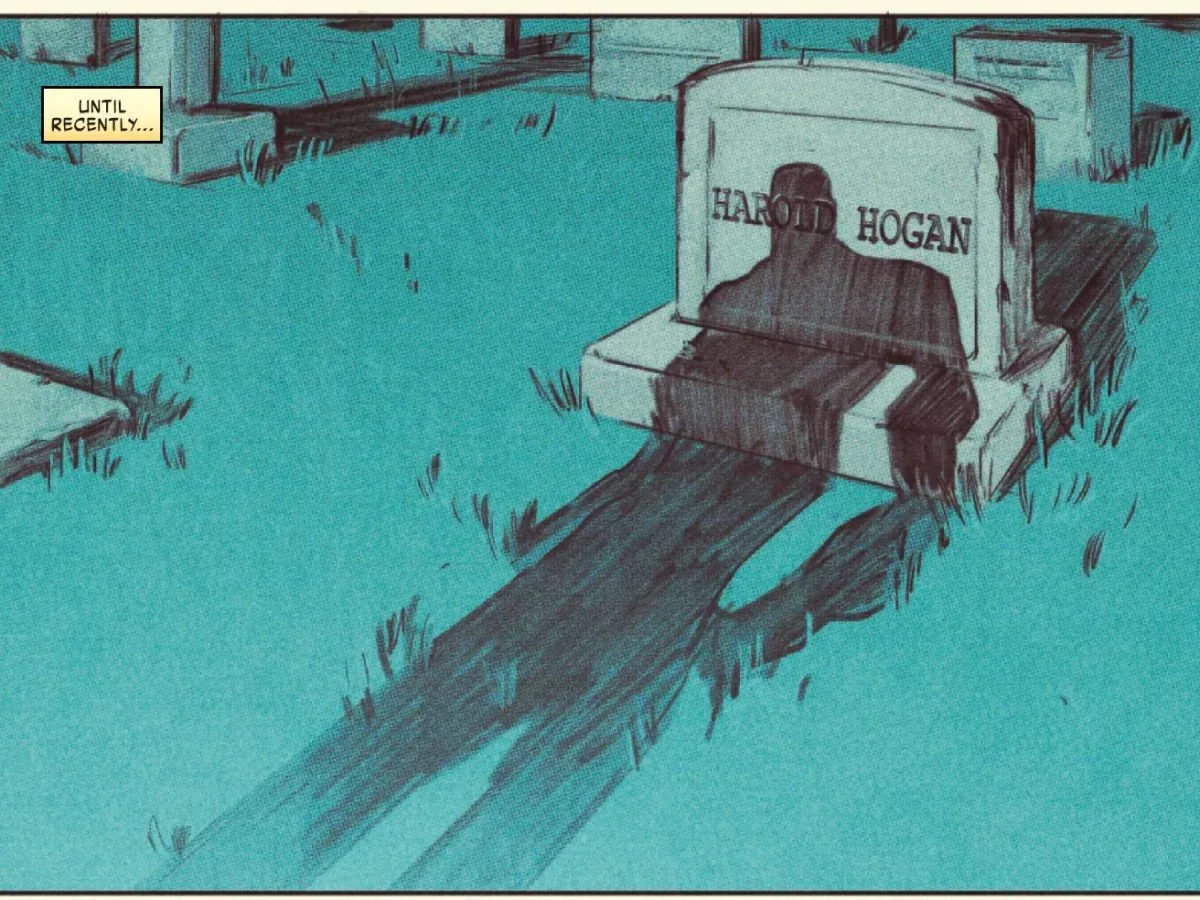
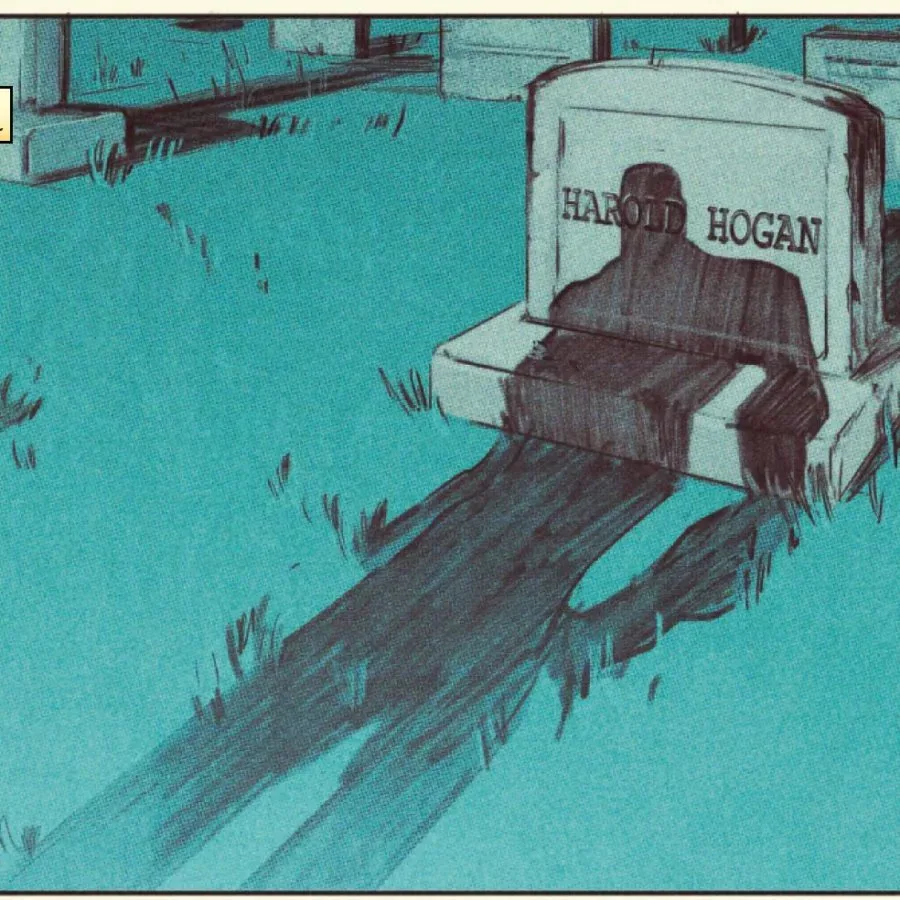
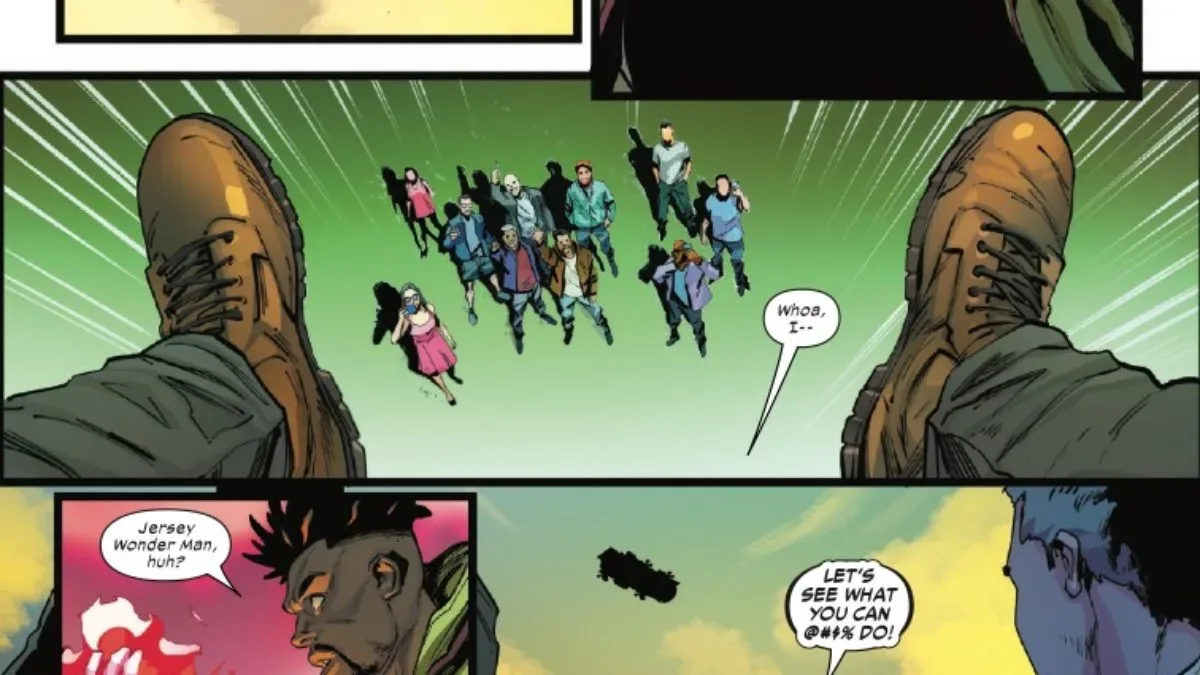
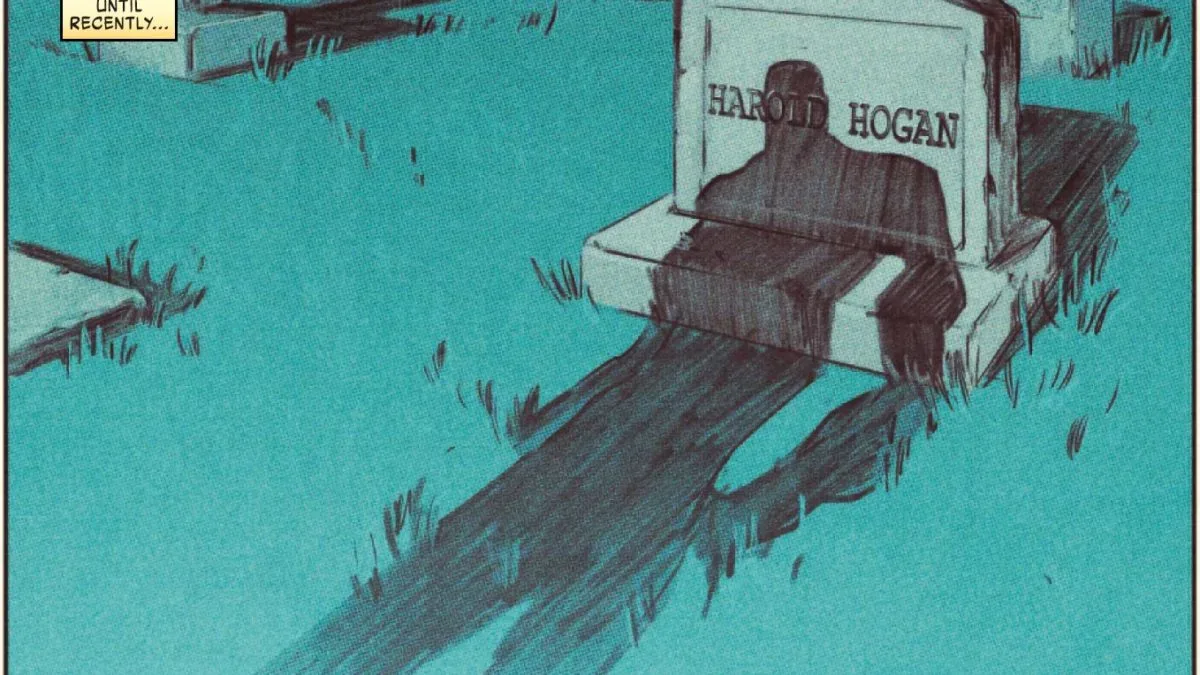
Marvel’s newest Iron Man issue brings an especially personal mystery into the open: Citizen V, the figure who has been stalking Tony Stark, is Happy Hogan. The revelation in Iron Man #10 identifies Happy as alive after his long-standing comic-book death, but it deliberately does not answer the immediate question readers will have: how did he come back?
Happy apparently does not know the answer himself. That makes the unmasking more than a familiar superhero revival. He has been operating under the Citizen V identity, a name associated with Baron Zemo and the Thunderbolts, while the circumstances of his return remain unclear to the character and, for now, to readers.
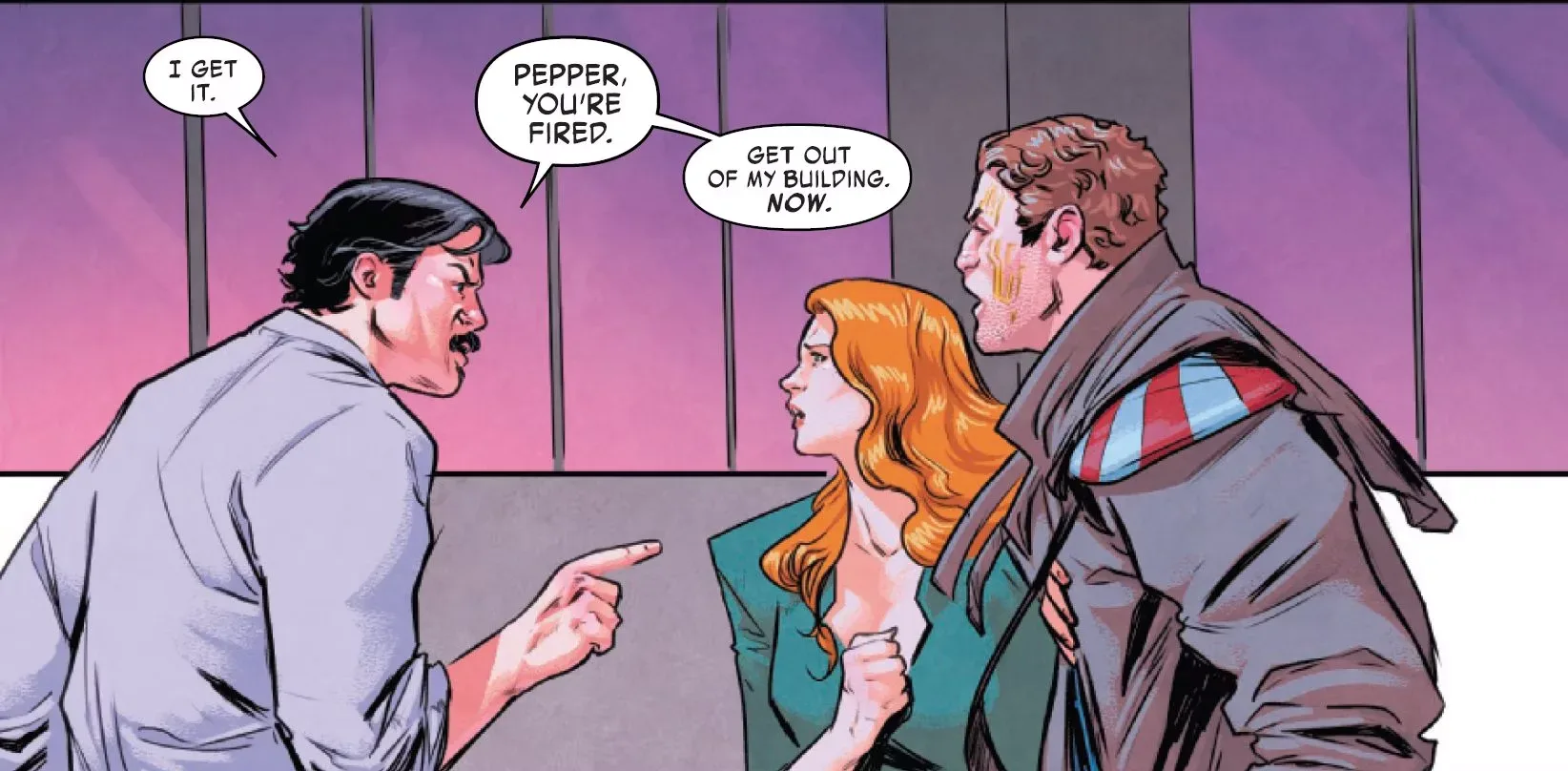
Written by Joshua Williamson with art by Carmen Carnero, the issue turns what could have been a straightforward identity reveal into a collision between people who have shared decades of fraught history. Happy is not merely an old Stark Industries colleague. He is one of Tony’s earliest confidants, a former husband of Pepper Potts, and a friend whose final comic-book chapter left Tony and Pepper with deeply painful choices to live with.
Citizen V is Happy Hogan — but the mystery is not solved
The solicit for Iron Man #10 frames Citizen V as a new presence tracking Tony, asking whether he is ally or enemy and whether he can shield Iron Man from Whiplash’s final assault. It also asks why the character adopted the name previously used by Baron Zemo in connection with the Thunderbolts.
The issue’s central answer is that this Citizen V is Happy Hogan. Yet the reveal opens as many questions as it closes. Happy’s lack of an explanation for being alive means the book has not presented his return as a fully resolved resurrection story. It leaves room for the series to investigate what happened, who might be involved, and why Happy emerged behind a masked identity tied to a very different corner of Marvel history.
Citizen V is significant because it is not simply a generic codename. The name carries Baron Zemo’s Thunderbolts association. In the context of this issue, Happy taking it on is an intentional puzzle: an identity with its own legacy now sits on a man traditionally connected to Iron Man’s most private personal circle. The result is a mystery built from both plot mechanics and emotional stakes.
Why Happy’s return lands differently for Tony and Pepper
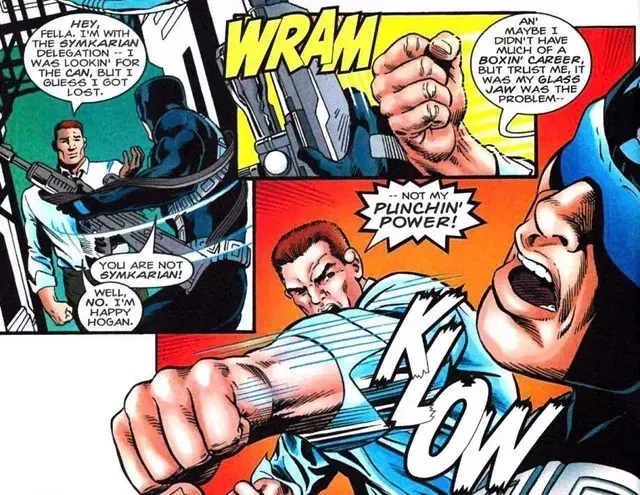
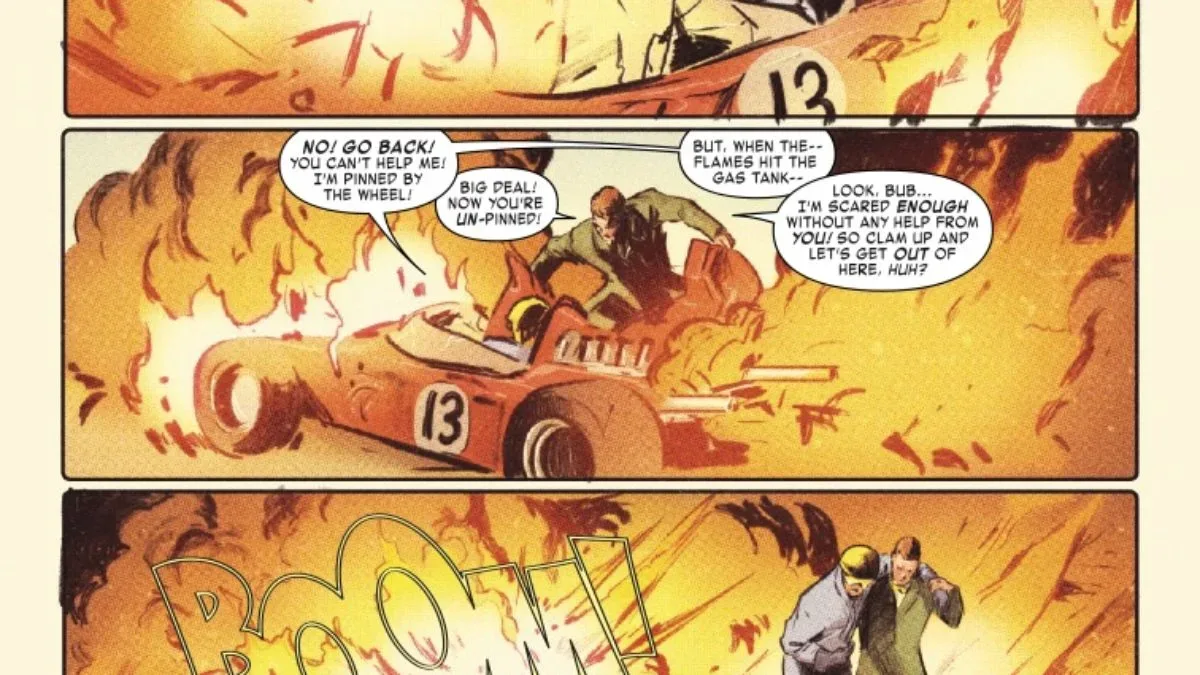
Happy has been part of Iron Man’s world since the early days of the character’s publishing history. Stan Lee, Robert Bernstein and Don Heck created him in Tales of Suspense #45 in 1963. A former boxer from Brooklyn, Happy earned his job with Tony after pulling Stark from the wreckage of an experimental race car. His nickname was a joke at odds with his demeanor: “Happy” was known for not smiling much.
That origin establishes the foundation of his relationship with Tony. He was not brought in as another powered hero or a rival inventor; he was the person who saved Tony’s life before the superhero identity became the defining fact of Stark’s life. Happy subsequently became one of the first people to know Tony was Iron Man.
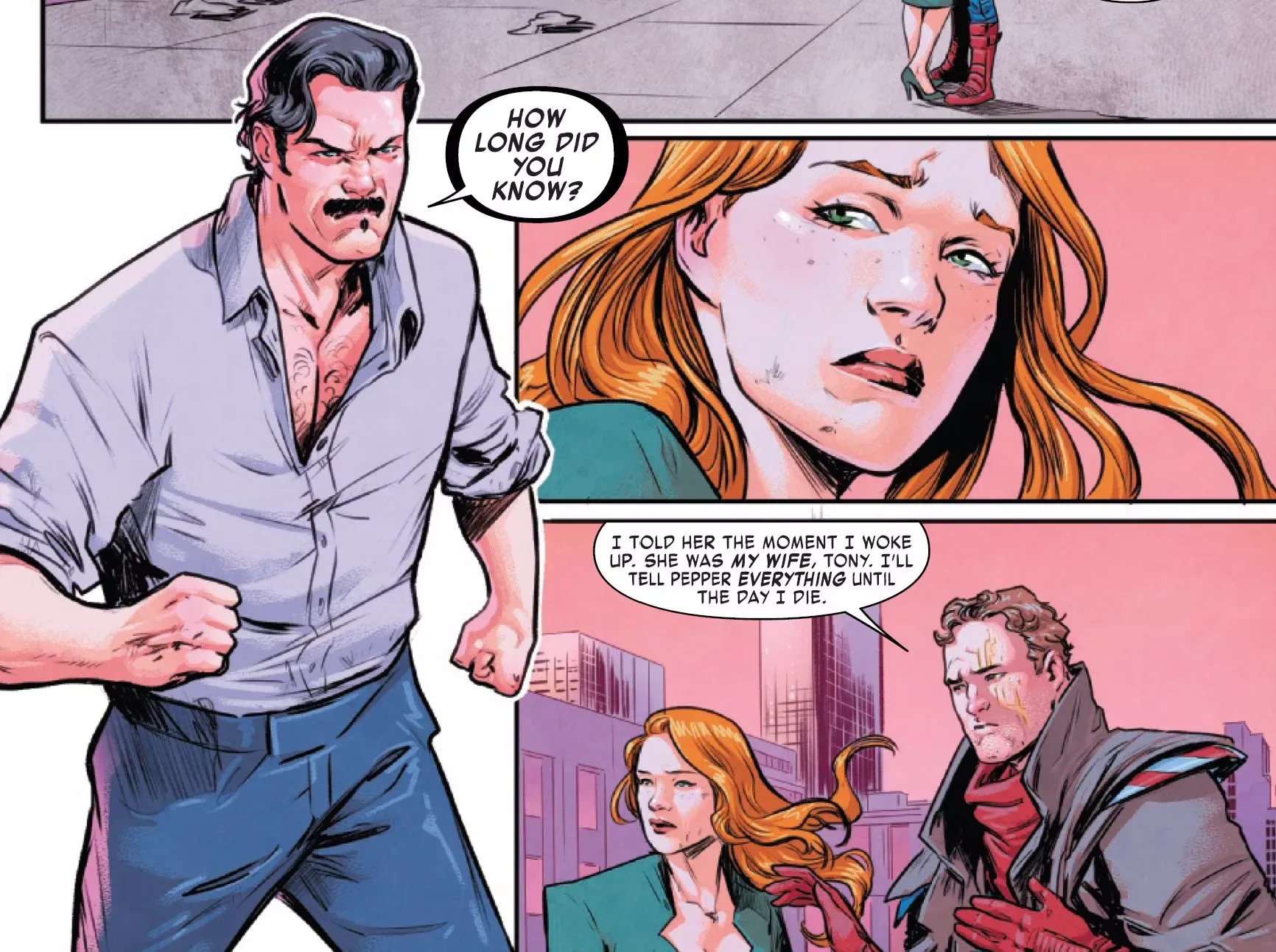
His connection to Pepper is just as essential to the new story. Happy and Pepper were married for a period, placing all three characters in a personal relationship that cannot be reduced to workplace loyalty. When Happy died following the events of Civil War, that bond was broken under agonizing circumstances. He had been injured by Spymaster and left in a vegetative state. Tony ultimately ended Happy’s life at Pepper’s request.
That background explains why a reunion cannot be treated as uncomplicated good news. Happy’s presence brings back a friend Tony lost, but also the memory of Tony’s role in his death and Pepper’s request that led to it. A revival does not erase those events; it makes them newly immediate. The issue positions the three characters to confront the gap between the version of their past they remember and the impossible fact of Happy standing in front of them.
Howard Stark and memory complicate the reunion
The emotional fallout also reaches into Tony’s relationship with his father. The issue connects the developing conflict to Tony’s memories of Howard Stark—or, more precisely, to what Tony believes he remembers. That wording matters. A story about memory can challenge a character’s certainty without necessarily changing every event outright. It can expose gaps, distortions, emotional blind spots, or the way old trauma shapes someone’s interpretation of the present.
For Iron Man, that is potent territory. Tony’s history with Happy is inseparable from the human support network around Stark Industries, while his relationship with Howard carries a different set of longstanding personal pressures. Bringing those threads together means Happy’s return may function as more than an explanation-driven mystery. It can also force Tony to reassess parts of his own past.
The issue also includes friends staging an intervention after events involving Magneto. An intervention in this context is a confrontation organized by people concerned about someone’s behavior or wellbeing. It is not a superhero battle in the conventional sense; its importance is that it places Tony’s closest relationships under direct scrutiny at exactly the moment Happy’s return destabilizes them.
That setup gives the series several pressures to balance at once: Whiplash’s threat, Citizen V’s secret identity, the unresolved cause of Happy’s revival, Tony’s memories of Howard, and the complicated history shared by Tony, Pepper and Happy. The issue therefore seems less interested in treating the reveal as a one-page surprise than in using it to create consequences.
A comic-book Happy Hogan return, distinct from the screen version
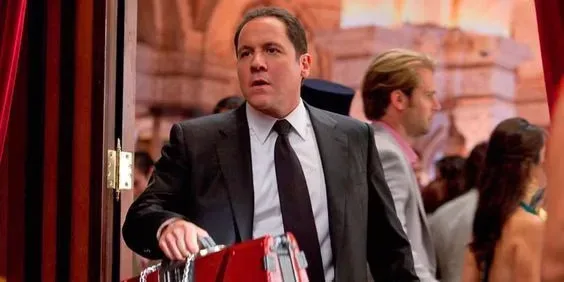
Happy’s return is particularly notable because the character’s comic and screen histories have taken very different paths. In comics, his death after the Civil War era had kept him absent from the ongoing status quo. On screen, however, Happy returned almost immediately in 2008’s Iron Man, played by Jon Favreau, who also directed that film.
Favreau’s Happy continued across the Iron Man films and later appeared in Spider-Man: Homecoming, Avengers: Endgame, Spider-Man: Far From Home, Spider-Man: No Way Home, and Deadpool & Wolverine. In that continuity, he is Stark Industries’ head of security. The character has therefore remained a visible part of the wider screen universe even while his comic counterpart was dead.
That contrast may make the comic reveal feel immediately familiar to audiences who know Happy primarily from the films, while still carrying a very different weight for readers of Iron Man comics. This is not a screen version being imported wholesale into the page. The issue’s Happy is tied to the traumatic specifics of the comics: Spymaster’s attack, his vegetative state, and the decision that ended his life.
There is potential for fans to connect the timing to Avengers: Doomsday, which is due in December, particularly because speculation has circulated around the prospect of Favreau’s Happy encountering Doctor Doom with Tony Stark’s face. But that is only speculation, not something established by Iron Man #10. The comic itself gives readers a more immediate story: Happy Hogan is back, he does not know why, and the people who mourned him cannot simply resume where their lives left off.
What the issue changes for Iron Man readers
The practical takeaway is simple: Iron Man #10 is not merely a Whiplash chapter or another masked-figure reveal. It is the point at which the current Citizen V storyline becomes explicitly tied to Happy Hogan and to Iron Man’s foundational supporting cast.
- Happy Hogan is alive: his status quo has changed, though the cause has not been disclosed.
- Citizen V’s identity is revealed: Happy has been using a name with Baron Zemo and Thunderbolts history.
- Tony and Pepper face unresolved grief: Happy’s death involved a decision Tony carried out at Pepper’s request.
- Howard Stark is part of the larger emotional thread: Tony’s recollections of his father are relevant to the conflict.
- The series has set up further answers rather than supplied them all: Happy’s unexplained revival remains a live mystery.
For a character often defined by armor, inventions and enormous external threats, this storyline pulls Iron Man back toward the people whose relationships gave Tony’s world its earliest shape. Happy’s reappearance has superhero-mystery elements, but its force comes from the ordinary human questions beneath them: whether a friend is really the same after an impossible return, whether grief can be revisited without reopening it, and whether Tony and Pepper can face a past they believed was permanently closed.
That personal emphasis is part of what makes Happy’s unmasking a meaningful turn rather than a simple status-quo restoration. The mask is off, but the harder work for Tony, Pepper and Happy is only beginning.
For another look at how pop-culture stories can use staged conflict and audience expectations, see this discussion of a wrestling-style “work” in the Mortal Kombat orbit.
Shop the products
Check current price, model and availability at the retailer.