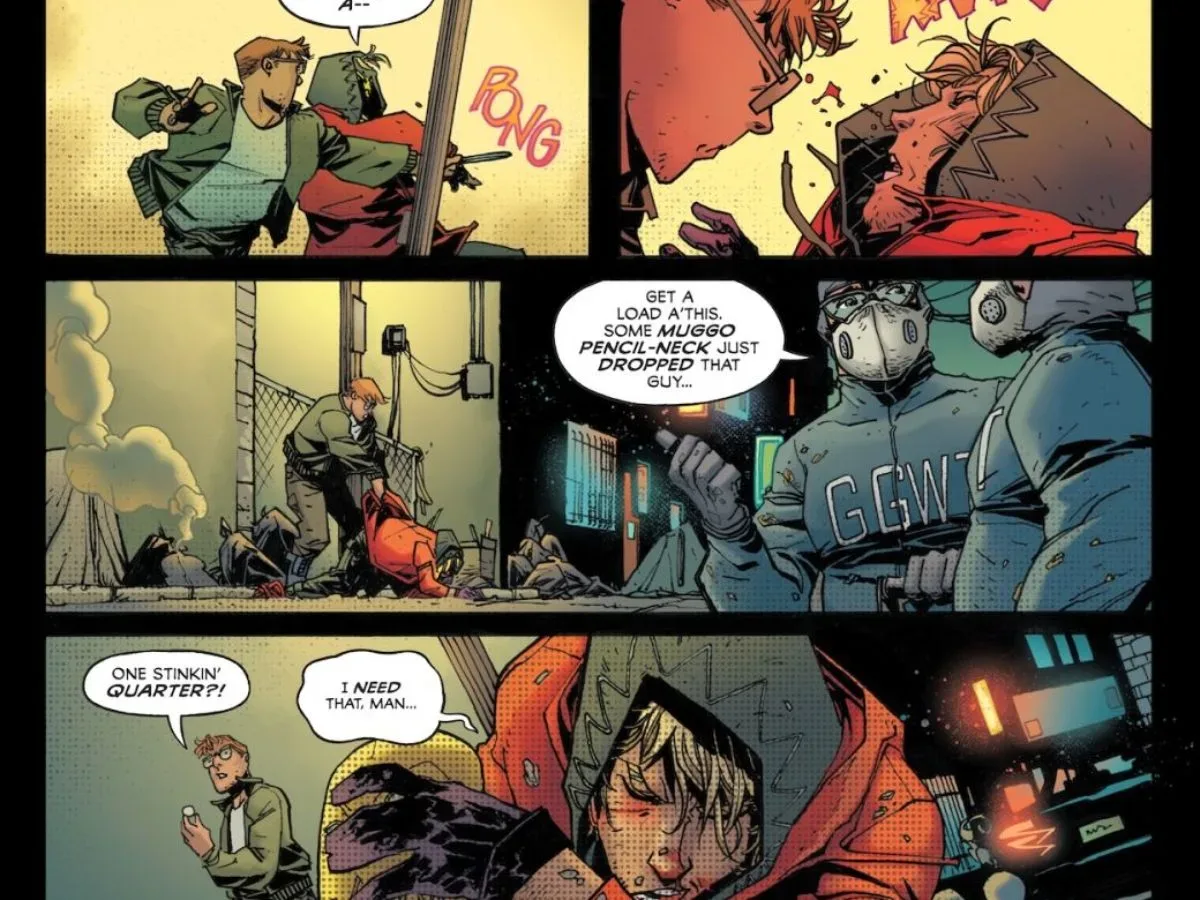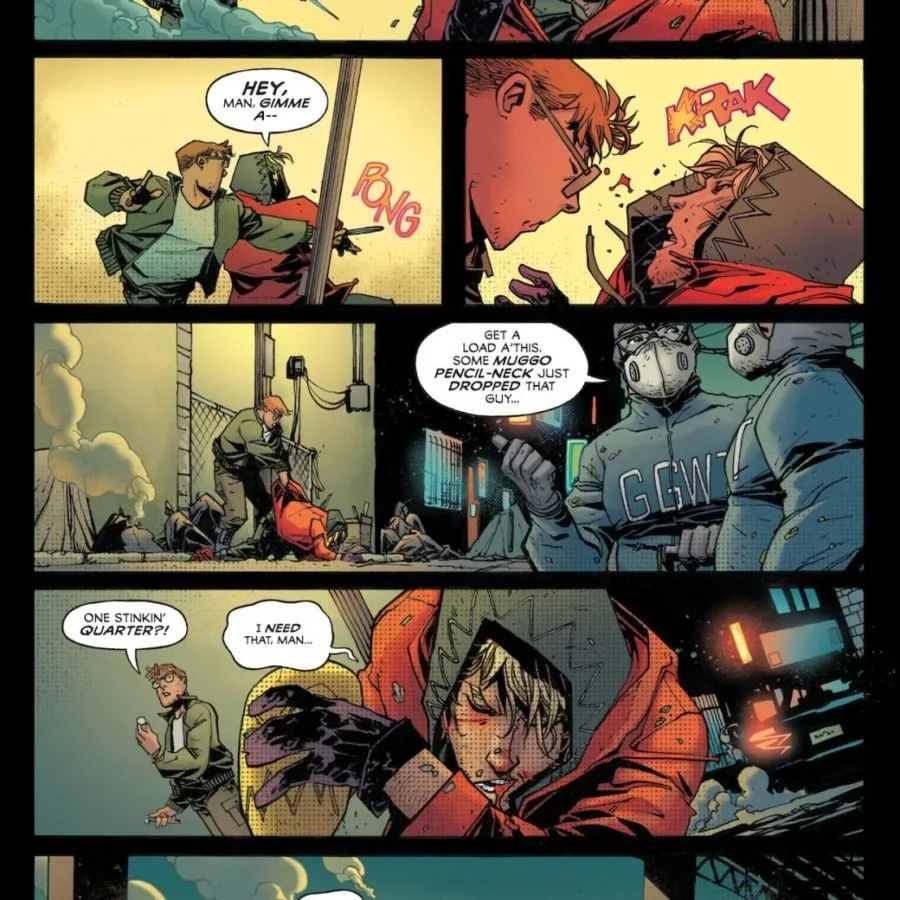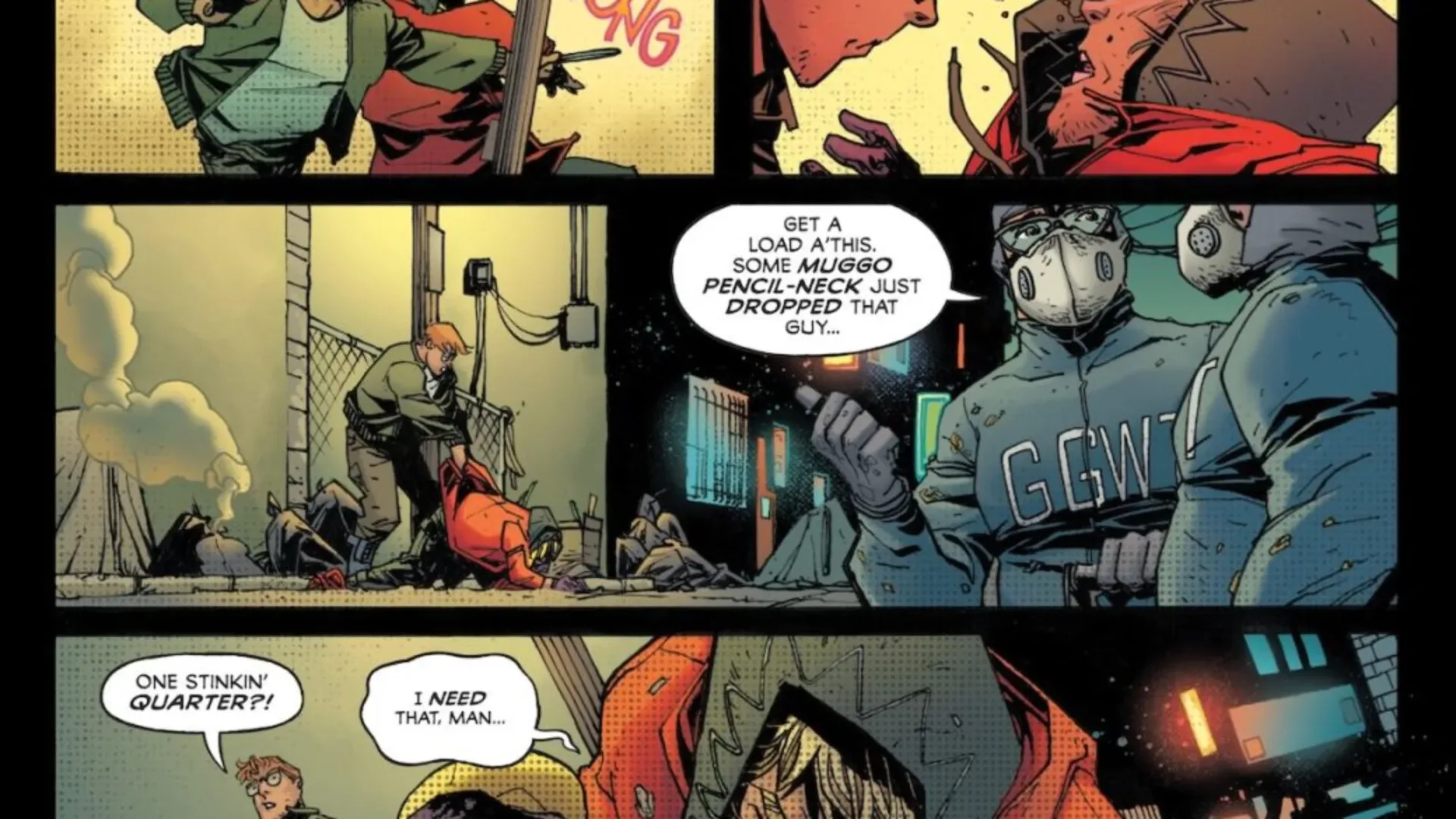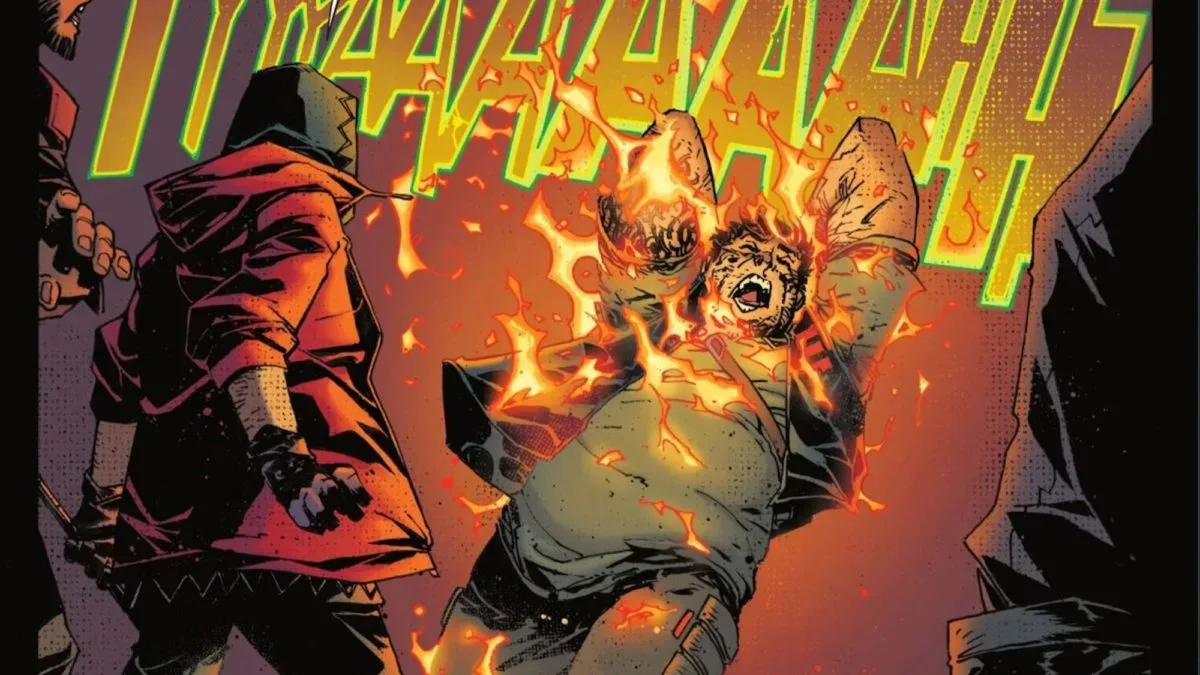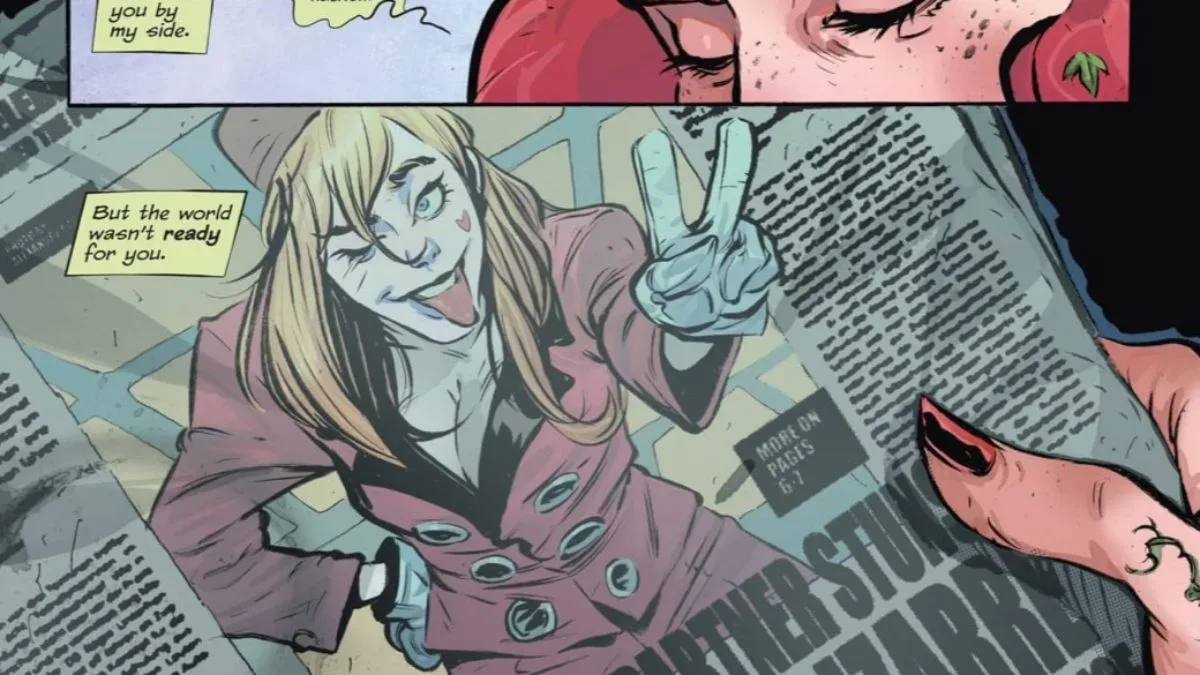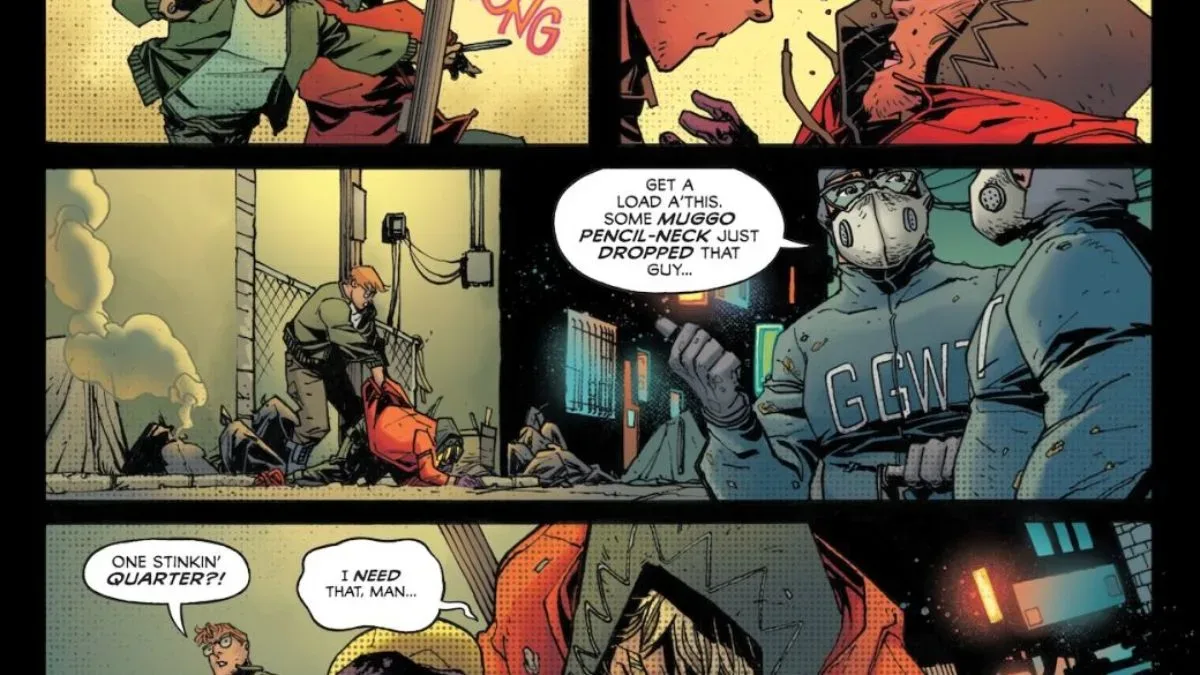
Gotham has never been short on terrible jobs, but Gangs of Gotham #1 gives Lonnie Machin, better known as Anarky, one with an especially unforgiving performance review: bring 100 low-level street gangs under one banner or face elimination.
The new DC Comics series is credited to writer Christopher Cantwell and artist Mike Henderson. It follows the events of Batman: Bad Seeds and places its conflict at street level, in Gotham’s East End. Rather than framing the story around a single robbery, supervillain scheme, or citywide spectacle, the premise is built around a sprawling power struggle among criminal groups that are currently outside the control of an organization called the Torus.
For Anarky, this is not an invitation to negotiate. It is an ultimatum. Success would earn Lonnie a place at the Torus table; failure means he will not survive it. That setup makes the first issue sound less like a conventional rise-to-power story and more like an extremely hostile merger, where every potential partner has a reason to refuse the deal—and a likely interest in making the person proposing it regret showing up.
An East End assignment with no easy win
The Torus has tasked Anarky with unifying gangs it does not already control. The number matters: 100 is large enough to establish that this is not a matter of winning over a few lieutenants or cutting one arrangement with a neighborhood crew. It is a decentralised political problem inside a criminal underworld, with Anarky expected to turn separate interests into a functioning hierarchy.
In the language of the book’s premise, a “seat at the table” means proximity to power within the Torus. But it also underlines the lopsided terms of the deal. Anarky is being asked to do the dangerous work of expansion before he is allowed into the organization’s leadership circle. The reward is conditional; the threat is immediate.
His first destination is Gotham’s East End, described as a free-for-all populated by some of the city’s most uncontrollable figures. That establishes the central obstacle plainly. Anarky is not walking into territory where one boss can issue an order and settle the question. He is entering a contested area where disorder itself appears to be the point.
That should create a useful tension for a character associated with anarchy. Anarky’s name suggests defiance of imposed control, yet his mission requires him to create control on behalf of a larger power. Whether Lonnie sees that as a betrayal, a tactical compromise, or merely the only available route to survival is the dramatic question the series is positioned to explore.
What “street-level” means here
“Street-level” is a comics shorthand for a story whose stakes are rooted in neighborhoods, rival organizations, individual survival, and local power rather than cosmic threats or reality-ending disasters. It does not mean the consequences are small. In a Gotham story, control of blocks, crews, and criminal networks can determine who gets protected, exploited, recruited, or pushed out.
Gangs of Gotham is described as a street-level criminal saga, and the solicitation’s focus stays firmly there: competing gangs, the Torus, Anarky’s position, and the East End. The series’ conflict is about control from the ground up. That makes the 100-gang demand an engine for encounters and alliances, but it also gives the book a built-in question about what “unification” really looks like when no one involved is obligated to cooperate.
It is worth separating what is established from what remains open. The available details confirm the Torus ultimatum, the East End setting, and the potential reward for Lonnie. They do not establish how the Torus operates, which gangs will matter first, or the specific methods Anarky will use to make progress. Those are story questions for the issue rather than facts to assume in advance.
Cantwell and Henderson take on a criminal Gotham story
Cantwell and Henderson are the announced creative team for the series, with Ariel Olivetti credited as the cover artist on the standard edition. The premise puts considerable pressure on character dynamics: Anarky must approach groups that are independent, hostile, or both, while operating under a deadline imposed by people who have already decided that failure deserves death.
That framework offers an inherently episodic structure without requiring the comic to become disconnected. Each gang can represent a new obstacle, negotiation, fight, or fragile partnership, while the Torus provides the recurring pressure that ties every choice together. The key distinction is that recruiting a faction and actually keeping it aligned are not the same thing. A deal made in one scene may create a problem in the next.
The East End’s “free-for-all” status also suggests that the challenge is not simply numerical. One hundred groups do not automatically become one force because a central figure declares it so. Leadership, territory, grievances, rivalries, and fear all complicate the kind of consolidation the Torus demands. The premise’s appeal lies in watching Anarky try to turn a near-impossible order into something that can hold.
Readers looking for another current DC character conflict can also see how a very different kind of pressure is being placed on Tony Stark in Iron Man #11’s Fantastic Four intervention setup. The situations are hardly identical, but both premises put the spotlight on a protagonist forced to confront a problem bigger than a straightforward punch-up.
Release details and cover options
Gangs of Gotham #1 is scheduled to arrive in shops on November 4, 2026, with a standard suggested retail price of $3.99. The standard issue is listed with Ariel Olivetti cover art.
Several additional covers are listed, giving readers choices without changing the core issue itself:
- Martin Simmonds cover — $4.99
- Christian Ward cover — $4.99
- Kyuyong Eom cover — $4.99
- Ariel Olivetti cover — $6.99
Variant covers are alternate cover-art editions of the same comic issue. They can carry different prices, as these listings do, but the supplied release information does not indicate different interior stories or extra story content for any of the covers. For readers who simply want to follow the series, the $3.99 standard edition is the direct entry point. Those choosing among the alternates are selecting a cover presentation and price point, not a separate chapter in Anarky’s story.
Why the first issue’s setup matters
Issue #1 has a clean, high-pressure hook: Anarky is compelled to achieve unity among a huge number of gangs that have not been brought under the Torus umbrella. It tells prospective readers who is under threat, what he must do, where he has to begin, and what happens if he fails.
Just as importantly, the mission creates conflict even before a specific opponent has been named. The Torus is an employer, judge, and threat all at once. The unaffiliated gangs are targets for recruitment but may be adversaries in practice. And Anarky himself has to navigate the contradiction of serving an organization’s expansion plan while carrying a name defined by resistance to systems of authority.
That is a sturdy launchpad for a Gotham crime comic. The East End is not presented as a problem waiting politely for one person to solve it; it is presented as a chaotic space where forcing an order may prove as dangerous as resisting one. On November 4, readers will find out whether Lonnie Machin can turn an impossible assignment into a path upward—or whether the Torus has sent him into a trap with a job title attached.