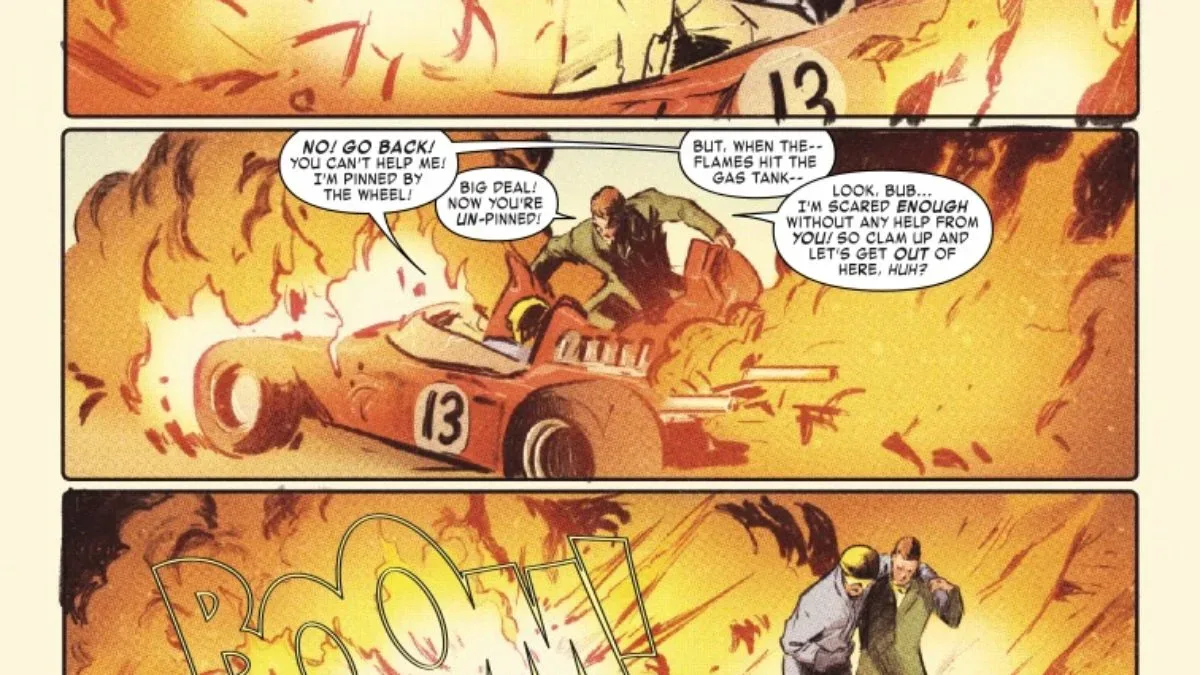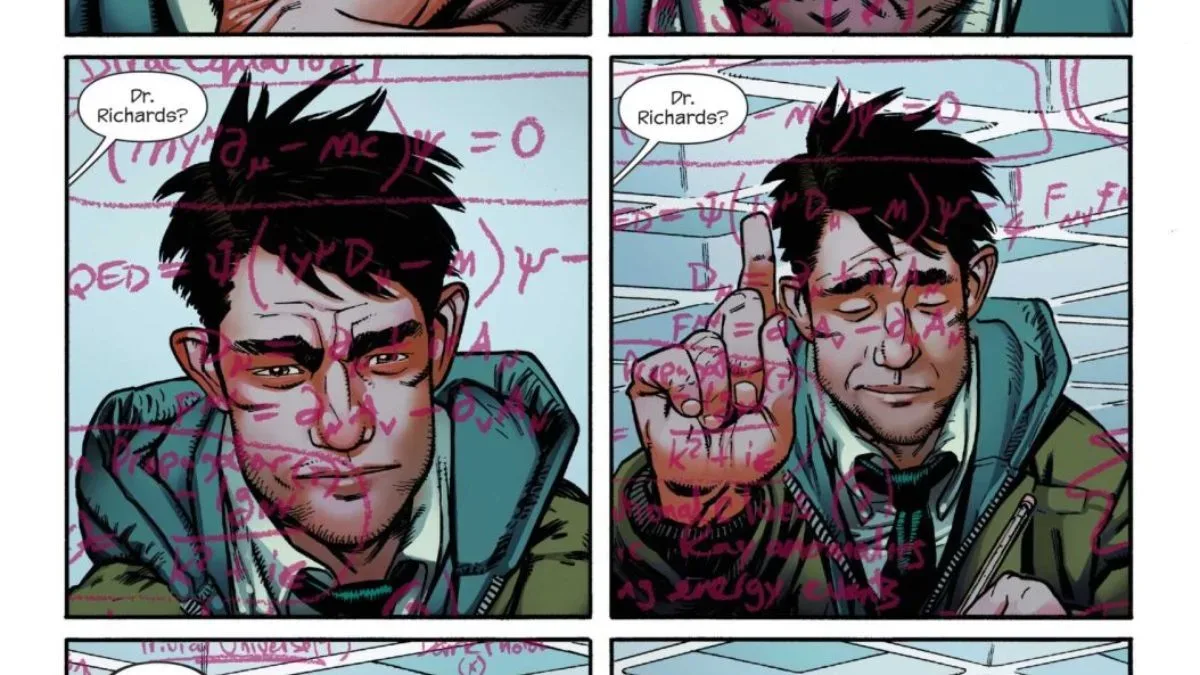
Iron Man #11 is set to put Tony Stark’s personal relationships under as much pressure as his armor. The 32-page Marvel issue, written by Joshua Williamson with art by Luca Maresca and a cover by Ryan Stegman, goes on sale November 4, 2026, for $4.99 in the US. Its central setup is pointed: Reed Richards and Sue Storm have been watching Tony from a distance, and Marvel’s First Family has decided that distance is no longer enough.
The solicitation frames the issue as “Fantastic vs. Invincible,” a character-focused collision between the Fantastic Four and the Armored Avenger rather than a straightforward super-powered brawl. It also asks the much larger question hanging over the book: what has Stark been doing, and how does it move him toward becoming the “Incarcerated Iron Man”?
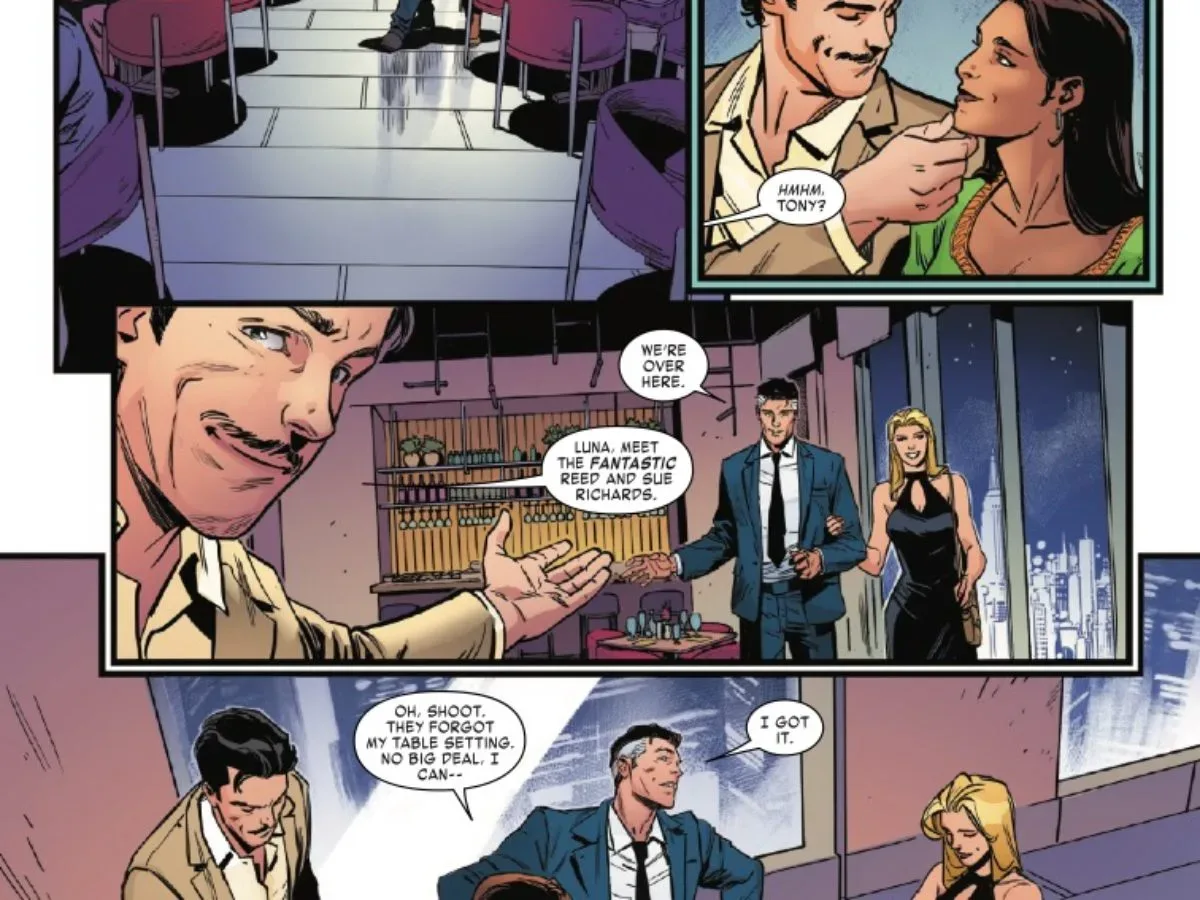
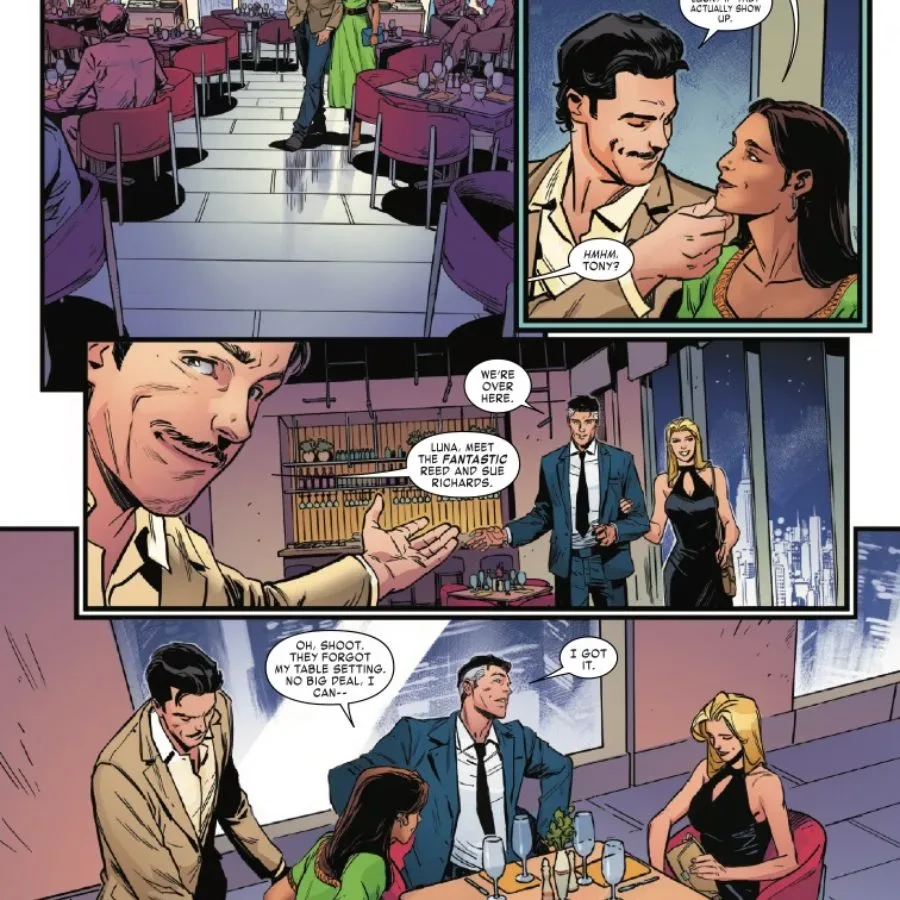
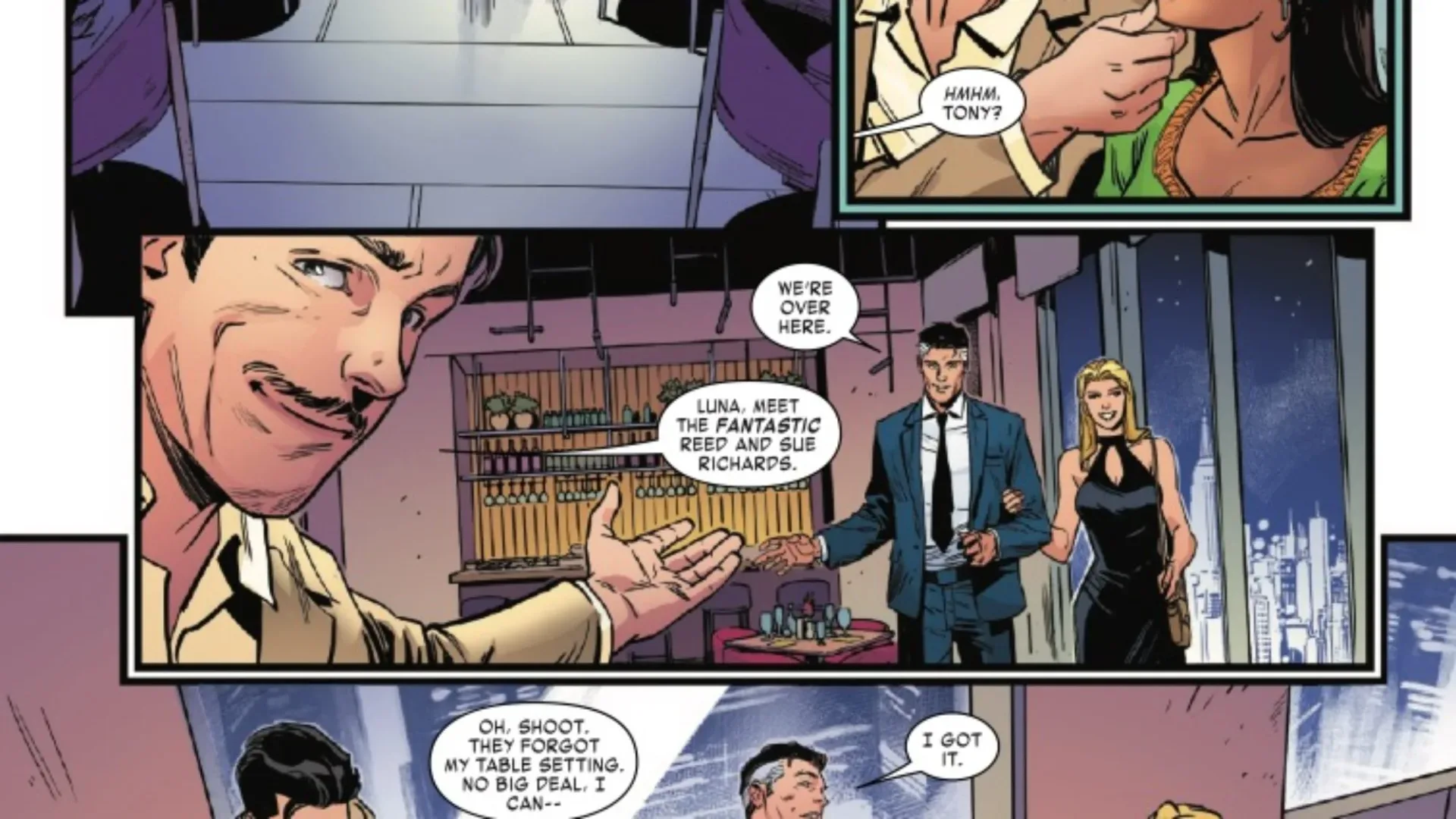
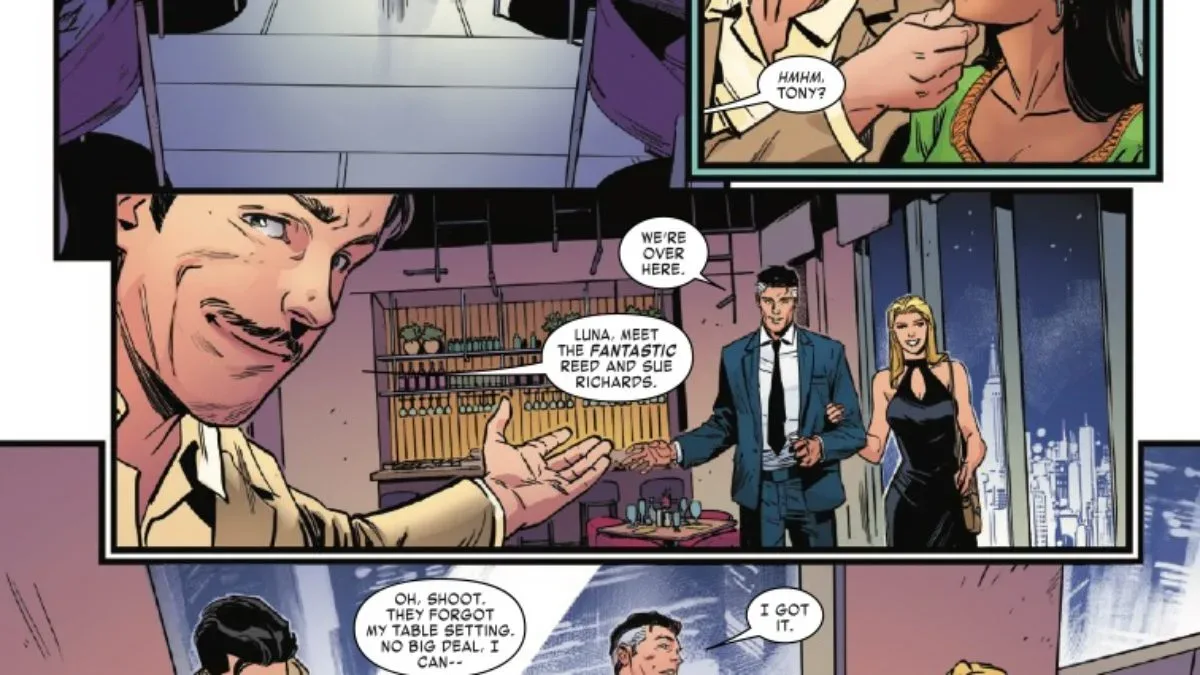
Preview material places the confrontation in an especially uncomfortable setting. Tony is having dinner with Luna when Reed and Sue arrive, turning what appears to be a private evening into an intervention. That premise gives the issue an immediate social tension that is different from the usual Iron Man emergency: there is no need to invent a giant threat when two of Marvel’s most formidable minds and personalities think their friend has crossed a line.
A confrontation built around trust
The notable detail in the setup is not simply that the Fantastic Four oppose Tony. Reed and Sue are described as people close to him who have been monitoring him, yet they have kept their distance until now. That wording makes their appearance feel less like a sudden disagreement and more like the point at which accumulated concern becomes too serious to ignore.
For more context, explore Drake Has 11 Albums on the Billboard 200 at Once, Led by HABIBTI and ICEMAN.
In superhero comics, an intervention is more than a difficult conversation. It often signals that a character’s closest allies believe ordinary persuasion has failed, or that the risks attached to a hero’s conduct have become too large to leave unaddressed. For a figure such as Tony Stark, whose intelligence, resources and armored identity are inseparable from his decision-making, the stakes of that loss of confidence can be substantial even before any formal incarceration enters the picture.
Reed Richards is particularly well suited to challenge Stark on questions of judgment and responsibility. Both characters occupy the rare space of being defined by exceptional scientific ability. The solicitation does not reveal the precise actions that have prompted Reed and Sue’s concern, so readers should not assume a specific wrongdoing from the preview alone. But the fact that they are finally confronting him directly establishes that this is not being treated as a minor personal dispute.
Sue’s presence matters just as much. The available material identifies both Reed and Sue as participants, making this a Fantastic Four response rather than an isolated Reed-versus-Tony intellectual clash. Together, their arrival gives the meeting the weight of family friends drawing a boundary, even if the conversation is happening at the worst possible time for Tony’s dinner plans.
What “Incarcerated Iron Man” signals—and what remains unknown
The issue’s solicitation explicitly connects the Fantastic Four confrontation to Tony becoming the “Incarcerated Iron Man.” That phrase is the clearest indication that the current storyline is heading into a major restriction on a hero normally associated with mobility, wealth and technological independence.
Incarceration means imprisonment or confinement. In the context of this issue’s marketing, it establishes a direction for the story, but it does not explain the mechanism. The preview information does not confirm who will imprison Tony, where it will happen, whether it stems from a legal process, or whether he will retain access to his armor. Those distinctions are important, and none should be filled in with speculation before the comic provides answers.
What can be said is that the label creates a powerful contrast with Iron Man’s usual image. Stark is commonly identified with an armored suit that represents escape, protection and personal control. “Incarcerated Iron Man” instead suggests a scenario in which control is contested or removed. The Fantastic Four’s concern may therefore function as an early warning within the narrative: people closest to Tony see consequences coming before the full situation reaches its breaking point.
There is also a key difference between a friend confronting someone and a friend acting as their jailer. The solicitation says Reed and Sue will “face down” the Armored Avenger, but it does not say that either of them is responsible for his coming incarceration. Their role, based on the material available, is to challenge him over his recent activity. Readers looking for certainty about blame, allegiance or the ultimate cause of Tony’s confinement will need to wait for the story itself.
Why the dinner scene is an effective opening pressure point
A dinner interruption may sound comparatively small beside the scale of Marvel’s universe, but its usefulness is precisely in how little room it leaves for theatrical escape. An emergency can be fought. A villain can be blasted. A difficult conversation with friends requires a different kind of response, especially when it arrives in front of another person at the table.
Luna’s presence gives the preview scene an added human dimension without providing enough information to define her role in the wider story. The material shows Tony dining with her; it does not establish what she knows about the problem, how she responds to Reed and Sue’s arrival, or whether she will be involved beyond that scene. Still, the setting turns the Richards’ visit into a disruption of Tony’s attempt at normality rather than a confrontation staged in a lab, headquarters or battlefield.
That framing also lets the issue test an enduring question around Iron Man: how does Tony respond when the challenge is not merely technical? A suit, a system or a strategic plan can be revised. Trust from friends is harder to repair, particularly if those friends believe that they have already waited too long to speak up.
The creative team and issue details
Joshua Williamson is credited as writer and Luca Maresca as artist on Iron Man #11. Ryan Stegman provides the main cover. The issue is rated T+ and carries a 32-page count.
Marvel has also listed three variant editions. Each has a $4.99 US price:
- Junggeun Yoon 1:25 Variant — listed at $6.25 in Canada.
- Peach Momoko Momo-Tone Variant — listed at $6.25 in Canada.
- Takashi Okazaki Variant — listed at $6.25 in Canada.
A 1:25 variant is an incentive cover designation. The “1:25” generally refers to a retailer ordering ratio: retailers may qualify to order one copy of that variant for every 25 copies of the associated standard issue they order. It is not a story designation, and the provided listing does not indicate any content difference between that edition and the regular comic.
“Momo-Tone” identifies the Peach Momoko variant by its cover treatment and branding. As with the other variants, the listing establishes it as an alternate cover option, not as a separate chapter or an additional issue. Readers primarily interested in the plot can look to the standard edition; those choosing among covers should confirm ordering details with their preferred comic shop, particularly for the ratio variant.
What readers can reasonably expect from Iron Man #11
The reliable expectations are narrow but compelling. Reed Richards and Sue Storm are stepping in after observing Tony’s recent behavior from afar. Their direct confrontation takes place during Tony’s dinner with Luna. And the story is positioned as part of the path to an “Incarcerated Iron Man” status quo.
Everything else remains deliberately under wraps. The solicitation does not reveal the conduct at the center of the disagreement, whether the wider Fantastic Four will become involved, or exactly when and why incarceration will occur. That restraint is useful here: the issue is selling consequence and conflict without prematurely supplying the answer.
For Iron Man readers, the attraction is the prospect of a storyline where Tony’s greatest obstacle may be accountability from people who know him well. For Fantastic Four readers, it offers Reed and Sue in a role that emphasizes personal responsibility rather than a purely cosmic or scientific crisis. Iron Man #11 arrives November 4, 2026, and its dinner-table ambush promises that Tony’s next problem cannot be solved simply by putting on the suit.