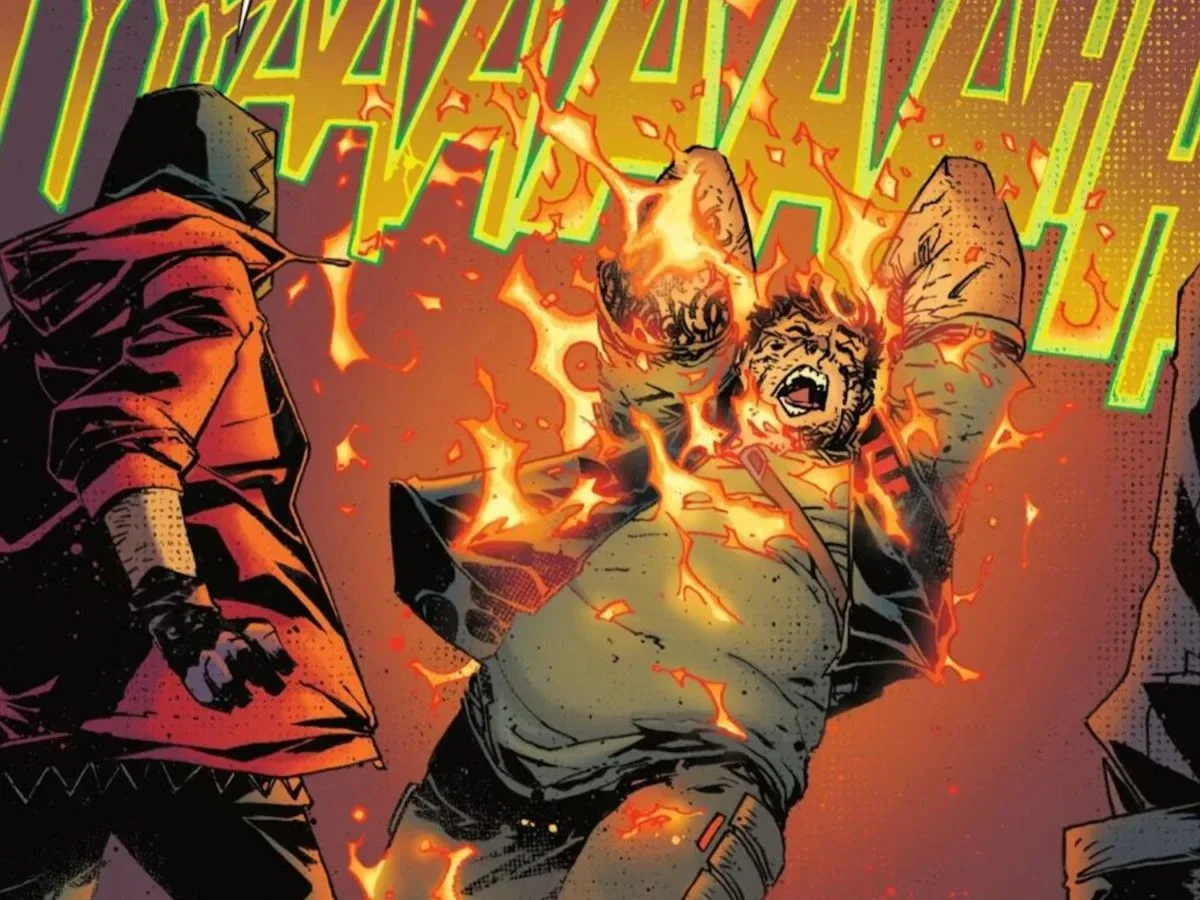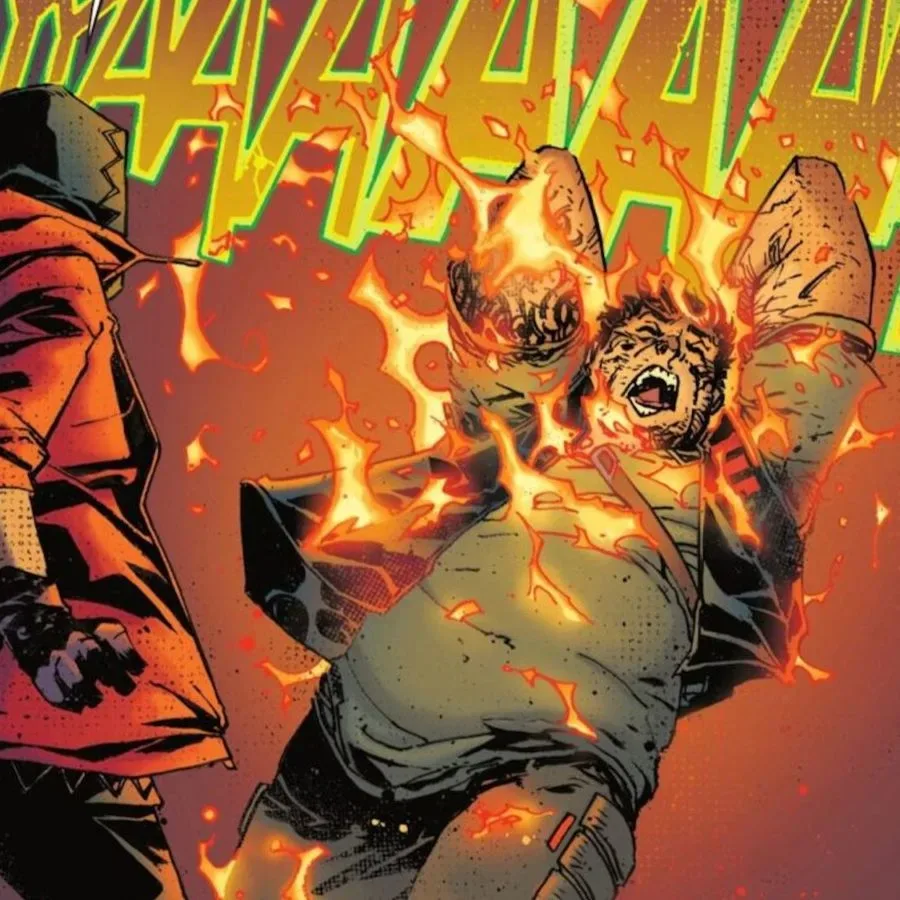
Gotham City is trading an extinction-level botanical nightmare for the less manageable mess of neighborhood criminal politics. Gangs of Gotham, a new DC comic series from writer Christopher Cantwell and artist Mike Henderson, is set in the aftermath of Batman: Bad Seeds and moves the focus onto a fractured underworld. At its center is Lonnie Machin, better known as Anarky, who has been handed a proposition designed to sound like a promotion and function like a death sentence.
The Torus, which already controls part of Gotham’s gang landscape, orders Anarky to bring 100 lower-level street gangs under its banner. Success earns him a place at the table. Failure means he dies. That premise makes the series a street-level criminal saga rather than simply another story in which Gotham’s villains briefly unite before Batman breaks up the meeting. The question is not merely whether Anarky can win a fight; it is whether he can turn splintered groups with their own territory, identities and grudges into a usable political coalition.
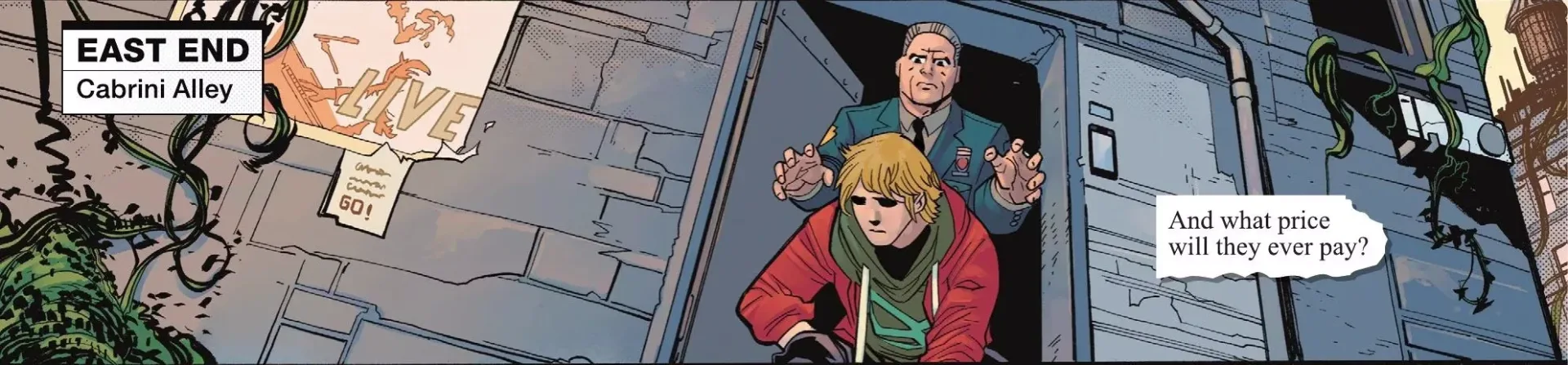
Gangs of Gotham #1 is scheduled for November 4, 2026, at $3.99. Cantwell writes the series, Henderson provides interior art, and Ariel Olivetti is credited on the cover. The first issue sends Anarky to the East End, characterized as a chaotic zone populated by some of the city’s hardest-to-control figures. That immediately establishes the scale of his task: he is not arriving to claim territory that has already accepted a chain of command. He is entering an area where control itself is the prize.
Anarky’s capture changes what the assignment means
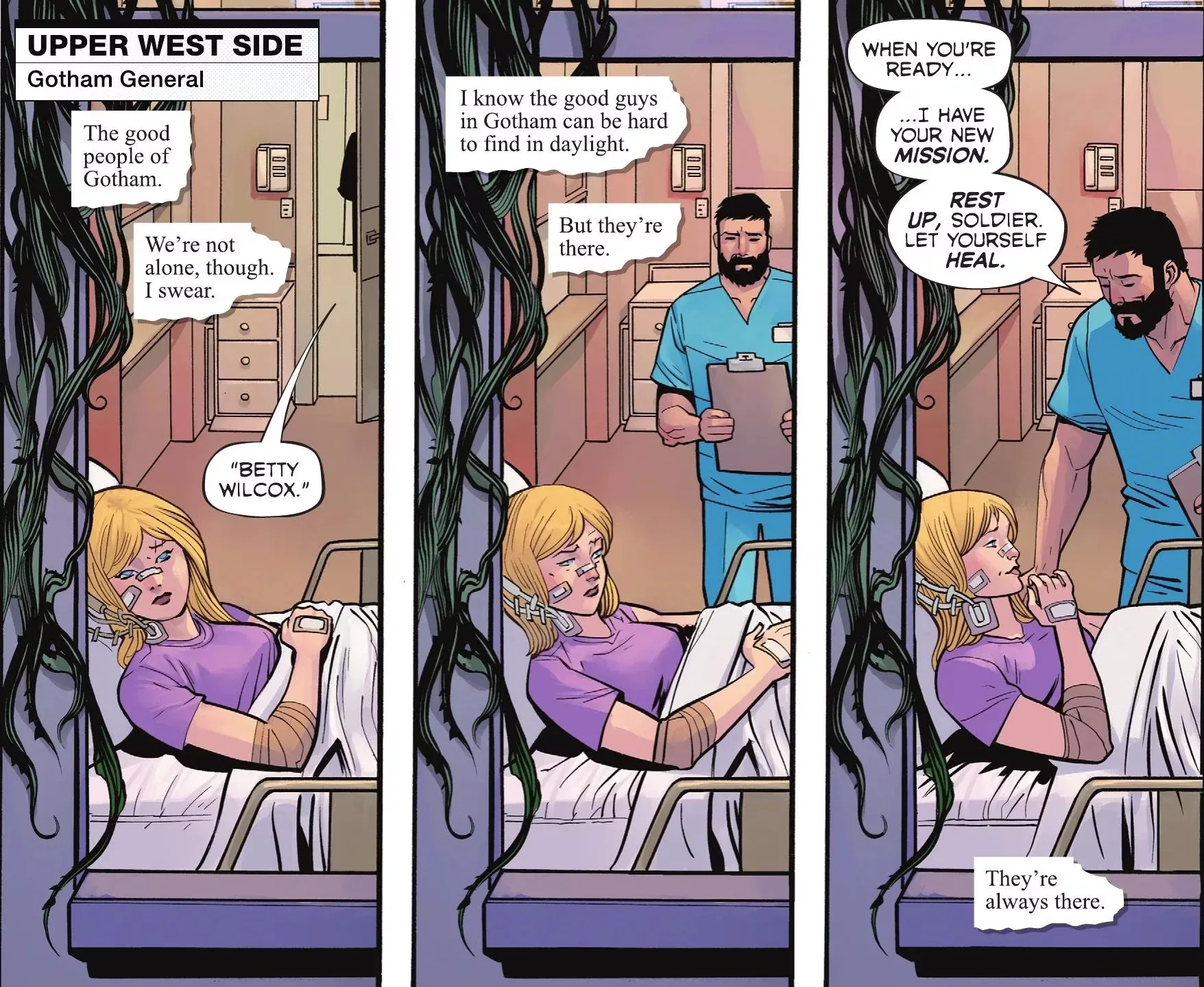
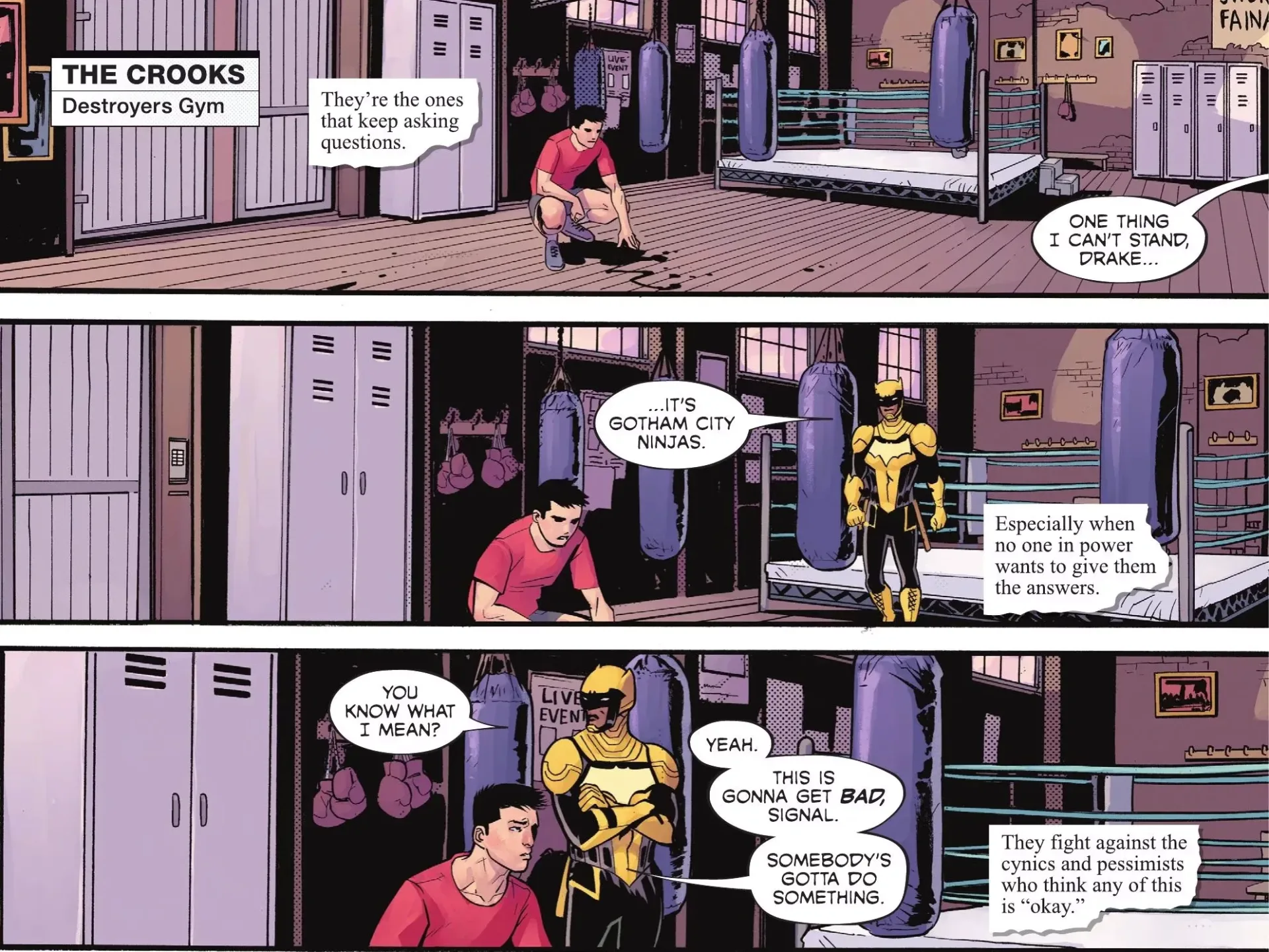
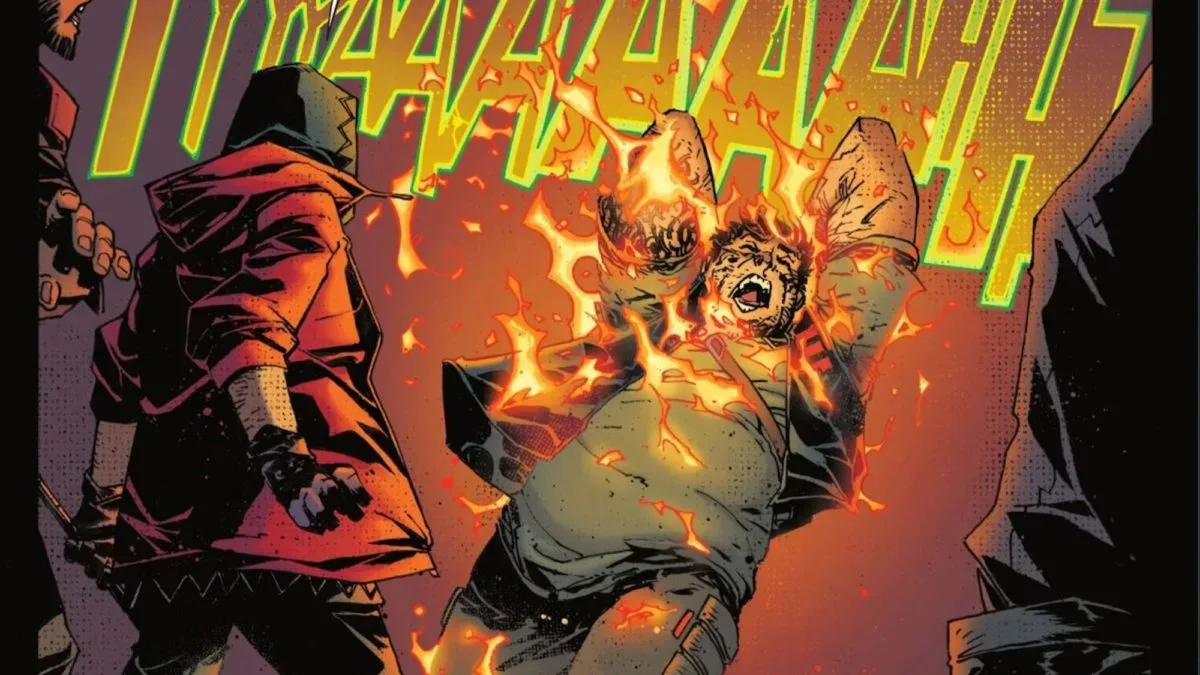
The lead-in from Batman: Bad Seeds leaves several Gotham figures in altered positions. Stephanie Brown is shown at Gotham General and receives a new mission from Batman when she is ready. She has adopted the name Clu, rather than the Betty Wilcox identity mentioned in the prior storyline. Tim Drake, as Red Robin, and Duke Thomas, as Signal, are dealing with the fallout while also noting the emergence of Gotham City ninja gangs.
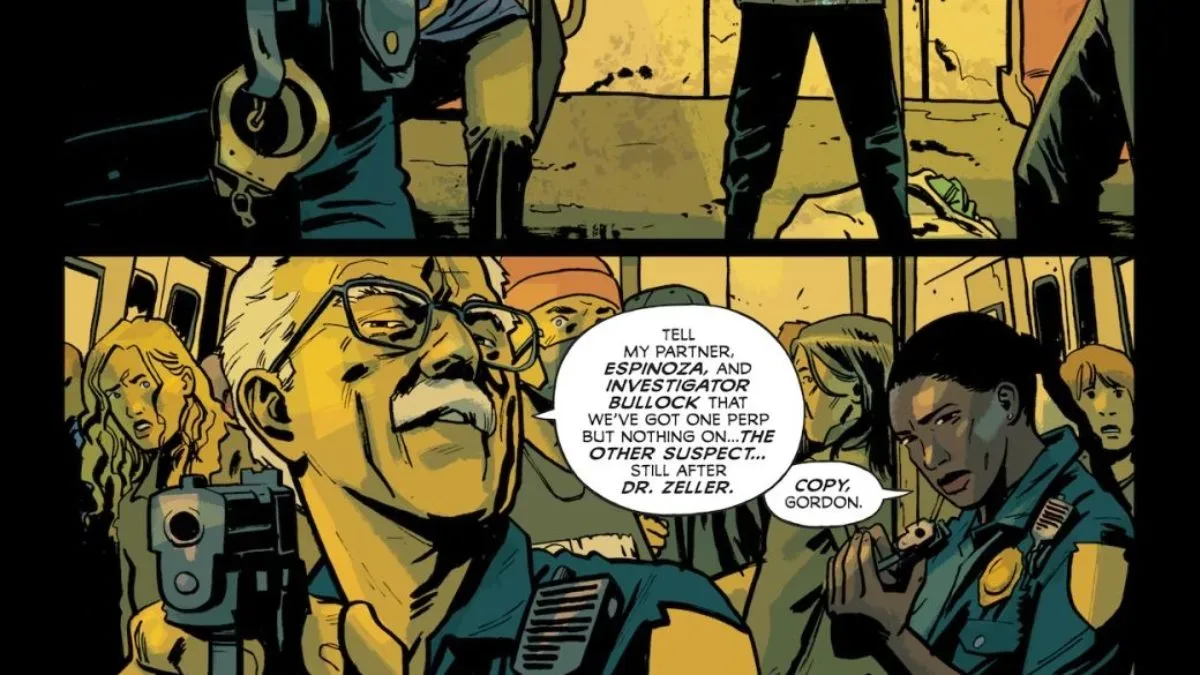
Anarky’s apparent capture is the most consequential thread for the new book. Arnold Flass, a corrupt Gotham police officer who had returned from the dead, appeared to take Lonnie into custody. Flass had worked for Vandal Savage and may have shifted allegiances. But the setup for Gangs of Gotham indicates that Anarky was actually seized by Minotaur’s people and redirected for Minotaur’s larger purpose.
That distinction matters. An arrest suggests a battle between a masked activist and the institutions of Gotham. A capture engineered by people connected to Minotaur suggests Anarky has become an asset to be deployed within the criminal ecosystem. The Torus ultimatum turns him into an operator working under extreme coercion. He may be promised influence, but the promise comes with a deadline implied by the stakes and no visible room to walk away.
Street-level is a useful term here. It does not just mean that the story takes place in alleys instead of in outer space. It describes a narrative scale focused on territory, rank, alliances, intimidation and immediate consequences for people on the ground. Gotham has recently endured Poison Ivy’s attack, which transformed the city into a prehistoric nightmare and created an urgent race to reach sunrise. Once that broader catastrophe ends, a vacuum can emerge: normal routines are disrupted, local forces test one another, and organized interests see an opening to consolidate power.
That makes the book’s gang premise a logical aftermath story. The superhero crisis may be resolved, but order does not automatically return with it. The mood of a hostile city street can be just as important as the monster at its end; Silent Hill’s famous alley opening offers a useful broader example of how a threatening urban space can turn a simple walk into a source of tension. In Gangs of Gotham, the threat is rooted in competing factions rather than a player-controlled route, but the East End is positioned to carry that same pressure.
Clu is not framed as a supporting complication
The solicitation for issue #2, scheduled for December 2, gives Stephanie Brown a direct role in the power struggle. By that point, Anarky has secured a place inside the Street Demons gang and begins climbing through Gotham’s underworld. Clu has her own plans for that gang, placing her in conflict with Lonnie at precisely the moment he needs stability.
The setup gives the pair a sharply practical choice: cooperate, or keep out of each other’s way. Neither is presented as easy. For Anarky, every competing scheme risks undermining his forced project of unification. For Stephanie, Anarky’s ascent is not necessarily something to tolerate simply because they share a past connection to Gotham’s vigilante world. Her adoption of the Clu name signals a distinct operating identity, and the series treats her objectives as meaningful enough to threaten the ladder Lonnie is trying to climb.
Damian Wayne is also slated to arrive in issue #2. The issue description promises that “bat blood” will be spilled in the streets, but it does not explain Damian’s full role or allegiance in the confrontation. What is clear is that the book’s initial conflict is not confined to two gang strategists negotiating turf. Gotham’s larger network of costumed figures remains close enough to intervene, complicate deals or become targets.
The Street Demons battle becomes a fight for the East End
Issue #3, scheduled for January 20, 2027, narrows the immediate conflict to Anarky versus Rash for the top position in the Street Demons. The solicitation makes the stakes larger than leadership of one group: the winner’s position will help determine the future of Gotham’s East End. That is a key escalation. Anarky’s original mission concerns 100 unaffiliated or uncontrolled gangs, but his ability to fulfill it may depend on first securing credibility inside a single important faction.
Stephanie’s story continues on a separate but connected track. She makes a deal with Holly Robinson’s House that is described as nearly impossible to complete. The available details do not define the terms of that bargain, so it would be premature to assume whether it is an alliance, a transactional agreement or a trap. What the solicitation does establish is that Steph may have to stake everything on Anarky despite the friction between them. That creates a potentially unstable dynamic in which mutual reliance does not equal trust.
What readers need before issue #1
The immediate context is straightforward. Batman: Bad Seeds: Sunrise, an oversized one-shot released October 28, 2026 for $5.99, concludes the larger event in which Poison Ivy’s assault threatens to permanently transform Gotham. It is written by Matt Fraction and G. Willow Wilson, with art by Giuseppe Camuncoli and Cliff Rathburn. Its ending places Stephanie, Anarky, Tim and Duke on the paths that feed into this new series.
For readers following only Gangs of Gotham, the essential names are equally clear:
- Anarky/Lonnie Machin: the reluctant focal point, tasked with unifying gangs for the Torus under threat of death.
- Clu/Stephanie Brown: an active player with a mission and ambitions involving the Street Demons.
- The Torus: the controlling force that gives Anarky his impossible assignment.
- Minotaur: the figure whose people appear to be responsible for taking Anarky and putting him to work.
- Street Demons and Rash: the gang and rival leadership challenge central to the early arc.
The strongest hook is that every apparent step forward has an attached cost. Joining the Street Demons may help Anarky build the leverage the Torus demands, but it also makes him vulnerable to Rash, Clu and whatever intervention Damian Wayne brings. Helping Stephanie may be necessary for survival, yet it may also place Anarky’s goals beneath a deal he did not make. In a Gotham still recovering from the extraordinary events of Bad Seeds, Gangs of Gotham is set to ask who gets to define the city’s next order—and whether Anarky can survive becoming part of it.