Spoilers for the setup and solicited material for Batman: Bad Seeds follow.
Gotham’s plant-driven emergency is heading toward dawn, but the end of Batman: Bad Seeds does not appear to be a simple matter of Batman finding the right antidote and restoring the skyline. Four comics dated October 28, 2026—Batman: Bad Seeds: Sunrise #1, Batman: Bad Seeds: Gotham General #1, Harley Quinn #67, and Poison Ivy #49—approach the event from sharply different corners of the city.
The shared premise is severe: Poison Ivy’s attack has turned Gotham into a hostile, prehistoric-feeling landscape of aggressive vegetation and plant creatures. The danger extends beyond the visible vines and monsters. People are dealing with spores, respiratory distress, hallucinogenic episodes, fires, failed power, and disrupted transportation. Gotham may be known for superhero theatrics, but this chapter of the event is also interested in what catastrophe does to people who cannot simply grapple-gun out of it.
That makes the final wave feel less like one issue delivering an ending and more like a coordinated snapshot of a city at its breaking point. Batman and his allies have the apparent deadline of first light; Harley Quinn is trying to reach Pamela Isley; Poison Ivy is suddenly powerless and hunted; and hospital workers are left to treat the damage while political figures and public narratives shift around them.
A dawn deadline for Gotham
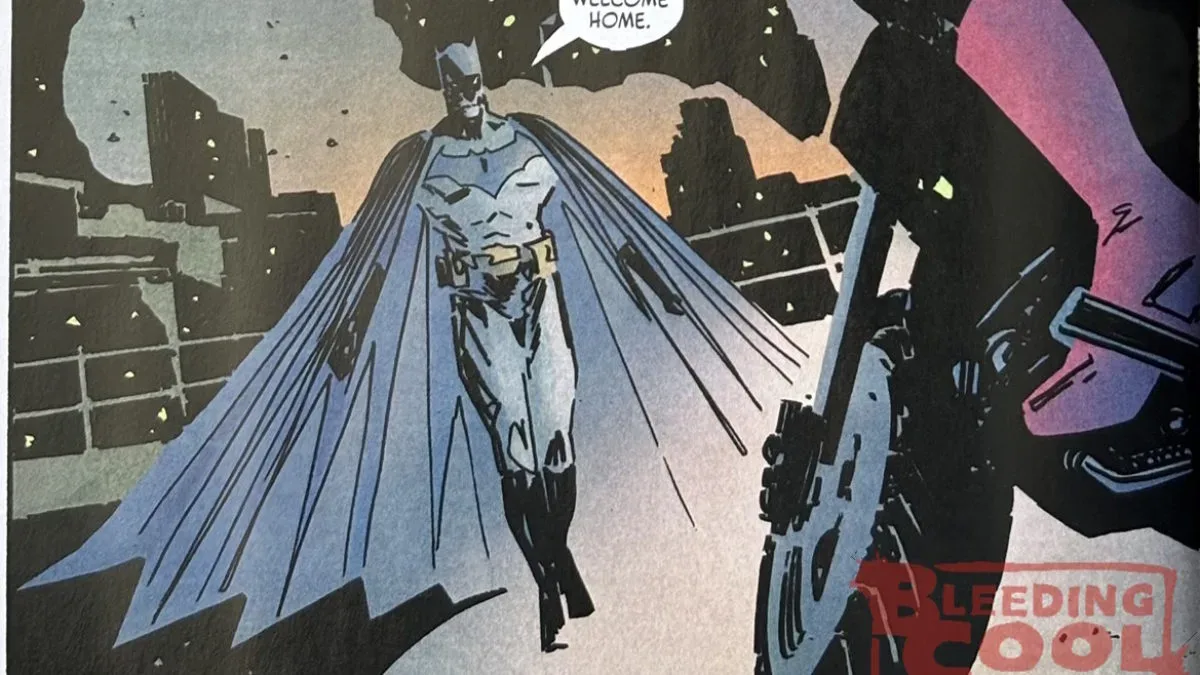
Batman: Bad Seeds: Sunrise #1 is the oversized one-shot positioned as the event’s climactic installment. It is written by Matt Fraction and G. Willow Wilson, with art by Giuseppe Camuncoli and Cliff Rathburn. The solicitation frames Poison Ivy’s action as an assault unleashed at sunset, one capable of permanently remaking Gotham if it is not stopped before sunrise.
The title matters because some early references call the special Sunset, while the published solicitation identifies it as Sunrise #1. The latter is the clearest available listing for the October 28 release. Either way, the sunset-to-sunrise structure establishes a very literal ticking clock: the city’s nightmarish transformation must be confronted before daybreak changes the stakes forever.
Poison Ivy is no longer operating from a position of civic authority. She has been removed as Gotham’s mayor, yet the city remains entangled in the consequences of her reign and her attack. Vandal Savage, meanwhile, is still police commissioner. That is an intentionally uneasy distribution of power for a Gotham event: Ivy has lost office and become public enemy number one, while Savage remains an institutional force even as the city collapses around him.
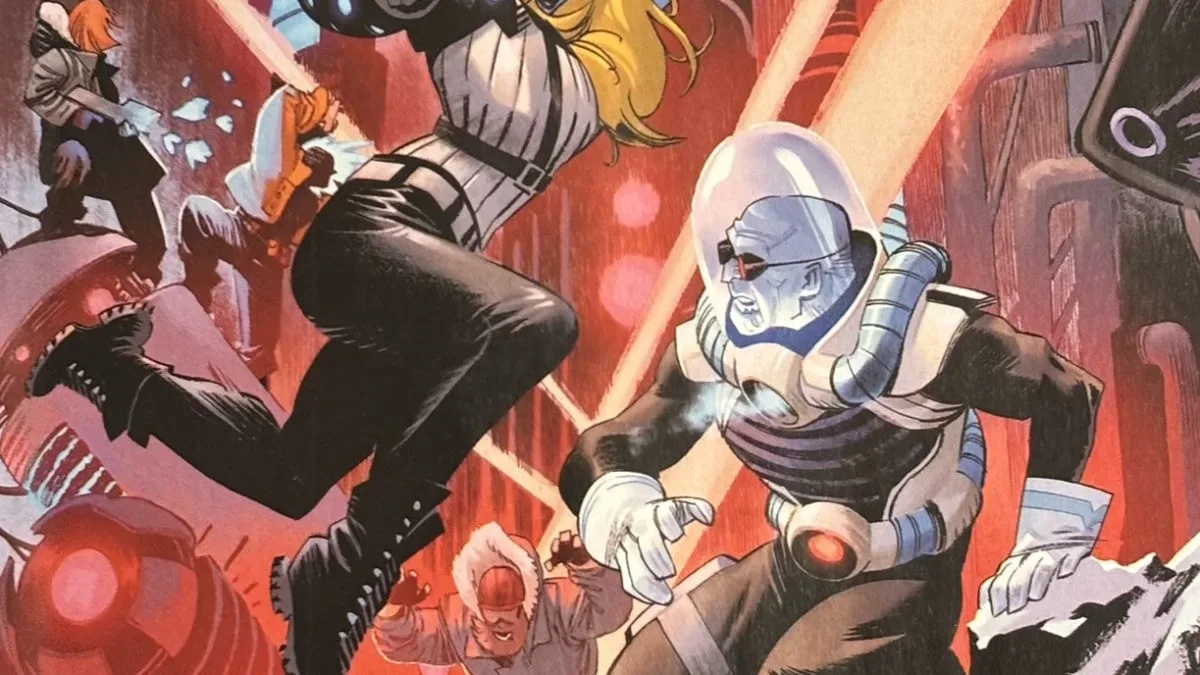
There is also a suggestion that simply freezing or poisoning the overgrown plant life will not solve the underlying crisis. The contamination is described as being deep in Gotham itself. In story terms, that distinction raises the possibility that the physical jungle is a symptom rather than the whole problem. Removing visible growth could help citizens survive the immediate night, but it may not erase whatever has taken root in the city.
Poison Ivy is the threat—and the person trapped inside it
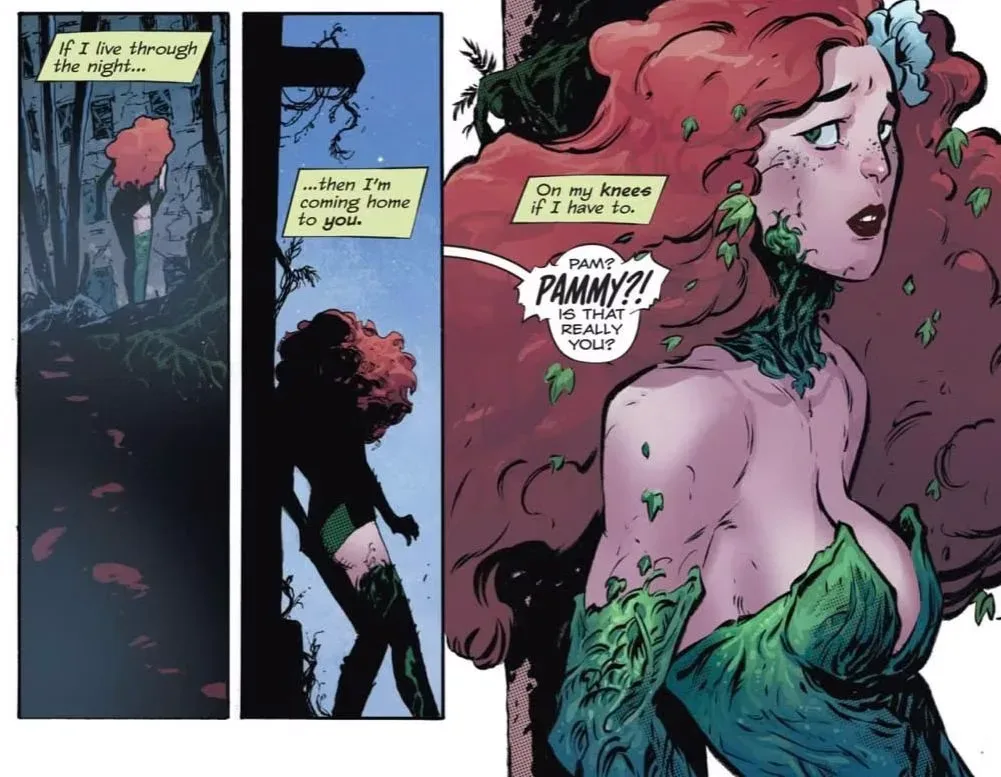
Poison Ivy #49, by G. Willow Wilson and Alex Lins, is described as the penultimate chapter of the saga. Pamela Isley’s circumstances have reversed dramatically. After a period when things appeared to be going well, she is now stripped of power, unable to safely leave Gotham, and surrounded by a public that regards her as the principal enemy.
That setup is more complicated than a standard villain-on-the-run plot. Ivy’s plant army has made Gotham unlivable, and the event is not minimizing that harm. Yet the issue’s framing also puts her in a precarious, isolated position. The question is not merely whether Gotham can stop Poison Ivy; it is whether she can survive the city’s response to her.
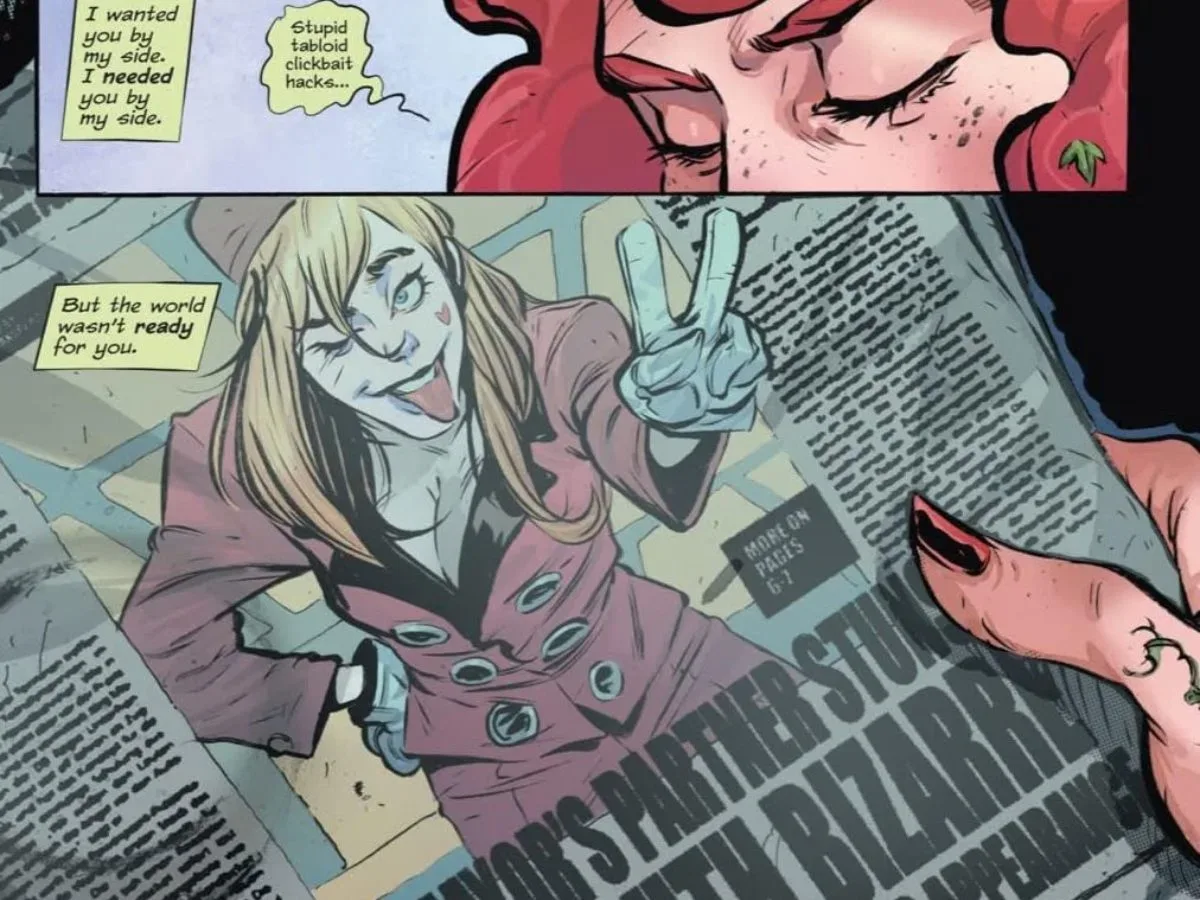
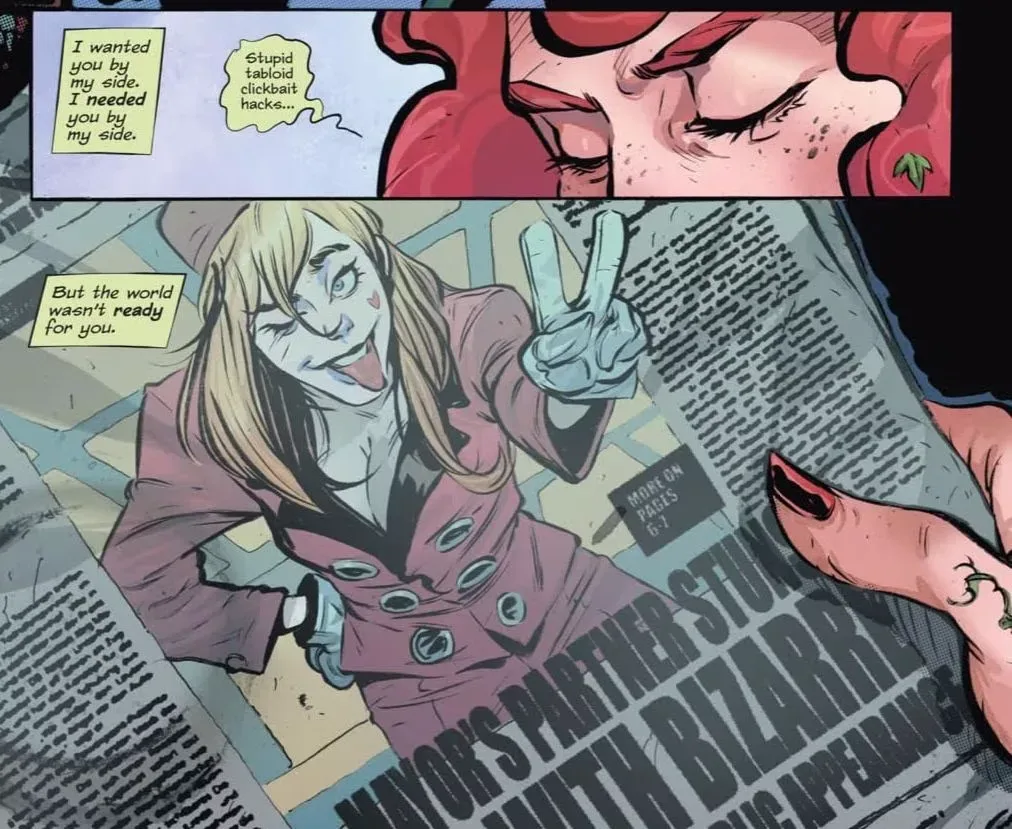
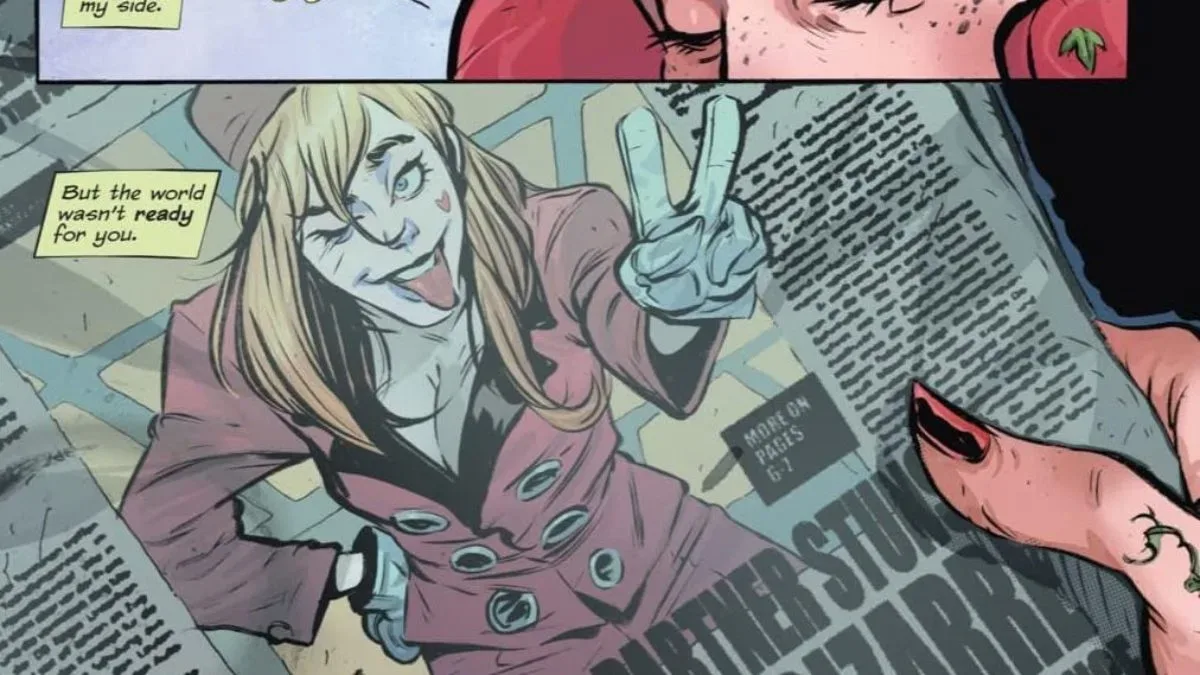
The event’s human and political pressure is reinforced by the emphasis on Ivy’s image. Her memories of Gotham’s bad press and a later newspaper image point toward a struggle over public perception as well as physical survival. A person can be guilty, frightened, dangerous, remorseful, or manipulated—sometimes all at once—but a front-page photograph does not have room for that complexity. For Ivy, whose connection to plant life has repeatedly placed her at odds with human institutions, being reduced to Gotham’s single face of disaster could become its own form of punishment.
Killer Croc, also known as Waylon Jones, appears to take up Ivy’s defense in Sunrise #1, though that support is not portrayed as an uncomplicated endorsement of her worldview. The material makes a dark joke out of Croc’s dietary disagreement with Ivy’s vegetarianism, but the larger implication is more useful: Gotham’s outcasts do not necessarily see Ivy as only the monster the city wants her to be. Their intervention could complicate Batman’s response at the very moment the story is demanding decisive action.
Harley Quinn’s route through the jungle
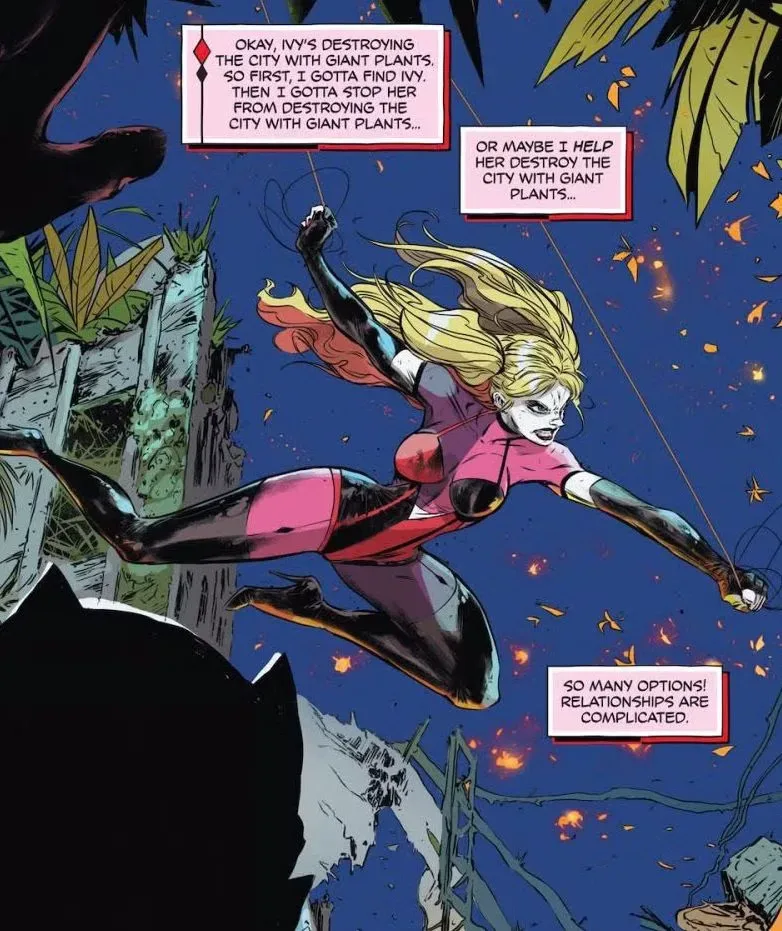
Harley Quinn #67, written by Elliott Kalan with art by Carlos Olivares, supplies the most personal route into the crossover. Harley’s stated goal is to reach Ivy for the overdue conversation their relationship requires. The obstacle is a city-wide wilderness filled with leaves, vines, trees, spores, and walking plant monsters—described as prehistoric cousins of Swamp Thing—so this is not exactly an easy relationship check-in over coffee.
Harley is armed with a machete and determined to cut a path to Pamela. The issue’s loud, jokey solicitation language signals a different tonal register from the event’s disaster fiction, but the emotional objective is direct. Harley is not merely trying to defeat a threat from a safe distance. She is trying to get to someone she loves while that person is at the center of a mass-casualty crisis.
That distinction makes Harley’s role potentially crucial. Batman can address an attack, a contaminated city, and a looming deadline. Harley may be able to address the person behind the attack. The available material suggests she may find Ivy more open to being reached than Gotham expects, though it does not establish what reconciliation, accountability, or recovery will look like.
It is a fitting use of a tie-in issue. Instead of repeating Batman’s central mission, it explores how the same emergency feels to someone whose most immediate concern is emotional connection. Readers looking for another genre-driven comic serial can also find a very different supernatural party dynamic in Dungeons & Dragons: Ravenloft #2, though Gotham’s problem here is less a misty investigation than a full-scale urban ecological nightmare.
Gotham General shifts the camera to the emergency room
The most distinctive companion book may be Batman: Bad Seeds: Gotham General #1, the first of two issues by Greg Rucka and Rosa Ekedal. Rather than centering costumed figures, it introduces the staff of Gotham General, the city’s top-tier trauma center, under the leadership of Dr. Ava Dastur.
Its emergency department is overwhelmed. Electrical power is out. Fires are spreading. Transportation has broken down. Calls keep arriving while the number of patients exceeds the number of beds. Half of the incoming cases are said to involve respiratory complications; the other half present with hallucinogenic psychotic episodes.
Those terms tell readers what kind of crisis this is. Respiratory complications means breathing-related medical problems, a particularly alarming outcome in a story where spores have filled the city. Hallucinogenic psychotic episodes refers to dangerous breaks with ordinary perception and behavior in which affected people may experience hallucinations or severe confusion. Whether the cause is a fictional plant toxin, panic, or a mix of hazards, the practical challenge for a hospital is immediate: medical staff must triage patients, meaning they prioritize care when needs outstrip available people, space, and equipment.
The book’s key idea is that the workers at Gotham General do not want to be called heroes. They are doing their jobs in impossible conditions. That is not a rejection of their courage; it is a statement about professional responsibility. A crossover usually raises the question of which hero saves the city. Gotham General instead asks who keeps people alive while the caped rescue effort is still underway.
Vandal Savage’s actions have already left at least one person in need of medical attention, putting him in the orbit of the hospital storyline as well. Savage’s immortality may let him outlast many opponents, but it does not mean he is untouched by bodily consequences. The event appears ready to contrast a powerful commissioner’s damage with the ordinary patients who have no extraordinary resilience at all.
The Gotham Balladeer and the fight over the story
The dawn special also introduces a new newspaper, The Gotham Balladeer, arriving as the Signal rises with the sun. In a story where Ivy has been mayor, Savage is police commissioner, and Gotham’s streets are overrun, a new outlet is not just background decoration. It represents another actor in the struggle to define what happened.
Newspapers can turn confusion into a timeline, name those responsible, amplify witnesses, and preserve images that powerful people would rather suppress. They can also simplify a complex crisis into a single sensational frame. Ivy’s apparent displeasure at a published photo underscores that tension. The Balladeer’s existence suggests that the end of Bad Seeds will not only decide whether the city survives the night. It may decide who gets believed when the sun comes up.
That is especially relevant because the event has built its threat across multiple levels: poisoned infrastructure, transformed streets, medical overload, political failure, personal relationships, and public fear. Batman can be essential without being sufficient. Harley, Croc, the hospital staff, and even a new newsroom each occupy a different piece of the recovery Gotham needs.
What arrives on October 28
- Batman: Bad Seeds: Sunrise #1 — one-shot; written by Matt Fraction and G. Willow Wilson; art by Giuseppe Camuncoli and Cliff Rathburn; $5.99.
- Batman: Bad Seeds: Gotham General #1 — first of two issues; written by Greg Rucka; art by Rosa Ekedal; $4.99.
- Harley Quinn #67 — written by Elliott Kalan; art by Carlos Olivares; cover by Bailie Rosenlund; $3.99.
- Poison Ivy #49 — written by G. Willow Wilson; art by Alex Lins; cover by Jessica Fong; $3.99.
Together, these issues present the final stretch of Batman: Bad Seeds as a citywide emergency rather than a single-hero showdown. Batman’s deadline is sunrise. Harley’s mission is Pamela. Ivy’s question is whether she can escape—or be reached—alive. Gotham General’s staff must keep working regardless of who wins the superhuman conflict. And by morning, The Gotham Balladeer may be ready to put a version of the night into print.