Gambit: Wanted #3 will put Remy LeBeau in a particularly precarious pre-X-Men predicament when the Marvel issue arrives on September 30, 2026. The 32-page, Rated T+ comic is positioned as an unexplored turning point shortly before Remy joins the X-Men, with the mysterious Suzerain taking center stage as the thief’s ominous new “queen.”
That language carries the card-table flavor inseparable from Gambit, but the setup appears much darker than a flirtation or a clever heist. The core conflict is control. Suzerain is depicted as exerting an influence that changes Remy into an agent of chaos, leaving the issue to ask the all-important question: is Gambit being played, or does he still have a move left that Suzerain has failed to anticipate?
A Gambit story before the X-Men
The issue’s setting in the period immediately before Gambit became part of the X-Men gives the premise its real dramatic weight. This is not simply a standalone villain encounter built around the character’s cards-and-explosions visual identity. It is a story framed around a formative moment, one that may test the instincts and morality that define Remy LeBeau.
In the material previewed so far, a corrupted Remy pursues Elodie through New Orleans. Elodie narrates a shifting, troubling sense of identity in the situation, describing herself in terms that include monster, pet, hero and victim. That sequence makes the confrontation feel broader than a conventional chase: both the pursuer and the pursued appear caught in a nightmare shaped by external manipulation.
New Orleans is an apt backdrop for the conflict because the available pages connect the city to Remy’s pursuit rather than treating it as simple scenery. The visual emphasis rests on a transformed Gambit moving through a dangerous situation, while Elodie runs and tries to understand her place in it. The issue’s tension is therefore rooted in character perspective as much as action.
What Suzerain’s influence appears to do
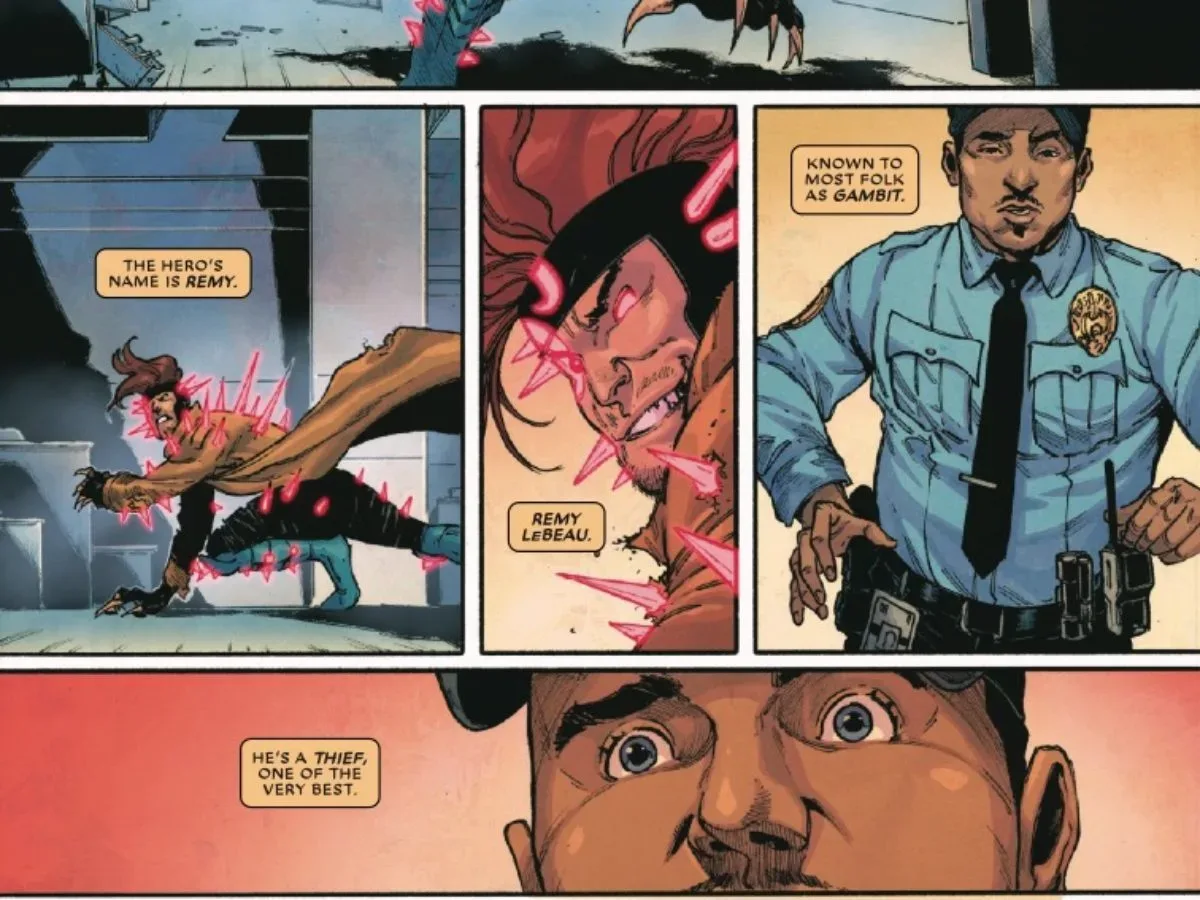
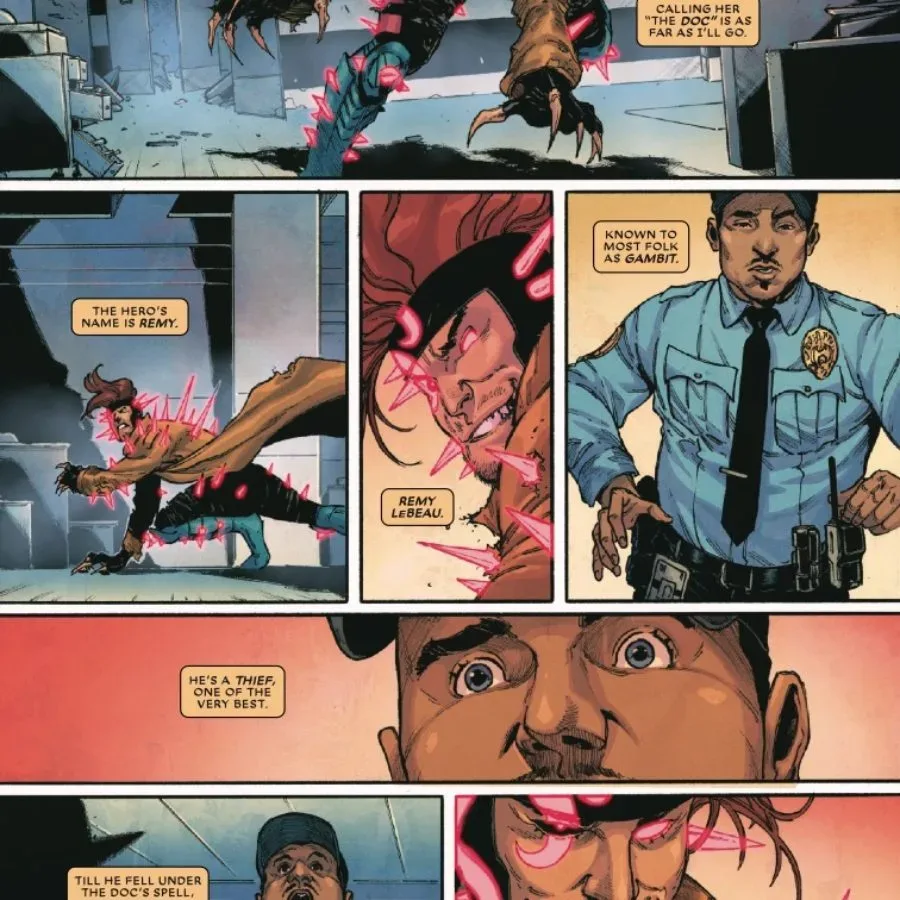
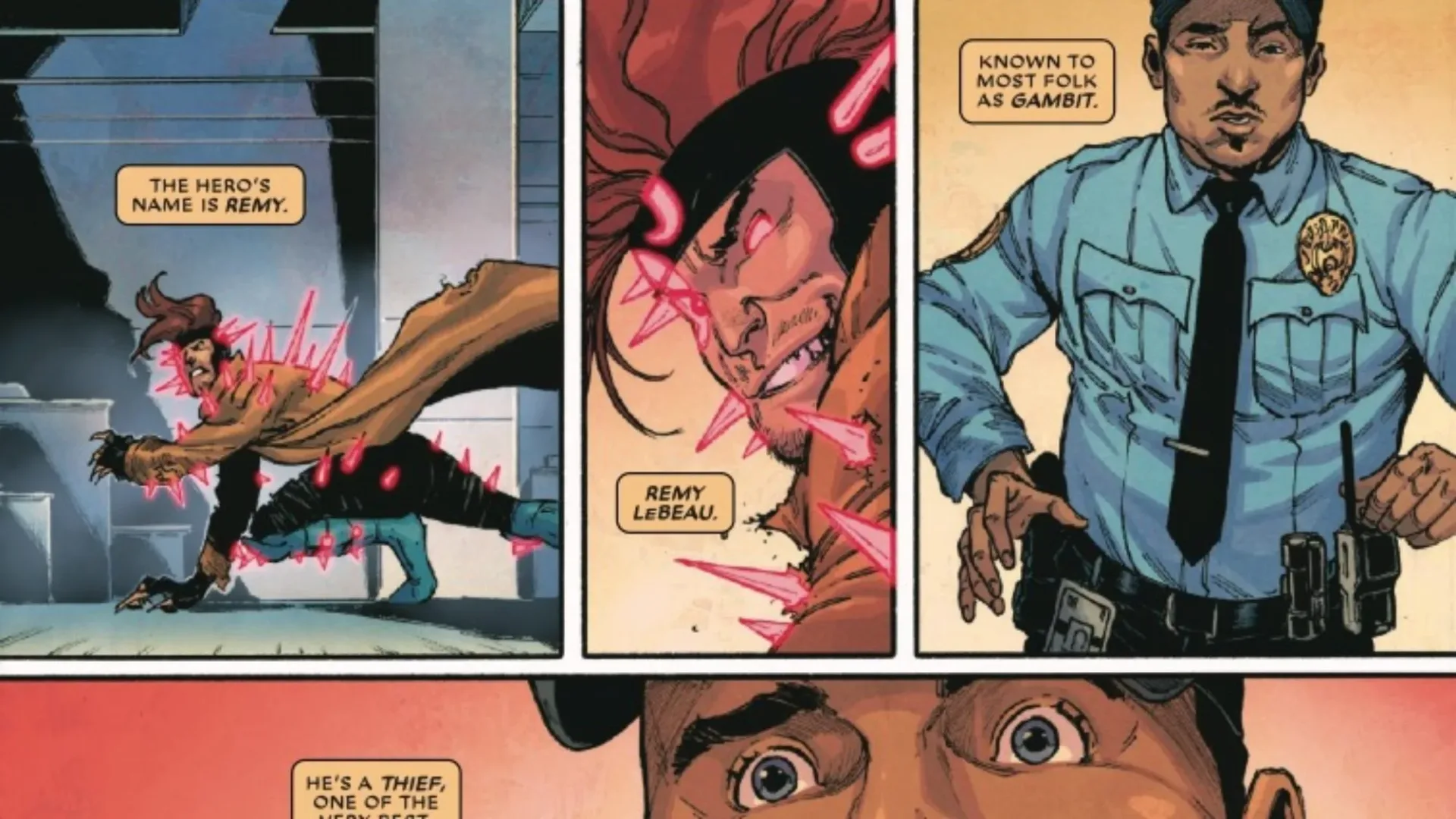
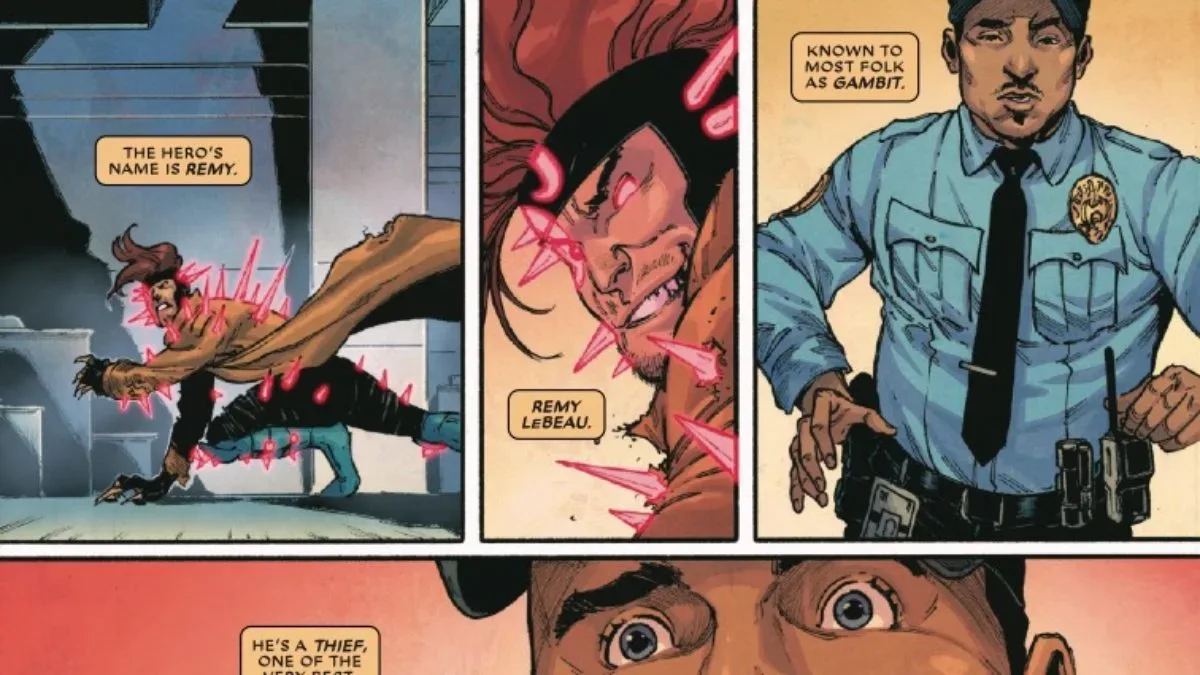
The preview imagery presents Gambit with glowing pink eyes and jagged kinetic protrusions across his body. Those changes serve as immediate visual evidence that something is wrong. A “corrupted” version of a hero is a familiar comic-book device, but it is especially potent for Gambit because his usual appeal rests on contrast: effortless confidence, quick thinking and a roguish charm that can conceal serious capability.
Here, that poise seems displaced by an aggressive, alien-looking power. The jagged energy effects suggest his abilities are no longer being expressed with the finesse readers expect from him. Instead of a character who can rely on style and improvisation, this Remy is presented as someone pushed into a more openly destructive state.
The distinction matters. In superhero fiction, corruption is not necessarily only a physical transformation or a new costume. It is often shown through a character’s changed reasoning. In the preview, Remy attacks security guards while considering people as objects from whom he can take what he needs. That view is starkly at odds with the moral agency required for a hero’s journey. It also clarifies why Suzerain is more threatening than an opponent who merely wants to defeat Gambit in a fight.
If Suzerain can reshape how Remy sees other people, then the conflict becomes a struggle over his judgment. The question is not merely whether he can break free physically. It is whether he can recognize what is being done to him while he is in the middle of doing harm.
Why the “Queen of Hearts” framing works
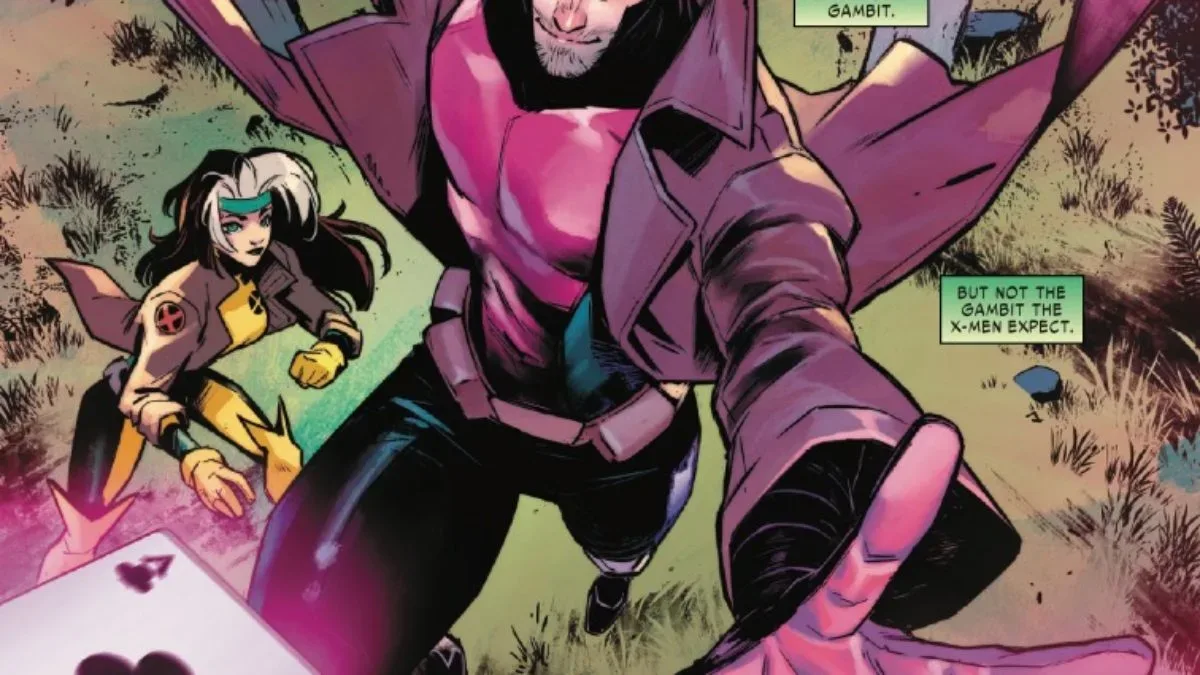
The solicitation calls this situation a “Sinister Gambit,” and the queen imagery is doing several jobs at once. Gambit’s name and presentation have long invited card-game terminology: hands, tricks, stakes and bluffs are all natural ways to describe a thief whose signature weapon is an energized playing card. Suzerain’s designation as a new queen places her within that symbolic language while making her sound less like a partner and more like the person attempting to direct the game.
That framing also creates uncertainty without giving away the resolution. A high-stakes card game depends on hidden information. Each player has to judge what the other knows, what they are concealing and whether an apparent loss is really a trap. The solicitation directly leans into that uncertainty by asking who is playing whom.
For readers, that is the hook to watch in issue #3. The visible transformation says Suzerain has achieved a major advantage. But the very idea of Gambit being reduced to a compliant pawn invites suspicion. A character identified with misdirection and survival may still possess some ability to turn a bad hand into an opening. Whether that possibility is genuine or merely part of Suzerain’s control is the story’s central suspense.
Creative team and release details
Gambit: Wanted #3 is written by Chris Claremont with art by Robert Gill. Leinil Yu provides the main cover. The issue is published by Marvel, runs 32 pages and carries a $4.99 US cover price.
Three additional $4.99 US variants are listed:
- Rickie Yagawa variant
- Alessandro Cappuccio Fall Fantasies variant
- Cory Smith variant
All listed editions are priced at $6.25 in Canada. Readers who follow Marvel’s wider comic output can also find another character-driven setup in Bleeding Hearts #8’s conflict between Poke and Rabbit.
What to watch for in issue #3
The advance details give readers a few concrete threads to follow. First is Elodie’s role. Her narration and flight through New Orleans suggest she is not just a bystander caught in Gambit’s rampage; she has a personal and unstable relationship to the situation that the issue may further explain.
Second is the nature of Suzerain’s power. The character is identified as the force turning Gambit into a servant of chaos, but the available setup preserves uncertainty around the exact limits of that influence. Is the effect total, intermittent or vulnerable to Remy’s own resistance? The issue’s dramatic engine depends on that ambiguity.
Finally, there is Remy’s eventual path toward the X-Men. Because this chapter is specifically billed as occurring just before that transition, the story has an opportunity to show a difficult experience that informs the person he becomes. The promise is not simply that readers will see Gambit at his most dangerous; it is that they will see him at a moment when control of his identity is genuinely in dispute.
Gambit: Wanted #3 goes on sale Wednesday, September 30, 2026.