The X-Men are accustomed to cosmic errands going catastrophically sideways, but Alien vs. X-Men #1 gives that formula a particularly teeth-filled spin. Marvel’s new crossover, on sale September 30, 2026, begins with the team seeking a Phoenix egg in space. What they bring back to Earth is something much less likely to offer rebirth: Xenomorph cargo.
The setup places Marvel’s mutants directly in the path of the creatures from Alien, with the solicitation promising a violent confrontation after the extraterrestrial threat reaches Earth. An unnamed unexpected ally is also positioned as a possible factor in the battle. That is the central, simple hook: super-powered heroes confronting a species whose danger is defined by its ability to reproduce, ambush, and turn proximity into a survival problem.
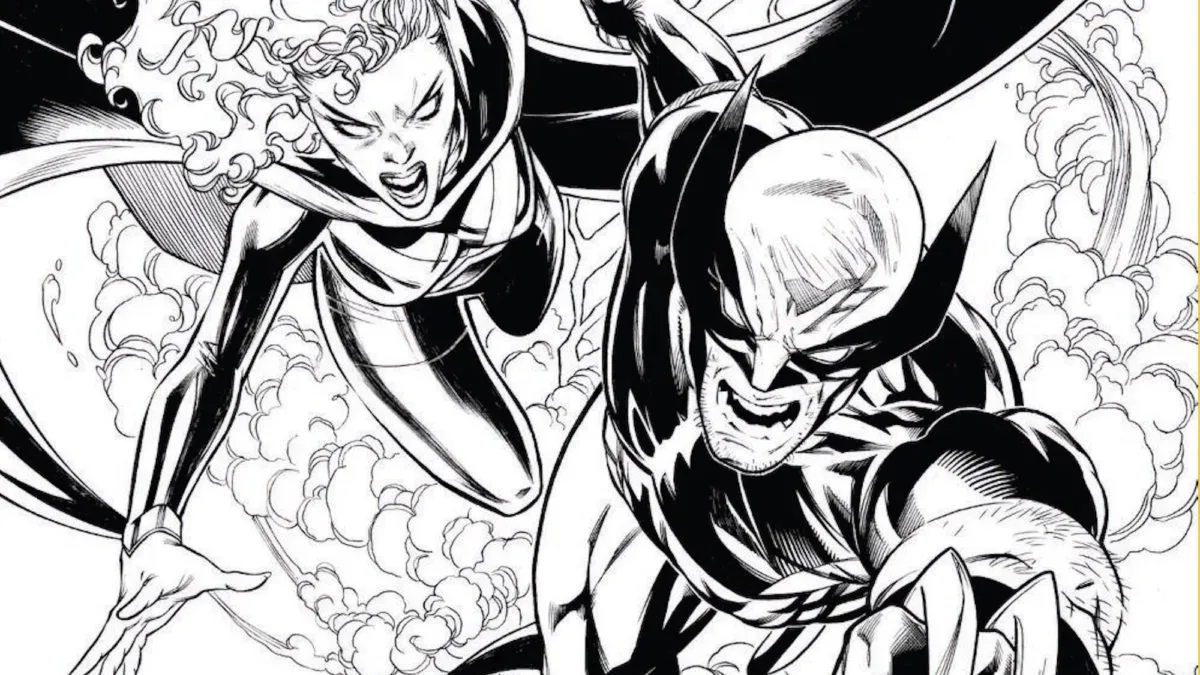
The first issue is a 40-page, Rated T+ release with a $5.99 US cover price for the standard edition. It is credited to Kieron Gillen and Chris Claremont, with art by Geraldo Borges and David Messina and a cover by Ryan Stegman. In addition to the main crossover chapter, the comic includes the opening installment of a new Claremont story centered on Kitty Pryde, the Brood, and Xenomorphs.
A Phoenix hunt turns into an Alien outbreak
“Phoenix egg” and “Xenomorph egg” make for an intentionally disastrous swap. Within X-Men storytelling, the Phoenix is a cosmic force associated with destruction and renewal. The solicitation does not spell out the precise nature of the egg sought by the team, but it makes the intended contrast clear: the mutants head into space expecting one kind of extraordinary cosmic discovery and instead carry home an organism built to make every enclosed environment worse.
For readers unfamiliar with the terminology, Xenomorphs are the iconic extraterrestrial creatures of the Alien franchise. The key word in this premise is “cargo.” It frames the danger not as an enemy openly invading Earth, but as a threat inadvertently transported there by the very people equipped to fight it. That converts a space mission into a containment crisis.
Marvel’s synopsis describes the story as a mutant-versus-alien battle, but that phrase leaves considerable room for tension beyond a straight brawl. The X-Men’s abilities may make them formidable, yet the appeal of an Alien scenario traditionally lies in uncertainty, isolation, and the hazard posed by an enemy that can remain hidden. The issue’s parental-advisory positioning and the preview material’s bloody imagery suggest that this crossover is leaning into the body-horror and violence implicit in that collision.
What the preview establishes
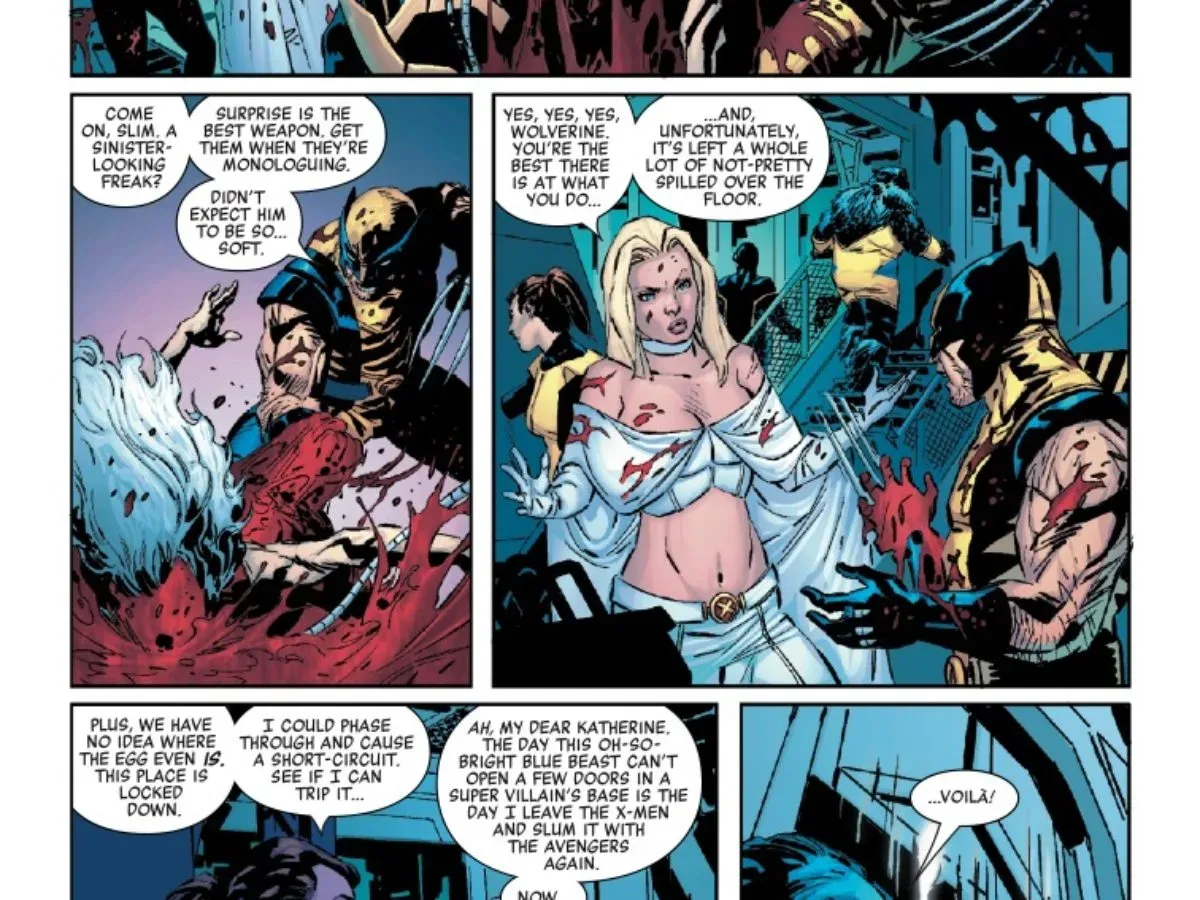
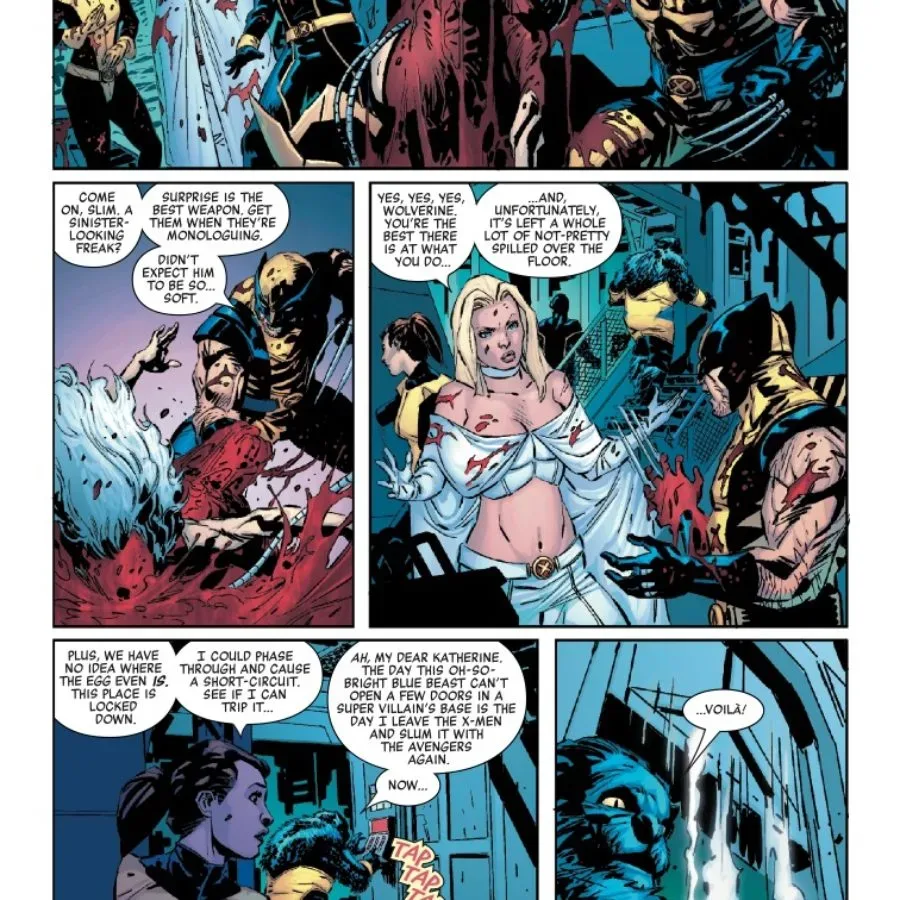
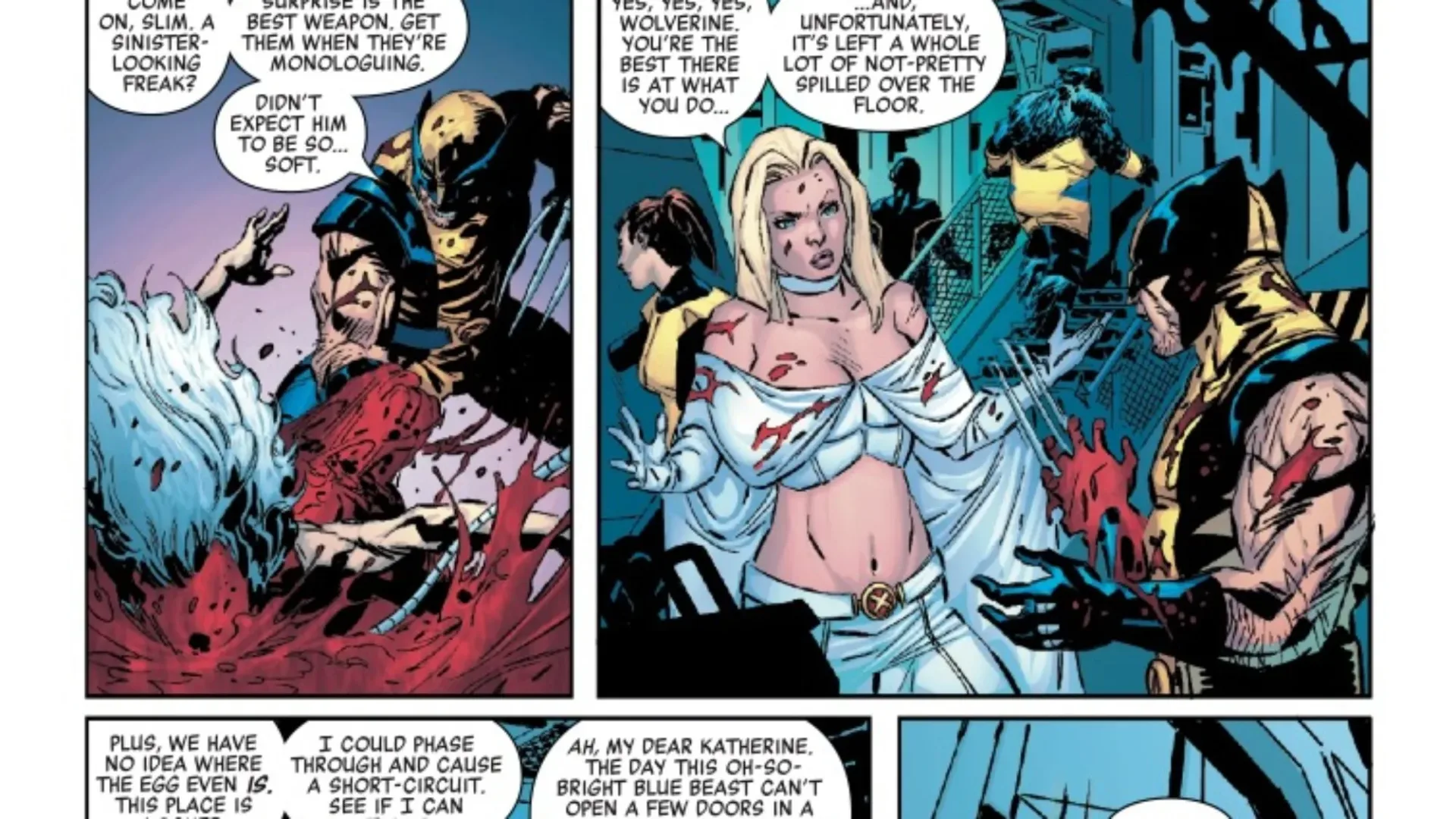
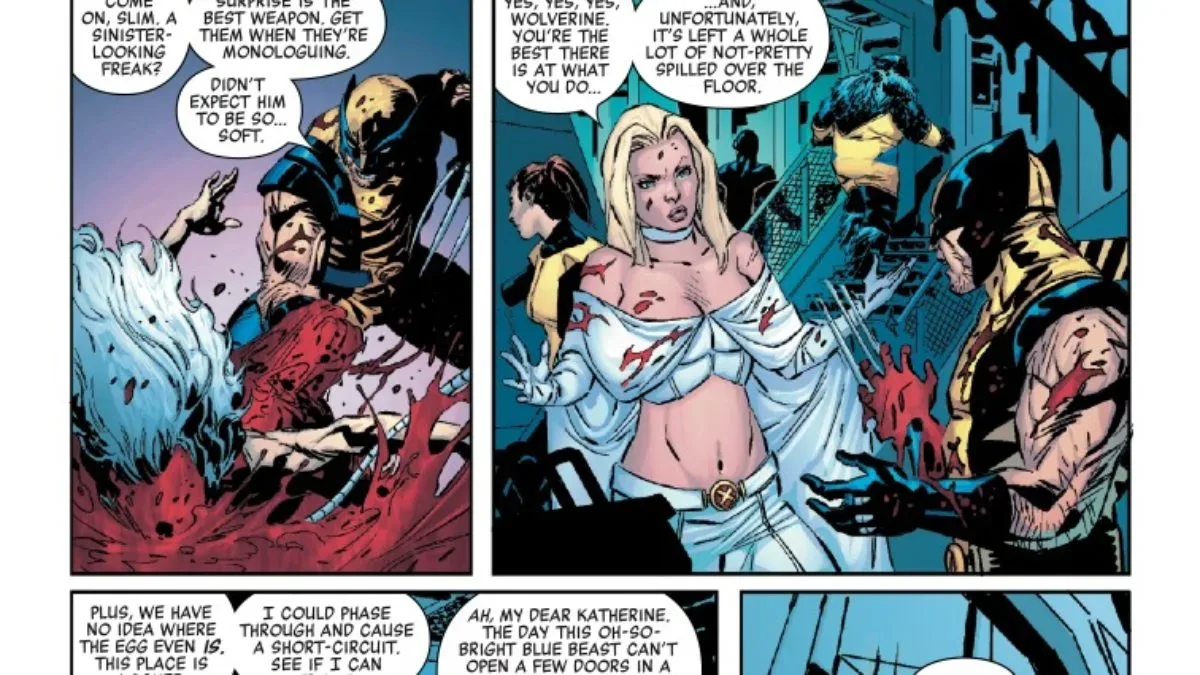
Preview pages indicate that Orbis Stellaris is involved in trapping the X-Men. They also depict Wolverine responding to the situation with his adamantium claws, while Emma Frost appears in a blood-spattered white costume. Those details establish an aggressive opening mood without resolving the bigger question: how widespread the Xenomorph danger becomes once the team returns to Earth.
Wolverine is an immediately legible fit for an Alien crossover because the visual vocabulary of both properties includes claws, close-quarters danger, and physical consequences. But a Xenomorph story cannot rely solely on the most obvious matchup. The sharper question is whether the X-Men can apply their varied powers without giving up the suspense created by an alien threat loose in the wrong place.
That balance is an important practical implication of the premise. A crossover succeeds when neither side is reduced to décor. If the X-Men solve the danger too effortlessly, the creatures lose their menace. If the Xenomorphs overwhelm every mutant capability without explanation, the superhero half of the concept stops carrying its weight. The solicitation’s reference to an unexpected ally signals that the creative team may be treating the conflict as more than a sequence of one-on-one fights.
Chris Claremont, Kitty Pryde and the Brood backup
The bonus story is one of the issue’s most notable selling points. Chris Claremont’s chapter brings Kitty Pryde and the Brood into contact with the Xenomorphs. The Brood are another alien menace associated with the X-Men, making them a natural bridge between the mutant side of the book and its Alien component.
Kitty Pryde’s presence also has a clear thematic use. Her phasing ability has long made walls, locked rooms, and physical barriers unusually negotiable for her, while an Alien-style threat gains much of its force from enclosed spaces and the fear of what may be behind the next door. The supplied details do not disclose the plot of the backup, so readers should not assume a particular setting or outcome. Still, combining Kitty, the Brood, and Xenomorphs promises a story designed around overlapping strains of science-fiction horror rather than a detached add-on.
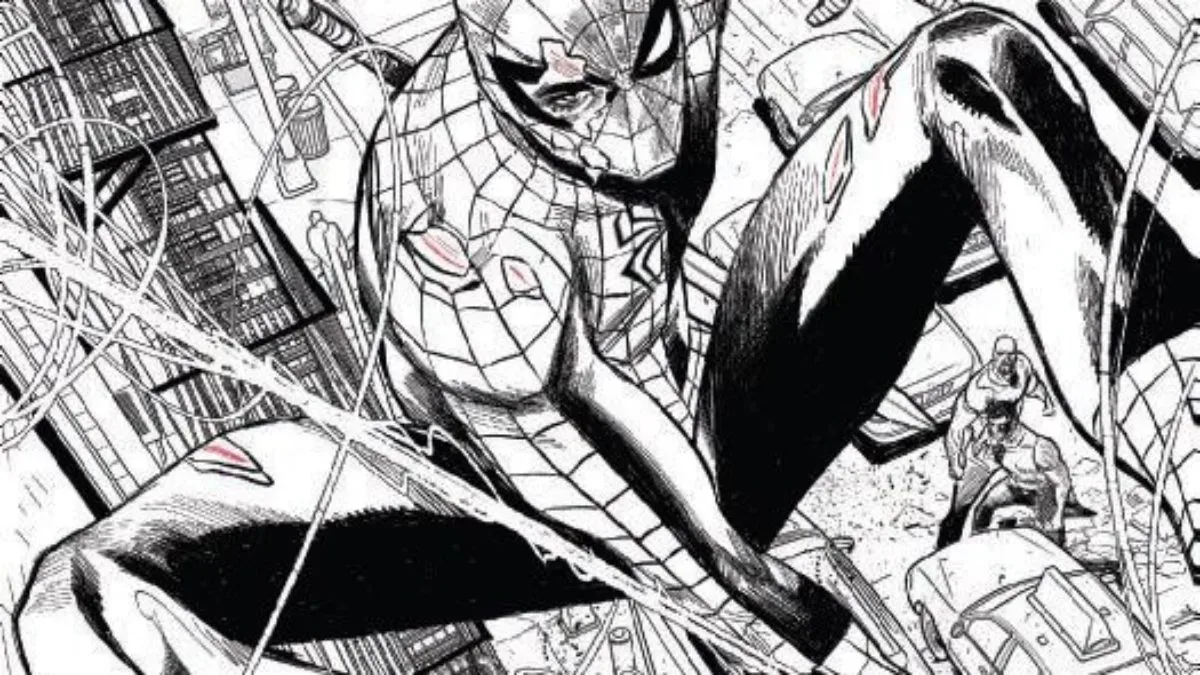
For people following other upcoming Marvel comic announcements, Joking Joystick has also covered Avengers #2 and its Spider-Man, Aunt May and Mephisto conflict. The two solicitations point toward very different corners of Marvel storytelling: supernatural disruption on one side, and an interfranchise sci-fi-horror collision on the other.
Format, rating and cover options
Alien vs. X-Men #1 will be sold as a 40-page comic in the standard US comic-book format. Its T+ rating and parental-advisory notice matter for prospective readers and parents: the book is being positioned for older teens rather than an all-ages audience. That designation is consistent with the violence suggested by both the premise and the preview imagery.
Marvel has also listed several variant editions. Variants are alternate cover versions of the same issue; they do not indicate a different main story. The announced options are:
- Ivan Shavrin variant — $5.99 US
- Leinil Yu virgin variant — $5.99 US
- John Romita Jr. foil variant — $8.99 US
- Alan Quah poster homage variant — $5.99 US
- Leinil Yu variant — $5.99 US
- Bjorn Barends variant — $5.99 US
A virgin variant generally refers to a cover presentation without the usual trade dress, such as the logo and other cover text. A foil variant uses a reflective foil treatment and carries the higher listed price here. The “poster homage” wording identifies a cover concept paying tribute to poster imagery, though no specific poster is identified in the supplied release details.
For readers who simply want the story, the standard issue is the clearest route at $5.99. For cover-focused buyers, the important distinction is that the listed variants offer different exterior artwork or treatments, not separate narrative chapters. Availability of particular editions can vary by comic shop, so anyone seeking a specific cover may want to ask their retailer before the September 30 on-sale date.
Why this pairing has immediate stakes
At its core, Alien vs. X-Men joins two properties that approach otherness from radically different angles. The X-Men are mutants navigating a world that often fears them; the Xenomorph is an alien predator whose presence makes fear entirely rational. That makes the crossover’s “dangerous cargo” premise more than a convenient excuse for an encounter. It puts a team already accustomed to suspicion and catastrophe in the position of being linked to a threat they did not intend to unleash.
The solicitation calls the project a crossover decades in the making, though it does not provide further development history. What is concrete is the opening configuration: a Phoenix-related mission, an apparent trap involving Orbis Stellaris, a return to Earth with deadly cargo, and a second Claremont-led thread involving Kitty Pryde and the Brood. That is enough to make the debut issue an unusually packed entry point for readers interested in either franchise.
Alien vs. X-Men #1 arrives September 30, 2026, from Marvel Comics, with the main edition priced at $5.99 US and the John Romita Jr. foil cover listed at $8.99 US.