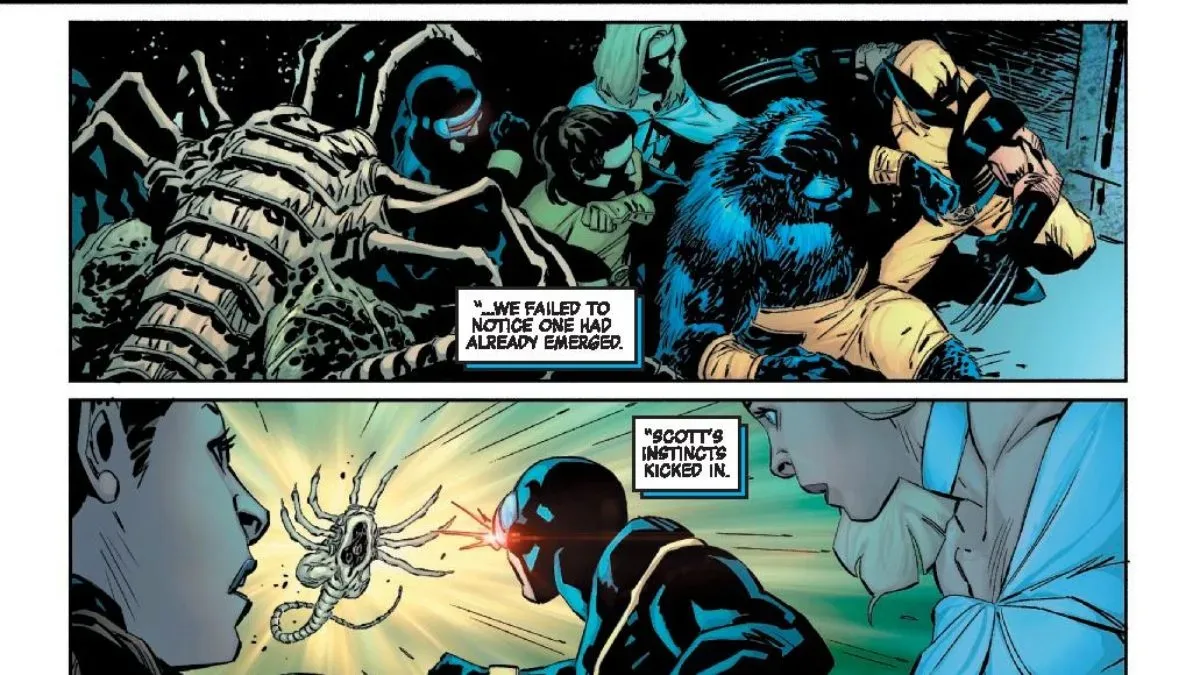

Alien vs. X-Men #3 is set to push its crossover conflict into an even more volatile direction when it goes on sale November 25, 2026. The central hook is blunt, alarming, and very much suited to a collision between mutant superheroes, biomechanical space monsters, and anti-mutant machines: Sentinels arrive at the X-Mansion with a plan to destroy it from orbit.
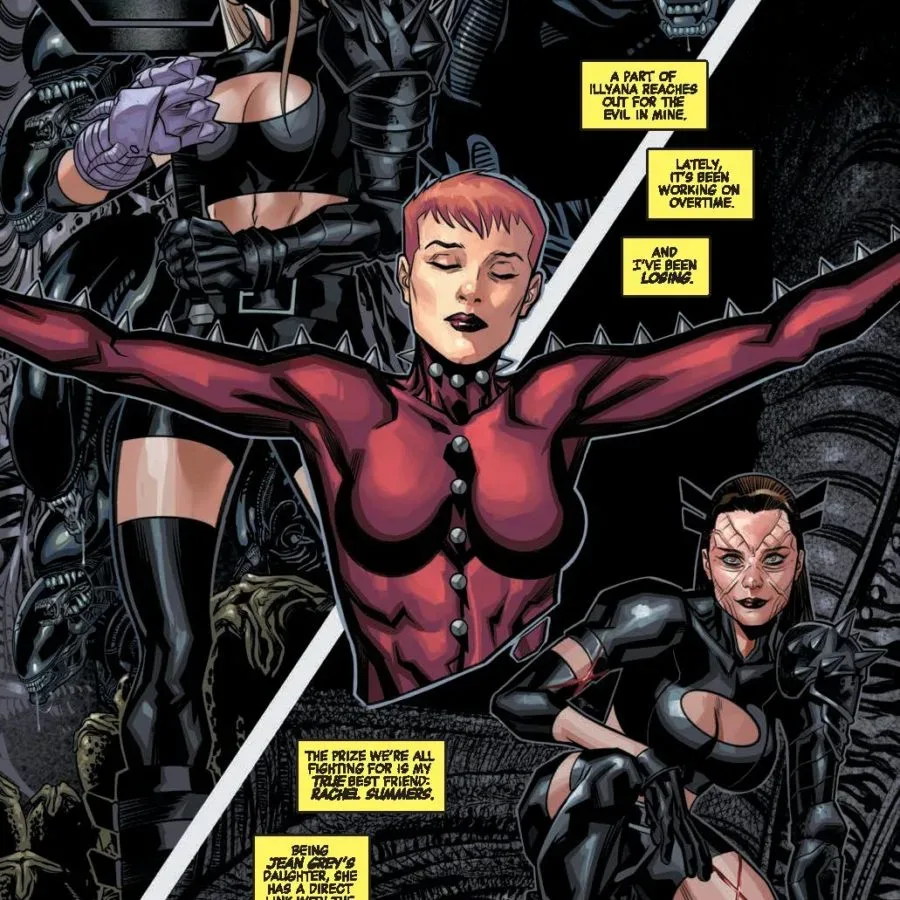
The issue is a 32-page, Rated T+ release from Marvel, priced at $5.99 in the US and $7.50 in Canada. Kieron Gillen and Chris Claremont are credited as writers, with Geraldo Borges and David Messina credited on art and Ryan Stegman providing the cover. Alongside the main story, the comic includes a Claremont bonus story in which Kitty Pryde and Rachel Summers confront the Xenomorph queen over the fate of the Phoenix.
A three-sided threat at the X-Mansion
The solicitation frames the issue as “mutant vs. Xenomorph vs. robot,” which is more than a catchy genre mash-up. Its setup puts three groups with fundamentally incompatible priorities into the same crisis.
- The X-Men are mutants defending themselves, their home, and apparently their identities.
- The Xenomorphs are the invasive extraterrestrial threat at the center of the crossover.
- The Sentinels bring the anti-mutant machinery and escalation, treating the X-Mansion as a target for overwhelming force.
“Sentinel” is the long-running Marvel term for giant robots deployed against mutants. In this issue’s premise, their arrival does not signal a convenient rescue from the Xenomorph outbreak. The machines appear to make the situation worse, proposing an orbital nuclear strike on the X-Men’s headquarters. That is a solution defined by total containment rather than rescue, investigation, or restraint.
The X-Mansion is not merely a useful superhero base in this setup. It is the target around which all three conflicts overlap: mutants are associated with it, the alien incursion has reached it, and the Sentinels have decided it should be eliminated. That makes the mansion an immediate pressure point rather than background scenery. Whatever the characters do next must address both the creature threat within reach and the catastrophic threat positioned above them.
Duplicate Sentinels add distrust to the crisis
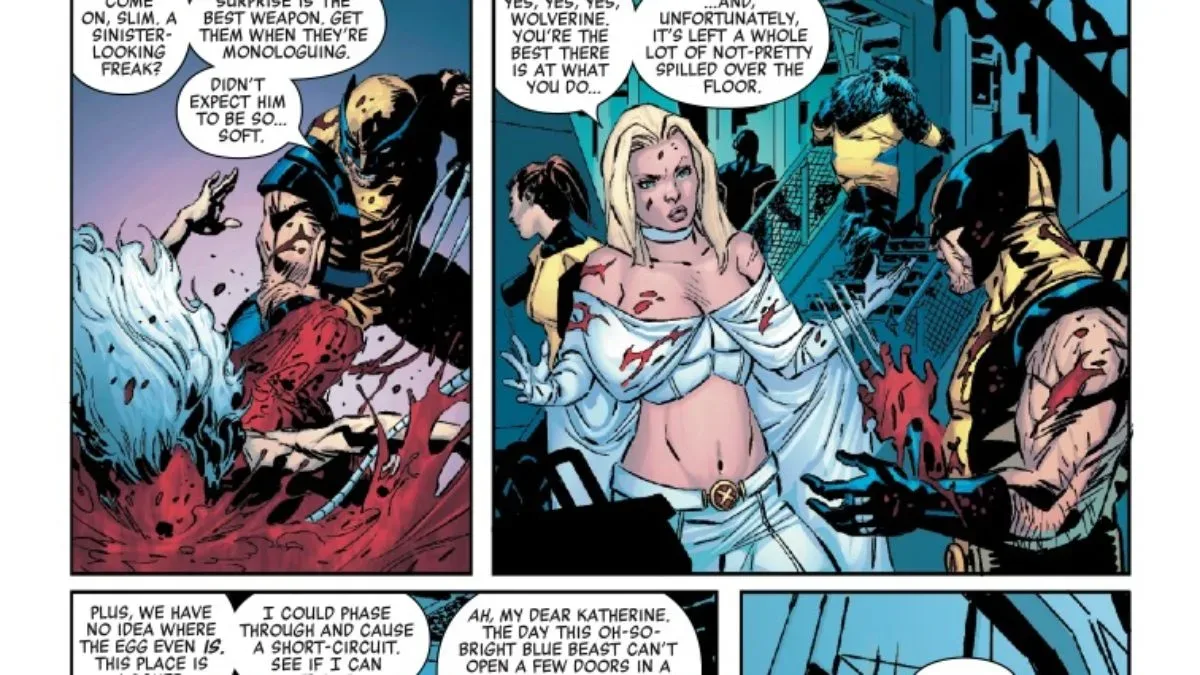
The available preview information also points to Sentinels that imitate people close to the X-Men. That detail shifts the story beyond a straightforward siege. If hostile machines can convincingly resemble allies and colleagues, the characters have an identification problem as well as a survival problem.
That kind of conflict is especially useful in an ensemble superhero story because it attacks the group’s ability to coordinate. A team can prepare for monsters or robots; it is far harder to act quickly when every familiar face may require verification. The preview material references Hope identifying a false Cable after a failed shot, while Logan recognizes that an imitation Wade has not healed as the real one would. Those observations suggest that the fakes can get close enough to create doubt, but their behavior or capabilities reveal flaws under pressure.
The distinction matters. The threat is not simply that a Sentinel could wear a familiar appearance; it is that trusted knowledge becomes a defense. Personal history, combat habits, and powers all become ways of detecting an impostor. In practical narrative terms, that gives the X-Men a possible response to infiltration while maintaining tension: recognizing a duplicate may be possible, but only after it has already gotten dangerously near.
There is also a grim irony in the pairing. Xenomorphs are associated here with an invasive species threat, while the Sentinels treat mutants as an invasive species of their own. The solicitation explicitly plays with that competing viewpoint. The issue’s tension therefore does not rest only on which faction is strongest. It asks whose definition of “the threat” gets enforced when one faction has access to weapons capable of erasing the battlefield.
The orbital strike raises the stakes beyond a conventional fight
An orbital nuclear attack is an ultimatum, not just a weapon. Its presence means the heroes’ task is likely larger than defeating the nearest enemy. They must contend with an external countdown and a force whose strategy regards indiscriminate destruction as acceptable.
That is an important escalation for a comic already dealing with Xenomorphs. A conventional confrontation allows the X-Men to use their varied powers, protect civilians, and try to contain an outbreak. A threat from orbit changes the geography of the story. The danger no longer exists only in rooms, corridors, or the mansion grounds; it comes from a position beyond ordinary reach. Even if the team handles the immediate Xenomorph danger, the Sentinel decision can still make success meaningless unless it is stopped or changed.
The phrase “nuke the X-Mansion from orbit” also carries a knowingly severe, militarized tone. It presents the Sentinel response as one that removes nuance from an already complicated scenario. For readers, that creates a clean dramatic question: can the X-Men survive a conflict in which the supposed answer to an alien invasion is to destroy the people defending against it?
Chris Claremont’s bonus story puts Kitty, Rachel and the Phoenix in focus
The backup story offers a concentrated second thread: Kitty Pryde and Rachel Summers face the Xenomorph queen, with the Phoenix’s fate at stake. The Xenomorph queen is the creature’s reproductive leader, making her an especially consequential opponent in a story concerned with containment and infestation. Her appearance gives the bonus story a specific adversary rather than merely another encounter with alien creatures.
The Phoenix element adds a second kind of scale. The main plot’s orbital threat is destructive in a military sense, while the backup story invokes a force whose fate is important enough to become the object of the confrontation. The solicitation does not explain exactly what condition the Phoenix is in, what the queen wants from it, or how Kitty and Rachel become involved. Those remain story questions rather than established facts. Still, the setup clearly positions the backup as more than an unrelated epilogue.
Kitty and Rachel are particularly notable choices because the story gives them a direct confrontation with the queen rather than placing them solely in the larger group crisis. A focused pairing can provide a different pace from the main narrative: fewer competing team members, one defined monster, and a stated objective concerning the Phoenix. Claremont’s presence on the issue also makes the backup a distinct creative component within the larger crossover package.
What readers can expect from issue #3
The available material establishes the premise but does not reveal the outcome. It does not confirm whether the orbital strike is launched, whether the mansion survives, which characters are duplicates, or what happens to the Phoenix. That uncertainty is central to the issue’s appeal: the story has stacked threats rather than offering a single obvious villain to defeat.
Readers picking up the third issue can reasonably expect several active lines of conflict:
- the ongoing X-Men and Xenomorph struggle;
- Sentinels entering the situation with an extreme anti-mutant response;
- the danger posed by robotic duplicates of familiar figures;
- an existential threat aimed at the X-Mansion itself; and
- a backup confrontation involving Kitty Pryde, Rachel Summers, the Xenomorph queen, and the Phoenix.
It is an unusually dense issue concept, but the pieces connect through a shared concern: who gets to survive a crisis when fear turns every other person into a possible enemy. Xenomorphs represent an overt alien menace. The Sentinels represent a supposedly controlled answer that may be just as destructive. The duplicate element turns familiarity into a liability. And the Phoenix thread promises consequences that reach beyond a single building or one battle.
Release details and variants
Alien vs. X-Men #3 arrives on Wednesday, November 25, 2026. The standard issue carries a $5.99 US cover price, runs 32 pages, and is rated T+.
Two listed variants are also scheduled:
- Francesco Mobili 1:25 Variant — $5.99 US / $7.50 CAN
- German Peralta Variant — $5.99 US / $7.50 CAN
For comic readers who enjoy Marvel stories built around large-scale crossovers, hostile machines, and body-horror alien stakes, issue #3 has a clearly defined escalation point. The X-Men are not only trying to outlast Xenomorphs; they must deal with Sentinels prepared to erase their home from a distance, while a separate confrontation places the Phoenix in peril.
Marvel readers looking for more comic-book coverage can also check out the developing mystery around Green Lantern #41.